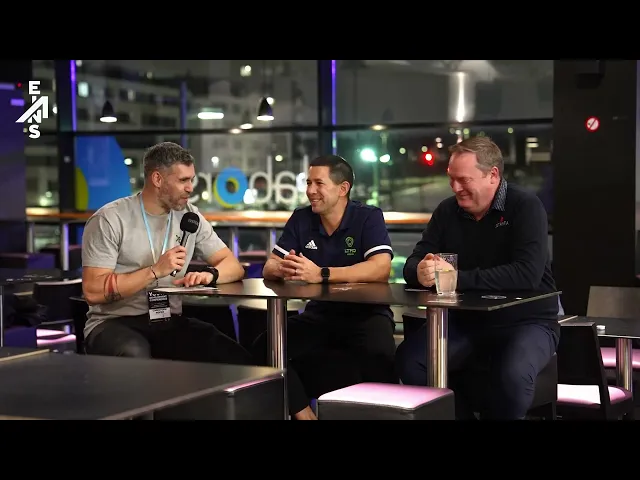
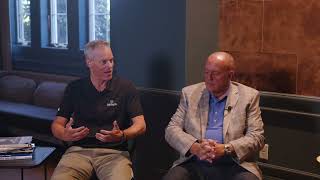
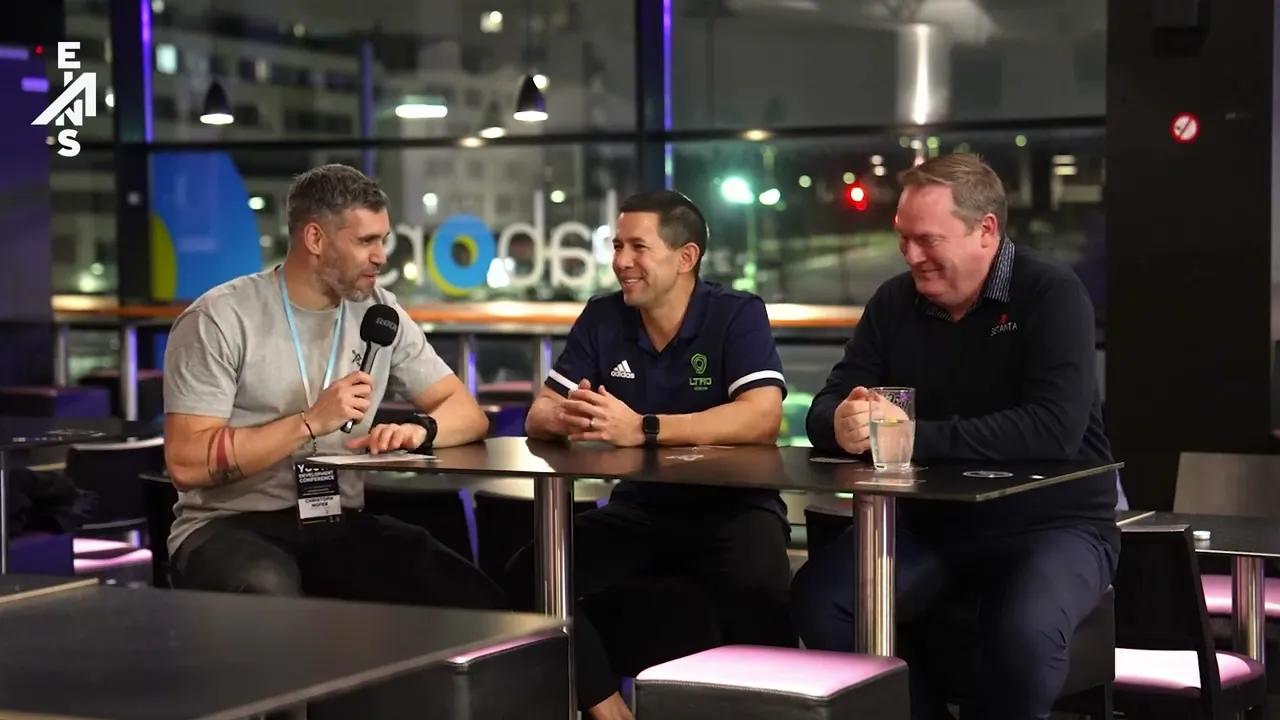
all right welcome to the round table of the youth development conference here in Vienna um next to me there is des rein and Mike young we already have the nearly half of the conference behind us now we are just going to talk about a few things before we start um I would like to hand over to you to give a short introduction what are you doing currently at stanta and with LTD network and to give our viewers a short insights into your daily business I'm Mike young it's been a pleasure to join einsa coaching at
this conference it's a very switched on coaching body and a pleasure to speak with Dez and uh welcoming group uh I am representing LTD Network which I feel in my biased opinion is probably the greatest resource on long-term athletic development available in a publicly accessible way on the internet for certain and perhaps everywhere we have brought together practitioners from a variety of fields and experts ranging from Sports Science and women's coaching and growth and maturation and development in a variety of different sporting disciplines and provided their intellect and knowledge in a manner that is available
via a monthly subscription uh perhaps the Crown Jewel of the LTD network is really our ypd model which was developed in conjunction with several experts in the field and led by my colleague and friend James Baker and it is I believe the most well full encompassing model that exists for El long-term athletic development so this uh conference theme is something that we're very passionate about and uh very appreciative that we were given an opportunity to be a platform and I can represent LTD Network thank you hello my name is des rein I'm the director of
coaching and performance at Satanta College I'm really looking forward to this event I I really do love everything about long-term athletic development it's so important it's so complex it's so interesting um short background on myself um in Satanta I lecture I support national government bodies I do a lot of varied things so in Satanta we deliver degrees certificates Masters we also work with uh World Government bodies like World rugby national Governor bodies and sports clubs prior to that um I worked in Arsenal Academy as head of sports medicine and athletic development for nine years so
I'll be sharing lots of insights from that and we'll be having lots of discussions about that and prior to that I worked in Irish Rugby again in academy um for many years so looking forward to asking everybody here lots of questions and being asked hard questions by everybody here thank you very much um yeah we will um hear a lot of growth and maturation tomorrow from your from your side that's looking forward to that so um I said I already told you um I will gonna ask you a few questions and I will start with
something um Mike used as an analogy a few times this uh this day like he said when you're on a deserted island what would you take with you and I'm going to ask you this question uh now like when you're going to a deserted island and in this case you're only allowed to use one of the coordinate conditional um yeah skills like strength speed agility Mobility um endurance which would you take and why should I I would I would start with you Mike sure so these are always quite polarizing questions but I do think they're
very valuable and that they are a thought experiment that makes us really create a hierarchy of what we value in our training or anything else it's a little bit of a trick question I'm not and I will provide probably a little bit of a trick answer if I were to uh I have been given about 10 minutes to think this over and I know that I can distill it down into three potential options one of them would be a loaded Sprint so a resisted Sprint uh another one might be a clean and jerk and another
one might be a full range of motion Squat and the reason I would choose these is because they can all check multiple boxes if I do a loaded Sprint I will certainly see uh uh High neuromuscular output I'll be able to develop power output I will have some bleed over in terms of this adaptations to even strength it is perhaps the singular most singularly active activity that we will see in sport in terms of the motor unit recruitment likewise a clean and jerk is somewhat of a cheat code for exercise we're involving a hinge we're
involving a squat we are involving a lunge in the catch position of the jerk we're certainly involving bracing anytime we're holding the bar either overhead or at shoulders and we have uh of course a press with a jerk so it's technically on paper one exercise but it's really at least five different movement patterns so that might be one of my answers and then the final one might be a deep squat again I've taken I realize I've taken three items to my deserted island but a deep Squad I think checks the Box in ways of mobility
and strength and uh you can even do that activity in particular for conditioning so I could do a deep Squat and really work on lumbo pelvic hip mobility and Ankle range of motion I could do it heavily loaded and work on muscular strength I could do jump squats and work on power output or I could do high repetition sets and it perhaps it's an aerobic stimulus or a anaerobic glycolytic type stimulus so the commonality I'm not sure which one I would choose of the three is that I'm trying to check multiple boxes with one of
these different stimuli and uh trying to find a way to be the most efficient with my singular task so difficult question I don't have it down to one but any one of those would be a suitable option for me on my deserted island that's now I'm going to stretch the truth in this story so you never let the truth get in the way of a good story so this island has a young under 14 team on it and I have to train them now there's only so much room on my board so I don't want
to put in dumbbells or discs or bars because I want my my comforting things like like my TV and whatnot so my laptop and and so on so I'm going to think now I've got to train these people on this island I can only only do one thing now and I'm going to dive into my philosophy and everybody should be aware of what their philosophy is in athletic development everybody should be aware of what the culture's philosophy is who you're working with so My Philosophy is very centered around movement so I'm going to be a
very broad answer one thing movement so these young people in this island when I'm not on my laptop or watching TV I'm going to be training them and they're going to do great small ability and stability they're going to do wonderful movement challenges they're going to be such efficient movers in terms of how they run sidestep change direction they're going to if they do play a game let's say they play tag rugby and they're going to be have amazing game speed and then I don't need any equipment I can make them stronger with their body
weight and whatever else is around the island and which maybe gone up in High Reps and I can do a full athletic development program with just one word movement is off and I've lowered the room on my boat to bring other things thank you yeah as you said very polarizing um I expected not that good answers but very good very good answers anyway so thanks for that so um coming to a question are something which um hasn't been discussed this weekend yet um it's about load management we all know load Management in um Pro Elite
um adult athletes looks like analyzing GPS data using Wellness questionnaires to figure out how they feel um and and so on yeah the the list is is long but in youth athletes It's Tricky simply nearly no one uses GPS in in 11 years old so you don't have the data normally we talked about that um poly supportive um um idea to to educate those um those young athletes means that they are moving in so many different ways uh what is your what are your thoughts on load management um with youth athletes so the club that
I work with uh does attempt to do load management with some of their players they run into the same issues that you have mentioned I work with the pro side of the club but the club is quite large and does have an academy that goes from around 11 years all the way up through the pro level uh they have access to the best GPS units available however they don't have the Staffing necessarily to look after all of it and even if they did it becomes logistically very difficult to get clean data to cut the data
to analyze the data so it's problematic on many of the levels that you already talked about even before we collect that data my issue with this would be that we could be collecting the perfect data set within the session but at that age and demographic we can't control so many of the other variables so I've come from Sports where as a coach I can control all the variables sports like Olympic weightlifting and track and field and the coach is both the snc coach as well as the sport coach oftentimes I can control all of the
variables I don't even need a GPS to tell me what we did I have it down to the meter of how much we've sprinted in team sport your your data that you collect your heart rate data your GPS data your Wellness tracking even that is a very granular look at what is happening on the larger scale right if someone had a you know worked out on your worked out on their own if someone had a very stressful day or fight with their spouse or partner these are effectively data points of Life stressors that are not
collected by my GPS or heart rate by my perhaps even my my Wellness questionnaire so that's in an adult population when they live a relatively stable lifestyle and but with children I think we run into an even more chaotic issue of how to why would it what would be the value in tracking when you don't know how much your sample size is representative of this load in totality and I I asked that as a legitimate question because would it be worthwhile to track this 90 minutes of their day that you have them and have no
idea what's occurring during the rest of their day are they participating in a very active physical education class in the States you do Club as well as your high school perhaps training um maybe you're doing multiple Sports so there's players who are competing in two sports at the same time and if all I did was track what I am doing it might not it might be very misleading in fact I remember actually taking a site visit to Arsenal and I was actually told very similar I believe it was Perry uh who said we have kids
and we don't know what they're doing they might they might have three hours of practice and sometimes they might practice with another club or uh and it we do collect all the data but it is very difficult to make sense of it sometime so I am legitimately unsure uh but I would be I would say that it is uh difficult and perhaps less necessary in the in a youth population to do anything more than an honest review of asking how athletes are feeling and trying to get some wellness and Recovery metric the actual output metrics
I think would be very difficult to do unless you could somehow Encompass the totality of everything they're doing on their daily day-to-day basis yeah great overview and one of the big challenges in developing young people and that's exactly the way it was in the academy in arsenal we had them for four or five times in the week depending on the age group uh we measured everything with GPS down to under 13s uh but we didn't have when they were in school we didn't have when they were away from us that we didn't have when they
were playing in the street so massive challenge that's why I always say uh developing young people is so much harder than the adult first team sport that's easy you got one coach you got 22 players use athletic development you've got many teams many stages of development many coaches many parents many other sports many other studies way more complex you have to be way more skilled to work with young people than the adults I'm tongue-in-cheek there a little bit but I when I moved back to Ireland we started looking after a county team so that's an
academy now there's 300 players in that so I had to make a decision do we give them Diaries do we give them an app do we measure get them to write everything down well no because there's only nine of us and we're not going to look through that we're not gonna have the time to look to 300 so we're doing a novel thing we basically had a workshop with the parents and I went through watch out for this be careful of that this is okay is there one day off in the week do they have
time for free play out in the street do they do three activities in the one day if so talk to us and the players are there as well it's a parent and player communication do they have two matches under one day do they have two high intensity activities side by side on the days are they doing too little do they have more than one day off in the week where they don't do physical activity come and talk to us other sports introduce us to the coach of the other sport so so far that's been going
good anytime there's a a flag like those things the parent or player come to us and we modify and we're very collaborative in spirit so if there's another team that is training on the same night as us on another night GO train with that team and make sure the week is balanced we don't want to say stop training with that team at under 14 level Etc so it's not perfect but it is having something in place is as educating and it is supporting and it's built around trust and respect now the other thing just adding
on to it don't get too caught up in the numbers I say this to younger conditioners all the time it's wonderful GPS is wonderful data is wonderful Readiness to train is fantastic but it's it's like what Mike says what else is going on in their life it might not be physical activity I was at the a concert last night and I saw a person playing uh the violin for two hours God that was intense but I'm sure it wouldn't be looked on as a physical activity in some ways but wow that was intense to be
able to do that um that evening so these young people will have other activities like that going on that is more than sport that has to be understood and measured and and finally I can go on but a little story about uh GPS during the covert I had to take a few return to play sessions important we measure the the load in that the distance covered the high speed running and I was given the session plan I spoke to the physio yeah okay how fast how long what distance no problem so me and the player
went out we did the session it was an easy session he couldn't go over 70 it was only 45 minutes long I did the session with him he did his runs it was on his zigzag stage and then we were going in and I went ah I forgot my jacket run over there and get my jackets please so he ran down the pitch to get the jacket and he ran back and suddenly there's 200 meters extra high speed running high speed running is over yeah it's not that high speed but because it was absolutely not
relative and we came in and then suddenly the young conditioner comes to me cheers what did you do you did 1100 instead of 900 meters high speed running and I went come here player come over here physio come over here player are you sore tired no no what do you have tomorrow school no activity sound see you later physio you okay with that I didn't go over 70 45 yeah okay thank you see you later and then I spoke to the conditioner it's okay he strided the length of a pitch got my jacket stride the
back no one died hamstrings are okay he's nothing tomorrow don't look just at the laptop look at the session with me and look at the player is is important when measuring Lord sorry I'm going on but I can't do that no good inside it's good and a good point like this is something you wouldn't count as a part of this of the session but when you only look at the data it's part of the session and no one would care if someone would have seen this like yeah um cool um my next question is about
um LTD so there's conferences about youth conference it's called youth conference um and um LTD is a term which is used often simultaneously to Youth and we know and you told us this in the beginning of your um of your talk that this is a LTD is there is no youth in long-term athlete development it's like it's a never-ending story isn't it so a very important part although in youth training is gamification yeah getting um getting um buy-in from the athletes so my question now is and I want to start with you that's now um
which part does gamification um have or which how important do you think it is with older or even adult players when they are used to do this in the youth yeah yeah sure it's it's an important thing uh I think they the implementation I've been doing for a good while the terminology gamification is is relatively new and there's some good resources out there uh the magic Academy we had them speak um Russell Earnshaw speak with us and he has cards and it's best for adults and young people on how you can turn the session into
a game a computer game type things so for sure it's important for the adult players they like to have be energized they like to have fun they like to be competitive they like to to have competition scores to to play against each other similar with the young people but what I will say have a method behind it have a reason for it coach within it don't just let something happen organize lesson out and let it run its course why are you doing that game yes there's laughter there's fun but what are you trying to achieve
in that section players will never realized maybe that you're trying to achieve that are you working on a side step in the middle of that are you creating a game where there is a lot of sidesteps are you given feedback to players during it and similarly with adults now you have a very impactful session now you have a very a session with high buy-in because of the gamification because of the enjoyment but there's purpose behind it there's there's meaning behind it and what I will say to people is if you haven't already start reading around
the area of skill acquisition it's a language that's coming into the industry very quickly it's a profession that's coming into the industry very quickly it's new in terms of the science there's there's fair amount of research out there more needed but we as as professionals be it Sports scientists or student conditioners need to be able to work with these people and a lot of what they're sharing is game-based approach is is like gamification is that language of learning through the game so a very important area but I'm digressing again I shouldn't it's about energy given
energy to the players given something for the players to look forward to so they run to train and they don't saunter and walk slowly to train it and it's the same for adults young adults youths children yeah great answer there uh before I go off on a tangent I'll start with one and just follow up with what Dez was saying about motor learning and skill acquisition I had the luxury of having uh Dr Richard McGill as my PhD advisor and starting my company with a motor learning uh would be expert in Dr will Wu who
works primarily in the field of golf now but has worked across multiple domains and it is one of the most misunderstood but highly relevant Sports Sciences for coaches basically how well do you communicate to achieve an end goal I've heard a friend of mine once say that coaching is really all about putting an idea that is in my head into your head that's pretty profound uh if I see something and I'm trying to make that observation go from here to there and it actually results in movement how well can I communicate that what is the
practice design the environment the constraints my language my queuing my type of feedback timing of feedback all of that is really important so let me come back now and answer the original question of actual gamification of course can include levels uh of skill acquisition into it I think it's really important uh again have a purpose to why you do it I mentioned in my presentation this this afternoon that we never want to do something and take the emphasis off of the physical development objective of the session so whether that is including a sporting task or
the ball or some form of game play but also I think it's really important that at the end of the day sport even at the highest level should be fun it should be fun for everyone involved if you work in professional sport we sometimes come to think of it as a job but really Sports should be fun and if we can make the tasks associated with being excellent in your sport fun that's great if we can use those same uh those same techniques to achieve a better physical outcome like driving intent like making it accountable
like making practices more competitive then I think that can be useful so I've gamified sessions where we put out timing Gates to and effectively create little micro races of athletes against each other I've created uh gamification where we are using vbt velocity-based training metrics to compete against each other or uh obviously creating situations where athletes are forced to compete against each other or chase one another or tag one another and I think all of these are suitable for athletes of all ages it works really well in youth populations perhaps for a slightly different reason it
keeps them mentally engaged and can help you disguise the training as something that is truly fun but even in adult populations uh if there's nothing wrong with the training being fun and if we can use that same technique that makes it fun with making it more effective it's a win-win scenario thank you very much um you now said it several times fun which brings me to my last question um I would like to hear the funniest story you have ever experienced with a youth athlete um in the gym I have two now so I'm going
to be greedy so the first one it's a it's a player I I think I can mention his name I know I can because I'd be I'd be friendly with him no no in a different way more of an older Uncle type way because he's much younger than me but when he was 14 his name is Joe willick he plays for Newcastle United very very very good player and sold for the high 20 Millions uh from Arsenal uh so hugely talented but when he was 14 he was a late developer bored physically and and from
maturity point of view from a psychological I suppose you'd call it there was a gym session going on with the great party roach the coach that was is in Arsenal and the players were doing elbow Halls and there was pockets in the jerseys of the training tops and Joe while he was doing an elbow hold was reaching into the packet and eating the sweets I was looking and gone what is he doing eating the sweet so I didn't interfere I'd it's the coaches section uh I chatted to the coach afterwards can we have a chat
with Joe and Joe come here what are you doing there in the session oh sweet spot is better so I didn't test it out but apparently sweets taste better now we managed this appropriately we chatted to them you have to Tinker him he was a 11 12 year old hanging around all these 14 year olds we didn't want to be too hard on them there is rules and repercussions yeah he knew he shouldn't be eaten sweets in the gym it was quite funny to look at um and he learned from that but that was an
example of managing it appropriately to the stage of development making sure the player knew what was right and what was wrong and yeah it was quite funny watching amid sweets while he was doing a side elbow hold the other one I won't mention the player's name but we're in the gym in the older uh venue where the first team was so there was a first team player getting his massage from a massage therapist we were just hanging around and suddenly the massage therapist runs out the door and where where did he go so we go
over to the player and he went what's wrong there I thought there was something wrong and he said oh he just got engaged I went right well why did he run out I said I'd give him ten thousand pounds if he goes to Paris and kisses another girl under the Eiffel Tower so he did and he did kiss a girl of the Eiffel Tower he sent the picture and he got ten thousand pounds that's the crazy world of the Premier League uh so this was several years back uh I was training a group of higher
level bordering on Elite level youth swimmers so if you've ever worked with swimmers on their dry land training you know that they are the human equivalent of Fish Out of Water they are lack any significant level of motor control especially in the youth stages they glide through the water with significant skill and ease something that most humans could never do but if you put them on land they look like they would trip over their own feet so this is the context that we're working with this quite successful swimming group in handling all of their dry
land training we go to the pool we have access to a pool deck that has benches on it that we can use for some of our dry land training some bands some light dumbbells that kind of thing so it's full gym but we can make do and provide a good resistance training environment for this group as I mentioned there are already at at their best uh what might be lovingly called a motor they don't have the best coordination as a group but there are some individuals within this group that were really really lacking so I
remember one day we are doing bench dips so imagine the feet are on the floor the hands are on a elevated bench and it is a tricep and shoulder exercise it's not even quite like a a parallel dip it's a bench dip uh imagine that the the hips should drop down to the close to the floor elbow is flexing significantly and we push ourselves up some form of an upper body press highly relevant to swimming because it's a very tricep dominant upper body pull back in tricep so we're doing this large groups 20 to 30
at a time usually just one coach and it's rare that I'm actually coaching this group but for some reason I happen to be on this particular day um they're reasonably well behaved but it's a group of Youth athletes and I'm trying to coach the the bench dip and one athlete in particular is just doing what effectively looks like some a very lewd hip thrust so he's holding on to the bench pictured this in your head his hips are elevated and they're going up and down like this the arms are remaining straight no movement of the
shoulder or tricep none despite this being hilariously awkward movement I'm trying to keep a straight face and my first intuition as a coach is not to single this individual out but to coach as a whole I'll give cues to the group as a whole let's make sure we're bending our elbow let's make sure we drop your if you do this right your hips will drop close to the floor uh all of the action will occur at the elbow going through this Litany of cues some of them are externally focused uh your butt should run down
the side of the bench your elbow should point up towards the ceiling I'm literally exhausting all of my cues some of which are following best practices of motor learning and skill acquisition we've gone through several sets and this guy is still doing this pelvic thrust with a straight arm point I say bend your elbow and I'm kind of getting aggravated at this point and I go by and I tap his elbow he's still not bending his elbow and I this is a uh a group of 14 to 16 year olds thankfully they are higher level
in terms of performance and had a very hard driving coach because at that moment I lost my temper this is now five or so minutes on three sets into this uh multiple repetitions being ignored using best practices of queuing and feedback and everything else this is your elbow bend your elbow and that is what got it through to the kid everybody paid attention to me from that moment forward but everything leading up to that point was uh some form of highly inappropriate hip thrust mind you they came to dry land training also in their swimsuits
so if if you can imagine what it looks like to do a inverted plank hip thrust in a swimsuit 14 to 16 year old boy and it occur repeatedly after multiple attempts to correct the exercise uh you can see why it was a Tipping Point for my uh aggravation thank you very much for sharing I can I can imagine that and I'm not sure if I want to experience that as a coach I'm not not sure much funny might be a bit um dangerous for my career um thank you very much for that insights for
that very nice discussion we're looking forward to another day of um yeah practical and theoretical work with udas um thanks for uh thanks to you Mike it was a pleasure to have you here and yeah we will finish that day with a few drinks and chatting and yeah we'll see you tomorrow thank you