this is Perry Marshall I'm here with bill Jenkins and bill and I are going to have a discussion about information theory as it relates to DNA and design and biology and I would like to submit to you the audience that that this is an airtight argument for design and if you're skeptical of that claim then this is the right place and this is the right video to be watching and so bill and I are just gonna jump right into it and don't welcome thank you good to have you here back and so Simon I'm gonna
start with with the with the fundamental argument okay and it's a it's a three point syllogism and it goes like this it says one DNA is a code okay the pattern and DNA is a code number two all codes we know the origin of are designed okay and number three therefore DNA is designed and that's the argument and what we're gonna do in this next a little while is we're gonna back this up we're gonna back this up with factual information and I just want to say at the outset everything that that I use to
back up this argument is non-controversial peer-reviewed scientific literature that's been out for for the most part 20 30 sometimes 40 years okay there's some more recent books than that that I'll use but there's still I mean this is very old very well-established stuff so shall we you bet let's go okay so so let's let's start with let's start with the first the first part of this DNA is a code or specifically the pattern in the is a code okay well why do we say that well you know first of all you know DNA is this
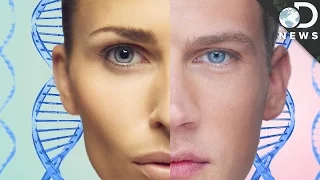
helix and it's Chi it's got what we call base pairs in it which are guanine adenine thymine and cytosine which is a four letter alphabet and and so a strand of DNA in your own body has about three billion of these letters from one end to the other and it codes for and I use that word very deliberately it codes for everything that all the instructions to build a human body okay so it's it's 750 megabytes of data it would fit on a CD if you put it as barely just barely if you if you
put it if you put it in that format and so and so the a C's GS and T's are arranged in triplets where three in a row makes something called a codon which which then is is translated into an amino acid which is then translated into a protein okay and so when we say D in as a DNA is a code here's what we mean by that is we have this string of a CG T's and they are they are translated into amino acids which are then converted into proteins and this all goes on inside
themselves yes so when DNA is read and a cell grows from the instructions in that DNA it is translated to amino acids according to table which I will talk about okay and then the amino acids are translated into proteins okay and so so for example GGG codes for glycine okay an amino acid called glycine ay-ay-ay-ay-ay for example codes for lysine okay and you can look at any biology book or any genetics book and it will explain this table okay and then there's a much more complex table which I won't go into that creates specific proteins
based on combinations of amino acids and so this is like going from from you know ones and zeros to letters of an alphabet to words and sentences essentially as is what's going on there and so and so this if you if you read this book here it's called information theory evolution and the origin of life by Hubert yaki he explains in Chapter five why the this process perfectly matches the diagram of a communication system which I am drawing right now which is encoder code and decoder okay and Yaqui explains that that the process of going
from a CS and GS and T's they get encoded into amino acids and decoded into proteins that this is a communication process okay now this process was discovered in 1953 by Watson and Crick and they're all you know Fame guys who cracked the genetic code okay this process was defined in 1948 by a guy named Claude Shannon and he wrote this book the mathematical theory of communication which is arguably the most important book paper probably ever written in the field of Electrical Engineering this book made the modern communications age possible this book to find things
like well how many bits can you send across a wire and how much how much redundancy do you have to have in the signal if there's noise and how much like if you've got a telephone line how much data can you squeeze through that telephone line so you remember 56k modems well that was as much data as you can squeeze through a phone line and if you wanted a faster internet connection than that then you had to do something different in this book to find all that stuff so are we good so far good and
this is this is my I love this topic