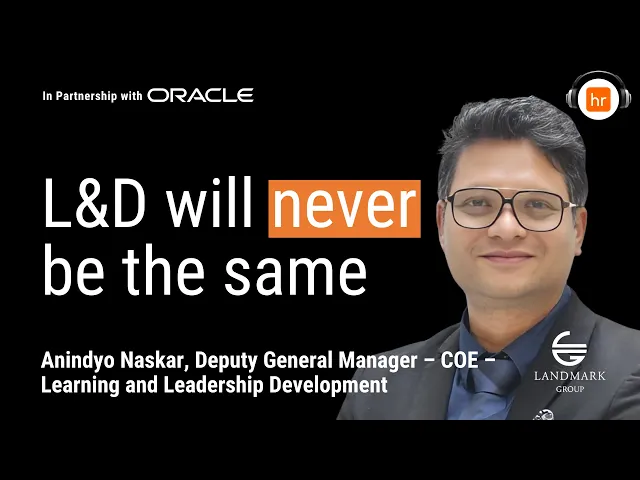
just prior to the covid people were more focused on the work the worker and workplace but with Future Ready organizations I think the challenge is completely different we are actually looking how do I futurize my uh work how do I personalize my worker and how do I humanize my workplace I I I guess HR needs a larger role to play in making organization future ready and definitely whether you call it recruitment learning Talent uh leadership engagement uh I think it needs to function together in order to bring that context [Music] back Andy welcome to the
show how are you I'm good Chris how are you it's been a while how long has it been actually because you can't you joined us on the panel a while back right like is yeah yeah I I I think about about two months three months now oh okay time flies really fast where where are you where you where you based at the moment yourself I'm currently in Dubai I work out of uh Dubai and uh yeah it's a beautiful city amazing people and uh a great place to stay yeah how long you been there now
uh I've been in uh the B for almost seven years now wow in the region about uh 16 years so yeah quite quite an understanding of the Middle East yeah you are that long and uh have you still have you gotten used to the Heat or you never will get we are almost like living you know in the heat every time now even in even in the winter right it's basically still hot uh yeah means uh we hardly get two to three months of winter but it is it is it is like Christmas for us
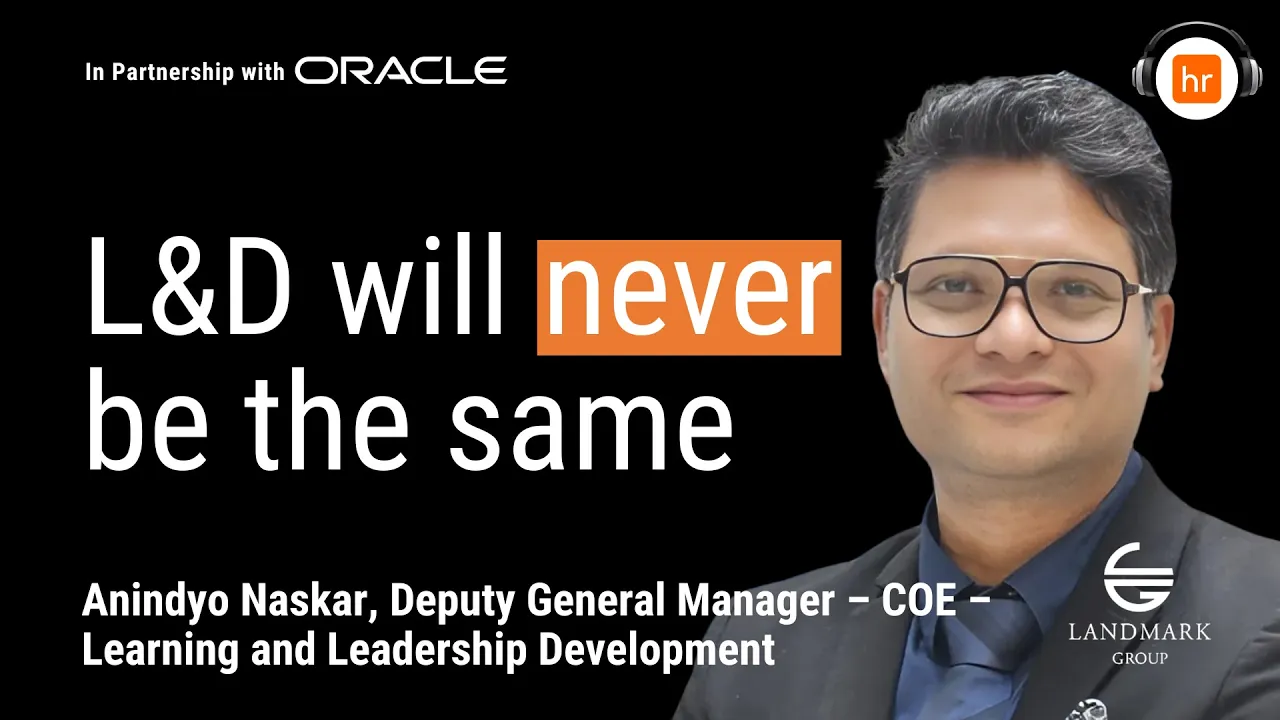
uh before we jump in uh and tell on a little bit more about your background and your journey to where we are now and your current role in your in your organization at Landmark group uh so uh currently I look after the learning and leadership development for the landmark group I am based out of UAE uh a little bit about landmark group we are about uh uh one of the biggest private Middle East retailers we operate out of most of the countries out of GCC and I'm responsible to look after the learning and leadership development
for the group and this entails across all retail office function and Warehouse so uh yeah means interesting portfolio to be in uh uh my background is I have been in Learning and Development for almost 20 to 22 years now and specifically in the areas of capability as well as uh Talent uh that's my core uh I've been in uh specifically in retail industry to be honest and that's where U my Niche lies uh and uh my interest has always been uh development using different uh techn techologies to develop uh using different methodologies to develop and
I think uh we are trying to really change people's lives and their careers by doing that initially to my before to my career I uh was into sales but that's for a very short stint and uh then I moved into learning as a full-time role uh apart from my education qualification which is based into masscom journalism I have also done my cipd I last year graduated out of uh a course from nairod and I University uh which is the gldp the global leadership development program for uh Chief learning officers and con yeah it's been quite
a journey I think yeah well it must be quite fascinating because you've seen the full journey of Learning and Development from in-person classroom learning all the way through to now now we're talking about AI right so you know it's it's almost it's hard to comprehend when you think about and I think we are blessed to be living in this time honestly yeah because we we've actually TR and I do not know when the transition happened Chris you know when did we actually move from uh just very focused instructional red training uh during covid to digitize
the complete part and now we are actually looking more into a complete part which is Technology based peer based social based learning and based on that the preferences of Learners have changed the preference of um the workplace has changed so uh if I just look at the way it was pre pandemic before the covid and the way we are doing it now I think organization are more agile they want to be more future ready and this is called out again in as inure and lingon reports that uh just prior to the covid people were more
focused on the work the worker and workplace but with Future Ready organizations I think the challenge is completely different we are actually looking how do I futurize my uh work how do I personalize my worker and how do I humanize my workplace I I I guess HR needs a larger role to play in making organization future ready and definitely whether you call it recruitment learning Talent uh leadership engagement uh I think it needs to function together in order to bring that context back yeah they're also inter I love the way you made the distinction between
those two is and but part of that and it needed on one of the questions we had here was it requires a quite a big mind mindset shift right could you talk to that a little bit more so I think it so the mindset shift uh when we when we talk about it I think we always talk about it from a Leader's lens or from a people's lens I think it's a higher in order I think it's the organization lens first that you know uh we need to make it future ready and therefore this is
the critical mindset shift we needs to which need needs to happen uh in my opinion and in my experience mindset shift uh between a front line and a middle manager cannot happen if the mindset shift has not happened in at the organization level or at the leader level I think we are pretty good at that and we make sure that any kind of mindset shift which requires it requires awareness one it requires where are we going what are we heading towards why are we doing to uh rather how are we doing and what are we
doing and the why starts with thinking about uh why are we doing it where it is going to take us and therefore uh you know the mindset shift starts from there and mo once the organization is aligned leaders aligned I think people um managers just follow through that so yeah so mindset shift is really really critical to make these Mak make these changes uh I can give you a small example so traditionally we work out of of of of of a country which also has a second language which is Arabic most of our content which
we deploy design are mostly in English because uh that's how the uh Partners would work for the last couple of years this was done in a very traditional way uh using traditional agencies Partners translators and all of that we've recently deployed a AI technology which actually not only translates but actually can translate voice modulations videos uh content by just a photo so you can have my photo I can just talk about how do I make an omelet and that entire content can be replicated in alic in various forms so I think the technology uh plays
a critical role I think somewhere there needs to uh really have the awareness that this is possible I think it's a lot to do with awareness and the moment you have awareness I think the shift is already happened yeah there's awareness and there's also fear yeah right so because you know I speak to recruiters and I speak to L&D teams and some of their employees are almost hesitant to adopt this technology because they feel like they're going to be replaced so we can't yeah you know like that's something I hear and and and the truth
is some people will be right you know like you don't need a whole team of translators now like that's gone correct like I mean there's no way like there's no easy way around that the technology can do that what would take typically weeks and months can be done instantaneously we spoke just before the show right we I showing examples of Atlas being able to do that so the harsh reality is there will be roles that um that will be obsolete but on the other side there'll be other roles that they now you'll be able to
unleash the full potential of that role because AI can do a lot of that heavy lifting a lot of the administrative tasks so you can spend time on the most the meaningful work if that makes sense correct and Chris I I think uh you know a lot happens with fear psychosis and feared is what we uh your your brain tends to adapt first yeah for good for good reason because we used to needed to be able to survive right so so so so for good for good reason as well yeah and it's also preparing yourself
that how can I actually levitate to the next level how can I ingest something as a which raise my awareness and I can do better uh I think a classic example is that while AI would take X millions of jobs which which is been talked over all over I think what it also promises into 10x millions of jobs it's going to create yes exactly yeah uh so are we actually looking at uh a replacement of task versus amplification of task so it's just two mindsets which is just there are we looking at just being um
speed up the process or are we looking at the efficiency of that speed as well so there are two two School of thoughts to it uh are we looking at only a automation or are we looking at automation with quality or automation with very very specific Intelligence on you know how a process and a task is done better so I think again it it boils down to all all all mind mindset shifts and and how you are actually taking a technology or even a Content or anything yeah when you think about sort of the AI
Revolution what are the things that you're saying that leaders are getting wrong okay uh first of all I think uh uh one of the thing which uh leaders are are tend to understand with AI is that it might solve all your problems uh it might increase uh the speed of a process um but I think we need to clearly demarcate what is a generative AI doing and what is a specialized AI doing and and we need to be really really clear about the process uh ultimately uh you know it would whatever inputs I would give
the outputs would I get through probing and through prompts is what I actually get now someone can like write a prompt much better than what I do for a Content or for any content and someone might not I think just blaming the technology itself is not good so uh one is how are you evolving with the technology how are you uh internalizing the technology in order to get better outputs that's the first one second while generative AI will give you very very specific Solutions A specialized AI which is currently used in medical domains used in
coding specialized AI uh you know domains would actually give you much more predictive and prescriptive results than a generative EI so I think whenever we are looking at any AI solution or any technology uh one of the thing which we really need to understand is that what kind of prompts I giving what kind of expectation I have from that technology and am I moving towards more of a generative AI than a more specialized AI because there are specialized AI but we we tend not to use it because currently it's evolving it is actually uh you
know evolving by the years but what we tend to do is that if that technology does not work for us I think giving up is not the solution working with the technology is what we need to do so everybody and I've said this before everybody wants get me a better best use case for a AI where I can do videos and I can actually validate a Content or I can um I can actually uh do a Content which is validated with different links uh while the use case is is great and you have multiple use
cases no one wants to be the use case no one wants to try it and try it and I love that yeah Everyone likes the use case but no one wants to be the use case what so when you um brought like one of the challenges you know obviously we we're going into many organizations with Atlas co-pilot and part there's kind of two challenges one is you're right finding the right use case and then the other is finding the person who's going to lead that and be the use case right and and that's sometimes where
I'm getting blockers what was the use cases that you and the team settled on because you mentioned you've implemented an AI what was the use case that you went to the team with and said this is what we're solving for specifically okay so Chris again it's a failure story good that's what we learned the most that's good and and and the reason I I wanted to talk about this is that it's really really important and that that has actually formed the baseline or The Benchmark for us for what we are moving forward uh we we
we use a lot of mentoring and coaching methodology across our businesses to develop our our leaders uh one of the technology I would not like to name the company is we used the AI based uh technology mentoring app which helps us to do something very simple identify mentors uh uh look at conversations of mentoring schedu mentoring conversation and this all goes between the mentor and menting uh we don't we don't own the process because the process is very personal it's very relevant and it's extremely hyper-personalized to that person's development so we don't control the process
one of the thing which we realized that because of AI the quality of insights should be amazing and when we actually deployed the technology we were more focused on does the AI do mentor and mentee mapping and this is a typical use case we are talking about but over the last six to eight months when we realized that while the product is good at the front line I think what we were really really focusing as an organization is the back end of how does mentoring conversations happen What were the kind of value of this conversations
and how is the organization heading towards what are some of the three or four indicators the app couldn't give us instead it was AI I do not blame the app I think also it is also the insights that we wanted to uh also understand so there are two learnings from it uh while AI is the buzzword understand what your organization needs and whether that technology is going to provide you with those insights it can be best to another company a versus to another company B so again I say use cases can be great for a
company a might not be great for me it's what you want to actually do with that technology so we've used a lot of and since then we try to uh look uh look at explore pause and reflect option so we explore a technology we then pause with it and say that how's this technology is going to evolve we we go and study a lot about the technology in in in global uh you know uh uh Global ratings like fos grid and all to see where that technology is right now and then we actually go and
explore the technology in Full full scale what we've also done Chris we also tend to do a little bit of competition of that uh technology to understand and then we actually take a uh take a you know a call let me give you a simple example we are exploring a specific technology in order to do uh content and do curated Journeys that's one of the technology we are exploring uh globally we have assessed more than 11 partners and those more than 11 Partners were again based on four scales what was the cost what was the
scale of operation are they present in Middle East and most important what is the next next Journey for the next three years so we've had our own way of understanding how does that and last but not the least does it solve the problem for me and if it doesn't it can be the best technology all the best with that it doesn't help us out yeah no I love that you got to really cuz you could solve a million different solutions and have a million different features right but is it solving for this specific problem um
that we're having and I love the fact that you ask about the future road map that's a really good thing for everyone listening make sure you ask what what what does that road map look like um and is it important for you that those companies also have flexibility to co-create and coll collaborate with you as opposed to here's our off the-shelf product good luck in terms of sort of building features with them or you know building uh as part of that process in terms of a collaborative partner as opposed to an off-the-shelf solution so Chris
we do not go with off the self Solutions all the best of luck to the guys who want to stick to off the self solution it's not going to work for you that was pretty harsh but I love it it's true it's true no but but you so you the answer is yes then you prefer to work with a company and and and and work specifically with them and Chris with most of the partners I think we do not squeeze them on cost we are we are we are okay with the cost I think what
we really really uh position is let's co-create because when we co-create we are actually having a a wide board where we can tell you what is our wish list and then we work with that wish list with their road map so we are also sensitive that some of these some of these companies or agencies are also evolving in the process and those evolvement requires real good funding so while we are parallell working with them we are also conscious of the fact that what's my need for the first year what is going to be my need
for the second year and what is going to be my need for the third year and then we co-create along with the partners some of these partners really really worked at scale and over a period of time before even we predict what's going wrong they are able to easily assess and now the the way we look at it they said no actually this is a great solution if I do this I would have another 10 Partners working with yeah because what you're most and then that's the kind of decision making from their point of view
same same for me right you know is this a feature that my other partners are going to want and and most of the time it is so I'm like obviously have to be careful I can't make everyone's dreams come true otherwise you get nothing done but most of the time in terms of our Integrations our road map that's informed by co-creating with all of the companies that we're working with right now which is really exciting as well um to be honest to be on to be on that Journey who did you one of the challenges
that many of our listeners are facing and I love to get your your advice on this is they're struggling to get the Buy in internally who needs to be in that room who did you engage in the business to to to get this across the line to CU you know many of them are getting blocked they have the money they've they want to do it this is not a money and can I do this is not a want or a uh do I have the money like you know I'm speaking to C love the product
Chris we have the budget and then they get blocked you know by someone or a function internally what who needs to be in the room to make this work what would your advice be to people listening so so Chris any such technology uh we generally work with a working group and these working group are people who would actually essentially use the content or use the technology so and I'm talking it from from a center of excellence perspective where we have 11 countries we have 11 Brands you know just to name the complexity with a matrix
organization so what we do we actually take decisions as a working committee there is a project sponsor there would be a sponsor who would actually finally take a decision but that gets Amplified when six or seven business entities who would use it would come and endorse the fact and said listen I'm I I'm great I've been through the process I've seen the demos I have seen what the technology can provide and this is what's going to levitate our results from X2 why and we are very very clear about it and then that conversation actually becomes
very easy very fluid and and makes complete sense because generally what what what what uh uh what people tend to do or uh not not just typ casting it is that I have a I know the technology is good I know it's going to give me amazing results from my function for my role for my department but there is no alignment with other people yeah now when there is no alignment it might be the best technology but the vision is not clear with your stakeholders who are going to use the technology now everybody talks about
adoption you know the biggest word in Technologies adoption how are how are people adopting to it you do not need to go after adoption if at the onset you have clearly clarified the process that by doing this this is where we are this is where we want to move and the adoption actually then becomes seamless you would have Problem Child I think on the process it's just 20% when they see the other people into the bus they generally also want to catch the bus yeah no I love that it's alignment is a key word alignment
and creative working Council and do you have an AI eics Council as well do you have that set up something like that was that part of the saying Council uh as of now this is completely uh run by our digital teams we have our legal teams we have our um data Protection Team they're all they're all present in that conversation yes yes in fact when we actually look at a technology or we look at anything we actually go past them we go a really really right way of even U agreeing to some legal compliances which
is really really mandated like something like data protection you would never move into any technology without have having that covered yeah so that's that's one example of how do we want to do it plus the security within our organization I think uh is is clear so we do all these check and balances and all of these people are part of the conversation even before we put a proposal so you mentioned at the beginning then what is uh where do you see the future of the L&D function and and how you're leveraging this moving forward you
mentioned already a couple of use cases what are some of the other ideas and use cases that you and the team have specifically to especially in up a Frontline worker environment where you've got many of your employees in the retail environment you need a solution that can scale right um to to to meet them where they're at yeah so I think Chris two things I think first of all it's deathless workers uh the only only only Hardware access they would have have is the device so whatever technology you are getting into it has to be
SSO based it has to be single sign on you cannot expect them to go to Five apps Connect you're actually making their life more complicated uh by doing that secondly it all has to be in integrated into one text T the reason I'm saying that is that whether you have your email or you have your slack or you have your teams all of these text needs to be integrated with W so technology needs to make it easy for the user to use the technology that's the first thing we we should double we should double click
on that because I want to make sure everyone understands the the importance of that so the very first request we got to your point Chris I need this inside of my teams and I need it inside of my slack and I was like and because it needs to be in the flow of work you can't add another app you can't add another one on top of the I think the average employee has something like 20 something apps at work which is kind of crazy as well so that's really important whatever you choose that it shows
up in your existing communication tools in the flow of work because then they get used they actually get used um what you that way so good great Point uh secondly I think we are all very busy uh and and the the entire business environment is going to get busier so there is a requirement of actually identifying a learning time and we we we we are now trying to get to that but why is a learning time required because I think for an average learner to focus on anything or learn during their work work time actually
also commits to the fact that this learning is really important for you to perform in your job you cannot dissect both you want people to be capable and you do not want them to learn so one of the elements we look at is dedicated learning time the third element I think which is very very important is uh not too long content uh user generated content I think that's one thing which is really coming up we are trying to explore it but for example how do I run a cach still or how do I do a
VM in a store my uh person who's doing it at the front line they know better than everyone else better than anyone else so I think user generated content is going to be really really uh really going to amplify the game over the next few years but I think what's your content seat time is really important you cannot have a user generated content and the quality yeah it's it's like it's so cuz you almost want them to like selfie camera film this this is how you do it and it's like that's but then it's like
okay how long does that how if you have an update to that process but that content still in the system system how do you know that that's out ofd content so then it gets a bit it's a it's a tough one correct yeah it's a tough one and there has to be a validation process and then then it has to be a combination it has to be a combination of Blended learning I I guess but I think the last most important point which we are trying to focus a lot uh now is that training and
engagement cannot be two separate parts so while you're while people are actually uh uh going through any kind of intervention I think what follows through is the kind of Engagement you create around that content around that learning and it can be a reward and award mechanism it can be uh just engagement uh doing through a leaderboard but how are you actually creating a sense of uh uh competition in learning where Learners are learning fast they are learning through each other and there is a sense of purpose in all of that uh you know being done
at one time at the same place so I think we we are trying to really really look at uh not just learning learning but also on uh engagement and uh uh I think it all all boils down to uh what you're trying to do with that uh learning what's your results are you actually doing it for Pure Play capability development are you creating a succession bench are you actually creating someone to take on a new role or is it an event you are preparing for so it's the results which mattered and based on that you
according detailer make your uh methodologies yeah how is this change the type of skills that you're hiring in your team like for example I've seen many L&D teams that uh now have a prompt engineer in their team which you you know which is incred many HR leaders I speak to now they've got a dedicated they got you know they've got their workday agent they've got their visia agent they've turned on they've got they've turned on their service now agent now they've got seven agents they they have in their Tex de right and so they're like
we need someone whose dedicated role is to make sure we're overseeing this yeah and it's kind of like a half off HR operations and half having sort of prompt engineering experience to understand it's a very complete new set of skills that need to exist in the team absolutely I think one of the thing which we which we are really uh looking um in our portfolio is how are you actually managing your stakeholders uh because because that's critical it's like what content how do I prioritize my content uh what kind of content goes off the shelf
because we are in retail so the interventions are really periodic it's like very seismic to be very honest so it's really really every week every uh week falls through the month and so on and so forth so uh you need to be really really closer to your business in order to understand so more than more than having the necessary skills of training I think one of the thing which we are really looking is how are you actually managing your stakeholders so that's one part second how is your fluency to get adapted to any technology we
do not know what kind of Technology we'll take now and we do not know what kind of Technology we are going to take in the next three years but how good are you actually looking at technology uh there's a very funny way we do that we also look at um people who are playing games what kind of games they play what kind of levels they are in uh what do they like about the game what kind of content they look at the games it's it's it's a very funny way of looking at it but what
we are actually trying to get is how are they looking at the overall you know purpose of that of of of that technology uh third I think one of the thing which we really really started uh changing is how are they looking at data how are they looking at interpreting that data because for us that is mission mission critical how are they looking at uh consolidating a data at one end how are they presenting the data what are the insights and observations they are getting out of these programs and how does that shape up uh
we are yet not there Chris but we are trying to make a lot of um uh you know changes in this specific area apart from you being an amazing facilitator you being able to understand content yeah and yeah so I think these two or three skills is uh what what we are looking you being there yeah one of the most uh we we we've got kind of like these predefined use cases and predefined prompts inside of Atlas and one of the most used which you no surprise is data literacy yeah yeah so in the application
we can measure and see kind of what what all the questions that the HR leaders and their teams are asking a lot around data literacy AI of course Etc but that's kind of like in the top three the data literacy piece uh no surprise Chris one of the thing is that you know there's a lot of conversation and seat at the table seat at the table uh you know that conversation keeps on we still having that one after 20 years I've been doing it's still mushrooming I think the context is extremely simple actually uh talk
to the people who are sitting at the uh seat in their language and I think uh data is one thing uh which is very insightful it gives you very very predictive and prescriptive information if you are able to summarize that it it makes life easy for everyone yeah uh last question before I let you go because I could talk to you forever um I know you're still on this journey um um of the evolution of AI and the transformation but what what advice would you give to people that may be just starting their Journey what
would be your parting advice to them okay uh one is uh what looks good uh may not be good uh you need to analyze it from your business context uh that is the first piece so please analyze what is your business requirement and then fit the technology to the uh to that context do not do it the other way around uh that's the first context second if you're actually uh getting into uh uh looking at really changing the technology landscape please understand that in the next two to three years it might hit a plateau so
you need to really focus on what's the uh what's the road map of the development of that technology that is really really critical if you do not have the visibility of that road map you have bought a very expensive technology and you realize that in next two years the technology is not moving and that then the technology is of no use for you yeah third uh speak to a couple of your peers I think it's really important it's always good to Deep dive and check in if someone is using a piece of technology more than
what are the features benefits talk about challenges and support they required in order to you know look at it and how is it business relevant leave it with three thoughts only in this one yeah I love all of those and do you literally just reach out to people do you ask the vendor for referrals say hey who are some of the other customers I want to speak to them like how do you approach yeah just literally ask them yeah so I do a bit of both I try to First reach out to my network which
is fairly decent in in in in in LinkedIn and across I try to reach out to their Network to understand who's currently uh using a set of Technology uh second I also asked their um Partners uh to uh you know give me an overview but my first preference is reach out to people whom you know who are currently using the technology I think sometimes the partner they feed you the best ones right here's our most here's our most happy customers right so I love that's that's why I double clicked on that cuz I think I'm
happy you said it right you so don't be afraid to reach out to drop them a message on LinkedIn message your network people really want to help right so don't be afraid of like if you see those logos on the website uh of that partner you can just message those people on LinkedIn their heads of learning their HR team and say hey I'm looking to implement this what are your thoughts right you'll be surprised how many people come back to you yeah and Chris there is one one one thing which is really wored I used
to always uh get input from a peer like anybody who's ahead of learning anybody who's ahead of leadership development and when I used to get input from them it was like oh it's amazing the technology is really working fine I have now changed the entire context I said can you put me to someone who's actually running this for you yes because it's not them yes yes that's that's what I meant earlier right because I'm you know I realized early on I'm speaking to the chro every day obviously that's who I interview on the show typically
but I realized they're not the ones using it they're not the ones they're not the ones owning the process right so I had to kind of go down and figure out like who is the person who's going to be right you're so right it's a very different conversation versus having yeah it's great it's going well Andis it is a chalk and cheese conversation because you know it it's it's very very different you know because when you're actually using the technology up front you are really really you are it's open in front of you you know
what are the challenges you know what are the supports so that's one top tip I would really just don't get to Andy get to someone who's managing that for Andy yeah the vendors aren't going to like us now after but listen honestly it was great chatting with you I appreciate you come on the show and uh we'll do like a check-in in like in like8 months and you can tell us how you're getting on with abely yeah it' be cool to see the on both sides of that as well but I appreciate you sharing the
journey all always in Chris always in yeah thanks for coming the show thanks thanks a lot for this thanks a lot Chris [Music]