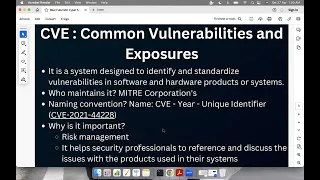
hi everyone hope you're all doing well welcome back to our Channel and in this video I'm going to discuss about cves or how our vulnerability is defined if you're watching the series from the beginning in the last video we have discussed about vulnerability management the six stage process which can help you improve the overall security posture of your Enterprise and in this video we are going to discuss about what our cves why cves are standardized how cves are defined resources you should refer to read more about cves let's begin when we talk about security products available all across the globe and I have to name leaders we have Microsoft Symantec McAfee and crowdstrike now there are many other security vendors as well but I am listing these to create a hypothetical example all these vendors offer different Security Solutions for all the digital States likewise identity endpoint or network but let's assume that I have a security solution from all these vendors and the purpose is endpoint vulnerability Management in this case as soon as I onboard one of my endpoint to these Security Solutions these Solutions will start highlighting all the vulnerabilities that exist in this endpoint but what we have to understand that if the endpoint has Windows 10 which is a Microsoft product how come these three other vendors know about the vulnerabilities that exist in Windows 10. similarly if I have an oracle application installed on this endpoint all these Security Solutions will start highlighting the vulnerabilities that exist for a specific build or a version of Oracle application but again the question remains same how come these four vendors know about the vulnerabilities that exist in Oracle product or application now this can only be possible if either all these vendors share the details of publicly known vulnerabilities of their own products with each other respectively or there is a standard which is followed by all these vendors to list and Define the vulnerabilities that exist the second statement makes lot more sense and that is exactly what happens there is a central repository which has the list of all the publicly exposed vulnerabilities found in different products and reported by these vendors and the list is termed as cve which stands for common vulnerabilities and exposures now this method of defining vulnerabilities has been standardized by miter and the link which you can navigate to check all the details is cve. miter.
org let me show you all this in action and then things will make a lot more sense so now what you see is one of my browser where I have signed into cve. mytear. org and I can just click on search cve list and I can type a platform name let's say I want to know all the vulnerabilities that exist for Windows as a platform and as you can see it is listing down all the vulnerabilities that exist now if I want to click on any one of them I will get more details in terms of what is a brief description about the vulnerabilities which were found and then a vendor specific article or link that lists down all the details that does include CVSs score what were the metrics that were calculated and what are the impact this is a very common practice that is same across all the vendors now what do I mean by this that I've shown you an example of Windows when we were getting redirected to msrc portal similarly let's say if you type here Oracle or any other name of you know any other product or any other vendor you'll get the vendor specific information so let's say if I search for Oracle then I'm getting all the vulnerabilities that have been reported for Oracle okay now let's say if I click on any of these and then again you'll see a similar description and a vendor specific link here you can see it is going to oracle.
com and then a specific subset of security alerts so this is all the information that you can refer to for a specific vulnerability altogether now there is one more aspect of cve and that is the naming convention cve you already know this stands for common vulnerabilities and exposure then the year when this vulnerability was actually reported all the documentation was made publicly available and then this is a number which is actually defined by CNA which is termed as cve numbering Authority okay so this is a naming convention which is used for cve cve common vulnerabilities and exposure the ear when it has been published and the number which is generated by cve numbering Authority so that was all about knowing how cves work let's talk about a quick summary of what all we have discussed in this video we have discussed about cves resources that you should refer to in terms of reading the documentation regarding cve which is cve. mydia.