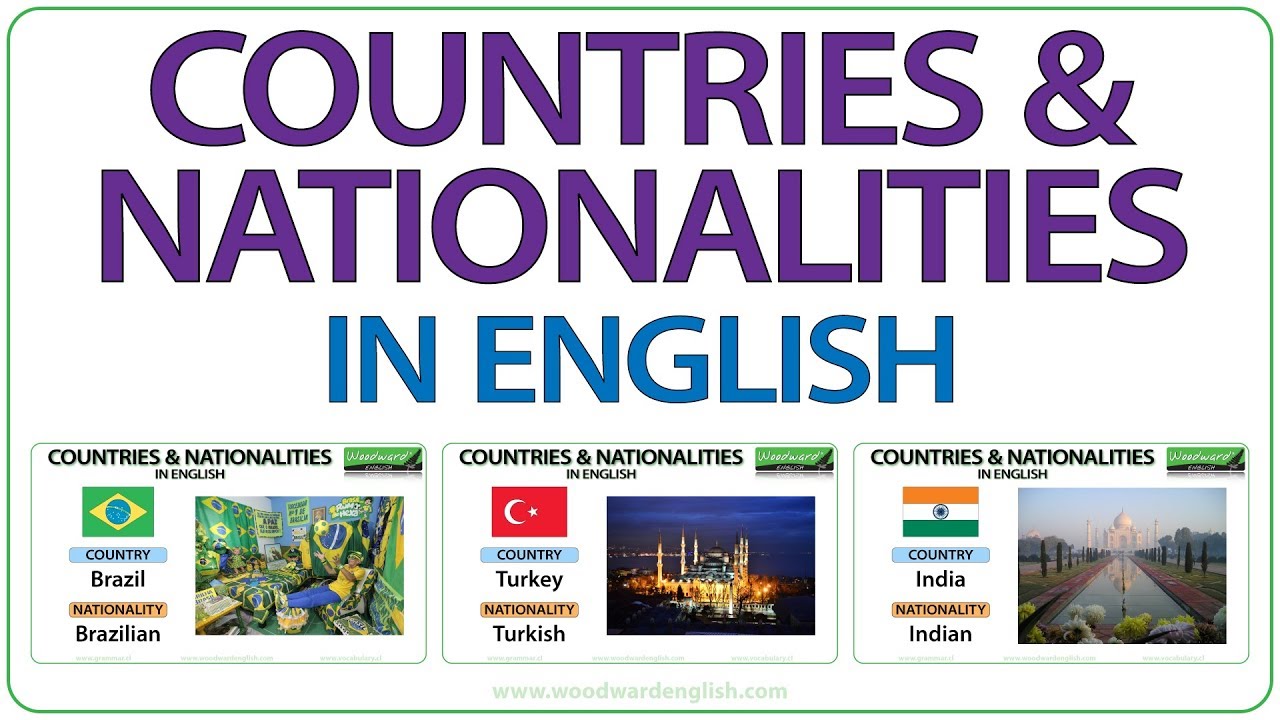
uh where are you from me i am come from italy no wait i'm come from you either say i am from or i come from you don't say i am come from no but you know what let's talk about countries and nationalities hello my name is maddie from poc english if you want to talk about a country a nation or a region you need to know three things the first thing you need to know is very simple the name of that country for example america italy france spain these are the names of different countries the
name of the country is very useful if you want to say where you are from for example if someone asks you where are you from you can say i'm from and then the name of your country i'm from italy i'm from france there is also another question that somebody might ask you where do you come from where do you come from and then you can say i come from plus the name of your country i come from italy i come from france i come from spain so if somebody asks where are you from you say
i am from if somebody says where do you come from you say i come from now pay attention a very common mistake sometimes students mix the two structures together like i am come from no no no no no you don't say i am come from you say i am from or i come from or maybe even in the question form some people might say where are you come from no my friend you should say where are you from or where do you come from so be very careful where are you from i'm from italy where
do you come from i come from italy all right what is the second thing you need to know to talk about a region a nation or a country well that is the nationality adjective for that country for example america is the name of the country and the adjective is american italy italian france french spain spanish these are the adjectives if someone says where are you from you can use this structure and say i'm plus the adjective of your country for example where are you from i'm italian i'm spanish i'm french i'm american okay hold on
a second there are three options you have to respond to where are you from you can say i am from plus the name of the country i'm from italy you can say i come from plus the name of your country i come from italy or you can say i am plus the adjective of the country i am italian so don't say i am from italian i come from italian or i'm italy i'm italy you can also use the adjective of a country the nationality adjective to talk about the things which belong to that country for
example you can say american companies the companies that belong to the us you can say italian food the food that belongs to italy you can say french wine the wine that comes from france that is made in france or you can say spanish culture the culture that belongs to spain another use of the nationality adjective is to talk about the people of a country so you can say an american man an italian girl a french actor a spanish chef so you can use the adjective the nationality adjective plus a noun to say where something or
someone come from american companies companies from america a spanish chef a chef from spain when i was in america an american man helped me with my luggage when i was in america name of the country an american man a man from america helped me with my luggage look at this sentence is it correct italian are very sociable people what do you think no this is wrong why because italian is an adjective right and after the adjective we need a noun italian what are sociable italian people are very sociable or look at this one french are
really talented is it correct french is an adjective french what are very talented french people we need a noun after the adjective so if you want to talk about the people of a country you should say american people british people italian people portuguese people brazilian people but it's like people people people people people people is there a way not to say people actually that is the third thing you need to know if you want to talk about a country a nation or a region how to talk about the entire population of a country how to
talk about all the people of a country as i said before you can use the adjective plus the word people and say english people english people are very talented but if you don't want to use the noun after the adjective you can do one thing remove the noun and put it that before the adjective so instead of saying english people are very talented you can say the english are very talented very interesting right but pay attention you cannot use this formula for all the nationalities you can use it for nationalities that end in sh like
english or spanish those ending in ch like dutch or french and those ending in ese like chinese japanese for example you can say spanish people are very hardworking or the spanish are very hardworking dutch people are very punctual or the dutch are very punctual english people love drinking tea the english love drinking tea japanese people have a very healthy lifestyle or the japanese have a very healthy lifestyle so you either use the adjective plus the noun or you remove the noun and use the at the beginning however you can only use it for the nationality
adjectives ending in sh ch or ese but what about the rest of them for other countries you can use the plus plural noun so you should basically add one s to the adjective to make a plural noun for example italian people or the italians german people or the germans american people or the americans pay attention if you don't use that s it's wrong you cannot say the italian no you say the italians for example italian people love eating the italians love eating you cannot say the italian the italians love eating american people love camping the
americans love camping now to sum up look at this table the first column is the name of the country the second column is the adjective and the third column is how you can talk about the entire population or all the people from one country now the first group spain adjective is spanish england english britain british wales welsh okay france french the netherlands dutch the name entirely changes china chinese japan japanese and portugal portuguese portugal portuguese pay attention to the pronunciation as well now all of them belong to the first group and if you notice they
all end in sh ch or ese so if you want to talk about the entire population of a country of this list you can either say adjective plus noun english people or remove the noun and use the at the beginning of the adjective with no noun like the english the dutch the chinese the japanese the portuguese the british now look at group number two italy italian brazil brazilian america american belgium belgian norway norwegian if you want to talk about the entire population all the people of these countries you either use the adjective plus noun nor
vegan people italian people brazilian people or you remove the noun and use their in the beginning plus s to make a plural noun the italians the brazilians the belgians the nerve agents the americans and group number three these are irregular nationalities and countries number one thailand the adjective is thai and if you want to talk about the people of this country you say the thighs the second one is switzerland the adjective is swiss and to talk about the people you say the swiss number three finland the adjective is finnish and if you want to talk
about the people of this country you say the finns poland the adjective is polish and to refer to people you say the poles scotland scottish the scots sweden swedish the swedes turkey turkish the turks if you want to have the list of these countries and nationalities the summary of this lesson and every other lessons that i post on youtube for free what you need to do is to give me your email address but how go to my website pocenglish.com the link is in the description of this video click on the link go to my website
type in your email address and click subscribe i will send you the lesson summary for free and that's it guys i hope you've enjoyed this lesson and as a challenge let me know where you are from and tell me a little bit about your country in the comments below see you [Music]