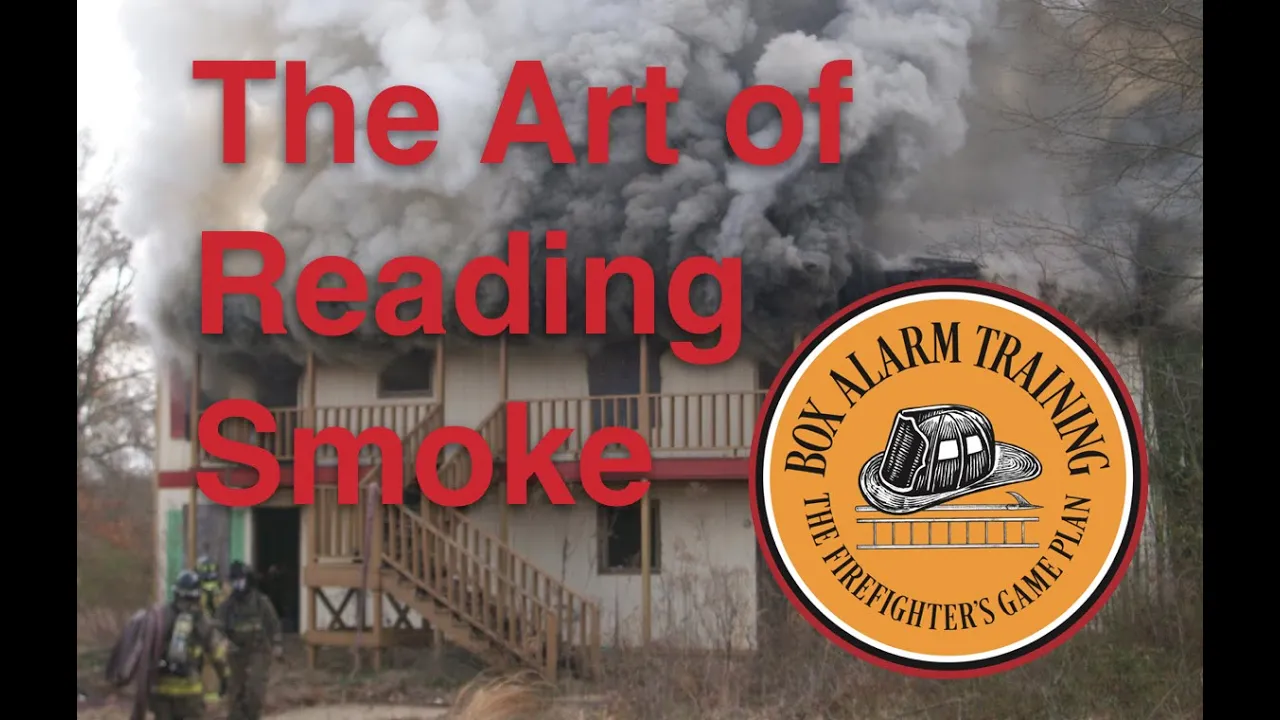
your head your head hi my name is Matt hle with Ms firet today we're going over the art of reading smoke when you arrive on scene at a structure fire it is extremely important for you to note the smoke conditions that are present not only at the beginning of the fire but also throughout the whole duration of the fire being able to read the smoke gives us a lot of information about the fire like the fire's location the fire load what type of materials may be burning in the structure and also where the fire is
going before we talk about the art of reading smoke we need to understand what smoke actually is smoke is a byproduct of combustion it's something that we can see and we can use it as a clue to find the actual Target that we're looking for which is the fire itself it's very important to remember that the smoke is not the target it's only a clue that leads us to the actual Target smoke is made of many different things has a lot of toxic gases in it like carbon monoxide phene gas it can have a lot
of things in it that can hurt us really really bad but it also has uncomplete particles of combustion when a fuel Burns it very rarely Burns all of the fuel that's there it most of the time has fuel that's left over like when you burn a campfire there's fuel that's left over and it didn't completely burn it it's not a clean burn it's a dirty burn so smoke particles that are left up inside of the smoke during a structure fire some times there's ignitable material in that smoke which can cause a smoke explosion so now
that we know that smoke is flammable or could be ignited let's do a little experiment with a candle to show you what it actually is you can try this at home if you take just a normal household candle uh and light the candle and have a lighter readily available when you blow the candle out the smoke that's released off the candle has incomplete particles of combustion in it you can ignite the smoke with a lighter and then the smoke will re ignite the candle showing you that smoke is actually ignitable in this experiment we blow
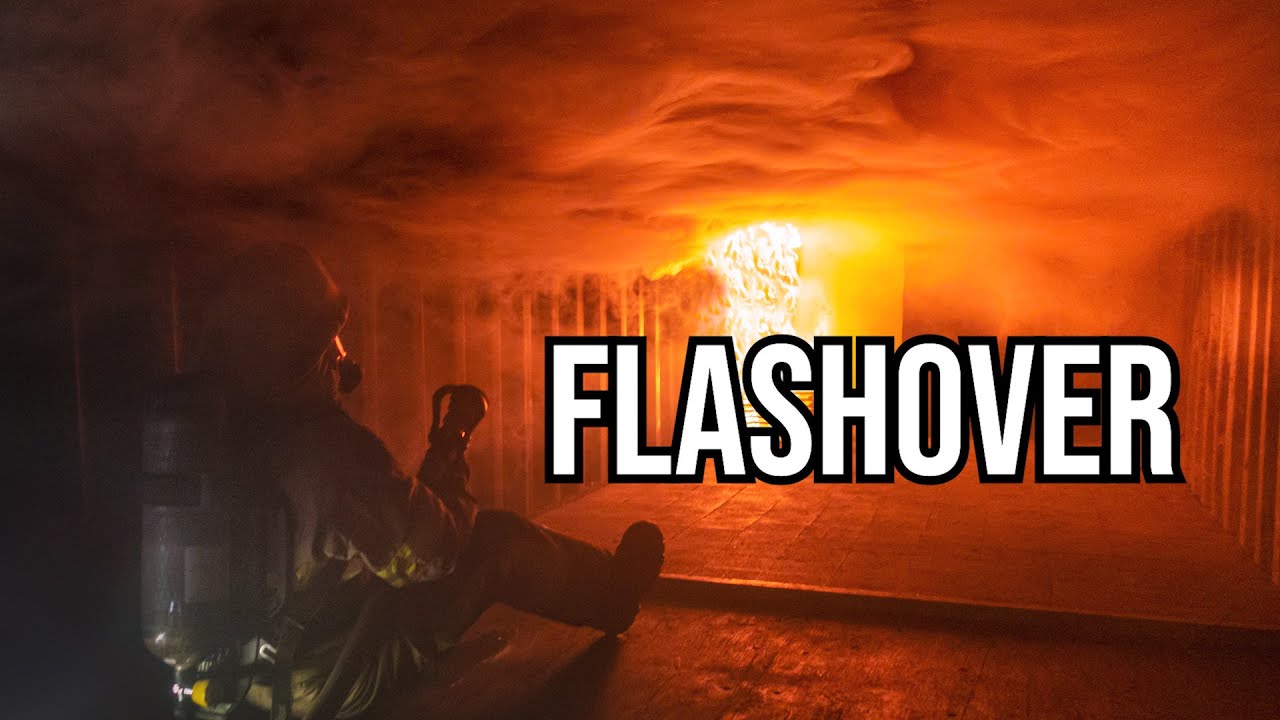
out a candle which releases a trail of smoke we then ignite the smoke which reignites the candle the reason for this is because there are incomplete particles of combustion in smoke that means that smoke is ignitable when in the right concentration we can also use smoke to tell us a lot of things about a structure fire especially very dangerous conditions like backdrafts and flashovers a backdraft is a fire that has the fuel and the heat already inside the structure it's basically a fire that has been burning and it's used up its amount of oxygen inside
the structure the Heat and Fuel are already there and all it needs is an introduction of oxygen in order to start a very volatile explosion or fire Backdraft conditions when they're present you will see very dark yellowish Brown smoke you'll see a pushing and pulling of smoke inside the structure and the reason for that is because the fire is actually fighting for oxygen it's trying to pull a draft through the house and suck air into the house so it can get oxygen to keep burning other things might include crackling of Windows popping of Windows uh
smoke stained windows that means that we have a lot of heat inside the structure but no visible fire is present if we see visible fire in the structure that tells us most likely we don't have a danger of Backdraft conditions because the fire has oxygen readily available to it or else we wouldn't see the fire burning in order to prevent backdrafts we simply ventilate up high uh we don't want to open up a window or pop a window or pull a door open cuz that introduces oxygen down at the fire's level at the seat of
the fire and we'll have a very volatile fire uh when that happens you could even possibly have an explosion so we're going to go to a High Point and ventilate the fire vertically most likely if you can't ventilate it vertically you try to ventilate it horizontally at the highest point that you can okay another experiment we can do is something to show you what a backdraft is visually uh we're going to use a plate of glass some matches and some liquid to show you how fire can create a draft and actually suck up contents um
like the liquid into a glass if you can imagine the glass being the structure or your structure fire house uh you can basically see that if it's a good tightly sealed structure we have a potential for Backdraft because it doesn't have a breathing ability there's no way for that oxygen to get into the glass so we're going to ignite a fire put a glass over the top of the fire to let it smother it out we have Heat and Fuel there but we do not have oxygen cuz we're smothering it and the fire is basically
going to fight to get oxygen it's going to try to pull every bit of oxygen from underneath the glass to be able to keep burning and when it does that it's going to suck the liquid into the class in this experiment we're igniting matches that are on a plate we're going to take a glass and we're going to try to smother this fire with the fire starving of oxygen it's going to try to pull oxygen from underneath the glass which sucks the liquid off the plate into the glass in theory we could actually have a
backdraft if we timed it just right to introduce oxygen to that fire because the fire would already have fuel and heat it just lacks oxygen so how do we read smoke there's a few things that we look at when we're reading smoke to tell us what's going on one is the color of the smoke color of the smoke can tell us what type of products are burning a lot of times nowadays we have a lot of polymers Plastics different types of hydrocarbons a lot of different synthetic materials that are burning that release very very dark
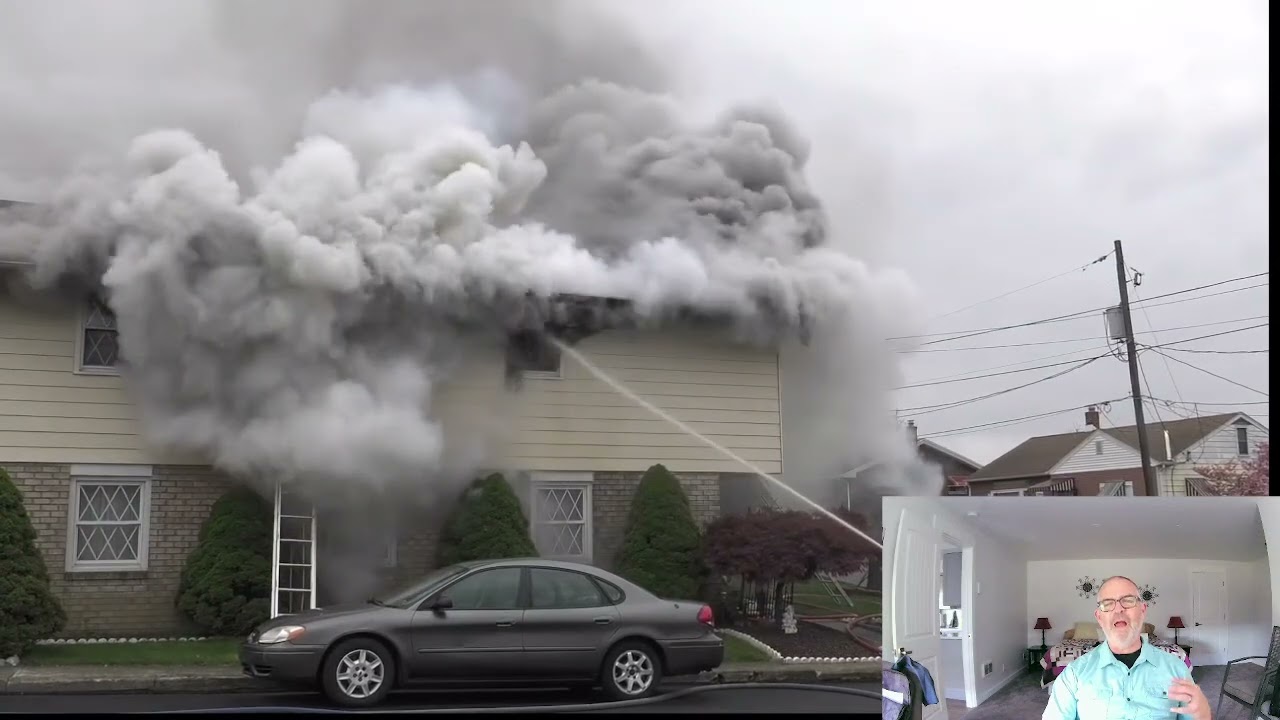
type smokes uh class a combustibles ordinary combustibles are generally going to be feel lighter color smoke we also look at the volume of the smoke basically how much Smoke's coming out if we don't have very much smoke coming out then our fire load is probably not very high if we have a whole lot of smoke coming out then that means because the fire is generating a lot of smoke it has a lot of material that is burning we also look at the velocity of the smoke basically how fast is a smoke moving out of the
structure we can look at it as being pressurized or laminer laminer is going to be a very light moving smoke barely moving out of the house it tells us that it's a compartmentalized fire probably just some contents burning it hasn't really gotten going yet pressurized smoke lets us know that the fire's generated enough potential inside the structure that when now we have pressure differences in the structure uh basically it's creating its own atmosphere inside inside that structure so where we're getting a lot of pushing and pumping of smoke lets us know it's under pressure and
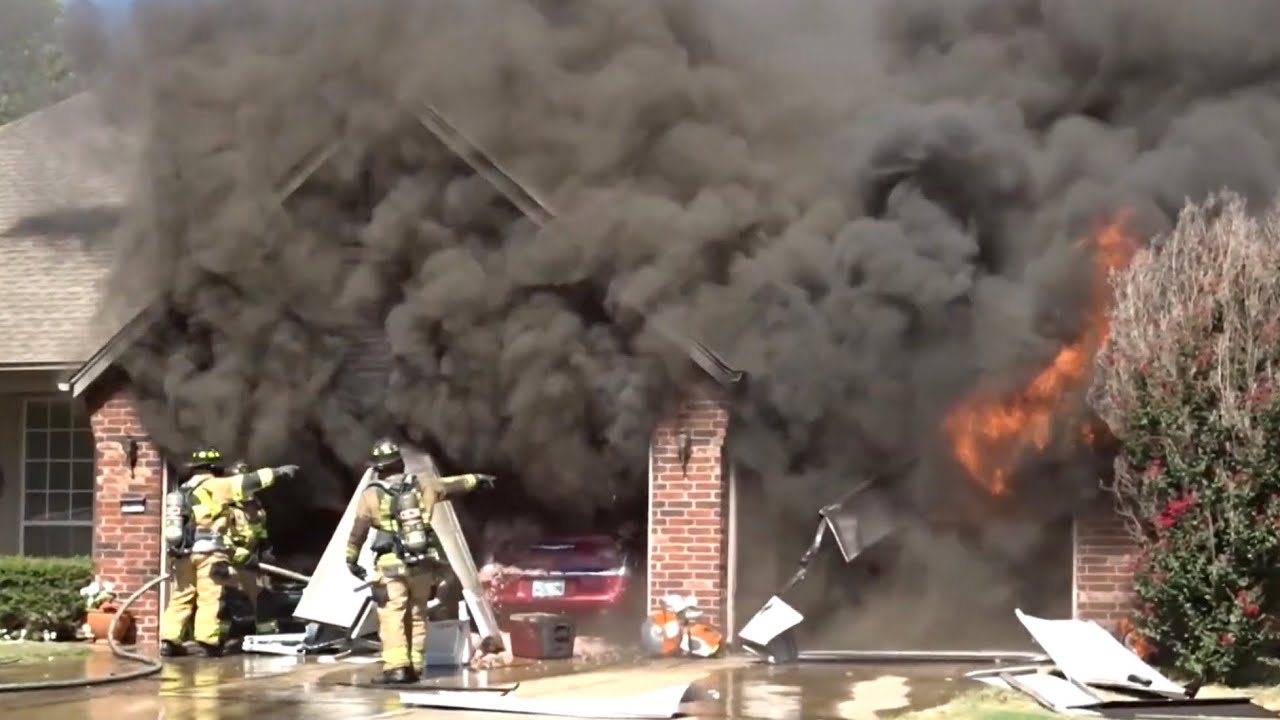
that the fire really has a lot of lot of energy behind it in this clip we have laminer smoke flow which is a very low velocity smoke flow this tells us the fire is in the very early stages and because of the color of the smoke we can tell we most likely have class A Products burning we don't have very many synthetics and the contents are probably the only things that are involved right now now notice the difference in color velocity and volume of the smoke we have a darkening of the color the speed or
velocity of the smoke is picked up and also we have much more smoke showing from the structure now you can see there is a little bit more pressure behind the smoke this would be categorized as a pressurized smoke if you look closely towards the charlie delta corner of the structure you can see there's some fire coming out from around the corner this is actually a window that is ventilated and the fire is burning out the window if you noticed our smoke flow is starting to change because of the ventilation of the fire we are losing
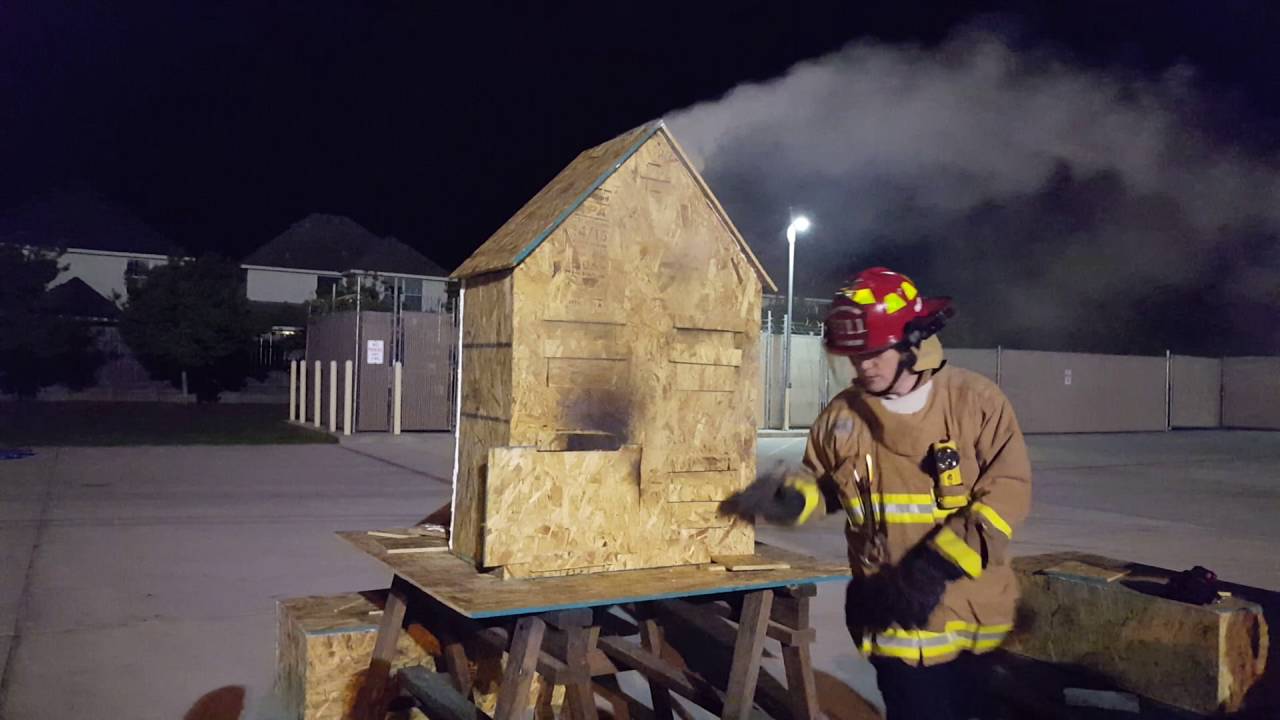
our pressure behind the smoke our velocity behind the smoke and our volume behind the smoke the Fire or the smoke rather is becoming much more laminer in this clip I want you to notice the very dark smoke of the top portion of the doorway this is known as the thermal balance that smoke is very very hot in the upper atmosphere of that room if we went into that structure fire with a power cone or fog pattern up above our head we could displace that heated gas back down to the four with us now notice the
smoke its color its velocity and its volume we have a good bit of fire going and it's producing a lot of smoke at a high velocity now you can see see the fire's naturally vented itself through the Gable this is going to change our smoke conditions very much because all that pressurized smoke now has somewhere to go now you can see after the ventilation smoke com pressure the color the velocity has all changed I hope some of those experiments and video footage helps you understand how to read smoke if you have any questions just write
us or comment on the video below and we'll do our best to answer your questions thanks for watching






![**EARLY ARRIVAL - HEAVY FIRE in Taxpayer** FDNY Battles MAJOR 4-ALARM Fire in Bronx [ Box 2297 ]](https://img.youtube.com/vi/yx9Y9YEH1uc/maxresdefault.jpg)