Percentage of people that watch Truth Unedited come away thinking that Jesus is not God. Anyone that thinks that Jesus is God is embracing a Greek philosophy. The Greeks did not come up with this; so he is just clearly mistaken about that.
More to the point, he is wrong and will lead people astray. Do not listen to Truth Unedited. Why?
Because he simply does not have the truth about the most important thing, which is the identity of the one who has come to save us. The Greeks did not come up with this. In the last video, we began to discuss the doctrine of the Trinity.
I gave my point of view; many agreed, many disagreed, as expected. The thing is that I believe that among the many who disagree, there are some who, no matter what I say, are hearing in defense and are not trying to really understand what it is I’m saying. So, those people I can’t really speak to; they want to just disagree, and there’s nothing I could say to them that would get them to understand what it is I’m saying.
But for the others who disagree, I believe that many do so out of a lack of information, and I believe this lack of information is crucial if you are going to understand this topic. There are people who flat out say that they disagree, that Christianity and the doctrine of the Trinity are not inspired by Greek philosophy. The Greeks did not come up with this.
You see, I’m so happy about the way our Father orchestrated all of this because if you really are paying attention, you can better discern for yourself. People who speak through arrogance and pride will say something is not true just because they themselves have not studied it. Look at how people speak.
This is a comment on Instagram: this man writes, "The goal is to lead to the discrediting of the Trinity because, in Ron's view, it is rooted in Greek pagan philosophy," which honestly is not true in the slightest. Now, this man is a senior pastor who wrote this. Do you see how easy it is for people to say something is not true regardless of the amount of evidence that proves them wrong?
They will discredit someone based on their lack of understanding instead of trying to ask questions and understand the person's point of view. The Greeks did not come up with this. What’s worse is that when you correct them, they won’t even stand corrected and humble themselves.
They’ll just ignore it and go to something else. So, when dealing with this topic, for everyone who says what I’m saying is not true, wouldn’t the proper way of handling it be to ask me questions to understand why I have come to this conclusion and then research the things I have brought up, if you are not aware, and then discuss it? That is the proper way of dealing with subjects like this.
But no, people just say it’s wrong, and they hope that the person making the claim can’t back it up. That the Trinity is a doctrine of men and is completely centered around Neoplatonism? Well, I and many others would disagree.
Well, I praise Yah for equipping me to expose the arrogance and pride of Christians that keep people trapped in falsehoods, all because they don’t want to dig deeper into their understanding. It’s all being exposed, and I’m backing it up, so let’s deal with it. We’re going to dig into it now.
As we go into this topic, I must warn you that this is not a simple subject. Greek philosophy can be quite confusing, and I apologize if I lose you or confuse you while explaining all this. Understanding their philosophy is not more important than understanding that it is philosophy.
It has nothing to do with our Father, but in order to prove these points, I must go into the philosophy. So, we will start here on this topic: the divinity of the Messiah. This is one of the things that people were coming against me with hard, like, “Oh my goodness!
He’s denying the divinity of the Messiah! ” People believe that denying the divinity of the Messiah is denying the Messiah himself. What is divinity?
Divinity is the state or quality of being divine. To be divine is to be of, from, or like God or a god. The word divinity is directly derived from the Latin word "divus," meaning of or belonging to a god.
The origin of the word "divus" is originally linked to the Greek word "theos. " The Greek word "theos" means god. It all goes back to the Greeks.
The concept of divinity or God-like quality has roots in ancient Greek culture and language, and this was a major mindset and way of thinking of the ancient Greeks. The Greeks studied divinity, not the Hebrews. Let us be clear that the Hebrews were never in search of trying to understand the divinity of anything; that was never their mindset or their way.
Why would it be? When understanding the Bible, you must understand it from a Hebrew mindset. The thing is that people hear that, and they take offense to it like it’s something bad.
But just review this: what other people on Earth were monotheistic and dealt with the Most High Yahweh personally? What other people were led directly by Him? If someone was talking about being led and guided by your parents, let’s say, but they never actually met them directly, but you have, wouldn’t your point of view matter when trying to understand them?
Obviously, it would. But that did not matter to the early church, and this is why the Yahudim were not included in the faith of Christianity. The Yahud did not try to understand the divinity of things because only Yahweh was divine.
Who they focused on, they did not have many gods, so that they needed to discuss their Divinity or not; they didn't think like that. They didn't have to. So let's talk more about Divinity.
The Greek philosopher Xenophanes is often considered the Greek philosopher who most significantly contributed to the concept of a unified Divine being, essentially starting the theory of divinity. Without getting all deep, the study of divinity is Greek philosophy. You're going to keep hearing me say this because this is the root behind Christianity; we cannot get around this.
The study of divinity is not from the Hebrews. As an early Church Father, Justin the Martyr, a pagan convert to Christianity, in his writing, Dialogue with Trypho, he writes on page two, "What do you mean? Do not the philosophers discourse entirely about God?
" He went on to say, "And hold their discussions invariably about Supreme government and Providence, and is not this the business of philosophy to make inquiries into the nature of divinity? " You see, this is what the Greeks do: they inquire into the nature of divinity. So just with everyone asking this question about, "Is Yahusha God?
" you should understand that this mindset comes from the Greeks, because they need to understand his divinity. I'm giving you a direct quote from Justin the Martyr: "Is not this the business of philosophy to make inquiries into the nature of divinity? " So when you're inquiring about the Divinity of something or someone, this is the business of philosophy, not according to the way of the Hebrews.
This was not a concern for the Yahudim; they never spoke like this. So what we're going to do is document all this. We're going to start a list of points of evidence, and let's just put this point as the first point in the list of evidence of the doctrine of the Trinity being rooted in Greek philosophy and being a doctrine of men.
The study of divinity originates from the Greeks, and the business of philosophy is to make inquiries into the nature of divinity, as spoken by Justin the Martyr in early Church Fathers. So let me clarify this, because I think it's important that you really understand what it is I'm communicating here. Everyone has been taught to view this subject in a certain way, and because your mind has been set to look at this in this one certain way, you can only look at it through these lenses.
But what I'm asking is that you review the lens that you're actually reviewing the Scriptures through. Let me explain. You see, though I have said repeatedly that I do not know the Divine relationship between the Son and the Father, and I have said I don't believe that we need to know, many people disagree.
The question, and the point that I'm asking you to consider this through, is what mindset are you asking this question from? What I'm about to show and prove is that there was not a clear consensus on the Divinity of Messiah before the doctrine of the Trinity was solidified. I need you to understand that now.
Let me say it like this: could anyone question that Yahusha is the Son of God? Absolutely not. Why?
Because the Scriptures many times clearly define Yahusha as the Son of Elohim. Second thought: we know our Father is Elohim because He says it many times, "Yahweh your Elohim. " There are no questions that can make this debatable.
But guess what? Even though so many of you seem to feel like you know Yahusha is Yahweh, this was not something that was agreed upon before the doctrine of the Trinity was created. Understand this: this was not something that the apostles ever focused on.
When did you see the apostles discussing the Divinity of Messiah? You didn't. The question about Yahusha being God is not something discussed in Scripture; it is an argument that was discussed by the early church fathers who needed to understand this.
They wanted to know whether he was God. My point that I'm making is that this is not a point made by the apostles; this was a question from the early church fathers that was later answered and later accepted. The mindset of the Hebrew apostles did not consider this because, no matter what, they worshiped Yahweh.
It's really important that you understand this faith and the proper reverence that you should have towards Yahweh. You should go back to the Book of Job and look at how our Father spoke with Job when Job and his companions were trying to speculate about Yah. In Job 38, then Yahweh answered Job out of the whirlwind and said, "Who is this who darkens counsel by words without knowledge?
Now prepare yourself like a man; I will question you, and you shall answer me. " That's Job 38:1-3. Then Job answered Yahweh and said, "I know that you can do everything and that no purpose of yours can be withheld from you.
You asked, 'Who is this who hides counsel without knowledge? ' Therefore I have uttered what I did not understand, things too wonderful for me which I did not know. Listen, please, and let me speak; you said, 'I will question you, and you shall answer me.
' I have heard of you by the hearing of the ear, but now my eyes see you. Therefore, I abhor myself and repent in dust and ashes. " Job chapter 42, verses 1-6.
That's just a brief excerpt, but Job and his sorry friends were speaking for Yahweh and rationalizing Him based on what they thought, and Yahweh was not happy with it. He does not want us to treat Him this way. You see, so many of you are so confident.
. . But unless he has spelled it out directly, you should never speak about things that he has not declared; and that is what I'm trying to say.
In proper reverence for Yahweh, he would have to say it directly: "Yahusha is Elohim," or Yahusha would say, "I am Elohim, the Most High. " This is the way that you know this doctrine is true. This has to be the level that you take the word through; it's about respect and honor to Him.
I mean, what if your rationalization is wrong? What if the divine relationship between Father and Son is too incomprehensible for us to imagine? What if you're wrong?
Do you ever want Him to feel that you don't have proper respect for Him? That's why I don't make assumptions and use scripture as a puzzle that I'm solving. I just believe what it says, and I don't get all deep like these pagan converts did.
You must understand your influence. You see, the other nations had other gods, and they never learned the true reverence for Yahweh. That Yasharel was chastised many times for throughout the scriptures: only Yasharel served the one true God, Yahweh.
And so, it matters if this thought about the divinity of the Messiah originates from the apostles or from the early church fathers. You will see without a doubt that it was the early church fathers—the pagan converts—who never dealt with monotheism. It was they who inquired about the divinity of the Messiah, and they did that because that is what the business of philosophy is.
So the main point I'm saying is that this question about the divinity of the Messiah should not even be a question. We worship Yahweh; He is the Father. This is what Yasharel did, and this is what we do.
This never changed for the apostles either; they followed Yahusha and were waiting for Him to be King, and they knew He was the Son of the living Elohim. This is what we are told to believe. The children of Yasharel worship Yahweh, and every last one of us needs to get this right.
Our goal is not to figure out the divinity of anything else, because we are called to worship Yahweh only. This question about Yahusha being God does not come from the Hebrews; it is a mindset that comes from the mind influenced by Greek philosophy, taking pride away in whatever you were indoctrinated to believe. You must ask yourself: does the matter of the divinity of Messiah and the deity of Messiah—does this mindset come from the Hebrews or from the Greeks?
And if the early church fathers debated about this and were not sure, how could this be a salvation issue? This is extremely important; it's the manner in which you treat the scriptures. Do you treat it from the perspective of the pagan converts, or do you take it from the perspective of the apostles?
If this was what the apostles were concerned with, then there would be no need for a debate or discussion about different views, but you will see shortly that this is exactly what happened. There was nothing but debate about this; there were debates and discussions about the divinity of the Messiah. And so, by following this way of thinking, who is it that you're actually following?
You have to be sure you are not following doctrines of men. What I am making very clear to you is that this is all about the doctrines and the rationalizations of men. But let me continue.
Okay, so let's discuss how the doctrine of the Trinity came to be. Let's be clear that before the second century, there is no writing or evidence about the Trinitarian doctrine. This concept was first started by Origen, who was noted as the founder of the Trinity doctrine (Origen: 185 to 253 AD).
He was an early Christian theologian who blended Greek philosophy into Christian theology. He taught others to read the scriptures in an allegorical sense, finding the hidden meanings; to him, the Bible was to be explored as an allegory of hidden truths. Origen was the first Christian to speak of three hypostases in the Trinity and to use the term homoousios to denote the relation between the second of these hypostases and the first.
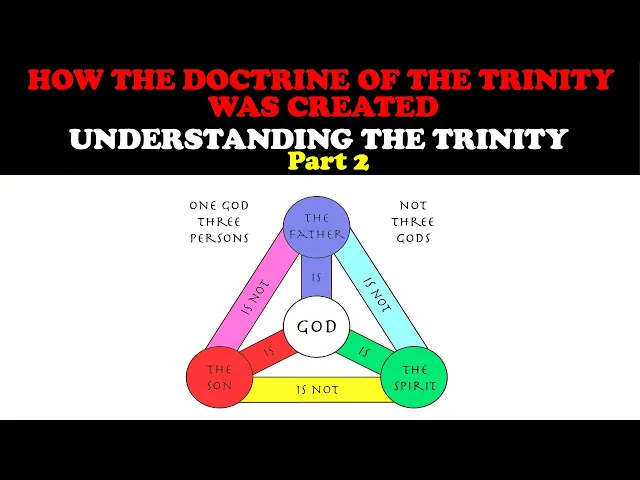
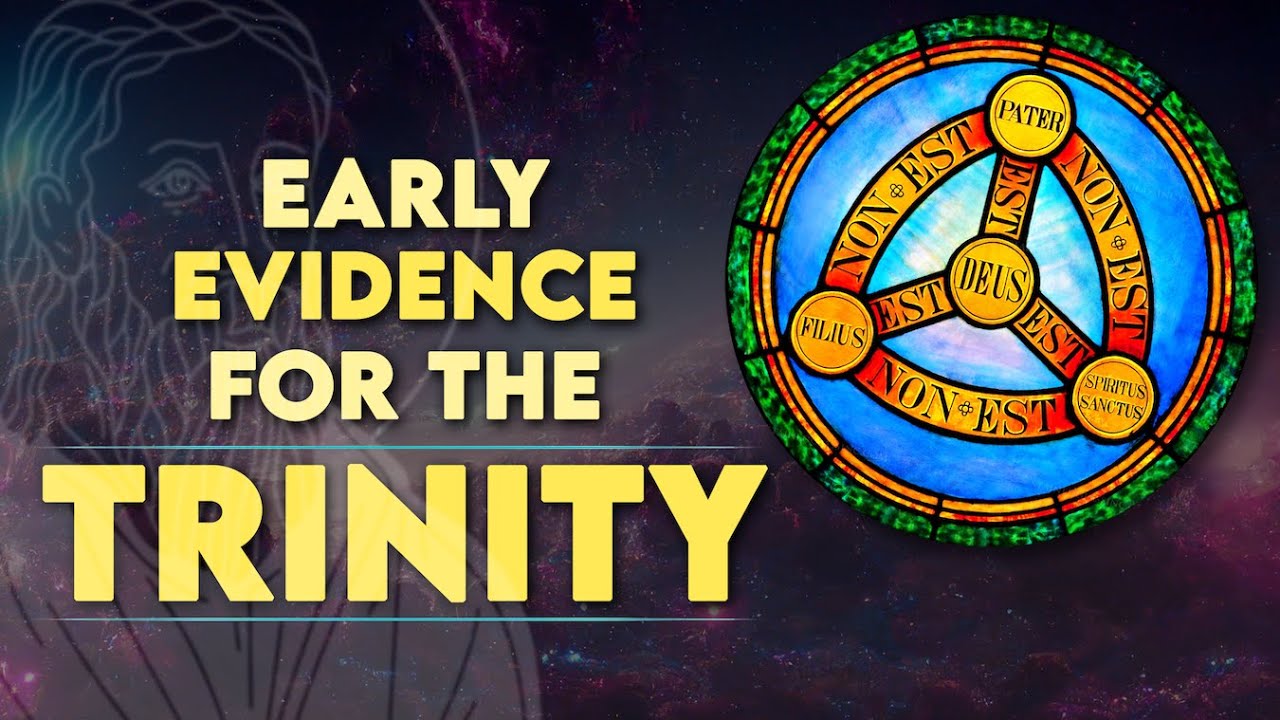
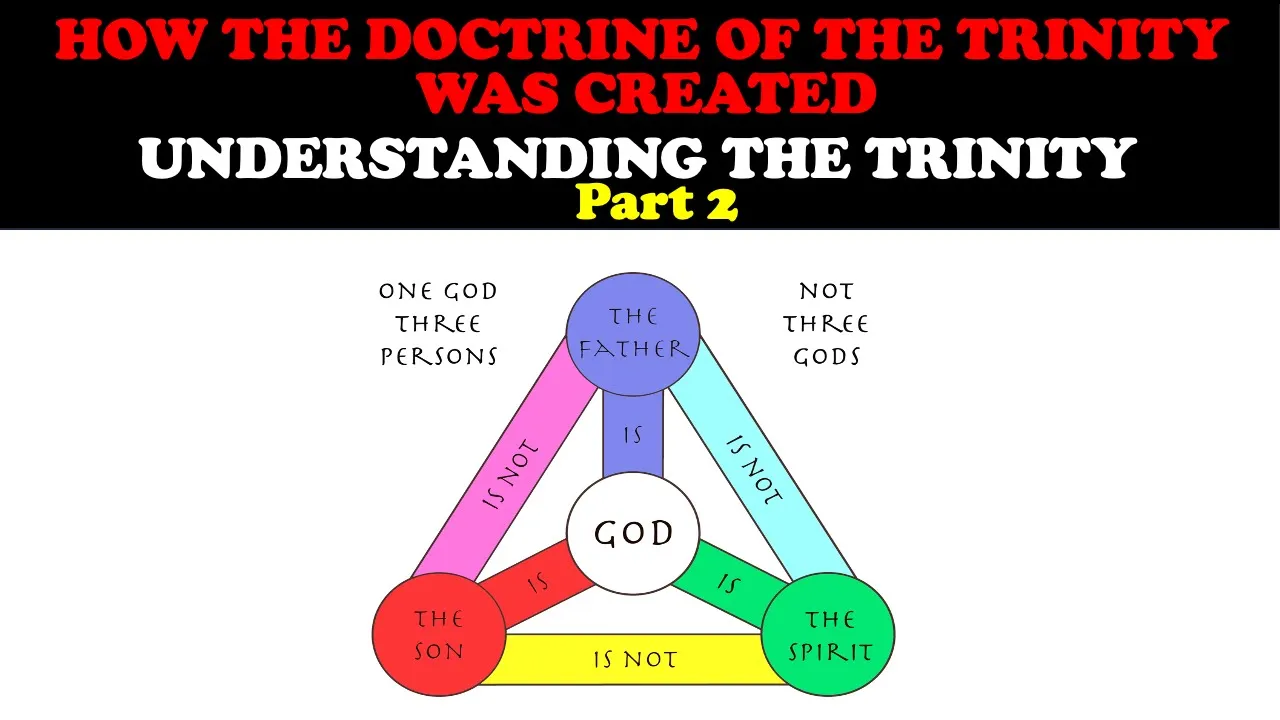
Now, these words are important, so let's just review them. This is the doctrine of the Trinity: it's the hypostasis of God. This refers to what they call the Holy Trinity, which is comprised of God the Father, God Jesus Christ, and God the Holy Spirit.
In philosophy, hypostasis is an underlying reality or substance as opposed to attributes. Now listen, I don't truly understand their thought process, and I don't actually want to get it. I just want you to know how they were thinking.
Homoousios is a Greek word, obviously, that means "of the same substance" or "same in being. " It is a Christian theological term that describes the relationship between Jesus and God the Father as being of the same substance or essence. Listen out for people when they start getting deep talking about the Trinity, because they will start using these terms.
Whenever you hear these terms, just recognize the influence of Greek philosophy that they are probably oblivious to or are just ignoring. They think they're talking deep, and they think that they're educated, but all they're doing is using Greek philosophy indoctrinated by the Greeks. So let's add this to the list: before the second century, there is no writing or evidence about the Trinitarian doctrine.
Origen was the first Christian to speak of three hypostases in the Trinity, and he was also the first to use the term homoousios in a Christian context. Okay, let's keep discussing Origen. As a Christian theologian, he was influenced by Neoplatonism and used it to reinterpret Christian doctrine.
He is known for his work on "First Principles," which is considered an influential work of Christian Neoplatonism. Origen was the first truly philosophical thinker of the beginnings of Christianity to turn his hand to not only repudiate nosism but to offer an alternative Christian system that was more rigorous and philosophically respectable than the mythological speculations of the various Gnostic sects. Basically, he gave a better philosophical reasoning than what the Gnostics had said.
He adapted Greek philosophy, particularly that of Plato, to blend with Christian thought, and that is what Neoplatonism is. To understand his influence on the doctrine of the Trinity, you can read his writings on "First Principles. " I have the link to the PDF in the description box.
In this work, he begins by establishing, in typical Platonic fashion, a divine hierarchical triad. But instead of calling these principles by typical Platonic terms, like "Monad," "Diad," and "World Soul," he calls them Father, Christ, and Holy Spirit. Though he does describe these principles using Platonic language, we're talking about syncretism right here.
So let me explain this as simply as possible. The terms "Monad," "Diad," and "World Soul" (or "Anima Mundi") all originate from Greek philosophy. Pythagoras, the one who was steeped in the mystery religions, first used the term "Monad" to refer to the beginning number of a series.
The "Monad" is the Supreme Being, Divinity, or the totality of all things. By the time of Plato, it had come to mean even more than that. In Plato's metaphysical theory, the "Monad" and the "Diad" are the first two principles of being, which are opposed to each other: the "Monad," the active principle or the one which limits, and the "Diad," the indefinite or unlimited principle.
The "World Soul" mediates between the ideal realm and matter, projecting the four dimensions of the ideal realm onto matter to form the four elements: fire, air, water, and earth. Now listen, I am not expecting you to remember or even understand this, and I know, again, this stuff is very confusing, but this is what the doctrine of the Trinity is based on. So imagine thinking that this is confusing, but then over here, explaining the Trinity.
This is what the Trinity is based in and formed from. It's important for you to understand their thinking if you're going to understand what was done with this doctrine of the Trinity. What Origen did was replace Plato's "Monad" with the Father, replace the "Diad" with the Son, and replace the "World Soul" with the Holy Spirit.
That is literally the first three chapters of his writing on "First Principles. " So let's just add this to the list: Origen replaced Plato's metaphysical theory with Christian terms; he replaced "Monad" with the Father, "Diad" with the Son, and the "World Soul" with the Holy Spirit. Let's go deeper.
One of the chief characteristics of Origen's doctrines is that the Father, the Son, and the Holy Spirit are three persons (hypostasis). He affirms that each of the three is a distinct hypostasis from all eternity, not just as manifested in the economy, meaning it does not only refer to their part in salvation history. He asserts that the Son and the Holy Spirit are not only powers of the Father but that they are hypostases like the Father; they are persons like the Father.
"Hypostasis" is absolutely a term from Greek philosophy. You can tell it has nothing to do with the Hebrews; if you just read the Scriptures, you hear nothing about them talking like this. This theory of hypostasis was used in Neoplatonism.
The word "hypostasis" comes from the Greek, which means person or substance. In Christian theology, the term "hypostasis" refers to the essential part of a person or what makes someone who they are. Now you know how the doctrine of the Trinity speaks of the three different persons of God.
This is just them applying Greek philosophy to their Christian doctrines. When you're hearing about the three different persons of God, they're applying the hypostasis philosophy going back to Plato. So add this to the list as well: "hypostasis" is a term from Greek philosophy and was used in Neoplatonism for Christianity.
Greeks did not come up with this—the Trinity is a doctrine of men and is completely centered around Neoplatonism. Well, I and many others would disagree, but let me explain this further. Plato had a philosophy that comes from his work "Republic.
" The philosophy comes from the theory of forms, which gave rise to the theory of the one and the many. The one and the many refers to the concept that a single perfect form underlies and gives definition to the many individual imperfect things we experience in the physical world. Essentially, it is the idea that a single universal essence, the one, is the source of all the diverse manifestations, the many, that we see around us.
This philosophy is the primary influence that Origen used as he created the doctrine of the Trinity. Origen's theology is completely inspired by the philosophical question of the relation of the one to the many. Add that to the list too: Origen's theology is completely inspired by the philosophical question of the relation of the one to the many.
This is Neoplatonism. Neoplatonism influenced the development of Trinitarian theology, but the two are not identical. Neoplatonism says the one emanates the demiurge, the image of the one, and the archetype of all things.
Neoplatonists also believed in the world soul, which is between the one and the material world—that's their philosophy. Now, Trinitarian theology, the Christian Trinity, states that there is one God with one will and one power but expressed in three persons: the Father, the Son, and the Holy Spirit. Now, you must understand they are saying the same thing; they're just using.
. . Different terms: syncretism.
Let's also add this to the list. Neoplatonism influenced the development of Trinitarian theology. Also, understand this: Origen's Trinity Doctrine stated that the Son and Holy Spirit were subordinate to the Father.
This subordination didn't relegate the Son to be a created being; the Father-Son relationship was eternal and an essential aspect of God's nature. Now, you could read all of this for yourself in his writings on First Principles, so just add that one to the list as well. Now listen, I can go deeper, but I don't think I will.
All this can be very confusing, and a lot of thoughts are just unnecessary. But it's all how the Trinity was created, and perhaps it's the reason why most people don't understand all this history because it's masked in great confusion. So if you start reading on this, you'll start getting confused very easily.
It takes a long time to really understand what these people are actually saying. But for Christians to say that the doctrine of the Trinity has no influence from Greek philosophy, and that they use all their terms and disagree with these points, is absolute arrogance. Let's continue, though.
I'm going to discuss the next Church Father, Tertullian, from 160 to 220 AD. He is the first to present Christian ideas in Latin. He is considered one of the founders of Latin Christianity.
He was another pagan convert into Christianity. Tertullian was the first to use the Latin term "Trinitas" to describe the relationship between the Father, Son, and Holy Spirit. He was the first writer to describe the doctrine of the Trinity in Latin terms that formed the foundation of later Catholic teachings, so add that to the list.
Tertullian was the first to use the Latin term "Trinus" to describe the relationship between the Father, Son, and Holy Spirit. He is who we get the term "Trinity" from. This is found in his writing, "Against Praxeas.
" Also, I have a link to download this writing as well, to see for yourself. In Chapter 2, on page 30, he writes, "This economy arranges unity and Trinity, regulating three: Father, Son, and Spirit. Three, however, not in unchangeable condition, but in rank; not in substance, but in attitude; not in office, but in appearance; but of one nature and of one reality and of one power, because there is one God from whose these ranks and attitudes and appearances are derived in the name of Father, Son, and Holy Spirit.
" He uses it other times in his writing as well. It's all in this writing where the term "Trinity" comes from. So Tertullian, a pagan convert, said things like, "The Yahudim are no longer in covenant with Yah.
" He says the Jews had formerly been in covenant with God, but being afterwards cast off on account of their sins, they began to be without God. "We do not follow the Jews in their peculiarities in regard to food, nor in their sacred days, nor even in their well-known bodily sign. " Also, "The same God, therefore, who prohibited meats also restored the use of them, for he had indeed originally allowed them.
" This is who followers of the Trinity Doctrine get this word from, and you expect me to follow this and attach to it? Absolutely not. Now understand this about him: his doctrine does not make it into the official doctrine of the Trinity; that comes later.
But it did influence the discussion. In Chapter 3, on page 31 of that same writing, he writes, "All simple people, not to say the unwise and unprofessional, who always constitute the majority of believers, since even the rule of Faith itself removes them from the plurality of the gods of this world to the one true God, become greatly terrified through their failure to understand that while he must be believed to be one, it is along with his economy; for they judge that economy, implying a number in arrangement of Trinity, is really a division of unity, whereas unity deriving Trinity from itself is not destroyed by it, but made serviceable. " Goodness gracious!
He realized that the Christians of his time were setting follow by his three-in-one explanation of the Godhead. Tertullian taught that the Father, Son, and Holy Spirit are not the same persons but are of one substance, and of one condition, and of one power. Now, being under the influence of Stoic philosophy, Tertullian believed that all real things are material.
God is a spirit, but a spirit is a material thing made out of a finer sort of matter. At the beginning, God is alone, though he has his own reason within him. Then, when it is time to create, he brings the Son into existence, using but not losing a portion of his spiritual matter.
Then the Son, using a portion of the divine matter shared with him, brings into existence the Spirit, and the two of them are God's instruments, his agents in the creation and governance of the cosmos. This is philosophy. In this theory, the Son is not God himself, nor is he divine in the same sense that the Father is.
Rather, the Son is divine in that he is made of a portion of the matter that the Father is composed of. This makes them one substance; they are not different as to essence. Add this to the list: Tertullian was under the influence of Stoic philosophy when he created his doctrine of the Trinity.
With his theory, the Son is not God himself, nor is he divine in the same sense that the Father is; rather, the Son is divine in that he is made of a portion of the matter that the Father is composed of. This makes them one substance; they are not different as to essence. Okay, now listen.
This writing, "Against Praxeas," he is defending. . .
His stance on the Trinity involved common believers concerned with monotheism, so he was basically defending his position by saying that although the above process results in two more who can be called God, it does not introduce two more gods. There can only be one ultimate source of all else, the Father; thus, monotheism is upheld. This reflects his philosophy regarding this doctrine and how he explained and rationalized it.
So listen, as I'm going through all this, I'm trying to explain how this doctrine came about, and we haven't even gotten to the main part of the Council of Nicaea (NAA). After this, we will discuss the Doctor of the Church, Augustine, a main contributor to the Trinity doctrine and the merging of Greek philosophy and Christianity. The events of the Council of Nicaea deserve full attention, so I will address that in the next video.
However, I want to briefly close with a note on Arius (256 AD to 336 AD). He was important for one specific reason: he brought attention to the need for the Council of Nicaea, which created the official doctrine of the Trinity that all of you who believe in the Trinity hold today. Arius taught in accordance with an earlier theological tradition.
He argued that the Son of God was a creature made by God from nothing a finite time ago. He ruled out the Greek Platonic ideas of origin and posed the question in scriptural terms of Creator and creature, logically arguing that the Son was a creature. Around 318 to 321, a controversy broke out with Arius's teaching, initially opposed by his Bishop, Alexander of Alexandria in Egypt.
Bishop Alexander examined his views and excommunicated Arius from the church. There were numerous churchmen who supported Arius's arguments regarding the Son, and they rallied to his side while others, favoring theologies that upheld the eternal existence of the Son and his equality with the Father, joined his opponents. The dispute threatened to split the church, leading to a series of councils that variously excommunicated and vindicated Arius and his defenders, as well as their opponents.
Each side successfully attempted to win the favor of the then-current Emperor, which eventually led to the Council of Nicaea and the Nicene Creed. Now listen, I honestly don't care about the debates; all this stuff is honestly ridiculous to me. They are debating things they have no business delving into.
The point I want to add to the list is that the opponents of the Neoplatonists, in their view of the Trinity doctrine, were opposed. The opposition to the Neoplatonists and their views on the Trinity led to the Council of Nicaea. So someone please tell me how is it that people can say this is all some crystal-clear doctrine that everyone should abide by when there were absolute rifts and divisions while this doctrine was being created?
Do you know how in history you only hear about the side of the victor that won the war? Imagine if Hitler had won World War II; how different our worldview of history would be. History and influence are told from the side of the victor, and the doctrine of the Trinity that everyone holds onto today is based upon events that happened at the Council of Nicaea.
We will definitely deal with that next. If you remember how we started this, people were saying that I'm a false teacher and that there's no evidence that the doctrine of the Trinity was rooted in Greek philosophy, and that it is not a doctrine of men. A percentage of people that watch Truth Unedited come away thinking that Jesus is not God.
Those who believe Jesus is God are embracing a philosophy; the Greeks did not come up with this. Now, let's go through the evidence I have presented. Remember, I have given receipts; I've provided PDFs of all these writings I referenced, which you can download and review for yourself.
Any one of these points you can fact-check and look into yourself. So, let’s go through the list: the study of divinity originates from the Greeks and their philosophy. The business of philosophy is to inquire into the nature of divinity, as told by our Church Father Justin the Martyr.
Before the second century, there is no written evidence about the Trinitarian doctrine. Origen was the first Christian to speak of three hypostases in the Trinity; he was also the first to use the term "homoousios" in a Christian context. Origen replaced Plato's metaphysical theory with Christian terms: he replaced "monad" with the Father, "dyad" with the Son, and the "world soul" with the Holy Spirit.
"Hypostasis" is a term from Greek philosophy that was used in Neoplatonism. Origen's theology is completely inspired by the philosophical question of the relation of the one to the many; this is Neoplatonism. Neoplatonism influenced the development of Trinitarian theology.
Origen's doctrine stated that the Son and Holy Spirit were subordinate to the Father. This subordination did not relegate the Son to being a created being; the Father-Son relationship was an eternal and essential aspect of God's nature. Tertullian was the first to use the Latin term "Trinitas" to describe the relationship between the Father, the Son, and the Holy Spirit; he is from whom we derive the term Trinity.
Tertullian was under the influence of Stoic philosophy when he created his doctrine of the Trinity. With this theory, the Son is not God Himself, nor is He divine in the same sense that the Father is; rather, the Son is divine in that He is made of a portion of the matter that the Father is composed of. This makes them one substance or not different as to essence.
The Neoplatonist view of the Trinity doctrine is evident. Was opposed. The opposition of the Neoplate in his views with the Trinity led to the Council of NAA.
Now listen, I'm going to put this in a PDF, but I need to finish the list; this is only the beginning of the evidence. So here it is. I'll finish the list in the next part.
As I've shown you, there are people that just say honestly none of my claims are true; that the Trinity is a doctrine of men and is completely centered around Neoplatonism. Well, I and many others would disagree. The Greeks did not come up with this, but I am giving my reasoning and providing you with sources.
Anyone that wants to oppose needs to deal with what I'm actually saying, and not emotions and just a desire to disagree. For anyone trying to understand this, just evaluate the fruit. Am I not being thorough with you?
Am I not giving you sources that you can use yourself? Are the people that are challenging me challenging what I say, or just making it about me? You be the judge.
I mean, I get it; I am challenging indoctrinated views that people have had all their lives. But this is the end times, people. We need to get ourselves right and ready, and truth matters.
If you love Yahweh, the truth is the only thing that should matter—not your ego, not your pride, not what you believed all your life. You need to be in the truth because we are preparing for the kingdom of YH, and lies, falsehoods, and all that other stuff do not come in. So you need to prepare yourself and get yourself right with Yah.
In order to do that, we have to get rid of the lies. All this is about the ways and thoughts of men. If you study this on your own, it becomes extremely confusing, and the reason is because Yahweh is not in this.
These are people who do not actually know Yahweh, teaching as if they do, applying philosophies and logic and reasoning on subjects they have no business philosophizing. The Hebrews did not talk like this or think like this; it's not a part of their ways at all. I don't care what scriptures these men use, or their rationale, or their logic, or their reason; this has nothing to do with our Father and the way He led His people.
It actually bothers me severely to hear these people philosophize about my Father, and I'm here to cut it all down. These are the facts, and if anyone wants to oppose, they have to deal with this—not their attachment to Greek philosophy and what they think they understand, and all this other stuff. They want to say, "Well, why does it say this?
" and "Why does it say that? " I don't care about your Greek philosophy or the way you philosophize the Word. We don't deal that way with the Scriptures; that's not the way this faith works.
What our Father says is clear and unambiguous. All of you need to go back to the Scriptures and remember clearly what Paul said: "Beware lest anyone cheat you through philosophy and empty deceit, according to the tradition of men, according to the basic principles of the world, and not according to Messiah" (Colossians 2:8). Listen, with all this evidence that I'm giving, all of this right here should be very clear.
I shouldn't have to make a part three, but with all this evidence being so clear about the philosophy of men and Greek philosophy being tied to your doctrines, for anyone to want to justify and fight over this, you're fighting pride; you're fighting ego, and you're not trying to deal in the truth. So I get it; you're going to make it about me, but I'm making it about the truth. You can do what you want.
If you believe in these Scriptures, like Colossians 2:8, why are you coming against me for speaking against philosophy? "Oh, Timothy, guard what was committed to your trust, avoiding the profane and idle babblings and contradictions of what is falsely called knowledge. By professing it, some have strayed concerning the faith.
Grace be with you. Amen" (1 Timothy 6:20-21). And you see, this is exactly what has happened to many.
All of this should make a person say, "I need to look into this a little further. " But if these people are just rejecting me and making it about me, you can see they're being led by the enemy because I'm not making this about me or my opinions; I'm just giving you information on why I reject the Trinity. Based on what I have presented so far, I believe I have a good case, but I have more to show.
So what we will do next is deal with the Council of NAA and the Nicene Creed, and you will see the absolute nerve of people to just disagree and say there's no evidence. They are literally speaking through pride, and the real test is: will they admit that they're wrong and that they need to study more, or will they just attack? Either way, these falsehoods are being exposed; we're cutting them down.
We will continue this discussion in the next part, but please don't follow the doctrines and philosophies and rationalizations of men. There is an ultimate subtle goal of this Trinity doctrine, and that is to remove our relationship with our Father. I haven't even explained that yet.
It's very important that you just stick to the Scriptures. Trying to figure out the divinity of Messiah is Greek philosophy; that's the business of philosophy, and this was not a part of the culture of Yasharel. I reject that mindset and have no tolerance for it.
It's very simple: if Yahweh says it directly, I. . .
Believe it; let him explain himself. I don't believe we're capable of understanding this connection, and I don't believe that we're supposed to even try. The fact that these people are tying your salvation to believing in their doctrines of men is absolutely ridiculous.
I mean, this guy literally told me I can't be saved because I don't believe these false doctrines of men, and this is what everybody's listening to. It's ridiculous! I want you to think about this: these people will tell you it's okay to not keep the Commandments, it's okay to celebrate pagan holidays, it's okay if you take oaths and pledge to their fraternities, it's okay if you tie yourself to this land of wickedness.
All of these things are okay, but if you don't believe this doctrine that these men created, this means you're in danger of going to hell. If you can't see the manipulation of Satan right there, I don't know what else to say. Live in the truth and just take the word as it says.
You do not need to add logic or reason to it; just believe what it says. For Elohim so loved the world that he gave his only begotten Son, that whoever believes in Him shall not perish but have everlasting life. For Elohim did not send His Son into the world to condemn the world, but that the world through Him might be saved.
He who believes in Him is not condemned, but he who does not believe is condemned already because he has not believed in the name of the only begotten Son of Elohim. And this is the condemnation: that the light has come into the world, and men love darkness rather than light because their deeds were evil (John 3:16-19). If you believe this too and reject the false doctrines and the wicked philosophies of men, you will be ready for the Kingdom.
Be blessed! Hallelujah! Praise Yah!
Okay, thanks again for watching. If this has blessed you, please don't forget to like this and share this video with others. If you haven't done so already, please subscribe to this channel, Y'willing; I upload every Friday.
Also, don't forget to follow this ministry on Facebook and Instagram, as well as on my website, truthunedited. com. Thank you for watching; I'm thankful for all of you.
Thank you especially to those Yahweh has placed on your hearts to give, and you have done so. Thank you for your assistance in carrying out this ministry every week. Thank you for your blessings and your prayers; they truly support this ministry; you have no idea.
Thank you for your obedience to Yah's call on your heart. Okay, thanks again for watching, everyone. I love you all!