we heard talk about multi strats uh my name is John Kushner I'm head of relationship management Northern Trust head fund Services it's my privilege to be here with this phenomenal group uh and in the interest of time I think we'll jump right in so if you wouldn't mind just quick intro as you uh engage that'd be great last few years have seen enormous flows into multi strats right both from an a perspective and talent perspective we think about 3 four five years ago star PM you know out there launching his business more and more they've
been um you know it's become more attractive for them to Simply get onto an existing platform so I want to set the stage with theal Care's perspective and Jack you might feel put you on the spot you talk a little bit about how we got here and what you see as the outlook for multi strats this year perfect oh um thanks very much and it's pleasure to be here I'm Jack springate so I run the hedge fund business uh in the external investing group at Goldman Sachs we're about a $27 billion sort of hybrid funto
fund uh group um I mean the multi strategy space is is really interesting the the the model itself works for a reason I mean there it gets the fundamental law of active management on your side you the more you increase the Independent Drivers of return the higher your sharp ratio it's a very efficient way of using uh risk to produce returns based on The Leverage and the risk management that's involved and when the business models work and they produce these consistent returns for investors um they create this sort of posit positive feedback loop where the
business able to grow and scale and reinvest in itself and build Moes and build infrastructure and data and people and talent and and create sort of a a very sustainable way of delivering Alpha to to clients so that that's the good news but the obviously the the the shift in the industry over the last few years has just been how much this space has grown I think 60% of the net growth in the hedge fund industry over the last decade has come from multi strats and when you look at uh performance um you know the
the the hedge fund database we we look at the kind of five-year Alpha of each of the the hedge fund strategies multiat has been top of the pack the average Alpha has been just under 4% the the problem today is when you look at over three-year time frame that Alpha has dropped to below 1% and it's more middle of the pack I think the top performing strategies the last three years have been Quant equity and and and macro and that's because the hedge fund industry is no different from any other industry when people see something
that works there's a lot people allocate a lot more to it and there are a lot of firms who who seek to emulate the success of of some of the early pioneers and that can have a kind of dilutive effect uh on on performance you know ac across the whole Space so if we kind of fast forward to our view on on where we are today um we think there's going to be a lot more dispersion because if if if some of these firms if they start to underperform that positive business spiral can work in
reverse if you see outflows that can put a lot of pressure on these businesses as they contract um but there are still some outstanding organizations and and and multi strats out there that are able to deliver this this really strong performance and then there's an interesting caveat which is the part of the industry that really hasn't grown which in in many ways is under capitalized is the sort of Boutique end of the industry the the the the smaller hedge funds and even though you see just as much dispersion there as well um I think there's
growing recognition that there's there's actually a lot of alpha in that part of the industry uh to be captured as well thanks Jack and Marcus me you have a uniquely European perspective do you have anything to add just in terms of the how this year will take shape yeah John as you mentioned I'm from that part of the world which has no economic growth uh I'm from the largest third largest economy worldwide largest in Europe but um yeah still no growth so um uh uh I'm running the alternative business for a firm called fery which
is just based North of Frankfurt we are 61 billion in total and the alternative business is 18 and with regards to what has just been set is that this hch fund attitude is not a centerpiece and financial allocation in Germany having said that over the last 6 to n months it appears to change let it be that an effect of 22 where bonds and equities dropped and then as there's a certain appetite coming into allocation towards alternative outside private markets hedge funds um it is the multiat where our clients which I mean basically German speaking
clients in Europe they are coming up and say do we need the multi strats and then they do the math which you just done um and we are in this kind of situation with all the caveat Let It Be leverage let it be some of them closed Etc but as a starting point they look at these statistics what we always try to encourage us that this does not have to be all over the place so multiat is not the final name in terms of you need it and nothing else but as a starting point um
that's very important but for us it's important that this is educative element with our German speaking clients is a starting point where you guys are way ahead but again discussions is currently ongoing with the multi struts um as that element lowall the stats speaks for themselves um not sure if this is going to be the same in two three years thanks Marcus Maybe Just sh sh in focus to the manager perspective for a moment know Caroline we spoke quite a bit about competition for talent you maybe just touch on the Approach at Sumit TX for
acquiring and uh developing and frankly retaining top Alpha generating Talent sure so I'm I'm Caroline kolie I'm the chief investment officer and managing partner of summit TX Capital formerly known as Crestline Summit until this month we've just recently rebranded um Summit TX uh was formed in 2015 um and we manage a multi strategy Equity oriented um Market neutral hedge fund uh we use a um open architecture multi PM model so we have teams that are both internal um and teams that are external and and managed via smas um so competition for talent is real um
it is the most frequent question we get from investors how can you compete for talent in this world with all of these platforms and SMA providers um and the fact is um there's a competition for talent and then there's also a high bar in order to hire someone so over the past year we've spoken with hundreds of potential Partners um and hired a dozen so it kind of works both ways um we hire experienced portfolio managers most of the PMS we've talked to have been at other platforms and we find that compensation and capital is
a commodity and as all of you have had taken a job somewhere you know that that is one portion the compensation is one portion but there's so many other things that you consider when you take a job and we find that PMS care about things like access to leadership are they just a line item or do they have a seat and know what's going on at the firm at a senior level um are the terms that they have good are there access to risk tools appropriate have you set them up for Success um there's just
so many other factors that we find goes into the equation um that we've been you know that we think with the right um fit between the portfolio manager and the and the platform um there is still talent to be had and and we've Embrace that that's great thanks Caroline and Jeff we were speaking in The Green Room about something uh you know similar topic around team building you talk about from a systematic business standpoint kind of your talent strategy definitely um so I'm Jeff Shen uh I'm the chief investment officer for our systematic active Equity
Group uh the group has actually been around for 40 years and we're celebrating our anniversary this year and uh it's about 200 people and $200 billion dollar um asset under management and we've also been you know tapping into the multi strategy um o over the last few years I'll say that's from a talent perspective I think it's interesting in the sense I'll say that maybe three really quick points I think number one is actually I think typically people think about fundamental and systematical quants um I think that distinction may very well be interesting and relevant
but at the same time I think it's slightly dated um I think maybe the potential interesting way to think about from a talent perspective is uh who is modern who's a little bit oldfashioned um I think the world is changing rapidly so I think their modern Quant um they're modern fundamental investors but they're also oldfashioned Quant and oldfashioned fundamental so I think that's probably from a talent assessment that's number one we want to make sure they're modern and the second one is that I think I want to come back to Caroline's point I do think
the culture is a very important point there people who are very happy with a small part and but there also people who are very much excited about being able to collaborate with other people and get a bit uh more of um um a culture that is open that is actually that you're going to learn a lot uh from each other so I think that's important attraction for talent and I think the last one on Talent is I think uh um I think it's this is a you know certainly a hedge fund conference but I think
uh you got to think about the modern Talent is got to be able to um you know work with a large language model or generative AI so I I C the talent probably will become need to become more synthetic uh if you will because I don't think that it's it's basically the lawyers who use AI versus lawyers uh who don't use Ai and I think that applies for investment as well so I think I think how do you uh work and leverage and being able to really do above and beyond uh with development in AI
I think is also key element of the talent thanks Jee shifting Focus for a bit you know feel alignment always top of mind for allocators and managers Marcus perhaps I could put you on the spot how should investors think about balancing the reality of significant costs it takes to just run a multistrap platform with fee structures and uh return profiles yeah I'm just reminding everybody that I hold a German passport I was raised with two things uh no war and no inflation so we had inflation inflation is price increase so there's one element which Germans
don't really like which is price increases fees etc etc so uh on a on a on a precise note uh if you come in and you had good success and your Rises you rise prices uh um quite intensively then this is probably something uh absolutely ripe for discussions the split net gross obviously we own all the numbers um is something to talk about as well which uh still does not reflect that if you have this excellent product as talked about you can charge these extraordinary fees which goes down because people pay for it um going
forward I think you still have to distinguish between certain uh jurisdictions if you look at the ticket sizes of some of the most of the biggest allocators worldwide the will of paying these kind of fees I think is going to drop to some extent and we've seen over the last 15 years in particular performance fees staying at a pretty stable level and management fees coming down and I think this is an element of negotiations again Central Europe Central German speaking um there is a sensitivity uh to lower fees which at the end of the day
is in negotiations and if we are right that there is a certain increase to hedge funds from the European base then there might be the willingness uh to negotiate uh on both sides most importantly um as long as these stats stands where they are um there's an asymmetric power supply in terms of who can charge fees and um the stats are there they're telling everybody this is low Vol this is high extraordinary performance and that's when you have to charge those fees the question is and this is the route we go down we go to
the second tier second level which does not mean that the starting point is negotiating for fees but it is an element where and Caroline is probably in that particular Corner which we look at because that gives you a certain niche at a different level and you might even be able to negotiate fees at a different level and don't have to accept what they put on a plate Caroline what are your thoughts so I think I want to shift the conversation when we talk about alignment and talk about structure of fees rather than level of fees
right so um it's what are what are you paying for first of all so um if you are going to pay fees you want to be paying fees for performance and you want to be paying fees for Alpha not beta um and in the current Market you maybe you want to be paying fees for Alpha not cash returns so I think there's a push for managers to offer um Fe performance fees that have a hurdle we've adopted that for all of our funds all of our funds have the option of being charged with a hurdle
or without a hurdle um and so I think um and then also just kind of if you think about the platform one of the reasons that fees have gone up is that the the talent gets paid as opposed to the old old model where there's one fee and then the talent didn't get paid and the reason this has happened is because it um you know kind of incentives Drive behavior and it and it helps the Returns on a net basis so so anyway again I think people investors should focus on are they aligned do the
fee structure fit for what you're paying you what you're what you're trying to achieve um and it's not just the level it's the structure thank you um looking for ahead let's say the next 3 to 5 years if you had a crystal ball Jack what trends will continue or what new trends might emerge that will shape multi strats in the years to come well I don't have a crystal ball I've learned I'm not very good at predict Le long-term prediction but I'll have have a crack at it nevertheless I mean the hall Mark of the
hedge fund industry is just how Dynamic and how competitive it is we often liken it to you're kind of standing on an escalator and it's going down and if you're doing the same thing today as as you were 3 years ago or 5 years ago you're you're not as good as you were 3 years or 5 years ago even if you've got a discipline process and doing the same same things because everyone else around you is getting better and innovating and and and so on and that's acutely true in this space because the rewards are
so high and um you know there's been so much growth in in the last few years so I think if you look at it from the lens of the multi strategy hedge funds who are relying on bringing Talent inhouse there's going to be a high burden on how they develop IP how they develop those sustainable sources of advantage and I think the two areas that kind of stand out that firms are going going in one is how do they actually develop Talent internally themselves so they're not always dependent on hiring from the outside and getting
into that kind of price War and the second area which I think is interesting is how they're developing kind of Quant capabilities and in even to the extent some of the Quant firms developing multi strategy capabilities because you know the Quant space is obviously where there's there's a huge amount of innovation there's the ability to harness technology all the dynamic trends that that are going on and once you develop signals that are alpha generative you can scale them without the same types of uh Talent price pressures as as through the PM acquisition model so I
think that focus on IP uh sort of development within organizations to compete is is going to be really important the other thing that's interesting is the if you look at kind of the top four multi strats by size three of them are pretty much hard closed or even returning profits and one of them is growing and the way that one is growing is through essentially doing what we do in our group external allocations and similar to to what uh Caroline's business does and I think that really speaks to the opportunity set in this kind of
Boutique part of the the hedge fund industry um and I think we're going to see a lot more of that the the the two things I the two advantages multi strats have I started with the ability to have a wide range of drivers of return and the ability to have an efficient Implement implementation model to access those through essentially a manage account structure that you can leverage and risk manage you know there aren't any Moes around that that's something that that you know lots of allocators other hedge funds can can develop um so this is
a big Trend that we're seeing with the within the industry it's a big Trend within our business so increasingly the way we're seeing kind of portfolios evolve is is trying to deliver clients you know the best allocations to the best of the best the the the top performing multi strats the top performing institutional hedge funds but then around that actually having managed account exposure with smaller funds with boutiques co-investing more just being able to much more dynamically access that part of the industry that that is um that is under capitalized that people haven't focused on
as much for the last five or 10 years thanks Jeff crystal ball no no no ball but I'll say that's maybe a couple of things for consideration I think uh um number one is I think um um I think size is bad but scale can be good um so just because you're running a large fund it doesn't mean that it's going to necessarily be good but I think scale is actually quite important and and I would actually argue that scale is increasingly becoming um a bit of a necessary condition not necessary sufficient but necessary condition
for for success now let me just go a little bit deeper on scale point I think uh uh the amount of data that um a manager or a platform a multi strategy were um are are consuming um is is how much money is being spent uh on data uh given that we uh you know the amount of time we've been here 20 minutes I think the amount of data we generated is probably more than uh what human race has actually produced in the first couple thousand years so there's abundance of data then there's also think
about scale is to think about uh you know what is the the the mindset what is the the mental framework people use if you will um how many algorithms are there out there to think about is this really using the abundance uh of of scale out there if you will if you can think about human uh or Star PM or Star Trader is actually really one algorithm now how many algorithm you can have certainly lot of multi strategies have done extremely well but fast forward today you got to think is there a deep learning stack
is there a reinforced learning stack maybe there's a a a deep seek stack um the the as of yesterday so I think um I think the the scale part I mean the last part of the scale is actually I do think that how do you unlock um the the connection the network effect uh from the different people this is you know Jack to your to your point earlier how do you develop that internal IP and and I think how do you unlock that uh that's really where I think the scale can potentially uh can can
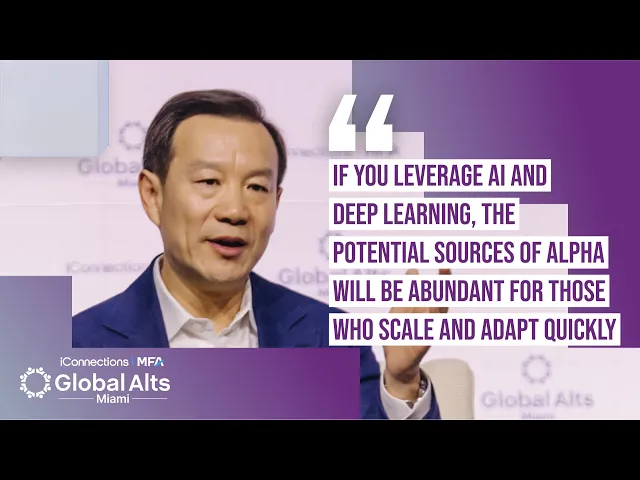
potentially Excel so I think scale I think it it's going to be critical I think the second one is I I do come back to a little bit I think we are in a golden age of innovation I think if you think about the disruption of whether it's Transformer whether it's uh deep seek or whether it's uh uh development of AI in general I think uh it's got to be an era where I think this mindset that there are only so many people out there we got to pay them a lot of money so that
they can generate Alpha I think that mindset is limiting um I think we're in a golden age where if you can actually use a large Lang I mean I give you one specific example we just had our research Workshop uh last week so the the few people basically come up with fine-tuned large language model that essentially have their one what we call as agent if you will has read 39 million sales head research report since its Inception like every there's a sales set research report we've read it and so that's a super agent then there's
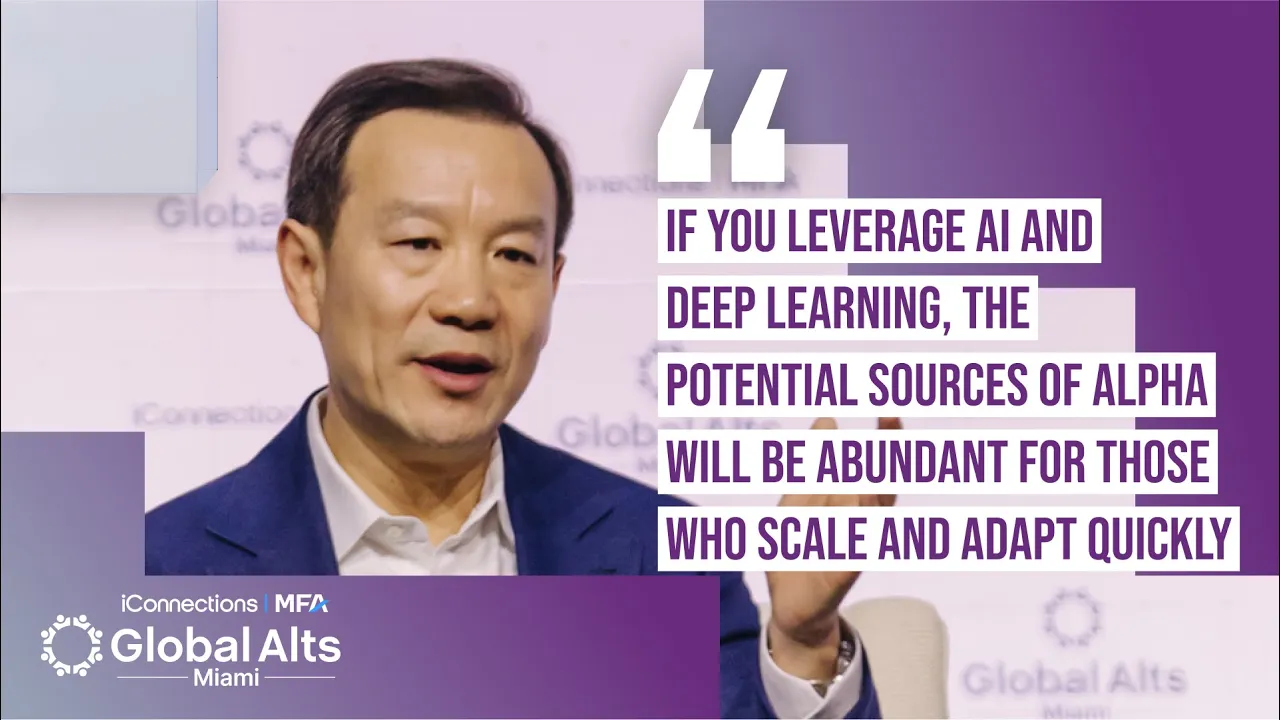
another agent that actually has listened to every conference call transcript or conference call ever and the big thing is voice to vac which is try to listen to the tonality of the conference called transcripts and then there's another bot which is actually read all the financial news ever so if you think about these three Bots and then you can think about okay invest as if you're H marks maybe invest as if you're sha um you know whatever the style you want to you want to fine tune it that's a potential abundance of potential Alpha and
and you know you can say maybe just a a a a dumb bot and it doesn't but I think the bar is rising dramatically and it's also the one that from allocation perspective in terms of how do you deliver Alpha what is beta I think there's a lot of things you can fine-tune so I'm actually quite confident on the future of the potential source of alpha uh especially if you can deliver scale if you can deliver Innovation um in you know the the the the AI tools that we actually all have at at abundance and
I think that's probably a different setup I think the dominant players need to also adapt to this new reality very quickly otherwise it's not about being dominant today it's about becoming dominant on a forward-looking basis thanks Jeff um well that's it it's all the time we have really appreciate uh all your thoughts thank you thank you perfect thanks everybody [Applause]