all right so last class we were starting to discuss the um islamic empires that were starting to emerge around 600 ce and child they took over a large part of what is now known as the arabian peninsula they also moved east along the axis of the silk road and then traveled west along northern africa and then eventually came into southern spain right here so um in addition to these muslim invasions and migrations that are happening out of saudi arabia but there are other groups that are also um invading various parts of western europe within this
period of time we have the magyars coming in from the east and they are led by atelia the hun and then we also have the scandinavian vikings who are coming out of this region and they are traveling by sea to most of this region in the north um northeast atlantic and then they're even going across the atlantic into what is now canada in the united states so um in addition to the vikings and the magyars we are of course having these other local groups as well including the gauls and the goths the vandals et cetera
there's lots of conflict happening people don't live very long at this point in time because there is so much turmoil and there's pillaging and conquest um and because of that when people are moving around a lot and they're running for their lives they're not really creating that much art it's kind of a good excuse all right so this is a period that was known as the dark ages in western europe for a couple of reasons one you have all of these invaders that are are coming in and conquering these areas it's a very fraught time
there's also this thing that's happening where a lot of the knowledge that was cultivated during antiquity this knowledge about building roads and arches and like large like lavish works of architecture um knowledge about medicine etc a lot of that stuff is being forgotten not a lot of people in western europe at this point in time are literate people don't really know how to read so even like innovative roman technologies that were common around 300 years before this point are not really present in this region they're totally fine in the byzantine empire because they've preserved a
lot of those traditions but in the west that's not really happening so it's not really until the late 700s that we're starting to see stability in western europe again as we transit transition into the gothic period so it's at this point that charlemagne establishes the carolingian empire so we have a couple of scattered kingdoms and then there's like more or less stability as the um vikings and these other groups are converted to christianity and people start settling down a little bit more so there's only two works in the early medieval unit one of which are
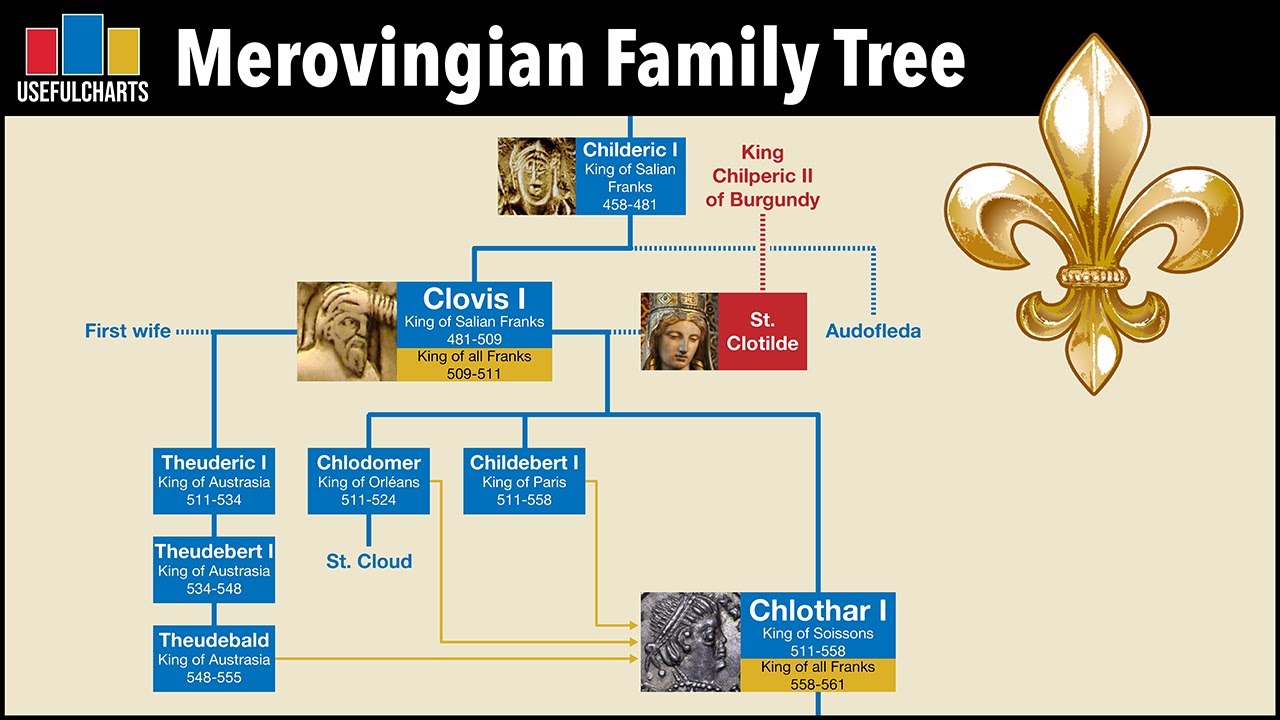
these merovingian looped fibulae so fibulae describes two fibula so that's one fibula two or more fibulae so a fibula is a pin that is used to fasten a garment think of it as like a fancy clip so the maravingians where this dynasty of frankish kings that lasted for a couple of hundred years they spent very lavishly on themselves they had access to gold silver jewels colored glass and all manner of fancy things and they love to spend money on themselves and oftentimes they would commission these kinds of work to demonstrate their status basically how much
disposable income that they had oftentimes uh when frankish kings or members of nobility died they would be buried wearing all of their finery so lots of excavations especially in these areas that are now germany as well as france and luxembourg belgium and the netherlands have revealed earrings brooches bracelets pins more fibulae as well as larger and more ornate objects like cuts chalices and even reliquaries so again kind of like as is typical with a period most of these objects tend to be smaller and more portable so the kinds of elements of a design that we're
seeing in this work are zoommorphic so zoomorphic is a fancy word that means incorporates animal shapes so you can see these little fish right here in the fibulae fish were heavily associated with early christianity in particular there there was a symbol called ichthus and the acronym ichthus was kind of like a secret code that was indicating jesus christ so you there's actually a lot of graffiti in rome that has the ichthy symbol and that was basically like almost like a christianity like gang symbol so we have these little bit little elements of of christian design
in here with the fish or ichthyos there's a couple of crosses as well the technique that has been used to create these pieces is called clothesline uh i apologize for my horrible pronunciation of french basically what that means is enamel work so there's thin strips of metal that are separating um these different um areas and then enamel which is basically like a fancy powder is melted to fill in these areas so oftentimes it's like a kind of colored glass so think of it like an enamel pen that you might have today it's a piece of
metal and then there's raised edges and then bits of enamel or lacquer or glass are melted to fill in these little grooves and areas there's also chasing being used so chasing is this method in jewelry where you have a some sort of of implement that you are putting into the surface and then you hammer it and to create repeating designs so it's very likely that this pattern right here of these rings was created by having like an o shaped stamp that the artist would then hammer into the surface so we have chasing and closing a
we'll see chasing again when we cover um work of the pre-columbian americas so here are a couple of other works that were produced by the merovingians you'll notice that they are incorporating these precious materials like gold colored glass was not nearly as easy to come by then as it is today and the color of red in particular was very precious because it required gold to manufacture this color when you look at these objects you're also noticing that there's some other influences in these pieces most notably in this image you see these this celtic not work
so a pretty large element of meriving and work is that they were incorporating work from surrounding cultures including the kells who are in what is basically the northern part of the british isles now so this next artwork consider concerns a manuscript so the creation of an illuminated manuscript was an extremely laborious expensive and time-consuming process it's very difficult for us to conceive of how difficult this was in the modern era when we can print things so easily but remember that we're not seeing the printing press until a couple of hundred years later and that's something
that we're going to be talking about in the gothic period but at this point in time basically everything that is written is done so by hand this is one of the reasons that so few people are illiterate it's because books were extremely expensive because they had to be hand written so that was one of the reasons why people were so illiterate so most writing was done as a faithful copy of an existing text a lot of the texts from this era are bibles or religious manuscripts they are oftentimes beautifully illustrated with illuminations which are basically
drawings of these very complicated images that oftentimes involve gold leaf so you're taking gold and then you're using an adhesive to add gold to the page so these resulting tomes especially those containing religious texts were oftentimes treated as sacred objects because for one thing they were incredibly valuable and expensive to make and on the other hand they contained basically the word of god so they were regarded as holy in their own right in many cases so there's been several kind of hordes of these kinds of manuscripts that have been discovered more recently it is thought
that a lot of these groups would hide their tomes when these um invading groups came in so that they weren't stolen or desecrated and a lot of those caches are just being revealed today which is super interesting so to give you a sense of the amount of work that goes into creating an eliminating manuscript i have this short video in the middle ages parchment was used to make the pages of books parchment was made from the skins of animals the transition from a fresh skin to a surface suitable for writing was a slow and laborious
process the parchment maker selected skins of sheep goats or calves skins were soaked in lime water for three to ten days to loosen the animal's hair the parchment maker then scraped away the hair and any remaining flesh after this the skin was soaked in fresh water to remove the lime and then stretch tightly on a frame a special rounded knife was used to scrape the hide to the desired thickness the process of scraping continued over the course of several days during this time the parchment maker continually tightened the tension on the stretching frame while the
skin dried the result was parchment a smooth and durable material that could last over a thousand years before parchment could be written on it had to be specially prepared first the parchment was rubbed with pumice powder to roughen the surface and then dusted with a sticky powder these steps made the surface receptive to inks and colors the whole finished skin was then cut down to the size of the pages needed for a particular book a big manuscript was assembled from sheets almost as large as a single skin for smaller books the skin was cut into
two or more pieces the parchment sheets were folded and nested to make gatherings usually of 16 or 20 pages the vibrant illuminations in a medieval manuscript often overshadow the words on the page yet the writing of the script was as important as the painting of the images the tools of a scribe the person who copied the text onto the page were simple pens called quills were made from the feathers of a bird which were soaked in water dried and hardened with heated sand the scribe carved the quill to a rough point cut a slit to
draw ink down then trimmed the point to the proper width the shape of the quill point varied with the style of the lettering being copied scribes made ink from a variety of materials gal nuts groves found on oak trees were often used to create a dark black ink black ink was also made by dissolving a common carbon substance the resulting ink was called lamp black before the scribe began writing he ruled the parchment using a straight edge medieval scribes and their patrons prized a regular and elegant script if the scribe made an error he would
scratch it out with a pen knife because the page was made from parchment which was very resilient it could stand many erasures of this type an illuminator decorated the pages of a manuscript using paint and precious metals he began only after a scribe had finished copying the text the illuminator first sketched his design then added details such as the features of a figure or the interlacing of a decorated initial thin sheets of precious metals like gold leaf were always applied first the illuminator put down a base coat consisting of either a plaster-like substance called gesso
or a gum as shown here once the gum base dried the moisture in the illuminator's breath was enough to make the small piece of gold leaf stick to the page then the illuminator brushed away the excess and polished the gold leaf after applying the gold leaf the illuminator painted his design each color was made from a vegetable dye or a mineral substance ground up and dissolved in liquid the illuminator applied the paler shades first then the darker tones once the illuminator applied black outlines and delicate white highlights to the figures and vines the illumination was
finished after the scribes and illuminators had finished writing and decorating the parchment pages the manuscript was bound groups of folded sheets of parchment called gatherings were sewn together with strong linen thread onto flexible supports such as these narrow leather thongs next the binder attached end bands which secure the top and bottom ends of the pages in the spine of the book the binder then laced the leather thongs along the spine through channels and tunnels which had been carved into wood boards these boards were the covers of the manuscript the thongs could be held in place
by wood pegs or iron nails the volume was then covered usually with leather without pressure from the covers to keep the leaves flat parchment expanded and contracted with changes in temperature and humidity pressure was applied by the addition of clasps or straps which held the book closed the binding of a manuscript could be decorated with any one of a variety of materials a manuscript might be covered with leather stamped or tooled with gold or covered with silks or velvets the most elaborate bindings received sculpted decoration made from precious metals the materials of the binding depended
on the wealth of the patron the type of manuscript and its intended use alrighty so our example that we're going to have today of an illumina illuminated manuscript is the book of lindisfarne or the lindisfarne gospels so this is a work of hiberno saxon art it's in remarkable condition for how old it is it's over a thousand years old which is remarkable for a written publication so this work uses animal style so animal style is different from zeromorphic so xeomorphic is typically involving animal shapes and textures whereas animal style is something that we're typically seeing
in hiberno saxon art it oftentimes involves these complex interlacings of stylized animals in these tight richly colored patterns so to give you an example here are some birds right here which are have their necks wrapped around in these complicated knots so the illumination and the um transcription of the text was done by one person in this case which is highly unusual usually there would be one person who does the text um and then another person who would do the illumination or illustration there's a really convenient colophone at the end of the book which is basically
a small section describing how it was made and who made it which is really again helpful for us art historians trying to figure out some additional important context about these artworks so the text in this book was done in latin and then somebody went in about 250 years later and added english between the lines as a sort of um like live translation so this is the oldest surviving manuscript of the bible in english and utilize the vulgate translation there's a couple of different translations of the bible so over 130 calf skins were used to make
this manuscript you saw in the last video that even the creation of the paper itself was an extremely intensive process that involved a wealth of materials and resources it's just creating the paper that we're not even getting to the illumination yet so again that video is just a glimpse into how complicated this entire process is and explains why these books were so expensive so there's a couple of pages within the book of lindisfarne that the curriculum wants you to know this is the cross page from the book of matthew right here you can see the
cross in the middle of the page hence its name this piece very obviously utilizes horror vacuum which you'll recall from our last lecture is this term that is used to describe an artwork that has virtually no empty space so um what you'll notice about this page is that it's very symmetrical and balanced um you're having these design elements on the outside of the page that are repeated on all four sites to create this sense of balance and order and like we saw with the maravengi and looped fibulae we're seeing this intermixing of like christian imagery
as well as this imagery that is typically associated with these quote-unquote barbarians in the western world so um there's also um contrast that is being used by the artist particularly in these blue sections these um the stuff in the foreground like these birds right here as well as this these this knot work is done in lighter colors and more mid-tones and the artist has used black to really strike a contrast between the foreground and the background here so this is the saint luke portrait right here um there's a bit of latin on this page for
one there's hyos lucas which is basically translates to holy lucas this is saint luke and then there's emma go with tully which literally translates to image of the bull so these are um sometimes pronounced as w's in latin so this imago watuli acknowledges saint luke's traditional symbol of the calf which itself is a sacrificial animal so what you'll notice when you look at this figure is that he appears quite young he doesn't really have any age lines in his face or his hands however he does have a beard which at this point in time is
a symbol of status and authority and would typically be something that we see on an older figure so this is one of the ways that an artist is depicting as this figure as wise beyond his years he is also writing on a strip of parchment right here which indicates that he is literate remember that literacy is something that not a lot of people have at this time so this is another symbol of status and authority and education in particular you'll notice that the artist has also used some elements of twisted perspective here you can see
that both feet are visible however the view of the face is a little bit more of a three-quarter view so we're seeing um some elements of like classical depictions of figures that are being lost at this time again um in the in western europe at this point in time a lot of this classical conventions are kind of going by the wayside and they don't come back again until the renaissance you'll also notice that on the bull and on st luke right here they have these um circles behind them these are oftentimes what artists use to
indicate a halo which is associated with holiness we also saw this in the um the virgin theotokos and child image with the angels so this is the saint luke insipit page so incipit is basically a fancy word to say like the beginning this is the opening words quotient queen you you'll notice that the um the first couple of words and the first letter are beautifully illuminated um the queue itself takes up about half of the page um so typically these like um in these incident statements like the first letter or the first couple of words
are really heavily illuminated this is something that you oftentimes see in storybooks so when you look at the cue right here you can see a couple of um these like swirling designs in here again alluding to celtic not work my favorite detail on this page is this long cat that is going along the border you can see his um head and leg right here and then there is an image of eight birds inside of its long rectangular stomach one of my favorite parts of illuminated manuscripts are all of the strange animals and creatures that these
um people would draw in the margins oftentimes there were these menageries of beasts both real and imagined and you oftentimes get lots of these kind of like second and third hand interpretations of animals that actually existed but because nobody that was drawing these images had actually seen them there were a lot of like misconceptions about how they looked it's always entertaining