Everyone makes mistakes, but only a select few are unfortunate enough, or in some cases fortunate enough for their screw ups to alter the history books. In fact, the United States of America, as we know it, would not exist without a handful of notable bungles along the way. So today we're pointing the finger at some of the big mistakes that created modern America.
But before we get started, be sure to subscribe to the Weird History Channel. After that, leave a comment and let us know what other happy accidents you'd like to hear about. All right.
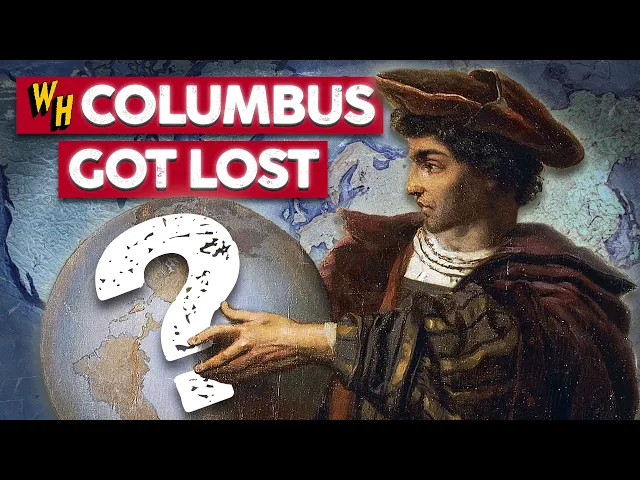
Repeat after us. I pledge allegiance to the line. The notion that Christopher Columbus set sail to disprove the flat Earth theory has long been debunked.
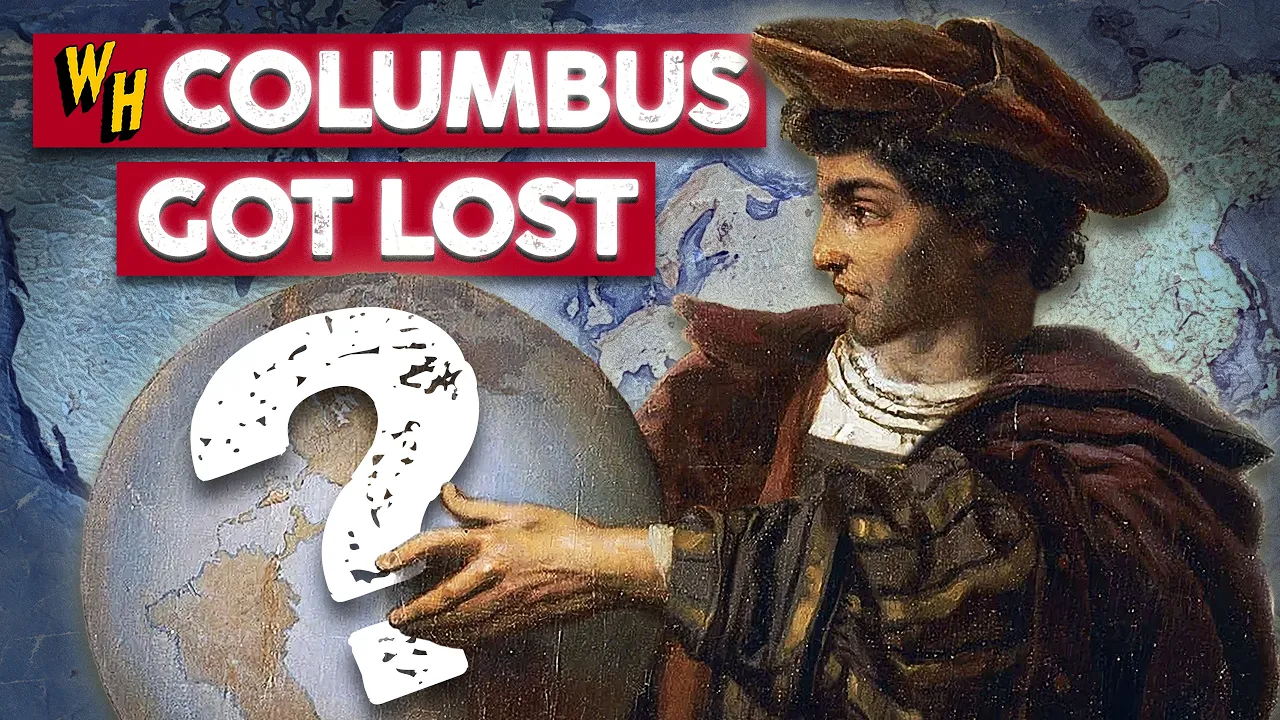
But his legendary 1492 voyage did draw inspiration from a scientific misconception of his own. Columbus's journey to the new world was made possible by a handful of critical miscalculation on his part. Including the failed conversion of Arabic miles to Roman miles and misguided corrections to old maps.
As a result, Columbus planned his trip to Asia using calculations that were 8000 miles off, give or take, because of Columbus's mis measurements, he anticipated a far simpler westward trip from Europe to Asia than what he encountered. This error allowed him to essentially trip over the new world amid his journey. Columbus's discovery devastated the native population nations of the Americas and triggered the further development of European civilization in the Western Hemisphere that ultimately resulted in the United States and the Pirates of the Caribbean, the actual Pirates, not the Disneyland attraction or subsequent movie series, although it did technically lead to those as well.
The partial meltdown at Three Mile Island occurred on March 28th, 1979, and remains the most serious nuclear disaster in American history. It happened due to an unlikely combination of malfunction and human error. After a relief valve for the reactor core became stuck, open, plant staff were unable to read the signs of impending trouble on their array of gauges until it was too late.
Although nobody perished during this event at Three Mile Island and any adverse health effects caused by the release of radiation have been minimal. The real consequence was Americans distrust of nuclear power. The incident in three mile Island essentially ended any chance the United States had of adopting nuclear energy in greater force.
This resulted in further reliance on fossil fuels and a national aversion to alternative sources of energy, which persists to this day. In the early stages of the American Civil War, the Confederate Army seemed poised for victory as the rebels headed further and further north, winning several key victories along the way. General Robert E Lee concocted special orders number 191, an 1862 plan to take control of several important Maryland locations.
One copy of these orders, however, was somehow lost, only to be picked up by a union soldier. Huh. I thought Grant was supposed to be the drunk one.
The leaked details of Lee's plan allowed the union to defeat him at South Mountain and Antietam. The victory at Antietam also provided the pretext President Abraham Lincoln needed for issuing his preliminary Emancipation Proclamation, which transformed the union cause into a crusade against slavery. The United States made several attempts to topple Fidel Castro's government in Cuba, but the most concerted effort was the failed Bay of Pigs invasion that occurred under the John F Kennedy administration.
The Americans landed some 1200 soldiers, mostly Cuban exiles, on the shores of Cuba on April 17th, 1961, a force meant to be backed by air support. The six B 26 planes arrived unescorted as the air Force forgot to consider the one hour time zone difference when dispatching them from Nicaragua to Cuba. mis-scheduling a zoom meeting for remote workers is one thing, but this was a little more serious.
The planes fell to Castro's & 33s. Ground forces were overwhelmed and the vast majority of the intruders were either captured or slain. The incident was an unmitigated failure and drastically increased tensions between the United States and Cuba, which culminated in the Cuban Missile Crisis near the end of World War Two, when the United States delivered its terms of surrender to Japan in July of 1945.
The world breathlessly awaited their response. Japanese premier Kantaro Suzuki told reporters he had no comment at the moment and he used the phrase mokusatsu or silence to express his message of patience. Unfortunately, mokusatsu has multiple meanings.
The press chose the translation that read to ignore with silent contempt, miffed by the seemingly flippant statement. President Harry S Truman proceeded with the planned devastation of Hiroshima and Nagasaki, of course, dropping the first atomic weapons in history and unleashing devastation the likes of which the world had not yet seen was never going to be a quick or easy decision. President Truman and his advisers were weighing many difficult and complicated factors, so it's difficult to know exactly how much weight Premier Suzuki's reply carried.
However, had the phrase not been mistranslated, it's also possible the bombs would not have been dropped at all, and perhaps a peaceful surrender could have been negotiated. This was not the case, and as a result, the loss of life was devastating. And the world has been caught up in a nuclear arms race ever since.
George Washington's crossing of the Delaware is one of the most iconic moments in U. S. history, thanks mostly to that one painting and his subsequent defeat of the Hessian forces on the other side was a total victory in the American Revolution.
But this victory almost didn't occur. A local farmer arrived at the Hessian camp beforehand, warning of Washington's approach. But Colonel Johann Rall was busy playing cards and refused to see him.
The farmer wrote him a note explaining the dire circumstances. But Rall, a German speaker who couldn't decipher the message in English, stuffed it in his pocket and returned to his game that morning. Washington caught the Hessians by surprise.
Washington's victory at Trenton was as decisive as it was important to America's eventual independence. More than two thirds of the Hessian forces were captured, and the Revolutionary Army gained a foothold in New Jersey Rall and over a dozen others paid for the mistake with their lives. Hope at least won that game of poker in 1970.
Xerox created the Palo Alto Research Company PARC for short and began pumping out countless tech innovations at the same time. Steve Jobs, and the minds of Apple, had hit some roadblocks and were looking for new ideas. Jobs requested access to the PARC facility for three days, and the executives at Xerox agreed.
In exchange for a pre-IPO investment in Apple, Xerox got 100,000 shares in the company for just $10 apiece. While Jobs and his team got to witness the innovations the Xerox team was introducing to computing jobs, and his coworkers at Apple had already made numerous strides in the personal computer world. But the concepts they saw in action at PARC helped revolutionize the company's direction moving forward.
Innovations like the use of a mouse, a graphic user interface and other user friendly designs were adopted for the advent of the Lisa and Macintosh computers. As a result, Apple set itself on the path to its current dominance in the tech industry, and Xerox got a hefty return on their investment. Just good luck refilling a toner cartridge.
The American housing market soared in the early 2000s, with sales reaching record highs and more individuals owning homes than ever before. Financiers attempted to cash in on this prosperity by offering subprime mortgages to those with little to no documentation who were later unable to repay their loans. As the record number of homeowners turned into a record number of people unable to pay off their mortgages, foreclosures loomed.
And the mortgage crisis began. The effects of the mortgage crisis are still fresh in American society. The housing market has never fully recovered, and owning a home is difficult, especially for members of younger generations.
With fewer Americans able to own homes. A bevy of economic consequences followed, as well as an aggressively quirky Adam McKay movie starring just about every famous person from the past ten years. So what do you think?
Which of these foul ups was the most consequential? Let us know in the comments below. And while you're at it, check out some of these other videos from our weird history.