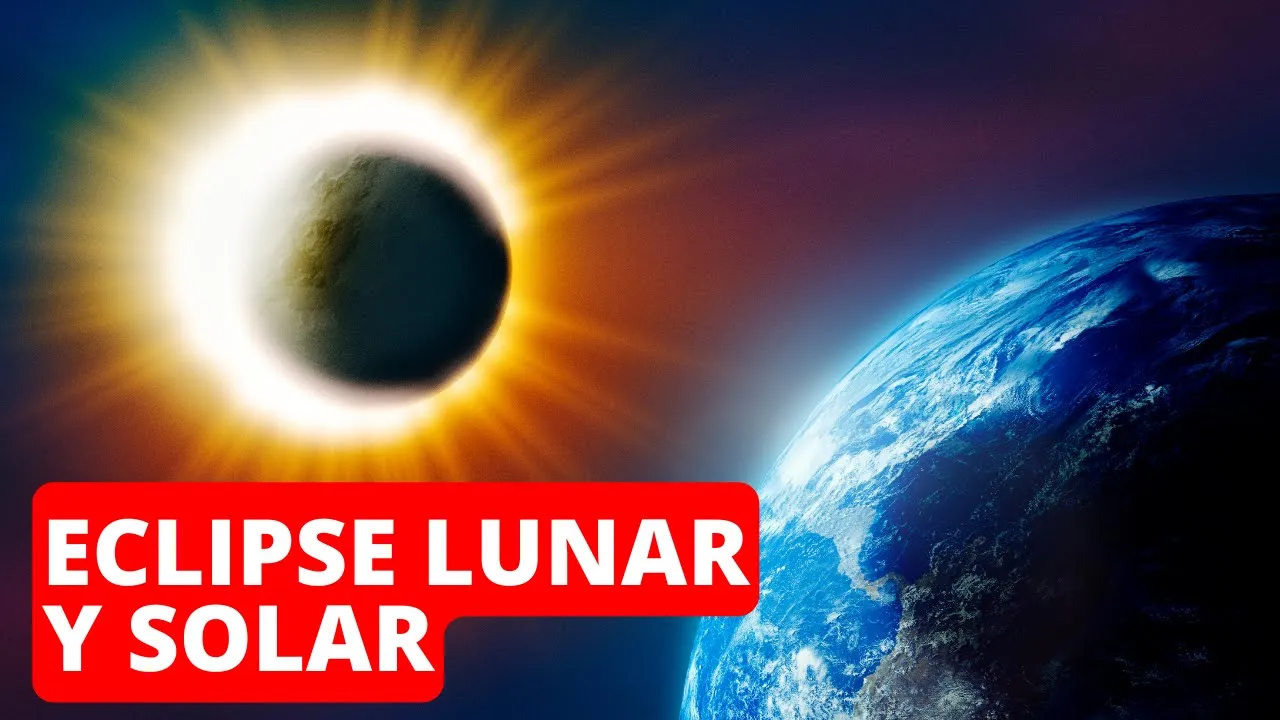
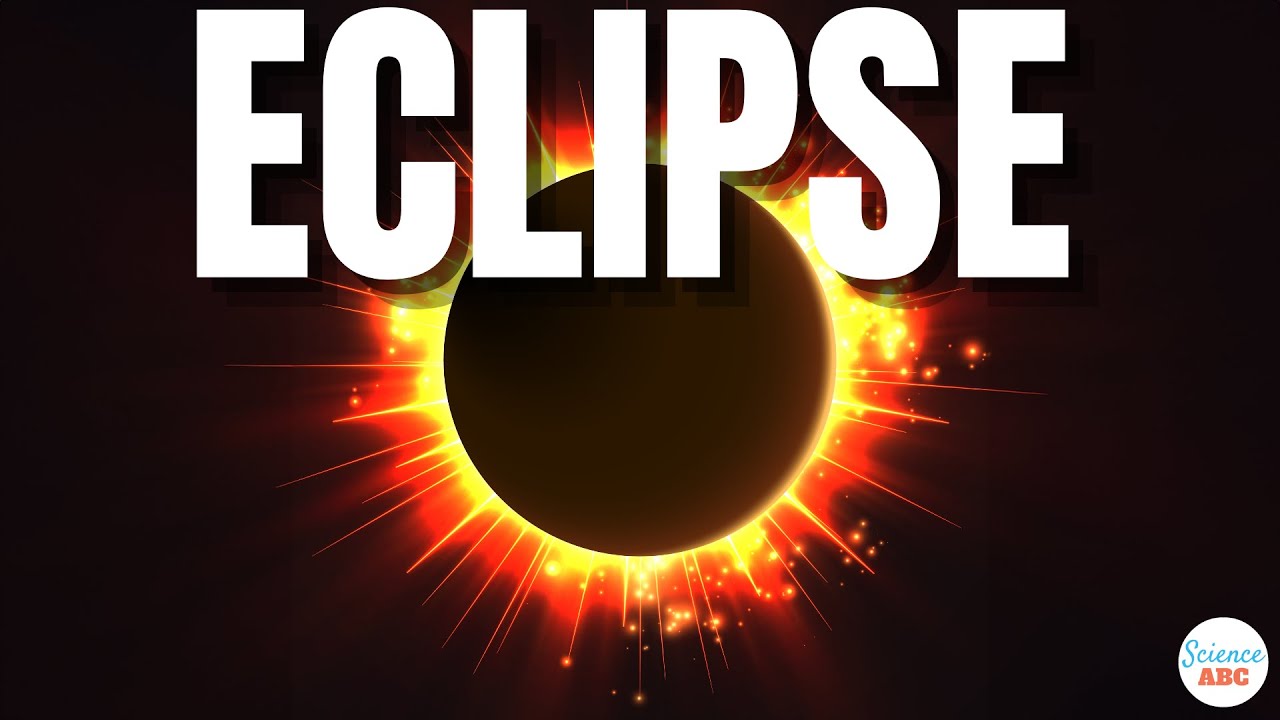
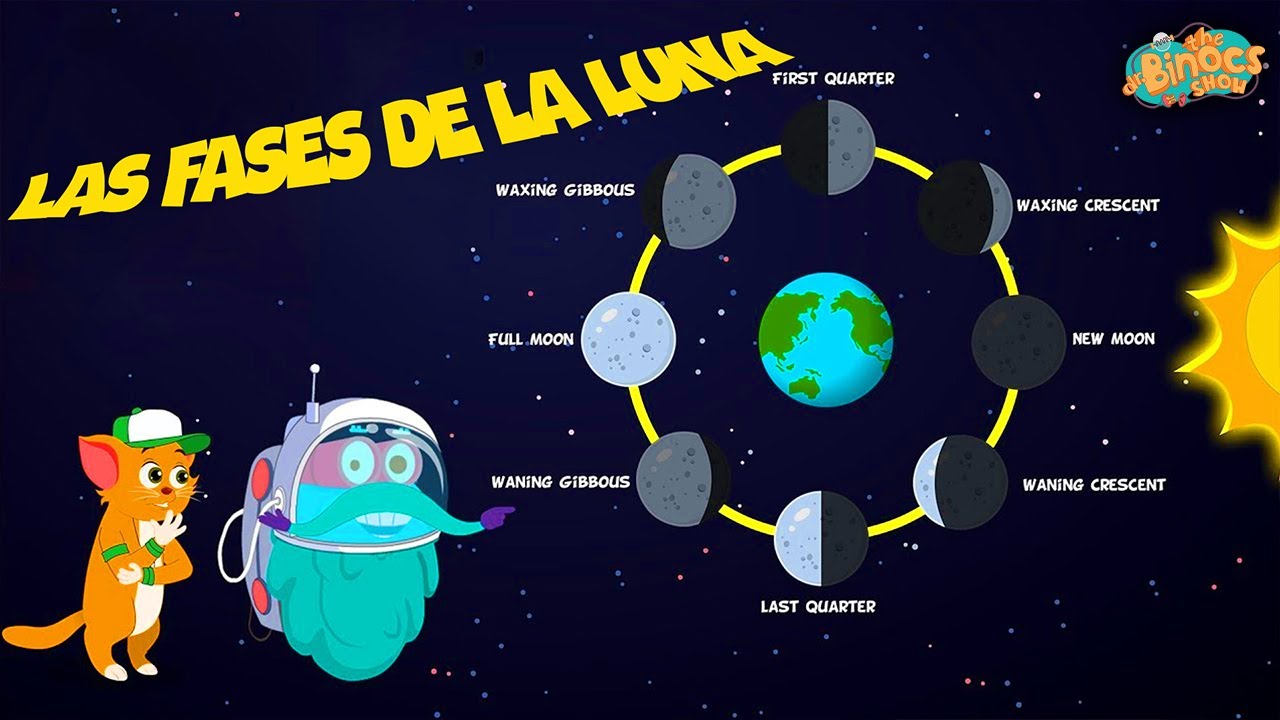
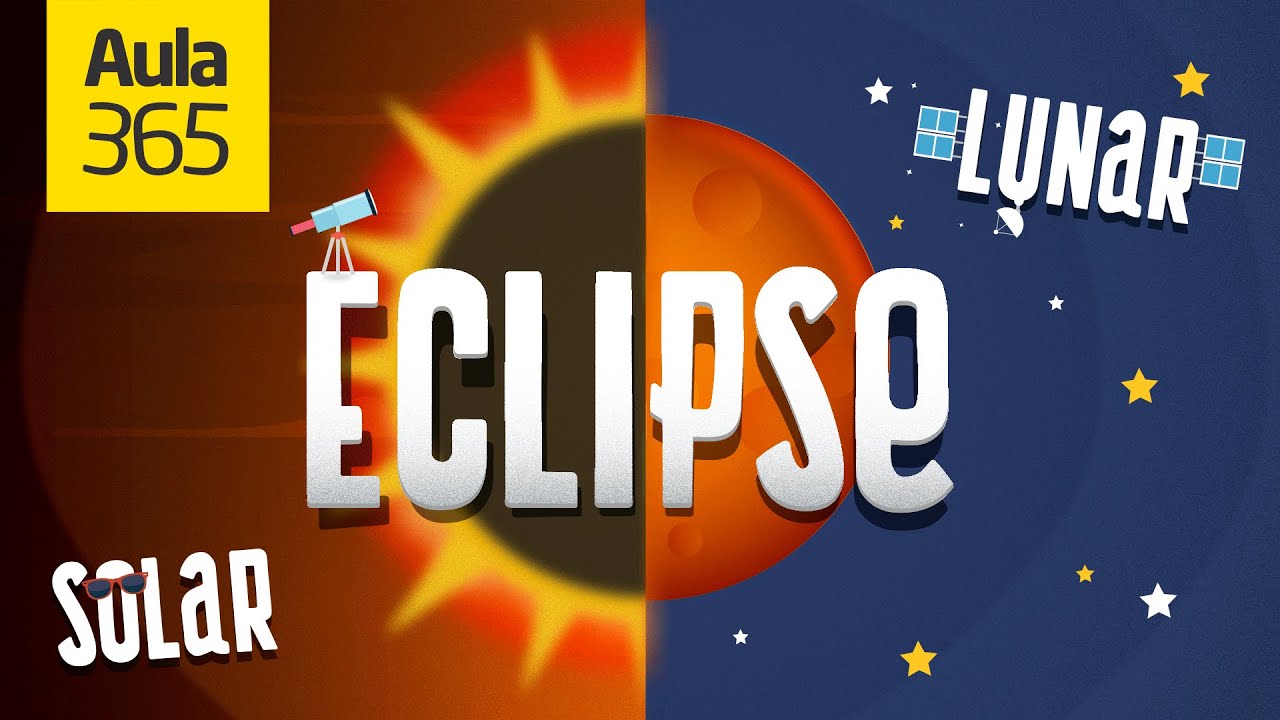
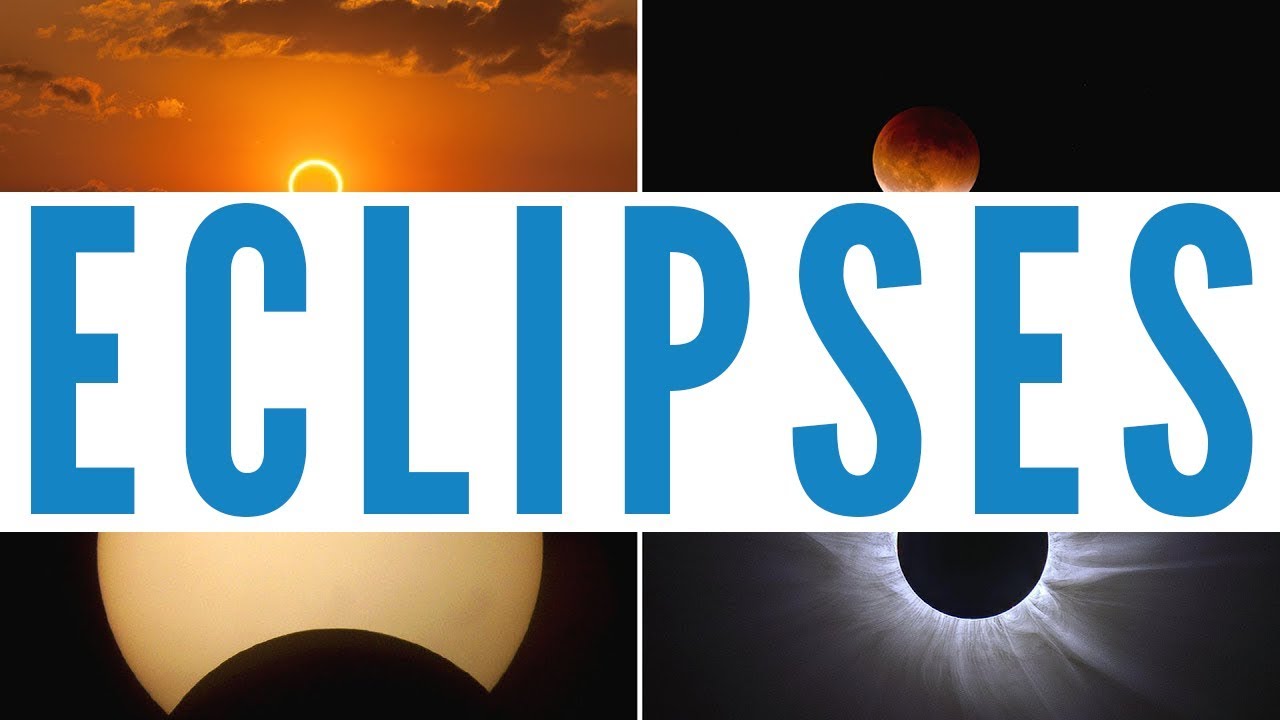
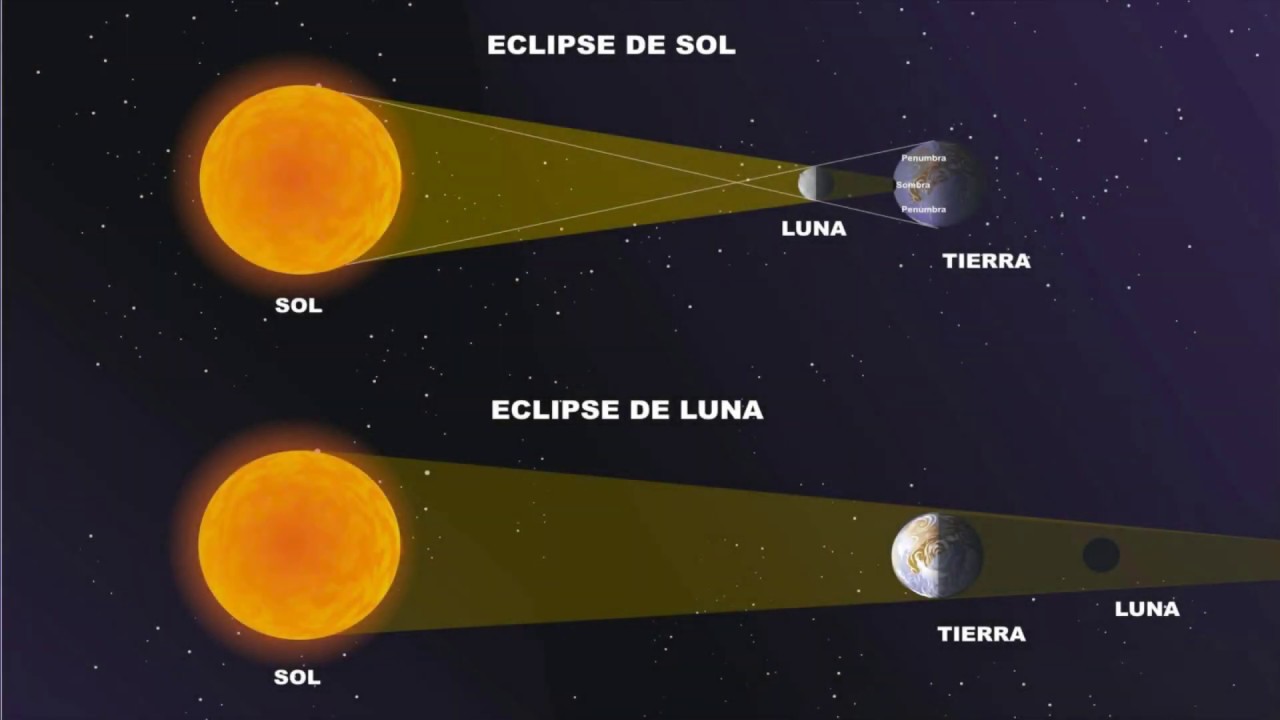
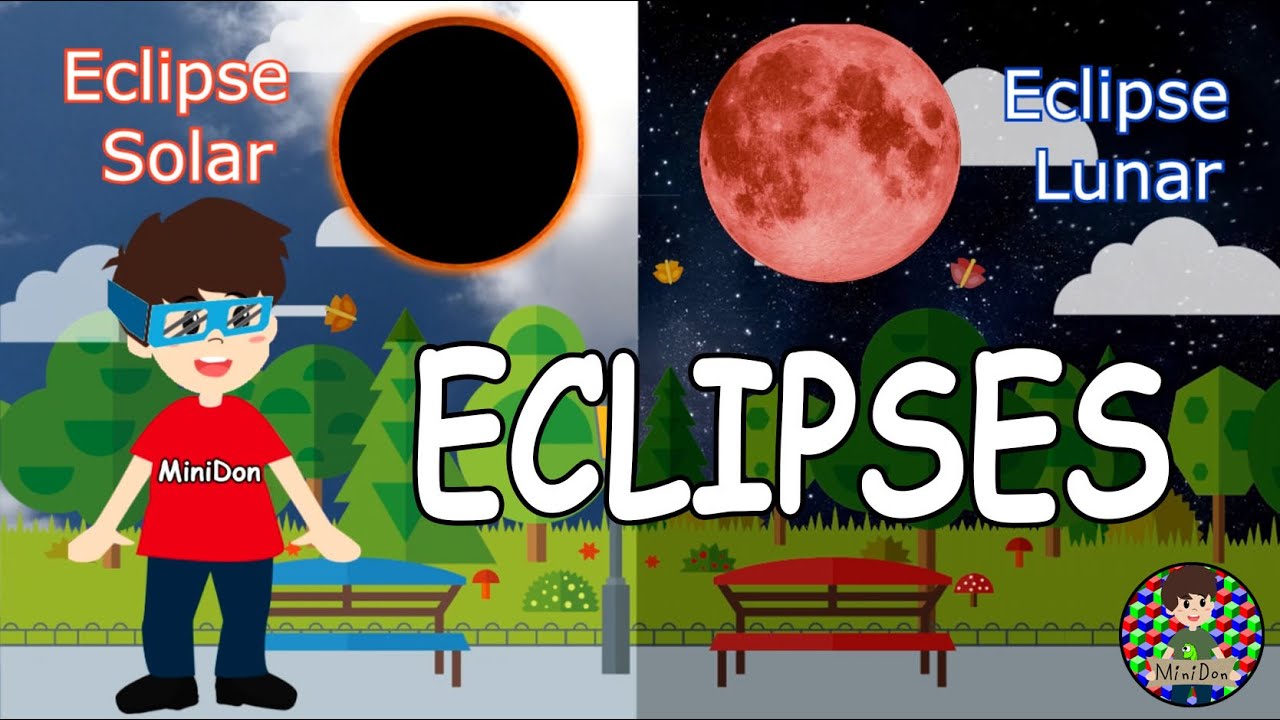
Solar and lunar eclipses are two types of phenomena in which the Sun or the Moon is hidden, as the case may be. When a solar eclipse occurs, the Moon blocks the view of the Sun, while a lunar eclipse means that the Earth's shadow obscures the Moon. Solar eclipses only occur during the phase known as the New Moon, when the Moon is between the Earth and the Sun.
During this phenomenon, the Moon casts a shadow on the planet, totally or partially blocking the view of the star. Lunar eclipses occur in the full moon phase. The Earth is placed between the Sun and the Moon, so the Earth's shadow falls on the lunar surface, which makes it dim and there are times when the satellite is perceived with a reddish hue.
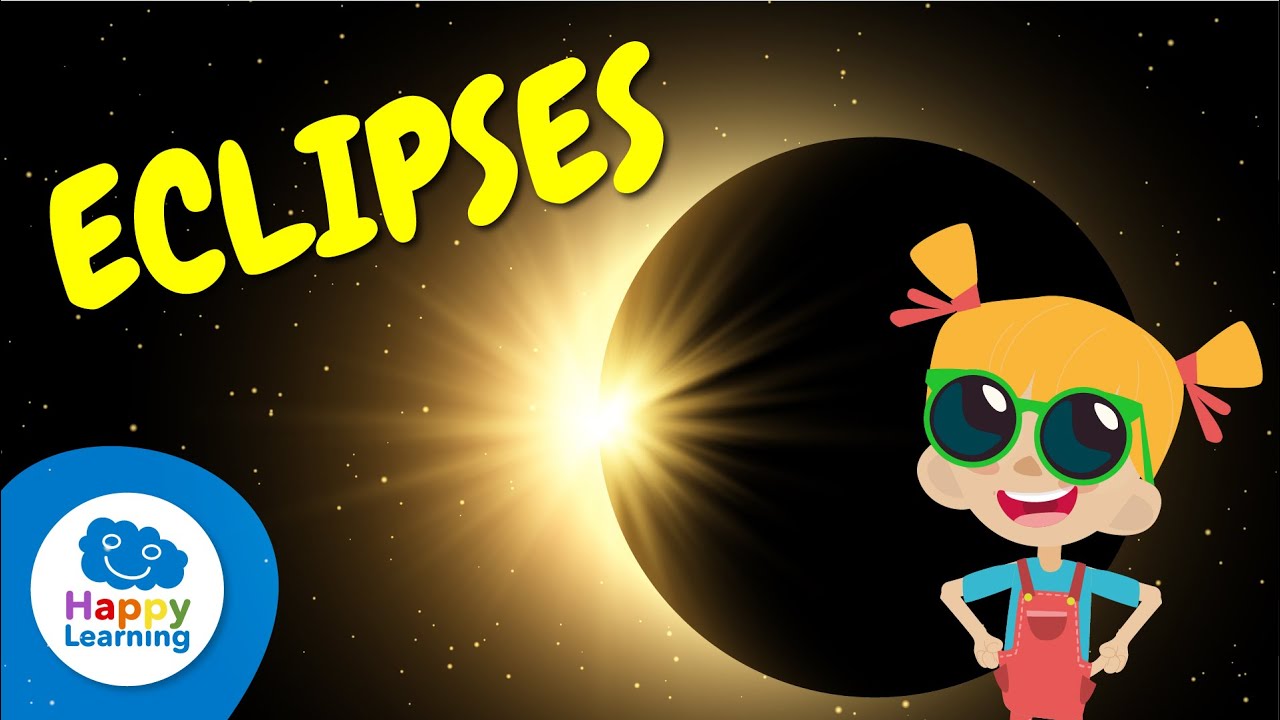
Solar Eclipse A solar eclipse occurs when the Moon, orbiting the Earth, passes between the Earth and the Sun. This partially or completely blocks sunlight from reaching the Earth. During a solar eclipse, the Moon's shadow on the Earth's surface is about 300 miles long and consists of two parts: the umbra, which means the Sun is completely blocked, and the penumbra, where the Sun is only partially obscured.
People in the umbra zone will see a total eclipse, and those in the penumbra will see a partial eclipse. How are solar eclipses formed? Solar eclipses can only be seen from some points on the planet.
Although the Sun has a larger diameter than the Moon, the natural satellite is much closer than the Sun, which allows the Moon to block the Sun under certain conditions. The phenomenon occurs when the Moon gets in the way of light casts the Sun onto the planet, casting its shadow. Every year a maximum of five solar eclipses can be seen from Earth.
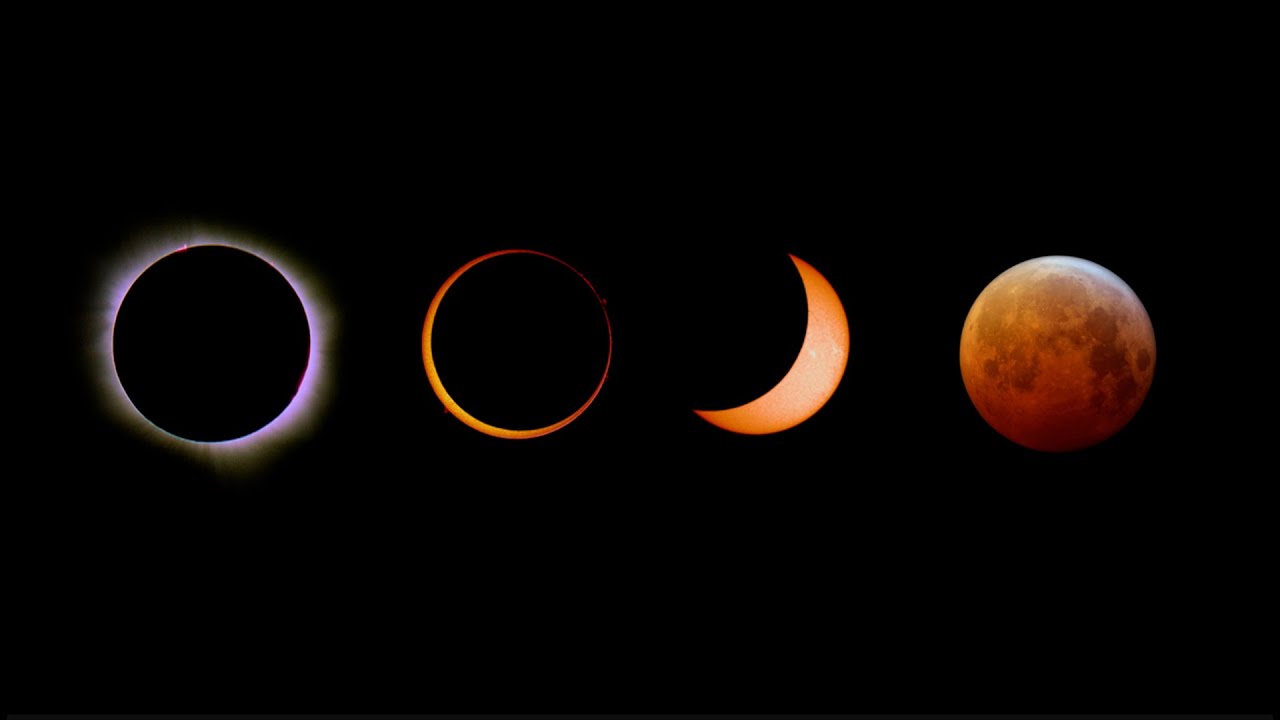
What are the types of solar eclipses? There are four types of solar eclipses: partial, total, annular, and hybrid. In partial eclipses, the Moon, Sun, and Earth do not fully align, so the Moon casts only a part of its shadow, called the penumbra, onto the planet.
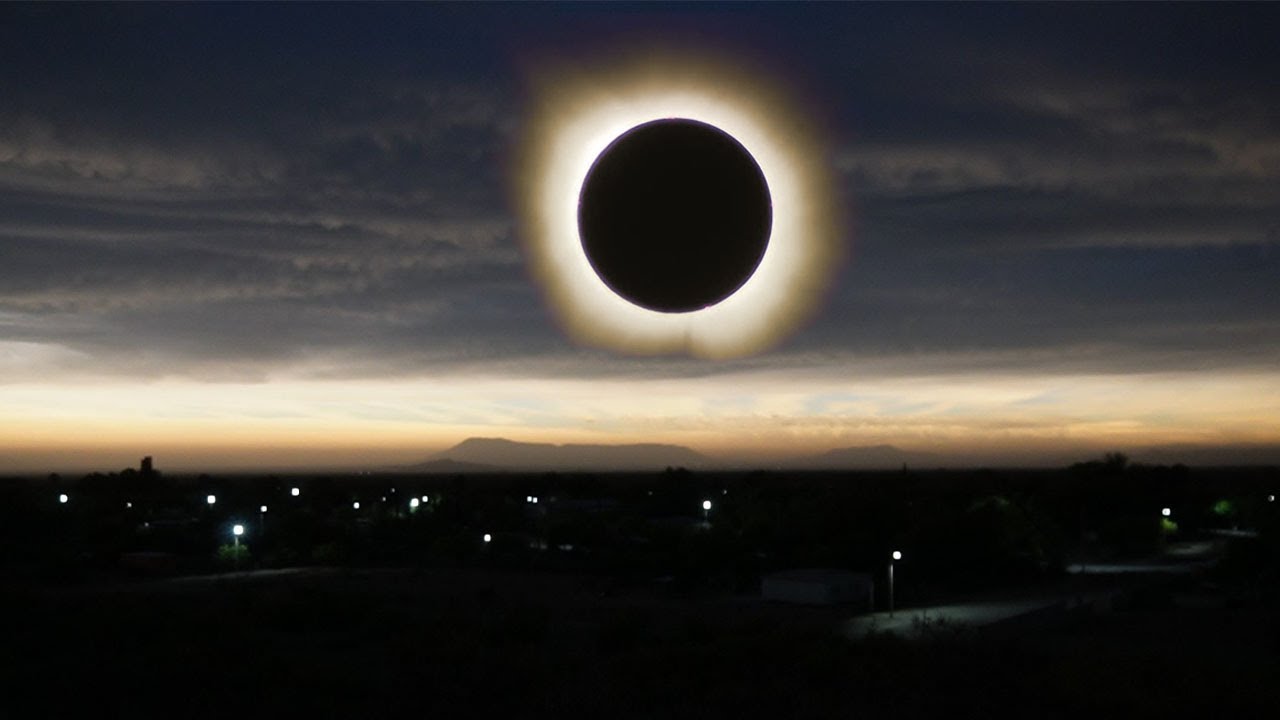
It is estimated that 35% of solar eclipses are partial and can be visible over almost the entire planet, but it is more common to see them near the Earth's poles. Total eclipses mean that the Moon covers the entire solar disk, but this phenomenon can only be seen by people who are in the path of the Moon's full shadow, called the umbra. For those who are not in the zone of the umbra, a partial eclipse is perceived.
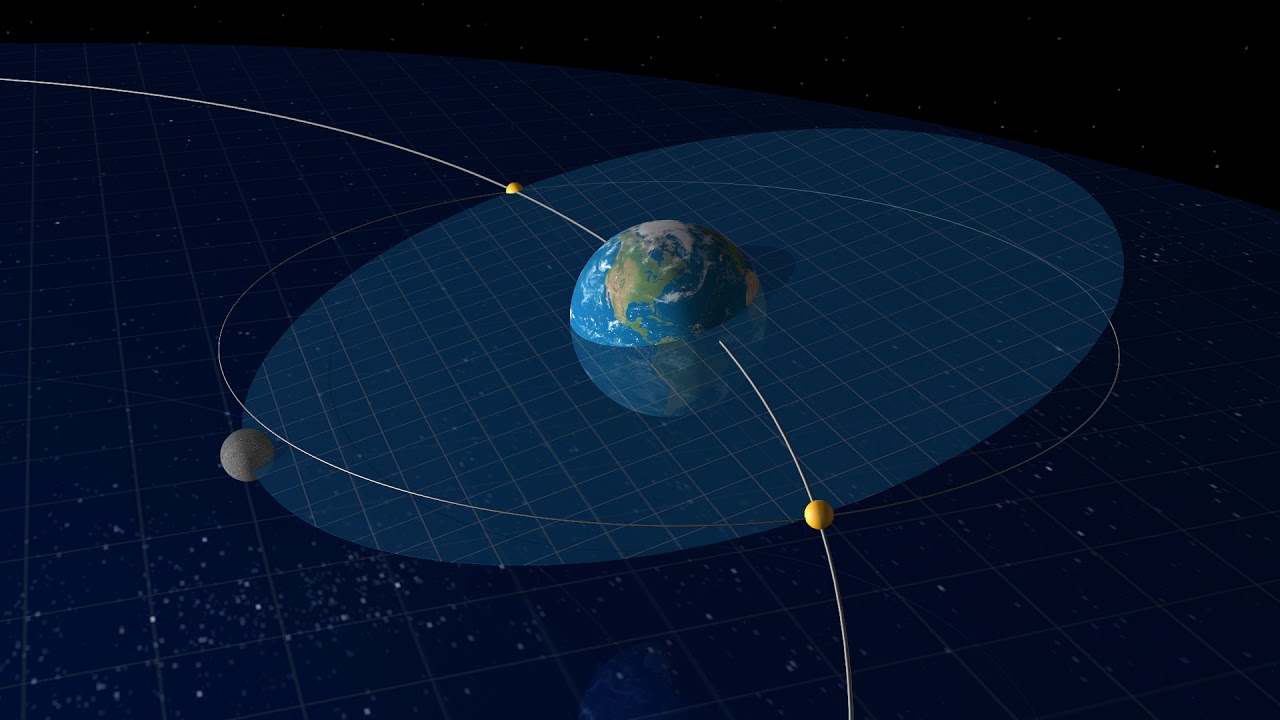
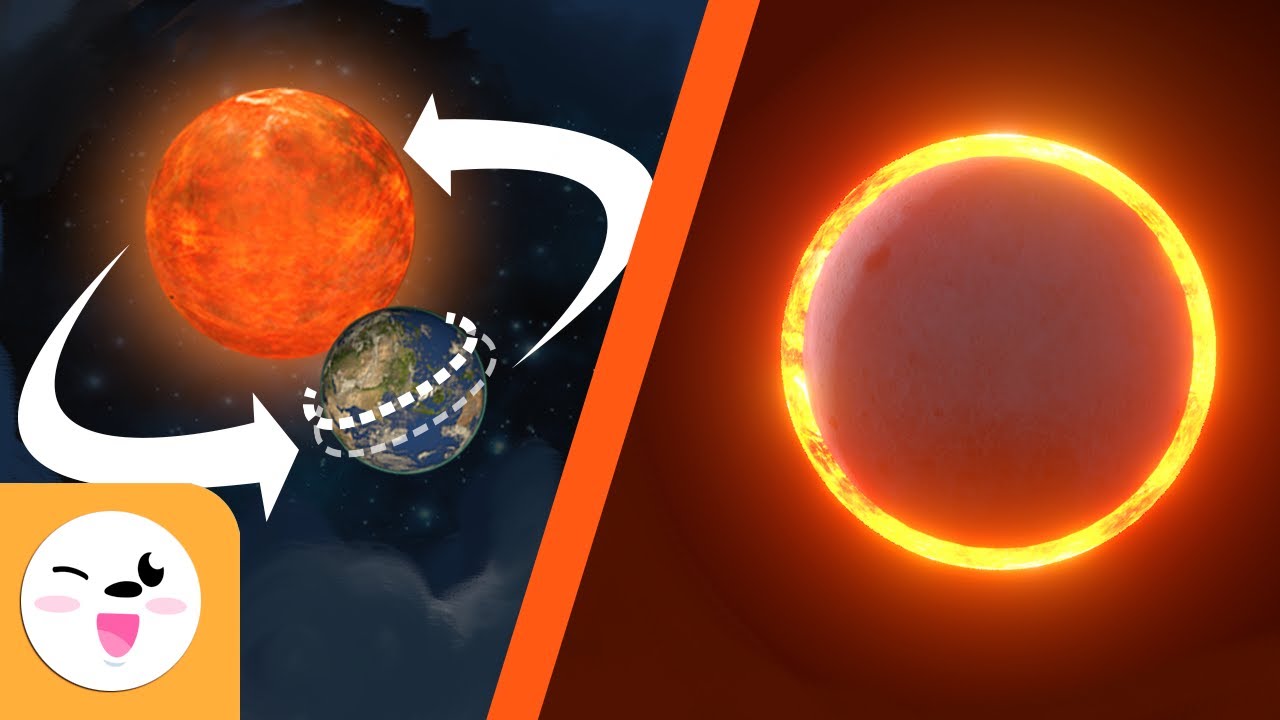
There are cases in which a total eclipse can be seen anywhere on the planet. Annular solar eclipses occur when the Moon covers the central part of the Sun, leaving the edges of the star visible, so a kind of ring around the Moon can be seen. This type of eclipse occurs in a new Moon, when the satellite is very close to a lunar node, the point in the sky where the Moon's orbit intersects with that of the Earth.
Hybrid eclipses occur when an annular eclipse is combined with a total one. It is appreciated according to the location of the person who is observing. They occur when the Earth travels through the area where the Moon's umbra meets the antumbra, a region in which the body appears contained around the disk of light.
How long do solar eclipses last? The complete phenomenon of a solar eclipse can last approximately two hours, but the so-called exact phase, which shows the phenomenon at its maximum, lasts an average of a few minutes. A total eclipse can range from a few seconds to 7.
5 minutes. So far in the 21st century, a total solar eclipse has been recorded with a record duration of 6. 39 minutes, which occurred on July 22, 2009.
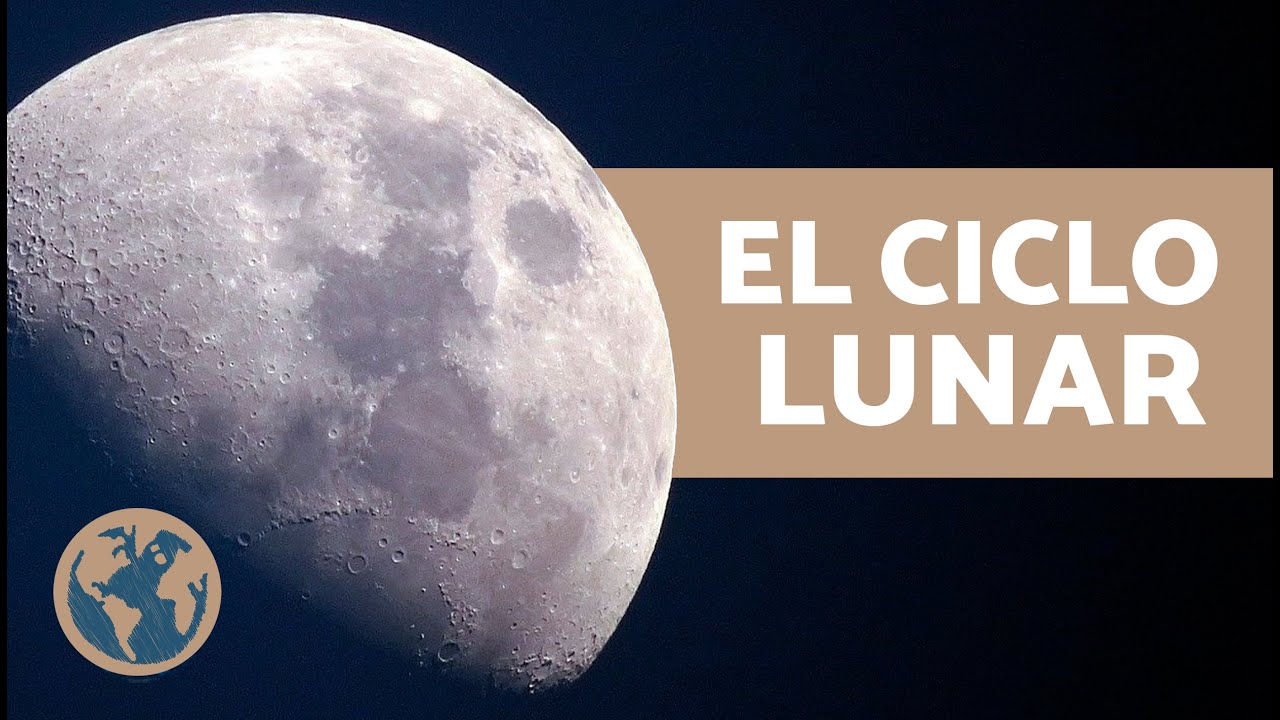
Lunar eclipse Lunar eclipses are phenomena that occur during the full Moon, and are generated when the Planet Earth lines up between the Sun and the Moon, casting a shadow on the Moon's surface. This phenomenon implies changes in how the Moon is perceived from the planet. The natural satellite takes an average of 29.
5 days to orbit the Earth, the time in which it completes one cycle from the new Moon to the full Moon, but there are only an average of three lunar eclipses each year. How are lunar eclipses formed? For there to be a lunar eclipse it is essential that the Sun, the Moon and the Earth are aligned.
Also, because the Moon's orbit around Earth is not flat, the moon commonly passes above or below Earth's shadow. Lunar eclipses occur at times when the Moon has a similar tilt to Earth. What are the types of lunar eclipse?
There are three types of lunar eclipse: total eclipse, penumbral eclipse, and partial eclipse. The total lunar eclipse implies that the Moon passes into the umbral shadow of the Earth and sometimes causes a phenomenon called the Red Moon or Blood Moon, with which the satellite can be seen with reddish tones. The moon turns red because of the way light from the Sun interacts with Earth's atmosphere.
Upon reaching the atmosphere, short wavelengths, such as the color blue, are scattered outward, while long waves, such as red, are reflected by the Earth. The penumbral lunar eclipse occurs when the Moon passes into the outer shadow; the effects of this phenomenon are not so evident on Earth, it simply darkens the Moon slightly, something that is not so easy to appreciate, not even with a telescope. A partial lunar eclipse occurs when the Sun, Earth, and Moon are not perfectly aligned, so only part of the Moon passes through the planet's umbral shadow, resulting in only a portion of the lunar surface being visible in reddish tones.
How long do lunar eclipses last? The duration of a lunar eclipse can vary between half an hour and six hours, which include the entire phenomenon. On average, they tend to last longer than solar eclipses, due to the size of the Earth with respect to the Moon.
Every year between two and seven lunar eclipses can occur. Their frequency is also higher than that of solar eclipses, but most lunar eclipses are not as noticeable on Earth. We have already reached the end.
If you liked it and you have learned, give it a like and subscribe to the channel. I wish you a happy day. See you soon!
![Earth tilt and seasons [eng subs]](https://img.youtube.com/vi/RETy2e5ZrJ0/maxresdefault.jpg)