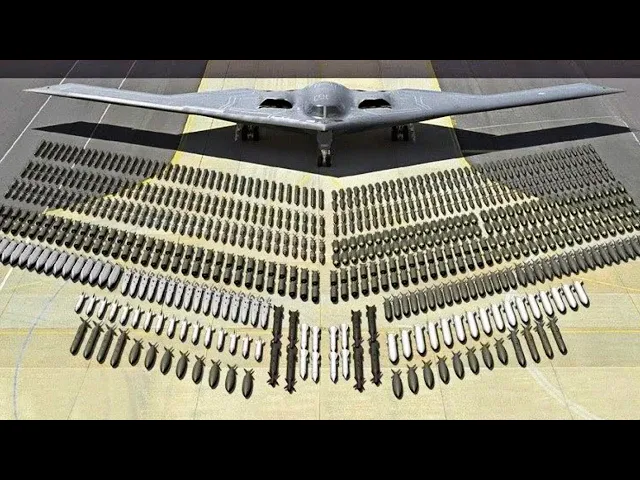
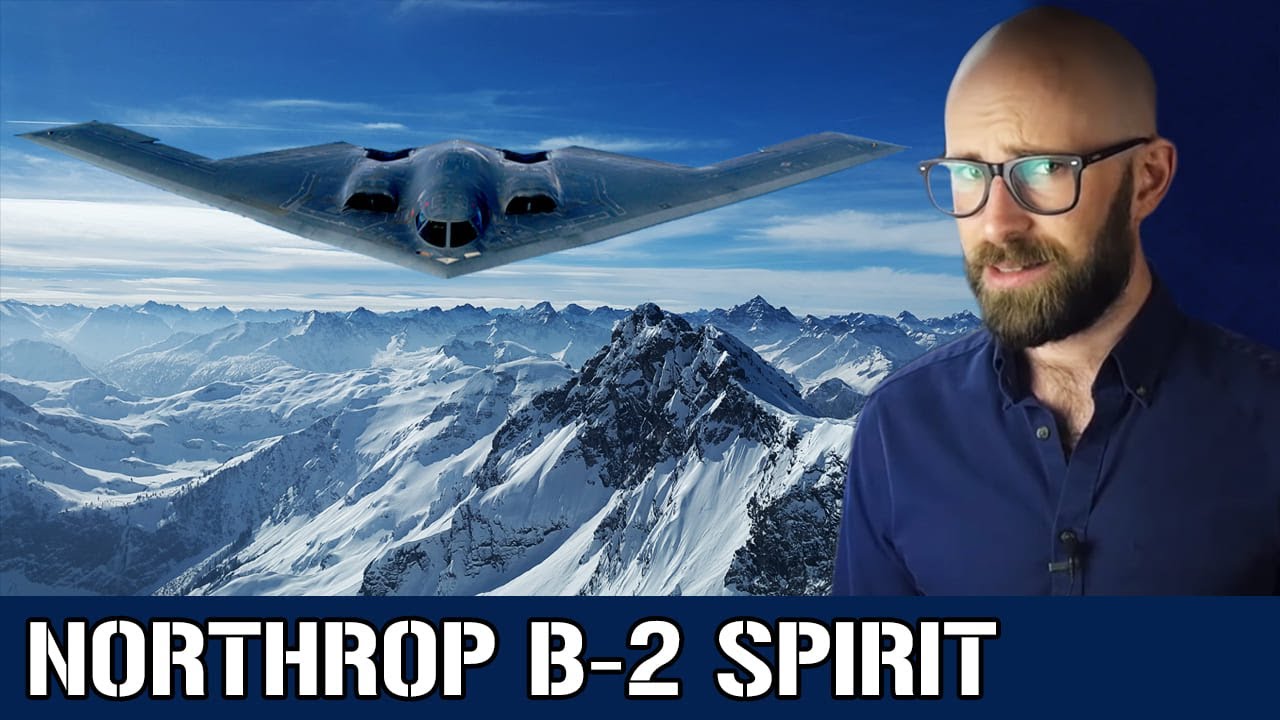
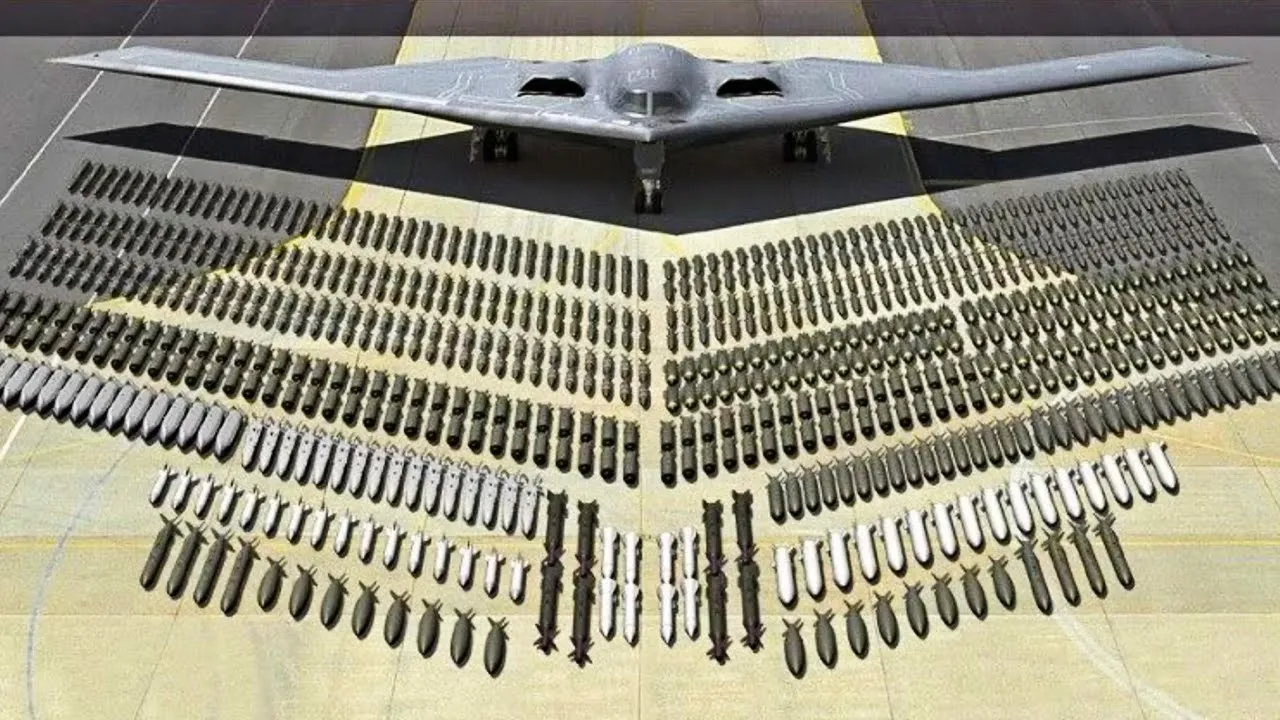
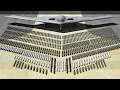
we know it as the b-2 but its full name is the northrop grumman b-2 spirit it's one of the most powerful aircraft that any country's military defense has but what makes it any different from any other aircraft its role is to be a stealth bomber so it should come as no surprise that stealth is its number one priority but how can an aircraft that travels at a top speed of max 0. 95 almost the speed of sound stay hidden so well join us in this video as we explore the unrivalled power of the b2 bomber it's wider than it is long its 52 meter wingspan trumps its 21 meter length but remains virtually undetected this is all thanks to its clever packaging a radar cross section is how detectable something is by radar and the b2's cross section is just 0. 1 meter square compared with a cargo aircraft which can measure anywhere up to 100 meters square this low drag wing configuration not only helps it achieve minimal cross-section but its range is also vastly improved it can travel more than 11 000 kilometers about 6 900 miles in one go and can keep going thanks to its ability to be refueled mid-flight radar absorbent materials like a carbon graphite composite help reduce its infrared signature by absorbing many of the radar beams that would normally detect such a plane in fact up to 80 percent of the aircraft is made of composite materials which as well as having radar absorbent properties are extremely strong and well suited to the b2's ultra dynamic nature the wings for example have a larger degree of flex than airplanes you and i may have flown on which helps absorb energy from aerodynamic stress making it more efficient at high speed using these materials also helps the longevity of this bomber aircraft while metals and metal alloys have a shorter lifespan composite materials can be meticulously engineered at a molecular level to extend and improve what is known as fatigue cycles a growing number of target countries are recognizing this though so have turned to other ways of detecting an aircraft infrared systems are used to detect the heat of an aircraft not only from its engines but the body which heats up due to air friction the engines are buried deep in the fuselage to help combat this to keep the aircraft as prepared as possible in the event of a technical mishap the b2 was additionally built not to rely on gps but rather a range of sensors gyroscopes and radars to help pilots recognize where they were based on landmarks a gps antenna would also make it more susceptible to being picked up by enemies hundreds of thousands of dollars were later driven into developing a new type of gps known as emcode which are more reliable responsive and destined only for use by the military this represents a significant milestone in navigation technology it may be a powerful aircraft but it doesn't just need to be stealthy its primary purpose is to carry and fire ammunition in target countries with a width that is half the length of a football field you may think it can carry a lot double this and add some more that's how much the b2 can store two internal bays have an official limit of 18 tons but it's likely that it could carry even more if needed its armament includes 80 500 pound class bombs 36 750 pound class bombs 16 000 pound class bombs and 16 nuclear bombs such as the b-61 or b-83 as well as a handful of other satellite-driven missiles and penetrators an update in june 2007 a decade after it was first conceived the b-2 was awarded a contract to integrate two massive ordnance penetrator or mop weapons this gps guided weapon carries 5 300 pounds of explosive material and is designed to target even the most protected enemy compounds its manufacturers say that this is the most survivable aircraft in the world and combines three things that no other rival could long range stealth and the ability to carry an extraordinarily heavy payload all of this comes at a cost though each supposedly game-changing aircraft cost 737 million dollars in 1997.
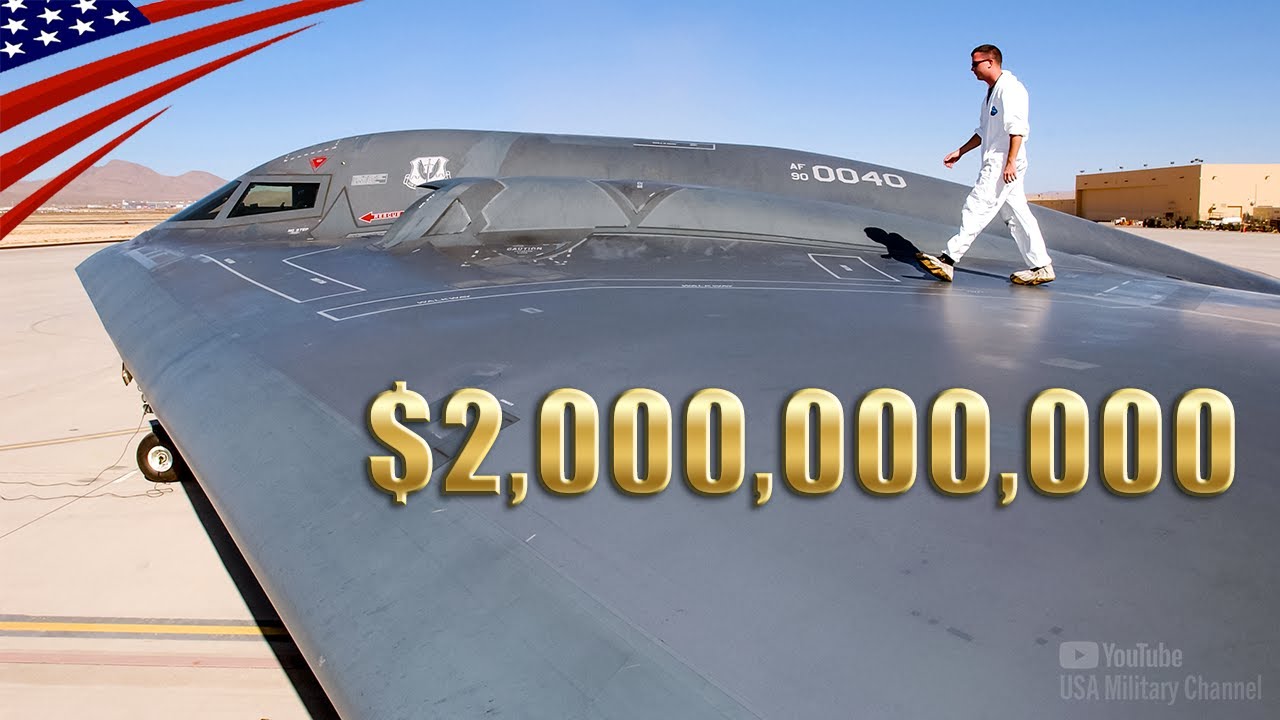
that's about 1. 2 billion dollars adjusted for today's currency this is affordable though compared to the cost incurred to develop the b2 including testing and deployment the figure is placed at 2. 13 billion dollars per aircraft for this around 3.
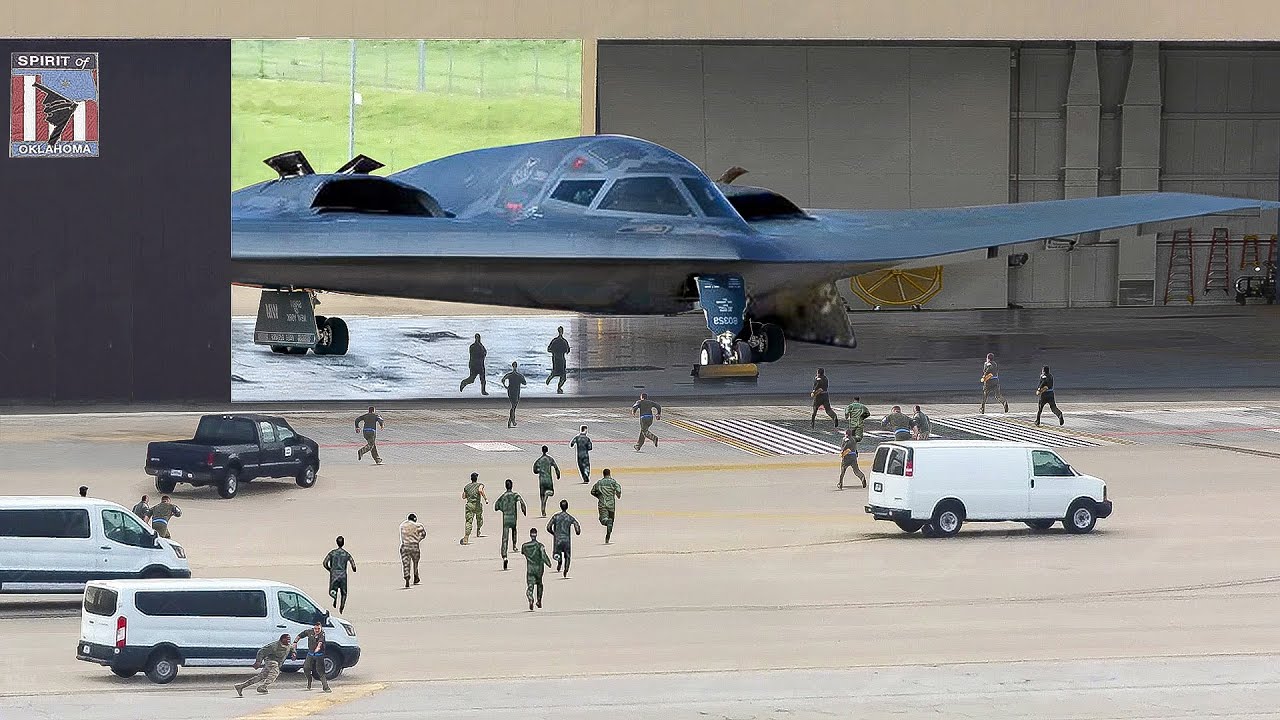
5 billion in today's money initially 132 examples were commissioned but this was later dropped to 75. after the soviet union had dissolved in the 1990s only 20 were acquired as set out under the george h w bush administration although a final 21st aircraft was given the go-ahead to be converted from a prototype all 21 examples are still in operation and the u. s plans to keep them until 2032 retiring them at an age of over 30 years old some of the cost went into acquiring an old ford plant in pico riviera california which had to be rebuilt to be able to house the aircraft's extensive wingspan the early stages of the program were kept so undercover that the staff would often be required to work out of uniform to avoid suspicion and would even be subject to routine polygraph or lie detector tests much of the company's procurement would be placed through front companies so that the assembly of the b2 would be kept secret purchasing them is one thing keeping on top of the world's most impressive stealth bomber is another it's estimated that each hour of flight requires 119 hours in maintenance that's twice what is required by the b-1b and b-52 in 2010 it was said that each hour of flight cost 135 000 to the u.