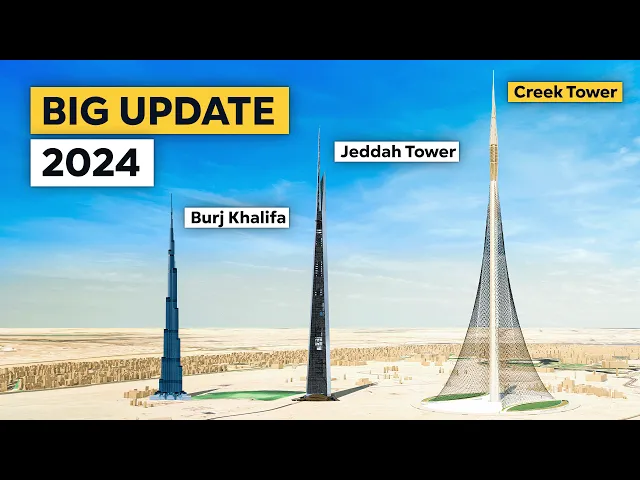
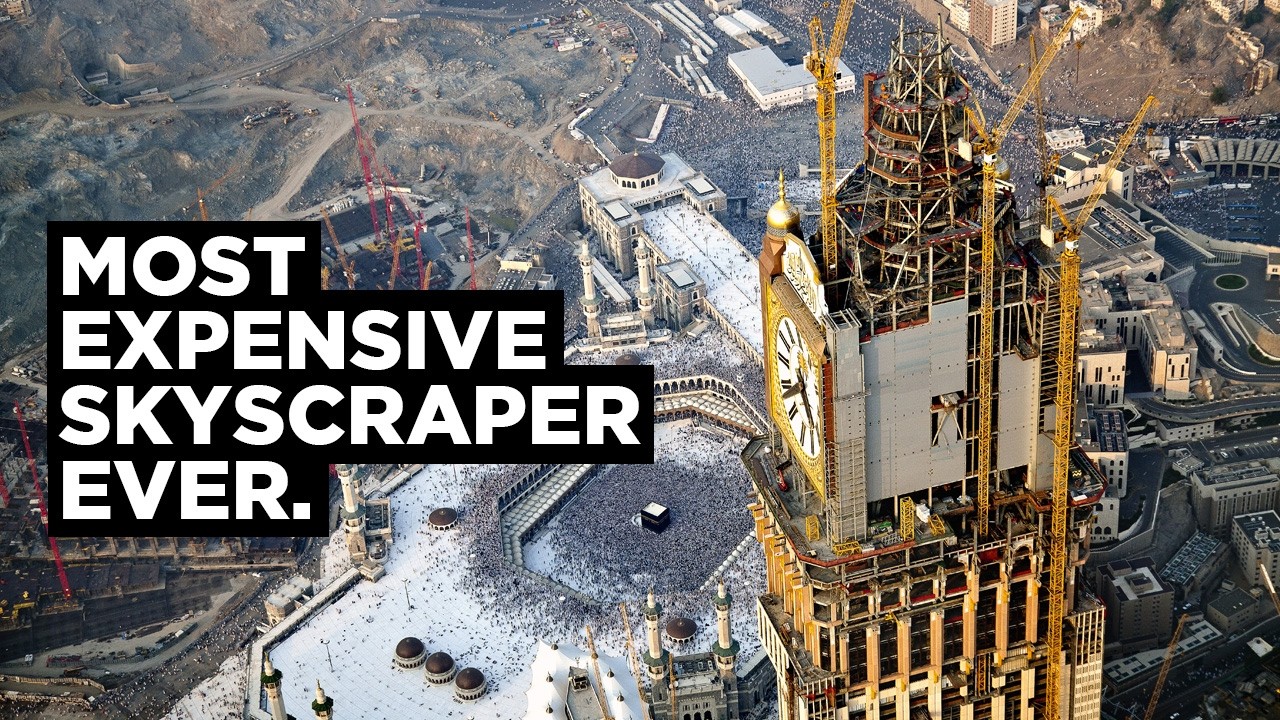
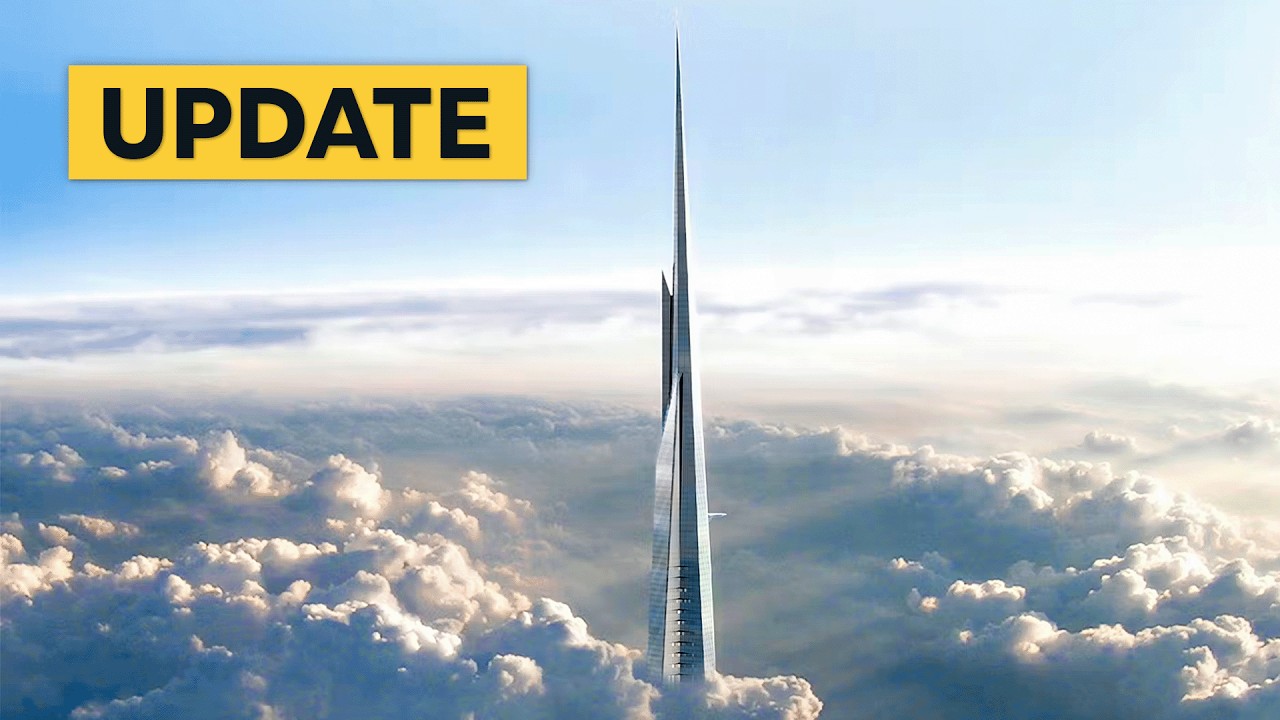
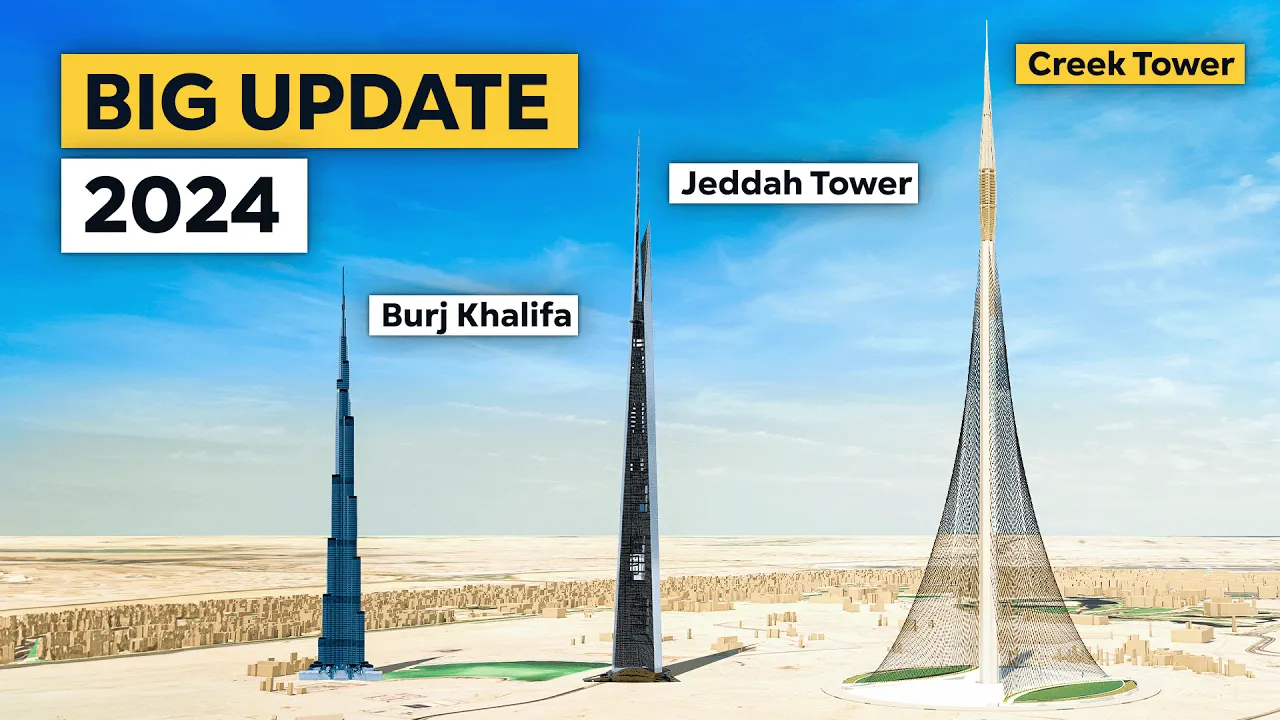
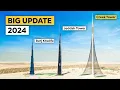
The race to build the world’s first one-kilometer structure is now back in full swing! Shortly after Saudi Arabia announced the resumption of construction on the Jeddah Tower, Dubai also announced that work on their Dubai Creek Tower will resume. But there is a catch, the developers announced that they will redesign the entire structure.
So what exactly has changed? And how do you actually build a skyscraper this tall? For today’s video, we came up with our very own design to answer this question.
But, more on that later. First, let's take a look at the development of the Dubai Creek Tower to date. The project was first announced back in 2016 and was set to become the tallest manmade structure in the world.
With an initial proposed height of at least 1,300 meters, it would easily surpass Dubai’s very own Burj Khalifa. The current tallest building in the world. But not only that.
It would probably also be taller than its rival the Jeddah Tower which is, as far as it is publicly known, slightly over 1,000 meters tall. Although the Dubai Creek Tower was put to a complete stop in 2020, there has actually been some considerable work done on site. Developer Emaar Properties managed to finish the tower’s foundations just two years after they began construction.
However, work on the main structure itself didn’t start even after this initial progress. According to some news outlets at the time, Emaar Properties was still in the process of searching for a contractor for the project, hence the delays (1). Ultimately, because of the COVID-19 pandemic, construction on the Dubai Creek Tower was suspended indefinitely.
All mentions of the project were even removed from the developer’s website around this time which led many to speculate that the tower might actually have been completely abandoned. Though the future of the tower remained uncertain, the surrounding Dubai Creek Harbour seemed to have continued as planned. The development is a brand new high-end district located in the historic Dubai Creek.
With the tower itself being the centerpiece of the development overlooking the harbor to the west with impressive views of both downtown Dubai and the Burj Khalifa. Although the entire development is still very far from completion, just a quick glance at the website of Emaar Properties will show you just how much has already been built as of this year (5). Northwest of the site for the tower lies an artificial island called simply the Creek Island.
This reclaimed area by the water is already home to a wide array of luxury hotels, apartments, and restaurants. Some of the most notable developments on the island include a 5-star waterfront hotel (8), an 80-berth marina yacht club (9), and a man-made beach and lagoon (10)! In total, the entire Creek Harbour Development, once completed, will span an area roughly twice the size of downtown Dubai (2).
It will also be capable of housing as much as 200,000 permanent residents, along with being able to accommodate tens of thousands of tourists at a time (2). All in all, if Dubai Creek Harbour turns out to be successful, it is poised to become one of the city’s major districts when it comes to business, tourism, and luxury. And that future might soon possibly become reality.
After three years of complete silence from Emaar Properties, it was announced that the Dubai Creek Tower is currently being redesigned (2). Proving that the company hasn’t entirely abandoned the project just yet. According to Mohamed Alabbar, founder of Emaar, the tower is being redesigned by a still undisclosed international firm which they’ve chosen after a comprehensive tender process (2).
This new design is described by the founder as a change that would “elevate the grandeur and impact” of this ambitious project (2). Although the redesign has still not been finalized, Emaar’s founder is already making it sound like the new version is going even flashier than the original. They hope to finalize this new concept by as early as April of next year.
With construction on the tower itself finally resuming one year later (2). Though the actual reason for this unprompted and sudden redesign is unknown, we can make some assumptions based on the information out there. It could be attributed to pressure from Emaar Properties’ shareholders and executives (4).
Since the Dubai Creek Tower is one of the company’s major projects, having it left abandoned for such a long time is probably not a good look for them. The company’s founder has recently even been quoted saying that the tower might in fact be not taller than even the Burj Khalifa upon completion (4). Contradicting his earlier statement about the change being one that would “elevate the grandeur and impact” of the entire development (2).
But why is this the case? According to the limited information, it seems like Emaar Properties, for one reason or another, is reducing the scale of the entire project. “We have to always look at our bottom line and deliver value to our customers and shareholders”, he said in a recent interview.
“A lot of work is still going on the redesign. I’m not sure it will be the tallest tower in Dubai. I have to be happy with the redesigns”, he added (11).
Though what’s even more interesting and strange about this news is that all this is happening just as Emaar Properties recently reported that their sales have increased by 25% over the past year (11). They’ve also even announced that they were looking to expand their projects and were aiming to finish 15,000 apartments by the end of the year (11). So it’s no question whether or not the company has the resources to work on the Creek Tower as originally planned.
It also looks like Emaar Properties is reducing the scale of the design in order to finish the project in the shortest amount of time possible. This could mean that they might have encountered problems with the original design which they were unable to fix. Or, another way to look at it is that there might have been parts of the earlier concept that was simply just not feasible or practical to construct.
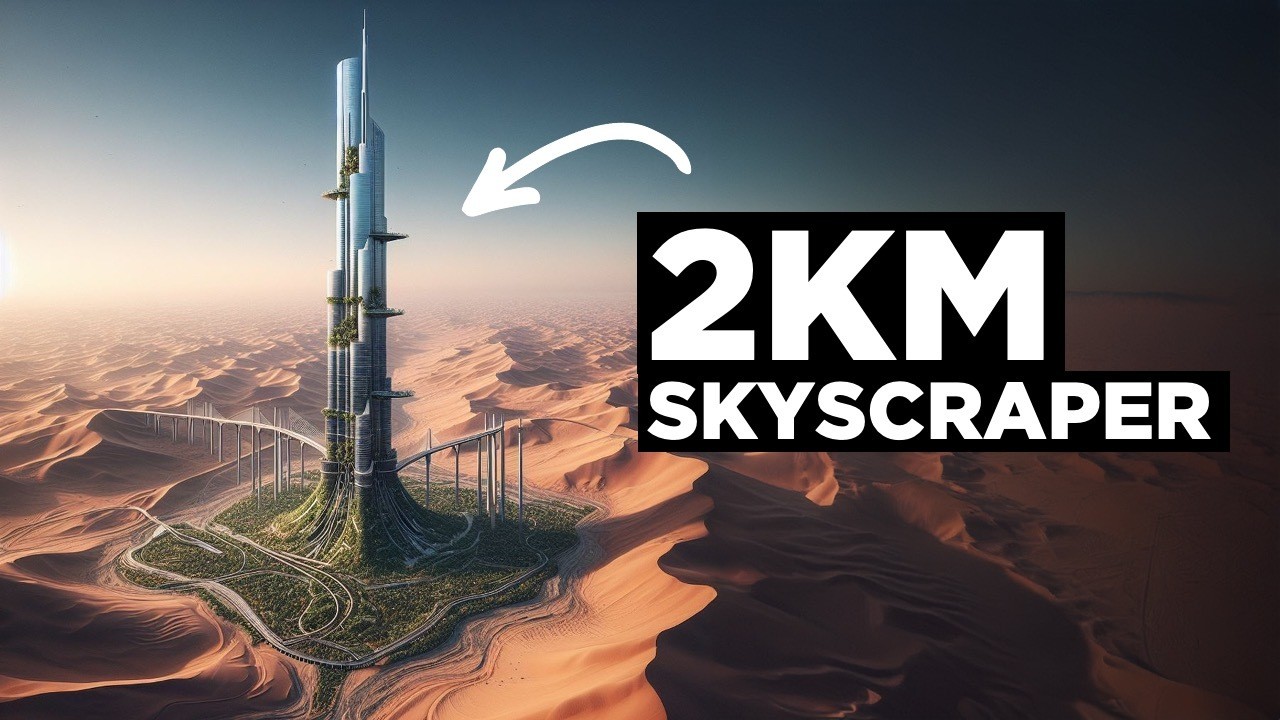
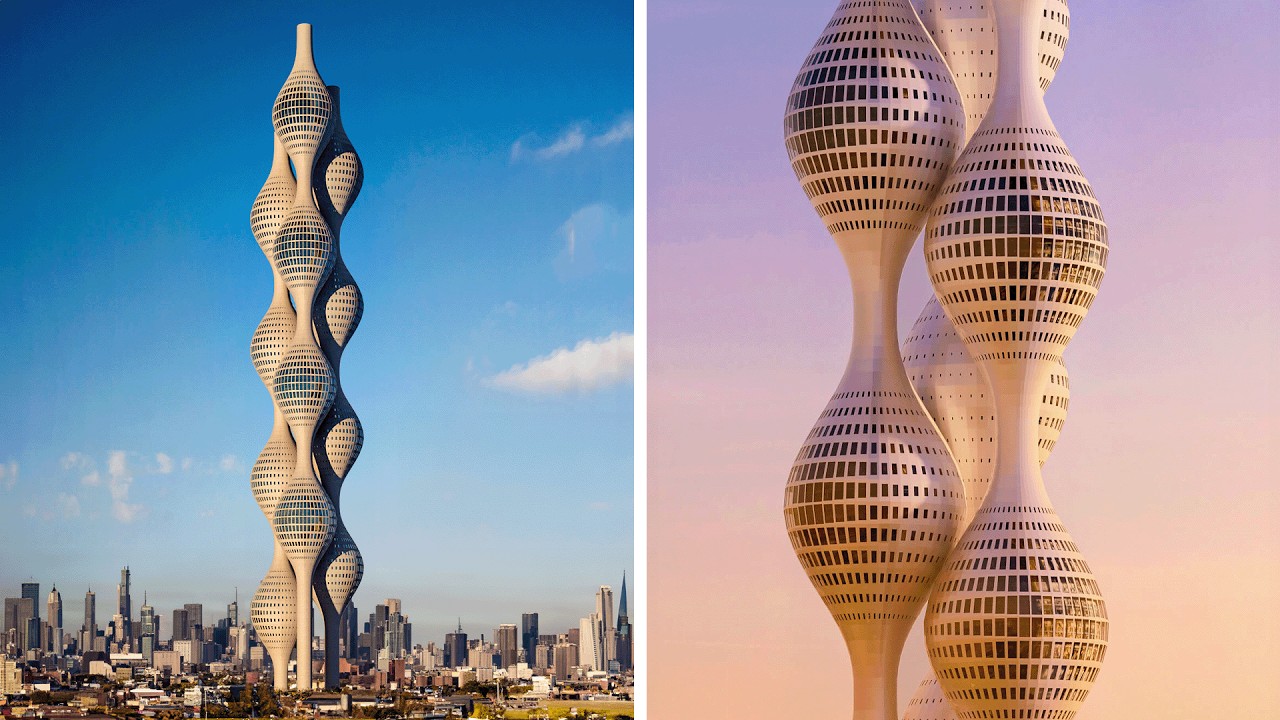
After all, building a skyscraper isn’t exactly the easiest thing to do. So, how exactly do you build one? To dive deeper into this question we rendered our own modified version of the Dubai Creek Tower.
Of course, this is not how the Dubai Creek Tower will actually look like. But it helps to understand the process behind designing a skyscraper. The most important consideration when creating a building, especially with one that is more than 1-kilometer tall, is its stability.
Generally, as the height of the tower increases, so do the wind forces pushing against it. Making it all the more difficult, challenging, and expensive to build as you go higher. To ensure that this design would be stable enough to stand up to 1,000 meters above the ground, we incorporated several techniques.
Starting at the base, we added a 3-axis foundation similar to that of the Burj Khalifa. Not only is it a unique and iconic look that the city is known for, it actually also helps with stability. It has been proven before that such a triangular footprint does in fact reduce the effects of wind forces on the structure thereby increasing stability (6).
This kind of foundation acts like three individual legs that all work together to hold up the rest of the building. Equally distributing the weight of the structure between the three corners, instead of just one central point. The next noticeable feature we made is the sleek and tapering exterior along with strategically placed notches and setbacks throughout the middle.
By doing this, we can make sure that the lower parts of the tower would be able to support the weight of the structure as it goes up. The tapering shape also reduces the wind forces that directly come into contact with the main structure. Meanwhile, the notches and setbacks allow for wind currents to pass just right through the skyscraper.
To further help with our design’s stability, we included a feature called a tuned mass damper. This device is used to reduce the vibrations experienced by a rigid structure such as a skyscraper. Though we generally think of buildings as solid and concrete objects that have a fixed shape, this isn’t actually the case.
All buildings, especially supertall skyscrapers, do in fact sway ever so slightly because of strong winds and other forces. This swaying movement can cause extreme discomfort to the people inside. Or, in some extreme cases, even lead to a collapse.
Mass dampers such as this one, work by counter swaying in the other direction. And since of the large mass they have it helps a lot to reduce the swaying of the entire building. To explain this concept in further detail, we spent quite a lot of our time researching & creating our very own redesign.
So if you enjoyed this video so far, we would appreciate it a lot if you subscribed. Aside from stability, another important consideration when designing a skyscraper is the safety of the people inside. In today's modern skyscrapers it is common to include a comprehensive suite of structural monitoring systems.
This will make sure that important information regarding the structure’s health such as wind speed, swaying, fire safety, and plumbing, will always be monitored (7). All working together to act as sort of a control center for the tower’s vitals. With these systems in place, weaknesses or inconsistencies within the structure can easily be addressed before they become a major problem.
Finally, the third and final consideration in creating a skyscraper are the aesthetic and design choices. Nobody would want to see a one-kilometer structure tower over a city looking like it was designed by a three-year-old in art class. These aesthetic considerations can sometimes even go hand in hand with ensuring both the safety and stability of the overall design.
That’s why we also made sure to retain the original design by keeping the net of steel cables. The cables from the original version were arguably the most notable and iconic part of the design. So we didn’t want to leave it behind.
Though only a supportive structure, it also adds a unique silhouette to the rest of the tower and gives it its distinctive shape. Coming back to the actual Dubai Creek Tower, it looks like construction will resume next year. It will definitely generate a lot of international attention as one of the most interesting skyscrapers currently built.
And with the neighboring Jeddah Tower also starting construction again, the race to build the world’s first one-kilometer structure is officially reignited. What do you think about our own concept? And what would you change about it?
Let us know in the comments below. If you want to know more about the Jeddah Tower, you can check out this video. Thank you for watching, and we will see you in the next one!