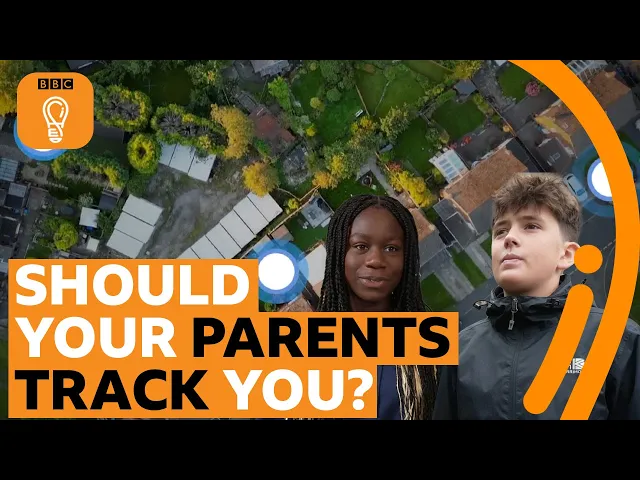
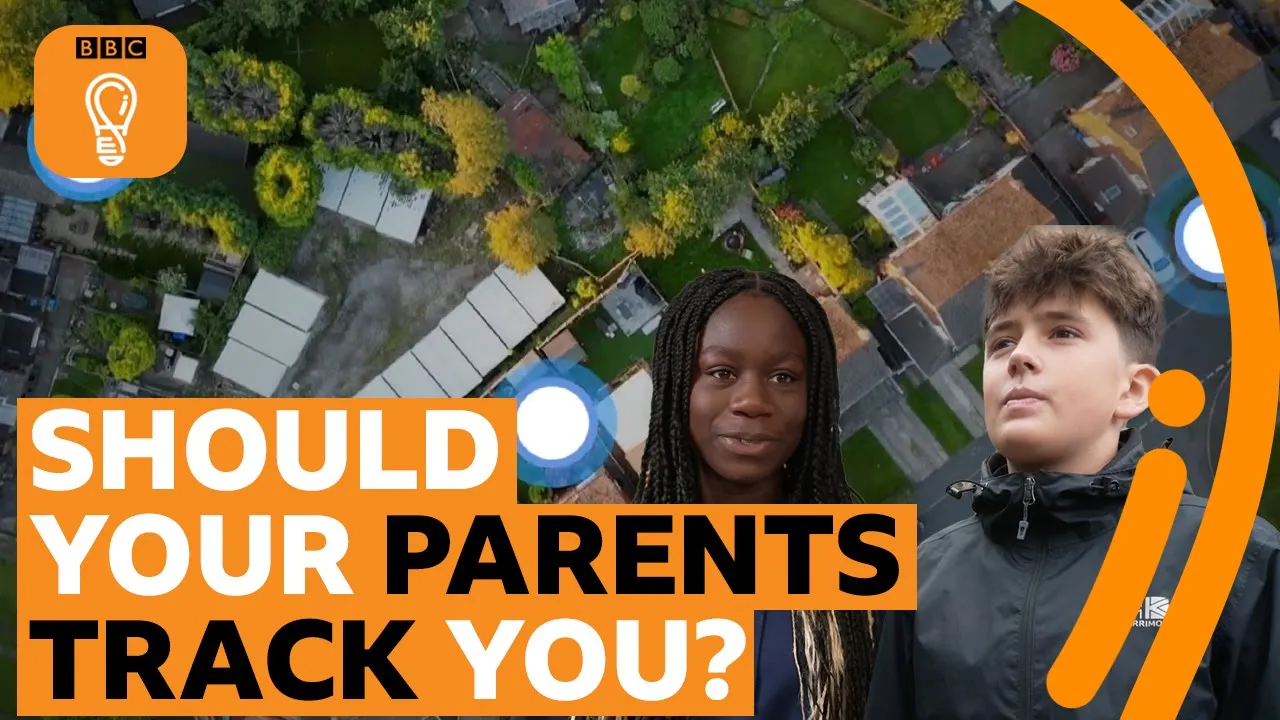
- You have a tracker? - Yeah. Do you ever want to just turn it off?
I always know where he's at. I can also set up safe zones. There seems to be a new danger lurking round the corner all the time.
I always thought I'm not controlling, but then you find, like, "Oh, actually, maybe I am. " It's nice to know that someone's watching me, so I'm safe. It's a big societal experiment and we don't know how it'll turn out.
Where have you guys been? Oh, we went to the skate park with some mates, and we're just heading home now. So do your parents know where you've been?
Yeah. My dad tracks me on Find My Phone on Apple. Yeah, my mum knows where I'm going and where I've been.
There is this whole market of parental control apps. The dynamics, the relationship between parents and children, and especially as children grow into adolescence, has really changed. 20 years ago, parents let their kids out, they had no way to know what was going on for kids, so they kind of had to trust their children.
So, Jamie, have you been tracking Will when he's been out and about? Well, I have been, actually. What about you, Maggie?
Ah, yes, I do track Shalomy. I guess they want to know where I am, and that's, like, understandable. I don't really mind it.
It's nice to know that someone's watching me, so I'm safe. Very broadly speaking, young people seem to be or tended to be more accepting of location tracking. There was less of that understanding for parental control apps that constrain digital behaviours, stopping young people from using certain apps, accessing certain websites, and just potentially shutting down access after a certain length of time or at a certain hour in the evening.
I got some examples where young people felt misunderstood, or that the parents didn't have a full understanding of the effect this parental control app was having on those children's social lives, their ability even to do homework sometimes, and so on. I get like three hours per day. I feel like that's kind of little.
If he ever puts a guideline and he says, "Oh, don't go on this website," or if it's like Instagram and I want to go on Instagram, there will always be a way round. I think they've all had double accounts. I follow one account and, you know, it all looks nice family pictures.
And then I find out there's another account. If a creative young person is able to circumvent those rules and find their own way and conceal what they're doing from parents, those young people are actually less safe than they would be if the parent hadn't set those restrictions at all. As a parent, I might see a scary headline about social media and how it's really bad for my children.
So I'm going to go and put these controls. It could also have this effect of preventing me from having actually a conversation with my child, and hearing my young person's point of view. What we see is, especially in adolescence, the more restrictive parents are, the more likely young people are to rebel or react to their parents.
The result is that the parents' behaviour is counterproductive. Young people do want to be safe and well, but they also really want to be independent when they are emerging adults. That's where this tension becomes the highest.
And parental control apps don't have any way of helping to support children's learning and autonomous choices. Sometimes you feel like when you give them too much, they don't know when to stop. And then if you're constantly just wanting to control, when will they ever grow up and make decisions for themselves?
In psychology, we talk a lot about self-regulation in adolescence. And ideally what we want is both to keep young people safe, but also to teach them how to do that by helping them to learn to regulate their own behaviours, to make their own smart decisions. Yesterday it was, gaming was bad.
Today we're all concerned about social media. It will be very difficult to develop a rulebook that will anticipate the next technological development very precisely and give us all the advice and the best choices we can make. Listen to your young person, understand what their relationship with technology is, how they use it, how they would like to, what their concerns are.
Maybe as you get older, they could just chill a bit on it, and if you build that trust then it will make it easier to kind of let go of that when they reach an older age. I think 16 is a good age. I think 14 you should be able to be tracked by your parents and the parents should have the decision.
But 16 and above, I think you can make that decision by yourself. If we can teach kids how to make smart decisions online when they're young, when they're teenagers, if we build those open and trusting communications and relationships between parents and young people, it helps young people to make those smart decisions about their tech use for the rest of their lives.