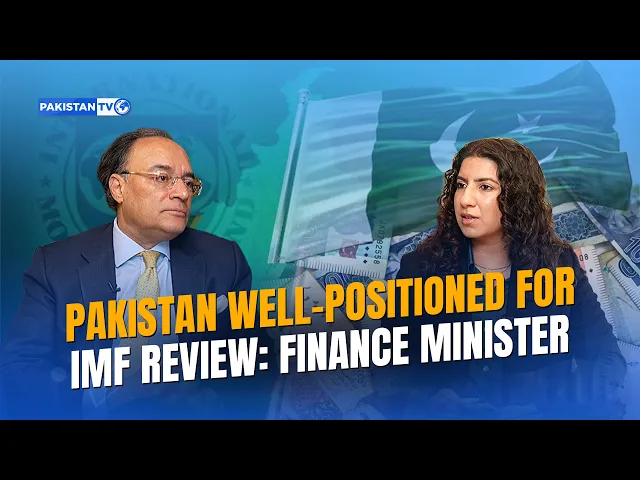
Thank you so much for taking out time for us today. I'd start by asking when you assumed charge of the ministry, what was the situation at that time and what key differences have you seen in these last few years? Yeah.
So, um I you know I've been now in the job for almost uh couple of years and uh from where we started uh we were in the process of uh already recovering as an economy uh because it's to Prime Minister Shabbash's leadership that he was able to negotiate uh the 9-month SBA uh with the with the fund which gives gave us the the breathing space and when and I came in uh we were quite clear that we are going to go into an extended program with the fund um really for two reasons. uh one was to provide more permanence to the macroeconomic stability which had just begun to um at that point in time um talking about sort of March 24 uh time period and secondly u the administration's firm resolve uh that we are going to uh undergo structural reforms and to carry that under that umbrella. So fast forward um where we sitting now uh we have been able to consolidate uh the macroeconomic um stability um uh gains and it's reflected in many ways um in terms of our fiscal situation.
We have had u surpluses on the primary side um consecutive surpluses on the primary side and if the current trajectory inshallah continues we'll have uh one of the lowest fiscal deficits uh in our history during this fiscal year. The current account continues to be in good shape. Uh notwithstanding some of the the growth that we are now beginning to see and the which is the good story and the LSM uh turnaround.
But as you know because we have an import dependent economy you know at times uh we have to be very observant about the current account situation but alhamdulillah that is moving in the right direction as well on the back of very strong remittance flows. We had $ 38 billion uh last fiscal year and during this fiscal year we'll expect to close at about 42. And then the IT export services um story is just a fantastic story and it continues to move from strength to strength.
So we should be anywhere between 4 to5 billion uh this year while we are focusing on our traditional export sector. Inflation has been a good story. It's uh down into single digits.
The policy rate therefore has come down to 10 and a half%. We have a stable currency. our FX reserves uh which had gone down to roughly 2 weeks of import cover uh in sort of July 23 are now up to about 2 and 1/2 months of import cover and if all goes well by the end of this calendar year we should be at 3 months of import cover which is a will be a very good international benchm >> right and over the last year we've also improved our diplomatic standing how has that helped us secure more economic partnerships or agreements.
>> Yeah. So um in addition to um the macroeconomic stability and the green shoots that we are now beginning to see on the on the on the GDP growth side uh I have always maintained uh that over the last as you rightly point out uh the last 10 months or so we now have um geopolitical tailwinds uh right so uh the relationship with the Trump administration uh continues to go from strength to strength I've just come back from Washington DC where the prime minister was there uh for the board of uh uh peace meetings. Uh on the back of that I had uh some meetings with the US administration including secretary lutnik on the on the commerce side.
Uh so um in terms of trade and investment flow that's now the basic discussion. The same thing with uh with China uh now with the CPAC phase 2. 0 which has been launched uh and then uh with the GCC countries.
Now these have all these have been traditionally very very strong partners. Uh but now with everything that we have been able to do on the diplomatic front um now we want to build on that by moving from an aid related and aidled model to trade investment uh model. number one and number two primarily we want to go in for businessto business engagement and that is uh the discussion uh which is now well underway whether it's CPEC phase 2.
0 which is from B2B. you saw um the Saudi delegation was here which was represented by various businesses and uh we'll have the first uh investor conference um on March 31 um and I was with the US chamber of commerce our minister of um petroleum and minister of IT uh will be there uh very focused on uh sectors like uh oil and gas minerals and mining and IT to woo further trade and investment from the US investors. >> You mentioned your trip to the US and that brings up tariffs which have been back and forth since the Trump administration came to power and recently we're hearing that the US Supreme Court actually scrapped tariffs.
So how will that impact Pakistan's trade? Well, if we go back to uh sort of uh when this whole discussion started u back in April of last year uh what the US called the liberation day uh you know we were put in a category of 29%. Um on the back of uh the trade deficit that US had uh with us uh we were able to negotiate it down to 19% end of July.
Um and we were in the process of now moving towards a joint statement and framework agreement uh but with a very clear view and that was part of our discussions with Secretary Lutnik as well that we uh don't want to be competitively disadvantaged uh from any of our regional competitors. Uh so so we were sort of advancing this discussion uh when the Supreme Court decision uh came in. Um now as you know the US government has now announced a global 10% tariff.
Uh but from the discussions we have had with them early days uh they're still determined to bring u the tariff regime back to where it was although through other measures. So our discussions with them will continue uh both with uh the the commerce secretary and uh the USDR uh that if we were to go in that direction that we continue to get a favorable consideration visa we are regional competitors. >> Right?
>> So the story has not ended. It's it's just work in progress. Let's put that.
>> Okay. And then moving domestically, um the stock exchange has been declining over the past few days and some people are saying that actually means that the market is correcting itself. So how do you assess that situation?
>> Well, you see the stock market um I I think in the first instance there are some good things which are happening there. Uh the number of investors uh have expanded in the in in the stock market. Um and so there is a real um um u you know impetus in that market from where we started uh whatever uh 12 to 18 months back.
Um the reality is uh the markets will go up and down. These are I mean you mentioned the domestic it's uh it's you know the regional tensions which are going on at this point in time. There are many things which we on to especially uh the foreign institutional investors which which come in.
My own view is that it's um u you know hovering around PE of eight. There's still a lot of opportunity uh in the market. Um and um you know it'll it'll have its uh up and down but I do think uh that as things stabilize in the region um you know things will start moving in the in the right direction again.
>> Right. And how do you assess Pakistan's e economic stability at the moment? Yeah, I think we are well into our stabilization phase and um the whole discussion is now how do we move what I would call sustainable growth because that is very important right and anyone who has covered uh Pakistan for for some time knows that we have gone through boom and bust cycles um and therefore we are in the program back with the fund so this time around we want to be very clear that it's exportled growth uh so that when um our growth gets to a certain stage, we do not get into a balance of payment issue because that's what's been our our history uh going as recently back as 22.
So we've taken a number of steps in in that direction um including a very bold reform in terms of our tariff regime. While uh you know maybe some of the world has been moving towards protection, we decided back in July that we are going to open up the economy by bringing our tariffs down over a a over the next four to 5 years down to an average tariff of 15%. And the reason for that is that we have protected our industries for the longest time.
And we want to ensure uh that all our industry here is internationally competitive and therefore reducing the tariffs in terms of raw materials, reducing the tariffs in terms of intermediate goods so that they are able to you know reduce their cost of production and become competitive to to export. So there is a lot of emphasis on um on on export-led growth. It takes time uh when you make some of these changes.
Uh as I said it is already a very bright factor. Agriculture is going to uh notwithstanding the dip at this point in time will remain a a huge potential for us. Pharma will remain a huge potential for us in this is in addition to the traditional textile sector where already uh the value added garment space we are seeing sort of good uh good good traction there.
Uh so there's a lot of focus right now on seeing how we move towards sustainable growth. >> And going off of that are there any other recent measures that the ministry has taken for economic continuity or to maintain fiscal balance? From our perspective, there are few things which we take the lead and there are other areas where we support other line ministries.
So I'll give you examples in terms of making sure that we move towards fiscal sustainability. Um you know the whole taxation machine and FBR is undergoing transformation in terms of people, process, technology. In fact the prime minister himself is sort of leading that uh initiative.
So we were hovering at about 9% tax to GDP. We are now at about 10. 3% uh in terms of FBR uh tax to uh to to GDP and we want to move towards 12 13%.
And it's a function of both uh you know stopping the leakages stopping the theft uh and that we are doing through AIEL production monitoring AI CRM. So technology is playing a very very important role u with the help of um you know datadriven uh decision- making. So we we are uh driving that uh between finance and revenue.
Similarly uh the pension reforms uh you know again the finance ministry took um took the lead in that while the stock is there we have stopped the bleeding in terms of moving all new government colleagues who join us in the federal government are going to be now on defined contribution uh as well which is a which is again a very bold reform. The third one is the right sizing of the federal government. So we have merged I recommended to the cabinet uh to merge some of the ministries.
We have closed some of the uh departments um like uh utility services corporation PWD uh in the process of closing Pasco uh simply that the misuse of subsidies is is minimized. We are also helping the privatization commission. We have now uh chaired the cabinet committee on SOE.
We have handed over 26 suees uh to the to the privatization commission and uh they now have real tailwinds on the back of very successful PIA privatization also the first women bank so they have a number of assets which are uh which are there then we uh help uh other um sort of line ministries uh in terms of uh their reform uh processes whether it's on the power side where it's on the on the on the petroleum side. Um and then the big thing for us is also access to finance. Uh right that once uh the financing rates have come down even people who had leverage balance sheets u you know policy rate coming down from 22 to 10 and a half% has helped them in a very big way uh to create that capacity.
Um we are also trying to see how we reduce uh the debt stock but also reduce the interest uh uh cost as well. So our debt management office has been sort of restructured and um we are doing liability management trades. So we saved about 850 billion rupees in debt servicing cost last year and this year we expect another 1 trillion rupees of um uh savings in debt servicing cost which can therefore be then repurposed for other areas and can help our fiscal deficit situation.
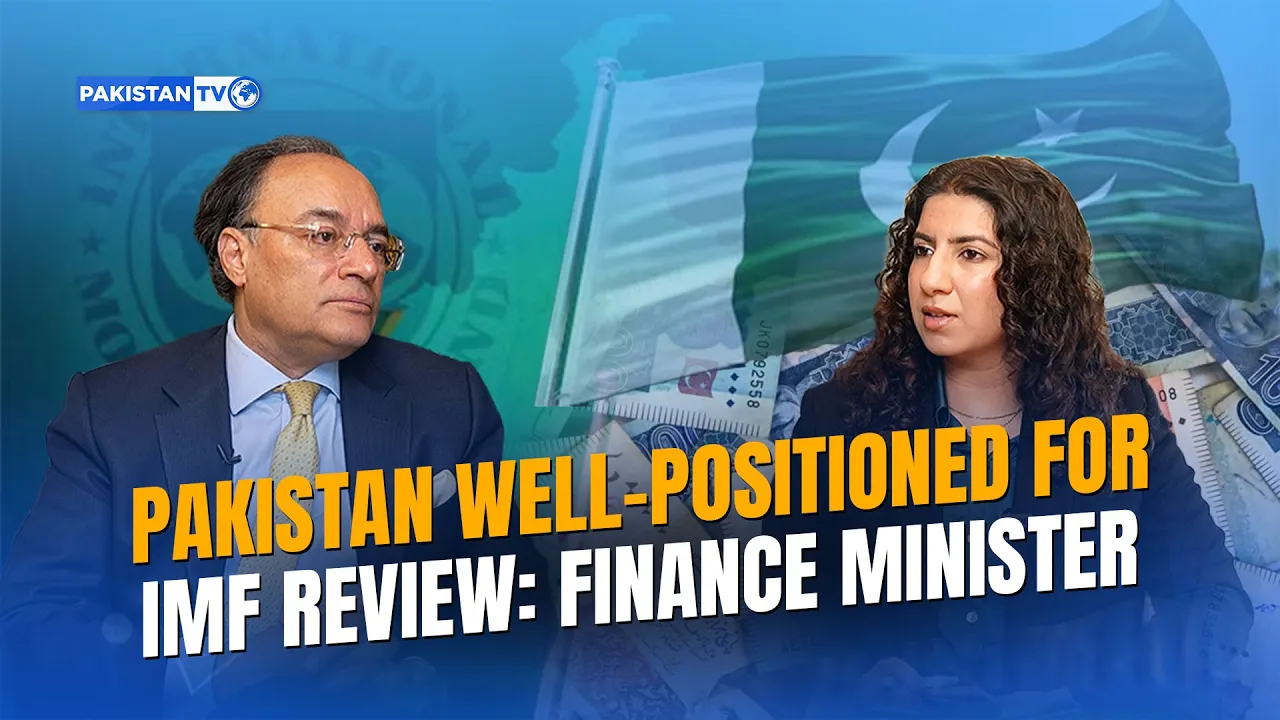
The last thing I was I would say there when when we come to access to finance is how do we in help the state bank and in turn the banking system increase lending to the private sector especially to the priority sector uh priority sectors whether it's agriculture whether it's IT whethermemes so the finance division then uh provides first loss guarantees so that uh in case there is a loss situation In the first uh instance we will help the banks in terms of some that loss sharing and the other thing is subsidize uh providing uh subsidize u financing. So we ask the banks to further reduce the lending rates uh to the eventual customer and between their cost of funds and the rate at which they lend to the eventual customer whether it's on the housing side whether it's on the theme side uh that bridge is done by ministry of finance uh through our own sources >> and lastly uh where does Pakistan stand in terms of its commitments to the IMF >> I think that's a very timely question because because the team is already here. I mean they started with Karachi and I'll see them inshallah here on Monday.
Uh we are getting up for the third review. Um and uh and that review will um have both the performance uh discussion in terms of where we stand in terms of our quantitative benchmarks and our structural benchmarks um and also having a little bit of forward-looking view because we are sort of halfway through uh the the extended fund program. Uh so we'll we look forward to very meaningful conversations.
Um it's always premature before I mean the way we take our exams I mean take take our tests and you know go through our audits it's always premature to to say how it will go. Uh but I uh would uh I would uh I would say that we are well positioned for this review. >> Great.
Thank you so much for your time.