I have found that there is a secret ingredient to going viral and everyone they think it's the algorithm. But the real secret to going viral is something far more human. Our psychology.
Over the last 20 years, I have built a system that has helped brands and celebrities and even creators just starting out reach over 60 billion views. So, in this video, I'll show you how understanding human psychology can transform your storytelling and give you five powerful techniques to go from 300 views to content that consistently breaks through the noise and hits 1 million views plus. But before we get started, it's good to know how the algorithms work in the first place.
In a recent video, the head of Instagram, Adam Roseri, practically handed creators the playbook when he broke down how the platform actually rkes content. And if you understand this, you gain leverage that most creators miss. So, there are two types of reach that matter.
Connected reach, people who already follow you, and unconnected reach, people who don't follow you yet. Now, no matter who you're targeting, Instagram prioritizes three core signals: watchtime, likes, and sends. With sends being the Instagram equivalent of shares and while we might not have an explainer video from the YouTube or Tik Tok CEO, we do know this watch time matters everywhere.
So, if your content keeps people on the platform longer, the algorithm rewards you with more reach because more time means more opportunities for the platform to serve ads and the more ads means more revenue. Your content becomes valuable not just to viewers but to the platform itself. Which is why it all starts by tapping into one of the most fundamental needs any human being has to feel seen.
Viral content doesn't just take off just because it's funny or dramatic. It spreads because it reflects something deeper, a subconscious desire to feel or be seen in a certain way. So when you understand what your audience really connects with, you can tell stories that are naturally driven to watch, like, and share.
So when somebody chooses to share your content, they're doing it because they feel it reflects who they are. Deep down, we're all trying to signal something, whether it be intelligence, taste, authenticity, or status. So when your content taps into that aspirational identity, you'll not only draw them in with a hook that makes them want to watch till the end, you'll also unlock this prime reason that people want to share it.
In this book, Contagious by American professor Jonah Burer, he talks about the importance of what's called social currency. That idea that people share things to make them look good in front of others. They want to appear smart, cultured, and ahead of the curve.
They want to seem aspirational so that when they come across a piece of content that promises to give them something they desire, they will watch it till the end. And if they're impressed, they will actually share it to make themselves seem like the person who created the video in the first place. So here's a great example from Robert Crow.
Do you want to be the first millionaire in your family? Here are my three best tips to help you achieve it. In his 26 million view video, Do You Want to Be the First Millionaire in Your Family?
He uses an excellent hook because it taps into the target audience's desire to become a millionaire. Viewers will watch this to discover his three points, but they will share it because when their followers see the video, they will attribute the receiving of this knowledge to them, which boosts their own status as someone in the know, someone who shares value. It's not just about the content, it's about what sharing that content says about them.
British entrepreneur and diary of CEO host Steven Bartlett says that people will pay you what they perceive you're worth. And that applies to both money and attention. The same logic works with content.
If what you publish makes your audience feel smart, inspired, or seen, well, they're far more likely to engage with it and share it. Because by sharing it, they're not just endorsing you, they're saying something about themselves. This is something that marketers have been tapping into for years.
Brand strategist Craig Clemens, one of the top copywriters in the world, says that one of his favorite ad campaigns, came from the legendary Gary Halper. To assist the launch of a perfume line by Tova Bourn, wife of the movie star Ernest Bourn, he used the headline, Tova Bourdine swears under oath that her perfume does not contain an illegal sexual stimulant. with the subheading, "Wife of a famous movie star agrees to give away 10,000 samples of her fragrance just to prove it's safe to wear in public.
" This led to the Bour Nines going from earning $20,000 per month to $800,000 per month, all because Halbert had tapped into the audience's need to seem aspirational. They flocked out to buy the product because they thought it would make them more appealing. Now, that may have taken place in the early 1970s, but the company still uses this approach today.
Now, every year, Spotify gives users a personalized breakdown of their listening habits. But here's the key. It's not just data.
It's a bragging moment. It's an identity flex. Look at how niche my music taste is.
Look at how much I listen to indie bands you've never even heard of. People screenshot it, post it, and suddenly everyone is sharing their rap to keep up. Spotify didn't just give people a playlist.
They gave people a reason to feel seen and a tool to be seen the way they want. Then of course there are LinkedIn career posts. Stories like 3 years ago I was sleeping on a friend's couch and today I'm leading a team at Google.
Now these work because they are inspirational but also they're aspirational. They tap into the identity that people want to project. resilient, successful, and self-made.
So, how can you use this? Well, start by thinking about the audience that you're creating for. Not just what they like, but what they want from others to see in them.
Remember, if viral content acts as a social mirror, then it will allow the person sharing to reveal who they are. To tap into that, align your content with one of the three biggest aspirational drivers: money, relationships, or health. So ask yourself, does this content make someone look financially savvy or ambitious?
Does it make them appear emotionally intelligent, desirable, or socially aware? Does it show that they actually care about well-being, performance, or self-discipline? Create content that when shared allows your audience to signal these traits to their followers.
But content isn't just a way of sharing who you are. There's one specific experience that you need to put them through to boost your chances of sending your content viral. So, we've already established that people share content that they connect with.
And nothing connects with people more than experiencing an emotion. Because viewers, they don't just just share information. They share feelings, too.
And when you trigger a strong emotional response, you're hijacking the brain's natural reward system. But there are certain emotions that do this better than others. In their groundbreaking 2012 study, Burger and Milkman analyzed thousands of articles from the New York Times to find what made certain pieces go viral.
And what they discovered was that high arousal emotions such as awe, amusement, anger, anxiety, and excitement were the most likely to go viral. Now, low arousal emotions like sadness, or contentment, they didn't seem to have the same effect. But why does this work?
Well, high arousal emotions drive action. They activate something within us that makes us want to share. But that emotion doesn't just stop with the viewer.
In 2014, Facebook ran a massive experiment on emotional contagion by tweaking users feeds to show more positive or negative content. And they discovered something powerful. Emotions, they are contagious.
You don't just make one person feel something, you influence their entire circle. And while many believe that only outrage or negativity goes viral, the data tells a different story. Positive content spreads just as fast because joy, hope, and inspiration are just as contagious and often times more sharable.
And that's what makes emotional content exponential. Therefore, your best shot at going viral is by tapping into these emotional triggers. We've seen this time and time again throughout the years.
In 2019, documentary filmmakers Jimmy Chin and his wife won the Academy Award for best documentary as it follows a climber named Alex Hnold who was the first ever to climb El Capitan in Yoseite without ropes. By focusing on the fact that Alex was able to do this without ropes, the marketers were able to connect the audience with the primal fight orflight instinct and in doing so created a curiosity that drove that film to do so well. In 2023, Mr Beast paid for 1,000 people to receive lifechanging eye surgery.
But the story wasn't just about medicine. It was also about hope. It triggered awe, compassion, gratitude, and outrage from critics.
Now, whether you loved it or hated it, it got you to feel something. 140 million views because it tapped into deep emotional duality, generosity versus performative altruism. And you don't need ropes or a million-dollar budget to do this.
Take Hunter Prosper, a creator who's built a massive following not with stunts or spectacle, but by asking strangers one simple question. What is the most painful experience that you have ever had that wasn't physical? It's a masterclass in emotional design.
As someone opens up on the screen, we don't just witness their pain, we actually feel it. And in doing so, we start reflecting on our own regrets, heartbreaks, and moments that we rarely speak about. This is high rousal emotion in its purest form.
Anxiety, empathy, and awe, all wrapped in authenticity. And because the emotion feels personal, people share it personally as a way of saying, "This is what I've been through, too," without ever having to say a single word. That's the power of emotional storytelling done right.
It doesn't just inform or entertain. It connects, reflects, moves, and that is what makes it spread. So the next time you want to create a piece of content, you want to ask yourself, what is the emotion that you want to trigger in your audience, and how are you actually going to do it?
So here are a few tips to help you in achieving that. To create awe, use breathtaking visuals, surprising facts, or stories of extraordinary achievement. Make people feel small in the best way possible.
Now, to create anger, expose injustice, hypocrisy, or something that may clash with your audience's values. Channel that emotion into a clear call to action. Now, if you want to create anxiety, tap into fears or uncertainties, but also be aware that you also need to offer a solution or hope for this to work.
Now, this is especially powerful for health, finance, or safety related content. Now, if you want to create excitement, build some type of anticipation with sneak peeks, bold claims, or contagious enthusiasm. Think of product reveals or trailers, countdowns.
But there's one emotion, a secret weapon that fuels virality. And if you master it, your content doesn't just spread, it explodes. Now, we've already seen one powerful example where this works, but I would like to break it down even further, and that is humor.
Now, humor is one of the most powerful viral techniques available because it's both entertaining and it's also relatable. It's a tool that breaks down barriers. It builds trust and most importantly, it gets shared.
But you can't make it work unless you understand it first. In psychology, humor is classified as a social bonding mechanism. Now, a lot of studies have shown that when we laugh, we release endorphins, which increases trust, and it gets us to literally sync up with others emotionally.
A research paper from 2018 found that humor increases social cohesion, reduces status gaps, and even makes serious messages more palatable. In other words, humor makes you human. Platforms prioritize content that holds attention, sparks emotion, and just keeps people watching.
The more relatable engaging your content is, the longer people stay. And the longer they stay, the more the algorithm boosts your reach. People are drawn to patterns of behavior.
And when that pattern is interrupted, they freeze. In marketing psychology, a pattern interrupt is that moment that breaks the expected flow of information. It kind of jolts the brain and makes people pay attention.
And humor is one of the best pattern interrupts there is. A very clever use of humor could be found in an ad created by the Martin Agency for Geico Insurance in 2015. Now, this was a skippable pre-roll ad on YouTube, which referenced the fact that you can't skip this ad because the message was delivered within the 5 seconds they had to watch it.
It worked because it pointed out the truth. It caught people's attention and made them laugh. Then there was Dualingo's Owl, which pushed the company's Tik Tok presence to new heights when they abandoned their corporate polish by taking their mascot of a green owl and pairing it with trending audios to create chaotic skits, petty jokes, and also tapped into Gen Z humor.
This led them to gaining millions of followers because they had successfully humanized their brand in a space where just most companies were playing it safe. Now remember what I said earlier, your audience doesn't just share information, they share feelings. So by creating something funny, they'll be able to connect with others because of the relatability.
So how can you build this into your own content? So when you're creating something with the intention of being funny, ask yourself, is it a little self-aware? Because a little self-deprecation goes a long way.
It lowers the barrier. It makes you seem vulnerable. And as a side effect, you become more relatable.
And most importantly, your content becomes more sharable. Does it embrace absurdity? Where in the area of the internet where nothing is too weird?
If your idea feels too strange or silly to post, it might be exactly what goes viral. Dualingo's owl twerking, that wasn't an accident. It was a strategy.
Does the humor match the tone to your brand? It doesn't have to mean slapstick or memes. It can be very dry, dark, ironic, or clever.
whatever fits your brand voice. The goal isn't to be a comedian, the goal is to be memorable. So, even if you don't feel humor is the right fit for your brand, the next one can get fantastic results as well, and it's just as powerful, if not even more so.
Now, you might be surprised to hear this, but this one keeps people watching because our brains are wired to chase answers. Don't believe me? Well, think about the last sentence I just said.
I implied that you would be surprised to hear something. Now, the question I have for you is, didn't that instantly make you want to know the truth? That's why the emotion that we're talking about is surprise and if you understand how it works, you can use it to help you go viral.
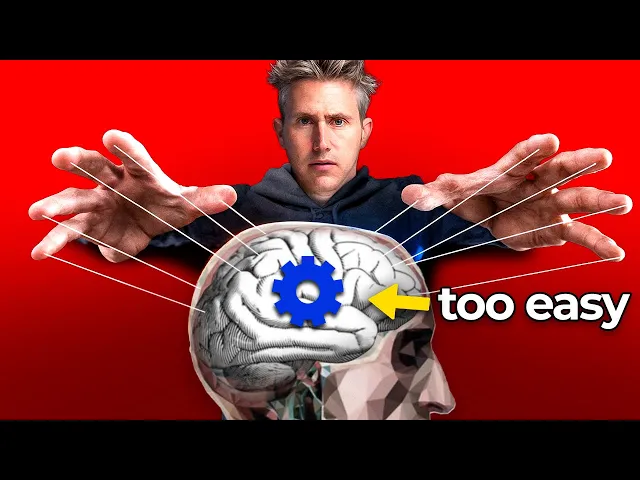
It all comes down to neuroscience. So, stick with me. Surprise isn't just a gimmick.
It's actually a biological event. When the brain encounters something unexpected, it triggers a spike in attention and alertness, often accompanied by a release of dopamine. This surge activates key brain regions like the hippocampus and prefrontal cortex which are involved in learning, prediction, and decision-making.
At the same time, the lyic system lights up, assigning emotional significance to the moment. And that emotional weight helps lock it into memory. In short, a single surprising moment can make your content more memorable than repetition or even beauty ever could, especially when it's part of a strong, cohesive story.
It also opens a curiosity loop. The brain wants to resolve the tension. It needs to know what happens next, and that's what keeps people watching.
There are several different ways that you can create content that develops a mystery. Dualingo struck again very recently when they removed their Green Owl mascot from every country except Japan. Now, this caused massive online speculation, user generated content, and media coverage.
People were absolutely desperate to know why this had happened. A visual pattern had been broken and the internet rushed to fill in the gap. The majority of Mr Beast's content relies on the element of surprise.
His videos will often have a title and thumbnail combination which causes viewers to want to know how it all ends up. Examples like I spent 50 hours buried alive leaves audiences with a morbid curiosity with a burning desire to find out how that had turned out. In what is his best performing video to date with 800 million views, Squid Game in real life not only capitalized on a trendy show, it was also a show which had a hook that generated surprise.
By now, everyone knows his game show style, but he created even more intrigue with the question of how can such a brutal game be performed in real life. But how do you do this in your own content? Well, you lead with the unexpected.
Your hook, it must immediately disrupt the viewer's assumption. Use something that is visually strange, a bold, contrarian take, or a statement that feels contradictory at first glance. For example, Tik Tok creator Dylan Page starts with obscure images like this one, a vape that is connected to a Tamagoshi.
It's so visually striking that it makes you want to know what the device actually is. Another powerful tactic is misdirection. Setting up a predictable premise, then flipping it.
You need to lead the audience down one path only to just surprise them with an unexpected turn. This approach especially works well in storytelling, skits, and how-to content. Take this example from Faze Fresh.
She begins with what seems like a typical day in the life video as a private chef working with a client, but by the end, the twist is revealed. She is the client she's been referring to all along. Viewers laugh, rewatch to catch the clues they missed, and then share it with friends to see if they'll fall for the twist as well.
It's clever, it's entertaining, and it rewards attention. Everything that the algorithms love. Surprising can be challenging to get right, but rewarding once you do.
If, however, you feel intimidated by this, then there's another technique that you can use. And if you do it well, you could go viral using this one alone. But if you're looking for a faster path and want to know how we've helped our clients generate millions of revenue, billions of views, and build audiences over 100 million followers, then book a call with my team at Hookpoint.
They can help you take your content from just starting out to getting it seen. If that sounds like something that you're ready for, well, hit the link in the description and let's get started. Now, let me tell you about the single most important technique for building trust, loyalty, and lasting authority.
I know that you've probably heard this one a thousand times before, but stick with me because most people, they misunderstand what it actually means. And that is exactly where the opportunity lies. I'm talking about offering real value.
When done right, this will build trust, loyalty, and authority. It's the foundation of long-term growth, and more importantly, it is the most reliable way to make people genuinely care about you, your content, and your brand. In my work with brands and creators, we use what we call the value first approach.
That doesn't just mean being helpful. It means delivering a perspective shift. A perspective shift is a powerful aha moment that challenges the way that your viewers think.
You're not just trying to solve problems. You're changing how people see the problem in the first place. Because value isn't just about giving tips.
It's about activating clarity. And clarity is what people will remember. When you do that, you're not just offering content.
You're offering a shortcut, a tool, or a better way. It's another form of social currency, except instead of status or identity is about being the person who knows the thing that helps. Now, there are countless examples of this online.
In fact, it's the one that you've probably seen pop up the most. Any educational topic on YouTube is full of it. Tik Tok and Instagram have pages and pages of techniques that you can use to solve whatever painoint you might have.
These can come in so many different forms. Casper Capital delivers money hacks through little skits like this one, helping viewers shift from feeling powerless about hospital fees to understanding how to use their rights to save their money. My superhero foods offer super helpful lists like this one, breaking down which foods people think are healthy but actually aren't.
And Kasa Tips just offers straight to the point advice like this where he challenges the idea that you need specialist kitchen tools, showing how everyday items can work just as well. As you can see, there are so many different ways you can offer value within your video. Now, to really get this going, you'll want to land on topics not a lot of people are solving right now.
The 2022 AI boom launched Chat GPT into the spotlight, and with it, a wave of explainers about how to use it. These explainers became so popular they created an entire niche of their own. Don't worry though, even though the market is crowded, you just need to get creative in providing solutions.
Look, to solve micro problems, don't try to change someone's life in 30 seconds. Just help them do one thing faster, cheaper, smarter, or better. Now, it may come in the form of a tip, a mythbust, mistakes to avoid, howto's.
So, if it's relevant to your audience and useful, it will be valuable. When you create these things, make them as accessible as possible. Put them out as lists, step by steps, sideby-side comparison.
Do this, not that frameworks. The brain loves structure. So the more scandal your content, the more sharable it becomes.
And always lead with the benefit. Tease the results up front. That itself creates the mystery, the element of surprise.
For example, want to make your videos look more expensive? Try this. The audience instantly knows what they will get and looks at the content to find out how they can achieve it.
So if your content makes people's lives better, even just by 1%, they will engage, they will share, and they will come back for more. Nail any of these techniques, and you'll have made the first step to going viral. And the wildest thing is it's only scratching the surface.









![What is Food Noise really? [surprise answer] 2025](https://img.youtube.com/vi/pgvnC65XWwU/maxresdefault.jpg)