it will it will paint on you. See you are correct 10 companies right, it's not a small thing. So it's a good and.
Okay, so let me just card. Okay fans. So today we have Frank up with us and fancy won't believe it.
She's holding 10 offer letters friends 10 TCS at CL enforces Airtel bang there on royal cyber taxi Maven wave at AWS, and editors, oh god I have to take a break now I have to drink the water. So, so great Branca and I was really thrilled and excited, you know, to, to have you on our channel on our show today, because you have, and I was so proud you know when you have been the that okay you have cracked seven, and then by the time we are shooting this is already 10 I don't know. By the time you will join someone complete will increase.
So that's really phenomenal thing Branca and we all are eager to know how you have dragged all these interviews and obviously we will have that kind of mock session we are we are going to go through with all these questions so far and so this session is definitely going to be I don't know maybe two part three part, because we have more than 50 questions friends to cover, so I'm sure we will not going to cover in one session. So now, Frank I'm just zipping up and over to you Why don't you tell us about yourself, your journey how you cracked 10 interviews and then we will go to have a q&a session shots sourcing and thank you so much for such a wonderful introduction and behind Shot sourcing and thank you so much for such a wonderful introduction and behind my success of cracking so much of interviews I think I give a lot of credit to your channel career talk because that's the place from where I learned, and I understand perspective of many people who have shared their views about how they are working in their real life as a scrum master. And that really gave me a good experience of how the industry works in the various organizations how people vote in the scrum master.
And that really helped me so I think I will give hundred percent credit to your channel for my experience like my professional journey I would like to say that I started my career in 2010 as a software development specialist, I was into traditional waterfall way of working working at the QA professional and I worked in manual testing for a good number of years, and from there on, I got an experience like within the organization who was transforming from waterfall to agile way of working. I got an opportunity to work as a scrum master. And from there, and my journey in the giant space started, I started to work as an acting scrum master in one of the teams who was just starting to work.
So, in a scrum framework. And yeah, from their own I started to learn the framework what is all in into it, and after been working there for some time, I realized that this is the time to change, and that said I started to prepare for more about the framework, and that's when I used. I used many, many options like your YouTube channel.
Apart from that, going through the scrum guide to refresh my knowledge about it from the, go to the Agile Manifesto. And also, going through many blogs and from there I gain that knowledge and implemented it. And behind that success I would say there is a lot of hard work, I have given around 4040 Plus, interviews, because this lot of rejections before I started to get into the real world of, you know, getting those offers so yeah behind sex in front of the success there is a lot of hard work and I think if one is getting rejected any at any place.
He should not feel discouraged or demotivated rather keep trying and that's the best way to get, get, successful at a good place. Absolutely. People don't only think of success but then they forget how the how much hard work, person has put it in there.
Okay. Thanks a lot for that your introduction. Okay, so if you will or shall we start with our q&a now.
Yes, yes, yes. Okay, so now this one is with respect to your Scrum Master experience right, so we're going to tell us about your role and responsibility as a scrum master. a scrum master.
Sure. So in my current role as a scrum master, my roles and responsibilities include facilitating all the scrum ceremonies that are in the scrum framework so I am facilitating Scrum 70s, and I am looking at two Scrum teams, one of which is based out of India and there are 10 team members, including the scrum master and product owner. The other one is based out of India and US to that to mix, or a global at that.
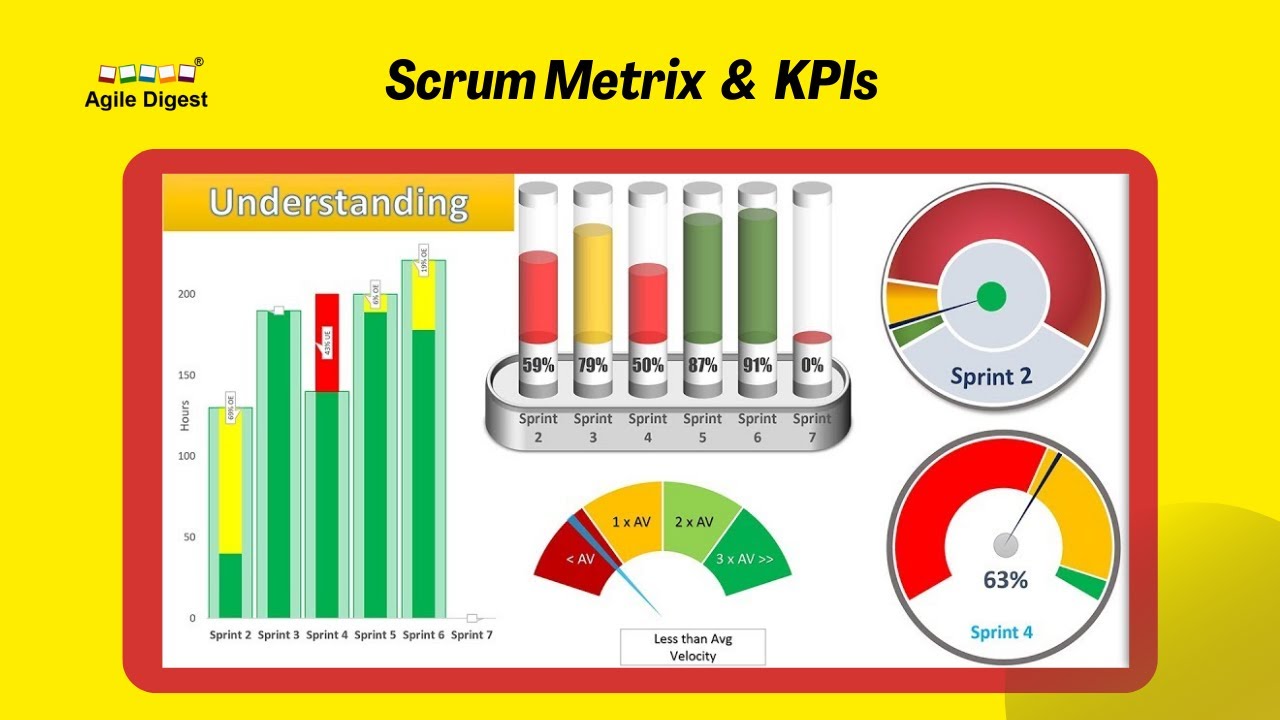
I also work on removing the blockers or impediments that team is facing. Apart from that, I'm also held responsible for sharing certain metrics with the leadership, like velocity commitment reliability capacity effort estimation and product backlog and quality metrics. So, these are some of the ones that I share with the management.
Along with that there is a scrum committee in the organization which I'm a part of similar to center of excellence with various Scrum masters meet together and talk about how their Scrum teams are performing, how we can make them more self organizing and self sufficient by sharing ideas with each other. Yeah, I think these are some of my basic responsibilities in my day to day life. Okay, thank you for that.
Okay, so what do you think is your greatest strength as a scrum master. Oh, yeah, I think my greatest strength as a scrum master is like the lines, and empathy with my team. I have built such a connection and rapport with my team that they can rely on me, they can show, whatever challenges they are facing in their day to day life, and I haven't showed them that I am there to listen to them to protect them, so they can come up and talk to me and for that I have set up one on one for each of the each of my team members.
So the so that I can understand their perspective, what is the definitely seeing it any challenges. What is their concern behind that, or I can connect with them emotionally. I think that is something really helping me in managing my being there they are able to confide in me and they can share their problems and this is that I am able to guide and help them in the whole.
True. Thanks, Ben cover that. Okay, now this one is most asked question that why we hire you.
You're already interviewing 10 more candidates right. So why we should hire you think. I think the answer goes in the same lines that we have just talked about in the previous question that I have been able to connect in my, in my current role I have been able to manage my team very well as a scrum master.
Also I've been able to help organization in terms of, like, I have been, I always keep looking on forums where I can, I can share my knowledge about the framework with other teams who are still following traditional waterfall model, so that I can tell them the advantages or benefits of using the scrum framework how we can increase that transparency and by inspecting and adapting the things we can improve our business value. So, I mean, I always look for such kind of forums and with the help of that I am able to help the organization, transform many teams from waterfall to agile way of working. So I think that's one of the achievement that I think I will be able to use that skill and the new organization that I'm going to study I think that's my forte and based on that I think it's a good, good way to go that I can be hired.
Okay, thanks sprinkled on there. Okay. So as you mentioned about a lot of challenges and you might have faced right as a scrum master, so wanted to share some of the challenges and what you have done to resolve those issues or challenges which you have faced.
As a scrum master my biggest challenge. The biggest challenge for me is the mindset. It's really hard to convince people at times that why we want to change from waterfall to agile and there is a scrum master coming in saying no, the way you are working now via want to change that.
And now we want to have Vokes, with more transparency and we have to inspect and adapt at every development phase, and you have to work breakdown you walk into smaller pieces. So I can share example that when I joined my current organization. It was into a transformation phase.
And at that time, I just tell my team that Scrum is just a new way of working. This is a way where you, we are, we are empowering the team, now they can decide the work by themselves by estimating and capacity planning, we will be able to make our book, more transparent with the help of artifacts that we have in the scrum like product backlog sprint backlog and the increment. They will be able to review our walk in the form of reviews and retrospectives and the client will be able to give feedback so we will be able to resolve the changes and risk well in advance to this is just another way of working and slowly when money team is able to understand the benefit, they were able to, you know, work in the framework with a happy mind shape.
Thanks a lot, been covered. Okay, so let's assume that you have assigned to a team, and then you have a product owner who just came into your team. And he's not able to understand this whole completely.
So as I scroll monster how you're going to help your product owner. So if a scrum master who is coming as a new team member in the team as a scrum master my responsibility would be to coach him to guide him to understand that the purpose of this role is to generate business value is to be accountable for the product backlog. He is the one who can get those requirements from the client.
And with the help of pain, we can have these user stories refined there we can talk about each of these user stories, and if there are any dependencies or risks involved in that we can resolve that before taking that into our sprint backlog. We will have to define do our and God for each user story and we can create good user stories with the help of invest criteria. So these are some of the things that I would explain to my product owner so that he can understand the framework, and when we are actually looking into the product backlog we are grooming this to user story when we are refining it, we are able to slice it correctly.
And then, The team is also on the same page, they are able to understand each of those functionality and we are able to reach to sprint goal, and generic business value out of those user stories. Great. Okay.
And what about let's say if your product owner is a little bit pushy. Maybe he or she is asking the team to deliver a user story in between the sprint. So in that scenario what you are going to do as a monster.
Yeah, and that's a very common scenario. As a scrum master, I would go to my product owner that taking new user stories and an ongoing sprint should be an exception, and it should not be a habit. But if something is coming as a high priority with just from the business requirement that it's a high priority.
Then, being a JV will be able to incorporate it at some times. And again we will have to loop in our developers because they are the people who will actually be working on those user stories, and we would need some time to estimate the user story and decide if we have the capacity in the current sprint to pick up that user story. So I think that generally comes up two scenarios in this case.
One is that if you're taking the user story, we will remove the equivalent story points from our existing sprint, and then we will be able to deliver it. But if we are in such a stage in the spring that we will not be able to take back some stories from the sprint backlog back to the product backlog, then that is a last minute product owner to get me some additional resources so that they can get this done. So I think these are the two possible options that we can do if there is an urgent high priority item coming up within the sprint.
But then that should be an exception and not a regular thing. Okay. Okay, so let's talk about retrospective.
So, can you just share some different techniques or different ways by which you have done retrospective as a scrum master so far. shots. So in my experience as a scrum master, I have used multiple retrospective techniques, because using the same one, every time doesn't work, and it doesn't keep the team, engaging every time.
So the most common techniques, or the retrospective methods that I have used is a sailboat, which is the most popular again, we talked about the anchors the winds are the islands that we have into our strength that we have just passed, and we also use a mad sad and di technique. The theme differentiates about what are the things that make them mad or what made them sad on which is what is it that they, they felt happy about. Another technique that I've used as starched start doing stop doing and continue doing so is this something that we can start doing into our team, maybe a new process or need new tool that we want to add in or stop doing something which is not working or maybe an example can be if we are increasing our ceremonies time.
From the time box time. So this is something we need to stop doing in future sprint and continue doing something which is really working fine and we should continue to, so that's another one. Apart from that, there is a for a technique that we use, which is which talks about light lag learned and long for.
So the team can talk about these things. And one of the ones that really woke in my team, which I used to do before we before we went into this pandemic situation and we used to work from office is the. I used to have.
When we are having this meeting, you know, in a boardroom, or we are sitting with each other. So write down your concerns or anything that you want to talk about the improvements on a piece of paper, without mentioning the name so if the team is not feeling, open, open up about sharing something, then it was available so in that case they can write it on a check, and then within the team we will open up all those chips and then. In this way, everybody if it's about individuals they be able to get the feedback, without feeling offended with any other person.
And within which we were able to identify some areas, which we can work upon into our future sprint so I think these are Okay. Okay, great. Okay.
So, as a scrum master What do you think are your achievements so far apart from whatever you are doing, apart from your day to day work. Do you think if you want to share some of your top achievements as as commercial shower show so some of the top achievements, I would mention is that being looking into a global team, the developers and the product owner is based out of us and the queue is and Scrum Master is based out of India, it's sometimes difficult to maintain that collaboration among the teams because we have only a few hours of overlap time when we are working as a team. And when the default on any of the events the so if it's a sprint planning or to view a retrospective happening that they falling on that day.
then in the situation. Every sprint. So I think this.
This is something I've been able to manage very well in my team and this is, we are getting it with the help of some of the metrics that we are using that commitment reliability trend is looking good, and a difficult to get metrics is looking good. The quality is good as well as the commitment and estimation you're going to find so this I would say as one of the achievements. Apart from that, and I can also mention that I'm a part of Scrum committee.
So, in that I have been able to share my ideas that how I am managing my theme. And at the same time I'm also listening to them getting their ideas and implementing that team. So with the help of that forum.
We are able to achieve a lot into our team, we are able to add a new very lot of new ideas into our teams, which is like a view of helping each other we are able to make our team, more collaborative more cooperative and they feel motivated at the same time, saying, this is another achievement. One more thing is that I already mentioned that I keep looking on forums where I can share my knowledge about the framework, and I've been able to help transform many teams from waterfall to agile. So this in a way help the teams, and the organization.
And we're moving forward touchy when you forget. Now you are a part of carriers. Like couple Sharma Show right now, how you feel, to be part of crystal Great, so this is important.
Okay jokes about friends. Okay, Let's move on. Okay, so let's talk about a scenario where, as you mentioned that you are a part of Scrum committee right.
We have working with the different practices, maybe. So what is the scenario when some of your other colleagues come to you and they're asking about safe or some other kind of framework for example Spotify or any other thing, and let's say you will not have enough knowledge about that particular framework. You only know about this Chrome, right.
So, how the conversation will flow in that kind of scenarios. Yep. So I think if I am in a group where people are talking about other frameworks, other frameworks which I do not have knowledge about, then I would like to be an active listener in such a scenario, I would listen to the conversation, understand their viewpoint, about the other frameworks, and I would try to differentiate it with Scrum because that is something I know.
So I would try to understand how it is different from Scrum and is, what is it that we can adopt in our view, working from these other frameworks. And apart from that, I think, once the discussion is over once the meeting is over, I would like to go back to the people, I would like to interact with them so that I can learn more about those frameworks and how how I can use them, and also going through the documents, the videos from which I can gain more knowledge about those frameworks that would be my approach to that in future if I come across such situation. At least I have an idea of that, even if I don't have a practical experience.
Okay, thanks for sharing your honest answer. Okay, so, you talked about business value you talked about mattresses. So we like to share some of the mattresses, which talked about business value.
Oh, yes, some of the metrics are the like the most common metrics or thing that I would, I would say would tell us the business value is the working software. have got out of this product or project. Apart from that some other metrics like quality metrics will tell us that how our project is looking how many defects we have into the system.
And I'd be able to improve that spend by sprint. And that's another thing that I think would tell us that how valuable are productive or how the quality of our product is ok, you any way to calculate that, that working software is working fine or if you've seen something in the past, like how you measure that okay now your customer is happy or this particular software as you mentioned it is perfectly working find something. Yes.
So, when we are having those review meetings, if we see that there are, there is no feedback coming from the customer now or the stakeholders are there is very minimal feedback, and you're appreciating the work that you're doing and end users are also happy or satisfied with the functionality, there is no much feedback coming from the end user I think that will be to determine we do not have a particular metrics for that but we run some surveys, at times and like getting the user surveys will tell us that how the product is going, and are they happy with the delivery that we are giving them. Think. Okay, So let's talk about lead time and cycle time if you're aware about what's the difference between these two here, so lead time and cycle time, it's, it's a.
These are the terms that are used in combat framework and these are not from the scrum framework. So to be honest I do not have practical experience of the practical knowledge of it, but from my experience what I've learned over the years. I think cycle time is something then we have received some piece of functionality.
The time we have received it versus when we have delivered, the total time. We call it the lead time, and the cycle time is the when the developers actually started to work on the functionality till the time they delivered it is the cycle time. And I think that's the difference I don't know, a lot of details about it because I experienced.
Yeah so Scrum of scrums is is used when we are into a scaled agile framework, and there are multiple Scrum teams working on a single product. In those situations, there are multiple Scrum teams and the scrum of scrums happens. Among the scrum masters where they talk about their individuals teamwork and what are the dependencies they have with respect to in these teams so these are the things they talk about during Scrum Scrum meetings and I think, again, the duration depends upon being to team in the organization to organization generally once a week or twice a week that's grandma's from happens, and it's used in places where dusk, a dial is adopted at an enterprise level or a portfolio level.
Okay. And are you aware about a spike in technical depth. The students.
Yep So spike, and technical depth, are again really. First let me talk about Scott spike spike is our user story or epic for which the developers do not have clear understanding and they are not able to get to estimate of that. So they dedicate time maybe a time books time in which they are able to do that research work on that functionality.
And the result of a spike would be that research work would be they'll be able to get to the estimates that how much time it will be to complete that functionality. That is a spike and about technical debt. I'd like to explain technical debt as a feature that the developers has developed, because, because of the tight deadlines, they have delivered something with a with a shortcut, or maybe a bandaid fixed but the later they want to refactor it so that they can improve the performance of the functionality.
so that I think is a technical debt that just because of some deadlines they have delivered the functionality but not the perfect code, something that they have done. And then that needs improvement in future Sprint's. That's why we call it a technical debt.
And according to what is a good user story. A good user story is something which, which has of characteristics that it follows in this criteria and that it is independent of other user stories so it's not dependent upon another user stories when we are delivering it or working on that user story we are able to deliver business value just out of that user story, and it should be negotiated well between the product owner and developers so if they want to talk about the user story should be negotiable between them. It should be valuable again, able to deliver some value at the end of the day, estimable, we should be able to estimate it, at least at least a relative estimation, we should be able to tell it small smaller should be small enough to be delivered in a and it should be testable we should be able to test it before we can say that this is done in the definition of done is meant and we can pass it for the release.
I think these are the characteristics of a good user study, from my perspective. Okay, and let's say your project manager came to you one day and your project manager is telling you that. Could you tell us, your job is to increase the productivity of 13.
So how you can do that how we can increase the productivity of a team of teams not performing well, how we can improve the productivity of the team. I think what we can do is in the retrospectives first we can try to identify the problem areas, because only when we know the problem we are able to identify a solution for that. So what is it that is not working fine.
Is it that we are overestimating or under estimating our user stories, or the capacity planning is not done well people are taking too many leaves during or unplanned leave during the sprint, or they are reading too many defects into the system. So once we know what is it that is not working basis that only we can decide that how we can improve on that and improve the productivity of the team. Ok.
Okay, now this one is again one of the most asked question, what's the difference between a burn up and about down chart. Okay, so, born up and burn down charts are some of the metrics that we use in the strong framework. Bond on jack is based on time versus the effort.
So, on excesses we have the time the number of days we have inner strength and y axis we have the story points or the bubbles. So, each day, then we are working on the sprint, we will be able to do the burn down charts we will be able to figure out that how many stories have been burned each day. And there is an ideal line and the burn down charts which tells us that this is the expected goal that is expected to be completed each day.
So, each day we are practicing and as a scrum master I will be tracking that how many stories have been born. And is it lesser than or more than what is. We expected based on the ID line.
And this is a way to basically judge how our team is performing in the sprint. How far or near VR to the sprint cool. Are we able to complete the sprint goal on time.
So this is something we use the burn down chart to track the progress of our sprint. And similarly, a burn up chart is again tells us that this is our total book, and each day what we are completing or how many story points we are completing each day. So, in our project we have supposed to hundred story points.
So, each day, we are telling that, or maybe sprint by sprint we are telling that every sprint we are able to deliver 20 story points, that's the velocity, and then 25 story points was trained by sprint we are telling that this much work has been completed. That is something being told to the management in terms of that burnout chart. Okay, thanks for that.
OK, so now this one is about. Product Backlog in a spring. So, what do you cover in a sprint or a bread backlog, other than the box issue or user stories.
So I think that's been my understanding, apart from working on user stories and bugs. The work upon spikes and technical debt. During our sprint.
I think we have already discussed about what is a spike and what is a technical debt. If we have capacity into our ongoing sprint. Maybe there are situation, generally, which is not the case that we do not have enough user stories refined into our product backlog, and we have capacity, the team in those situations, maybe we can take some spikes or technical debt in the ongoing spread apart from our regular book like user stories and.
and placement if there's anything else that we are working and I'm not aware of, please feel free to add that no no that's that's ok ok ok now let's move on to the other one this is again a typical service question which we have seen many times. So let's say any one of your team member is not interested or not attending any of the speed even tracks it's a daily Scrum or it can be the planning session or refinement, it can be anything so how you work with this kind of team members finger. Yeah.
So considering an example there is a team member who is not attending the daily stand up, I would just talk to the person that what is his reason behind not attending the meeting, and supporting suppose he comes up and say that are not attending the meeting because I do not have any impediment. And I would like to use that time in doing my regular book, I will be able to save that time. So in that case, I would help him understand that daily stand up, it's not just about you.
It's about the team, even if you do not have any impediment that it doesn't tell us that you will not be able to be a part of somebody else's problem. So, if the purpose of following the scrum framework or a diabetes, working is that we are rising together and we are feeling together. So, we have taken this ownership together as a team to when we are meeting in the day stand up, it is giving transparency to the integrity.
And what is it that we will be yesterday What is it that we are working today and what is it that we will be working tomorrow. So, yeah so um what are the problems that we have so in case you do not have any problem maybe there's some other member in the team who has problems and you get that opportunity to help that person and outshine yourself. So this is the way I would help him understand the importance of daily Scrum daily, sorry the framework and the daily Scrum so that he can feel encouraged to participate in those events, I think.
Coaching and Mentoring is the thing that is required here if a person is not attending any of the sessions. Okay. Thanks.
Think about that. Okay. Now, this one is again ready, especially with respect to Oscar master.
So what is your biggest failure and a success as a scrum master, if you go back and see your journey so far as a scrum master. I'm my biggest failure and a success so I think I would not call it a failure but a challenge is, like I was explaining in all already in one of the questions is that changing the mindset when you're working with the team who is transforming from waterfall to agile way of working. So in those teams.
It's really difficult to do you know convince them that this is the new way of working and we should start doing it because there are many advantages of using the framework, because change is hard, it's tough for for people to accept the changes and working in a framework where there are tight deadlines and we are open and transparent about everything we are inspecting and adapting it every phases. So, this is I think is the biggest challenge and I think with the help of collaboration and explaining him the benefits and how it will benefit the customer as well as to themselves, we will be able to, you know, align them to why we should work in this space. But yeah, I think this was a challenge that I faced multiple times when we want to transform a team from waterfall to agile we're focusing on the success.
Success I would say as a scrum master in my career, I have been able to manage multiple teams have been able to work with the different team members having different thought process and I've worked with many teams who have been transformed to a jive to waterfall waterfall to agile way of working. This has given value to the organization, like they have been able to develop, and they have been able to work in a dialogue framework to this is I think a success. And, again, working in collaboration with your team when you're working in a virtual world we're working with the global team, and you're still you're still the team is still doing well they are moving towards Norman to performing phase.
They are facilitating the ceremonies by themselves. They are empowered enough to give their viewpoints they are courageous. These are some of the things that are used to determine how my team is performing and I think that successful Scrum Master steam is performing and have been matured enough that even in the absence of a scrum master things are going well, Wrong finger okay okay I think Branca, yet good, we have covered I think half of our questions, and instead we have it more than 2025 questions still there, but I can see on your face your little exhausted.
So I think I said I time to take a break. So we will continue this session after some time. So, yeah, thank you so much Branca, and I am really glad that you are here and you shared all those questions and the way you answered is good, you know, so that's really awesome and I'm sure that whoever is going to watch this session, they will definitely learned a lot of new things, new ideas examples which you have shared with all of us.

![[𝐑𝐄𝐀𝐋 ] scrum master interview questions and answers ⭐ scrum master interview questions 𝑷𝑨𝑹𝑻-1/6](https://img.youtube.com/vi/3ZMjfHcfjrk/maxresdefault.jpg)
![[𝐑𝐄𝐀𝐋 𝐖𝐎𝐑𝐋𝐃] scrum master interview questions and answers ⭐ agile interview questions⭐ [𝑷𝑨𝑹𝑻-2]](https://img.youtube.com/vi/bbuxEGa9pNk/maxresdefault.jpg)
![[Infosys] scrum master interview questions and answers ⭐ scrum master interview questions](https://img.youtube.com/vi/rgRY8WmT6BU/maxresdefault.jpg)
![[5 Jobs - Top 40+] scrum master interview questions and answers ⭐ scrum master interview questions](https://img.youtube.com/vi/QVdKrKTqvSs/maxresdefault.jpg)
![[Top 20+] SAFe scrum master interview questions and answers ⭐ scrum master interview questions](https://img.youtube.com/vi/DNfyqMgl67A/maxresdefault.jpg)
![[Top 17+ Questions] scrum master interview questions and answers ⭐ scrum master interview questions](https://img.youtube.com/vi/ZrwVygXbEkA/maxresdefault.jpg)
![[3 Jobs Offers ] scrum master interview questions and answers ⭐ scrum master interview questions](https://img.youtube.com/vi/OiAS6j9hhpI/maxresdefault.jpg)
![[Wipro] scrum master interview questions and answers ⭐ scrum master interview questions](https://img.youtube.com/vi/O-lTgXeAO7Q/maxresdefault.jpg)