The cursing is the removal from God, and that Cain's land was cursed, but he himself was given a mark, which is not a curse. It was actually a protection. He was pleading with the Lord to save him.
God is the author of diversity, but He is not the God of racism. In fact, He says in 2 Nephi 5:20, Inasmuch as they will not hearken unto me, thy words shall be cut off from my presence. That is the cursing.
Hello. Welcome back to Scripture Central. I'm Lynne Hilton Wilson, part of the team that tries to build enduring faith in Jesus Christ by illuminating and defending scripture.
And as I mentioned in the past. I love the Old Testament, and I use as my commentary restored scripture. I want to focus this year on our handmaidens and our harems and our heroines.
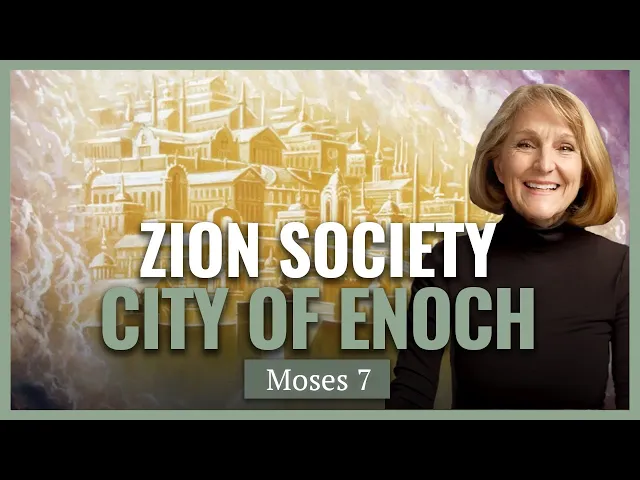
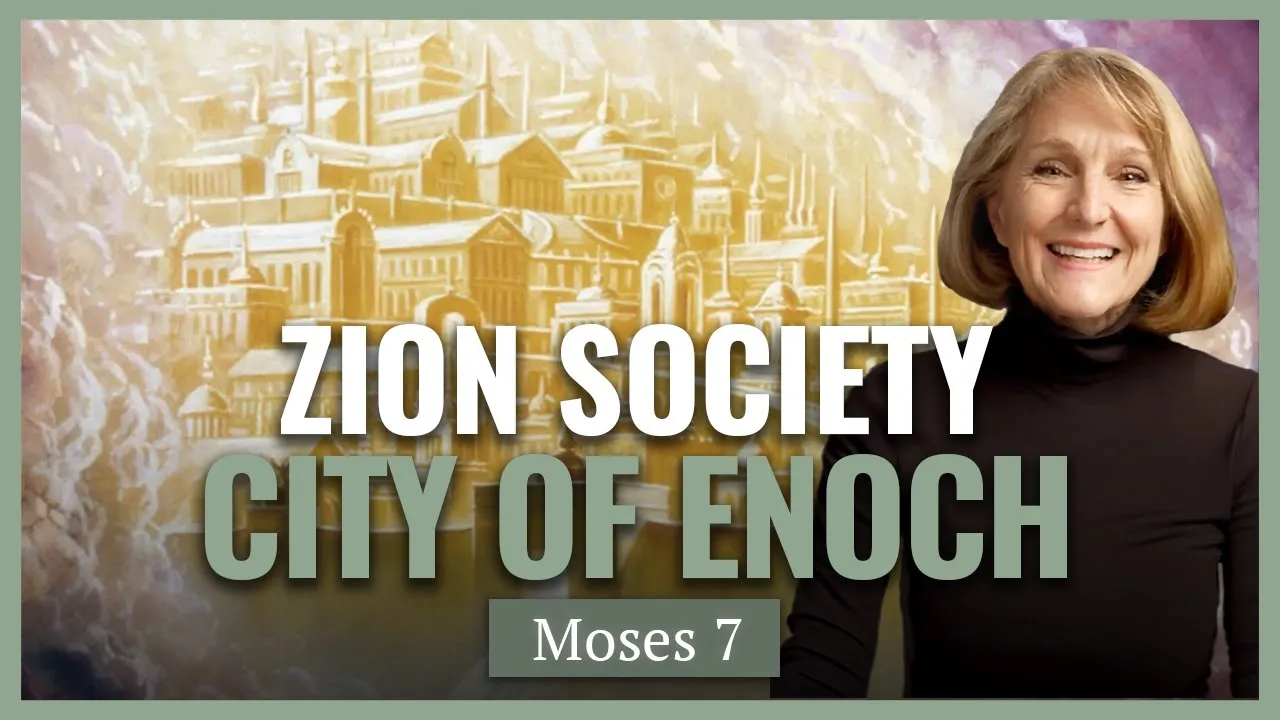
And we continue today in chapter 7 of Moses with many heroines who become the city of Enoch, who are a Zion people who are striving to live the law of consecration, who are striving to follow God and build a kingdom that is so holy that it is translated to heaven. This is a wonderful example of heroines finding the Messiah, and it's taken a long time. He preaches for 365 years.
Just as a reminder, the city of Enoch is taken just a few decades after Adam's death. Adam lived until 930. The city of Enoch is taken, according to Genesis, in 987, or according to the Book of Moses, 1,052.
So just a few decades later, they're gone. I want to dive into the text, Moses 7, and focus on verse 2 through 4. Enoch cried unto the Lord, and there came a voice out of heaven saying, Turn ye, and get ye upon the mount Simeon.
And then we're skipping ahead a little bit. And as Enoch stood, he said, Behold, the heavens opened, and I was clothed upon with glory, and I saw the Lord, and he stood before my face, and I talked with him, even as a man talketh with another, and his face to face. And he said to me, Look, and his vision unfolds, and he learns more and more.
Enoch is a wonderful example of a prophet of God, who is a sure witness. And I believe our prophets are sure witnesses. I also believe that this text is very similar to what we read about when Nephi asks for a vision, and he is told by his guide, Look, and he looked and beheld, and then Look, and Look.
And I feel like this is good advice for all of us as we apply these scriptures to ourselves. Look for the tender mercies of God. Look for answers to our questions.
Seek out the glories of God. And as Enoch is seeking to understand things, the Lord allows him to enter into His presence. This is the whole purpose of our temples, is to prepare us and practice to learn how to enter into the presence of God.
As I mentioned in the Old Testament, this is referred to as the way, the way back to the tree of life, the way back to the presence of the Lord, where, because of Jesus Christ, we can partake of that fruit without our sins. And as the early Christians were called the way, we see this repeated here. Now, I mentioned last week that there are books of Enoch that are not in our canon, that have been discovered, archeologists and literarists, in our last 200 years.
Starting in about 1880, they began discovering these things, and they are consistent with the Book of Abraham. But one of our greatest scholars, Dr Orlov, has written that, The patriarch Enoch is a recipient of angelic revelations, including a celestial knowledge of astronomical and meteorological and calendrical lore. Enoch is portrayed as the one who saw all the secrets of heaven.
This is consistent with what Joseph revealed. Another thing from this great Enoch scholar who's not a member of our faith, he's talking about Enoch's name. He said, The patriarch's name might be related to the Hebrew 'root,' to train up, to dedicate, or to initiate.
And I believe that when Joseph Smith restored the messages for the women's organization, the Relief Society organization, he said, I want you to be organized as the order of Enoch. That's part of this initiation. That's part of the women becoming priestesses.
It's just beautiful. Now, chapter seven does not specifically have any named women, but we have a lot of references to people that are called to repentance, and they obey. We behold the families of the earth.
Enoch sees all of them. He sees the children of men. I'm in verse 41.
I think that this has an overtone to the mother of all living. This goes back to our wonderful mother, Eve. We also learn that Enoch pleads with the Lord to bless the children of Noah, that they can be kept on the earth.
Enoch also prophesies in Moses 7:61, that there's going to be darkness covering the earth, that, The heavens shall shake and the earth shall be in great tribulation, and it shall be among the children of men. But my people will I preserve. He's not just talking about destructions earlier, he's also prophesying of the last days.
Right here in Moses 7:20 is our first reference that the seed of Cain were black and had not place among them. I mentioned to you earlier when we were discussing Genesis 4, that the cursing is the removal from God, and that Cain's land was cursed, but he himself was given a mark, which is not a curse. It was actually a protection.
He was pleading with the Lord to save him. Also, we see this same thing in the Book of Nephi. God is the author of diversity, but He is not the God of racism.
In fact, He says in 2 Nephi 5:20, Inasmuch as they will not hearken unto me, thy words shall be cut off from my presence. And that is the cursing. However, this has been misunderstood.
And it's often thought that Cain's curse was a black skin, but that is a misinterpretation. It's not until five generations later that the seed of Cain are mentioned that way in the Book of Moses. But let's get back to Enoch's Zion.
Starting in verse 16, we start learning about this great prophet's community, the people who are willing to live with one heart. In fact, it says in verse 16, The Lord came and dwelt with his people, and they dwelt in righteousness, and the fear of the Lord was upon all nations, so great was the glory of the Lord. And the Lord called his people Zion because they were of one heart and one mind, and dwelled in righteousness, and there was no poor among them.
That is our goal. This is why we had the Restoration. This is why Joseph was told to create a Zion society, why he's given the law, Section 42, when he arrived in Kirtland.
The Lord wants us to become a Zion society so we can be prepared to enter into His presence. And just as the city of Enoch was translated, the Lord needs us to be living that level so that His Son can come and there will be a people prepared for Him as we read in the Book of Revelation 19:7. It's not until the bride or His church is ready.
It's not until a Zion society is formed. This is one of my favorite sections of this chapter describing how a Zion society is of one heart. And they're one heart, not because they think the same, but because they are focused on our Savior, Jesus Christ.
They are focused on love and charity and compassion, and there is no poor among them. We have a long ways to go on this as well. But I, for one, am so grateful that I have been commanded to live this law of consecration.
We live it with our tithing, we live it with our time, we live it with our means, we live it with every aspect of my life so that we can become a Zion society, and there will be no poor among us. Continuing on in verse 35 and 36, the Lord identifies Himself as Man of Holiness is my name, Man of Counsel is my name, and Endless and Eternal is my name also. We get three beautiful titles of the Lord here.
Wherefore I can stretch forth my hand and hold all the creations which I have made, and we already know there's worlds without number that He's created. He goes on, Mine eye can pierce them all, and among all thy workmanship of my hands, there has not been so great wickedness as among thy brethren. That is tragically the case in our generation as well.
We are on the world that, according to this text, has had more wickedness than any other world that God has created. This is why we need the ordinances. We need the Spirit.
We need prophets so that we can deal with this. However, as Enoch realized this, and he saw the tragedies that were going to befall the people that were left on the earth that did not listen to him, he cries, he weeps, and we learn that God weeps with him. So not only is Enoch known as the great weeper, but we believe, according to this Joseph Smith Translation, that God Himself cries over these things.
I love the text in verses 37 to 40, The whole heaven shall weep over them, all the workmanship of my hand. But in verse 38, He says, A prison have I prepared for them. And verse 39, He talks about the Chosen One who has pled before Him.
The Chosen One will suffer for his sins. The Chosen One will call them to repentance. And then it ends by talking about the heavens weeping.
Well, as I look at this, I say, there seems to be some parallels here. And so I've written up on my chart another beautiful chiastic structure. As Joseph is translating these things and his scribes are using a quill to write as quickly as they can, he probably is unaware of this beautiful Hebraic poetic form that he's using, where the first is also the last message, and the second is the second to the last, and the third, which I have chosen, pled for my face, is also the third to the last.
My Chosen shall return unto me. And then the center point, as the most important, He will suffer for their sins inasmuch as they will repent. We're told also in the Doctrine and Covenants Section 19, that if we do not repent, we will have to suffer for our own sins.
But our Savior has done the hard work for us. He's done that heavy lifting, and we have this wonderful opportunity to fall before Him and repent. And not only does God weep, but we can weep as we strive to change our natural natures and come unto Him.
I also love the fact that in ancient Jewish traditions, they also have a God that weeps. And we have a record where the weeping of the heavens at the time of Enoch included not only the figurative drenching of the world with rain through Noah, but also a literal weeping of God and angels and the patriarchs. This is all an example of the things that are in 3 Enoch that have a parallel between Joseph Smith's Enoch.
This is a bullseye. Joseph Smith's translation of Genesis, including these Enoch chapters, fit in perfectly, as I mentioned previously. In verse 41, we see that Enoch's compassion grows as he understands greater knowledge of God.
The Lord tells Enoch that all the doings of the children of men, that Enoch knew them, and he looked upon them, and he saw their wickedness, he saw their misery, and he stretched forth his arms, and his heart swelled wide as eternity, and his bowels yearned, and all eternity shook. Do you see Enoch's compassion growing? The more he understands.
And he begs the Lord to save Noah. He sees a righteous descendant generations down, and he begs the Lord to allow Enoch's posterity through Noah to stay on the Earth. But the majority of Enoch's posterity that were righteous are taken into heaven.
In fact, in verse 42, it says, Enoch also saw Noah and his family, and the posterity of the sons of Noah should be saved with a temporal salvation. Now, isn't this interesting? That Noah becomes our temporal savior.
The Ark and his three righteous sons and three righteous daughters and the animals that they took with them are saved from the Flood's destruction. But Noah in heaven has a different name. We learn in restored scripture that his name is Gabriel.
And angel Gabriel is the one who has chosen to come to announce the Savior of the world. As we continue on in chapter seven, down in verse 48, we get a beautiful reference to mothers. And a beautiful reference allegorically to the earth as our mother.
It reads in verse 48, Enoch looked upon the earth, and he heard a voice from the bowels thereof saying, I am pained. I am weary because of the wickedness of my children. When shall I rest and be cleansed from the filthiness which has gone forth out of me?
And when will my Creator sanctify me? So the earth also has a spirit, and the earth is compared to the mother of men. He continues on, When Enoch heard the earth mourn, he wept and cried, O Lord, wilt thou not have compassion upon the earth?
So Enoch has compassion on the people. He's developing charity, and he's worried about all these people. I would encourage you, as you want to learn more about Enoch, to not only study the Book of Moses, but also if you want to go to Scripture Central and look up some of the beautiful Pearl of Great Price Central archives, you'll find fabulous information.
Also online, you can use the Encyclopedia of Mormonism and Hugh Nibley's book, Enoch the Prophet. He's written hundreds of pages on Enoch, and we hardly have scratched the surface on this great prophet, so I'd encourage you to go there, as well as some of these other apocryphal texts that are available online. As Enoch is having one of these two visions, he sees the residue of Noah swallowed up in the floods.
The wicked that are left on the earth. And in verse 44, it reads that, As Enoch saw this, he had bitterness of soul, and he wept over his brethren. These are his grandchildren.
Enoch has some of his own posterity here. And it says that Enoch said unto the heavens, I refuse to be comforted. But the Lord said unto Enoch, Lift up your heart and be glad and look.
There is always a plan for saving these people, and it may seem awful on a mortal level, but as we think celestial, these people are removed from an environment where they could not learn the truths of the gospel of Jesus Christ. They were only adding more and more sins to their lives. But the Lord is able to stop their sinning and give them a chance to learn in a different environment where they can receive the gospel there, where they can receive a degree of glory.
God's plan is amazing. And he continues talking about it in verse 45, Enoch looked, and from Noah, he behold all the families of the earth. And then Enoch begins asking questions.
I love these questions in scripture. When shall the day of the Lord come? And when shall the blood of the Righteous be shed?
That is Righteous, capital R. That's Jesus Christ. That's the promised Messiah.
When is our Savior coming, he's asking. And later on, When will all they that mourn be sanctified and have eternal life? It's so hard from a mortal perspective to see these things.
And so Moses ends all the way to verse 60, referring to the first and Second Coming, where there is a day of wickedness and vengeance, where there is wickedness that saturates the world and the Lord is promising him He will come again in both those times. He came in the meridian of time and He's coming again. And we live in a day and age where we have been restored the same order of Enoch in our prophetic leadership, the same order of Enoch where we have given the commandment to live the law of consecration.
And all who have been to the temple have covenanted to live that law with our time, talents, and energies, where we can give all we can to the building of the kingdom and hopefully become a Zion society, where we are one heart and there is no poor among us. And I leave this with you in the name of Jesus Christ. Amen.