this video on delayed hypertrophic super compensation is sponsored by Squarespace okay so there's this brand new study that was published just this month from researchers in Norway that's actually pretty groundbreaking you can hear dr. Eric Helms and Greg knuckles talking about it in the math research review I really like this article you covered it's something that we've talked about in the Bible in community for a very long time the idea of overreaching and super compensation not just for strength but actually Frankfurt Rafi super super interesting article the study title was delayed by a nuclear addition
myofiber hypertrophy and increases in strength with high frequency low load blood flow restrictor training to volitional failure Jesus Christ that's a mouthful so before we dig into this new study over here I want to give you guys a quick rundown on the basic theory behind super compensation first over here on the y-axis you have your level of fitness or you can think about this as performance on the x-axis you have time just for our reference here let's say this is the end of your eight-week program week program and so you begin your program over here
and it's actually a pretty challenging program and initially you actually lose a little bit of fitness because you're not able to fully recover from the new training however as your muscles and tendons and immune system recovers your fitness level comes back up to baseline however your body actually ends up overshooting that adaptation and you get all of these delayed gains over here and this is what we would call super compensation so we can actually break this droop part over here up into two separate phases so this section over here where you're actually losing Fitness initially
we'd call that over reaching and in this segment here where you're recovering we would call that the recovery phase overtraining would be if you never end up entering this recovery phase and you just continue to see this downward trend and that usually only happens in beginners who take on a program that's a little bit too challenging for them however it can happen in more intermediate to advanced trainees if you ignore the warning signals from your body which we'll get to in a minute so how your progress and recovery looks is going to depend on how
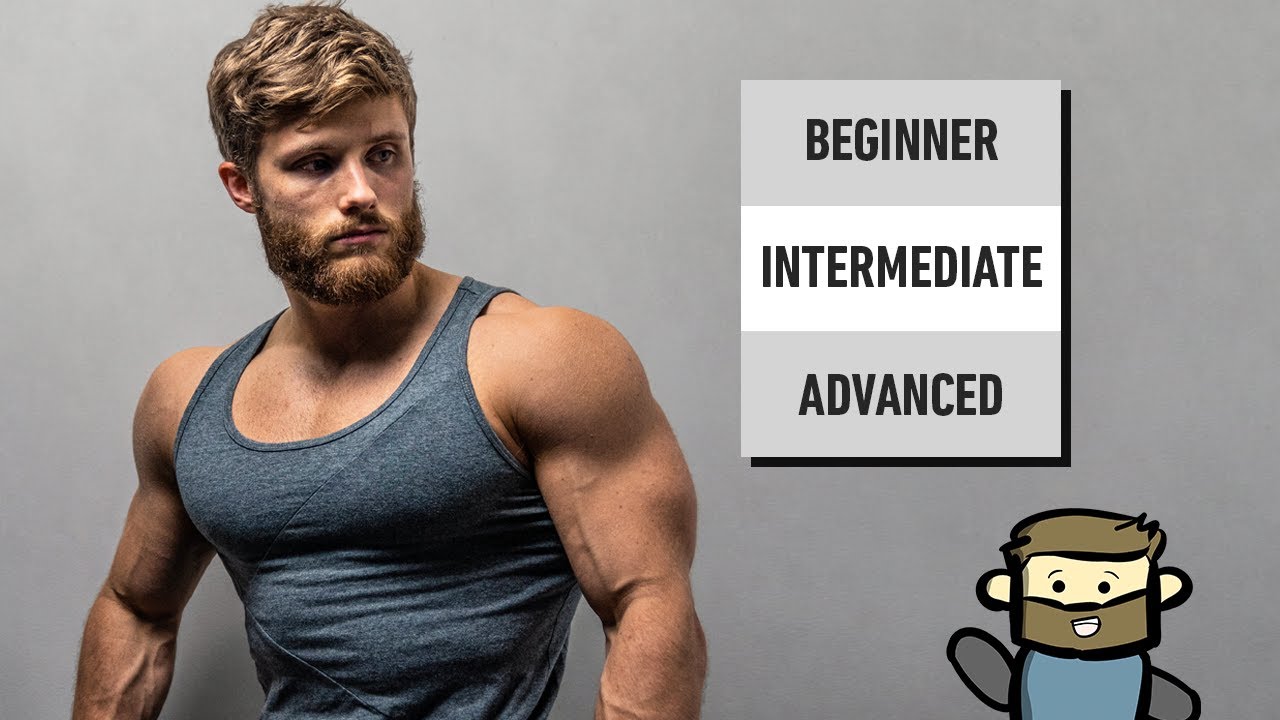
new you are to lifting so how overreaching and super compensation works for a beginner is gonna be different than how it works for an advanced trainee so as someone who's relatively new weight training you actually don't really need to worry about super compensation and overreaching really at all you should be able to make more or less linear progress from workout to workout as you get a little bit more training experience and enter the intermediate phase now you're going to need more of a training stimulus to make the same progress so you may need to dip
down into slight phases of overreaching but still you can see that over time you're more or less still getting linear progress now once you get into the advanced stage of lifting experience here's where things may change a little bit but essentially you may need to apply so much of a training stimulus for continued progress that you end up dipping down into these more extended phases of overreaching that will then add up to this super compensated phase over here over time if I were to say pluck a random day over here from your program and have
you go for a bench press PR the weight might actually feel really heavy because you're not fully recovered but then if you were to run a d load for a couple weeks and pick out a day over here or you're in that super compensated stage now you'd be so much more likely to hit a PR because you're actually recovered so up until now a lot of this has been pretty speculative most of it is based on research in runners it has also been applied in powerlifting circles for decades where for example you can run several
overloading weeks leading into an overreaching week where you train harder than normal followed by a recovery week or a taper for one to two weeks so that you line up your competition day with that super compensation phase when you're making the most gains and most likely to PR now to give you some reference for the expert climate on this and a podcast interview just last year you can hear dr. Mike Israel and dr. Eric Helms expressing some skepticism towards the idea of super compensation sweet yeah I'm not willing to bet one way or another as
to whether there are true super compensatory processes at work with overreaching but I will say the following as you train harder and harder and as your body adapts to that harder and harder training and visor overload for its poor requires more how much training you need to get better naturally be more than what you can recover from discounting the possibility that you can see a nonlinear rebound in performance possibly from doing a lot of work and then doing a recovery period that could be better than kind of your normal standard overload I would really love
to see that state and well here we are just one year later and that study has now finally been done they measured a lot of different stuff from gene expression to cellular signaling and we're gonna skip many of the details here but you can find them all in the mass research review at the link below so they basically took 16 untrained subjects and put them on a pretty grueling leg training program especially for beginners that was split up into two training blocks each block actually only lasted five days but in those five days they hid
their legs seven separate times so on some days they'd hit legs twice in the same day now the leg workouts were actually very simple they do four sets of leg extensions to failure using blood flow restriction training where you basically wrap a band around the quads which forces blood to pool in the muscle and actually 13 of the 16 subjects actually ended up completing the study and making the final analysis as three dropped out and one showed signs of a rhabdo so they did a five days of the leg extension protocol that was block one
and they took ten days of complete rest and then did the same five days of leg extensions again in block two now we're gonna look at muscle fiber size at four different time points toward the end of block one in the middle of the first rest period three days after block two and then ten days after block two now if the delayed hypertrophy theory was true you'd expect to see the most hypertrophy after all the training was over so the hypertrophy would be delayed so they'd end up finishing the second training block rest for ten
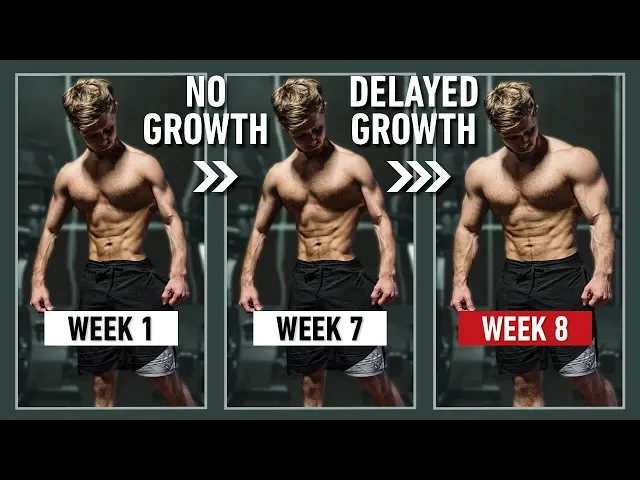
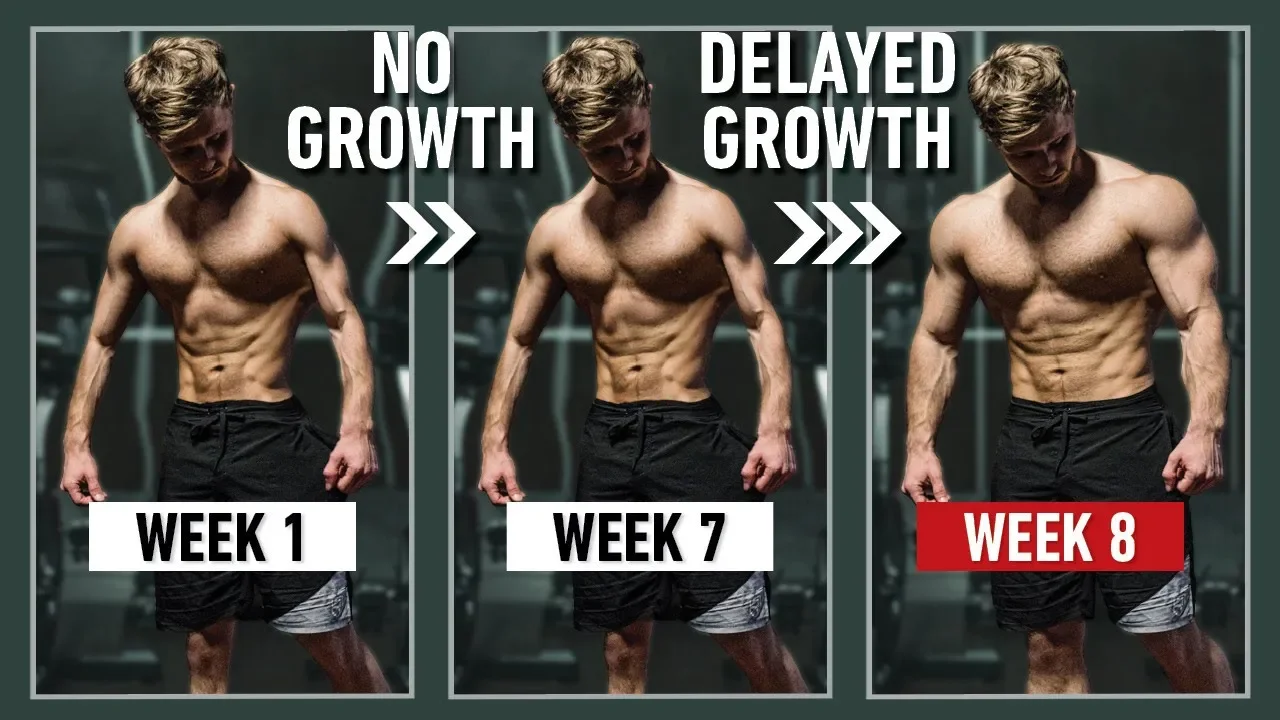
days and then that's when you'd see the most muscle growth and in fact that is exactly what they found they found that muscle fiber size decreased initially maybe because they weren't recovering well was still lower than baseline during the first rest week but then increased in the three days following the second block and increased even more ten days after the second block so I think that what we have here is the first evidence of delayed hypertrophic super compensation where you do see that drop in muscle size initially during the training but then in the recovery
period after training muscle size continues to increase now a few disclaimers here first they didn't take another biopsy after that second 10-day rest period so it is possible that their muscle fibers kept growing after 10 days but all we can say for sure is that their muscle fibers definitely were bigger 10 days following the second training block and second even though muscle fiber biopsies did show delayed hypertrophy when you look at their ultrasound results trends were a little different and they didn't see much evidence of delayed hypertrophy at the whole muscle level however anabolic signaling
did also point toward delayed hypertrophy I'm so basically I think we really need to replicate this study before we can take these results and run with them but when it comes to delayed hypertrophic super compensation I think this is the first bit of evidence showing that it certainly is possible so what does all of this mean for our training I would say as a beginner this is something to keep in mind for when your progress starts to slow down down the road but I don't think it really applies to you just yet I don't see
any reason why a beginner should intentionally overreach and risk overtraining just for a potential super compensation response now for an intermediate to advanced level bodybuilders I think this research leaves the door open to the idea that you can run a functional overreaching cycle where you push the upper limit of training volume and then run a lower volume phase or a D load where you're gonna realize the gains from that previous training cycle and I have actually noticed myself that if I'm running a very strict program with a very aggressive progression I don't notice much in
terms of muscle fullness until after I finish the program and then chill out on my training for a bit so this could be a very practical takeaway as well you're currently going all out on your training program not seeing much gains easing up on your training for a few weeks might actually allow you to realize those gains from all those tough training sessions now personally I'm not fully comfortable making the broad recommendation to use overreaching cycles to force super compensated progress at the moment we really only have this one study showing delayed hypertrophy and even
it has some contradictory findings but with that said from my personal experience I definitely have observed this effect in general especially in terms of strength and if you're overworked we're taking a deal owed pretty much will always lead to improved strength performance and I have noticed a similar visual effect in terms of muscle fullness both in myself and in others so I think this is an exciting new area of research and I'm excited for new data to come out on it but until then I think that if you do decide to give an overreaching cycle
a shot you don't want to flirt too much with that boundary between overreaching and overtraining and if you do push it always listen carefully to feedback from your body like increased soreness joint pain lack of sleep poor mood and performance detriments and know when your body is telling you to ease up okay so you guys can read more on this topic in the mass article they go into a lot more detail over there on the blood flow restriction aspect and that's something I think I will cover in a future video at some point and before
we go I want to thank Squarespace for sponsoring this video Squarespace is the all-in-one website platform that I use to run my own website in my own online store where I sell all my training programs they have sleek designer custom templates in 24 hour customer support and the whole process of getting your website up and running is actually very simple and easy to do as if you guys are looking to get started with creating your own website or your own online store then you can go to squarespace.com forward slash and that's gonna save you 10%
off your first purchase as thank you again Squarespace for showing your support on the channel I really appreciate it thank you guys so much for watching please leave me a like if you enjoyed the video don't forget to subscribe if you happen to be new and I'll see you guys all here in the next video