What I want to do is really kind of unpick this issue of purpose and argue that unless we rethink purpose in the context of value creation and by that I mean collective value creation then is actually going to be impossible to change the way that capitalism currently works and of course we should remember there's varieties of capitalism and the fact that economic growth has not just a rate but also a direction how do we Actually debate together through different types of stakeholders how we can change our value chain and our inner purpose in order to
redirect the system in better ways there we go so that is not my first slide very interesting they began in the middle what happened here can you begin from the beginning and not in the middle oh yes that way you got to see all my slides cool thank you right and so I'm mainly gonna be talking About some of the key themes in a book I just wrote with this title you might remember that Oscar Wilde said a cynic is one who knows the price of everything but the value of nothing but I want it
to be quite upbeat about the possibilities of how to transform the system so the value of everything is supposed to be already from this part start a positive message and given I mean there's a real nice coincidence here that we had Larry Fink open the Aspen ideas festival yesterday kind of reminding people of this kind of call to arms in the business community to rethink purpose to warn against the dangers of short-termism and how unless we kind of rethink also more stakeholder view of the business itself who you know who the stakeholders are not just
the shareholders then we're not going to get a very good form of capitalism and even profits even profits depend on this kind of long term ISM and interestingly this Call for purpose has also been echoed in fact it's not surprising it's much less surprising in some ways in the political sphere on sort of on the left on the center-left and so it was quite interesting that Ed Miliband when he was campaigning he later lost he very much kind of focused in on this issue of purpose and in an interesting way he really brought it to
this notion of kind of productive versus unproductive ilysm and how could we steer the forms Of capitalism in a more productive way but also that really fundamentally solves some key problems that we have in equality being one of them so what I'm going to do now is kind of you know just remind you isn't this great that different spheres in both the financial community in the business community so-called Pullman and Unilever is calling for purpose in politics fantastic right and especially after the financial crisis I want to just pause a Minute and depress you just
a bit on how little has changed since the financial crisis so in some ways I'll provoke you to think you know everyone's calling for purpose but why is nothing changing and you won't be surprised to hear that then I have a sort of my own view of what needs to happen for this call for purpose to become real not just a talk but also a walk and in all the different what I would call value creators in society that would include both public And private and third sector so philanthropy is fundamentally after rethink how they're
operating but also the government I think has really lost its way in thinking that its role is really just there to kind of tinker on that edges bail out the banks when things go bad and fix different types of market failures but I'll get to that in just a minute so first the depressing bit I'm going to focus on four big problems that we have The first is in the world of finance and you know I'm going to do this quite quickly so pardon the super speciality but you can buy my book later and there's
all sorts of references I think over 500 references for deep discussions for each one of these points here but this first one the problem is that the way we have allowed the financial sector to evolve is problematic basically because finance has been financing finance and by that I mean fire so Finance insurance and real estate in this graph here which is from the Bank of England which is showing the data for the UK in the u.s. it's very similar shows the degree to which financial intermediation which is basically broadly defined the entire financial sector including
shadow banking has kind of outpaced this is the dotted line the growth of the rest of the economy and as long as that finance was fueling growth in the real economy no problem but There's different types of studies that have shown just how much of finance so resources have gone back into the financial sector in the UK it's over 80 percent so only between 10 and 20 goes into the real economy then you'd think ok terrible finance is bad let's fuel industry the problem is that industry itself has become ultra financialized and by that I
mean that profits are increasingly being used to boost share prices stock options surprise surprise Executive pay there's been quite a lot of work on this this is a some data from the work of Bill is onic and his colleague which shows that from 2008 after the financial crisis to 2017 466 of the largest companies have spent over four trillion dollars just in buying back their shares and you know that would be fine if there was also money kind of being reinvested back into human capital and R&D and what the data actually shows is That this
rise in share buybacks has been accompanied by a fall in that kind of reinvestment in that long-run growth that people like Larry Fink are calling for and what you see at the macroeconomic level the impact of this is a fall in aggregate investment you might remember that GDP can be broken down into different components one of which is business investment and this lack of reinvestment back into the real economy shows up as a fall in that Investment part of GDP and by the way let me just say something about this in case I forget to
later I often speak in parentheses you'll get used to it this big debate nowadays about the robots are taking our jobs if you actually look at the data for the last 200 years and mechanization is about 200 years old robots are not that new they're just a new form if you want of machinery what we've had is that yes labor has been displaced by machinery but as long as Profits were being reinvested back into the economy even though some jobs were displaced in one part they showed up again in another part so I would argue
that part of this robots are taking our jobs narrative is missing one of the key issues which is the big changes that have occurred in corporate governance with this obsession about maximizing shareholder value which has had a direct impact on this lack of Rand so this is the second problem the third One is that the state itself and by the state by the way every time I use that word don't think had a Big Brother you know top down one big machinery I'm really talking about the decentralized network of different types of public organizations that
exist in any country I believe that the state has sort of lost its way has stopped kind of being what I call mission oriented and kind of dreaming up the big stuff from setting up the welfare state almost a century Ago to going to the moon and back again kind of real kind of missions to simply fixing things when they go wrong whether that be bailing out the banks or patching things up too much pollution do a carbon tax that would be an example of a negative externality one form of market failure funding those things
that the private sector doesn't fund like basic research that's an example of a positive externality and it's not that these market failures don't exist they Do and there's also quite a useful tool kit in economics to think about it but if we really want a transition of the economy to create a more sustainable inclusive for another form of capitalism which I think will be debated over the next set of days and this fora just tinkering on the edges and putting some bandages here and there is part of the problem so this is the third big
problem we have and the last one the fourth one is kind of the biggest because we will Not have a planet to live on until until we really face in a serious way what Gretta Thornburg is talking about which is the house is literally on fire and we about 12 years left and if you look at the data Bloomberg New Energy Finance yes there is some spending in this area but even just renewable energy apparently we're only spending about 20% which needs to be spent in order to reach the kind of goals that are being
talked about and we should remember that The green transition is not just about renewable energy it's about transforming the entire economy so lowering the material content of the steel sector of course would be really important and across manufacturing anyway so these are the four huge problems in finance in industry in government and the planet okay so what to do and what I try to do in this book on value is to basically argue that you know yes fantastic that there's this discussion after the Financial crisis about getting more inclusive and sustained will growth fantastic we
have these sustainable development goals that you know hundreds of over 100 countries have signed up to fantastic that you have people in both the business community and in politics calling for a search for purpose and long term ISM and calling out you know the real problems that we have with the current system but why is so little changing and I kind of go to This key point that unless we can rethink how to both account for but also really aimed for a different type of value so what value is created but especially explicitly admit that
we have a stakeholder form of capitalism in other words markets themselves are outcomes of how public private and third sector come together let me just repeat that the market is not out there that you intervene in it when it kind of messes up the market itself is an Outcome of how business is organized how the state is organized and the degree to which policy can be kind of smart or not smart how the third sector which would include trade unions or organize we shouldn't forget that trade unions got as some of the biggest innovations of
our time the weekend not bad and the eight-hour work day these are social innovations how these different actors come together fundamentally form the kind of market system we have and unless We really rethink purpose within each of those areas so in the intra organizational setup of these different actors value creators all of them and their relationships we're not gonna change things and what's really interesting also is that after every crisis this was after the big crash of 1929 this quote here there's often a call for understanding again how can it be that we're allowing so
much finance so many funds so much a value creation To be siphoned out of the system let me just read this quote that's fantastic it's a quote by big bill Haywood great name the first trade unionist in the US and in 1929 during the crash she says the barbarous gold barons they did not find the gold they didn't mine it they didn't mill it but by some weird magic alchemy all the gold belongs to them and this is related to this issue of purpose and in some ways it is During also part of what Larry
Fink is talking about which is if you have too much speculation too much short-termism this actually siphons out energy and investment from the economy and what's interesting is if you look and you're gonna have to forgive me a bit here because I'm going to give you a quick speeding tour of 400 years of economic thinking if you look at some of these discussions about what is productive what is unproductive why are we allowing You know parts of the financial sector to siphon out too much funds and it's not being reinvested back in and these arguments
coming back basically after each crisis it kind of requires us to think about where is value creation coming from you know it or is there a distinction between value creator and a value extractor are there some types of activities that create more value than others and there's really no answer to that and what's quite interesting is That it's so I'm gonna put up all these nice quotes here is that it goes back in basically into the history of economic thinking and what one of the things I want to argue is that when we no longer
have that debate what is value and how can we make the economy more productive and not unproductive but also through that productive activity actually solve some fundamental societal challenges that we have and I mentioned climate change just being one of them then this Notion of value and productive versus unproductive can also be captured quite easily and you basically just have different stories about where value creation comes from and I was quite struck in 2009 just one year after the financial crisis this really bold statement they buy made by Lloyd Blank Fein that the people of
goldman sachs are the most productive in the world and i'm going to come back to that later in other words that might sound a bit crazy That statement but could it be actually that how we account for value in the economy actually allows that statement to be quite a rational one because we kind of confuse price with value but that's gonna be sort of the punchline i'll come to but if you think about this word value we kind of hear it all the time I've already mentioned the maximization of shareholder value but we often hear
that the Silicon Valley tech entrepreneurs are value creators in Brexit I know there was a session this morning at the Jerome hotel we were told in the UK we have to at least protect some key sources of where value comes from in the financial services as being somehow quite valuable the prices of drugs are talking about in terms of value-based pricing again I'm going to come back to some of these later on and the state itself is seen as kind of needed also to redistribute value if you if we want to More progressive and not
regressive type of taxation system so these words are kind of always out there used and kind of I would say a fuzzy potentially flaky kind of way and one of the things I want to argue is that you know actually all of those different statements are fundamentally underneath them or stories about where value creation comes from it's very easy unless we bring value to the core of how we think about the economy to allow simple stories about Value creation to actually pass for value creation when actually what's happening is quite a bit of value extraction
but to differentiate the two we need to kind of come back to this core idea and so when I said 400 years of history I literally mean that if you look from the 1600s until now the way that economists thought about value is fundamentally tied also to what was happening in the economy so it's not surprising that the mercantilist and the 1600s this was the era of you know ships going on from C to C so the 1651 Navigation Acts they really believed that value occurred through exchange and that's why they were very worried about
trade and getting the exchange rates right in some ways I would argue in thinking about walls and focusing so much about trade agreements today we're going back to that kind of mercantilist era but what happened in the 1700 and the 1800's is that the economists Started really looking at production itself so they didn't focus on trade so the physiocrats in the 1700s this was obviously a period of agricultural economics sorry the economy was mainly agricultural and they basically built the first spreadsheet ever I would argue and so they really believed that value came from farm
labor and they were very concerned that the value that was created in agriculture was reinvested back into the economy in Order to make the productive system in agriculture improve and so they made this very interesting tableau here is called the tableau economy Jose Francois kanae in case you're interested and they divided the economy into three classes the productive class and these were the farmers the proprietors these were the merchants who are kind of just moving some of the stuff around to sell it and the sterile class think kind of the sexual connotation in terms Of
reproduction the sterile class were the landlords who basically were seen as just kind of living off the land and being able to charge rent and they were seen as kind of like fundamentally unproductive to the point of being sterile and what they were very concerned about was the degree to which as the money flowed that enough of it was being plowed back in because you would need some money obviously to sell the goods but if too much was used for Exchange or too much rent was taken out the system they believed would fall apart and
what the class sorry the the classical economists and these are Adam Smith David Ricardo and Karl Marx they were living of course through the Industrial Revolution so it's not surprising that they actually believed that industrial labor was the source the fundamental source of value it actually came up with the Labour theory of value but all three of them in different ways What they're really focused on was things like the division of labor this is Adam Smith looking at the pin Factory looking at how if one person has to produce the whole pen then he's only
he or she will only look at the time was mainly he will only produce one pin a day and if you actually divided that division of labor into the eighteen different tasks you could produce up to five thousand pins a day he was very interested in that division of labor and The degree to which would increase productivity growth and surprise surprise The Wealth of Nations which was the title of his great book Adam Smith was then followed by David Ricardo and Karl Marx some years later and they were really living through this kind of period
of the rise of the machinery of the machines so David Ricardo in 1821 was already asking as I mentioned before the question will the robots take our jobs he was interested in the degree to Which machines would displace labor and also Labour's wages would fall unemployment would fall and what would happen to the system Karl Marx kind of took that on because he really fundamentally believed that profits came from exploitation of labour so the irony he thought was if machines are displacing the source of exploitation what's going to happen to the capitalist system as a
whole forget whether they were right or wrong What was very interesting is that they were really looking at the kind of objective conditions of production who's doing what the division of labor they weren't you know Karl Marx for example wasn't using the word unproductive to be things necessarily bad he would actually look at the activity that was being conducted literally by say a truck driver where they were driving would then define where they were productive or unproductive Adam Smith had this very Interesting list of activities that he thought were unproductive and he must have literally
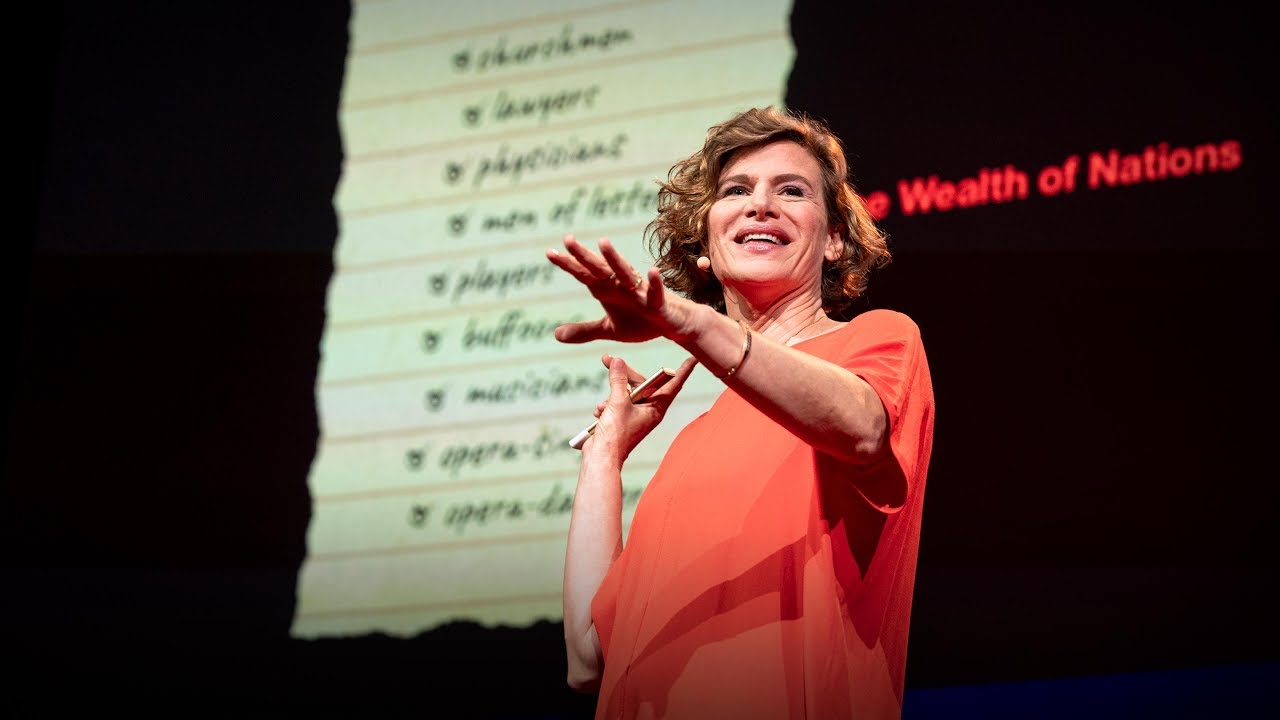
gone to the Opera I think the night before because there's three different types of activities happening in the Opera that he called unproductive musicians opera singers and opera dancers but what he meant by this is that you know obviously there'll be some cultural activities that we all need they might be unproductive but we need them for say cultural reasons but if we Spend too much on in those areas that are unproductive then the system won't reproduce itself and what happens basically with neoclassical economics which is the economics that we teach all over the world is
that the logic fundamentally switched instead of having a whole discussion of where does value come from and using that to determine a theory of price in exchange they put a lot of emphasis on prices themselves again really superficially supply and Demand curves I'm sure you've all heard of that forming equilibrium prices through individual decisions maximizing utility for consumers maximizing profits for companies maximizing the choice between leisure versus work for workers and so through this idea that different actors are maximizing their individual decisions we form the supply and demand curves into the prices come about and
they reveal value okay and so what happens is first of all the class Struggle kind of disappears overnight there's no more attention to what is the kind of relationship between profits and wages depending on the actual division of labor and say bargaining power wages are simply the outcomes themselves of this individual decision-making again leisure versus work the other thing as I said price reveals value and already here you see why it's so easy then for someone like Lloyd Blank means to say I you know we earn a lot we are very Valuable it is absolutely
true that goldman sachs wages are very high and if we're using the wage which is the price of labor to reveal the value of things and we'll give you more examples in a minute then actually there's some sort of logical consequence to that statement as crazy am I Reince this is very interesting because many people who write about inequality look at rent rent is no longer it was in the classical's some form of unearned Income that stare out class and the physiocrats in the classical's themselves talked about rent as unearned income but it's kind of
the existence of it some sort of imperfection that prevents us from getting a competitive price some transient form of Monopoly power that can ideally if we remove those imperfections be competed away so out goes from the door this kind of attention to could it be that some activities because of how they're Organized not just because it's financed or not financed but how finance has evolved has potentially led to unearned income just moving stuff around that kind of view of the problem around rent disappears and so what I want to argue is that when this debate
then of what is valuable what it's not valuable where does value come from basically disappears because we focus so much on prices and kind of take away the lens of objectively what's happening and don't Think of objectively as some sort of deterministic factor the if you if you read the classical's they were very interested in change and technological change that was constantly happening in their era but an objective look on who's doing what where's the division of labor for example if you're looking at the innovation chain all the different actors that are responsible for innovation
how do they work together across that innovation and how do they Together create value that kind of attention to production itself is displaced by this attention to prices and so you know again the logic going from price to value making it very easy to kind of confuse potentially those two so what I'm going to do now is just kind of say why this matters is this just some kind of academic debate I'm like okay fine whatever you've just told us this quick synopsis of a four hundred years of value thinking I wouldn't argue That it
really matters to a lot of different areas and again forgive me for going quite quickly here but I'm going to cover quite a lot of ground the first is how we measure output and you know even though GDP was not meant to be used as we're using it today to look at every little percentage point Kuzon its warned against doing that he was one of the founders of the concept what we clued in GDP is fundamentally what you Know all the goods and services that actually have legal prices this is why if you marry your
dog cleaner GDP will go down potentially because that person will still be doing the same job in the house was simply not being paid for it if you pollute GDP goes up now these things are known so feminist economist and environmental economists have called on changing how we think about GDP to account for those unpaid say care services at home or to actually measure The value loss from the pollution itself not just the value gained from cleaning it up for quite some years what is less known him I was struck by how few of my
economist friends know this that finance itself wasn't included in GDP up until about 1970 only for example those financial services that you played a direct fee for so if you went to get a mortgage and paid a fee sorry I'm very dehydrated cuz I'm jet lagged hmm that went into GDP so the fee to the mortgage Provider but net interest payments wasn't going in that was literally seen as a transfer of existing income in the same way that Social Security payments don't go to GDP is just movement of existing income and so specifically the net
interest payments weren't going in and then because of that finance problem actually called it the banking problem they saw that these net interest payments were just rising that drastically there was a group inside the United Nations called the UN systems of national accounting and they said we got a problem here this huge part of the economy again that first graph that I showed you in the beginning the rise of Finance compared to the rest of the economy we gotta count for it so instead of instead of kind of just pausing and in doing the physiocrats
thing and looking at well what form of finance is increasing and what is it exactly doing Is it productive is that unproductive should we just pause them in it before we just put into GDP they just gave it a name so a national income and product accounts an aim to the good or service that's been included so the name to what commercial banks were doing the name given was financial intermediation the name of investment banks was risk-taking and just you know overnight bank it goes in and that was very interesting because it's not you know
there's no clear-cut Way how to do this but the fact that there was almost zero discussion of what form of Finance is actually increasing and is their productive versus unproductive side of it is should we be careful before we put it into GDP to distinguish the two was basically absent that discussion was completely absent - you know this whole issue again that Larry Fink raised last night in which is you know a much broader conversation worldwide about some of the Limits of just maximizing shareholder value in companies it's actually backed by a particular theory of
value and if you read Michael Jensen's work in the 1980s which was taught and Harvard Business School and business schools worldwide the idea is that shareholders are the only ones without a guaranteed rate of return literally they're called the residual claimants if there's anything left over once everyone else was a guaranteed rate of income is paid Whether it's workers pay their salary banks pay their interest then they you know get the residual which means that they actually risked the most they're the greatest risk takers completely kind of ignoring the fact they'll come to this a
bit later and I've talked about it quite a bit in my previous book down to proneural state that there's actually a much more collective risk taking workers take risks all the time but also some of the greatest advances of our Time have required the state to take big risks for example the internet was you know state funded for every success there's been many failures so this idea that somehow maximizing shareholder value is rewarding those who are also taking the biggest risks and companies because they are the residual claimants the only ones without a guaranteed rate
of return again is very interesting because it kind of shows this complete lack of attention so it's actually Happening kind of on the shop floor there's much more collective type of risk-taking that occurs across different actors and not just shareholders and this is interesting simply because you know you don't need me to tell you that there's some problems with maximizing only shareholder value but I think it's gonna be very hard to change that unless we debunk some of the underlying assumptions behind that kind of proposition itself pricing of medicines Is quite extraordinary so I mean
it's actually the best example of value-based price are e of this confusion of price with value so when in some recent months the price of an antibiotic went up by 400 the CEO of the company I think there were a Nostrum pharmaceuticals was asked what are you doing how can you increase the price of a medicine by 400% overnight and the answer was we have the moral imperative to allow prices to rise To what the market will bear so you know how much people are willing to pay and of course you are gonna be willing
to pay very much if you need it in order to survive and what was interesting was not only that you know that moral imperative to the shareholders which I've already mentioned but also underlying that is this notion of value-based pricing which is a real kind of deformation of the word value let me just sorry for the problem with things like this when they Have to wait is that then I can't get to the next slide quickly this notion of how you base pricing what's interesting is that it again dismisses this much more collective notice that
I keep coming back to this point of value having been created collectively in this particular sector what's extraordinary is that every year in this country the US government spends over 30 billion anywhere between 30 and 38 billion on drug research and the fact that the Prices of drugs don't reflect at all that collective right this isn't saying that Big Pharma doesn't invest of course they do but that collective value creation is not in the price itself and that you need welfare states around the world to bring down the price but the pre distribution price doesn't
reflect that value creation is again very interesting in the way that there's this kind of absence of looking at well who's actually doing what across that value Chain what's also interesting is you know this big debate now about the tech companies what do we do about them you know issues around privacy issues around taxation just this week we heard that Amazon pays zero taxes in the US you know one of the you know interesting things is I think it's been fueled by this idea remember the quotes I had at the beginning the stories about value
creation that wealth is created in places like Silicon Valley and then gets Redistributed to other parts of the world so to consumers in all sorts of different ways without actually again debunking the notion of in that case where has wealth come from are we simply going to react two problems along the way like privacy or taxing that wealth or could we actually redesign the system itself which better reflected in this case let's call it digital capitalism platform capitalism this collective Value creation process so if you think about it the the technology that's used by the
members and the Google's you know internet GPS was funded by the state the citizens themselves are constantly creating data every time you click on an app you're creating data why is it that we've accepted that that data which again is is retrieved with collectively funded technology and citizens themselves are creating the data why does it just go into companies and then We worry about the fact afterwards so there's a nice experiment happening in Barcelona and actually other cities across the world also in Amsterdam which in some ways go to the core of kind of rethinking
the value proposition behind platform capitalism and so what they've done in Barcelona through a project called decode is to think of creative ways to govern that data creation process in new ways so the city itself houses the data through a publicly Governed and public isn't just state it just means govern in the same way that if you what the UN is governed through different stakeholders the data so that you can improve public transport for example so citizens you know it's a public value if you want this increase through this data creation which is fundamentally done
collectively I mean the role of government is interesting because you know so much of what the government does in you know many Countries first of all is free and so the value of public education doesn't go into GDP but the salaries of the teachers do so this kind of focus on government justice spender and not really as investor a value creator is really interesting macro economically how it gets accounted for so it'd almost be impossible for a teacher to say we are the most productive in the world because we fail to account for to value
the output that they're producing in the Public education system but the other thing is how we train civil servants and this has kind of become an obsession of mine also in setting up a new masters in public administration in my Institute how we train civil servants has basically been fed by this idea that at best what the state is there to do is fixed different types of market failures along the way it's been interpreted in management schools in terms of new public management public Choice theory we're basically to make a long story short bureaucrats are
convinced that you know government failure is even worse than market failure so be careful don't occupy too much space don't do too much because you might get captured and that best define the market failure and try to fix that but basically don't try to you know dream big Steve Jobs is great you know speech to the Stanford graduating classes be hungry be foolish There you know if you want to innovate you cannot be hungry and foolish if you're in in the bureaucracy today because of how that training occurs but it's specifically this very static view
of what the market is your scene is just fixing it not being an active co-creator so what I did in this previous book was kind of go through the history of Silicon Valley and show all the public risk-taking investments that went into everything that makes your smartphone Smart and not stupid everybody mentioned some internet GPS touchscreen Siri but the point is not to say state versus business but why is it that you know I mentioned this the other night that a 700 page book by Walter Isaacson on Steve Jobs fantastic book there's not one page
one paragraph one sentence one little word on any of the public investments that went into any of the eye products iPhone and iPad and in fact they would be stupid products not Smart products without those public investments but this lack of attention again to the objective conditions of production who's doing what and this collective division of labor kind of allows for this mystification to happen so what to do you know are we just gonna say oh god that sucks you know what are we gonna do to actually improve things I'm gonna do this quite quickly
unfortunately someone's head is on the timer there you go thank you so what to Do first of all I've repeated this now enough so I'm sure you this won't surprise you we really need a way to talk about value in terms of stakeholder governance value is collectively produced I've talked about the state I've talked about workers but also really looking at different types of sectors and really trying to identify could there be ways to also make things more productive by not allowing so many funds also to be siphoned out whether it Be by share buybacks
or the financial sector which kind of isn't doing its job because it's just financing finance organizations all organizations not just business organizations need to rethink their purpose but also really invest in those dynamic capabilities which allow you to be a value creator it's really striking how in government there's been massive outsourcing of investment in-house in its capacity because of this massive drive to outsource knowledge I Found this even in places like NASA there's been lots of outsourcing and this fundamentally makes it really hard for you also to continue to be a value creator so it
kind of becomes a self-fulfilling prophecy if we don't have ways to account for value created across a much wider spectrum of actors in the economy besides just business surprise surprise those actors also become less and less able to do so because we don't think of those really Interesting things like strategic management decisions sciences organizational behavior which taught managers learn across the world this whole issue that we really need to stop confusing the word market with business markets are outcomes of how business government third sector institutions come about and if we do want a greener form
of capitalism it's not gonna happen by leveling the playing field it's gonna happen by tilting the playing field not By choosing one company one sector a certain set of actors but really making that choice of tilting the playing field towards a green transition and we'll come into some examples of how to do this in just a minute but this idea that you know markets kind of just come about by profit maximization it would be impossible to understand the history of the internet biotech nanotech if we thought that that was just by leveling the playing field
there was very Concrete choices made that made that happen including the moonshot no this is stuck is it can someone in the back make this go on there yeah this whole notion of the production boundary it's quite a nice I think emphasis to come back you know actually understanding that there is this productive and unproductive sphere but instead of making a list of you know big bad hedge funds great industry how can we start steering through actually Tilting the playing field for example through taxation activities back into the production boundary I was really struck in
the u.s. in the 1970s it was actually the National Venture Capital Association that had just formed the lobbie very successfully very quickly government to reduce capital gains tax by 50% in just four years and that actually increased the short-termism of the whole kind of broadly to find private equity space but the fact that Actually VCS were then following you know large pots of public finance for example of the National Institutes of Health kind of you know it that was dismissed completely and that story telling of where wealth comes from and you know by steering it's
not you know VC is actually very important venture capitalists are very important but the fact that they are so exit driven went to X in three to five years through a buyout or an IPO has in many different Sectors created a rush to exit so in biotech there's lots of plebos product with IPOs and that's fundamentally not because VC is bad or good but we've allowed a certain form of venture capital to exist and kind of rese tearing venture capital to be more productive and less unproductive or steering the evolution of intellectual property rights to
be less abused because we currently have patents that are too wide they're too strong they're To upstream that's not about saying we are pro or against patents but how can we fundamentally redesign the patent system in order to have more productive entrepreneurship and unproductive entrepreneurship there's all sorts of ways that we could also reform finance to you know be more long-term it's amazing we don't have a financial transaction tax it's not rocket science that that would help fuel long term ism we need to really confront this issue of D financial izing the real economy and
make it as central to the debate about the future of work as the current debate is around the robots which does I've already mentioned have OS displace labor but we need that reinvestment back into skills production skills don't only happen through training programs and government's they have been historically an outcome also a business investment and the whole issue of drugs really you know prices of drugs I reflected on this Quite a bit in my talk two days ago so I won't talk much more about that but come on prices should obviously reflect that collective contribution
what I want to talk about now my last kind of minutes I want to have at least some questions is this notion of purpose coming back to it because they began with it what would purpose look like if it was really shared that agenda across these different actors these collective value creators that I keep talking about and I've had a real privilege not only of being able to set up a whole department around this concept at UCL called the Institute for innovation and public purpose and also along the way try to change narrative the vocabulary
we're using in the public sphere but I was given the opportunity in the European Commission to write a report which was then voted on by the Parliament so the outcomes of the report have now changed the law and what's called the horizon Program which is a hundred billion euros for innovation funding around this concept of purpose the idea was stopped just kind of dispersing money around just a categories like small companies SMEs or particular sectors really think through the kind of moonshot approach which really required public purpose and both the public in the private sector
so getting to the moon requires lots of different sectors to invest in innovate it required government to change how it Was interacting so redesigning procurement and price schemes to really fuel the bottom-up projects and so thinking about moonshots around the SDGs you know starting with the challenges turning them into missions getting cross-sectoral in the private sphere investment in innovation but also making all these subsidies and investments that the private sector gets from business sorry from government conditional on reinvestment of profits but also towards Societal goals purpose and so the example would be you know as
the clean oceans I think it's SDG 13 or 14 I can remember making it much more specific that the plastic out in a limited amount of time all the different sectors from marine to AI chemical social innovation design that would be needed you bring lots of different sectors together to think that through and again use government's tools tentacles procurement prize grants and loans to fuel activity Towards actually achieving a socially set goal and also you know precisely because this requires lots of different types of actors sharing not only their risks but also their rewards this
is something that's really missing I often give the example of Tesla and Solyndra everyone knows that Solyndra was funded by the public sector is when it went bust the taxpayer was asked to bail them out but the same amount of money 500 million was given to Tesla and the Idea that we just socialized the risks and not the rewards is you know in the end you know it's it's not out of fairness it has to be done in reflection of also where that value came from in the first place Obama by the way told Tesla
if you don't pay back the loan we get three million shares in your company and why you would want three million shares in a crappy company that doesn't pay back its loan is kind of beyond me how do you said we get three million Shares if you pay it back the price per share from nine from 2009 to 2013 went from nine to ninety that would have more than paid back the Solyndra loss and the next round but that kind of thinking requires rethinking the role of government not just a spender regulator administer D risker
enabler facilitator all these really boring words but active risk-taker co-creator a value investor first resort not just lender of last resort so this is why narratives and Stories really really matter there's also other ways to do this you know redesigning IPR making sure that prices are reflecting I already mentioned many of these I will stop now because I want to make sure we get some questions and I see we have seven and a half minutes but you know last chapter my book is the economics of hope and I do think you know there's lots of
hope out there just the fact we have it's already mentioned SDG 17 of them with a hundred and sixty Nine targets below them is amazing the fact there's this call for purpose fantastic but to get real we fundamentally need to rethink where does value come from thank you [Applause] so am i calling on people I don't see anyone okay I think there's a roaming mic evolution value have relevance to what's going on in China in the explosion there should I take a couple at the same time or or just one went Okay so what's interesting
in China I mean my view of what's happening in China is China is learning the lesson of Silicon Valley at the same time that the current President of the United States is unlearning it so the first thing Trump did during his presidency was go after art by E I don't know if you remember was actually one of the first things he did I think was the first week in office so you know what China currently is doing is its spending 1.7 Trillion dollars that's 1200 some case people forgot I sometimes forget and I'm Italian and
to say trillion it to say Mila Miyata T and it kind of sounds like pidiendo Python so lots of money 1.7 trillion dollars on basically greening its entire economy that really fundamentally you know first of all this is out of urgency and it's really interesting how missions are especially easy when there's a war right so this is why when there's Wars we never asked Where does the money come from we just kind of fund the stuff that needs to be done the moonshot was funded no one really asked how much is it going to cost
but China's urgent pollution problem is fundamentally you know the reason why it's spending so much money on that but if you look at how they're doing it it really is across the entire economy so it's not just about renewable energy and you know what's also interesting in China is they have different forms of corporate governance so what why very much in the news is a cooperative it's not just a you know they also have classic state-owned enterprises in China and some other companies in China are going actually slowly to the shareholder model but you know
they it's interesting to me ask a question more than answer your question it's interesting to me whether China will not only learn the lessons about investment but what I Wrote about for example in the dissent in the entrepreneurial State where I looked at the value created in Silicon Valley was that there was this decentralized network of different you creating public institutions when you just have one big fund like the Chinese Development Bank which is giving out loans close to say between five and nine billion two companies a quick question that comes is is that going
to prevent it from actually fueling the Kind of knowledge based economy type of growth that we know is required in modern day capitalism because it's just big pots of money that very quickly become inertial by the way that amount of money is the same amount I said five to nine billion five billion is what Elon Musk got from Uncle Sam for the combination of his three companies Tesla Solar City and SpaceX but where these you know where these monies come from really matter we know that with the Private sector so there's a whole discussion about
how to design a company but within public organizations of the DARPA type which you know funded the Internet what do we know about DARPA how does it work how does this HR system work how did they welcome the kind of risk-taking that they did this question is actually happening in China when they're setting up new forms of institutions and that for me is just a big question you know what kind of Lessons are being learned not just in the history of economic thought but in the varieties of capitalism that we see and the dismissing of
the public sector as an active co-creator of value has meant that we have lost the opportunity to really understand which public organizations work which don't quick example public banks are all over the world some are really ambitious active co-investors other ones just give out subsidies and guarantees like the one in My country in Italy which creates a very parasitic kind of public-private partnership so how to get that real co-investment towards solving societal challenges fundamentally also is determined by how you organize that entity itself Gary I've been a venture capitalist for 30-something years and I'm wondering
whether you view the things I've been doing as productive unproductive parasitic etc and in particular to the Extent that companies are involved in information which hasn't really counted so much in our economy improving efficiency of markets and so forth how how do you view those types of companies okay so as you're a funder of the Aspen Institute I'm not allowed to call you a parasite but you're obviously not know so I don't think that way I don't think about like it's VC good is it bad that was kind of the joke I was mentioning with
Adam Smith he kind of just Literally made a list unproductive and I don't know if you saw the list but basically everyone in this room was unproductive you know it had men and women of letters so any professors in the room lawyers and doctors unproductive right so that's kind of a very static view good and bad in his case he wasn't actually saying bad he was just like there's these activities let's be careful how much we're spending on them because they're not actually Productive what I what I've been mentioning when I say Stier activities back
into the production boundary is that organizations and their activities can fundamentally be redesigned you know when I say mark markets are outcomes it depends outcomes of what of how we design the organizations and their interrelationships personally I think lots of the lobbying that's been done and it just gave one example by the VC industry but also I mean the large Pharmaceutical companies have done huge amounts of lobbying on taxation has not helped get a more productive form of capitalism there's very different types of venture capitalists some kind of look more like basically just private equity
and are very short-term those long-term VCS are I would argue more productive but what's really interesting is there isn't really a four I don't hear the long term VC guys or gals coming to the fore when countries around the world for Example after the financial crisis were like what are we going to do you know what are we going to do to increase growth there isn't really a collective form in the business community it let alone in the VC community that are like alright well what you really need to do is you know don't do
austerity get you growth you need mission-oriented strategic long-term investments which then crowd in for example the venture capitalists in the tech community Because that's exactly what happened in nanotech in biotech in clean tech have some interesting data on clean tech in this area the state when it actually is mission oriented strategic organized in the DARPA kind of way can do wonders for producing long-term growth because it catalyzes an investment in the business community if there isn't that voice and all we hear us you know reduce capital gains you know and not debating the really dysfunctional
use of patents as I've already mentioned patents are way too upstream so the tools for research are being patented they're too wide so they're being abused for strategic reasons if we don't have business itself arguing for a more productive form of capitalism it's not surprising then that you get kind of this race to the bottom in moments where countries are kind of desperate for growth for growth's sake yeah I mean so for me the question is not is VC parasitic or on parasitic it's I think it should stop actually lobbying for some pretty parasitic policies
but also lobby for the need for more long term venture capital funding which I think you yourself are interested in but there isn't that voice you know and I think you would agree that a lot I mean VC in biotech really did screw things up quite big by kind of rushing a science-based industry exit driven finance is not good for science-based industries you need patient long-term Committed finance even in the death valley phase other questions come on yes hello is it on yes discussion you just briefly touched the question of climate control once said considering
he said you know I don't think I really quite believe in it but it's like an insurance policy and so with that in mind the whole coast far faster than any scientist ever thought so so how do we move the needle to 12 years left for our future for our children so normally I Talk too much about climate change so apologies if I went overboard and spoke about it too little I talked about it in the beginning and then kind of made reference to the fact that we should be really treating climate problems as concrete
missions they're not just talking about climate change blah blah blah as a challenge but turned it into concrete missions and what we've been doing through my Institute is helping cities and different regions around the World around that so for example industrial strategy which often has a big pot of money is often just kind of sectors you know formulating different sectors that are going to get support we're saying any sort of climate related mission requires all your sectors to invest and change their current kind of way of doing things so in Germany that's happened recently where
the end of the vendee mission required you know the steel sector to lower its Material content through repurpose reuse and recycle and that kind of economy-wide Green transition is I think what we really need to be focusing on when we talk about climate it's too easy just to focus on renewable energy and just to give you an idea of how important that is when had mass production you know big revolution and kind of how we produce stuff basically a hundred years ago without suburbanization which was you Know a big change and lifestyles mass production would
not have fueled the kind of growth that it did and change as a production distribution and consumption and productivity across many different sectors across the globe it required that demand side pull so people like all these mass-produced products cars washing machines etc were were fueled the purchase of those was fueled the market the scaling up of that those products was fueled by the fact that People were increasingly living in the suburbs and what we should be thinking about is what's an equivalent you know demand side set of policies around green so green policies that become
the funnel the pull not there's not just a push through investing in renewable energy which I showed you there we're not even doing that enough but the pull and change in lifestyles and transformation of all these different sectors so that Green becomes the equivalent of Suburbanization but for lots of the current you know technological revolutions of our day so the you know the computational revolution the ICT revolution there's often a joke so Robert Solow and Robert Gordon two families economist often put up the toilet here indoor toilet in the internet there and they say if
you had to get rid of one which one you know so the idea being that electrification has had such a bigger effect on our economy Then say the Internet has but that's an unfair comparison because what electrification had was so much bolder set of demand-side policies which the ICT revolution hasn't had and using green to not only fuel a green transition in terms of going away from fossil towards renewable energy but to really think through very concrete demand-side policies which even allow the ICT revolution to have a new funnel becomes again that kind of more
Ambitious level of policies and that is what China's doing coming back to the earlier question they're looking at energy friendly technologies and also using that idea to transform how they're doing IT but you know the missions that we're working on with cities if you look at the green ones they literally require transformation of nutrition of transport of course renewable energy we worked also with the setting up new public banks and the idea was don't set up a Public Bank just to hand out more money to whoever is asking for it loudest really make it conditional
on any organization that wants that patient long term finance that a public Bank provides to be conditional on those organizations you know greening themselves and that whole conditionality of the public sector is kind of a new way to think in Bell Labs I'll just finish with this Bell Labs a very innovative or indie Laboratory in the private sector in AT&T many decades ago would not have happened without government insisting that we to retain the monopoly status that AT&T had it had to reinvest its profits back in the economy in innovation and big innovation beyond telecoms
and that kind of conditionality on reinvesting profits not only back into the economy but into areas that matter to solve our you know big urgency around climate why not [Applause]