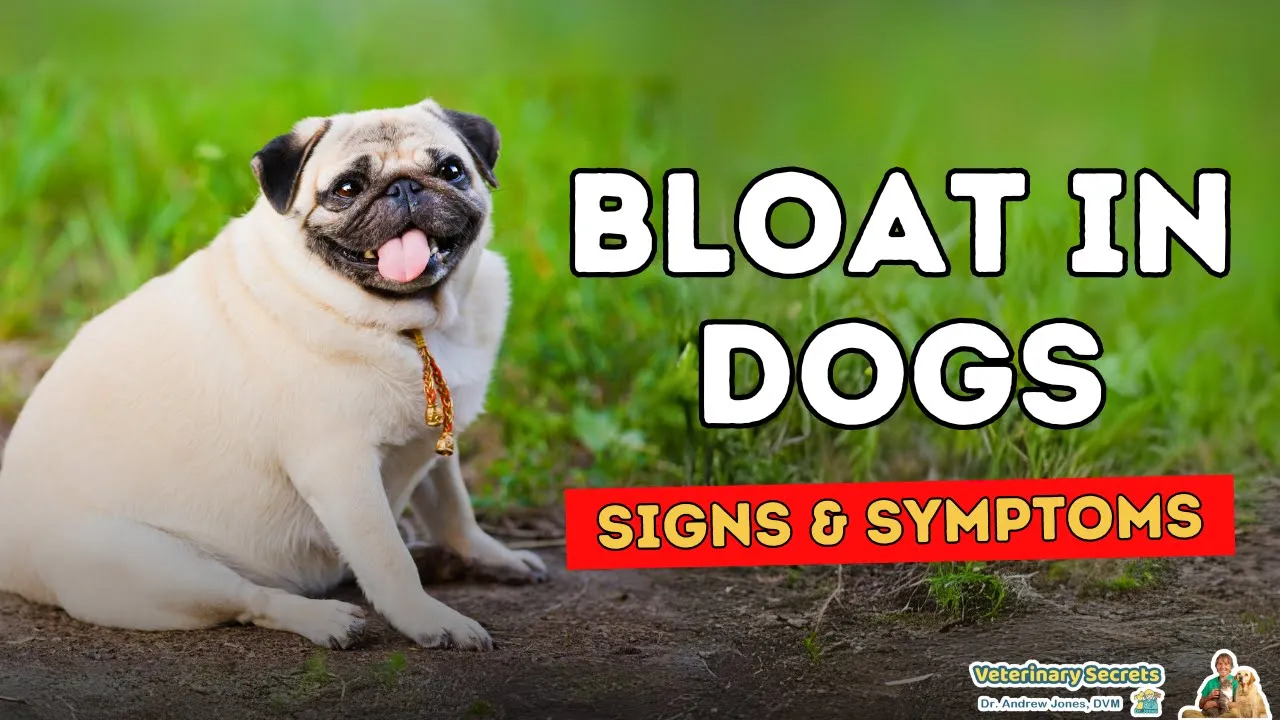
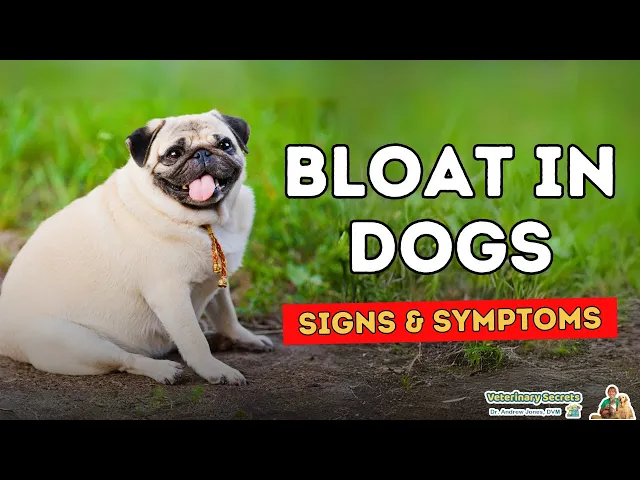
this is Dr Andrew Jones in this edition of ner secrets I'm going to show you how to tell if your dog has [Music] bloat bloat is one of the most serious health conditions that can affect your dog so it's really important that you understand what it is what you can do to prevent it the clinical signs associated with it so you can quickly recognize that potentially blo is happening within your dog and then you're taking the appropriate emergency action one of the big things I want to stress with you guys is just how quickly this
can happen when the stomach dilates it twists the stomach loses its blood supply you get all those serious secondary signs of shock including potentially even cardiac changes I mean it happens so so quick you really need to be on it in terms of recognizing this is what my dog has and then immediately going to your veterinarian blow it itself it's most often seen in our large deep chested dogs you know such as my dog Louis here so when we're looking at the breed we know the Great Dane is the number one breed but just thinking
the other deep chested dog dogs St Bernards Weimaraners doberman's German Shepherds obviously it can it occur in any dog in in any size but typically we we're looking at our large dogs sort of 90 lb and up they've got these deep deep chests in terms of describing to you what blow is so what's happening is your dog stomach is first is distending with air and so that's called the dilation and then in some cases is also twist and that's called the volvulus or torsion that's why it's known as gdv gastric dilation and volvulus the first
thing I want you to do is then just look at these next two slides one is showing an x-ray we've got a quite air filled to standed stomach which is what you often see involving an x-ray and bloat and the second one is actually showing you the anatomy of there's a normal stomach sitting in your dog's belly then how it looks like when it dilates and then twists so when the stomach dilates and then twists I mean a couple of big things are happening here and first of all what's happening is we're affecting blood flow
so the blood supply to the stomach can get cut off secondarily that dilation and then that twisting can compress a big vein called the codl aava and in doing so that is then further restricting blood flow to all the rest of the abdominal organs so as you can see pretty quickly your dog can progress from I'm feeling a little bit upset a bit of a painful stomach with gas distension it's an acute life-threatening emergency and that can immediately lead to signs of shock so some of the things that you can look for and some of
the things that I saw in Veterinary practice and this would be a client who initially have had their dog pretty typically it's following a meal usually it's a dry kibble meal the client may have even added a bit of moisture that seems to be one of the increased risk factor that risk factors they've added water to that kibble um sometimes it's been associated with exercise right after eating that dry kibble and regardless what's happened is as you can imagine mean all that kibble sitting there in the stomach it's produced all this gas and brought in
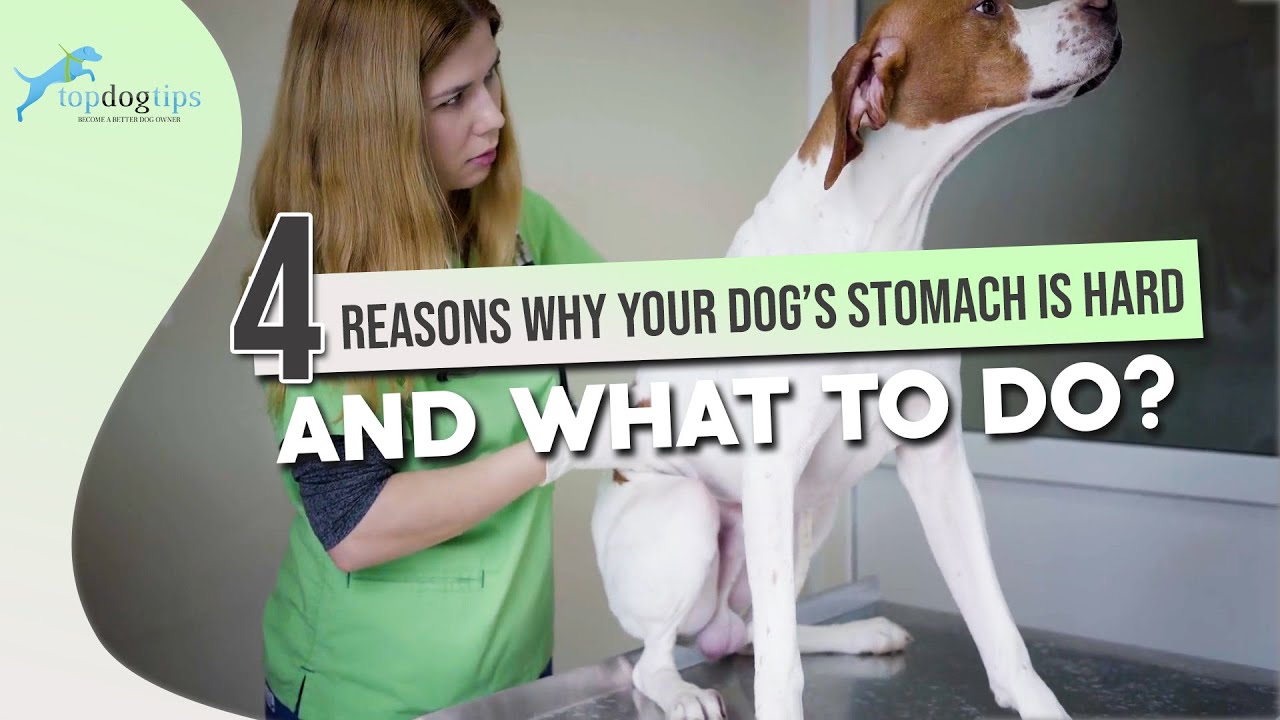
fluid to help break it up and that's caused the stomach to really distend quite rapidly that gas isn't able to to escape and in some cases then it twists so some of the clinical signs mean clients would report and what you'd expect to see is your dog is all of a sudden he's slowing down he's not moving much it appears he might be actually hunched you know where his belly seems sore and pretty typically you're going to actually feel I mean this is ls's abdominal belly here his abdominal wall here just in behind his rib
cage where his diaphragm sits it sticks out it's quite distended you've got this his entire abdomen is really distended cuz his stomach is completely filled with air um some pet owners report that it feels like a drum you know you hit on it just feels like a drum and that's what you see in bloat this big fully distended abdomen same the other bigger things and signs that point towards where the stomach is maybe even Twisted I mean that's an immediate emergency you need to get into veterinarian as soon as possible as where these These dogs
all of a sudden right after eating they start to vomit repeatedly vomit they're not sto vomiting and they're wretching and nothing is coming up because as you can imagine that stomach is Twisted it's twisted the the esophagus nothing's able to come up there's this repeated vomiting um their heart rate can go up their gums can become either pale or sort of grayish I mean clinical signs that we're all often seeing in relating to shock they're going to be drooling and signs related to abdominal pain but it's very painful it happens all of a sudden you
see this really big distended abdomen there's sort of hunched over all those signs sort of anytime you're going to see all those different clinical signs in that picture especially it's happened all of a sudden you really need to be thinking of bloat and you need to be having immediate emergency veterinary care so some of the big risk factors that seem to be correlated with the increased likelihood of your dog bloating is obviously one they're exclusively eating a dry kibble and in particular looking at a dry kibble where it's got animal fat is one of the
first four ingredients where animal protein is much lower down on the ingredient list it seems to be increased if the food is fed elevated where the you know they're eating their kibble up up high like up on a table um if you're adding moist water to that kibble that seems to in increase the risk of bloat there seems to be obviously if there's a genetic correlation so if it's within there's been a history of bloat within J for instance um in your dog's family then that increases the likelihood of your dog bloating obviously we talked
about earlier these big deep ch tested large spray dogs have a higher incidence of bloat and obviously they seems to be a correlation either one if you restrict water before after immediately after eating and if you're feeding like just one big meal far far better to break it up so you're just going to feed multiple meals throughout the day as opposed to you know one big big serving of kibble but some of the things that seem to decrease the likelihood of your dog bloating um or one if if you are feeding kibble you're looking at
animal protein as one of the first four ingredients animal fat way further down on the ingredient list um if you're looking at feeding in you know uh just people food so they talk about where you know in the past we said don't feed this stuff don't be making your dogs home diet far lower incidence of bloat for dogs that are in homemade diets for dogs that eat canned food didn't say any studies on it but I suspect similar for dogs that are eating raw food and it's that that dry kibble which seems to be the
biggest correlation all of all the different things so two specific things then to think of one you could look at just some gentle exercise you know get your dog outside walk him on a leash get them moving I mean it's something we're always talking about for colic and horses getting that horse walking moving get your dog walking and moving because in doing so we're getting that you know food that's push in that stomach to start moving its way through the stomach out of the stomach into the intestinal tract which is what we want we want
that food that fluid that air to start moving its way through so just gentle exer walk moving your dog walking your dog around that will help the second thing there is an overthe counter product called milant it's a liquid ant acid it has an ingredient in it that in some cases will help break down some of those air bubbles and potentially decrease the amount of air that's within your dog's stomach and potentially decrease the likelihood of it then progressing to a serious bloat um so you're looking at a milant dose of about 1 tblspoon per
10 lbs of body weight and so you know something like Lewis he 90 lbs beginning 9 tablespoons and that would only be in the early stages his stomach seems slightly dist standed he's okay otherwise he's not voming he doesn't have all those other Associated clinical signs that we talked about thanks again for watching this video I just want to reate the one big thing it is a really serious emergency you have all the range of emergencies in Veterinary practice you know when I was a new graduate this is the one that I was feared the
most like bloat such a serious serious emergency um first that you as a pener that you were able to recognize those clinical signs you know so acute sudden onset of stomach pain your dog is sort of hunched up this big distended abdomen he's drooling he's nauseous he's potentially repeatingly trying to vomit and nothing's coming out big big the big warning light should go off I think my dog dog has blowed thank you for watching this edition of eny Secrets what I want you to do now is first click that link in the Box above that
can subscribe to to my channel and you can go ahead and click that link in the box below and I can send you my free books and videos on how to heal your dogs at home with my top natural remedies




![How to prevent GDV [a.k.a Bloat] in Dogs │ Twin Trees Vet Talk (FREE VET ADVICE PODCAST)](https://img.youtube.com/vi/FnIpwE2McHg/maxresdefault.jpg)