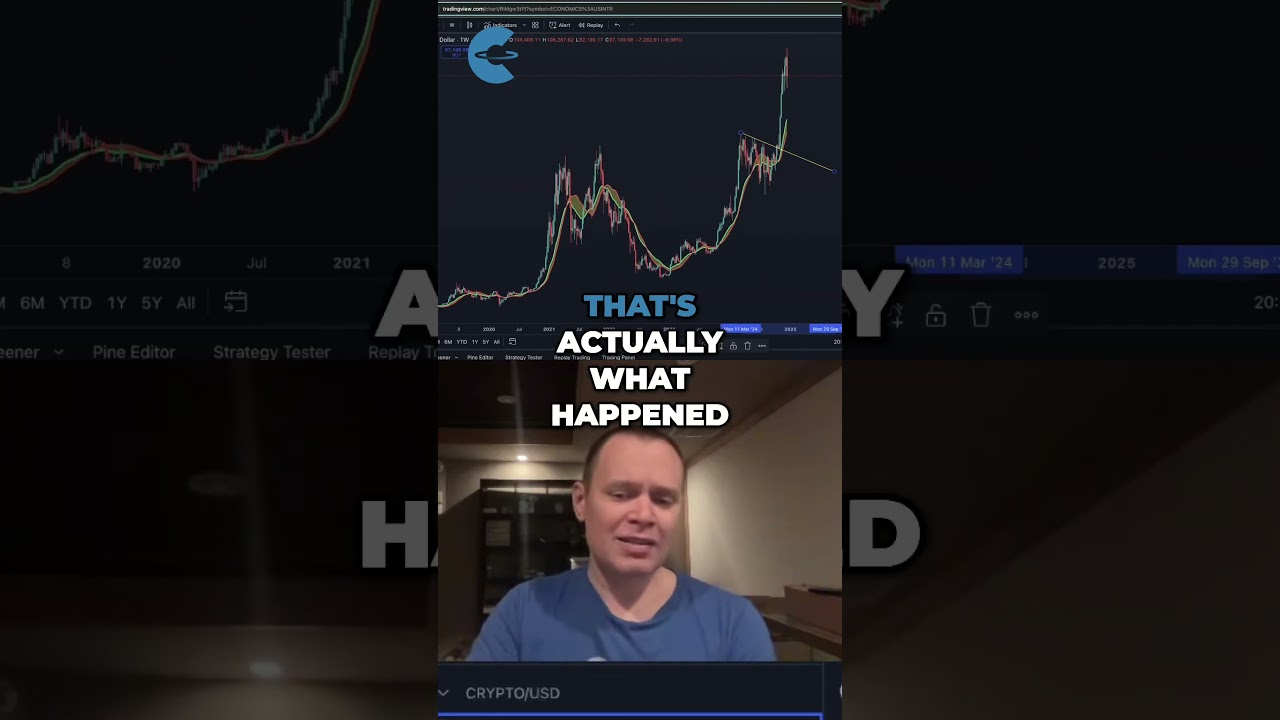
hey everyone and thanks for jumping back into the cryptoverse today we're going to talk about Bitcoin and how it continues to struggle as good labor market data comes in if you guys like the content make sure you subscribe to the channel give the video a thumbs up and also check out the sale on intothe cryptoverse premium at intothe crypto. com let's go ahead and jump in so we've seen an interesting thing PL take place over the last week and we sort of noticed it fairly early on and that is essentially that good news in in a sense has effectively become bad news and the reason for that is as the labor market remains strong and the FED having cut already 100 basis points the bond market is essentially not playing ball right the yields long into the Y curve continues to go up so what we're going to do is we'll talk a little bit about Bitcoin but we're going to spend most of the video talking about the labor market and why Bitcoin is struggling right now now before we get into all that I will remind you and I say this all the time narrative follows price not the other way around no matter what the price does we could come up with a narrative to support it okay so you might hear me talk about certain things and be like well that makes sense but again you should remember that narrative follows price not the other way around and so while some of the arguments I might that I might say might sound very convincing um it's price that leads not the narrative okay so just remember that um but I'll still do the best job I can to at least make sense of what's going on in the market the first thing to note with Bitcoin is that it's still doing more or less what it did last year around this time right and essentially what it is is you know it it you know went below the bullmark sport band in Q3 got a rally in October November same thing same exact thing and then it basically just went sideways for a couple of months right and what one of the things we mentioned before is that you know you basically have these risk on and riskof times right you'll notice that last year there was also a wick higher in early to mid January kind of like there was right here the main difference between this one here in 2025 and in 2024 is that in 2025 it was a little bit weaker of a move because it did not lead to a new cycle high right this one over here did this one did not suggesting there's a little bit more weakness now now the price is a lot higher right but it's a little the trend is slightly weaker not not not necessarily A Lot weaker I mean the overall move is still impressive right in both cases but that is at least something to note right kind of like how you can see the trend from 2023 was a little stronger than the one from 2024 in the sense that in 2023 we were able to even sweep these highs halfway you know in the summer and basically hold these lows throughout that summer lull but last year it was a little bit different right it was this sort of this wedge where it was putting in lower highs and lower lows and this was stronger than this and then this area right there was a has been a little bit stronger than that now one of the things to remember is that at the end of January in 2023 we we or sorry January 2024 Bitcoin eventually swept the range lows right so there were these lows that was holding eventually it swept it more specifically it actually held support on the 100 day moving average okay if you look closely you can see that Bitcoin Wicked below the 100 day moving average and then it got a bounc back up if you go over here today we are still above the 100 day moving average but where it is right now would actually correspond to this Wick right there although you could argue that the range low that we're looking at compared to over here is more so this one at 90k right this one over here was at 40K this one here is at 90k so if you see Bitcoin sort of go below 90k let's say it goes into the 80s and you're looking to see if it's going to follow a similar pattern then see if it finds support at the 100 day moving average now it could be a few weeks from now remember last year Bitcoin didn't bounce until basically the the last week of January so if it's going to play out in a similar fashion Bitcoin could still stay weak for another one to two weeks before before it it it potentially starts to pick back up and that's of course if it's going to follow what it did last year it could always do something different right it's always possible that it does something different and it's important to remember that things will not always play out the exact same way right you could have deeper sell-offs right I mean one of the interesting things is that Bitcoin while it has felt weak it actually has been a lot stronger than a lot of the other asset classes if you remember Bitcoin shut up a lot after the election right right here and at that time it was at 67,000 or still you guys remember that early November 67k it's still way up here at 93k but if you were to take a look at the S&P 500 it's almost back to where it was in November at the election right in fact the Russell the Russell has already given back all of the post election result gains right if you were to look at the altcoin market right if you were to look at the altcoin market and go to to November you can see it's still way up here so it kind of like raises the question right does crypto have to make that same drop or is it just that crypto is holding up better I I think one of the things to remember is that it doesn't necessarily have to make the same drop but if it doesn't make the same drop that's one of the reasons why when bare markets do eventually come for the cryptoverse they tend to be a lot worse than they are for the S&P 500 because they tend you know it holds up holds up holds up and then eventually you finally get a bare market and then they get sold off a lot more um and there's other there's also other comparisons to make with the altcoin market and the Russell 2000 uh one of those is that you know basically after the altcoin market swept the high from last cycle it hasn't really been able to continue just yet in the same way the Russell the Russell did the same exact thing right it also swept the high from last cycle and then has been struggling ever since so again you can see a lot of similarities and one actually interesting comparison I like to make from time to time is to look at the altcoin market against the Russell total three divided by the Russell and see that it also swept the high right so there's so many interesting comparisons that you can make but I digress this video is supposed to be about Bitcoin and of course the labor market so look I've always said you know worst case scenario in the short term right I mean long term worst case scenario is different right but sort of first of all a realistic outcome if it's just going to do what it did last year would be it eventually sweeps this low below 90k right that could happen if it happens still be it it it might just correspond for the 100 day SMA sort of slowly coming up going below that low finding support at the 100 day moving average and then waiting to see more data come in that's one option and then finding support and then bouncing off of there that's sort of the optimistic scenario uh uh maybe sort of like a more middle-of the road scenario could be that it could sweep that low right it's possible for it to sweep that low um worst case short-term scenario uh would be to sort of retest the breakout point right and again I I I I've mentioned that a few times I don't necessarily think you should go into it you know saying that that's the base case uh because that is that is quite a big drop but I do mention it just because the S&P has gone back down there the wrestle has gone back down there so I mean it's always possible that you could retest uh this level that it took a while to break out from um and if if it did go back down there there'd probably be a pretty big bounce off of it so that's just something to consider and that would only be if things get if things get really bad but what's interesting is that if you look at the labor market it's actually been relatively okay recently right like the unemployment rate's at 4. 1% let's just go through the data so we're going to go over here to the macroverse side of the website and we're just going to go through a lot of the different things we're going to start off with the unemployment rate so the unemployment rate is at 4.
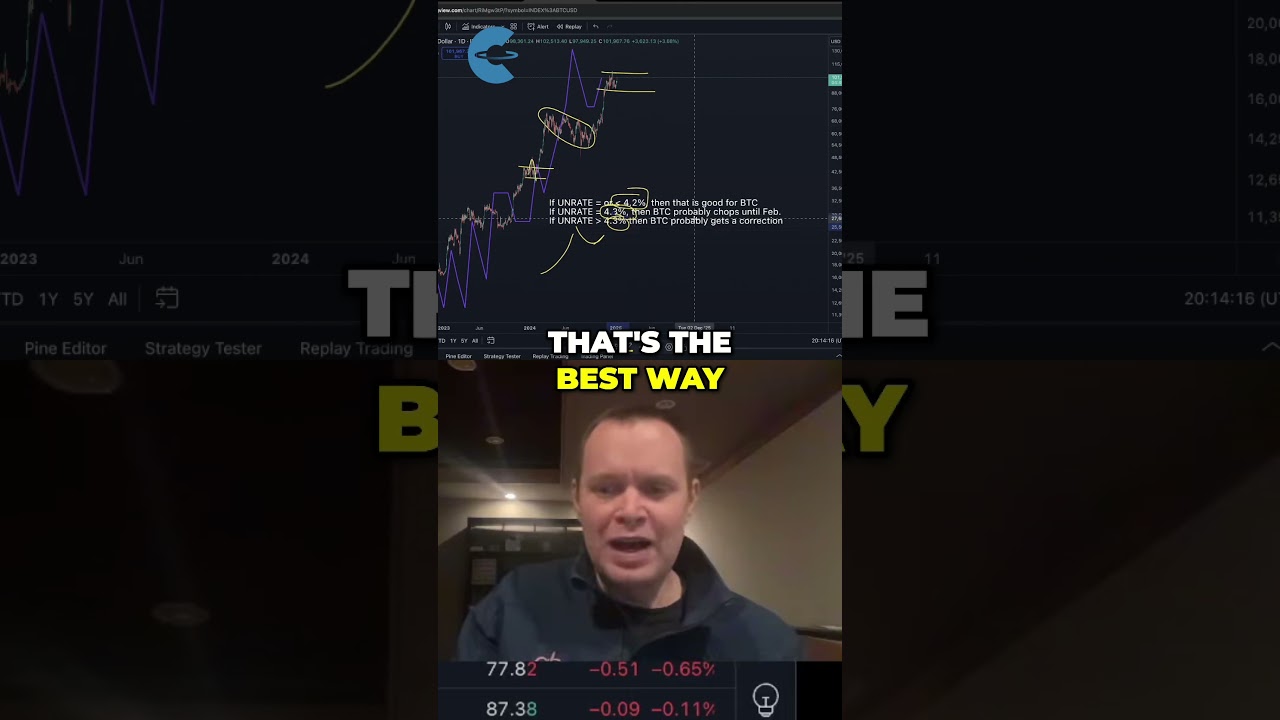
1% so it dropped back down so all in all that's a good thing now a week or two ago I would have said and I did say that a low unemployment rate a low unemployment rate is theoretically good for something like Bitcoin but we sort of changed our tune on that earlier this week when we noticed that good labor market data was actually causing Bitcoin to sell off now again remember what I told you guys what did I say at the beginning of the video narrative follows price okay we can always find a narrative but you should know that Bitcoin historically gets Corrections in January of post having years right a 30% correction in January of 2021 and a 30% correction in January of 2017 so it's somewhat foolish and by the way in January 2017 it found support at you guessed it the 100 day moving average over here didn't even make it to the 100 day moving average but my in0 21 but my point my point in this case is to say Bitcoin normally corrects at January in January of post having years so why do we need to go find a narrative to support that outcome because we already knew that was a likely outcome and now it's happening and now we can come up with a reason for why it's happening so just remember that don't get lost with the narratives uh focus on the price action right that's what makes the most amount of sense I'm just trying to give you guys some basis for you know why the market does what it does you know if you see you know micro strategy buying all this Bitcoin and you see these headlines for strategic reserves and whatnot and you're wondering like what's causing it perhaps it's related to that but again you can always find a reason but the unemployment rate 4. 1% so it came in low but what we've noticed is that as the labor market data has come in good over the last week it's actually led to sell-offs so it's sort of like we've entered into this phase at least in the short term where good news is actually bad news and the reason for that right the reason for good news now being bad news is because of the state of the long end of the yield curve right so if you were to go look at the long end of the yield curve we're just going to pull up the 10year yield one of the things we've noted before is that whenever it breaks out right just like it did a little over a year ago whenever it breaks out like this and then back tests the 21 we EMA like it did right here and right here after breaking out right you got a break out and then a back test break out and then a back test when that happens the S&P 500 gets stuck in traffic on struggle Street and what you'll notice is that as the 10year broke out and went higher the S&P went lower and the S&P did not bottom until the 10-year yield topped you see S&P bottomed when the 10-year yield topped 10 your yield keeps going higher now you can also overlay Bitcoin onto the same chart and see that Bitcoin like the S SMP was stuck in traffic on struggle street during that same period when the long and yield curve is going up now why is the long end of the Yi curve going up well it's a great question and it really goes back to why is the Fed cutting okay and I think that's the thing the Market's asking itself right now why is the Fed why has the FED cut 100 basis points when the labor market seems okay and why has the FED cut 100 basis points when inflation hasn't really gone to their target if you look at inflation in fact over the last couple of months it's starting to go back up now it's still relatively low all all things considered but if you get if you go look at the 1970s it started up it started going up slowly and then it really started to pick up in the postelection year in 1973 and the market actually topped out around that time and sold off okay so the market is on edge right the market wants to know is is is this what's happening because again over here the unemployment rate was actually going down just like it did went down today and as the unemployment rate went down inflation became an issue again and so the market is a entially going back and forth between two extremes and that is a weakening labor market or ex uh inflation re accelerating and it keeps weighing these two things and this week the labor market hasn't really looked that weak it's actually looked pretty strong and because of that because of that the long end of the yield curve has gone up and it makes sense because the the bond market is starting to say well hold on a second what if in the short term term we should be more concerned about inflation continuing to just slowly go up at this point I think most people are just ignoring it just two data points and hopefully it's it's a fluke but what if we get another inflation data point and it's 2. 9 right and it just kind of keeps slowly going up and then before you realize it we get a month where it does something like this right where it drop you know it jumps from like 3 8 to 4.
8 in a single month that is what we want to avoid we talked about this two years ago how the FED needs to stay higher for longer until they get the job done if they cut too soon it could lead to inflation reaccelerating now to the fed's credit that is not obvious yet you could argue that there does exist a Fed funds path that allows for a soft land in right you could argue that there have been soft Landings in the past there have been not a lot but there have been and so that is I think what what's going on right the 10-year yield is skyrocketing because the fed's cut 100 basis points inflation's starting to go back up and the unemployment rate's going down so are they setting us up for you know more growth them they want that then leads to higher inflation one of the interesting things about this Market is if you look at the S&P 500 divided by M2 divided by the money supply one of the things that's really interesting I've talked about this a few times before but if you look at the S&P divided by M2 this is exactly the same area that the S&P got rejected from in 1998 and in 1998 the S&P sold off all the way back down here note that this these lows right here the this low here in 2022 was the same low in December 2018 which was also the same low right here in July of 1996 and this high that the S&P has set in the short term is the same high that it set in August of 1998 what's even more fascinating is that back then when the S&P 500 set that high it was also it was it actually preceded the FED cutting rates from Believe It or Not 5 and a half% exactly where they have been exactly where they peaked this past cycle you see that they cut rates from 5 and a half to 4. 75 and around that time before that before that cut the S&P 500 sold off this time the fed's trying to get ahead of any major sell-offs right but you can see the S&P 500 sold off and and now it looks like it's starting to sell off again but the point that I'm trying to make here is look what happened to the FED funds rate that's what we don't want to happen the FED funds rate let me change this to a different color so it it stands out a little bit more the FED funds rate after they cut the following year they had to start raising rates again no one wants that right and I mean even pal has said they don't want that but that is something to at least consider and I think the market whether raise rates or not I mean that's not necessarily my base case um whether they raise rates or not though the market at least has to ask the question right you know do you I mean I don't imagine many people over here after they started cutting rates thought that you know they were going to go from five and a half down to 4. 75 and then within a year or two they're going to be back at six they're going to be up at 6 and a half per.
right I don't think a lot of people were necessarily thinking that back then but that's what happened so whether it happens or not the market is asking the question and because the market Market is asking the question the long end of theal curve is going up and as we saw previously when the long and of theal curve goes up the S&P sells off Bitcoin operates just as a risk asset like the S&P 500 whether we like it or not and Bitcoin is doing the same thing okay so the sell off by Bitcoin is not Bitcoin specific S&P selling off Russell's selling off if anything Bitcoin and even the altcoin market is actually holding up better than the S&P and the Russell up until this point because the S&P and the Russell are basically back to where they were with the election result news Bitcoin and the altcoin market are still well above it so I mean they maybe they go back down to it but for now they're above it so for now they're holding up better uh than the S&P if the S&P continues to go down then you could see losses in crypto accelerate but remember last year January we saw the same sell off into the 100 day SMA and every January of every post having year we've seen the same thing okay the question is is can it eventually go higher or not the the the obvious answer to that is going to be dependent on on inflation and the unemployment rate right normally you get right translated Cycles where the peak is you know um you know the peak occurs after like a a three-year bull market right and that's here's like a good example of one and then you just get a one-year bear sometimes you get a two-year Bull and then a two-year bear where the where the top occurs in either December of the election year or January of the postelection year that's not what we want right right I mean obviously that would not be good but it's happened before you have to wonder you have to wonder again I don't think it should be the base case it it pays more often than not to be more optimistic than pessimistic but you at least have to think like the market whether this happens or not where you have a a like a two-year bull that's already behind us whether that happens or not the the market has to at least ask the question are we going to see inflation re accelerate or are we going to see the unemployment rate go up and that's why the market is struggling because right now the long and of the O curve is going up and there's no clear indication as to when it's actually going to top and as long as it goes up risk assets are going to keep taking a hit because as the long in goes up it it it it leads to to sort of you know to to it can lead to compression of earnings right which then leads to uh layoffs okay it's all just you know again the business cycle takes years to play out hopefully you've learned a lot as we've talked about it over the last few years but uh just keep that in mind you don't want to see unemployment rate Skyrocket and you don't want to see inflation Skyrocket it's hard to thread that needle but that's what the fed's trying to do but if we get back on track the unemployment rate is 4. 1% okay now let's go look at unemployment level by reason for unemployment job losers dropped it dropped new entrance to the labor force also dropped in terms of the unemployment rate so that's good thing re-entrance to the labor force also dropped so for the most part the data was pretty good you guys remember when the FED cut rates in September and I said that that the long end of the yeld curve would likely rally into q1 of 2025 here we are right it's q1 at 2025 long 's rallying I'm going to guess that the long in of the Y curve is going to top this this quarter that's my guess the long and the yeld Curve will Top in q1 of 2025 I could be wrong strong opinion loosely held but that is my guess is that the longin will Top this quarter I think it's going to go high enough to take the wind out of the sales for long enough to then lead to the 10e yield going down perhaps in like Q2 Q3 but I think it's going to top in q1 of 2025 and if you want to know when then good luck I could see it topping around maybe the next fomc um if not then then perhaps the next one after that but when is not that important of a question to me right now where is the better question and what I would say is if the 10year yield sweeps that high that would be good enough for for me to to to flip bearish on on that on the 10e right or you know bearish on on yields um because if you look at TLT which is just like the inverse right what it normally does when it bottoms is it puts in a double bottom sometimes even a triple bottom right but you'll see that a lot of times where it might like sweep AOW and then go up so whenever that occurs if and when that occurs I would guess that's probably it for the long end that's my guess okay again strong opinion loosely held I don't need any any people being like but you said guys I don't know right it's just dubious speculation I don't have a crystal ball if I did I would probably keep it to myself because you know if you tell everyone then maybe the market would do something else but I don't have a crystal ball I'm just guessing I'm just saying you know if you look at the 10e if you look at TLT it tends to sort of do this thing where it double bottoms and it's not even that far away from doing that so if the 10-year yield were to Rally to around 5% that could be it for it but in order for it to top it needs a reason to top and you're not you're not getting a reason if if you keep getting all this good labor market data as long as the labor market data keeps coming in good why why is the 10 year need to top remember too that you could get an example where you get a sharp sell off one week uh making you think it's topped and then it just keeps going higher uh that actually happened uh in you know back over here right you got you had one week right here where it sold off a lot and then the next week it just went right back up so keep that in mind and actually it was around this level where it it had a sell off before then continuing to go higher now if we go back to the unemployment rate stuff um we can go to the unemployment rate per state uh Alabama unemployment rate actually went up California stayed stayed the same at 5. 4% uh Connecticut stayed the same at 3% Idaho 3 does anyone watch this channel from Idaho I'm curious uh 3.
7% District of Columbia dropped . 1% I is like checking in with Florida Florida went up a little bit um I want to check in with uh Texas went up 0. 1% and then also let's check in with Virginia it went up 0.
1% number of states where the unemployment ratees going up over the last month it actually increased by six so Six States six more States saw the unemployment rate increase okay um again this is kind of lagging so we need to update this data but that's where currently stands over the last 6 months it looks like that I need to get this updated though I I think I think it it might need to get one more month of getting getting updated because I think we might have just gotten the data not too long ago so but again you can see it has the the number of states where the unemployment rate is going up has continued to increase um but it's still not you know where it has been in in Prior major downturns in the economy here's a map if you're curious and here's over six months alternative unemployment rate measures greater than 15 weeks unemployed it dropped that's a good thing to see um job losers You2 this also dropped people not in the labor force uh I'll let you look at it if you're curious I also don't really think that some of these things are going to be as helpful uh you know you can look at the labor force participation rate and and see where it is uh civilian Labor Force Level the employment level um so this is the um one of the one of the ways to measure the employment level and one of the things you can see here is that if you look at and then this this came in at 256 C 256,000 which is a lot but one of the things to remember is if you look at at where it previously came in in in um prior December there were also some um well I guess there was a spike uh in in January 202 3 and there was a spike in December of 2023 right and there's also a spike here in December of 2024 so often times you'll see a spike around this time but all in all you know if you just look at three-month moving average uh it has been dropping right it has been slowly dropping in terms of the establishment month over Monon survey okay um now if we go back to just sort of the normal thing and we look at the household survey it went up by 478,000 which is a pretty big increase all things considered the year over-year change actually went from negative to being positive again okay so that's a good thing the nonfarm private payroll employment level so I believe this is the ADP yep if we look at the year-over-year percentage change there it's currently at 1. 39% not that different from what we saw way back over here total temporary Help Services employees actually went up okay so we haven't seen it go up that many times but now you got two months in a row where it went up so that's a good thing it also topped out in March when the FED started raising rates and so far it bottomed uh one month after the FED started to cut rates multiple job holders dropped by 109,000 job postings on indeed this is total uh so far has has you know continue to to slowly go up here so that's a good thing employment to population ratio year-over-year change is negative right but it's it isn't as as negative as it was job openings went up again it's been going up ever since the FED started to cut job quits rate dropped so people aren't leaving their jobs layoffs are still low they went up but they're still low initial claims are at 201k that's really low my guess is they're going to start to bottom out soon you can look at last year you can see they bottomed out January 13th this data point was for January 4th so my guess is they're going to bottom out relatively soon and as they start to go back up that'll probably cause the 10-year yield to top out um initial claims map so this is basically just normalized by population that's what it looks like um you can look at a continued claims map as well and see what that looks like all in all it still doesn't look that bad and now highers are are still down right highers actually continue to drop so I think the reason why you know like if you look at this you can see like normally the S&P follows highers but this time it hasn't normally hires are dropping when the unemployment rate is going up because also layoffs going up this time layoffs haven't really been going up and hires have been dropping and so what essentially is happening is is companies are are hoarding the workers right they're not laying them off that much but they're also not really hiring new people and so that's why I think you see this disconnect because yeah like the labor market isn't that great in the sense that it's hard to get a new job but if you have a job most of those people have been okay and they haven't been getting late off if we look at at um some of the indicators for where is it recessions um you can look at the smooth recession probability indicator as of November it's 1. 32% chance of being in a recession um if you look at the Su Ru recession indicator it is you know it triggered a few months ago but then it untriggered as the unemployment rate has come back down if you look at the number of states where the S rule has triggered it has you know it's basically just done this it went up came back down has gone up a little bit again but still well below you know the entire country here's a map of where the Som rule has triggered kind of just right in this uh central part of the country there across that across the middle the real GDP recession indicator relatively low uh the coincident economic activity index um if you look at a year-over-year percentage change still relatively High um and you can see where prior was sessions have in fact started um and that's basically what I have for you right that's basically what I have for you the other the only other thing I can think to really show is the job openings per unemployment level so number of job openings per unemployed worker uh went back up to 1.
14 so basically what it means people are going to argue the data you can argue all you want but according to the data there's 1.