the world has seen many creatures come and go and this includes some that have only just left us recently while alive many these animals sadly went underappreciated by people it was only after these animals have disappeared that people realize how fascinating they truly were and when an animal goes extinct their last photos instantly turn into haunting memories of the internal Doom that awaited them but it's sometimes forgotten that the last photo of an animal doesn't mean it went extinct just then as many sightings of doomed animals have occurred after the last known photos these sightings
are perhaps even more somber than photos as they represent the last time a human has ever laid eyes on a particular creature and this is four famous extinct animals and their last recorded sightings the first animal on the list is one that has gained much popularity in recent times and for good reason at that as it was a magnificent creature this is the barbery lion this feline was also known as the North African lion or the Egyptian lion and inhabited the mountains and deserts of the mcreb from Egypt to Morocco Hunters of this lion claimed
that they were the largest of all lions and possessed long Mains that were of unique colors not seen in the mains of other Lions It is believed that they first emerged roughly 100,000 years ago and were extremely successful for the duration of that time period only beginning to experience trouble after firearms and bounties for it started to spread in the regions where it lived very quickly the hunting of the lion began to take a toll and by the 1890s only 26 years after it was officially recorded its population had been decimated and sightings became very
scarce on top of this when sightings were made it was now usually only of aone individual a grim sign as before almost all sightings involved groups and just some 35 years later in 1925 the last recorded photo of a wild barbery lion was taken sadly even then hunting still took place which unfortunately also included successful hunts yet eventually the hunting of the animal abruptly ended when in 1942 the last known Moroccan barbery lion was killed after which of course none other would ever be hunted this individual was shot by a French Colonial Hunter who had
tracked the lion along a pass in Morocco's High Atlas Mountains for many this day marked the official last sighting of the lion however the last time a human would ever lay eyes on the giant feline took place over 10 years later in 195 6 when several people on a bus saw a great lion just north of the town of satif in Algeria the lion was said to have watched the humans for a while before disappearing into a forested area a forest that was sadly destroyed not long after during the French Algerian War likely killing the
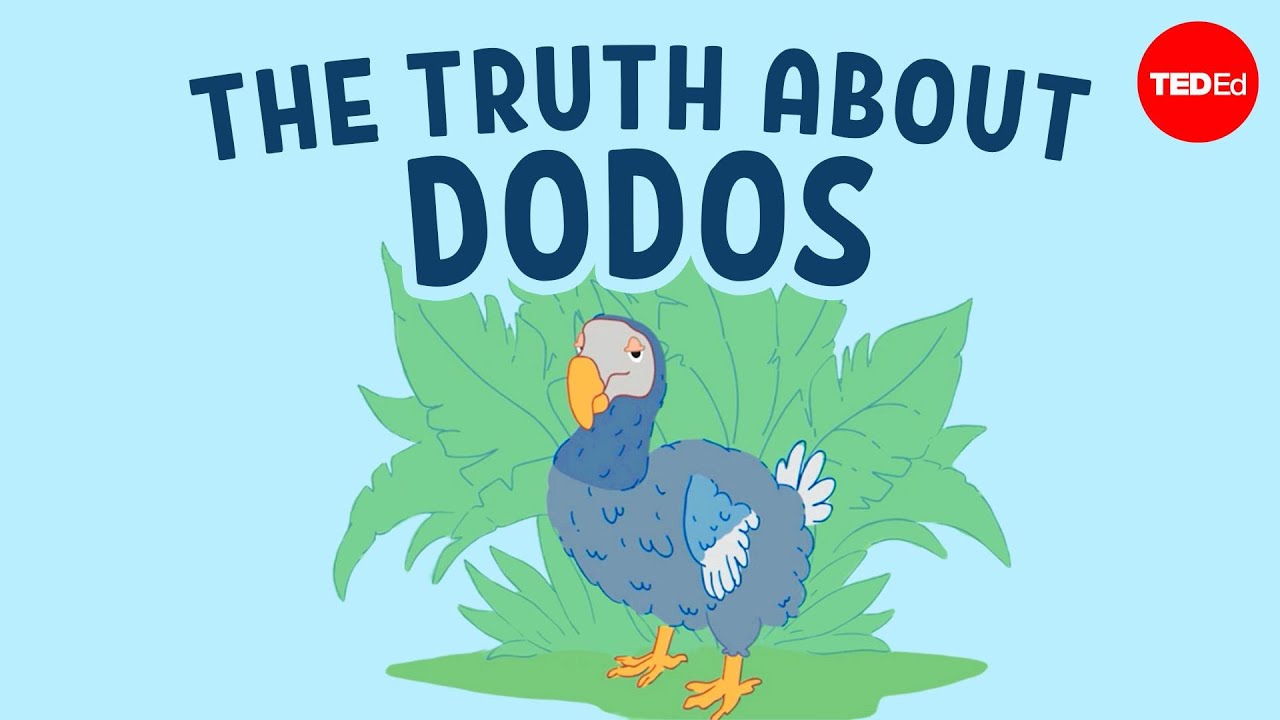
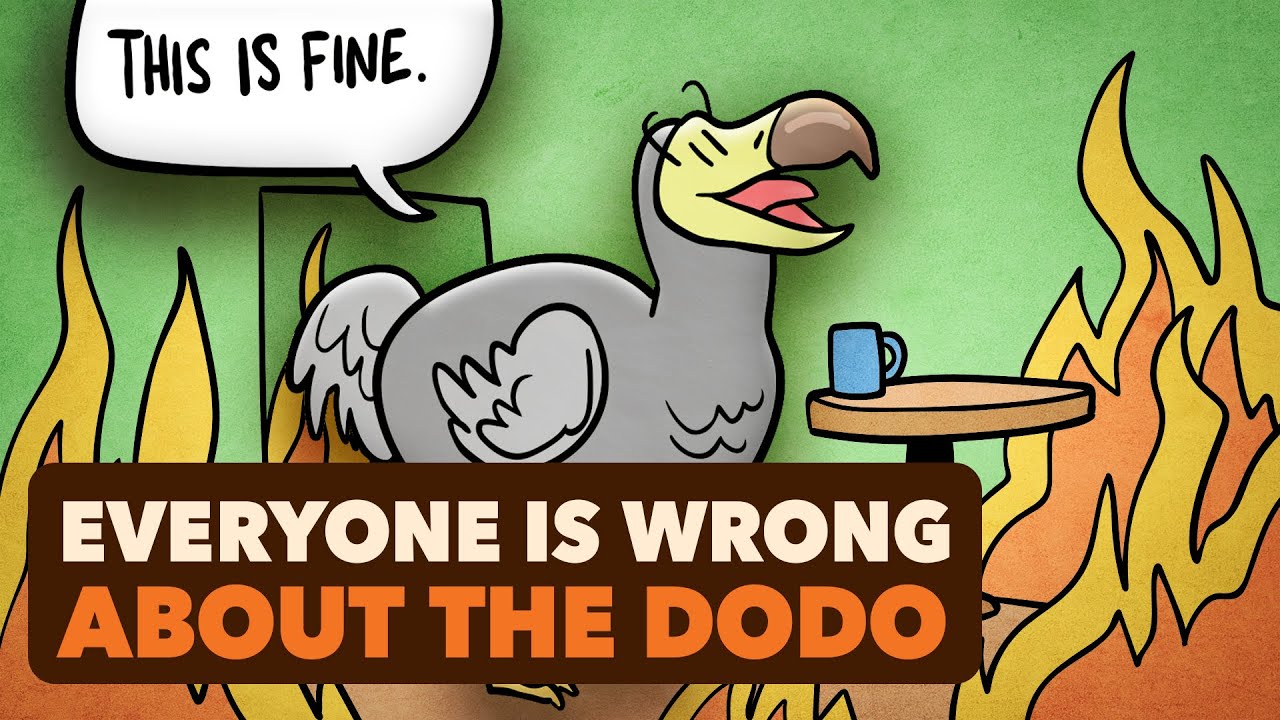
lion fortunately some 80 to 100 Barber Lions still live in captivity around the world the only problem is no one knows if they are really true barbery Lions as no wild one can be tested for comparison while debate on if the barbery lion lives on remains there is no debate that this next animal the dodo is gone for good the dodo has become an icon of Extinction and has made various appearances in pop culture it was a flightless bird that was endemic to the island of maius and belonged to the columbid family which includes doves
and pigeons very little is known about Its Behavior but from what reports remain scientists uced that it preferred Woodland areas and feasted on Fallen fruits nuts seeds bulbs roots and Poss shellfish the earliest known accounts of the dodo were given by the Dutch in 1598 and were quite mundane as those who made them were stared Sailors that were only interested in the plumpness of the dodo not the fact that had never been seen before they remarked that the dodo was Fearless of humans and was easy to catch yet sported a beak which could administer Fierce
bites and because it was quite large it soon became a staple for Sailors and introduced invasive animals which included dogs pigs cats rats and Macks the the introduction of these animals was even more detrimental to the dodo population than human hunting and its population began to rapidly decline research has also shown that a series of flash floods added to its losses to add fuel to the fire their wooded habitats were also destroyed as well when people who came to the island destroyed them in order to build settlements on top of that live specimens were also
exported abroad what's interesting however is that as this was taking place and dodo numbers were declining no one really took notice and eventually they practically disappeared as far as scientists know the last time anyone for sure saw dodo was in 1662 less than 100 years after Europeans reached the island the sighting was made from Stranded Sailors who remarked about the strange flightless birds that did not fear them and in fact followed them around the sailors soon noticed that these birds could not fly but were difficult to catch thanks to their surprising speed but eventually they
caught one which provided more than enough food but to their surprise the dodo made a great noise upon capture after which the other Doos came forth as to help but were then made prisoners themselves and subsequently killed it's honestly quite sad that the last sighted dodos were killed so nonchalantly and unfortunately this somber tone towards the dodo may have continued even after its official Extinction date as the only reliable yet unconfirmed sightings that followed came from the governor of the island who maintained that he continued hunting dodos for multiple years until 1688 after which he
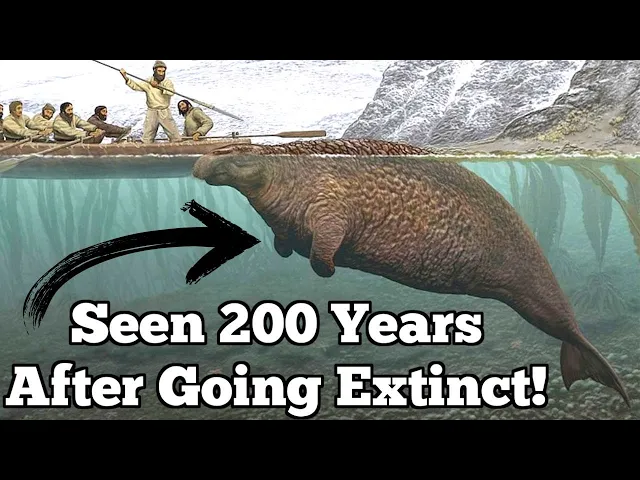
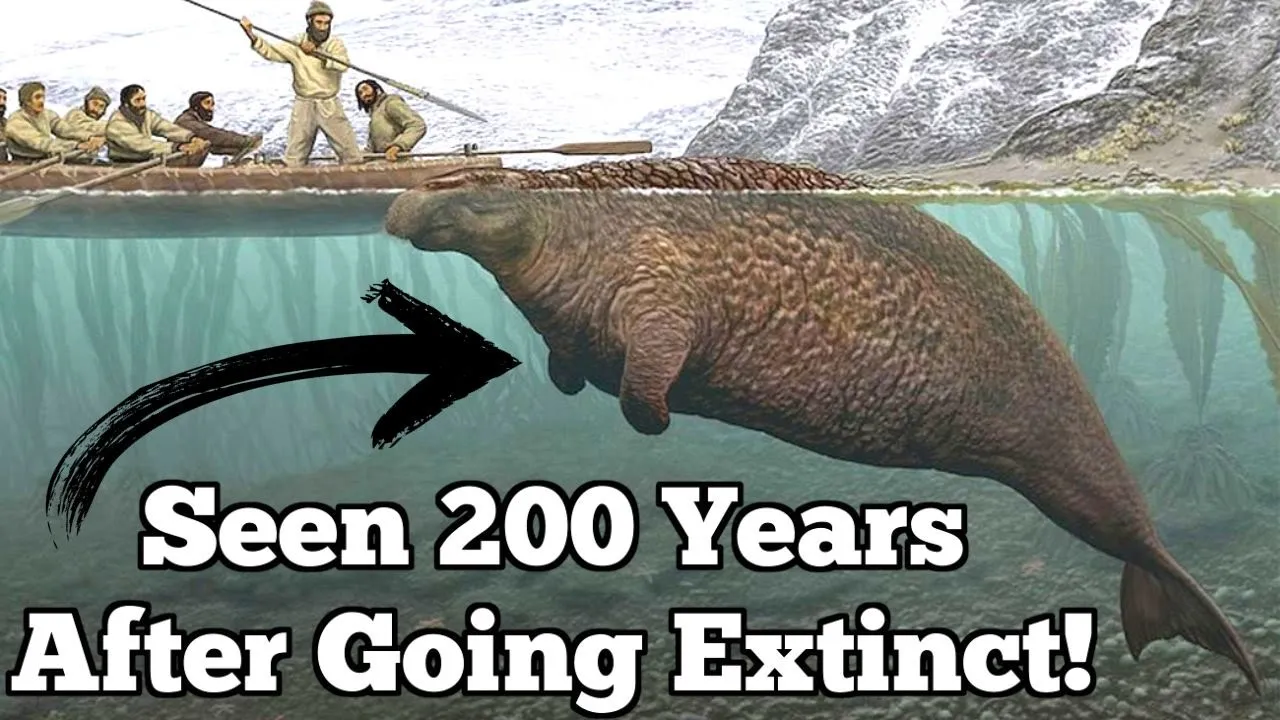
never encountered them again nor has anyone else for that matter unfortunately the dodo's calm manner towards humans did them no favor and the same could be said for Stellar seow an extinct sirenian described by George Stellar in 1741 at the time its range was limited around the commander islands of the bearing sea between Alaska and Russia but during the pla scene its habitat was much more widespread extending to the North Pacific it was a giant animal being the largest sirenian ever ever but was also truly a gentle giant as described by Stellar who noted it
as a docile social creature that fed on kelp lived in small families and communicated by using size and snorting sounds unfortunately this gentleness was taken for granted by stellar and his crew and it did not help that the sea cow was extremely slow and could not fully submerge due to its buoyancy making it quite the easy Target and this proved to sadly be the case with the crew successfully hunting one just a day after discovering it eventually Stellar told others of his Discovery and after the area became more well traveled by Sailors it became quite
common for fur Traders and seal hunters to butcher the animals and masses this was a huge problem as the Stellar sea cow's population was already Abyssal at the time of its finding with an estimated population size of only 2,000 individuals thus it didn't take long for hunting to completely destroy the remaining seal population and only 27 years after it was officially discovered it went extinct with the last official Rec a sighting taking place in 1768 when Hunter spotted a lone individual in deep water once seen it was swimming the opposite direction that the sailor's boat
was traveling but when they turned around it had vanished and none were ever seen again or at least officially as nearly 200 years later in 1963 the official Journal of the USSR announced an unconfirmed yet highly likely sighting the article stated that a whaling ship had reported a group of large marine mammals grazing on seaweed in shallow water off of Kamchatka the crew reported seeing six of these animals ranging from 6 to 8 m or 20 to 26 ft with Trunks and split lips that swam very slowly they claimed to have seen them from 100
m or 300 ft away but the very next day they again encountered the creatures but this time they were closer and grazing on kelp a known food of the sea cow this made their sighting quite compelling with the only contradiction being that they stated that the animals would regularly submerge which goes against traditional claims that the sea cow could not go fully underwater after this encounter the ship went on its way and sadly since then no major sighting or that of any Merit has been made in the case of the Stellar seow it definitely did
not help that so few remained at the time of Discovery but as our next animal the great o shows sometimes numbers don't make a difference this was another species of flightless bird that made it on Rocky remote islands that had easy access to water and plentiful food when not breeding the Great o spent most of its time forging the Waters of the North Atlantic ranging from Northern Spain to the coastlines of Canada Greenland Iceland Norway Ireland Great Britain France the Iberian Peninsula and the Pharaoh Islands many describe this bird as being very similar in appearance
to Penguins yet the two weren't closely related with the great o belonging to the Alid family unlike many animals on this list this bird actually had a long established relationship with Europe and coexisted rather peacefully only being occasionally killed by hunters who described the bird as being rarely frightened an excellent swimmer and fish eater it wasn't until the 18th century that the slaughter of the great Au picked up steam when pillow Industries realized that their down feathers made good stuffing for pillows this exponentially increased the amount of ox that were hunted which at the time
were numbered in the low Millions as demand for their feathers increased so did demand for their meat oil and eggs it also didn't help the sailors to use breeding grounds as makeshift landmarks for navigation thus increasing interactions between themselves and the bird and by the early 1800s people began noticing the increasing Rarity of this bird which had once been a common sight its Newfound rareness actually proved to be more harmful to this Majestic creature as Museum started funding people to capture and kill Ox so their bodies could be preserved and studied this all proved too
much and in the 1830 only one place in the world was known to Harbor them the great o rock of Iceland yet even here was not safe as a subsequent volcanic eruption submerged the island and the survivors had to flee to a lonely even smaller rock known as Eli it was here in 1844 that Humanity for the last time would lay its hands on a great a when two hired Hunters butchered a male and female and destroyed their eggs the hunters without emotion stated that the birds struggled as they were strangled but they made no
cries however this wouldn't be the last time a great o was seen as 8 years later during Christmas a highly decorated ornithologist Henry Drummond made what would be known as the last confirmed sighting of a great a he recounted that while on his ship he spotted a lone bird that he was confident to be a great a along the banks of New Finland it was aimlessly wandering along the shores perhaps looking for a mate not understanding that it may have been the very last of its kind Drummond states of the bird very quickly began to
become smaller and smaller as the ship moved faster until it finally disappeared forever from Humanity's gaze