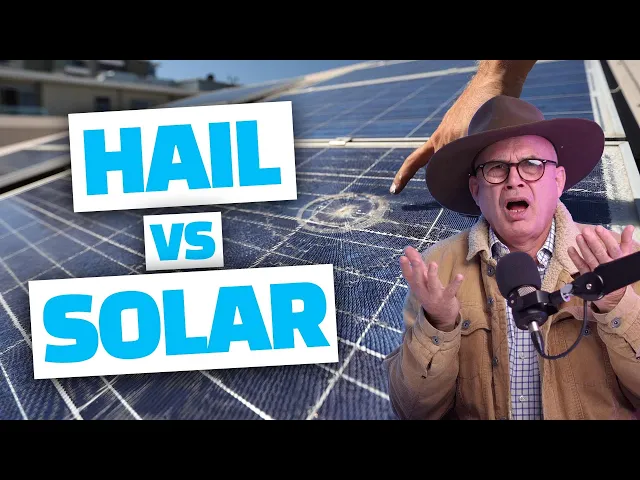
you asked are solar panels hail resistant I used to work for a manufacturer of solar panels and so I've actually seen the hail testing for solar panels what happens is they make little ice balls usually around 25 mm thickness there is a machine a testing machine and it uses a velocity of around 23 m/ Second which is around 80 kilm to shoot that ice ball at the panel from about 3 4 M distance and the p cannnot have a crack broken glass or anything like that it's usually a number of spots could be 8 10
12 different spots on different sizes of the panel that this particular ice ball will get shot at and if the panel survives that it is strong enough to pass the hell test the issue nowadays maybe due to climate change is that the 25 mm of the eyes which is about this size a little bit smaller than the golf ball in some cases is not what the hell is nowadays I have seen them this size of a fist what's going on I don't know but that damn thing's getting bigger and of course if that type of
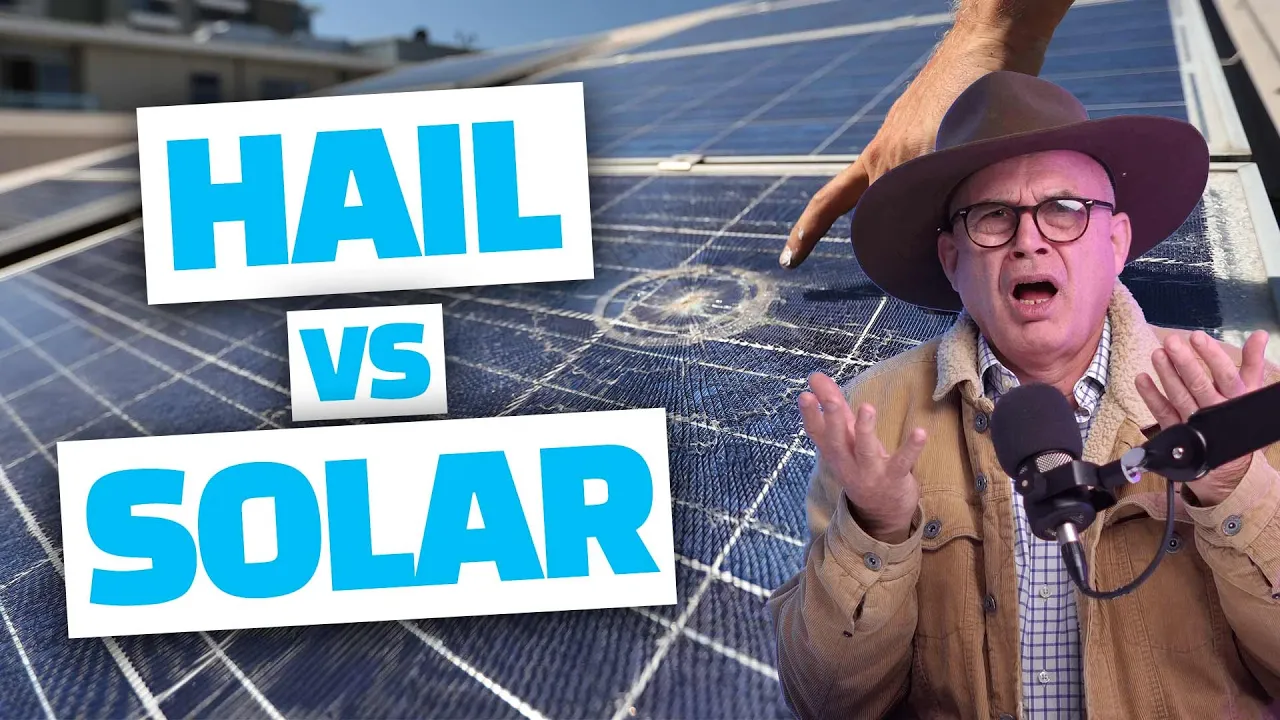
hail hits any solar panel the panel will shatter and by the way hell storms when the panel breaks it's not a warranty matter just like your tile manufacturer on your roof does not warrant you that the tiles couldn't be smashed so this is a home insurance matter no manufacturer will give you a warranty on that the worst case scenario with hail is you have a big hell storm 20 of your panels survived and two panels got broken your insurance comes out they'll pay for the two panels you think well this is all good no it's
a disaster because unnown to you those hail stones that hit the 20 panels that didn't have the glass broken will still cause microcracks microcracks means that the hail has hit the panel has hit the cell and the cell actually cracked or even shattered as soon as that happens that causes resistance in in the cell and the cell will heat up the heating up of the cell creates a runaway effect because now the resistance increases and over time you will get hotspots the problem is the hotpots might take three to four to 5 years to develop
by which time you might have already changed insurance companies twice you can't really go back to the insurance again now and say oh well you know that tail Storm from 5 years ago I actually realized all my other 20 panels got smacked as well the problem is that the insurance company will push back because they can't see the damage I see no problem at all so unfortunately there's only two options you pay for one of the panels to be removed and you send it to a laboratory and you have it check for microcracks and I
give you a guarantee that will be riddled and you can tell hellstone breakage because it looks like a bull's eye in that case I think you got good proof to your insurance that there's a problem the alternative is that you ensure that the insurance takes a file note on your case and then in years to come should you get the issues you can go back back to them and you have the proof about the matter so from those past experience I had myself I recommend strongly that you follow this path to protect your own investment
in solar you might be lucky that you have optimized panels or you have Micro inverters on the panels and you have the ability to individually now monitor the various panels and that means you can actually see if the output has reduced on specific panels which would also be a good argument with your insurance company finally we do not encourage you to get on the roof and try to check your solar panels out after there was a hail storm it's too dangerous you need qualified help who knows what they're doing the problem is when there was
a hell storm that the assessors are very busy it's not just you that's got the problem if you have smashed panels in those instances you have to turn the system off to protect it from dangers associated with broken equipment now naturally when you have utilized and used one of our recommended installers they will prioritize the systems that they've installed themselves as part of their high quality after sale service and obviously the importance of monitoring and especially in a system that's been hit by hailstorm watch the monitoring now in a month in six months and compare
it to data from previous years to really establish that the system is still functioning in the way it was initially designed so monitoring is important a good after sales service and you having your arguments ready with insurance company is important Want More Energy answered visit your energy anwers.com for Quality Energy Products tools and calculators and find your quality local installers please support the channel by liking the video hit that subscribe button and ring the bell and check out all our other [Music] videos you're still here I'll see you next time bye