Since the time of Darwin. Questions of human evolution have fascinated scientists. When did humans learn to speak and ask questions?
Think in abstract terms and perform feats of engineering. When did humans learn to archive and build their collective knowledge? how far back does human memory go?
And what was it that gave Homo sapiens the edge? Now it's clear that something happened to our ancestors that enabled a massive leap ahead of the herd, and that turned us into a crop farming city building a technology, inventing civilization. What was it?
It is clear that a gap exists in our understanding of human progress around the planet. How did ancient humans make such a phenomenal leap forward in agronomy? How did that advance reach the far corners of the world with such rapidity, where science can only identify the gap?
Ancient texts and ancestral memories propose an answer. Native American mythologies speak of an external intervention in human progress. The Mohicans speak of a non-human entity that coached their ancestors in a time when their survival on the planet was fragile.
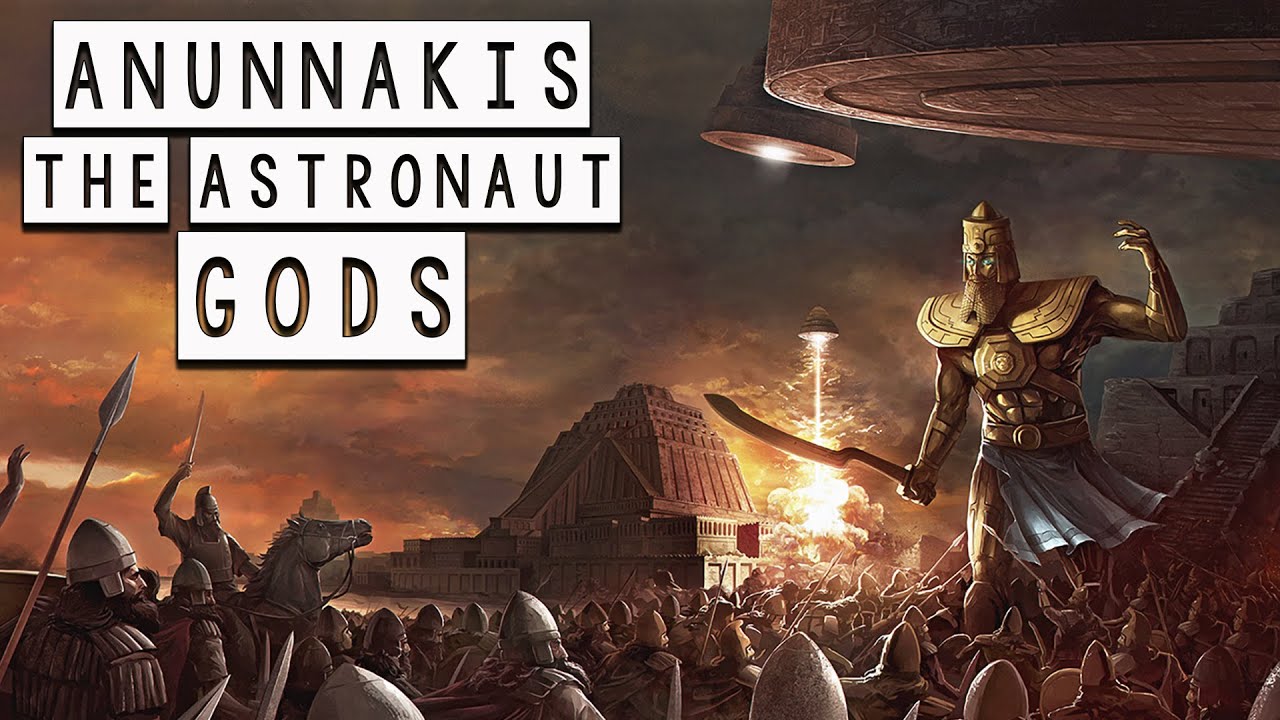
The Cherokee people tell a beings from the Pleiades arriving an egg shaped craft at living among them to teach them agronomy and the fundamentals of civilization. External intervention is the story of Zulu beginnings, Mayan mythology, Babylonian and Sumerian narratives all speak of non-human beings appearing and teaching our distant ancestors new technologies for farming. Along with all the rudiments of civilization.
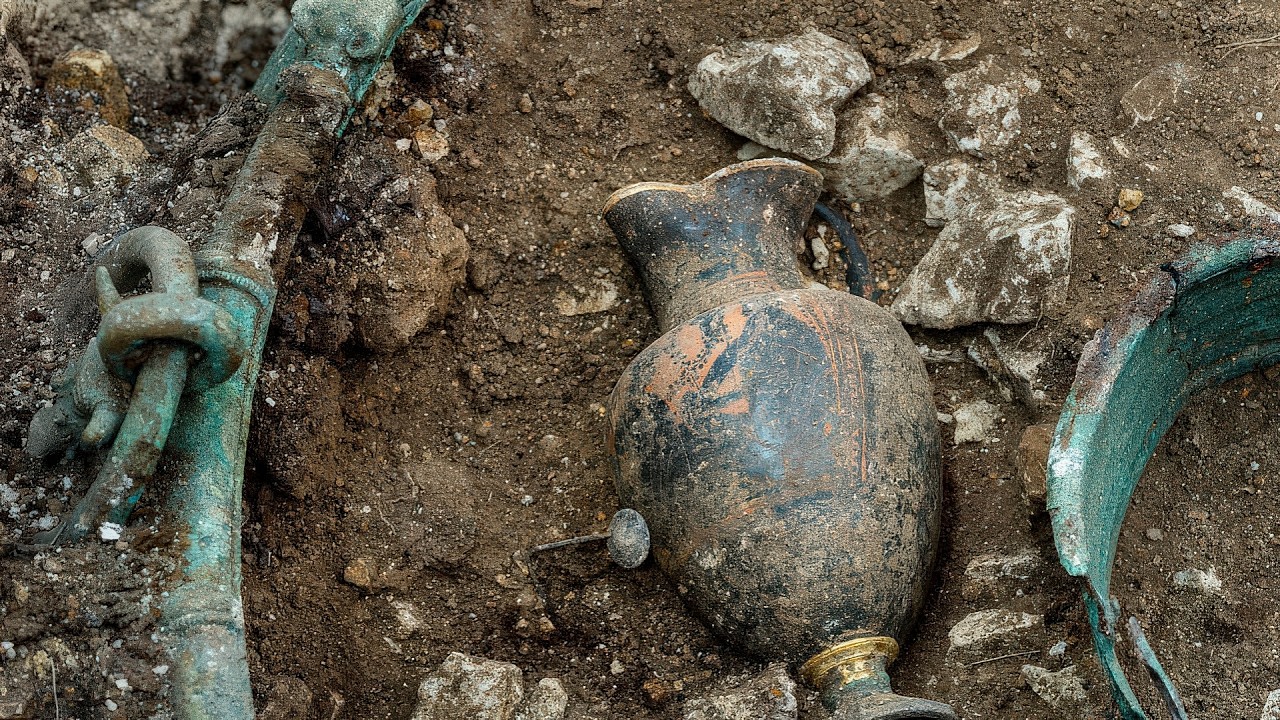
But before we settle into two neat and tidy a picture, this external assistance, if we date it to Karaca Dağ, puts us at around 10,000 years ago. Yet just down the road in the same country, you'll find the remains of Gobekli Tepe, a sophisticated megalithic structure already standing at that time and buried around 8000 years ago. This isn't the work of a family that's just learned how to farm is clearly the work of a previous civilization.
And Gobekli Tepe isn't the only megalithic site from that period. The Gulf of Khambhat, off the coast of India, Malta, Japan, Cuba all have remains of ancient cities which would have been above sea level no more recently than 10,000 years ago. So this beautiful intervention at Karaca Dağ the first farm, was nurturing a new civilization into being after the loss of a previous civilization.
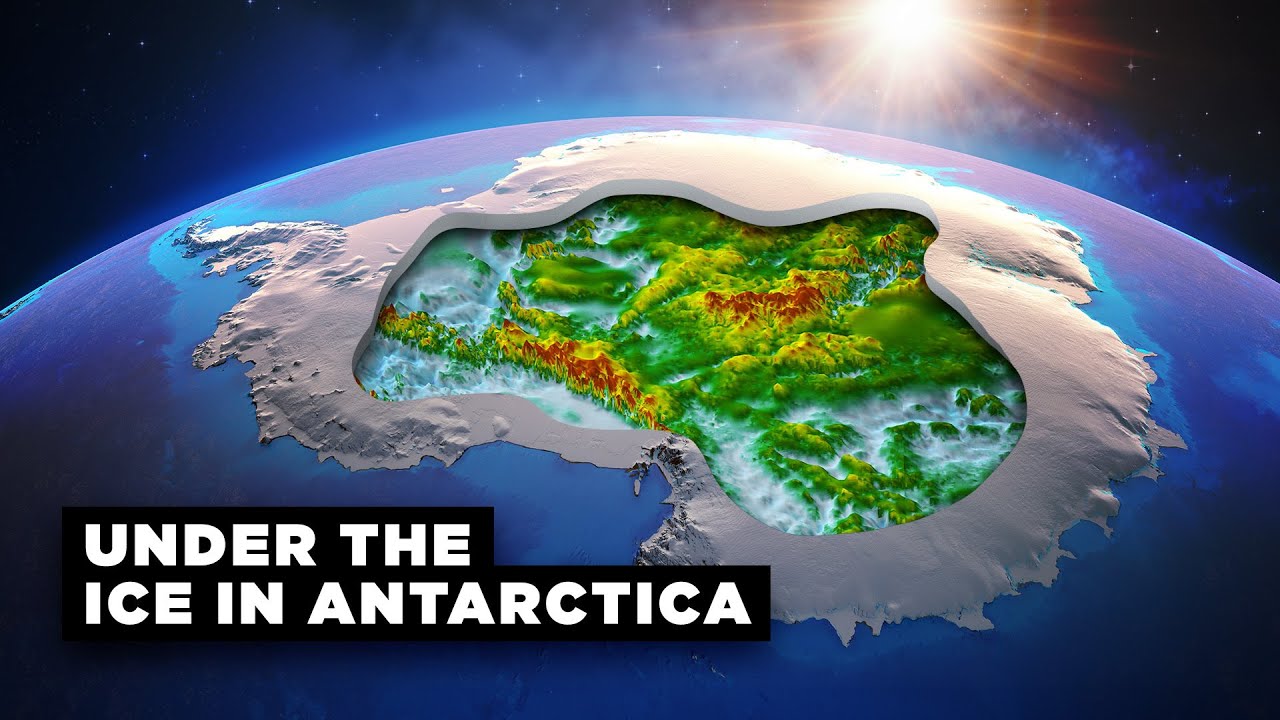
That's where I believe the evidence is pointing. So this is not the beginning of human history, at Karaca Dağ, It's a reset. It follows the period of the Younger Dras cold period and near extinction level event towards the end of the most recent ice age.
So this leap forward comes at precisely the time when human beings would have desperately needed assistance to recover their footing on the planet and all their lost technology. The question my book raises is how many resets are embedded in human pre-history? Who was here 10,000 years ago to assist ancient humans in their recovery?
Could it have been the survivors of the previous civilization, the descendants of those who had built at Gobekli Tempe, the Gulf of Cam Bay and off the coast of Japan, Cuba and Malta? One of the reasons I'm not convinced that these lessons in agronomy came from survivors is the fact that farming appears to spring up almost simultaneously all around the planet. So there's still an element missing to that story.
So I lean to the explanations given by our world mythologies, which suggest external intervention by people from another place. And I mean an extraterrestrial civilization. Now, some might argue, oh, this is the aliens in the gaps theory.
You know, wherever there's a gap in our ability to explain, it must be aliens. Now, I fully understand that skepticism, because intervention from survivors doesn't clash with our general worldview. It's easier to believe.
But the questions I take to these anomalies in our prehistory up what makes this story coherent, and what material data would corroborate an e. t explanation? What makes the best sense of what we do know?
Vladimir Sherbak & Maxim Makulov of the Kazakh Al-Farabi University and the Fesenkov Astrophysical Institute Have produced findings, solid data in our genetic code patterns that point to intelligent external intervention in our DNA, in our very design as human beings. And the ET explanation is there in ancestral narratives and mythologies the world over. In my book, escaping from Eden.
I argue that that same narrative of intervention by another civilization is actually embedded in the text of Genesis. When we drill down into the translation of those ancient texts. In the study of human origins, scientists look for various indicators of intelligent or human behavior.
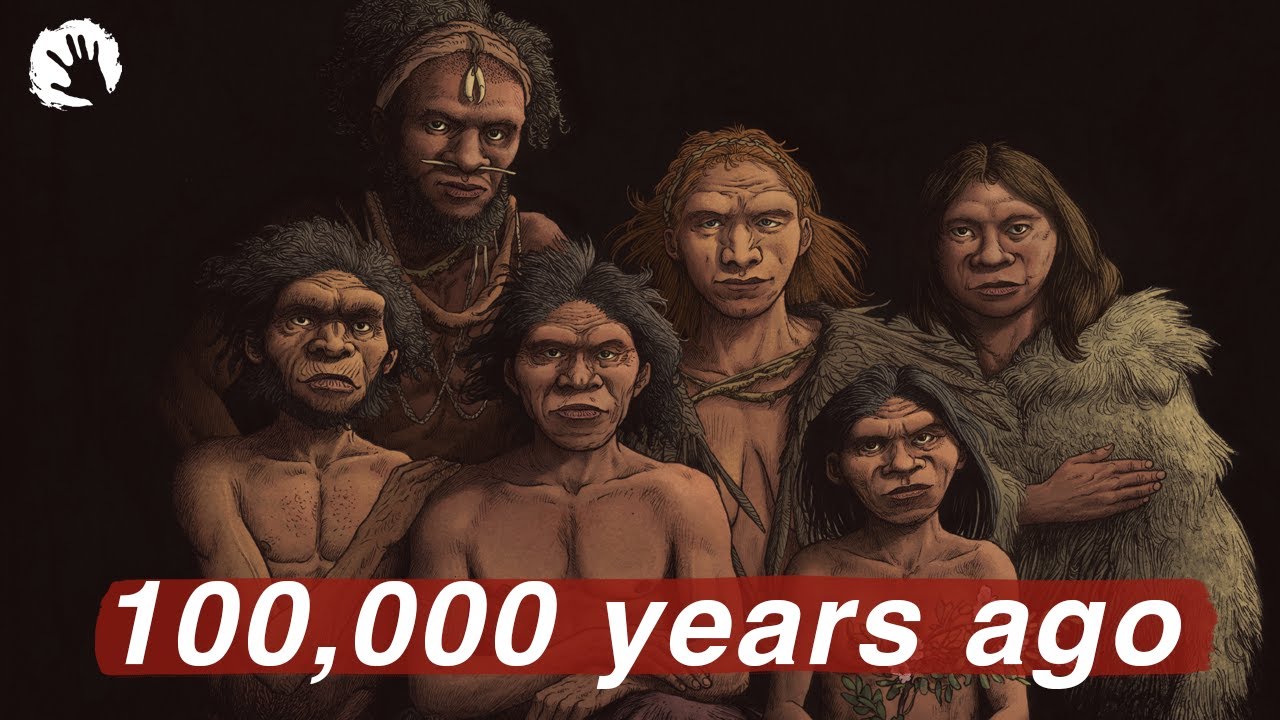
Art, craft, and ritual practices can be found dating to 20,000 years ago. The remains of people of our exact design and build can be found in Ethiopia from around 200,000 years ago. The earliest shelters we have found are in Japan, dating from 500,000 years ago.
The earliest evidence of hunting with spears dates from 400,000 years ago. If we prospect for the earliest use of fire, that puts us in Africa between 400,000 years ago and 1. 4 million years ago, if we are all related, then how far back does our ancestral memory go and how many external interventions may have happened in that time?
The Book of Ecclesiastes is a book in the Bible with roots in Sumerian literature, and its author says this. We have no memory of who and what went before us, and after a while the people who come after us will have no recollection of us. Now, what is true of us as individuals may also be true of civilizations.
My book argues that the Book of Genesis holds ancestral memory of at least three resets in human history. Genesis one represents a planetary recovery and the nurturing of life on Earth, including human life. Genesis six represents a planetary cataclysm and a repopulation.
And Genesis 11 represents the obliteration of a technological civilization and a reset of the human story, where we re-evolve from a pre language state. Now, these ancient narratives all tell of external interventions, recalling some interventions that harm and some that assist. But most profoundly, they all tell are the external intervention in our very design.
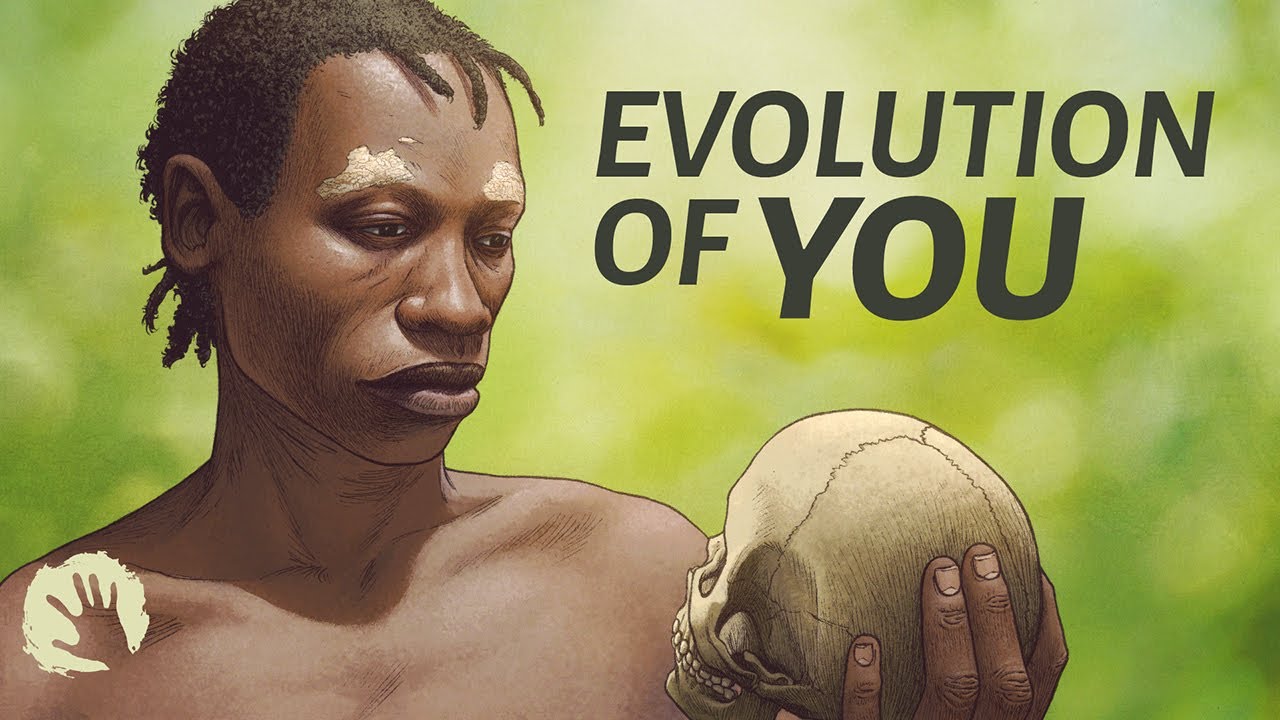
Today's scientific consensus has concluded that our ancestors were descended from a primate ancestor, shared by the great apes. The two folks of primate evolution separated as the result of what might seem a tiny modification of chromosomes. Great apes have 24 pairings of chromosomes containing the instructions for how to build a great ape.
Human beings have 23 pairings of chromosomes. So did the apes gain a chromosome, or did humans lose one? In 2002.
A research team in Seattle analyzing the human genome demonstrated that human chromosome number two was created by fuzing two ancestral chromosomes. Together. In the April 7th issue of the journal nature in 2005, a team led by Washington University School of Medicine published research which included an analysis of human chromosome two.
The team included scientists from Washington University, MIT, Stanford, the Wellcome Trust, the Sanger Institute, the National Young Men University of Taiwan, among others. Their research uncovered new evidence that confirmed the Seattle team's finding that human chromosome two resulted from the fusion of two ancestral ape chromosomes. It contains 1346 protein coding genes, representing around 8% of human DNA.
But what or who engineered this prehistoric fusion that enabled our ancestors to stand apart from apes and become truly human? Mesoamerican, Mesopotamian and Greek mythology and the narratives of the Bible all speak of a moment in human history when another civilization from another place interfered in human evolution. Now the Popol Vuh, the Mayan mythology is especially interesting because it speaks of a sequence of experiments to get us like this, and the product of the successful experiments was us, and some ape like creatures that live in the forest.
That's what it says. Now, what's so interesting about that is that the Popol Vuh relates us to apes centuries ahead of Charles Darwin. And it's not that we're descended from apes.
In the Mayan story, the Popol Vuh says that we and these forest dwelling apes were engineered from a shared ancestor. Well, that's amazing, because that is exactly what contemporary research, including DNA research, is telling us today. Our ancestral narratives.
So many of them speak about complex decisions being taken about upgrading human intelligence and consciousness. And we're told that there are conflicts among these other powers as to how intelligent or conscious they wanted the human beings to be. Now, these decisions followed a period in which the earlier iterations of humans had been engineered as workers for this other species.
And the Mayan mythology. The Popol Vuh is very frank, plain speaking, when it says the engineers said to each other, let us make avatars for ourselves, to work for us. In Southern Africa, researcher Michael Tellinger points to the presence of prehistoric mines, which he dates to around 200,000 years before present.
His work joins with the work of Yan Haina, who first drew attention to a vast network of stone circles spanning South Africa, Zimbabwe and Botswana. Michael Tellinnger's work studying the weather patterns of the stones and their current setting, dates them to between 200,000 and 300,000 years ago. But who was here 200 to 300,000 years ago to build on such a vast scale?
And to what purpose? What function did this stone grid serve? Might have been a form of technology that we have yet to understand?
The presence of prehistoric gold mines in southern Africa certainly raises the question of who was here in the prehistoric past, who wanted those minerals, and who did the actual mining? If the mines really are 200,000 years old, as some researchers are arguing, then our ancestors, Homo sapiens, were here at that time, not yet smart enough to work out how to farm, but smart enough to work in someone else's mine. Now there is a connection between our early ancestors and mining that's actually hinted at in the Book of Genesis.
The text introduces us to Eden as a place where the humans lived. In their earliest iteration. In other words, this is the point in the story before they have been upgraded with higher intelligence.
Meanwhile, the text informs us that just near Eden are some key mineral deposits, including gold. And then we're told that the overlords, the Elohim, the powerful ones, put the humans to work. Now, who was interested in those minerals?
Not the humans. And exactly what work were our ancestors put to? My interest in all of this is partly invested in the past.
What did happen? And what is our place in the universe? But it's also invested in the now.
Because if our mythologies hold real information about the engineering of human beings and the establishment of our level of consciousness, then they also hold information about our potential as human beings, with clues about how we can upgrade to a better way of being human and a higher level of consciousness. And that's what excites me. How far back does human memory extend?
Might our world mythologies hold vestiges of that memory? Do those memories include information about our evolution, our interaction with other species, and our role in the ancient past? What does information about our origins tell us about our potential today?
Thanks for watching The Fifth Kind. If you enjoy our content here on 5th kind TV and would like to support our work, please would you consider subscribing to our new website 5th kind. tv Here we will have our full catalog of material along with exclusive access to interviews and documentary content.
Sign up today. Become part of the community. Become part of the conversation.
Thank you so much for your support and I'll see you there.