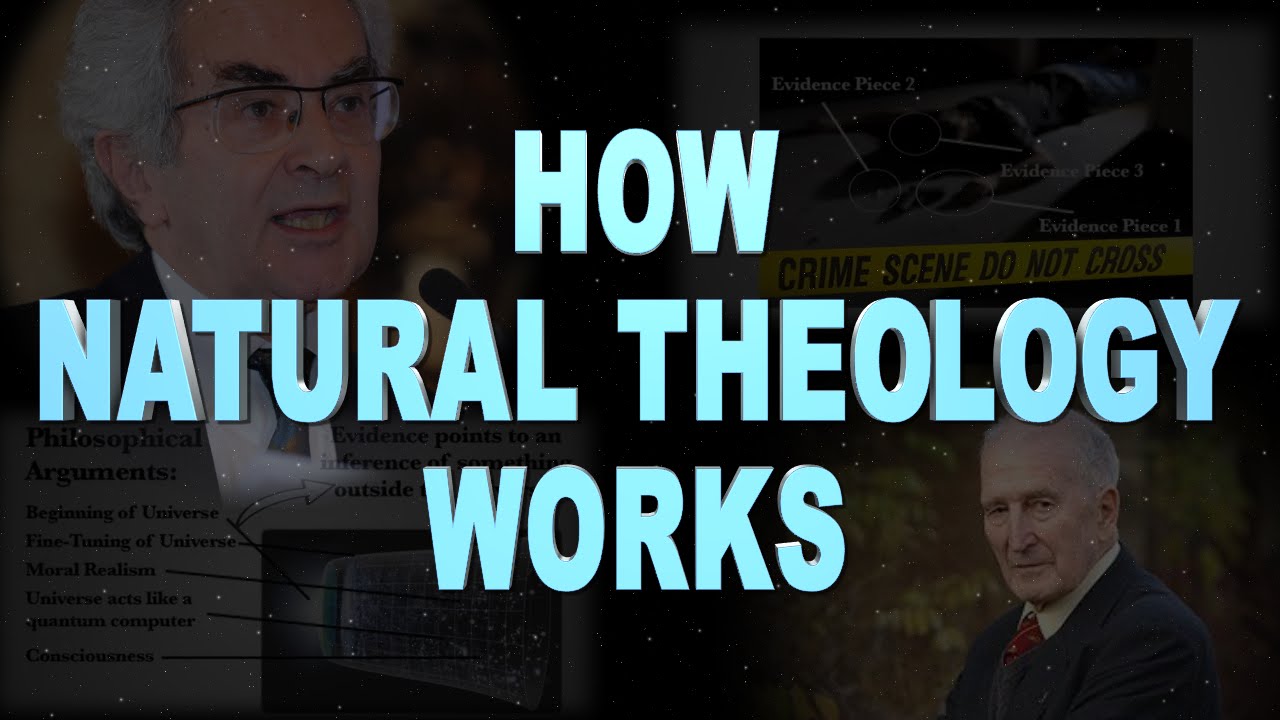
so several atheists responded to my video what atheist confuse a link to that video and all their responses are attached below and now it is my turn to respond so what are some of the things they say well first a couple started off by not even attacking the argument in the video but wanting to clarify some things about philosophy of science and this is fine the video is not about philosophy of science but how philosophy of religion works and reaching the conclusion that God exists the argument I was making in the video was not to
explain the complex field of philosophy of science but to contrast a commonly understood scientific method with how a philosopher arrives at the conclusion that God exists the scientific method consists of asking a question proposing a possible solution called a hypothesis testing the hypothesis through a series of experiments examining the results of the experiments to see if the hypothesis has been supported or refuted and then proposing a new question or a new hypothesis however a philosopher doesn't argue God exist by taking the same route all I was doing is pointing out that there are other ways
of drawing conclusions other than the scientific method and yes I'm well aware that nothing in science is ever technically proven again this was hardly the point of the video which is why I said we conclude it is scientifically proven not that it technically is what we conclude is proven doesn't mean it is or always will be the case it simply means we accept it as fact unless someone comes along and shows us our errors and then we adjust properly so focusing on this aspect was kind of humorous to me as it missed the main point
entirely of what I was trying to say however this was not the only point they brought up some of them took the next section out of context where I addressed a total skeptical atheist one who just looks at the evidence and says I don't know the point they brought up is that one can still not have an answer while still being skeptical of the inference of a designer and I would agree and note this really doesn't address what I was saying if you are skeptical of a designer it means you have a reason for why
there cannot be a designer you're not arguing from Pure ignorance but giving evidence or reasons to justify your skepticism just like with this analogy Sam gave recently the trash got taken out at my house now I lived with four other people my three roommates and one of my roommates girlfriend so I think that the girlfriend took it out because she has been you know cooking cleaning a lot more because she has a lot of free time at the moment and you know she likes to be appreciative of the fact that we let her stay there
and we really have greeted her as a member of the House however I don't have proof of this because I never saw her take out the trash it's it's a reasonable INF inference but I would never say that I know that I would say that I believe that that's the case however I can rule out that it was Socrates because Socrates has been dead for thousands of years exactly you can rule out Socrates because you have good evidence or reasons to roll him out he is dead and you have good reasons to for why it
was the girlfriend this is not the same thing as being a total skeptic or pure agnostic one who simply looks at the evidence and refuses to infer anything or offer counterevidence to the possibility of a designer your analogy actually helped what I was trying to say in that you gave a good argument for why it was the girlfriend and not Socrates so when it comes to the evidence pointing to a designer you can't just say I don't know but I know the theist is wrong you need to provide reasons why the best inference is not
a designer if you want to roll out the possibility of a designer like you can roll out Socrates then you need to give reasons not just be skeptical and assume that it's good enough Sam also responded to my address that extraordinary claims requires extraordinary evidence inste I took San's popular phrase out of context he argued that there's nothing inherent about this statement the way that you want it to be it's not about something being extraordinary instead it's about the fact that every claim has its own burden of proof which I agree claims do require evidence
the question I am returning to you is what gives you the right to say the existence of God is extraordinary you admit to some degree it is subjective but then argue that Sean's phrase is self-evident and should be obvious Common Sense however if you say that then it should also be obvious that common sense is just a subjective as many feel belief in God is self-evident in fact Dr Justin Barett identifies that belief in God seems to be self-evident among children his book born Believers argues that the science supports the idea that we are born
to know God exists and it is a self-evident belief now obviously some have argued against his work but his point is simply that for most people across the globe the belief in God seems to be self-evident and not an extraordinary Claim by any standard for them so if you want to say the statement extraordinary claims requires extraordinary evidence is self-evident then I can simply respond that that's subjective and the existence of God seems to be self-evident for me and many others so we obviously do not have the same self-evident beliefs either way Sean's popular phrase
doesn't refute the argument that the existence of a designer is the most logical inference from the evidence we do have now you could do as Gary Edwards did and attack my objection to Sean's phrase by building a straw man cautious atheists may use the term in a more technical sense meaning in apparent violation of natural law and it is in this sense in which reports of Miracles are extraordinary Gary never once did I argue in my previous video that claims of Miracles are evidence I argue the evidence put forward by natural theology not miraculous claims
should at least entail that the best inference is that God exists at the very very least and to put it with excessive modesty scientific naturalism is in the running when it comes to offering the best explanation of phenomena like apparent fine tuning or Consciousness it also does not appear to have dawned upon IP that scientific naturalism May contribute to Natural theology rather than assaulted perhaps he needs to be reminded that to do natural theology is to do little more than to reach conclusions about God based on reason and observation rather than Revelation in scripture look
Gary if you don't agree with me that's fine but don't put words in my mouth at least address what I said and not a straw man I didn't use scripture as evidence in my other video and I also never denied that science contributes to Natural theology remember the inferences I listed clearly I acknowledge that science contributes to Natural Theology and of course I would agree with your claim that natural explanations are preferred I never denied this my point was that things like the hard problem of Consciousness and the beginning of the universe do not have
adequate natural explanations and infer something beyond the natural if there was a perfectly reasonable natural explanation I would not have listed them I will give you credit though you acknowledge that God is not impossible whereas Sam and deconverted man seem to not realize that the concept of God has been properly defined going as far back as St Augustine and I gave this definition in my series on the ontological argument and defended it so this just shows a lack of knowledge on philosophy of religion of course this was not my favorite part of deconverted man's response
I thoroughly enjoyed his misuse of logical fallacies his entire video was supposed to point out the large amount of fallacies in mine unfortunately he only demonstrated that he doesn't understand when someone is committing a logical fallacy for example when I quoted someone or referred to them he called it an appeal to Authority and if that was the case then I guess everyone in the history of writing who has ever quoted anyone has committed this logical fallacy but that is not what an appeal to Authority is and he should know this an appeal to Authority as
defined by philosophy 103 introduction to logic is the fallacy of appealing to the testimony of an authority outside his special field quoting Thomas Nagel who is a philosopher is not an appeal to Authority and cherry-picking or quote mining in this case would only be true if I took the quote out of context and since you failed to show where I actually did this this is not a logical fallacy also I didn't appeal to Authority with John Lennox or CS Lewis either I simply used their analogies and wanted to give them credit I did not say
I am right because John Lennox agrees with me so this is not an appeal to Authority equivocation the word evidence can be used multiple ways and quite often is used multiple ways by apologetics he is also wrong here in equivocation fallacy would be if I use the same word twice to mean different things and since I only use evidence as as a body of facts or information indicating a belief is true I did not commit the fallacy and he failed to show where I committed this just asserting a logical fallacy doesn't prove I actually committed
one and this is not special pleading special pleading would be if I said evidence can be used for God's existence but evidence cannot be used to show God doesn't exist and I didn't say atheist cannot use evidence I said atheist cannot appeal to evidence that doesn't exist in the present as if it was evidence that existed in the present that in itself would be special pleading ah so I see so if the claim is made in the field of philosophy then the methodology used has to be that of philosophy even though philosophy doesn't have any
methodology philosophy doesn't have any methodology you're killing me small have you ever read anything on philosophical methodology ever now I could just keep going through this video and responding to every supposed logical fallacy he brought up but it's getting painful at this point before he thinks he can assume everything is a log iCal fallacy perhaps he should study what they are and when they are supposed to be used but perhaps he might just say I'm committing one now who knows on the other hand you could just hold to an incoherent definition of existence and use
that to say that God doesn't exist if we say outside the natural world then the word existence no longer applies and as Craig and Morland pointed out to Define existence this way is to say the natural world doesn't exist space and time are not themselves located in space and time therefore space and time must not exist when actually existence is better understood as explaining what actually exists and what could possibly exist existence must also itself exist and not violate the laws of logic and finally must allow for acts of knowing now properly defining existence is
still a problem in philosophy but restricting it to within SpaceTime is nonsense we need a broader understanding the overall problem with this response is that it pretended like religious language has not been defended however religious language has been preceding in the past several decades is a fully functioning field of philosophy and several philosophers have been defending it is beyond the scope of this video to dive into that now but I highly recommend the coherence of theism by Richard swinburn as a good starting point the argument that has not been defended is simply absurd now the
only response to video I receiv received that I was actually pleased by was the one from doratan instead of attacking the video he directed his video to what was really important if God is the best inference from the evidence he actually offered other possible ways to explain them which is where the conversation should be going not if future scientists will debunk the existence of God it is beyond the scope of this video to fully defend the pieces of evidence that point to the existence of a designer and I plan to do so more formally in
other videos but to quickly respond I will note that we shouldn't be interested in any old inference but the best and most reasonable inference so for all we know the universe could be Eternal but this is nothing more than a speculation and severely lacks empirical evidence an eternal Universe model still has to get around the board go Lankin theorem as venin said in 2006 cosmologists can no longer hide behind the possibility of a past Eternal Universe There Is No Escape they have to face the problem of a cosmic beginning Eternal inflation models are highly speculative
cosmologist Laura massini hton has pointed out that since Eternal inflation would have to have a beginning it implies it must have had very special initial conditions in order that the bubbles are not destroyed of course if it exists which may not even be the case 2013 plank data didn't show any evidence of internal inflation so this can hardly be the best inference for fine-tuning the existence of moral realism is ontologically best grounded in the nature of a necessary Eternal being to affirm its Eternal objectivity the fact that the Universe acts like a quantum computer infers
it is contingent on information processing showing the universe must be contingent on something outside of it the hard problem of Consciousness is not addressed by Evolution as it fails to explain how things like qualia can form from purely physical processes physical processes have only been observed to produce more of the physical not different substances altogether thus Consciousness infers the existence of mental non-physical substances again I will defend these inferences more deeply in other videos but as of now I feared I've gone on too long every single point brought up in these response videos cannot be
entirely addressed but I felt it was important to address the main points they brought up and offer a theistic rebuttal