Everyone thought you had to suffer more to run faster. But in the early 2000s, a Norwegian named Marius Bakan found a smarter way to train. Something that now has created world records, Olympic medals, and what many consider the most effective distance running system ever created?
So, what did Marius discover that made the Norwegians unbeatable? In this video, I'll show you the five-step system he developed that Norwegian athletes have used to break world records. and I'm going to show you a full week of training if you want to take advantage of this system yourself.
My name is Nicholas. I'm a sport scientist, physiotherapist, and former professional triathlete. To understand what the Norwegians figured out, we first have to start with a molecule that's misunderstood by most runners.
Lactate. Now, think of lactate as a byproduct that your body creates more and more of the harder you train. And at some point, as your pace increases, the lactate in your blood rises.
This first point is called your aerobic threshold or LT1. While it varies between runners, it's usually around 2 millmer. You're still in control here.
You could basically go for hours, but then things start to shift. You go harder and suddenly the lactate in your blood spikes like this. That's called the anorobic threshold or LT2.
This is typically around 4 millmer. And this is when things start to burn. And those two points LT1 and LT2 divide our training into three different zones.
Zone one under LT1 which is our easy pace. Zone 2 which is between LT1 and LT2 which is this controlled discomfort. And zone 3 which is above LT2 and that is just full suffering.
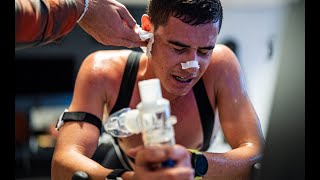
Now here's what changed everything. The Norwegians started measuring lactate during their training and not just in lab tests. And Mars Bakan found a sweet spot in zone 2.
And if he planned his training the right way, he could run fast but recover quickly. He was stacking high quality sessions, staying underneath that red line and avoiding injuries. And so he could train more.
This discovery laid the foundation of what we now call the Norwegian method. And in a recent scientific paper, Marius and his colleagues shares exactly how it works. So let me walk you through the five-step system that's producing world records and Olympic medals.
Step number one is the foundation. The base of it all is simple. High volume, low intensity training.
This is zone one, so below LT1. Basically, easy aerobic work. Runners following this system usually run about 150 to 180 km per week, but most of it is easy, but it's not junk miles.
This easy running builds capillaries, grows mitochondria, and gives you the endurance to support the intense work later. Think of it like pouring concrete before building a house. No concrete, no performance.
Step number two is the heart of the Norwegian method and basically it's what's made it famous. It's called lactateg guided threshold intervals. These are zone 2 workouts targeting a blood lactate concentration of 2 to 4.
5 millmer right between LT1 and LT2. So they train not based on pace, not based on feel, not based on heart rate, but based on blood. They prick their fingers during training every 1 to three reps to keep it precise.
A lactate creeps above 4. 5, they slow down. If it goes below 2.
0, they pick it up. And then there are some minor differences between sessions, but for now, we'll just keep it simple. So, why are they so specific?
Because this is a metabolic edge. You can still go fast and stimulate adaptation, but you can also recover fast enough to do it again later in the same day. So, this is the truly clever part.
They do double threshold days. In the morning they might do longer reps like five times 2 km or 6x6 minutes at controlled threshold pace. And then in the evening they might do shorter faster reps like 25 * 400 m or 10 * 1 km still within threshold lactate but at higher speeds and more neuromuscular demand.
They rotate the formats sometimes continuous blocks and sometimes intervals with short rest but always keeping lactate under control. And they do this twice per week, so three to four threshold sessions per week. And then they have full recovery days or easy runs in between.
This is how they stack volume and intensity and precision all without burning out. But that brings us to a misconception about the Norwegian method because most people think they never go above threshold. But according to the paper, they actually do.
Once a week, they push past that threshold. This is a V2 max or sprint session running in zone 3. or if you use a five zone model, then zone four and zone five.
It could be something like 20 times 200 meters hill sprints or short intervals at 3k pace. The goal here isn't threshold, it's power. These sessions are designed to stimulate central adaptations like stroke volume and oxygen delivery.
They are the icing on the cake. But here's the key. Only once per week anymore, and it compromises the rest of the system.
But that brings us to step number four. Even though they run a lot of volume, they don't just train hard, they recover hard, too. The Norwegians use a hard day, easy day rhythm.
Some days they'll do two threshold sessions in the morning and the evening, but the day after that, it's just easy running or complete rest. This rhythm allows them to recover while still hitting high total volume. And when race season comes around, the system shifts.
Then they do fewer threshold sessions and more work at race pace. They move from what's called a pyramidal structure where you do mostly easy running and then a lot of threshold and then just a bit of V2 max work or very hard intervals over to a polarized model where they do mostly easy runs and then not a lot in the middle and more hard runs. It's smart periodization changing the focus as we get closer to race while keeping the system intact.
Finally, the edge the Norwegians have is data. They don't guess. They test.
They adjust and they retest. Lactate, heart rate, perceived effort. They track everything.
So, they know exactly when to push and when to back off. And this lets them individualize their training to each and every runner. Minuteby minute, session by session.
But there's one more thing they do that makes this system even more powerful. Strategic altitude training. You see, they don't just train hard or smart.
They also train at the right altitude at the right time. Typically, they'll spend blocks of their season at moderate altitude around 1,800 to 2,000 mters. But, and this is very important, they don't use altitude to train harder.
They actually dial back the intensity at altitude. Instead, they use it to stimulate red blood cell production and improve oxygen carrying capacity without disrupting the threshold structure. Then, when they return to sea level, they're stronger, faster, and more efficient.
Even their double threshold trainings are carefully adjusted to avoid overtraining when they're training at altitude. It's not altitude for altitude sake. It's planned.
It's monitored. It's controlled just like everything else in the Norwegian method. Now, you might be wondering, what does a typical week look like?
Here's an example directly from the paper Mario's co-authored. Monday, you'll do an easy run in the morning and then an easy run plus some strides in the afternoon. Tuesday, you'll have a double threshold day.
So in the morning 5 * 6 minutes and in the evening 10 * 1 kmter. On Wednesday you do easy running plus some light strength training. On Thursdays you do another double threshold day with a 5 by 2 km in the morning and 25 * 400 m in the evening.
All below 4 millmer. On Friday you do an easy run. On Saturdays you do a sprint session.
So 20 * 200 m uphill. And then on Sundays you do a long run. I'll leave a link to the full article in the description below.
So should we try to do the same? If you're not doing a ton of volume, my advice will be no. Multiple scientific studies have shown that a polarized approach is better for most recreational runners.
And without precise control, we can't get the most out of this system.