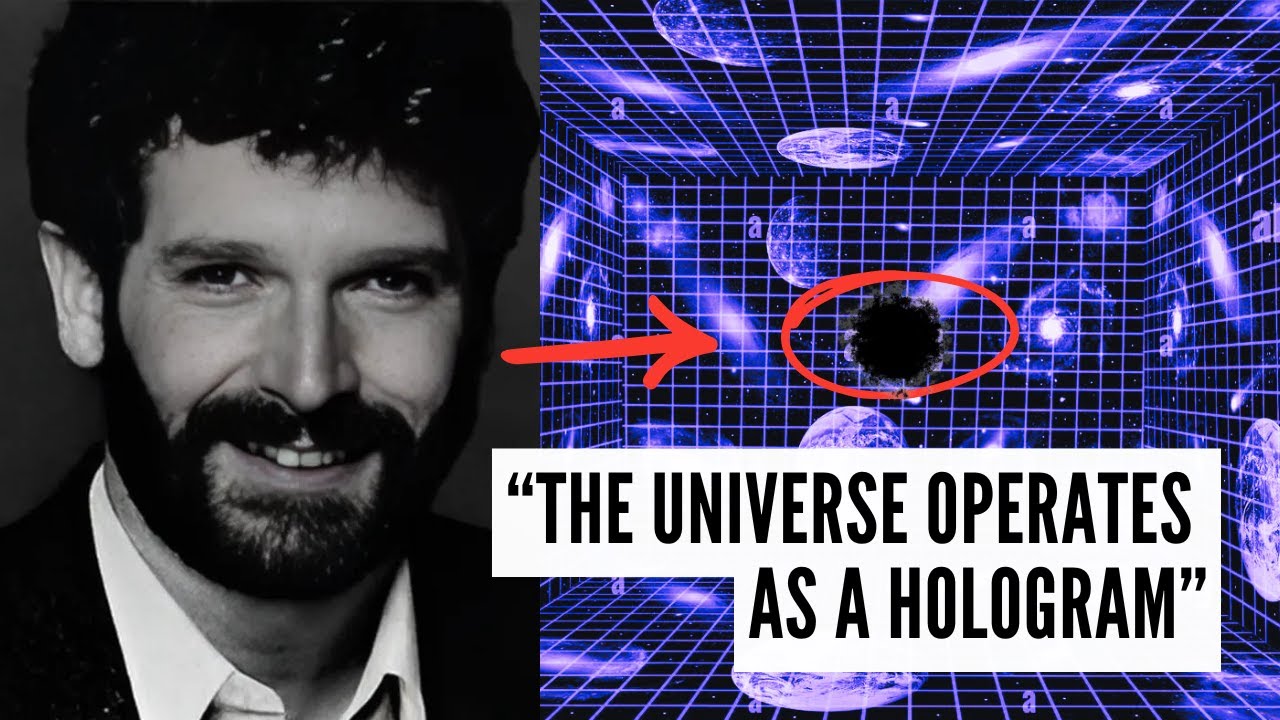
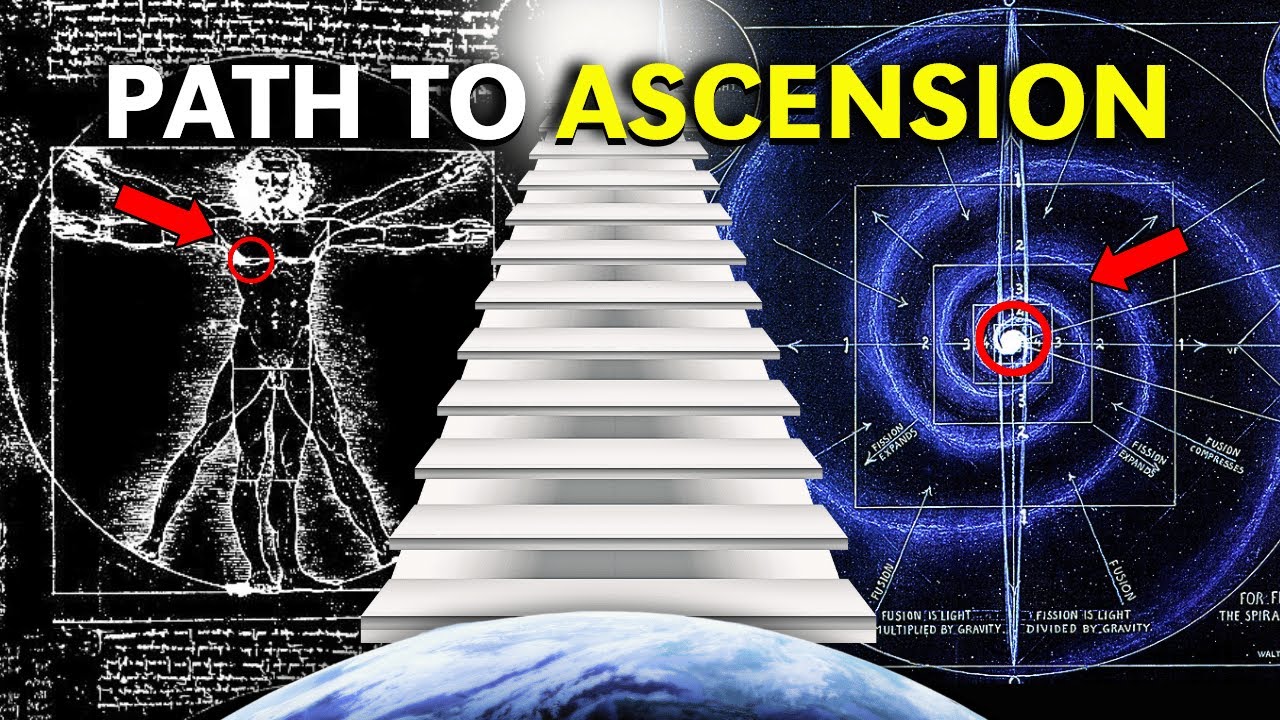
So, the universe is a hologram. It means, as William Blake said, that quite literally you can find the universe in a grain of sand; that every portion of the universe contains some semblance of the whole. Stop everything and listen carefully: what if everything you know about reality is wrong?
What if the universe and your own existence is like a hologram, where every part contains the whole? Michael Talbert claimed that this idea could explain déjà vu, psychic phenomena, and even how your thoughts shape the world around you. But here's the twist: understanding this could unlock a power you never knew you had.
Miss it, and you might miss the key to the true nature of existence itself. Back to the hologram. So, imagine this hologram as a three-dimensional image made from light.
When you cut a hologram into smaller pieces, each piece can still show the entire image. It's as if every tiny fragment holds the complete picture. Some have said our reality might behave in this same way; every piece of what we call matter or thought could hold a pattern of the whole.
This idea is known as the holographic universe theory. In a holographic universe, nothing stands alone; everything could connect, much like the way your hand's reflection appears in a mirror. That mirror isn't just showing your hand in a flat form; it's presenting a pattern shaped by light that contains what your hand is and how it moves.
Now, think of the entire cosmos working like that mirror. Each part might contain the full pattern. Each action, each thought, each choice could ripple across a vast field of energy and information that links you to everything else.
Michael Talbert wrote about this idea; he tried to help readers see that what feels solid might be more like a well-crafted illusion. If a hologram stores information across every point, then maybe reality stores information the same way. Nothing would be separate; distance would not be what we think.
Boundaries would blur, and the line between mind and matter might fade. It might mean that you are part of a shared pattern that stretches far beyond what your senses show you. It might mean that when you take a simple action—choosing what to eat for breakfast, deciding whether to smile at a stranger, or changing a single word in a conversation—you could affect events far away.
A small shift in one corner might reflect across the entire pattern. But stop and think for a moment: how do you really know what's out there and what's inside your mind? You might feel love, anger, or hunger and know these are internal experiences, but when you see a person, hear music, or feel the warmth of the sun, it feels obvious that these things exist outside you.
Yet the truth is your brain is creating that experience. Here's an example: when you look at someone, their image forms on the surface of your retinas, but you don't see them there; you see them out in the world. Or when you stub your toe, the pain isn't in your toe at all; it's a process happening in your brain.
Your mind takes these internal signals and projects them outward, creating a reality that feels solid and external. This is the same way a hologram works: a hologram looks three-dimensional, as if it exists in space, but there's nothing there. You can pass your hand right through it.
The image appears real because of the way light has been arranged. In truth, the image exists only on the surface of the film, encoded in patterns. So, what does this mean for you?
Your brain doesn't just passively observe the world; it actively creates it. It takes signals, patterns of energy, and turns them into the sights, sounds, and experiences you call reality. Your mind is far more powerful than you think.
Now, ask yourself: if your mind can arrange reality like this, what else could you create with the right focus and awareness? Michael Talbert's work raised more questions: What is real? Is matter solid?
Is the mind private or closed off, or are these distinctions more like shadows on a wall? A holographic perspective might suggest that matter, mind, and space fold into each other. It might mean time isn't fixed—that the past and future connect—and that consciousness itself plays a part in shaping what we see as real.
So, let's get into how the smallest decisions might ripple through time. Michael Talbert did not start with these theories formed in his office; his childhood was filled with strange experiences: things like random knocks on walls or objects sliding across the floor without anyone touching them. He even reported seeing what some called poltergeists.
At times, he felt as if he left his own body, drifting above his sleeping form. He spoke of telekinesis, where objects seemed to move without any visible force. These early experiences challenged what most saw as normal; they hinted that what people call supernatural might fit into a much larger pattern.
If our usual rules struggle to explain such things, perhaps those rules are not as solid as they seem. Maybe these odd events belong under the same umbrella as everything else. If we learn to see the big picture, like a hologram, even one tiny part of life might carry a larger truth.
These things might have happened to you. You make the small decision to take a different route home from work, or maybe you pass a bookstore you've never noticed before. You stumble upon a book that changes your whole perspective and results in changing your life.
Just a tiny choice, like turning left instead of right, can seed enormous changes over a lifetime. But what if those tiny changes don't just move forward but flow backward, too? So imagine you choose on impulse to stop by a café.
. . you've never visited before, and while sitting there, you meet someone who later becomes a close friend, a partner, or even a mentor.
As your life shifts because of this encounter, you look back at all the steps that led to it. Maybe you realize you had been thinking of visiting that café for weeks but never acted on it until that day. It feels as if the future connection—the bond you were about to form—was quietly pulling you toward that moment to stop by that café, to meet that specific person with whom you form a connection.
Or perhaps you had a sudden, almost irrational urge to call an old friend only to learn they desperately needed to hear from you at that exact time. What seemed like a spontaneous decision now feels predestined. Was it intuition, coincidence, or something else?
According to Michael Talbot, in a holographic reality, time doesn't flow in one direction; it folds back on itself, and the effect might call out to the cause before it even happens. I know it's confusing in the beginning, but you will get it throughout the video, where I'll share more examples. So, according to Michael, the future influences the present in mysterious ways or even reshapes the past.
This way of thinking forces us to question the boundaries between time, space, and even our own minds. It's here where Talbot turned to ideas including even quantum physics. At the time, scientists were making discoveries that challenged everything we thought we knew about reality.
For example, they noticed that certain particles behaved as though they were linked, even when they were in fact separated by large distances. Some called this entanglement; others talked about non-locality, where what happens in one spot somehow connects to what happens far away. These ideas were strange, yet they opened doors that many had never considered before.
Talbot took them to the next level. He wondered if they might explain more than physics. If reality behaves like a hologram, then quantum science could be the key to understanding it.
In a holographic universe, everything, no matter how distant or seemingly unrelated, could be connected. Patterns might emerge that defy explanation, linking thoughts, events, and even time itself. Talbot believed this could explain not just the mysteries of physics, but also the strange coincidences, mental phenomena, and paranormal experiences that so many have encountered.
So, what if these weird coincidences weren't exceptions to the rule, but glimpses of a much deeper interconnected reality? Suddenly, the smallest decisions and the oddest synchronicities might be part of something far more profound—a reality where every piece reflects the whole and nothing stands alone. But quantum findings made it easier to speak about patterns that do not fit old frameworks.
It meant that what we think of as separate—things, matter, mind, events—might connect in ways that leave no room for clear boundaries. What you think of as here and there, past and future, might all be part of the same larger image: a holographic field where every piece contains the whole. Everything could be part of one giant image, each piece reflecting the whole.
This can feel far from daily life, but pause and think about your own habits. Ever say something like, "I'll never figure this out"? That might feel small, yet it sets a tone; it shapes how you approach the next challenge.
Words guide your focus; they point you towards certain actions. Telling yourself you cannot learn may blind you to a simple step that leads forward. The non-locality theory suggests that the old lines we drew between mind and matter may not hold.
Maybe the stories you tell yourself interact with your world in ways you do not see. Maybe the small voice inside your head nudges outcomes one way or another. This does not mean that if you say, "I am rich," coins fall from the sky.
It means that the way you describe your life inside your head can shift what you notice and how you react; that can change what ends up happening. Think of a time you felt stuck. Maybe you repeated a belief that nothing would improve.
How did that affect your mood? How did it affect your decisions? Compare that to a moment when you said, "I can try something different.
" The shift in your words might have changed how you felt inside. Then you might have taken a small action that set events on a better track. Even one subtle choice can change how things unfold, so it's so important which story you tell yourself every day.
Is it a story that keeps you stuck or one that helps you see new options? Remember, words are not just sounds; they shape how we view our lives and what we do next. You have a choice!
What happens if you rewrite that story into something empowering? Also, David Bohm, a physicist, spoke of a hidden layer beneath what we call reality. He saw this layer as a kind of deep pattern that brings forth everything we sense and think.
This idea is known as the implicate order. It's not something we can hold in our hands; it doesn't show itself like a tree or a rock, yet it may guide what appears in front of us. Michael Talbot embraced this; he believed it fit well with a holographic view of the universe.
If the cosmos works like a hologram, then each part holds the pattern of the whole. Nothing stands by itself— all that we see and feel might unfold from that deeper pattern. Think of it like a movie projector shining light through hidden frames.
We see one scene on the screen, but there could be many scenes stored in the film strip. Some remain invisible until we adjust the light. Your beliefs are like glasses; change the lens and.
. . The whole picture shifts if you hold the idea that nothing connects your private thoughts to the outer world.
You live as if your mind is sealed off, but if you change that belief, you might notice small signs that your thoughts shape events. A shift in how you see things might rearrange what feels fixed; a hidden pattern waiting beneath the surface might spring into view when you look with fresh eyes. Pause the video and write down one belief you'd like to change.
It might be about your own worth or your ability to face a hard task. It might be about how you see those around you. Look at it on the page now; ask what happens if you try to see it differently.
What if you treat it like a lens you can swap out? Instead of "I can't do this," try "I haven't done this yet. " Instead of "No one cares," try "Someone might care if I share my thoughts.
" Give your mind permission to shift just a bit. If Bohm's implicit order is real, then a simple tweak in your viewpoint could alter what plays out next. Like changing the angle of a flashlight, you might reveal details hidden from your old way of looking.
You might notice that when you soften your stance, others warm to your ideas, or when you trust your inner voice, new paths seem to open. What could this new perspective unlock for you? Here's where it gets even more fascinating: our brains work like holograms, too.
Carl H. Triviani, a renowned scientist, discovered that memories aren't stored like photos; instead, their patterns spread across your mind just like a hologram. This idea caught Michael Talbot's attention.
If the brain works like a hologram, then what we call seeing or hearing might be more like decoding signals. The world we think we know could be a kind of projection. Our minds act as active participants; they read patterns and turn them into shapes, colors, and sounds.
Our senses filter what is out there, and our minds bring those signals into a form we recognize. Talbot thought this holographic way of thinking might explain strange effects that never fit old models, and holography offers a compelling explanation for how the brain can store an immense amount of information in such a small space. The brain would not just stand by and watch events roll past; it would mix, match, and shape the information.
It would help craft what appears outside and inside; it would join the dance of matter and thought so that every event we know would form in this dynamic exchange. So, in a nutshell, this suggests that reality may be more plastic and changeable, like an image, rather than a solid construct. It also implies that if the universe is holographic, then every portion of the universe contains some semblance of the whole.
A hologram has an unusual property: if you take a piece of photographic film that has a holographic image encoded in it—an image you cannot see with the naked eye—you have to reconstruct it by shining a laser through it. If you have an image of a rose and shine the laser through the film, you'll get a three-dimensional image of the rose on the other side. If you cut that film in half and shine a laser through each piece, you still get a whole rose from each piece.
Cut it in four, and you get four whole roses. So, if the universe is a hologram, then, as William Blake said, you can find the universe in a grain of sand. Every portion of the universe contains the whole.
What does this mean for you? It means that the universe, and even your mind, contains the whole within every single part. Imagine taking a holographic image of a rose; when you shine a laser through it, you see a complete 3D rose.
Now cut that film into pieces. What happens? Each piece still shows the entire rose.
It's a stunning analogy. At the deepest level, every portion of the universe contains the whole. As the poet William Blake once said, you truly can see the universe in a grain of sand.
This has profound implications for your understanding of reality. You tend to see the world as solid, fixed, and separate. But what if reality is more like an image—a projection—plastic and changeable?
You perceive yourself as distinct from your cup of coffee, from other people, or even from the stars in the sky. But at a deeper level, you are all connected; separation is an illusion. Here's how David Bohm helps you see it: Imagine an aquarium with one fish and two cameras—one from the front and the other from the side.
To an unknowing observer, it appears there are two fish moving in perfect sync, but it's one fish seen from different angles. Subatomic particles, and by extension all reality, are like that. What seems separate and distant is, in fact, unified and connected at a deeper level.
Or think about the famous placebo case: a man dying of cancer begged for a miracle. A placebo drug; his tumors disappeared when he believed he had the cure. When doubt returned, the cancer came back.
The drug was only saltwater; the man's healing was triggered by his belief. The power was in his mind. And here's where you take action: you must ask yourself what models of reality you are holding in your mind.
What beliefs are shaping your health, your energy, your success? The holographic model shows you that you are not limited by your circumstances; you are empowered to reimagine your life, your potential, and your world. To understand the nature of reality more deeply, we need to start with a simple yet profound concept: the universe is vibration.
In this universe, everything vibrates. Whether we think of it as waves or particles, but here's the catch: our senses are designed to detect only the "on" moments, the obvious crests of waves, while we completely miss the "off," the troughs, the silent spaces, and the intervals in between. We notice light but not darkness; we hear sound but not silence; we see form but ignore the emptiness that surrounds it.
And yet, the "off," the background, is just as essential as the "on. " You cannot have a wave without its trough or a particle without the space that defines it. No up exists without down; no something exists without nothing.
Our perception focuses on the foreground, the active, the visible, while the background remains hidden. But what if the background holds the key to understanding reality? This brings us to a fascinating truth about our universe: duality.
Everything has two sides, opposite yet inseparable. Light cannot exist without darkness; expansion requires contraction. Life is a balance between beginnings and endings.
At first glance, these opposites seem to fight each other, but they are not enemies; they are partners. Like two sides of a coin, they cannot be separated; each depends on the other to exist. Without sadness, we could not appreciate joy; without chaos, we wouldn't recognize order.
This is the paradox of duality: opposites are not separate at all; they are part of a single whole, two expressions of one truth. Yet our minds struggle to grasp this because we are wired to see this and that, to split the world into subject and object. Think of electricity: you don't see the energy flowing through a wire, but you know it's there.
The same goes for radio waves, subatomic particles, and countless unseen forces that shape our lives. Just because we cannot see the interconnected nature of duality doesn't mean it isn't there. To put it simply, the universe can be understood as having two layers: the foreground and the background.
The foreground is the physical world—what we can touch, see, and hear. It's the world of form where life plays out in tangible ways. The background is something far deeper; it is the realm of consciousness, the source from which all form emerges and into which it dissolves.
This is beautifully captured in the teaching: "Form is emptiness, and emptiness is form. " The physical world may seem like all there is, but it's only half the equation. The other half, consciousness, is invisible but ever-present; the unseen foundation of everything.
You can think of it as the ground of all being, as it's described: God, the universe, or simply the energy that connects all life. So how do we begin to engage with this deeper level of reality? How do we move beyond the limitations of our senses and glimpse the unity that underpins everything?
The answer lies not in thought, belief, or logic. Consciousness cannot be understood with the ego or the rational mind; it is an experience, a direct felt connection that comes from within. The ancient Greeks called this gnosis—an intuitive knowing that bypasses the intellect and resonates with the heart.
This experience can begin as an inner prompting, a quiet sense of awareness that whispers rather than shouts. For some, it comes in flashes—sudden moments of insight or clarity—like Dr Edgar Mitchell's profound experience of interconnectedness during his journey through space. For others, it unfolds gradually through practices like meditation, mindfulness, and the quieting of the conscious mind.
The goal is simple: to be still, to listen, and to open yourself to a reality beyond thought. As Psalm 46:10 beautifully says, "Be still and know that I am God. " But when we begin to engage with this background of consciousness, something extraordinary happens: we start to see who we really are—not as isolated individuals, but as beings woven into the fabric of the universe.
Your higher self, as many call it, is the portal to this deeper understanding. It is the you that exists beyond time, beyond space, beyond duality. It is the transcendent you that recognizes the unity of all things.
This is the immortal you, the part of you that knows it is not separate but eternally connected to everything and everyone. It is not something you find or create; it is already here, waiting for you to turn your attention inward and experience it for yourself. When you begin to see reality in this way, your life transforms.
The limitations of the ego start to fall away. You realize that your thoughts, words, and actions ripple through the interconnected web of existence. You become a co-creator of your reality, aligned with the greater consciousness that underpins all of life.
So ask yourself this: what happens when you step beyond the "on" moments and pay attention to the quiet spaces in between? What shifts when you stop seeing opposites as separate and begin to embrace the unity within duality? This is where your journey begins—the journey to see not just the foreground of life but the vast, infinite background from which it emerges.
The choice is yours: will you stay on the surface, or will you explore the deeper truth that connects you to everything? You've heard of near-death experiences, where individuals describe a world that is fluid, plastic, and instantly responsive to thought. Clothing appears because they think of it.
This is a glimpse of deeper, holographic levels of reality, where thought creates form immediately. It tells you that beyond your physical body, consciousness exists as energy, infinitely connected to everything. If you think of psychic abilities, you no longer need to imagine signals traveling across space.
The holographic model shows you that all information is already within you; every thought, every particle, every mind is connected in one unified field. You don't send energy; you simply tap into a reality where you and the object, or the person, are already one. It means you can.
. . Embrace a new way of living.
You are not just a physical being navigating a solid world; you are energy, interconnected with all of existence. You are capable of healing, transformation, and limitless growth. You can harness your mind to shape your body, to reshape your circumstances, and to live with profound purpose and meaning.
When you understand this, you begin to dissolve the illusion of separation. You realize that you already hold the whole universe within you. You are not a single drop in the ocean; you are the ocean in a single drop.
You are powerful, you are connected, and now you have the knowledge to unlock the infinite potential that resides within you. And if thoughts help form what we see, then what do our words do? Each day consider Dr Emoto's experiments.
He worked with water and focused words, sounds, or emotions on it. The frozen water crystals took on shapes that reflected those inputs. If thoughts and feelings shaped something as simple as water crystals, what might they do to our own lives?
Think of your morning routine. Maybe you wake up, look in the mirror, and think, "I'm too tired," or "I can't deal with today. " These words are not just passing thoughts; they guide how you feel and act next.
They shape where your mind settles; they set the tone that colors your day. If words can affect water, then words might affect the patterns inside your own mind. They might nudge how you perceive events or how you respond to challenges.
Try a simple step: speak one kind word to yourself today and notice how it feels. Pick something gentle, like "I can learn" or "I deserve patience. " Let that phrase settle inside you.
Watch how it might brighten your next interaction or shift your mood. If this seems small, recall that even a tiny shift in a hologram can change the entire image. But do not forget to think about the placebo and nocebo effects.
Patients often feel better when they believe a simple pill holds a cure. Shifts like these do not ask for new medicine; they seem to spring from belief alone. In a holographic view, body and mind form one pattern.
A single shift in attitude may change signals coursing through cells. The words you encounter daily, like "failure" or "success," are like a soundtrack playing in your mind. What story are they telling you?
What words are influencing you? And how can you take back control of your narrative? For example, when soldiers think a far-off hill is small, their legs ache less.
When patients trust a sugar pill, their wounds ease. Belief bends flesh and bone. This is what science calls placebo and nocebo effects.
A thought does not stay locked inside your head; it shifts how cells grow, how muscles contract, how a heartbeat pounds. In a holographic view, mind and body form one connected pattern. Each part reflects the whole, so a quiet expectation can spark real changes.
The words you encounter daily, like "failure" or "success," are like a mantra playing in your mind. They run again and again, framing each breath. They can weigh you down or help you rise.
So really ask yourself: what words are influencing you, and how can you take back control of your narrative? Belief is not a small, hollow thing; it stands inside a field where matter and thought mesh. Think of events that people call strange.
Some say objects shift on their own or odd shapes appear from nowhere. Many call these happenings paranormal. In a holographic model, they could be signs that your emotions and thoughts stir patterns in ways you rarely expect.
Poltergeists and psychokinesis might not be wild stories or tricks, but signals that mind and matter flow together. What seems solid might bend when strong feelings rise. This can feel distant, but look at your own beliefs.
If you say, "I always fail at this," you set a wall. Swap that thought for, "Every time I try, I will become better. " This new phrase opens the door to progress; it feels much calmer and more open.
Just that small shift in words might change what comes next. Try something simple. Really don't just watch this video; pause and take a paper and pen.
Write down one belief that holds you back, then rewrite it as something that gives you room to grow. Read it again and notice how your mood changes. I'm sure it does feel lighter and more hopeful.
If you would continue doing this, imagine what kind of new opportunities this will create in your life. Talbert claimed that déjà vu might offer us a glimpse into this deeper interconnected nature of reality. Déjà vu is a common experience where a moment feels strangely familiar, as if you've lived it before.
This sensation raises profound questions: have you looped back in time, or are you catching a fleeting glimpse of another version of reality? Moments like these challenge your understanding of time, perception, and the flow of your experiences. Some theories suggest that time isn't simply a linear sequence of events; instead, it may operate as a vast interconnected network where moments can overlap, intersect, or even repeat.
This concept introduces the possibility of time loops—events cycling back on themselves, allowing you to revisit moments, perhaps with a chance to make new choices. It sparks questions about fate and free will. Are certain events predestined, or do your choices truly shape what happens next?
From there, the idea of alternate realities emerges—parallel worlds where every decision branches into a different outcome. These realities could exist simultaneously, each unfolding along its own trajectory. If true, it means countless versions of your life are playing out beyond your awareness.
A thought as fascinating as it is mind-bending, it challenges the comforting notion of a single fixed reality. In stories and films, these. .
. Ideas take shape through time loops and alternate realities, offering characters extraordinary opportunities to reexamine their choices. Movies like *Groundhog Day* explore what happens when someone relives the same day repeatedly.
With each loop, the protagonist makes different choices, unlocking new outcomes. While these are fictional tales, they resonate deeply because they reflect your curiosity about the nature of time, choice, and second chances. They make you wonder: what would you do if you could revisit your past and rewrite your future?
Quantum physics takes this curiosity further, blurring the boundaries between science and philosophy. At the quantum level, particles behave unpredictably, existing in multiple states at once or becoming entangled across vast distances. These phenomena suggest that reality is far more fluid and interconnected than you might imagine.
The many-worlds interpretation of quantum mechanics pushes this idea to its limits; it proposes that every possible outcome of a quantum event actually happens, each outcome playing out in its own separate universe. In this view, all possible pasts, presents, and futures exist simultaneously, unfolding as alternate realities. While still theoretical, this perspective deepens your understanding of reality, hinting that what you perceive is only a small sliver of a far greater, more dynamic whole.
When you connect these ideas—déjà vu, time loops, alternate realities, and quantum mechanics—you begin to see reality as something infinitely flexible and alive with possibility. Talbert's insights remind you that your perception shapes your experience, and perhaps with enough awareness, you can learn to navigate this holographic, multi-layered existence with greater intention. Not only that, but near-death experiences and lucid dreams also offer a peek behind the surface.
In these states, thoughts can show up as if painted on a screen; physical rules seem less strict. People report floating through scenes that bend space and time. They often say that what we call real life is just one band on a much broader dial.
Shift your focus, and you might tune in to strange and subtle layers that lie just beyond your usual senses. If the holographic idea holds, then these unusual states suggest that our ordinary waking world is not the only option. Near-death accounts describe bright fields and instant connections; lucid dreams allow us to bend images to our will.
These reports hint that the solid stage we stand on each day might be a projection. By shifting the lens of Reactions, poltergeists, and psychokinesis whisper that emotion and attention might tug at the fabric of what you call real. NDE and lucid dreams open doors to deeper layers of experience where thought seems to sculpt surroundings.
Ancient wisdom spoke of illusions, and now we see parallels between old teachings and modern physics. Virtual reality analogies suggest that what you see might act like code and that changing a line in your own mental script can shift what unfolds next. Talbert's second book never came to light, leaving a gap where methods and steps might have helped shape this holographic field in a more direct way.
That absence hints that you can make your own map. Try a small step right now: identify a phrase that traps you. Replace "I can't do this" with "I'm learning every moment.
" Speak that out loud and notice how it feels. With such choices, you help create a personal guide, a path that leads toward better health, more abundance, and stronger insight. Look at how all these themes converge under one powerful truth: your consciousness shapes time and reality.
Each thought you hold, every belief you embrace, and every word you speak becomes part of the larger pattern—one that doesn't just influence you but radiates outward, touching the lives of those around you. Every choice you make today creates ripples across time, impacting far more than you might imagine. The pen is in your hands.
What will you write next? When you embrace this idea, you step into the role of a co-creator of reality. You realize that your thoughts, actions, and intentions don't merely react to the world; they actively shape it.
This is an extraordinary realization because it grants you a profound power—the power to make a positive difference not just in your own life but in the lives of others in the world you share. Think of a single act of kindness: it's small, perhaps fleeting, but its impact is immense. By helping one person, you inspire them to help another, setting off a chain reaction of positivity that spreads far beyond your sight.
The same principle applies to negative actions; they too create ripples. Understanding this makes you more mindful of the energy you carry into every situation, every conversation, and every interaction. To embrace your role as a co-creator, you must shift your perspective.
You must begin to see yourself not as a passive observer of life but as an active participant—one whose presence matters, whose actions carry weight, and whose choices shape the future. This shift fosters a deep sense of unity. If everything is connected, then what you do for yourself, you do for all; what lifts one, lifts many.
This interconnectedness invites you to collaborate, to support others, and to work together toward a higher vision. It's no longer about "me and mine"; it's about "us and ours. " At first, the idea of shaping reality may feel overwhelming, but let it empower you instead.
Your life has purpose; your actions have meaning. You are here to contribute to the unfolding of something beautiful, something vast and interconnected. So where do you begin?
Start with awareness. Pay attention to your thoughts, your words, and your actions. Choose your focus intentionally.
Cultivate positive, empowering beliefs and release those that hold you back. Words shape reality. Choose them carefully.
Surround yourself with others who share this vision. As you embrace this, life begins to take on a richer meaning. You see connections where before there was separation.
You begin to understand that every moment, no matter how small, holds an opportunity to contribute to the larger story. This isn't about controlling everything or forcing outcomes; it's about participating fully, mindfully, and intentionally in the ongoing creation of reality. Every thought, every action, and every word adds to the unfolding pattern.
You matter; your contributions matter. Now, think about the smallest decisions you make in your own life: a kind word to a stranger, an offer of help to someone, or even choosing to live with more mindfulness. These seemingly insignificant moments can ripple outward in ways you'll never see.
The next time you feel isolated, remember this: your thoughts, actions, and energy are part of the fabric of reality. Like the butterfly's wings, what you do matters. You are a vital part of the system, connected to everyone and everything.
This is the essence of embracing the holographic nature of reality. You are a co-creator; you are a participant in the grand design. By living with awareness, compassion, and purpose, you help shape a more harmonious, abundant, and beautiful world.
So reflect on this: what energy are you choosing to put out today? What story are you choosing to write? Recognize the limitless possibilities before you; recognize your role.
If this clicked for you, comment, "I see the pattern. " I'd love to hear from you. And if you found value in this, make sure to hit subscribe and join our community.
Your support means the world, especially now when content like this is being removed more often. And remember, you hold the power to shape your life, your community, and your world. Live with intention, speak with purpose, and act with an open heart.
The future is not fixed; it is waiting for you to create it. So step forward. The pen is yours.
What will you write?