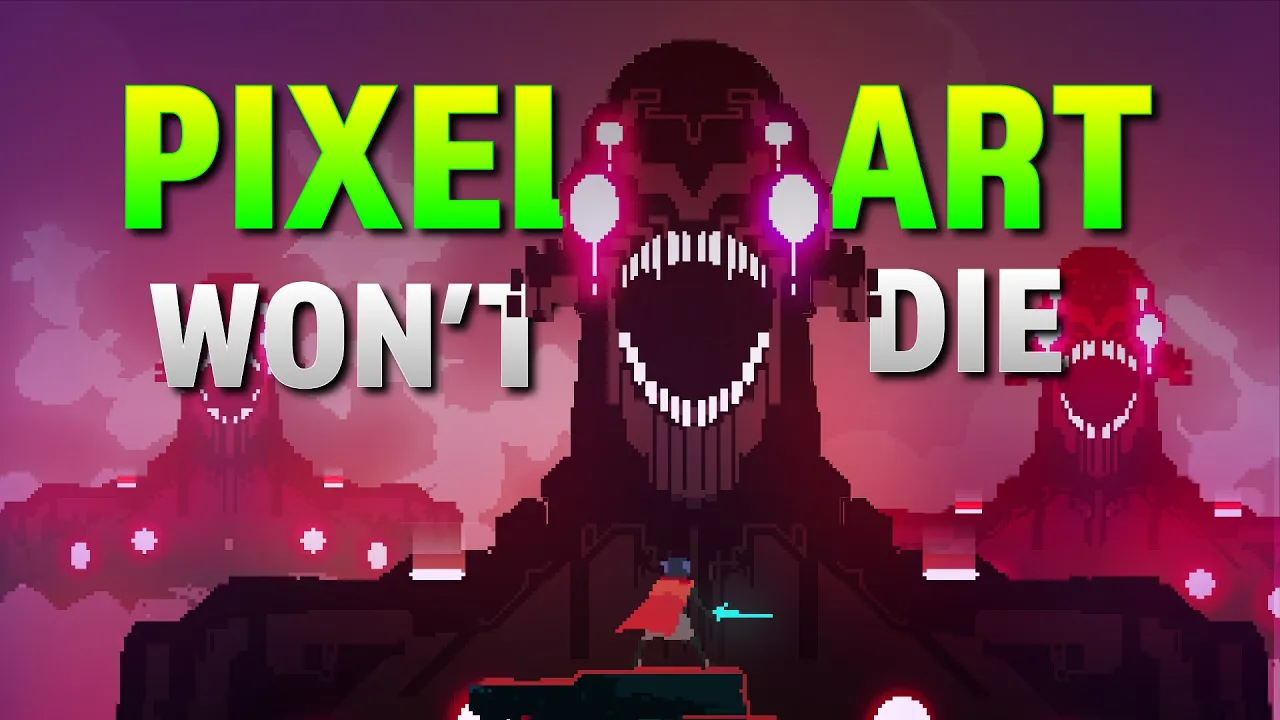
in an age where AAA studios are continuing to push the boundaries of advanced graphics and there are engines available to Indie developers that can generate truly stunning visuals why is it that so many games still use pixel art aren't we past that well I think inherent in that question is a false assumption that better graphics are objectively better in every way that's just not true pixel art has plenty of value to offer as well sometimes surpassing what high graphics can do especially when looking at game Design Elements like readability or movement Precision not to mention
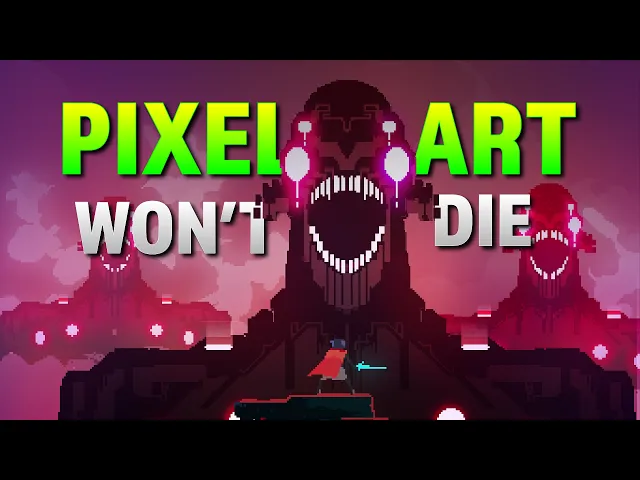
the impact pixel art can have on subjective measurements like perceived cuteness or visceral nostalgic reactions whatever the case is it's pretty clear pixel art is here to stay from games like dead cells to the recent Indie hit da of the diver pixel art has proven to Be an Effective medium for crafting compelling and successful games so what's the deal with pixel art why is it still so widely used and why does it work so well let's get into it one of the most commonly cited reasons for the prominence of pixel art in Indie Games is
its functional Simplicity it's just easy to work with sure game engines offer Indie developers incredible 3D environments in which to operate but using a simple 2D plane with just an X and Y AIS is just so much more approachable especially for beginner developers who are just starting out now that's not to say it's a medium only for beginners though Advanced developers also love working within the constraints of pixel art because it simplifies extraneous parts of game design for example look at xo's Celeste 64 versus its inspiration the original two-dimensional Celeste both games have a core
design principle of difficult platforming with a forgiving game Loop and relatively frequent checkpoints celest 64 while honestly an incredible game considering it was only made in a couple of weeks doesn't hit the same cord as the original Celeste players have to fiddle with the camera constantly just to get a clear view while the original Celeste handles the camera for you in Celeste 64 or the character needs dotted lines to show where she's going to land which honestly isn't always clear because again the player has to be adjusting the camera while also maneuvering obstacles the 3D
environment simply isn't built for precision platforming the way a 2d environment is by keeping the game constrained to a 2d plane XO is able to provide an experience that is very honed in on their Core Design principles they don't have to ask the player to learn dual stick controls or add visual cues to help the player know where meline is going to land they can simply focus on the whole point of the game tough as nails platforming now you might be saying well sure but why not use 3D graphics on a 2d plane then which
is a fair question I mean many incredible games do just that it's something we call 2.5d in the game design World Games in this category are fantastic but they're missing one thing that pixel art provides Precision when you're operating in a resolution as small as pixels it's easier to design games that are literally Pixel Perfect allowing for players to have more control of their character and thus providing a medium for higher levels of game difficulty and in turn higher levels of satisfaction associated with challenges in other words it's easier to make games that are fun
because they're hard when you're using pixel art one game that makes this pretty apparent is Mario Maker 2 in Mario Maker you can create levels using various versions of Mario games throughout history the two Styles I'd like to focus on here are the SNES version which is Super Mario World and Super Mario 3D World in the Mario Maker Community there's a style of level called the kaiso which is Japanese for the word remix if any of you have played Mario kaiso levels you probably know where I'm going with this kaiso levels are punishingly difficult and
are designed by Mario Maker Pros for Mario Maker Pros now what's interesting about these kaiso levels is that the majority of them are made in the style of Super Mario World the sness version that uses pixel art sure some kaiso have emerged in the other styles but the overwhelming majority of kaiso levels are built in this pixel art version and it makes sense levels that are designed for Pixel perfect Maneuvers and precise Leaps and Bounds should be made in a Pixel Perfect environment now of course there are additional reasons why the SNES version is so
widely used for these highly difficult levels specific texts like shell jumping and movement combos but at the core of all of that is the value pixel art provides for Pixel Perfect platforming now another reason pixel art is still so popular is related to the kinds of feelings it can evoke in just about any conversation about pixel art you'll likely hear the word nostalgia that the low resolution makes people miss and long for a better day back when your mom would drop you off at the arcade with a bag of quarters and you'd spend hours trying
to steal the high score on Pac-Man now what's interesting about this argument is that only a fraction of Gamers today were actually alive when arcades were the only way to play video games what about everyone who grew up with Nintendo 64 or we gosh even my kid who was born after the switch came out likes games that are made in pixel art these youngsters don't feel the same nostalgia right well maybe not in the same way I would but there's still a raw emotional feeling you get when you hear that 8bit music and play games
in that pixel art style it's a strong identity that's truly only associated with gaming an activity that we've always associated with fun and excitement even if you didn't grow up with the original pixelated games you know when you see something pixelated that it's game time perhaps this is why retro style games are still so widely loved even among younger Gamers now when talking about pixel art it's common to hear developers say they chose to use it in their game because it was simply an easier art style to learn and while I think the statement is
both true and not true depending on the circumstances it certainly contributes to why Pixel Art Is So widely used while pixel art can lend itself to some genuinely beautiful visuals it's also a medium with a low barrier to entry you really don't need to be a professional artist to generate something functional with pixel art case in point undertale Toby Fox the creator of undertale intentionally designed this game with very simp simp Le pixel art by going with this minimalist art style he was able to focus less of his time on the artwork and more on
story and gameplay and for anyone who has played undertale you know gameplay and story are the key ingredients to its success undertale has several different endings depending on player actions tons of story points that you can only access based on specific decisions you make in the game and a unique game Loop in which you don't actually have to kill any enemies if you don't want to the game is honestly genius even with its simplistic look by keep keeping the artwork minimal this solo developer was able to focus his attention elsewhere and create a truly Innovative
gaming experience now with that said pixel art is a lot more versatile and can be subjectively more visually stunning depending on who you ask games like Eastward and hyperlight Drifter have pushed pixel art to its limits with absolutely brilliant illustrations it's within this framework and mindset that we're designing our game tether gist that is we are trying to push pixel art as a medium to create artwork that is visually stunning rather than just simple for simple sake now the last reason I want to cover for the prominence of pixel art is related to processing power
it's my belief one of the large reasons pixel art is still so popular is because it is a safe decision for developers as they try to make games that take up little processing power and I think there are a couple of reasons why this matters as an indie developer you want your game to have as broad of an audience as possible steam players come from all around the world and naturally the quality of the machines running your game will vary greatly games that take up little processing power are accessible by more computers and that increases
your potential audience another reason processing matters for indid devs is that we don't always have the resources to optimize our code as well as a AAA Studio might we are Scrappy small teams of people sometimes coding is something we do on the side and I know that at least in my experience I've coded things in a less than optimal way if my game is operating at a smaller resolution a resolution that lends itself to pixel art the game is more forgiving to my son times less than efficient code now of course I still spend time
optimizing my game's performance and I will do everything in my power to ensure it runs smoothly but at the lower resolution it's easier for me to achieve that perfect 60 frames per second than with a game that's inherently more CPU intensive anyway those are just a few reasons why Pixel Art is still so popular and why I believe it's honestly going to stay with us for a long time it's a Charming art style that is heavily associated with gaming and it elicits feelings of fun and nostalgia it's arguably a better fit for games that require
precise movements and can be the solution to help Indie developers break into the market the full gaming experience will always be more important than just fancy graphics and we can see that in practice with the continual success of pixel-based games anyway that's all I've got for now if you want to check out the game that I'm working on with my team it's called tether gist you can use the links in the description below to wish list it on Steam and play test our current build we've also got a Discord server where you can hang out
with our community ask us questions about the development of tether gist and sign up for play testing our wireframes as we continue to create our Dream game thank you so much for watching and I'll catch you next time [Music]