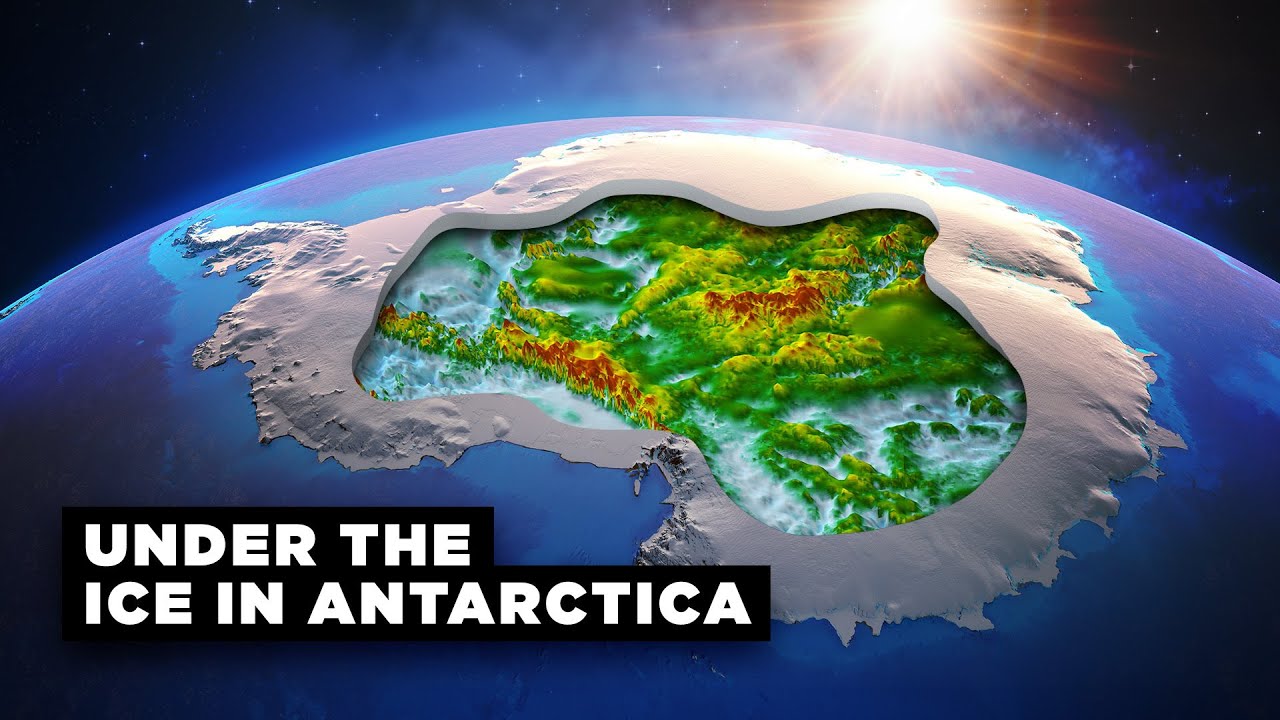
[Music] in 1964 a team of Russian researchers led by Andre kitza from Moscow State University conducted a seismic experiment in the eastern part of Antarctica near to the VTO research station they measured the thickness of ice in this region unaware that there was something far more valuable and revolutionary that they were missing right beneath their feet at a depth of 2 and 1/2 miles by 1973 a new expedition of researchers from the US the UK and Denmark ventured to study the same location this time they made an incredible discovery that initially seemed impossible what they found beneath the ice became one of the biggest geographical sensations of the second half of the 20th century they uncovered one of the largest freshwater subglacial lakes on the planet which had been completely isolated from the rest of the world world for millions of years it was named after the VTO station and became the subject of extensive research seeing how the things it might conceal could potentially change our understanding of how and in what kind of conditions life can arise and evolve not only on our planet but potentially on others as well the lake is about 149 M long 31 Mi wide and 2,460 ft deep in size and volume it's not unlike Lake Ontario which lies between the United States and Canada with an area of 7,300 Square mil lake vstar has been completely cut off from direct contact with sunlight wind and surface life its complete isolation has lasted Millions of years the water temperature in the lake reaches about 10° C indicating that the lake is heated by geothermal sources likely forming a network with other subglacial lakes and creating a separate ecosystem that had existed alongside the surface ecosystem of Earth for millions of years moreover the oxygen content in Lake foso water is 50 times higher than in regular fresh water and although the pressure created by the ice around 300 atmospheres is immense it doesn't rule out the possibility of Life existing there another remarkable feature of the lake is its dome-shaped air cavity which Rises several hundred fet above the lake soon after this astonishing Discovery drilling began in 1989 only 23 years later on February the 5th 2012 at a depth of 12365 Ft scientists reached the surface of the subglacial lake the subsequent analysis of samples retrieved from the lake suggests that Lake VTO might host a unique ecosystem surviving on chemicals from rocks rather than sunlight after studying the water samples scientists announced the discovery of a previously unknown type of organism these organisms are believed to derive energy from minerals in the lake and the underlying bedrock in addition scientists discovered bacteria that are parasites of fish leading researchers to speculate to this day that this may indicate the presence of unknown complex life forms the samples also contained psychrophiles organisms that live in conditions of extreme cold and thermophiles which thrive in warm conditions suggesting the presence of hydrothermal vents deep in the lake but what if we told you that the discovery of bacteria beneath miles of ice on our planet suggests that life could also exist on other planets even within our solar system we can assure you these hypotheses are far from baseless such perfectly isolated Lakes like VTO may exist not only on Earth but also on other planets and even moons in the solar system for example Jupiter Moon Europa has an outer layer composed of an icy crust believed to be 6 to 18 Mi thick with a liquid ocean tucked away underneath scientists particularly astrobiologists believe that the conditions there might not be so different from those found in lake vostock similar subglacial Lakes could also exist on Saturn's moons and even at the poles of Mars The Incredible phenomenon of Lake vstar offers hope for the discovery of possibly even complex life forms of underwater life within our solar system today we know of 150 large subglacial lakes in Antarctica and these are not only the potential homes for Unique life forms on this white continent let's not forget about volcanoes specifically the largest active volcano on Earth located in the heart of Antarctica Mount arabus standing at 12,440 FT it remained active for about 1. 3 million years and may help provide evidence of a hidden world that we can only imagine Mount arabus features a complex system of steam carved Ice Caves these caves were studied during extensive research conducted by the Australian National University scientists discovered that volcanic steam melts passages within the caves while traveling through open gaps creating a unique system conducive to life the temperature inside these caves can reach 25° C it's hard to imagine that in the heart of Antarctica with its extremely cold conditions there can be a place where you could comfortably stand in just a t-shirt and shorts DNA analysis of the soil samples from these caves revealed evidence of organisms being present including algae mosses and small invertebrate these findings offer a tantalizing glimpse of what might lie beneath the ice in Antarctic researchers don't rule out the possibility that these organisms could include new species of animals and plants despite the fact that there are only two active volcanoes on the continent including arabus Antarctica is dotted with fummer rals volcanic vents that release gases and vapor into the air these could also create similar steam tunnels where previously unseen and unknown life forms may exist over the course of research aimed at studying Antarctica's sub ice environments another unique Discovery was made by accident triggered by the detection of a strange gravitational [Music] anomaly back in the 1950s French and American scientists conducting comprehensive geological studies in the eastern part of Antarctica in the so-called Wilks land region recorded a positive gravitational anomaly this anomaly manifested as a regular gravitational strength in certain areas gravity in these spots was slightly stronger which could indicate the presence of dense structures beneath the ice responsible for the increased gravitational force at that time the area of this anomaly was outlined surprising everyone with its shape and size a circle with a diameter of 150 Mi this gravitational anomaly was strikingly similar to those observed near large meteorite craters as a result scientists hypothesized that buried beneath the massive Antarctic eye sheets might lie the largest asteroid crater on Earth in 2002 NASA satellites studying Earth's gravitational field as part of the Great program received data about changes in Earth's gravitational field in the wils land region according to refined calculations this anomaly was a staggering 300 M in diameter the approxim age of this gigantic crater is estimated to be about 250 million years suggesting that this asteroid impact might have triggered the peran mass extinction which occurred around the same time and remained the largest Extinction event in Earth's history wiping out 96% of all marine species and 73% of terrestrial vertebrates the wils land crater is so enormous it's almost three times the size of the chicks suub crater which wiped out the dinosaurs 66 million years ago the asteroid that crashed into Earth back then was 6. 2 mi in diameter whereas The Wil impactor is estimated to have been 5 to six times larger with a diameter of 30 to 37 Mi there are alternative explanations for the formation of this giant ring structure such as large scale volcanic activity however scientists lean more towards the asteroid hypothesis due to the greater amount of supporting evidence but don't let the idea take hold that everything worthy of your interest on this white ice Laden continent must lie beneath massive ice sheets something extraordinary is happening in Antarctica as we speak the world's largest iceberg known as a23a is on the move this giant Iceberg first appear appeared in 1986 breaking off from the edge of the filer Ron ey shelf in the western part of Antarctica however initially it didn't move very far grounding itself on the seabed in the central wed sea it remained stationary for about 30 years it only resumed its journey in 2020 and it's now located near the South ory Islands the iceberg covers an area of approximately 1,610 squ mil larger than the combined area of five New York cities or equivalent to the combined size of Moscow and London the average thickness of the iceberg is around 920 ft and it weighs about a trillion tons it's hard to Envision these dimensions and volumes for reference the infamous iceberg that caused the Titanic sinking in 1912 was 2 million times lighter than a23a according to senior scientists from the University College London over the past decade they've observed a steady decrease in the icebergs thickness it's been slimming down by 8 ft per year however this is not surprising as the water temperature around the iceberg has been steadily increasing although scientists cannot yet predict exactly how long a23a will survive they're confident that it will largely depend on its Future Path warmer air temperatures are expected to create pools of melt water on the iceberg surface which will then flow down creating cracks and leading to its eventual disintegration icebergs like a23a falling apart serve as a reminder of the serious threats hidden within Antarctica's ice masses one of these threats rightfully considered the most dangerous the Thwaites Glacier also known as the Doomsday Glacier and it's earned that name for a good reason thit glacia plays a key role in the stability of the West antarctic ice sheet and scientists believe if it melts it could have catastrophic irreversible consequences and trust us the scale of this problem is immense the glasser's outlet area measures 75 M along the coastline making it the record holder for the widest Glacier on the planet it flows into Pine Island Bay in the amundsen sea east of the dormant Mount Murphy the Doomsday Glacier spans an area of 46,000 Square mil larger than the State of Florida it also has a greater area than England Wales and Northern irland combined its depth at the base ranges from 2,600 to 4,000 ft next to it even the massive a23a Iceberg would seem tiny but what's caused the instability of this Glacier and its rapid melting in 2014 the University of Washington allocated $50 million for research to determine the cause of the glacier's melting and now we know a bit more until recently the melting of thit's glacia was attributed to human activity and the global warming associated with it although global warming has played its part the primary cause lies elsewhere thit's Glacier is being heated From The Underground beneath the glacia they've discovered geothermal activity Hot Springs this suggests there may be volcanic activity Brewing under the glacier since geothermal sources are always linked to volcanoes and that is very bad news for us in addition to geothermal activity seawater is also melting the glacier from within seawater enters the glacier's base accumulates and moves through the natural channels or pools within its cavities the sea water penetrates miles deep into the glacier and then in accordance with the 12-hour tidal cycle moves back out as the ice melts fresh water is flushed away and replaced with warmer sea water over the last 30 years the glacier's ice loss has doubled today thit's Glacier contributes to 50 billion tons of ice to the ocean annually nearly 80% of icebergs floating in the southern reaches of the world's oceans are fragments of THS this ice loss currently accounts for around 4% of the total Global sea level rise and on a planetary scale that's a significant amount the glacier continues to move steadily at a speed of 1.
2 mph if that doesn't sound alarming consider this in January 2019 NASA discovered an underwater cavity beneath the glacia with an area 2/3 the size of Manhattan this cavity is about 1,000 ft tall and likely Accel accelerates the glacier's disintegration what would happen if th's Glacier collapses entirely well the predictions are far from reassuring Global sea levels could Rise by 25 in this would trigger a chain reaction of dire consequences sea levels could rise even further by as much as 10 ft in case thit pulls neighboring glaciers with it this would lead to the flooding of coastal regions around the world recognizing these alarming Stakes the UK and the US established a joint International project in 2018 called the international thights glacia collaboration itgc to study the glacia and monitor its changes that said there's no need to panic just yet it'll take several hundred years for the glacier to dissipate completely we won't live to see the full extent of sea level rise and over such a long period Humanity will likely find a way to counteract or adapt to the changes currently as you watch this video thousands of scientists and researchers are breathing in the cold Antarctic air working tirelessly to gather new data about this icy continent their efforts are purely scientific and for good [Music] reason as early as 1959 in Washington 12 countries whose scientists were actively conducting research in Antarctica signed an international treaty that agreed on complete demilitarization of the continent and its use exclusively for peaceful scientific purposes this treaty is set to expire in 2048 however even before it was signed seven different countries had laid eight territorial claims in Antarctica including the United Kingdom France Argentina Chile Australia Norway and New Zealand most of these territorial claims resemble pie-shaped sectors extending from the north to the South between the Antarctic Circle and the South Pole collectively covering more than 80% of the white continent even Nazi Germany long before this became mainstream had laid claim to a large strip of land which they named new swabia these territorial claims on a continent 98% of which is covered in ice might seem strange but you shouldn't rush to conclusions in addition to things being hidden underneath Antarctica that draw the attention of scientists there's also something that pequs the interest of political leaders earlier this year Russia discovered vast reserves of oil and gas in Antarctica most of which are concentrated in the Ross sea region claimed by the United Kingdom the discovered reserves contain an astonishing 511 billion barrels of oil this is about 10 times the amount produced in the North Sea over the past 50 50 years it's almost double the total reserves of Saudi Arabia which ranks second after Venezuela in oil Reserves at $70 per barrel the oil reserves beneath Antarctica are valued at $ 35. 7 trillion this is greater than the GDP of China or the combined gdps of the US and Russia for 2023 furthermore it's been revealed that in addition to oil and gas Antarctica also contains deposits of oil iron Gold Silver and many other valuable minerals in light of these discoveries territorial claims by various countries are only expected to intensify attempts to claim territory on the white continent have sometimes involved strange and ambiguous methods Argentina in pursuit of its goal thought that this difficult matter could be helped by a pregnant woman in 1977 a woman was sent to the Argentinian scientific base with the ironic name esparanza which translates as hope a few months later a baby boy Amo Marcos Palmer was born there becoming the first known person born on the icy continent at the time the Antarctic treaty already guaranteed International governance over the territory but Argentina hoped that their citizens born in Antarctica would make its claims more legitimate between 1978 and 1983 eight Argentinian children were born in Antarctica but ultimately this had no impact nevertheless the Antarctic treaty remains in force and will continue to do so for another 24 years as for what happens after it expires we can only theorize Antarctica Remains the most mysterious and fascinating of all the continents on earth it's amazing how such a cold Icy world can hide so much important and valuable information for understanding the nature of our planet but Antarctica is not the only place on Earth that holds many Mysteries and unexplained phenomena most of us snow Antarctica is a frozen tundra with places so C that no human could survive without shelter but global warming can affect things fast and transform entire continents those of you who are familiar with Earth's history know that during the time of the dinosaurs Antarctica was a huge green forest and now the icy continent is turning back into a green one because of global warming it is a favorable environment for moss and algae the process has already started in some places the ice isn't just green but also red orange or Brown These are multicolor colored mosses which spread fast the site is stunning but green plants reflect less sunlight than a white surface and their spread accelerates the melting of ice so what does it mean for us recently researchers collected Limpet shells and penguin Bones from the coastal strip and determined their age this tells scientists when the ice disappeared from the beaches and it turned out that the two major glaciers in Antarctica thit and Pine Island are Now Melting faster than they did in the past 5,500 years because of this sea levels are rising every year and in a 100 years they will rise by 3. 4 m in 2020 NASA scientists have discovered that Glaciers are disappearing in other areas of Antarctica at an alarming rate over the past 25 years Antarctica has lost twice as much ice as was previously thought especially floating ice shelves these ice shelves hold back melting ice keeping it from flowing into the ocean since 1997 about 12 trillion tons of ice has melted all indications are that Antarctica is going back in time to when it was still green paleontologists say that the continent was Ice free during the crti ious period 145 to 66 million years ago back then the ocean could heat up to 30° and in general the temperature on the planet was higher than it is now most likely the Earth was heated by numerous volcanic eruptions volcanoes were spewing lava that was deadly to all life and causing devastating fires at times the entire region was on fire turning into a desolate burned out area but in spite of everything life thrived Antarctica was home to the ancestors of mammals reptiles and the first birds and dinosaurs in 1986 paleontologists discovered the remains of an osaurus on James Ross Island the bodies of these giant lizards about the size of an elephant were protected by a heavy and thick armor made up of massive cones and bone plates their tail had a thickening a kind of club that easily broke the bones of an enemy when struck later on the island of Vega scientists found the remains of hydrosaurus they reached a length of 7.
6 M and a weight of about 8 tons they had wide duck beak-like noses and hoof-like claws on their front legs they had a hollow helmet on their heads according to one version it contained combustible gas like a dragon the dinosaur rejected it in case of danger somehow igniting it as it exited its nostrils but so far this hypothesis hasn't been confirmed in any case both creatures were herbivorous and used their abilities for protection only at the same time there was also enough ruthless predators in Antarctica one of them the mosasaurs also lived on Ross Island their remains have been identified among tons of ancient lizard bones recently discovered by paleontologists their razor sharp teeth and powerful jaws allowed these monsters to tear their prey into pieces they preferred marine reptiles especially Turtles and plesiosaurs they even ate their own kind meanwhile Earth grew colder and ice covered Antarctica for millions of years but 56 million years ago during the EOS Epoch spring came to the continent again the glaciers of Antarctica were once again replaced by forests they contained palm-like araria trees conifers and Southern beaches the thickets were inhabited by ancient relatives of today's marsupial armadillos and antas on Seymour Island paleontologists found the remains of a creature that resembled both a horse and a camel and more recently they found the bones of unusual Birds pagodes these large creatures were armed with sharp bone spikes protruding from the soike Jaws such body structure helped the birds catch squid and fish the earen era inhabitants of Antarctica probably went extinct at the end of the epoch then the planet cooled again and the continent was covered with ice it now averages about 1. 6 km thick it would seem no creature could survive under such icy mountains but in recent decades scientists have found something on the continent that changes the way we think about Antarctica beneath the ice they've discovered multiple Canyons rivers and lakes there are about 400 Lakes alone one huge Lake the size of a modern city was recently found using an airplane equipped with GPR magnetometers and some other tools the lake about 200 M deep was named Snow Eagle it's 48 km long and more than 15 km wide this is about the same size as the famous Flathead Lake in Montana researchers are now studying the inhabitants of such Lakes it's believed that they have been living under the ice for millions of years Ukrainian scientist Andre utki found a leech of unknown species which has no equal among congeners in a calm State this terrifying creature is 35 cm long but after sucking the blood of fish it can increase three times in size another Discovery was recently made by German researchers by drilling a hole 740 M deep into the Ross Glacier a remote controlled robot submarine transmitted images of microbes crustations and strange fish they have incredibly huge eyes probably to better see things in the dark some of them are orange others are black and the largest fish found has translucent skin through which its internal organs could be seen But if the water temperature in the subglacial waters rises even a few degrees these creatures may not survive and our planet would be in for a nightmare if Antarctica melts sea levels would rise about 70 M flooding coastal cities the map by an international team of scientists shows in detail what areas would be affected here are just a few examples the Atlantic coast will disappear along with Florida and the Gulf Coast in California the hills of San Francisco will become a group of islands and the Central Valley will become a giant Bay millions of people will be forced to leave their Homeland in search of another home but will the new world have enough food and water for everyone Antarctica's ice makes up 70% of the world's fresh water supply if it mixes with Salty Sea Water it will become undrinkable the circulation of ocean currents which affects atmospheric processes and the tectonic movement of the plates beneath the Earth would change then Fierce storms huge tsunamis and ceaseless volcanic eruptions will become the new Norm some fertile areas will become deserts while other places will be regularly flooded it would be impossible to grow good crops or sustain large herds of animals under such conditions there'll be less food to eat and people will start fighting over a piece of bread the Outburst of epidemics will be another issue small poox Bubonic plague and Anthrax will spread across the world some of these deadly germs will be alive they've already shown themselves in 2016 when Anthrax broke out in yamamo for the first time in 70 years the epidemic took thousands of lives of reindeer and infected dozens of people it's believed it was caused by an activation of microbes due to the thawing of permafrost which accelerated during the summer heat after all everything may not be so tragic [Music] Antarctica which is a third larger than Europe will prove to be livable so the refugees can occupy this territory even when the ice clears the continent there will still be plenty of space the Antarctic Peninsula alone covers 522,000 Square kilm that's more than twice the size of Great Britain indeed some people will find shelter and will earn a living for example by mining valuable minerals experts suggest that the continent is rich in deposits of oil gas silver uranium Platinum copper and iron but it is still the South Pole for half a year there will be no sunshine researchers believe that the area will be covered with cold swamps and lakes as in some regions of Canada only mosses and lens would survive there and as for the livestock only the hardiest species of Musk Oxen would survive so productive farming and Cattle breing wouldn't be possible so we better hope Antarctica stays White And scientists find ways to stop the glaciers from melting the scientific Community has considered artificially removing greenhouse gases from the atmosphere or limiting the amount of sunlight but so far this seems too risky failure to intervene in the planet's complex climate system could lead to more problems and the process could no longer be reversed a team of scientists at the Massachusetts Institute of Technology has an idea to create a kind of protective raft of thin bubble-like membranes in Space over Antarctica it will reflect or absorb part of the sunlight directed at Earth the raft with a width of thousands of kilometers is planned to be placed near the first point of lrange these are areas where the gravity of two massive objects the Sun and the Earth or the Earth and the moon holds the third object in a stable position calculations have shown that the reduction in the amount of light will be 1. 5% this is enough to overcome the effects of global warming in addition if the raft does not perform its functions or starts to cause harm it can simply be dismantled although this is still just an idea and the project itself is still under [Music] development scientists have continuously surveyed much of the Antarctic surface since the early 20th century and have kept track of all the continent's ice shelves and their movements in one such ice shelf known as the brunt ice shelf they've recently discovered that an iceberg twice the size of New York City is poised to break away a recent NASA release says that a crack has been growing at a rate of about 2.
5 M or 4 km per year since 2012 the crack started from the southern part of the brunt ey shelf and is steadily moving northwards and can soon meet with another growing Chasm called the Halloween crack that was discovered in October 2016 growing Eastward from the McDonald's ice rumes in the northern part of the ice shelf although the Antarctica's ice shelves are in constant motion Rising With The Tides splitting off icebergs at its edges and growing again as Inland glaciers feed it but this type of anomaly is not regular at all for the brunt ey shelf as there has been next to no activity within the I shelf the glassier in question is around 1,700 km or about 656 s Mi making it the fifth largest iceberg in the world that's currently being tracked by the National Ice Center in Suitland Maryland this news has sparked various safety concerns for scientists in the area especially ones in the British Antarctic surveys hle station what exactly is driving these massive cracks to form in Antarctica's ice shelves and what would be the effect on the ice sheet itself if this crack led to a complete breakage let's look at a similar situation that occurred in the last few years a similar giant crack was discovered in the Lassen sea ice shelf in 2016 it was the fourth largest ice shelf in Antarctica at the time just imagine it had an area of 17,100 mil or 44,00 km which is an area larger than the state of California but this crack was about to break off an iceberg with the length of 68 M or 110 km a width of more than 300 ft or 91 M and a depth of, 1600 ft or 500 M more mysteriously by mid 2017 in less than a year the rift had extended another over 20 M or 32 km to a point where only 2 m or 3 km of unbroken ice remained and breaking was an absolute certainty and in mid July the iceberg finally broke off from the Lassen sea ice shelf taking away almost 13% of the ice shelf with itself and as of April 2020 scientists reported a68 has broken up into three pieces and is floating northwards towards open waterers when it broke the iceberg was one of the largest ever twice the size of Luxembourg and weighed in at almost 1 million tons what's driving these huge breakages in Antarctica and is Antarctica safe for now scientists are still trying to figure out this anomaly smaller carvings of icebergs are regular occurrences all over the shores of the continent these carvings are very much natural occurrences as losing icebergs to the ocean is how these ice sheets maintain equilibrium balancing the inputs and outputs from Ice streams in and around them however such large carvings from major ice shelves are not consistent with the natural pattern at all such large carvings leave the parent eye shelves unstable and more susceptible to breakages there can be various reasons for such phenomenon one definite reason for such occurrences is the accelerated climate change due to the rise of greenhouse gases over the last few centuries since the Industrial Revolution the concentration of carbon dioxide has been rising exponentially at a rate of about 0. 17% per year this change is primarily due to the combustion of fossil fuels but also to large-scale Tropical deforestation which depletes the climate systems capacity for photosynthesis climate temperature changes depend on the variations in the amount of carbon dioxide in the atmosphere carbon dioxide controls temperature because the carbon dioxide molecules in the air absorb infrared radiation the carbon dioxide and other gases in the atmosphere are virtually transparent to the visible radiation that delivers the sun's energy to the Earth but the Earth in turn radiates much of the energy in the invisible in infed region of the spectrum this radiation is easily absorbed by carbon dioxide when the carbon dioxide concentration is sufficiently high even its weaker absorption bands become effective and a greater amount of infrared radiation is absorbed as it prevents its Escape into space the trapped radiation warms up the atmosphere Antarctica is experienced air temperature increases of 3° C in the Antarctic Peninsula it's five times the mean rate of global warming is reported by the intergovernmental panel on climate change over the past 50 years the west coast of the Antarctic Peninsula has been one of the most rapidly warming parts of the planet this warming is not only restricted to land but also can be noted in the ocean surrounding it upper ocean temperatures to the west of the Antarctic Peninsula have increased over 1° C since 1955 thus ice shelves in Western Antarctica are particularly susceptible to warming oceans as relative ly warmer water eats away at the eyce shelves floating over the ocean since 1992 it's averaged a net loss of 65 million metric tons of ice a year one of the defining characteristics of West Antarctica is that the majority of the IET is grounded on a bed that lies below sea level when the ice sheet is attached to a bed below sea level ocean currents can deliver warm water to its grounding lines the location where the eye sheet attaches to the bed in some spots the bed lies more than a mile and a half below sea level when these grounding lines start to retreat ocean water can infiltrate between the ice and the bed and cause the ice sheet to float off its grounding line scientists recognized that this is the first step in a potential Chain Reaction ocean heat eats away at the ice the grounding line Retreats Inland and Ice shelves lose mass and when ice shelves lose Mass they lose the ability to hold back the flow of Inland glaciers meaning those glassiers can accelerate and thin out as a result of the acceleration this thinning only leads to more grounding line Retreat more acceleration and more thinning in all this push and pull sudden fractures can occur leading to massive breakages of icebergs like the one currently taking place in the brunt ice shelf once these icebergs break away from its parent Mass it becomes more exposed to warmer ocean currents and melts faster and as more ice flows into the oce every year it leads to an eventual rise in global sea levels this is the biggest fear among scientists with climate change for example the amston sea region of West Antarctica which is the most vulnerable to the rise in ocean temperature contains enough ice to raise Global sea levels by 4 ft 1.