Subtitles by Salesh. It is there all the houses in the neighbourhood. No, I am not talking about Tablemat.
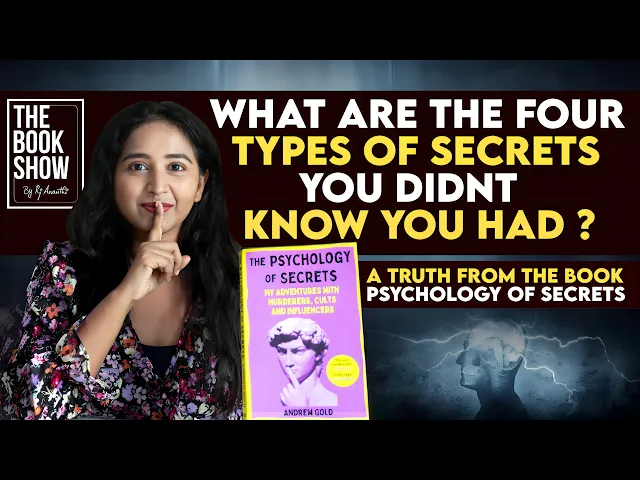
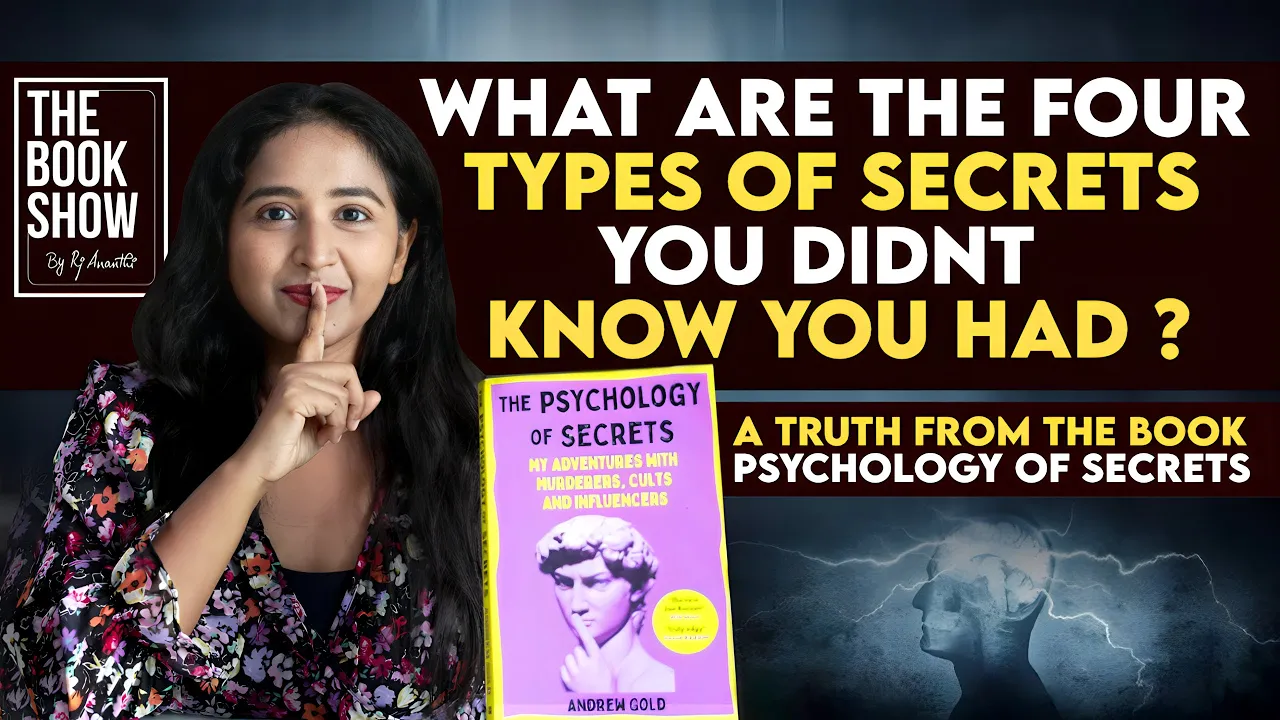
It is Secrets. It is said that we all have different types of secrets. Andrew Gold has said the same in his book The Psychology of Secrets.
We all have a lot of secrets within us. But a few of those secrets don't affect our mind and our body. We don't care about that.
But a few secrets kill us from within. We find it difficult to open up about those secrets. If we hold on to such secrets for a long time.
. . it takes a toll on our health.
The different types of secrets are. . .
1. Dark Secrets. We project a certain identity of ourselves to this world.
We project an identity because we want people to see us and think about us in a certain way. If we have done or if we are doing something against this identity. .
. That is a dark secret. Let's consider a person of great authority in school.
If the school is in their control then the well being of children coming to school is also in their control. But if that person of authority is abusing somebody in school. .
. or if the person of authority does something which puts the children's safety at risk. .
. It is that person's darkest secret. Suppose a pedophile is responsible for the safety of the kid.
. . Then that is their dark secret.
There was a problem in Berlin at a certain point of time. . .
There were many pedophiles. And there were a lot of homeless children. A psychiatrist who was supposed to be intelligent had suggested.
. . The pedophile created problems.
Meanwhile the children were homeless. Why not unite the pedophiles and the children? So, the children grew up in the custody of the pedophiles.
The children were abused by their custodians. But that isn't a secret anymore. It came out in 2006.
But with regard to any person. . .
if there is a hole in their identity which is against their actions. . .
it will become their darkest secret. It is harmful and opening up about the secret might lead to dangerous repercussions. This is the darkest secret.
2. Strategic Secrets. Let's consider a spy.
They have a hidden goal. So, they hide certain things. They have to maintain the secret to achieve their goals.
It may be for a few days or years or for some time. Spy is just an example. It may be a real-life person.
We have to hide something for a certain period of time. or we have to hide something from a person. If we open up about it, what we want might not happen.
This might be good or bad. It works both ways. This is a strategic secret.
3. Inside Secrets. This is a very curious thing.
I talk about myself in many podcasts and videos. But only my friends and family know certain things about me. That gives me a tribe.
My tribe knows about me. But I am showing everything else to the outside world. But my personal things and close secrets.
. . I share those only with my tribe.
I have a strong bond with these people. So this is an inside secret. .
. Just like an inside joke. It may be something known only to your friends or the people in your company.
. . or it may be something known only to a country.
So, this is known as an inside secret. Then we have free secrets. When I spill out a gossip about a hero or heroine there won't be any loss for me.
But it is very interesting to share. Sharing secrets regarding a third person to you or to another person is known as a free secret. Because there is no involvement for me.
I just got to know. It is like gossip. We know something about someone But we are not able to keep it to ourselves.
So, we share it with another person. This is known as free secrets. There are other categories of secrets which wasn't interesting for me.
They might be interesting for you. Suppose I am interviewing a celebrity. I might be having a hidden agenda for interviewing the celebrity.
But for the viewers, it is just an interview. Suppose the celebrity wants to put forth a narrative to the audience. .
. Then I will frame my questions accordingly. I am actually more aligned with that celebrity and not with the audience.
I am loyal to the celebrity and not to the audience. So, I might conduct an interview in favour of the celebrity and present it to you all. It might look organic but I might be biased.
This was very common among journalists. Celebrity had only media to help them sell a narrative. Certain journalists were told to ask certain questions and talk about certain things.
. . to project a certain image.
It is known as chill. Then we have a spotter. They were people who watched movies, sports or read books in order to spot certain things and have a critical take on that.
The author has written about many types of secrets. Certain questions have been explored. Why do we tell certain secrets to certain people?
Most of us open up about our secrets only to one type of people. We don't tell secrets to soft and compassionate people who are willing to listen. The people who are assertive and can manage things and be compassionate at the same time.
. . We open up about our secrets to such people.
Many open up about their secrets to such people. They have to be compassionate and not polite. They have to be assertive.
If they can manage their own secrets and the secrets of others. . .
We can open up to them. The author had written about an interesting character. Suppose a person is told that he or she is going to die in three months.
. . Then that character is hired for the sick person to open up about their secret.
The secrets should be revealed by the character to the family only at the sick person's funeral That person's job was to attend funerals and reveal the secrets of dead people. Suppose the person who tells the secret is very polite. .
. That person might not want to spoil the lives of others by spilling the secrets of the dead person. So, that person might think hard and withhold the secret.
So, secrets are often not told to such a person. Secrets are told to people who can understand it and be assertive about it. The secret keeper attends many funerals and tells secrets about the dead person.
Secrets are important to humans. We are very conscious about whom our secrets should and should not reach even after our death. What if our parents check our phones after our death?
What if our family members check our system? If you had thought about this, you are not alone. All of us are like that.
Why do we keep secrets? How do those secrets affect us? Whom do we tell our secrets?
Why do others tell their secrets to us? What kind of secrets affect our body? What is the difference between secrets and privacy?
What is the difference between a secret and a lie? The answers to all of these questions are there in this book, You can buy and read this book by clicking the link in the description. If you have questions even after reading just like me.
. . Let's talk to the author directly.
Andrew Gold. . .
Are you ready for an interview?