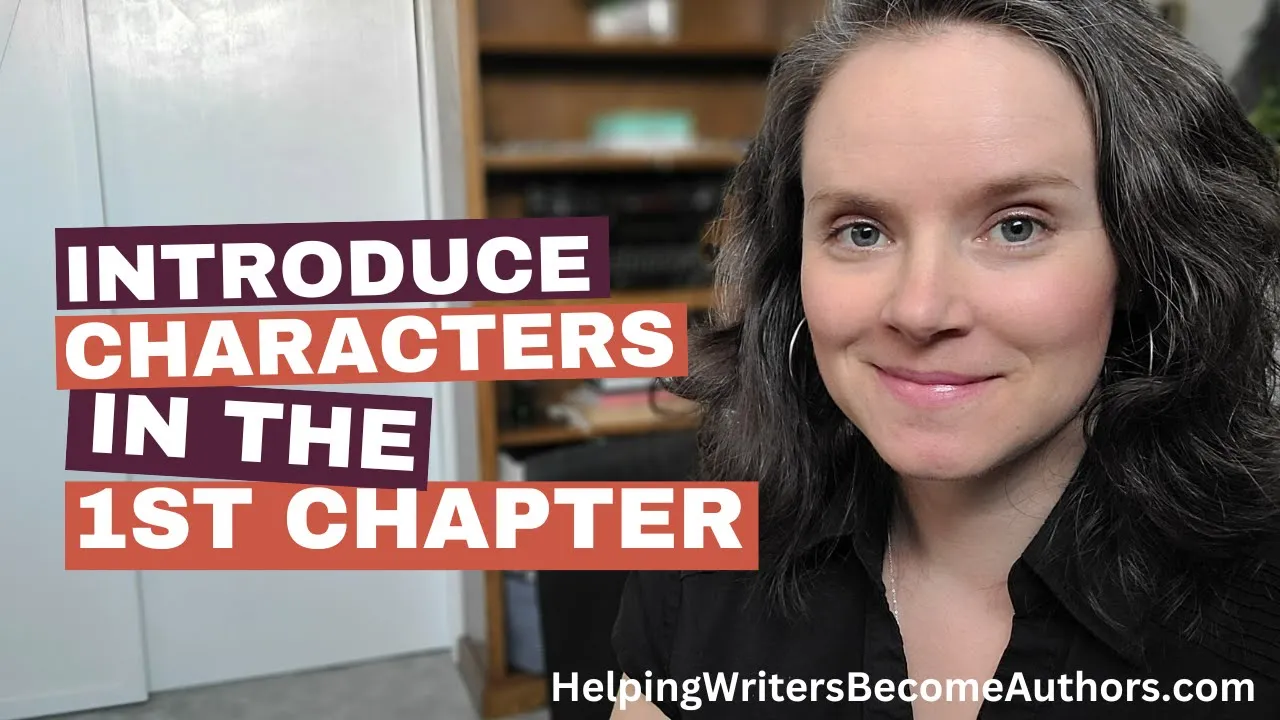
hello everyone and welcome to this month's video I am C wiland I run the website helping writers become authors and today we're going to be talking about beginnings and specifically about how to introduce your characters in the beginning of your story um how to hook readers with your character and how to set up all the important parts of your character's development and Arc that will happen in the entire rest of the story uh you may be watching this on YouTube or you may be listening to this um as a podcast as Audio Only um so
if you prefer one or the other of those formats you can find those um on my website at helping writers become authors if you're on YouTube it's also linked down below and if you'd prefer a transcript if you'd rather read what I'm going to tell you then you can also find that on my website at helping writers beome author.com so this video was actually inspired by a question I received a couple of questions that I received about endings and I'm going to talk about that in a future video but first I thought I'd kind of
bookend it by introducing some important considerations about how to begin your story because ultimately a lot of problems that we may have with the ending of our story really comes down to maybe some things that we didn't quite set up right in the beginning if you can get the beginning of your story right then generally speaking the rest of the story will work out pretty well by the time you get to the ending everything will fit together and make sense however part of knowing how to begin your story often has to do with knowing how
you want to end your story and not all of us know that um sometimes we we'll be better off figuring out how we want the story to end in an outline or just you know figuring it out in our heads before we sit down to write it um in which case that can answer a lot of questions about what would be the best choices for the beginning if that's not how you work or this just not how this particular story came to you then at the very least once you do reach the end in your
first draft you'll want to kind of circle back to the beginning and make sure that you've considered some of the things we're going to talk about in um this video and how they tie in with the ending that you have created whether it sets it up the way you want it to so I'm actually going to be talking about Beginnings in two different videos um we'll talk about the um we'll do the next one in about a month or so and this week we're going to talk about considerations for character in beginning in the next
video we'll talk about considerations for plot and creating um a structural hook for your story and things like that because the truth is Beginnings are so complex there's so much that you have to kind of think about and juggle in the beginning of a story because not only is it a scene in its own right and not only does it carry this momentous burden of needing to hook readers in and convince them that they want to invest in your story and keep reading but you also have to lay the groundwork for everything that follows you
also have to create this this perfectly orchestrated setup that then allows The Dominoes in the rest of your story to knock into each other in a perfect line so there's a lot to think about I always say that the beginning is the hardest part of the story maybe that's just me but considering how complex it is and just how many moving Parts you have to juggle and how much pressure there is on getting it right because if you don't the rest of the story can be pretty great but maybe nobody's going to read it it's
just a lot so there's there's a lot of ground to cover I'm certainly not going to be able to cover all of it in this video or the next video so as always I will leave lots of resources Down Below on YouTube and linked on my website at helping writers become author.com the first thing to think about when you are trying to figure out how to introduce characters and begin your story is to think about how you want to use two particular techniques and those are the first one is the characteristic moment now not all
stories will put their primary focus on character in the beginning however for my money and in I'm going to say 90% of stories beginning with character is going to be your best bet and this is because readers are there for the characters characters at the very least are the avatars of the action that is going to unfold in the story and we want to be able to relate to them and have somebody that we maybe not care about right away but that we're interested in and we think this is going to be someone is's going
to keep my attention as I continue with this story whether I'm watching a toour movie or you know investing maybe 10 12 hours in reading a novel so my recommendation is whenever possible open with a strong emphasis on character and specifically if it's possible open with your protagonist now this is something that isn't always possible in all stories but if you can open with your protagonist particularly in a novel it gives you the opportunity to hook readers in on a more personal and relational level before you get into um the action which obviously in a
written story and narrative fiction has to be explained right there's more it's it's not the same experience as when you're in a movie and it's very Visual and that in itself can often be a great hook and also keep in mind when you have someone who's deciding if they want to read a book they're not as captive an audience as they are when they've started a movie particularly if they're in a movie theater like they've paid for it they're sitting there they're going to watch watch it and so there is more of an opportunity for
a leisurely unfolding of the first couple of scenes and the introduction of the character in a movie versus a book whereas in a book you know readers are skimming they're flipping through they're deciding you know is this worth my time am I going to be able to you know ground and get present and actually pay attention to this book is it going to grab my attention and so you need to figure out the best way to do that in my opinion dialogue is one of the single best ways dialogue necessarily indicates that there are characters
on screen so beginning with your protagonist this person who presumably is the most interesting person in your story um and is the person who should be able to create the impetus and the momentum to convince readers to follow them throughout the entire plot that should in a story that should be your single greatest hook therefore beginning with your protagonist kind of it's two birds with one stone right you're introducing this very important character and the situations around them but also ideally it's like a fantastic hook and it's what's going to grab readers and pull them
in and we'll be talking more about the structural hook in the next video that I'm going to do so if you're beginning your story with your protagonist the characteristic moment is really that introduction right so just generally speaking a characteristic moment is pretty much the first dramatized scene in which your protagonist takes part and ideally what we're trying to accom accomplish in a characteristic moment is something that really shows readers who this person is right it's demonstrating key aspects of their personality and more specifically in this opening scene it's demonstrating why they're interesting why we
are going to find this person entertaining and want to follow them throughout the story now I do think it's really important and this is true of everything that we're going to talk about in this video but a lot of times when writers hear like a list of the things you want to include in your beginning the characteristic moment the hook they start kind of thinking of these arbitrary scenes that would check those boxes that would you know be an interesting scene that introduces the protagonist but often these can kind of feel tacked on like they're
there just to introduce the character they're there just to hook the reader rather than being an integral part of the scene or the chapter and the entire story that follows so it's really important important as you're going through a checklist like this for your story's beginning that you're not just thinking oh this would be a cool scene I'll stick it at the beginning of my story and that'll pull readers into the main story but rather thinking how can I create a characteristic moment or a hook or whatever else that is part of the main story
that you know is that first Domino that leads into the rest of the story but that also dramatizes the key aspects of the character and their personality in their relationships that is actually going to matter and affect the plot that follows and that can be really tricky you know cuz sometimes the first Domino that we you know feel is you know the obvious beginning of the story isn't that exciting it's boring um and we're going to talk about some techniques for that as well in the next video when we get into more of the plot
and narrative stuff but one of the best ways to create a dynamic characteristic moment is to also think about what kind of relationships you can bring into this opening scene now ideally as I say there'll be a relationship between the protagonist and a supporting character that is important to the story right that this scene we're seeing between these two people whatever it is is something that is initiating conflict it's moving the plot it's moving us toward that main conflict that we're introducing in the First Act and that's going to be fully entered into by the
second act so you wanted to be pertinent um but the advantage of bringing in a relationship Dynamic um right in that first scene well really there's many advantages and I think primarily it's just the entertainment value right you've got two people you have the immediate opportunity for dialogue which I like to say that dialogue is the purest form of showing rather than telling because it's literally what's happening it's literally just the words that are coming out of people's mouth you don't have to describe it at all really and so you've got this just this immediacy
you've got immediately one of the most entertaining aspects of any story which is the dialogue which means you have opportunity for conflict you have opportunity for you know just witty confrontation and it's a perfect way to show readers who these characters are right you're showing not telling and allowing just the readers to see how these characters interact with each other how their personality comes out through their words what their default argument tactic is you know just how do they move through a situation and you know within the context of your story this relationship Dynamic that
might come up in your first chapter you know it could be between friends and allies or it could be between you know Frenemies at work it could be cop buddies out on you know their job and it doesn't necessarily have to be the primary relationship within the story obviously in a lot of stories romances for example they don't meet the primary relationship character until later in the story but you want to pick characters and situations that ideally are ones that are going to show up again later in the story or at the very least foreshadow
or mirror situations that will become pertinent and important later on so that's something to think about that's always one of the first things I think about when trying to plan an opening scene is how can I bring in an important relationship character and get the dial going as soon as possible another quick little tip that can also really energize an opening scene is think about how you can keep the characters in motion what can they how can they move and that doesn't mean that they you know have to be in a kung fu fight or
some big action scene right away CU very often that isn't in fact the best choice for um particularly written fiction narrative fiction but if you can impart a sense of movement like maybe they're just walking across the room rather than sitting at a desk or something like that that immediately just creates so much more opportunity to dramatize the world they're in to dramatize the characters to show their personality so always think about how you can keep them moving if at all possible within the context of that opening scene okay so when you are using or
choosing how to use these particular techniques in introducing your characters in the beginning of your story hopefully hooking readers what are the factors that you need to be thinking about to make sure that these end up feeling very intrical to the store cuz again you're not just trying to think of the most entertaining scene you can possibly dream of and stick it at the beginning of your story you're trying to think of the most entertaining scene ever that actually introduces all of the important elements and sets up the story that's to come so it all
feels like it's part of this cohesive hole from a character perspective obviously there are plot considerations as well but from a character perspective what you're thinking about or what you should be thinking about when you're designing this opening scene in this characteristic moment that's going to introduce this character is laying the groundwork for the character Arc that will follow in the story so the foundation of all character arcs is the tension the conflict between one mindset and another between the LIE the character believes which is a limiting perspective about the world that is now becoming
dysfunctional as this Story begins and the theat truth which is the opposite of that and is a more expanded perspective that will allow the character to then operate more functionally within their life and within the purview of the plot so that's the foundation now some in some stories characters will overcome the lie and embrace the truth in other stories they won't so it totally depends on what kind of Arc that you've chosen to tell in your story but either way you want to be able to introduce the character's relationship to the lie and the truth
in the beginning of your story so as you're thinking about what characteristic moment is best to begin your story also think about one that will dramatize your characters either belief in the lie if they're um starting there and presumably arcing into you know belief in the truth or possibly arcing into you know more a more rigorous relationship with the LIE where it gets worse but if they're in a positive change Arc and they begin you know with this limiting perspective with the belief and the LIE then think about ways that you can dramatize that in
the beginning of the story now it doesn't have to be you know fullon some lies are very subtle they're not you know horrible things with people and horrible Lifestyles and you know doing really destructive things to themselves or others but just think about how you can start to show right because this is the beginning of the story this is what kicks it all off what is this tension that that is suddenly being created in this character's life that hasn't been there before that is creating the need for them to evolve out of the limitations of
this lie this mindset into a more expanded and functional and effective Viewpoint that they'll be learning over the course of the story through the um you know the moments and the action and the plot so think about that because that is really what needs to be dramatized within the characteristic moment right cuz you are the point of the characteristic moment is that you're showing readers this is who this person is and at the beginning of your story who this person is is someone who believes the lie and someone who is now finding beginning to find
that ever so slightly uncomfortable right the circumstances of their life are changing to allow this potential for evolving into a more expanded truth and obviously that's the whole Saga of the story and you won't get to that completely until the end but it's also kind of nice depending you know on how deep your character is in the life and if indeed you are telling a positive change Arc to show the potential that the character has for evolving into the truth and again a lot of this comes back down to just kind of this inner tension
between the two right they believe this lie but something feels a little scratchy you know a little itchy onside there's cognitive dissonance where and in that opening scene and if you can emphasize that in that opening scene it's this great opportunity for conflict very pertinent conflict that will build into the need for the external plot conflict that will develop more and more as you get deeper and deeper into the story when you're picking your characteristic moment and trying to come up with this scene that's the best one to introduce your character really think about the
character's relationship to the story's thematic lie and truth and how can you dramatize that how can you bring that out how can you show readers how this lie is affecting the character both how it has been functional up to this point in their life and how it is becoming increasingly dysfunctional and will become more blatantly so where they have to do something about it once they reach the inciting event in the first plot Point later in the First Act and with this inherent within this if this is how you begin your story with this Consciousness
you will also be introducing your story's most important thematic elements so that in itself will help you create a thematic Unity with everything that follows in your story and also ideally a tonal Unity right you're setting a tone for what's going to follow in the story for how your character interacts with this lie so maybe it's maybe it's quite funny you know or maybe it's very serious maybe it's like life and death Stakes or you know maybe it's ironic whatever whatever the tone that you're trying to achieve within your story that is appropriate for how
you're dealing with this character Arc that's what you have the opportunity to really lay the foundation for in the beginning of your story and if you're able to do that it's an amazing way to really create just the sense of cohesion for your entire story you know from the very beginning on there's never a sense that this is like a prologue or just something that's tacked on you know to get the necessary introductions out of the way it feels very real and very pertinent and just plunges readers right into the heart of what you're trying
to tell right from the beginning so one final thing to think about in regards to how you introduce characters in the beginning of your story is the setting so the beginning of the story The First Act symbolically speaking takes place in what I call the normal world so the normal world is in contrast to what's going to be the Adventure World of conflict in the second act and that's true you know no matter what your character is Adventure is even if it's very prosaic and is not you know going on a quest or something like
that it's just um that symbolic contrast between this is the normal world that they have always known up to this point this is all they have known right and ultimately what we're symbolizing is the perspective right it's still that lie the normal World represents the world of the LIE it is a world in which the character has been able to operate with this mindset with this limited mindset because it's an equally limited world and this world you know it can be a literal world you you're telling science fiction or it can just it can be
something really subtle it can be perhaps they actually leave this setting at the first end of the First Act but perhaps it's just something about the setting itself that shifts and that shift could simply be the character's perspective of it but the point and again that's a whole other topic and I will link some resources down below but the main point of considering your normal World in your story's beginning is to think about how you can you know choose a setting for this opening scene and this opening Dynamic with your protagonist that really dramatizes this
the opening situation that they're in in their life um you know where do they find themselves how is it good how is it bad and why is it going to change because that's what's what happens in the story everything changes so you're you're show what you're showing readers here is what's going to change you're showing them the place from which your character is going to Arc and you can't you truly cannot have a powerful character Arc or show a powerful change within a story's plot unless you lay the groundwork and set the foundation for what
is changing what is going to be changed or even destroyed because that lays the groundwork for Stakes it sets the context for why this story needs to happen and also how difficult it inevitably will be for the characters which really you know has the ability to deepen a car a reader's investment in what you're writing about think about ways that you can choose a setting or highlight aspects of your story's main setting that really bring to life your character's dilemma right this this growing tension between this limited perspective and this uh truth that they're going
to be evolving into um I think we see this clearly in dystopian stories which obviously have created this entirely in many ways symbolic to represent um the character's inner Wasteland in a lot of ways and sometimes that changes and sometimes it doesn't depending on what time but type of Arc the character is taking um Hunger Games comes to mind right she completely changes setting into this you know grotesquely corrupt and and glitzy and glamorous uh world in the capital that's a STK contrast to where we see her in the beginning you know in her District
which is you know run down and everybody's kind of starving and so that's a perfect example of how to create a setting and really utilize aspects of it to create characteristic moments to set up the necessity for the plot conflict that will come and to show how your character will interact with it based on their relationship to the story's primary thematic lie and truth so I know that's a lot of information again Beginnings are so complex so I think I do hear from a lot of writers who get very frustrated with their beginnings and feel
like you know they they just can't get it right and I completely relate to this I've never been happy with the beginning I've written ever um but I think just you know give yourself a little Grace there is like so much here writing a good first chapter is an art form unto itself like you can be a master of the all the chapters that come after it and still that first chapter it is it is a tough little nut crack so yeah I think this is just some things to consider again this I'll leave some
resources down below and in the next video um next month we will be talking about some considerations for how to set up the plot in your stories um beginning in first chapter and then after that I will be talking about endings how we can kind of bring that all for a circle and how beginnings and endings are really very linked and that if you can set up one correctly then you have all the tools you need to set up the other correctly so I hope that was useful thank you for watching and if you'd like
to um stay up to date on all the content that I produce you can do that um the best way to do that is by signing up for my mailing list at helping writers become author.com mailinglist and you can do that um if you do that you'll get you'll receive um info on all the posts that I do I do a weekly uh lengthy text post every Monday with lots of information as well as all of the products and books that I put out just all kinds of resources if you're interested in that you can
find all of that they signing up for my mailing list so I hope you will have a good week and happy writing