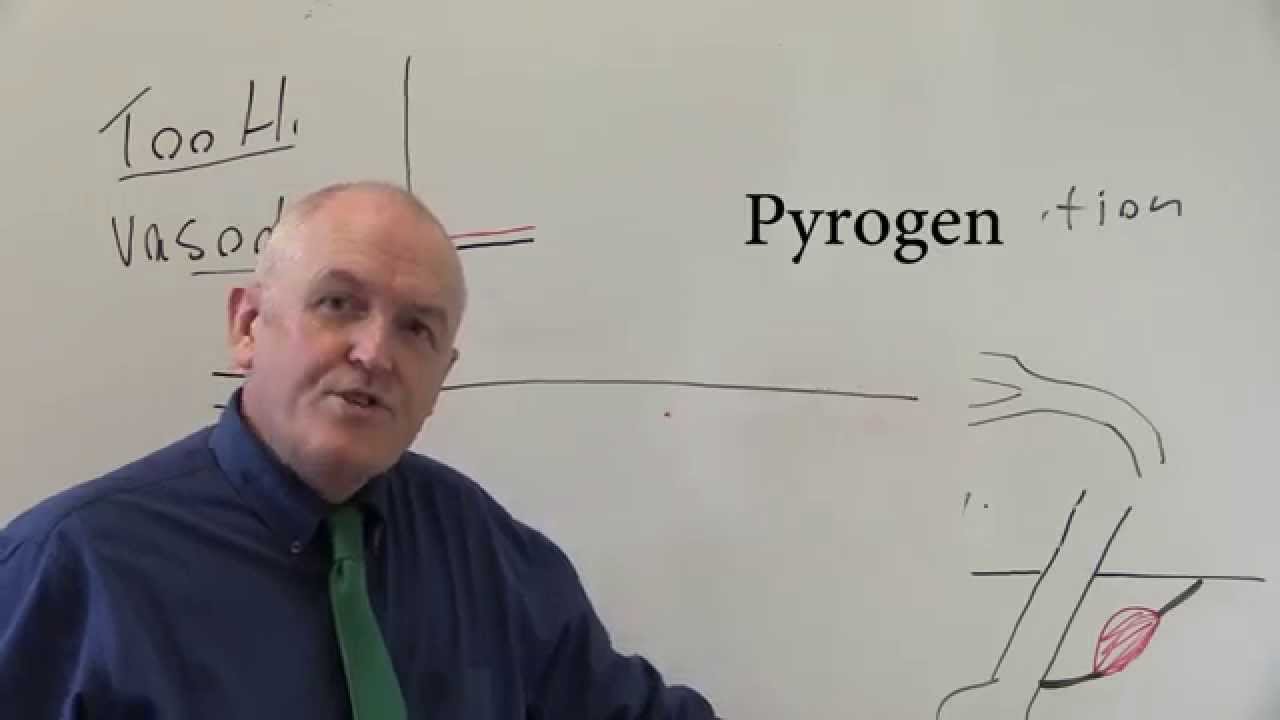
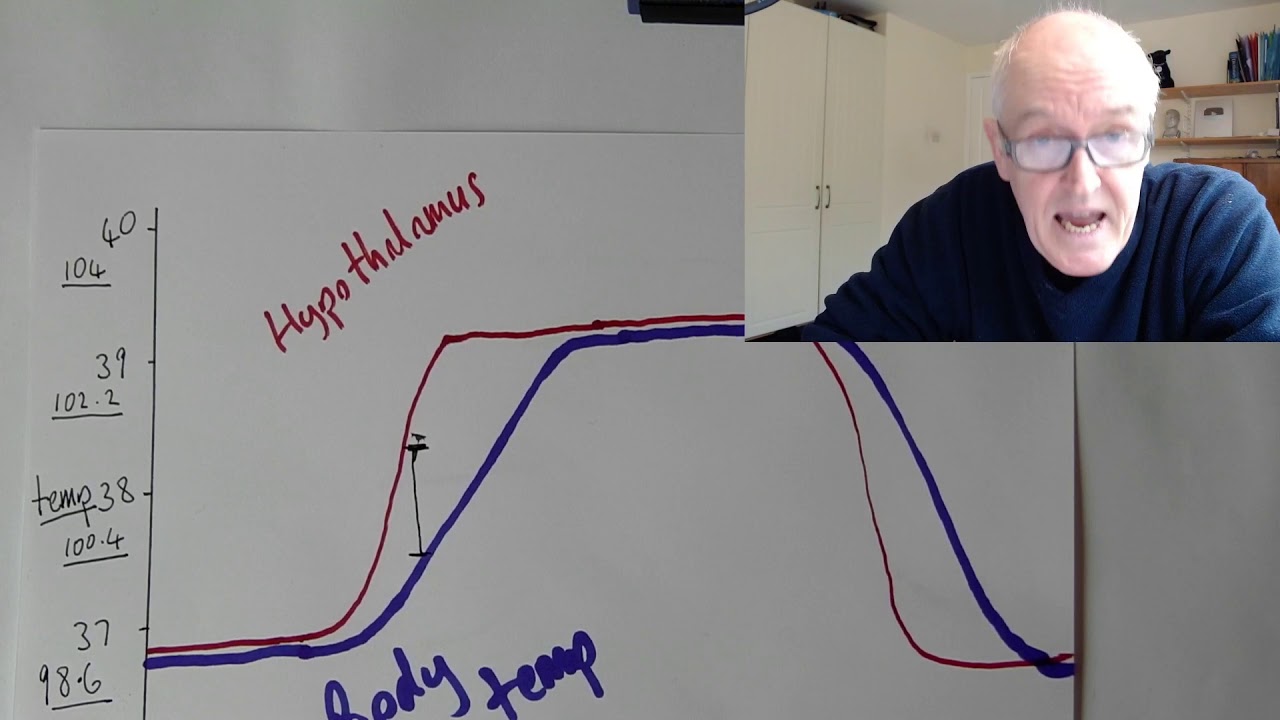
now if you're getting too hot the first thing that happens is you get the peripheral vasodilation but if that's not enough the body will then go on to produce sweat so for example if you're exercising you're running along you're producing a lot of heat you start sweating to cool yourself down so sweating is a thermo regulatory mechanism that goes beyond the vasodilation it's an additional mechanism and it's used as a second mechanism because of course it involves water loss whereas the vasodilation doesn't so the body is actually very sensible and efficient and efficient in the
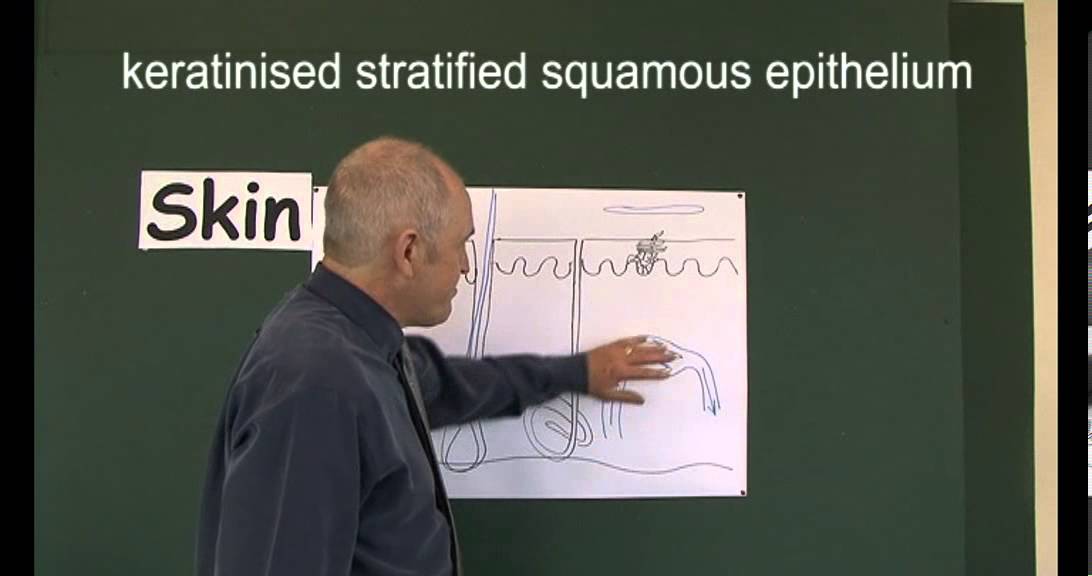
order in which it tries to cool the body down if it's getting too hot so let's think about the surface of the skin again and we're going to have sweat glands and the sweat glands dip right down and they are coiled tubes deep in the dermis it's a coiled tube this is the boundary between the AP dermis and the dermis here's the hypodermis here sweat glands are usually quite deep down in the in the dermis and there's two components to it there's the glandular component and there's the sweat gland duct and the glandular component is
associated with small blood vessels so there's an arterial capillaries surrounding the glandular component and a venule and sweat is actually taken from the plasma so the water and the other components in sweat come from the plasma into the sweat gland component here into the gland itself the glandular component then when the sweat has been formed it will move up the sweat gland duct all the way through the dermis through the epidermis and it will be deposited on the surface of the body and on the surface of the body the sweat will evaporate now there's physics
involved here because for water to evaporate it takes an awful lot of energy it's called the latent heat of vaporization so the sweats deposited on the surface of the body it takes a lot of energy to evaporate that sweat for it to evaporate away that is the latent heat of vaporization and that latent heat is extracted from the surface of the body to evaporate the sweat so as the sweat evaporates a great deal of heat is lost from the body and if you're in a very hot environment as long as you keep drinking and as
long as you can keep sweating and as long as that sweat can evaporate you can maintain a physiological body temperature even in really quite extreme environments the problem comes in hot environments if you can't sweat or the sweat cannot evaporate so if someone's so dehydrated they can't make sweat the body temperature can start to rise and you can get life-threatening hypothermia or if the wearing clothes and the sweat can't evaporate through the clothes again you can get life-threatening hyperthermia but as long as the sweat can evaporate we can normally maintain a reasonable physiological body temperature
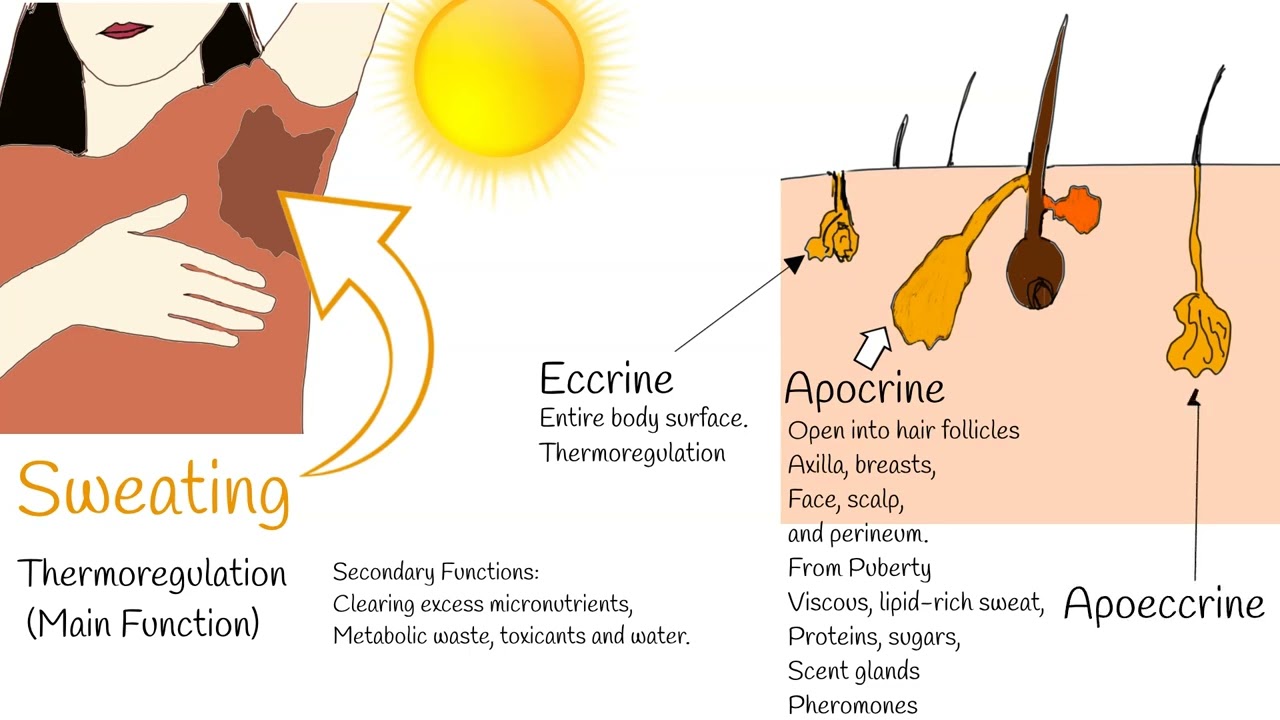
so the sweat is produced in the glandular portion rises up through the ductal portion to the surface of the body now this type of sweat gland the thermoregulatory sweat gland is called an equine swag land and eccrine sweat glands so this is an Akron sweat gland we've drawn here and there's going to be three or four million of these all over the surface of the body the eccrine sweat and the proper name for sweat glands is the pseudo Icarus glands so what we've actually drawn here is a nekron sudoriferous gland and Ekron sudoriferous gland we
normally just call it a sweat gland and this sway is going to contain water obviously and I'm sure you've tasted sweat it tastes salty because the sodium and chloride in the plasma and they go into the sweat and in fact the composition of sweat does somewhat mirror the composition of the plasma so there can be some urea and you react acid in the sweat as well in fact when patients are very uremic if you're looking up the uremic patients with kidney failure the sweat is going to contain a lot of urea a lot of urea
is deposited on the surface of the body and the patients can get what's called a urea frost they can get light white powdery you hear on the surface of the body but that would be very severe uremia but the sweat is reflecting the composition of the plasma so the sweat is going to contain water sodium chloride which is salt you rear in some ways you react acid but it also contains useful things like glucose and amino acids but again only in very small amounts it's important to realize that even although some of these waste products
are lost in sweat the sweat glands are not homeostatic they're not regulating the amount of material that's lost in the sweat to maintain the internal environment of the body they're just thermoregulatory of course the homeostatic organs are the kidneys but they sweat glands aren't doing that that's the job of the kidneys so these are the eccrine sudoriferous glands but there's another type of sweat gland called an a poke Rhine sweat gland and apocrine sweat gland it's a much bigger gland so again it's a it's a coiled tube but it's a much bigger much bigger gland
it's a coiled large glandular tube and very often these apocrine sweat glands actually open into hair follicles and the sweat leaves via a hair follicle here's a hair in this one this is the hair in here this is the hair follicle and this is an apple crying sweat gland opening into the hair follicle so when a Pokhran sweat is produced is produced in the glandular portion of the apocrine gland just as it was in the eccrine sudoriferous gland the sweat goes into the hair follicle and the sweat goes onto the surface of the body via
the hair follicles I've drawn my follicle a bit long though it only goes to the surface of the body obviously so the sweat goes up here and onto the onto the surface now the apocrine sweat glands are stimulated by hormonal changes at the time of puberty so children do not produce a Pokhran sweat it started to be produced at puberty and it's produced throughout adult life and the apocrine sweat glands are primarily in the axilla in the armpit and round about the groin now having said that there are some apocrine sweat glands in the bearded
portion of a man's face and in the areola area around a woman's nipple the areola is the colored area around about the nipple but most of the apocrine sweat glands are in the exilic Wien and they don't work in children they just start working in puberty but then they carry on working through adult life and as well as containing water appllo crying sweat also contains some lipids and some proteins it's thicker sweat and it contains lipids and it contains proteins and the combination of the water and the lipids and the proteins from the apocrine sweat
glands does not smell it doesn't smell but very quickly the lipids and the proteins secreted onto the surface of the body in the apocrine sweat are acted on by bacteria on the surface of the body so the bacteria metabolize the lipids in the apocrine sweat they metabolize the proteins in the Apple crime sweat and the bacteria start producing waste products and these waste products are very smelly that's why unwashed armpits and on wash groins become smelly because of the appo crime sweat and the bacterial action on the Apple crime sweat so eccrine sweat glands are
sweat glands are thermoregulatory a poke wine apocrine sweat glands producing this apocrine sweat and this gives people a kind of a characteristic smell and some people say that there's pheromones in it it's kind of a way that you can recognize people or even potentially some people say be attracted you know when you talk about the chemistry being right between two people that's probably what you're talking about the smell of the bacterial Braden products on their apocrine sweat is somehow consistent with your nasal cavity and your brain