For young people, there is another change in life: Right after graduating from university, there will be an immediate change, that is you will apply for a job. That means you will look for a job, and some people will find a job quickly, some people will find it slower. That will also put a lot of pressure. At that time, you will ask: Why did they graduate at the same time as you, but they found a job, while you still haven't found one? That has become a pressure. Then immediately people will ask how much is the salary.
But you know, the most important thing about a job, especially the first job in life is not the salary. That's right. The most important thing about your first job is whether it creates conditions for you to progress in your career or not. Does it enable you to exercise the competencies you have been prepared for and does it enable you to continue developing those competencies? Those are the criteria of a good job. Because once again, we keep making the youth understand that this world is a uniform. But actually, the world is not a uniform, that uniform
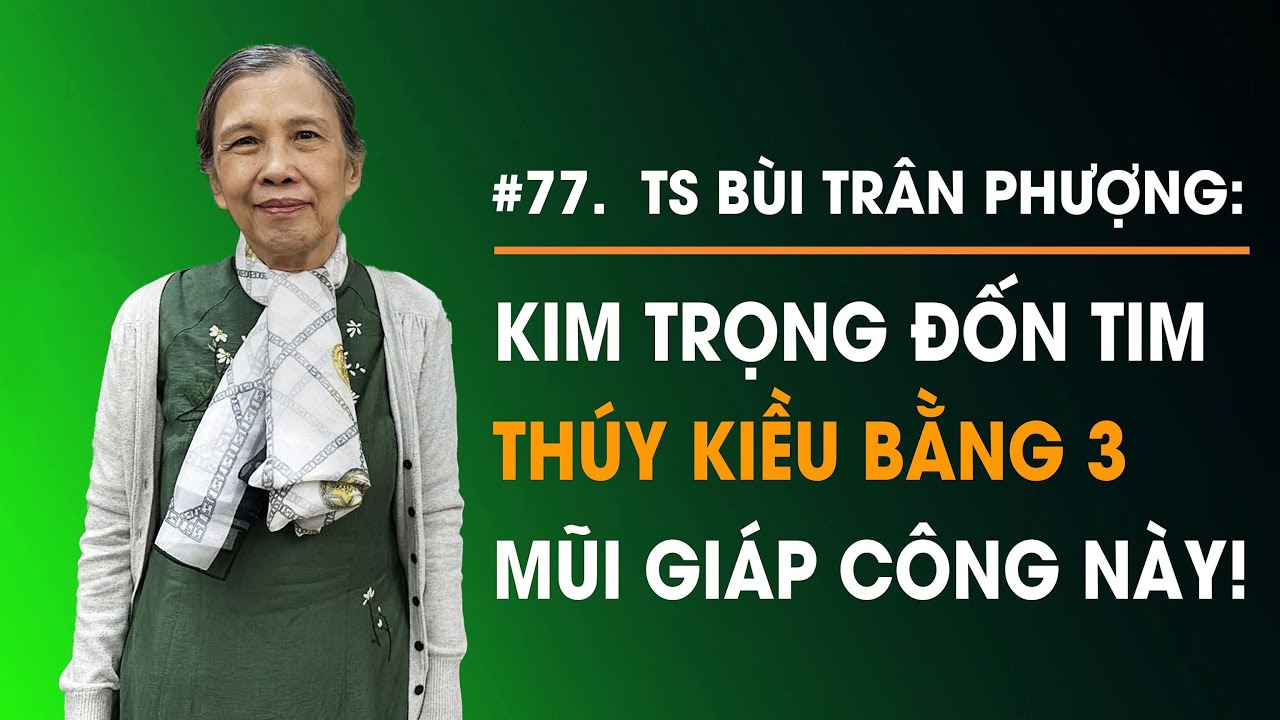
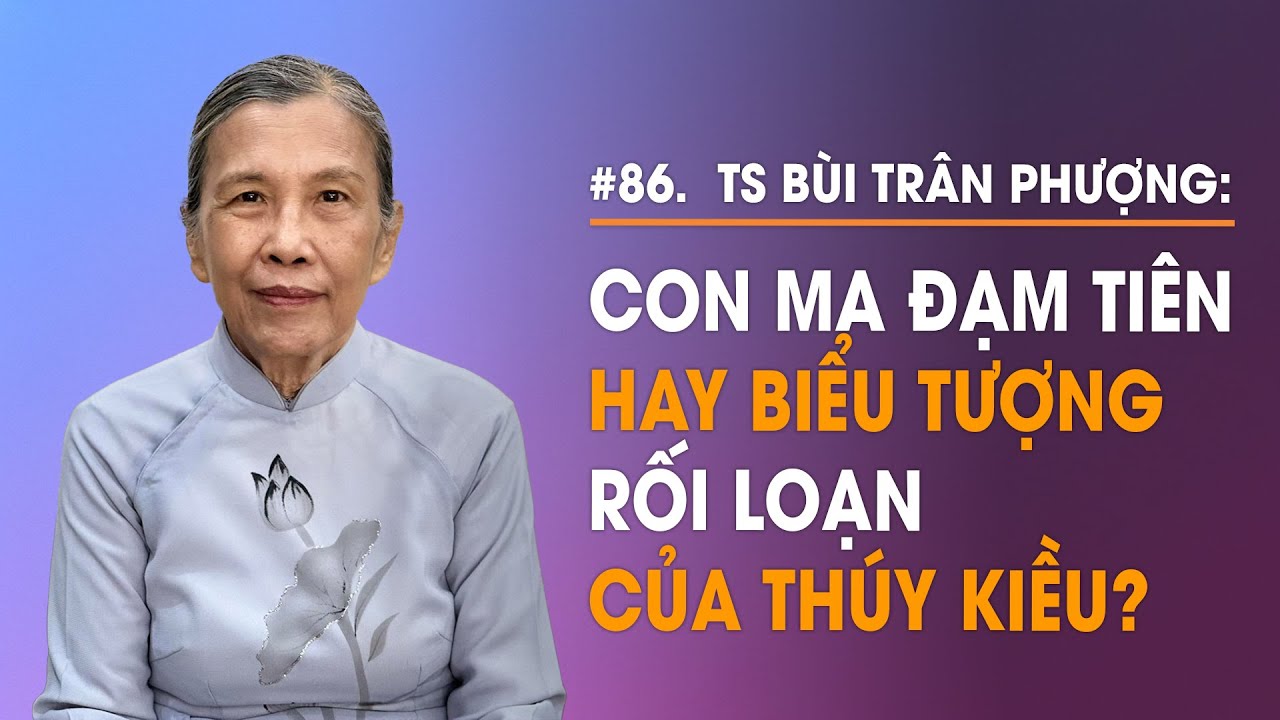
is fake, is virtual. If we go to work, we'll immediately be out of uniforms. Welcome back to EduStation season 4. Today, we meet again with Dr. Bùi Trân Phượng, Former principal of Hoa Sen University. She graduated with a bachelor's degree in History from Paris-Sorbonne University, France in 1972, Master's degree in History at Paris VII University in 1994, and defended her doctoral thesis in History at Lumière Lyon 2 University, 2008. Her research projects are of interest to the international scientific community. In 2022 and 2023, she was a professor at Collège de France with the lecture series:
"Vietnamese Women - Cultural Power and Multiple Identities". She also regularly shares about cultural and historical education at the Saturday Coffee show. First, allow me to represent the EduStation team and the other listeners, thank you for taking the time to come with us today. - Thank you Hùng, and thank you all. - Yes. Today, as we discussed with you, the theme of EduStation season 4 is "Be yourself". Today I want to ask you about part of that topic, which is the word “Understanding yourself”. I always believe that before we can do something, we must understand ourselves.
That's right. So, I want to start with a question for you, what is understanding yourself? It was very difficult. - Yes. - At first, it seems simple. It seems like no one can understand ourselves like we do, right? But life is not that simple. Therefore, "understanding yourself" is actually a long process and until now, I have entered the age of 70, the age of "Cổ Lai Hy", as people often say. Thus, I also have to have time to think to understand myself. I can't know clearly what am I, who am I and what kind of
person I am. So, it's a process. - Yes. - But there are times in life when understanding yourself is more important than other times. It is more necessary than at other times. It makes more sense than other times. So that's something we have to pay attention to. - Yes. - For example, at the age that you asked me about, That is the age of just graduating from university. It is one of those times in life when people should rethink to find ways to understand themselves a little deeper, especially with the current way of education, which
I have witnessed since 1975 until now. And I realized there are many shortcomings. And it is these shortcomings that make people unable to understand themselves. Yes. On the other hand, there is a factor that young people call "trend". Everyone keeps asking "Who am I?" in a very sad and painful way. - So... - It's like echoes, right? It causes even more confusion for young people, who are confused about the question "Who am I?" Actually, I don't think it's a good idea to get into lofty philosophical questions about the topic of "Who am I?", or "Why
am I present in this world?" That is not truly understanding yourself. Understanding yourself must start with very specific things. Because... How to say it? That is, in the education that I have had since I was a child, until when I grew up, with the generations before me, or the same as me, even the generations slightly behind me, I still feel they are better prepared for life. They are prepared by education from family, school and society to enter life. They take slow steps to become an adult. But now, it seems like it's losing those preparation steps.
Let's take a look at the simple things. For example, in the past, when starting secondary school, that is only 11 years old, in 6th grade, at that time, teachers addressed their students with higher-level pronouns. Meanwhile, in elementary school, they address students with lower-level pronouns than them. But then just one small step to pass the next class with an exam. At that time, there was a very difficult exam and it was the hardest exam in the South at that time. It's not a university entrance exam, but it's called the "6th-grade exam", meaning the 6th-grade entrance exam.
If you pass the exam, you will enter grade 6 of the public system. If you don't pass, you will study at a private school. But private schools in the past were schools for poor families, not schools for rich children like today. I see. Whether it's a public or private school, Teachers also address their students with pronouns that are higher than them. Instead of just before summer vacation, we are also called by teachers with lower-level pronouns. Then suddenly, we are 11 years old, we wear Ao Dai, and are addressed with higher pronouns. And if female students
wear Ao Dai, male students also have to dress more neatly. - Yes. - Right? In such a way, they trained children to gradually become adults. But now, I feel that many of you are already university students, But still let your mom wake you up for school, for example. There is even a case that I know, not sure if is it too extreme or not. But coincidentally, I know of a case where the parents of that young student, a student in the North, grew up studying abroad at the university level in Singapore or Thailand, which I
don't remember clearly. Ah, right. It's Thailand. After that, they got their doctorate degrees and then worked as lecturers at a prestigious school in Thailand. That's AIT (Asian Institute of Technology). They teach at that academy with a pretty high job position. And such parents must be highly qualified parents. But when their children go to America to study, Even though they are far away, they have to call America to wake their children up so they can go to school on time. That really shocked me. I don't know if this is an isolated case or not. I'm afraid
that's quite common. Because I heard that story not just once. Therefore, when someone matures so slowly, it is possible that intellectually they are still excellent students in school, still getting many degrees. But can they be self-reliant in their personal lives with simple, normal things like what they eat, what time they go to bed, and what time they wake up to do the necessary work in life? But if, at that age, they are still waiting for online reminders from afar, then that is a concern. Therefore, if you think that "the umbilical cord has not been severed",
then perhaps when they graduate from college, which is also the time they enter life is the time, or will they never be able to cut the umbilical cord and reduce dependence on their family? Not only does it depend on finances, but on many other aspects as well. Finances are not something to worry about. When we have just graduated from university and not being able to become financially independent right away is not such a serious problem. Somehow, we should also refer to the Western way of education. You know, when kids turn 18, They'll be sent out
into the world. - Yes. - This also has good and bad sides. It's not quite that good. But basically, everyone is given the conditions to grow up. Before we continue with the topic of "understanding yourself", I am curious to know that in 6th grade, the core idea of - being addressed... - at a higher level. That is to guide children to have a sense - of self-respect and respect for others, right? - Exactly. See yourself as an adult. Yes. I'm still curious to know why the 6th-grade entrance exam is more difficult than the university entrance
exam? Actually, it's just the result of the law of supply and demand. When I went to school, the year I took the 6th grade entrance exam was 1960. That is at that time, the war had just ended not long ago. - Yes. - There has been a great need for education. People send their children to school too much, but schools are not built in time. It's just that simple. Because there are few schools, but there are so many people wanting to study, So that exam becomes more difficult. And from the stage from high school to
university, - the number of students will decrease a lot, right? - That's right. And the time after the war ended, people had time to build more infrastructure for education, and so on. I will return to my question: What is "understanding yourself"? I want to say it again, "understanding yourself" means not falling into the trap of the distant question "Who am I?" in a tormenting and intense way. Or fall into the trap, which nowadays, people often call "life planning". - Yes. - That means: After you graduate, how many years later will you become department head? How
many years later will you be promoted to higher positions? You make a plan and try to strive to achieve that goal. People have seduced young people like that. I often use the word "seduction" in such cases. I don't know what do they seduce young people for? Maybe to sell the course or something like that. But actually, you can't plan your life like that. They even made plans to get married. But obviously, that's impossible. Actually, in my opinion, planning is an expression of the desire to control everything, right? But in reality, we cannot control it. And
that's not even the most important thing to control. I see. Therefore, the concept of "understanding yourself" for me is understanding very specific things. That is, we must understand how much self-control we have. In the past, our ancestors once said: "Everything needs to be learned, even the simplest". So do we know how to eat, or know how to breath? When we encounter a problem, then we realize that it seems like we don't know or we know about it very vaguely. Do we know how to care for ourselves, our bodies, or our health? Or have we become
self-indulgent? We can sleep or wake up any time we want, or we can use Facebook until midnight, etc. Basically, do we know what our own responsibility is? First of all, our bodies are our responsibility. Our health is our responsibility, and being on time with others is our responsibility, right? For example, when we go to school, we know what time we have to go to class. Then we have to do something to get to class on time. Previously, a few years after 1975, my child was born in 1988, I remember that when he went to elementary
school, I let him ride a bicycle to school. And when he started middle school, he had to ride his bike to school by himself. But now, many parents will not dare to do like me. I also understand their reasons. Because nowadays, the streets are much more dangerous than before. Therefore, children are taken to school by their parents for a long time. Sometimes this continues until they go to college. I still remember the image of parents sitting on motorbikes, waiting for their children in front of Hoa Sen University. That is very heartbreaking for parents and for
young people too. Because they still have to sit behind their parents to go to university, which is a pitiful image in my opinion. - There's something not right about this, right? - Correct. This is so wrong. Therefore, when we have graduated from university, that dependence has not ended, should we start by proactively ending that dependence? In the past, people still walked to school if they didn't have a bicycle. When I was in elementary school, I also used to walk to school. And when you walk to school, you have to own the process. You must know
how to cross the street safely, and many other things too. But now, there are so many things that people don't know. So the first things we should know are those things. Let's evaluate ourselves to what extent we can do those things ourselves. - Let's know the basics, right? - Yes. To learn to live normally. It's like a bird that has been raised by its mom since it first hatched from an egg, but at some point, the mother bird will throw the baby bird out of its nest. At that time, the baby bird must learn to
flap its wings to fly. So when you have graduated from college, have you walked on your own feet yet? Let's start from there. And ask yourself what we can easily do competently, and what we haven't been able to do yet, so let's start learning to do it. I remember one time, I interviewed students, and that was when Hoa Sen had just become a University. To celebrate that event, our partner university in the US offered us some scholarships for students to go to there for a semester of cultural exchange. We are interviewing to select students to
be awarded those scholarships. It had a preliminary round in English, of course those students passed. But in the final round, the students met me directly and I had a question that surprised a female student. I ask: "For example, if you come home this afternoon and your mother or maid is not at home, how will you prepare your own dinner?" That student is only a first year student. But I think I need to ask that because she is about to go to school in the US. After a moment of hesitation, she said she would cook instant
noodles for her dinner. I kept asking, how would she cook? She repeated that she would cook instant noodles. I wanted her to describe in detail how she did it. She replied that she would tear the noodle package, put it in a pot of water, put it on the gas stove, and then turn on the stove to cook. I laughed and asked: "Do you know how to turn on the gas stove?" Of course, she was eliminated in this round. But the student who was admitted made me extremely satisfied. Meaning that, within the same generation, people can
be very different. That student not only answered all my other questions smoothly, But he also answered a question that make me very surprise. I was surprised because it was interesting. At that time, Hoa Sen University was applying a learning method called: Study in a North American-style credit program. The reason we have to clearly state that it is North American style is because we organized like universities in the US. This means that students have a great deal of choice. They have several required credits to complete in their core subjects. But at the same time, they also
have some elective credits in other subjects. And there are a number of credits that students are free to choose. That's it. Therefore, before students choose a subject at Hoa Sen University, which is also the first year Hoa Sen University applies that model, I had to open a training class for lecturers first, then we will train new students, so they know how to choose, they know their rights, so they can use their right to choose in the best way possible. Those are very new things for students. It's completely new to them, who have just entered Hoa
Sen University from high school. When I asked the student with whom I was very satisfied in every aspect through the interview: "Now, you are preparing to study abroad in the US for a semester, do you know what subject you will choose or not?" He replied that he had already chosen. "So how do you choose?" I asked. He consulted the school's website and chose these subjects, and told me why he chose them. He answered like that. I found it extremely interesting and asked another side question. And surprisingly the answer gave me another interesting result. Because, when
I received the scholarships awarded by the vice chancellor of the partner university in the US, I asked her if her school had any mandatory requirements regarding English ability for foreign students or not. She said no, because she believes in Hoa Sen University through many times working with us before. She has seen how the school works, she has seen in school meetings, all the lecturers and staff speak English so she trusts it. So she said that, for Hoa Sen University, If the school chooses someone, they will not have any mandatory requirements regarding that person's ability to
use English. But actually, things are not like that. Meaning, that they also have mandatory regulations, but she doesn't know these regulations. That means she is also subjective and takes it for granted. Then after that, she wrote me a letter to apologize, because her school had a regulation that one must have a minimum TOEIC score according to their regulations to meet the requirements. Therefore, when we announced to the students, we still did not state what the English entrance standards must be, but only through the Hoa Sen University's selection. And we affirm to the students that, once
Hoa Sen University has chosen, the other school will accept it. So when I wanted to choose that male student, I told him: "I'm sorry because we just received new information. Accordingly, students studying abroad must have a minimum TOEIC score according to school regulations in the US". And if so, did he encounter any difficulties? Once again, I was surprised by his answer. He answered me that his only difficulty was not having money to pay the fee to get the TOEIC certificate. I encouraged him to feel secure and said the school would sponsor him for that expense.
And I find it interesting that we deliberately did not select based on financial factors. That means we only choose students who deserve their ability. Because I know it's only the first year of school. If we choose with too many difficult conditions, it will be difficult for us to have enough Quota for the number of scholarships we are planning to grant, because they are quite a lot. So we only need deserving students, regardless of whether they are rich or poor. And we discovered that the student was having difficulty. He is the son of a single mother,
has no place to live, and is staying in a room at a school where she is working. Even so, he's still a good student. Meaning, he knows who he is, what he knows, what his strengths are. Such unexpected questions are just side questions to me. But the question became unexpected, because it was beyond our expectations. But he still got the answer right away. That means he realizes what he has and doesn't have very clearly. So "understanding yourself" means that. That means when he knows that he is going to study abroad and that, he will go
to a school that is organized according to the credit system, he must take advantage of his right to choose credits. So when he gets there, he can choose to do the priority things first, right? And at first, he thought that the English requirements were only decided by the school, and he was confident in his English ability, without any questions. But suddenly, he received a notice that there was a minimum TOEIC score requirement. And so, he has to pay the exam fee. But this is beyond his ability. And he understood that and told me frankly that
he had no money to pay the fee. He said it naturally, without any self-consciousness or guilt. So he received my answer in a very natural way that, no worry, our school will sponsor him for that fee. Because it is so worthy. In my opinion, that is a specific example to clearly illustrate the concept of "know who you are". And I'm not surprised that in America, he was excellent in many of the subjects he has chosen. And when that semester ended, the university in the US asked us if could they keep that student at their school
to continue studying? I replied that it was impossible. That means, when that semester ends, he must be returned to his home country. But when he has graduated from Hoa Sen University, He can apply to study the Master's program and the university in the US is willing to continue to grant scholarships, because they are so satisfied with the semester that he has completed. That's kind of how things are. So actually, "understanding yourself" begins in a very simple way, right? Yes. We know what we are capable of. Knowing what capabilities we need to take our next steps.
And do we have those abilities or not? What we have and what we don't have. You should look at everything frankly, without self-esteem or guilt. But you need to proactively prepare the abilities you need to take the next step in life. I can give an example like that. I think that... actually, it will be very difficult for young people today. Correct. It's not entirely the young people's fault. I know the fault is in our education system, including education in schools. Because, schools in my time were very normal. What does that mean? This means that in
a class there will be people who are good learners, some who are average, and some who are weak, and some people who are good at this subject but bad at that subject. For example, at that time, I was good at many subjects, but I always ranked last in physical education. Everyone in the class, including me, knew that I was bad at that subject. And such a healthy educational environment will allow people to know what their strengths and weaknesses are, what subjects they are good and not good at. But now it's different: In a class of
50 students, but there were 48 of them were advanced students and about half of the class are excellent students, for example. It no longer has any order, and those labels become completely meaningless, it doesn't tell students anything about themselves. But I wonder, when they enter college, it seems that the picture already has relatively clear outlines, right? Yes. It's a little better than high school. However, Vietnam University is too inclined towards theory. That means it only measures your understanding of expertise and subjects in the best case. I emphasize that in the best case, you will receive
feedback on your education and professional qualifications. But when you step into life, it requires more abilities, and other skills, not for your parents to call from Thailand to wake you up for school, for example. Therefore, it can be said that there are many things that you do not learn, are not challenged at school and do not practice at home. I conducted an interview with several women for my research purposes. And I asked her permission, so I could reveal this detail to the public. Mrs. Phạm Chi Lan is a Finance expert that everyone knows, right? She
comes from a family where her grandfather and previous generations were all mandarins. Her father was a high-ranking civil servant during the French colonial period. She told me, that is her family is very well off, not poor at all. She told me that when she was 8 years old, her mother taught her how to manage the family's daily market money. And when the maid comes home from the market, she must report to her what she bought today and how much. And her mother helped analyze how much a meal that includes ingredients like this would cost. She
does not need to go shopping for her family, but she is learning how to manage her family's finances and many other things. I remember that my family is Much more modest than her family. My family is just a normal teacher family. We were not poor, but when I was 10 years old, a sudden incident happened. Therefore, my father cannot go to work. And so, my family lost an economic pillar. Therefore, at that time, my family's economy suddenly declined. remember, at that time, my sister and I were about 11-12 years old but already knew how to
go to the market for the whole family. The first few times, we went to the market with the adults. And the next time, we went alone and then managed the market money ourselves normally for the whole family. At only about 10 years old, people already know how to do such things. In fact, when people are 20 or so years old, it becomes too easy and simple. But now, when people have never done that in their life, never prepared breakfast for themselves, the concept of "understanding yourself" is, first of all, knowing such things. That means, we
have to know what we can do, what we don't know. And the things we don't know how to do, but now it's needed for an independent, autonomous life; so can we learn to do it? Do we learn quickly or learn slowly? What will we learn faster and what will we learn slowly? We can learn everything, but what things do we learn quickly or slowly? So "knowing yourself", first of all is knowing your strengths and weaknesses in everyday life, before talking about more sublime things. But your own strengths, weaknesses, good or bad points, If placed in
the situation of young people today, will be a factor that brings a lot of pressure. - Why? - Because, nowadays, young people are covered by many social networks and lots of information. I remember before, when I was 20 or 22 years old, my confidence wasn't under much pressure. Because, let's say, if I am not very good, then it is not a serious problem affecting the world. That's right. In the classroom, there are always good, average, and weak students. That's normal. Furthermore, in the space of a few dozen people, it wouldn't be a problem. But now,
I go online and see people succeeding too early, People making a lot of money too early. And everyone says, just focus on being good at this field, no need to focus on other fields. Actually, I have two feelings when standing on the outside looking in. First: Young people today are under too much pressure. Second, I have the feeling that the measuring scale seems a bit monotonous and dangerous. It's too dangerous. Yes. While the measurement it needs is more diverse. Right. In the past, students studied all subjects, so people would know that they could be good
at both math and literature. Many people are only good at math but not good at literature and vice versa. Even, people can be good at both math and literature, but they are very bad at physical education, drawing, etc. But if they are very good at drawing, they can still be at the top of the class in this subject. No problem. In the past, everything was much more normal than now. Nowadays, it is distorted and deformed by the trend, which in my opinion, is the wrong trend of the times. That is, everything is converted into money,
everything is converted into making money. But living worthy is not just living to make the best money in the world. - Yes. - Of course, everyone needs money to live. Without money, it is very difficult to have a decent life, Impossible to live like a human being, right? If you are deprived, you cannot live as a human being. But once we pass the subsistence threshold, there will be many more metrics in life, right? Money is not the only measure. If as you said, and I think you're right, is it true that young people now need
to equip themselves with the ability to be less immune to those unnecessary social pressures, right? If we didn't compare ourselves to Facebook, it wouldn't be a problem, right? That's up to us to decide. For young people, there is another change in life: Right after graduating from university, There will be an immediate change, that is you will apply for a job. That means you will look for a job, and some people will find a job quickly, some people will find it slower. That will also put a lot of pressure. At that time, you will ask: Why
did they graduate at the same time as you, but they found a job, while you still haven't found one? That has become a pressure. Then immediately people will ask how much is the salary. But you know, the most important thing about a job, especially the first job in life is not the salary. That's right. The most important thing about your first job is whether it creates conditions for you to progress in your career or not. Does it enable you to exercise the competencies you have been prepared for and does it enable you to continue developing
those competencies? Those are the criteria of a good job. And especially importantly, does that first job give you the right start in your career? Yes. So I said, can you use the abilities you have been prepared for? In fact, current career requirements are not so "stiff" anymore. For example, you graduated with a bachelor's degree in English, so the careers you can do are very diverse. But at least, those jobs must use your English skills. That's an example. So when you look for a job, especially the first job in your life, The most important thing is
not the salary. But unfortunately, nowadays, people often compare salaries. It shouldn't be like that. And there are many other aspects. Of course, it will also depend on each individual's own family situation. And your family situation is also something you must know clearly. But do young people know that? Previously, when we were in elementary school, we could tell whether we were from a well-off family or a poor family. Because your way of spending will not be the same as everyone around you. The same goes for dressing. Then some people walk to school, others ride bicycles or
cyclos, etc. So looking at that, everyone can guess your family background. We may not know other people's family background, but at least, we must know our own family background. But now, many young people do not know their family background, because their parents do not let their children know it. They just need their children to study, and parents will take care of everything else. So no matter how difficult it is for the parents, the children still don't know. That is the worry of parents today. And so, you must know how to narrow those gaps. If you
have not prepared yourself to be an adult since childhood, now you should consider this a milestone in your life, and start learning. You are not standing alone in the desert, you are not falling from the sky, or emerging from the ground. So no matter what your family situation is, you must understand your family's specific circumstances, the society you live in, etc. But first of all, if you want to focus on "understanding yourself", you must understand that you are in a specific context, not "understand yourself" as if the world is only you. - But I'm... -
There is another extreme aspect, that is, young people only know what they like, not what employers need. I have interviewed many job applicants and see that very clearly. That is, young people often brag about what they have, what they know, and what they like, But they don't know what employers need. Therefore, when we say "know yourself", we must always "know yourself" in a specific context. That means in the context of your family, in the context of the place you go to apply for a job. For example, when you apply for a job, you must know
what the employer needs an employee to know. But is it possible that young people have misconceptions or excessive illusions about their abilities? I don't know. That depends on your judgment. However, what is clear is that those who correctly understand their own abilities are a little better than others. I have another example for you. When my child studied abroad in the US, I met an acquaintance of mine through another friend. They asked me to find out about issues related to their children. He's going to school in another state, but he's about to transfer to the state
my child is in and also to the school my child is attending. They wanted me to ask my child if he could help their child quickly integrate into the new environment. I told them to let me ask my child for his opinion. Because I can't impose on my child like that. And then, my child agreed to help. But a month later, my son contacted me and said he couldn't help that friend. When I asked why, my child told me that it was because That friend's mother had strange requests. So my child couldn't do it. It
turned out that, during his time in high school in Vietnam, I did not understand how his mother did, but he was always an excellent student with top scores in all subjects. Like I said before, a class has 50 students, but 48/50 students are already excellent. So now, they transfer to an American University, which is on a credit system and he wants all his subjects to get A+. So my child cannot help. I also learned why that person had to leave his old school to go to another school, in another distant state and accept rent and
start with other difficult conditions. The reason is because, in his old school, he did not get A+ in all his subjects. And they chose to transfer schools and that person's mother expected that that person would get A+ in all subjects, like when he was studying in Vietnam. My child was helpless because no one could do that. The American students can't do that either. No one can do that. And what's more, that's not their goal either. So if young people have been raised in such a way, it is very difficult for them to evaluate themselves. I
want to ask, why is wanting an A+ in most subjects such a strange thing? Because that is an unreasonable thing. It is too unreasonable. Because, people can be good at one subject but bad at another, like I said. People can even be good at many subjects, but not at some other subjects. Because it touches on completely natural qualities and talents. Anything too perfect is abnormal, right? Not like that, but... Moreover, when you study in the country and achieve such results, are those results correct or not? With Vietnam's educational methods, please allow me to doubt that.
But now, you have gone abroad, a place beyond the reach of your parents, but if parents still want to manipulate society, manipulate the world like that, so that is an impossible thing. In my opinion, parents just think it's just about studying, right? Just try and work hard and you will get good scores in all subjects. - The issue is not like that. - Yes. When we are good, there will be others who are better than us. We also often think that, instead of trying to be good at everything, we should focus on the things we
are best at. - That would be better, wouldn't it? - Right. And no matter how hard we try, we are only better than others in certain subjects. In other subjects, we can only be equal or worse than others. So, that is not normal at all. And now, when we go to work. At that time, our other abilities are required. Yes. It starts with the ability to listen and understand what others are saying. Many schools do not teach communication. - Yes. - Or teach it in the wrong way. Teaching correctly means teaching learners to understand that
communication is a matter between two people, so it will have one side and the other. And if I send out a message, and the other side doesn't receive it in its original form from when I sent it out. They will receive that message with the refraction of other lenses. So I have to find a way to see through that lens of reception, to understand what message A' other people have received from my original message A. And when people respond to me with a certain B message, I also understand that with my refraction, it will become
B' or B'', or something. So at least, I have to understand that theory and I have to apply it many times in my life so that when I graduate and enter the working environment, I understand what my superiors and colleagues around me are saying, and what they want from me. And when I present a problem, to what extent will people understand it? These are basic things, but many times, we don't learn them at school or we learn them in a very theoretical, far-fetched, and shallow way. That prevents us from applying it. Previously, I told my
students that they had already learned, and also already known, in the sense of knowing the theory. But now, the problem is whether they can do it or not, And with what quality of results? Therefore, when understanding something, you must understand it thoroughly. Because at the company, where you work or in real life, people measure work efficiency by the final results, but they don't let you take tests and grade them according to the answers, right? - And the final result depends on.. - Many other people, not just you. So there are many things we have to
learn in the work environment and in a different way that is not the same as when we learn in school. So, "understanding yourself" here is knowing how to learn those things and understanding what we can learn quickly, what we can learn slowly, what is easy or difficult for us, what is extremely difficult for us and what is impossible for us to do. It means we can't do it. And have to admit normally that there are things we can't do, while the person next to us can do it wonderfully. Because you can do other things wonderfully,
but the person next to you cannot do it. The problem is simply that. You should understand that you and the other person are two different versions. We are not robots. But usually, young people easily fall into a state of comparison with each other. At that age, you have to endure a lot of pressure, and that pressure comes from friends. But that deviates from today's bias, which is that the entire class must be good students or all excellent. If someone in the class is not a good or excellent student, that is an abnormal person. That is
a very unusual thing. Because, in the past, a normal class had the majority of average students. And average academic performance is considered ok, normal, and be promoted to the next grade. There will be students who are a little better at this or that subject. And there will also be students with excellent academic performance in many subjects, - but certainly not excellent in all subjects. - Yes. And when our academic performance is average, that is completely normal and ok. But now, we see that our friends have excellent academic performance, so what should we do to be
like them? That is impossible. Because, we are used to a class having 50 students, but there are already 48 excellent students. I think that a class like that is already unusual. Can you tell me about the evaluation at that time? What is average, progressive or excellent? It's simple. The score range is 10, if a student scores 5, they will meet the average standard. That’s all. And people give points based on test results, not based on the number of gifts parents send. I'm sorry, but it's true. In fact, when you teach a class where all students
are graded in a normal and honest way, it certainly produces the same overall results. The proportion of average students will be the majority. That is, most students only score 5 or 6/10 points. That's almost a rule, right? For what reason? Because you have to design lessons and tests so that the majority of students meet the requirements, right? So you have taught at the right level of the students in that class. The lessons and tests have been designed so that the majority of students score 5 or 6. It was like that before. But now, you have
to design so that the majority score is 7 or 8. And everything that happens next, you don't need to care. So students receive feedback that, in their class, the whole class or almost the whole class are excellent students. That's all wrong. So when we step into life, we see that the other person is very good, and then we want to be as good as that person. This is impossible. Because, truly good people are only a minority, And the average is considered to have met the requirements. That is, if it meets the set standards or reaches
a certain milestone, that's already ok. I can imagine that when young people enter real life, most of them... I use the word "most", will fall into the state of realizing there is a gap between their understanding of themselves and their abilities, with the way society perceives them. That's right. At that time, what should a young person do? They must be rational and brave enough to understand that the school environment they have experienced is an environment that produces fake capacity assessments. Because there is no normal school where the majority of students are good. As long as
most of students meet the training requirements, it is a normal school. - But this has decreased a lot in higher education, right? - Yes. It's reduced a lot. The number of students with points 8 or higher will probably be small. Yes. It's reduced a lot. But somewhere such thoughts still exist. That's why there is a mother who want her children to get A+ grades in all subjects. Because she accomplished this in Vietnam. I said the mother did it, but I didn't say that the student did it, because, actually, I didn't believe it. So now back
to your question, what should young people do? I think that young people must be rational, alert and brave enough to realize that they should escape that virtual world and live in the real world. The real world is a world in which to do something satisfactorily is extremely hard and extremely tiring. Because you are a junior, you are still learning, so you try your best to meet the requirements and that's great. We can hardly be excellent people in that case. Of course, there are a few exceptions, which we excel at right from the start. But that
is rare and not common. So when we see on Facebook, or somewhere else, where there are exceptions like that, - then we accept that they are exceptions. - We will click "Follow" them immediately. Yes. We can follow if we want. But if we find that even if we follow, we don't learn anything, then it's best to stop. Why do we have to spend so much time contemplating that situation, instead of using that time to improve our own abilities? The next day being a little better than the previous day is already great. So why do we
have to compare ourselves with others? Ideally, we should evaluate ourselves with the job requirements, with the company's benefits, with the output standards of the products that the company must complete to bring to society for it to bring the highest value. - Yes. -We should reflect on ourselves with those things, And not compare our abilities with others. I understand what you mean about us needing to be alert, rational and brave. - Right. - Actually, alertness and knowledge are very important. - Correct. - Let's discuss these two factors first. Because, usually, I don't know whether young people
easily misunderstand that they are not being used, their abilities are not being evaluated and whether this environment is suitable for them or not, instead of thinking, maybe they do not meet job requirements. Right. Right. But it's not their fault. Because they are new and they haven't met the job requirements yet, they have to know why and where is the gap? When they studied, what were they missing? Is their knowledge too theoretical? Or their learning lacks attention to certain aspects of real life. For example, we have learned an outdated piece of software that people no longer
use. Now, everyone is using other software. That is the advancement of technology, which we have not been able to keep up with before. So now, we will learn the new software. The problem is as simple as that. We must continuously self-study. And we should have been equipped with the awareness that learning must take place throughout our lives. So, when we see something new, we learn. At that time, we can evaluate ourselves in the most alert way, What we learn fast, what we learn slow. That's where our strengths and weaknesses are. Weaknesses are not defined as
things we cannot do and learn slower than others, or learn faster than others. That's all. We should know what we will learn fast or slow. I want to ask more deeply. Actually, I want to hear your opinion on this issue. That means, actually young people can have a choice, and usually choose an environment that is easier, simpler. But, that is... I have two questions on that idea: one is, Is it a suitable choice or is it an avoidance? That's the first question. The second question I want to ask you is: I always understand that human
psychology will often choose easy jobs, but very few people actively choose to do difficult jobs. Then it needs to have some motivation for them so that they can overcome the initial challenges and difficulties to be able to reduce the gap and reduce the difference - between their current capabilities and... - The need for work. Choosing an easy job and an easy environment is suitable for whom and not suitable for whom? Yes. Again, it is about "knowing yourself". Yes. That is, if you know that you are a scared, shy person, you don't dare to take too
many risks, you're afraid of being criticized by people, afraid of being told you're doing something wrong, afraid of many things, Sometimes, choosing an environment that is a little easier, a little more convenient, and not very demanding is the right first step for you. That means you know yourself too. Once again, you have to know yourself first. When I was a child, I didn't choose a school due to my parents' wrong education. Parents should have let their children participate in choosing schools and classes from when they were young, then gradually, they have more and more rights.
At that time, I often asked students whether they chose Hoa Sen University on their own or their parents choose it? There are always 3 types, there is also a type that they choose, but their parents don't like at first. There are types that both parents and children like and there are types that only the child likes but the parents don't like, or only the parents like but the child doesn't like. That is, it always has many types. Now is the time when parents have no choice anymore. - Yes. - When you choose a job... ah,
but there are many people who also follow their parents' arrangements. They also choose a job according to their parents' arrangements. I assume that if you choose, so you choose an easy and a little convenient place, with few high demands. if your personality is to move slowly. If high demands at once make you scared, make you confused and lose your spirit, make you unable to bear the pressure, then you choose the easy one first and then slowly you move up. People can also do the easy things and then if they are diligent and hard-working, they don't
stop being complacent. Once we have established this step, we are ready to take the next step. But if we're not ready, we'll just keep doing that easy job all my life, Get the moderate salary, and be satisfied with that, we also consider that happiness, right? Yes. Right? There is no need to… That is knowing yourself. That's just knowing yourself. You don't always have to run after the most difficult thing, right? But what you asked: What is the motivation to work in a difficult environment? Firstly, it has an external motivation, which is the family's financial pressure
if your family is very difficult, You need a job with a salary like this so you can take care of your family, if lower is not enough. So you have to work really hard. It is because of the factor that you understand your family's situation, that why understand yourself like that in that context. Understanding your family's situation, so you need to work hard in that environment. Then it's a type of pressure from the outside. It also has motivation from within. Motivation from within is better and more sustainable. Pressure from the outside is a pressure that
if we try, we can overcome it. Then we will feel satisfied, but sometimes we will still be oppressed by that pressure. - But we are also susceptible to burn out, right? - Exactly. - And easily exhausted. - Yes. But if it's pressure from within, it means you like challenges, you like difficulties, you take a little risk. Right? You want to try a little, want to reach out a little. Once again, that is knowing yourself, knowing what type you are, and how you will produce your optimal productivity. Yes. It's too easy so you're bored. There are
some people like that: "It's too easy for me so I'm bored". So they don't do my best because it's too easy and too trivial. Then you go looking for something that is a little more difficult enough for you to strive for. Then you find it interesting, right? So "knowing yourself" is like that. Which means it still comes back to the story that it's true that knowing and understanding yourself is the most important thing. Temporarily, during the time when they are not sure, they can temporarily close the door for a bit from pressure - from friends
and from society, right? - That's right. They should close for a little longer. No need to open it too quickly. Because once again, we keep making the youth understand that this world is a uniform. But actually, the world is not a uniform, that uniform is fake, is virtual. If we go to work, we'll immediately be out of uniforms. So even later, when we are established, . we move forward on our own path and other people move forward on theirs. It's different. And there are also risks in life, they have to admit that. There is no
predetermined destiny as to who you will become. But there are also lucks in life, There are times when you are lucky enough to encounter opportunities where you can show off your talents and do many things in life. There are times when you're less lucky, but sometimes, 10 or 20 years later, it's your turn to be lucky again. - Yes, that's right. - We cannot know in advance. It turns out that whether we are lucky or not is something we cannot control. But what we can control is that we know what we know, What are we
good at and not good at, we know what we can do within our ability, and what we have to try a little, but we have the motivation to try. what we have to try hard, but still have the motivation to try harder. It's totally ok. The problem is that we know ourself and look less at the people around us too much. Yes. We just need to look at ourself and the job we were assigned, to see where is the gap between us and the job we were assigned? But it's really difficult. That's why I said
"look less", I didn't use the word "don't look". It's still very hard. I often look back, when I was 20-30 years old. That means I can be called a relatively lucky person and have many advantages at work. I also believe in knowing what I want and what I expect. But at the age of 20, what I always wonder about is that my understanding of the world is still too small. Yes. So I keep worrying, that is we often call it "Fear of missing out", I feel like I've missed something. Because I can temporarily not look
at my friends. Actually, in the past, it's true that I didn't look at my friends. But when I look at them, I think: "Am I missing a beat? Am I missing out on an opportunity? Am I missing something that when I open my eyes and step through the door, I'll see it?" So I think what young people have to fight in their heart is the struggle with FOMO: The feeling of whether they're missed anything. I think you are making the problem too complicated. How do you know what's happening outside? But what is in our hands,
the work we are doing, if we do our best and we do it excellently, then some eyes will detect us. Absolutely. Don't be afraid of not having that. We're just afraid that we won't be able to meet the job requirements, but when we can meet them and even meet certain aspects excellently, There will be people who will see that and give us opportunities. I really want to ask you this. Obviously, I have the feeling that your current faith in education is not much, but you have the feeling that having faith in society is very good.
Faith in people. Faith in people. Because, there was a very important idea that you told me: - Let's keep doing well and someone will see. - Correct. Why? Because there is one thing I also want to tell you, when you call to "apply" for a job, you should reduce the mindset of "applying" for a job. Yes, that's right. It's an agreement. You need a place to work The company needs people, and you need a job, both sides need each other. - No one gives anyone any favors. - That's right. No one asked anyone for anything,
and no one gave anyone anything. But that's because young people are used to living in a society where since kindergarten, they have had to buy and ask. And asking means they have to have conditions to give. It's the same today. And even many of them have entered the workplace using the same path. Right? Let's face reality. Even those people, if it's their parents' choice and they can't resist, they should just temporarily accept it. But then, they should stand on their feet. Treat the employer, because there is a contract between them and the employer that shows
that two free wills have decided to do this transaction together. That means: You pay me to do something you need. I remember in the past, there was a very clear word called "labor agreement". Right. It's called a "contract" or "agreement", which means an agreement between two parties after a discussion process. Yes. Do you agree? When I went to a job interview, It was actually an exchange of a contract. I'm a job applicant so I have to ask you: "What does your job require?" If I'm not clear at anything, I have to ask clearly what the
working conditions are like. So that if I'm not clear. I have to ask clearly to I see if I can meet your request. You are considering how well I meet your job requirements, but I am also considering to what extent your company meets my expectations for a suitable job. Maybe we shouldn't have any expectations that it would be ideal for us. We can't have whatever we want. It takes effort to achieve. Besides, there is nothing so ideal in the world. There is nothing that is prepared to meet all our dreams: A job that both fits
our abilities and creates conditions for us to develop our abilities, has a high salary, and has a good position, good benefits, good bosses, too many things. That’s impossible. But at least, the most basic thing is what abilities do they need and how much do we have those abilities, then we're ready to accommodate that. If you understand that the company is a place that needs people, and you're the person who needs a job, Then why don't you believe that if you do excellent work, so the company leader's mission is to discover that excellence. What do managers
get paid for? Managers are not paid to do the specific work that the specialist or employee is doing. If they can't see it, we'll just quit our jobs, right? Of course. It's a contract that if you don't sign again, then who can do anything to you? You even have the right to terminate the contract before its expiration date. It always has a clause that if you terminate the contract before the expiration date, you will accept damages. If you're willing to accept the damages because you have another better opportunity, who can stop you? Therefore, if you're
in a dignified and poised position like that when you go to sign the labor contract, you believe that if you try your best, You'll do a good job, and get good results, then the manager’s mission is to discover that good thing. If they don't figure that out, they're being an incompetent manager. And then, the board of directors must discover that the manager is an incompetent manager. That's it. Actually, it's not just faith in people, it's faith in the rationality of organizations. - Yes, the functioning of society too. - Correct. But because I understand that in
Vietnamese society, many things are not operating according to the rules, so you can see a lot of people being promoted... because they have a close relationship with someone, not because they have abilities. If you want to avoid that, You are good enough to work for a foreign company, then you can avoid that. That's it. There's nothing more we can do. Now this world is different from the world in my time and it's better, and better in that it has a lot of choices. Yes. You want peace, contentment with something easy. Ok, there are also easy
things for you to choose from. But if you want difficulties and challenges, you want to prove your abilities, you want to progress by walking on your own feet and moving forward, There is also a place for you to do that. There are many options. It's important that you know what you want, and who you are. You must know correctly, not by illusion. - Must know correctly, be alert and rational. - That's right. And we have to be brave to admit it. Also know how to receive feedback from others. Because actually, other people are also looking
at you, and they often look at you more objectively than you look at yourself. If you know how to accept feedback from people, when they look at you, they also have the opinion about you, do you know how to listen? Do you know how to listen to those opinions? And know how to understand those opinions? Or do you know how to absorb and learn from other people's feedback? That's also knowing yourself in order to progress. Because if you want to know yourself, you have to know how others look at you. When they look at you,
do you accept their look or do you just accept looks that caress your self-love, otherwise you will throw it away. I also take advantage of your answer to ask you to explain to everyone the distinction between "self-love" and "self-esteem"? I don't like using those two words. I don't like both of them. I like to use the word "confidence". Confident? That means I believe in myself. I believe in what I know that I have. Yes. And I also know what I don't have, so I don't have illusions when I'm confident. Just that. Once again, "knowing myself"
is: If I know correctly, I will see my values. Because everyone has some value, right? I see my values and I see what I don't have. Do I have enough strength to strive to get what I don't have, if I think it is necessary in life? Do I have enough strength to strive to change myself to have abilities or qualities that I do not have? For example, I'm very quick-tempered, I'm very hot-tempered and impatient. And I know that being impatient is harmful, so can I practice controlling my temper? Do I have enough patience to practice
that personality? That's it. If I ask myself those questions and I answer honestly with myself, I can be completely confident about what I have. "Self-esteem" means I see myself as superior to others. Why do I have to be better than other people? Why do I have to be better than others? When I have low self-esteem, I feel lower than others. I may be worse or better than others, that's normal. Why do I keep looking up? I can look down or sideways. No need to keep looking up. Suppose that I see someone who is better than
me, but ignore that person. Why do I have to be as good as that person? I may be worse than that person in this thing, but maybe, I can be better than that person in another. Why do we have to be better or worse for nothing? If I'm confident, I don't need to compete with others. Confidence means that what I have is enough for me. What I really need that I don't have yet, I try to get. I can try. People have the ability to change. It means understanding where you are and understanding the destination
you want to reach. Yes. What do you want in life. That's right. And how do we solve that gap? - That's right. - Solve that gap instead of having to keep looking... That's right. Why do we have to look around? Now I have a job that I'm happy with. But that work is getting harder and harder. Can I keep up with this current job, instead of I said I missed some opportunity outside that I didn't see? Right now, the work is getting more complicated and more difficult every day. Can I keep up with it? Am
I keeping myself up to speed with the requirements of the job? Yes. If I were like that, any manager would be happy to have an employee like me. But they don't need us to be like someone else out there, just ignore them. They're doing their job, and I'm doing mine. Why do I have to be like that person? Again, this world is not like the uniform. So I don't have to be like anyone else. I think we have a title for this episode: "This world has no uniforms". I don't know. It depends on what you
need to be reminded of. This world is not a uniform. Each one will be something very different. Right? - And we should respect our differences. - Correct. And we know our good and bad, know our strengths and weaknesses. We know the weaknesses that we need to overcome and the weaknesses that we can leave them there. Not all weaknesses need to be overcome. There are weaknesses that we just ignore. We may not be good at it, but just ignore them because they are harmless. I agree. I also see myself as having many weaknesses. Then my colleague
responded and I said: "Please accept me". Yes, never mind that. We also have other good things. Never mind that, if it doesn't harm people too much and doesn't bother anyone, then never mind that. It's also annoying. Those things bother me too, but I just leave them there, because I think it would be very difficult to fix them. Well, if something is really annoying but it's too difficult to fix, what should we do? So ignore that, accept you as who you are. You also have other good things. If my weakness is acceptable, please forgive me. It's
still acceptable. That's it, in a nutshell. - I still wonder, - Don't look for perfection. I want to ask you as the former principal of Hoa Sen University: In the past, during the first years of Hoa Sen University, did students of the school encounter these problems? Then how do you solve it? I don't think students have that problem in school. Because we tried to create an environment, I call it an "educational environment". It means an "environment" that does not have diseases like in society, it is not an absolutely sterile environment, you know that well. But
you know that wherever we detect germs, we destroy them there. Yes. That's it. Do you agree? I think they don't encounter it in school, but it's normal for them to encounter it outside of school, Actually, I want to ask more about the meaning, which is: I believe that the first-year students are still - influenced by previous general education. - By their past education. They also believe in being the best, being at the top, being good at many things. Yes. To help them, One of the first things the school actually does is let them choose subjects.
- That's right. - They choose subjects. And the school's rewards are diverse. Yes. People reward those who are good and excellent in studies, but they also reward those who are good and excellent in sports, in the arts, etc. - Then they see they have many opportunities to be honored. - To shine. To shine, like the word they often use. It a little sparkle. They have a lot of opportunities. The school has many different activities and they can express themselves in many of these different activities. Even if they do social work and do it well, they
will still be rewarded because they do social work good. The rewards are diverse, the types of scholarships are also diverse: talent scholarships, hardship scholarships, and a lot of scholarships. People try to show them that good ability in any field is recognized. So the first thing is for them to recognize what abilities they have and what they want? That's right, and they are given the opportunity to do things they like to do and are good at without having to study. That could be a completely different matter, for example: Welcoming foreign students. They like foreign languages, like
to use that to welcome foreign students, They participate in the team to welcome foreign students. I got it. Actually, everything is a learning process, both direct and indirect, right? Right. But we can distinguish that in the past, the environment... Usually it's academic, right? - Right. - As for this, they will... It's life with a lot of different things, and doing an internship is also one way. They have two internships during a course of study. One is called Cognitive internship, and one is called Graduation internship. Cognitive internship is really to bring them into life, to let
them know what life is. Because we understand that they don't know. They are too surrounded by their parents in the family, so they have to do internships. At that time, they had not studied anything, they had only studied for one semester. Back when Hoa Sen School was not yet Hoa Sen University, it was a professional school, it meant studying for 2 years. They only study for one semester and they are already sent for cognitive training. The company also asked me: "What did they know to come to our company to work? They've only been studying for
one semester". I say let them learn about the company and whatever the company needs them to do, they do everything without needing them to have any expertise just to let them understand the company. I give them human resources, and they help me to make them understand the business environment. Actually, they already know some things. They know how to edit documents and some skills. But the main thing is that to help them understand corporate life. And we have to negotiate a lot with the company before they accept them. They even demand to pay them when students
use their computers. But I told them that students use computers to work for the company, not for me. But on the contrary, for students, they also learn a lot of things, that is, they learn about real life in business. Yes. One student even told me, back when I was teaching secretarial work, and that student said to me: "I don't even make tea at home, but when I go to the company, I have to make tea for them". I said: "For example, if you consider it as a guest coming to your house, you make tea for
them, there's no problem with that. If you've never done that at home, this is your chance to do it". You go work from home. Yes. I also told that student: "If you’re really 18-20 years old now and you've never made tea at home, you've never cleaned your own bowl after eating, I feel sorry for your mother or your sister. Your house doesn't always have a maid. Why are you grown up like that and still haven't done anything yet?" But it's not a matter of making tea, it's a matter of learning to communicate and learning to
behave with people, learning to welcome people, learning to handle people's immortal anger, etc. That's business life. Yes. That's business life. They will learn such things. And through that, they learned many things. If at school, they study communication, when they speak, sometimes others will understand, but sometimes they don't. That's the reality to show that if people don't understand, how will they handle it? And when they don't understand people, how should they handle it? Something like that. So those things are things that help young people understand life better. It includes many things, including things that seem irreversible.
For example, integrity and not cheating. Because in today's society, cheating exists too much. Hoa Sen University always tells young people: First, when you join here, don't cheat. During exams, don't cheat, don't copy other people's exams, etc. If you violate that, we will punish you by canceling your exam results, we will impose a very heavy penalty to completely stop it. I once handled a case like this: One night, it was 7p.m., I was still working at school. I received a phone call, and the caller asked me: Is it true that I am alone in the office
right now, with no one else? I answered: That's right. And ask her what she need to say. That person said she wanted to inform me that in the class her child is studying in, The students always know the lecturer's exam questions in advance, let's call him A. I asked if only one student knew or the whole class knew. She replied that the whole class knew. I asked now… Because her child had told her such a thing, I asked her if she could please tell me the student's name. She definitely didn't say it. She is afraid
that it will harm her child. I said okay, and asked if I could know the name of that class. Then she told me which class is. I invited the class president of that class to come and ask about it. He said: "The whole class knows, it's not just one or two people know that." I asked him why the whole class knew? He replied that he was the one who told the class. He is the class president, how did he know the exam questions? The reason is because he came to the lecturer's house and helped him
do some work. It means that the lecturer receives some work from someone else, he comes to compose documents for that lecturer, then puts them in an envelope, etc. Basically, the lecturer told him to do the work, and then he would know the exam questions. I asked him how long he had been doing it? He said that he had been doing that since he first went to school, From the time he became class president until now. That is since the beginning of the semester of that class. I told him: “First of all, from today, you will
no longer be class president. Because you don't understand the duties of a class representative." He told me that from high school until now, he has been class president all the time, and he always does that thing. I said I believed him, but I wanted him to know: “From now on, because you have studied at Hoa Sen University, that thing will end.” The first is that he won't be class president anymore, lecturers will come to his class to explain what class president is. And the whole class will elect a new class president. For now, I won't
do anything to him. That's all he needs to know. He said that he knew that knowing the exam questions in advance was a violation of school regulations. I didn't punish him for that, because he wasn't at fault, and because he thought it was the duty of a class president. He said so. He honestly said that he "thought" he had to do that. So, I said I wouldn't punish him. But I informed him that from now on, he is no longer the class president, and that thing must stop, because it violates school regulations. Because it's not
honest, and because of many things. After that, I asked the head lecturer of the subject to change all the exam questions for that class. Normally, an exam subject will have 2 or 3 exam questions proposed by many lecturers. But the head lecturer of the subject usually also takes the exam from the lecturer of that class for the students of that class to do. Suddenly, when the whole class took the exam, they all stood before an exam question without knowing it in advance. Because I had informed the head of the department, as well as the head
of the academic department, When the exam took place, it was an evening class. When the exam took place in the evening, the lecturer who gave the exam came and protested to the academic department that the exam was outside the curriculum. The academic department said that they are only responsible for printing exam questions and sending them out. The exam questions are not chosen by them. The person who chooses is the head of the department. If he wants to say something, go find her. And they have nothing to do with it. That whole class made a scene
by saying that they couldn't take the exam because the exam questions were outside the curriculum. Staff from the academic department also responded that If they failed to take the exam, they would leave the paper blank and receive zero points. That depends on them, the exam questions are still the same. After that, the whole class even made a petition with many signatures, and asked to retake the exam. I went to meet the whole class and asked why they wanted to retake the exam. They said the exam questions were outside the curriculum. But because the head of
the department has confirmed that the exam is not outside the curriculum, if the whole class fails the exam, we accept that result and will let them retake the exam. They will be able to study and take the exam again. Right? But actually, not all of the class failed the exam. Only a few people failed. That's their business. Yes. We must dare to accept that, to correct something that was not right in the past. That's all. To this day, I still don't know the name of the parent who called me. Because she said that she let
her child study at Hoa Sen University because she believed in the school's honesty and integrity, but then her child told her that. She trusted me so she told me that story. I told her that she could trust me, and she could trust Hoa Sen University, because we would handle it. In the end, it was handled that way. As for that lecturer, we no longer signed a contract with him. It's just that simple. That student must experience once in his life that people can build a clean and incorruptible environment. Later when he steps out into society,
he may go to work in an environment that is not honest. At that time, he will decide for himself: Choose to stay in that environment and compromise, or go find a more decent, kinder place. That is completely their choice. Because they are not forced to spend their lives there. One time, I met a student, at that time Hoa Sen University was still a vocational school. That student graduated and went to work. Afterwards, she came and complained to me: "I feel so awkward”. Because she studied English, then she worked as a secretary and translator in a
company. That company has two managers, one is foreign, and one is Vietnamese. That means the manager is a foreigner, and the deputy manager is Vietnamese, something like that. The two of them were having a conflict with each other at that time, and she had to translate for them. She told me that they cursed each other so harshly, so she summarized it and only said the main points. That's why that manager cursed her but her translation was too short. because he saw that the other person talked a lot, So she feels pressured. Everynight she had nightmares,
in her dreams she saw her manager. I advised her to quit her job and find another job. Because with her ability, she can completely find another job. If she's really having a hard time, I'll help her find another opportunity. But I believe that with her ability, she can find another job on her own. And she has no reason to stay there and put up with a manager like that. I told her: “There is a man in your life and you find out they are terrible, you feel disappointed and miserable. If that person is your father,
then you miserable. If that person is your husband, you will also be very miserable. But you can totally handle it. Right? Because we are not responsible for those things. If he were your son, you would suffer even more, because you feel responsible for his education, until now he has become spoiled. But this is just a manager. You just need to quit your job.” "Being yourself" is like that. That means we know that we are not subordinates to that manager. We are not "just" their subordinates, or "just" their employees, but also ourselves. And between us and
that manager, there is only one labor contract. In fact, if that person's presence ruins our lives, makes our lives miserable, then we can just leave the company and find another company. If we are a truly powerful and capable person, - then why should we be afraid? -Yes. If we don't work here, we can work somewhere else. It's easy. "Be yourself" is like that. That is knowing how to protect yourself. Don't let people torment us, make us not sleep well, have nightmares, etc. but we have to endure them all the time, just for the sake of
salary. Don't be like that. Money is not everything. If you work somewhere else, they will also pay you. Right? "Being yourself" means knowing how to protect yourself like that, not for the rest of our lives, we just define ourselves as "employees of company A". Don't be like that. We are ourselves. I have one last question to close today's conversation. I really want to take advantage of what is called "steal your brain", which means In an era where AI is coming to life. Correct. - Use of the word "come to life" is correct. - Yes. So
do you have any advice for young people? You should observe, learn and find ways to live peacefully and normally with it. I got used to it last year, when I was in France. It was around May or June 2023, I had to prepare a conference. I heard that AI can do many things. And I have to prepare a conference. At first I thought that my speaker could speak in French, or in English. It was at a university in France. I was convinced that at the university level, I was convinced that at the university level, lecturers
could speak in French and also in English. Yes. But I was surprised that they refused me about it. They said it was because the subject I taught was being sponsored by an organization called “The Organization of Francophone Universities". Therefore, they did not want the conference to use any language other than French. They told me that if I wanted to use English, I would have to have an interpreter. But they didn't have the budget for that. I said I would find a volunteer interpreter. And I found a few people, but that turned out to be a
waste of time. All of my speakers spoke English fluently, they could absolutely speak in English, but they were not allowed to speak English. Everything has to be translated into French, so I need to translate it quickly in a short time. There were many articles by many speakers, but I only had a few volunteer interpreters. And since they did that work voluntarily, I had to reduce their workload, because they also had their jobs. At that time I heard about AI, and I tried to use it. I tried it out first and then showed it to others.
And the surprise was that, at that time I came from Vietnam, my volunteer interpreters were Vietnamese in France and they were of many different ages. There are a few people my age. One person is older than me, he's been retired for a long time and just came to help, and there’re two other women. They have never used AI before. I just tried AI first and then I introduced it to them. When I tried it out, I found it fast and effective. I gave it paragraph in English, and it could translate that text into French very
easily. But when I give it a paragraph in Vietnamese, it can still translate into French if it's normal words. Yes. If I try to let it translate idioms, it won’t work. Because idioms do not have a subject, or the subject is sometimes "ta" and sometimes "mình". But between "ta" and "mình", it cannot distinguish between "I" and "You". As a result, it was confused and did not understand. I have understood that its Vietnamese database is less Than the database of English and French. So it's difficult to translate Vietnamese. And the way the idiom uses words is
so new to it. But the style of the presentations of conference speakers is usually a normal academic style, so it will probably work. So I showed these 3 interpreters how to use it, and they were very satisfied. Thus, AI is a powerful assistant. It is an advanced tool for us, which means it helps us. But we are the ones who decide to use that translation, or correct that translation,... that kind of thing. So I think that if we use AI like that, we will still be in control of the situation, we don't have to be
afraid of excessive things happening. But one thing is certain: It will replace a lot of human labor. I agree. That's manual work. It's not just manual work, it's not just simple work, there are things that AI will handle better than humans. For example, even in translation, just by going out of the normal context a little, sometimes we haven't found the exact word yet, but AI can find it. Another example, I know that to identify diseases in medicine, AI can use the records of thousands or millions of patients that have been accumulated to handle a certain
case. It will process more accurately than the memory and processing ability of a doctor over a lifetime in which he has been contacted with patient cases. Therefore, it can do not only simple manual work, but also high-level intellectual work. It will also replace part of human labor. So once again, people must know what makes them better and different from AI. Therefore, the requirements for creativity, imagination, the ability to handle emotions, for example, love or anger, etc., are what makes humans different and better than AI. Are people gradually losing those things of themselves, because they are
chasing virtual values, such as money and power? That means, we keep comparing ourselves with other people: "They have money faster than me, more than me. They are in higher positions than me, etc". So we will lose the potential that we inherently have, and that is very necessary, because it will create the difference between us and AI. That's all. I think young people should pay attention and observe AI, and not lose confidence, but also not be subjective that it only does simple things. Because it doesn't just do simple things. It's doing more and more complicated things.
I was really surprised when AI beat the best Go player in the world. That happened a few years ago, not recently. Because I understand Go, I understand that to win against a Go player, the AI must be terrible. Later, I know more about how AI learned how to learn. When it learns... The ability to "learn" is an ability that previously seemed to only be possessed by humans, but now machines have it. So people must be very careful and not subjective. Yes. Your sharing is a beautiful ending part to this episode, called "Understanding yourself". Because it
actually makes sense in a specific situation, right? Specifically because in an era where everything is changing and AI has entered life. I even often tell people that I hope governments have some kind of agreement to not allow biotechnology connections. Because it's actually a very concerning issue. Let people and education have enough time to prepare people who are still living and working to have time to adapt and develop their intellectual, emotional, and creative, as well as fantasies, like you shared Once again, that is also a way to "understand yourself" in a specific situation. That’s right. Because
"knowing yourself" is not knowing something that is fixed, but knowing something that has the ability to change and learn continuously. Yes. I would like to thank you very much. Once again, on behalf of the EduStation and Vietcetera team, as well as the audience who had the opportunity to watch our conversation, we are very grateful that you still accepted our invitation to come here and share. And I hope you will stay healthy, and will have more time to devote to everyone. Like we talked before, that is: As long as you feel happy, you'll still do it.
That’s right. Not only feel happy, but every time I share with you, I also learn a lot, to be honest. So once again, thank you so much, and also thank all the audience. Yes. Thank you. Goodbye and see you again. Goodbye everyone.