Over the past few years there have been numerous unexpected discoveries in space that have changed our understanding of the Universe from mysterious new celestial objects to groundbreaking discoveries that challenge our knowledge of physics each Discovery has brought us one step closer to unraveling the secrets of the cosmos join us as we explore the most astonishing and unexpected discoveries in the universe Neutron stars are among the universe's Most Fascinating and extreme phenomena a testament to the a inspiring outcomes of Stellar Evolution born from the catastrophic collapse of a massive star after it has exhausted its nuclear
fuel a neutron star is essentially the dense core remnants imagine squeezing the mass of our sun over 1 million Earths into a sphere just 20 km across the result is a celestial object so dense that a mere teaspoon of its material would weigh About 10 million tons on Earth one aspect that sets neutron stars apart in the cosmic Panorama is their bewildering density their gravity is so powerful that atoms collapse forcing protons and electrons to merge into neutrons this process creates the neutron-rich environment from which these stars get their name but their strangeness doesn't end
with density neutron stars also possess magnetic fields millions of times stronger than anything on on Earth Capable of distorting the very structure of atoms additionally they spin at astonishing speeds some rotating hundreds of times per second due to the conservation of angular momentum during their formation furthermore in the realm of bizarre behaviors neutron stars are capable of producing powerful beams of electromagnetic radiation from their magnetic poles if these beams sweep across the Earth they are observed as pulses earning certain neutron stars the Nickname pulser these Cosmic beacons serve as precise Cosmic clocks emitting their pulses
with regularity that Rivals the Precision of atomic clocks the study of neutron stars not only unlocks secrets about the extreme states of matter but also improves our understanding of the universe's foundational physics principles through their extreme conditions neutron stars provide a unique laboratory for Understanding the forces and particles that shape our Cosmos making them a strange yet inv valuable object of cosmic curiosity pulsars were discovered somewhat serendipitously in 1967 by Joselyn B berell and her thesis adviser Anthony Huish while they were not hunting for signs of neutron stars their extraordinary find came as they sifted
through radio wave data collected by a large radio telescope they had Constructed at the University of Cambridge they noticed unusual regularly spaced signals that were initially so precise and consistent that they earned the the playful nickname Little Green Men half jokingly suggesting an artificial origin this regularity came from no alien civilization however but from a rapidly spinning neutron star emitting beams of electromagnetic radiation from its magnetic poles what makes the pulses of pulses so remarkably Unusual and invaluable to science is their astonishing regularity and precision each pulser has a fixed rotation period that can range
from milliseconds to seconds and as the pulser spins its emission beams sweep through space like Lighthouse beams across the ocean creating a pulsing effect observed from Earth this consistency allows scientists to use pulses as precise Cosmic clocks aiding in tests of general relativity and Measurements of cosmic distances the regularity of pulser signals is astounding some pulsers are so stable in their rotation rate that their timing can be used to investigate the very fabric of SpaceTime probe the interstellar medium and even contribute to the search for gravitational waves this makes them not only fascinating Celestial phenomena
but also powerful tools for probing the mysteries of the universe in the landscape of cosmic Discoveries the find of pulses stands out as a testament to the unexpected nature of scientific exploration where a curious signal in the data can unveil a universe of Wonders quazars or quazy Stellar objects are the extraordinary bright and distant nuclei of active galaxies powered by super massive black holes at their centers when astronomers first detected these enigmatic sources in the early 1960s they appeared as mere Points of Light similar to Stars hence their name however unlike stars quazar are incredibly
luminous outshining entire galaxies with light that has traveled billions of light years to reach us the discovery of quers marked a pivotal moment in the field of cosmology and drama I Ally expanded our comprehension of the universe initial observations were made using radio telescopes which identified quers as strong sources of radio waves subsequent spectroscopic Analysis revealed that the light from quers was highly red shifted indicating that they were moving away from us at a significant fraction of the speed of light this red shift not only showed that quers were extremely distant making them some of
the youngest and most distant objects ever observed but also that the Universe was expanding understanding quazars and their properties required astronomers to rethink the nature of galaxies and the Universe the immense energy output of quazars millions of times that of our own Sun could only be explained by the accretion of material by super massive black holes a process in which matter spiraling into a black hole releases a stupendous amount of energy this realization opened up new avenues of study into the life cycles of galaxies the role of black holes in Galactic centers and the mechanisms
powering these luminous beacons quazars also Serve as crucial cosmological probes offering insights into the large scale structure of the universe and the distribution of matter over Cosmic time their discovery not only challenged existing theories but also deepened our understanding of the extreme physics governing the universe reshaping our perception of the cosmos and its Myriad Mysteries black holes form from the remnants of massive stars that have ended their life cycles when such a star Exhausts its nuclear fuel it undergoes a catastrophic collapse under its own gravity leading to a supernova explosion or a direct collapse for
the most massive stars this process compresses the core to such an extent that it forms an area in space where the gravitational pull is so strong that nothing not even light can escape from it the point of no return known as The Event Horizon marks the boundary Beyond which all matter and energy are inevitably drawn into the Black hole's infinitely dense core or Singularity what sets black holes apart as one of the most bizarre and enigmatic objects discovered in space is their extreme and exotic nature challenging our understanding of physics first their immense gravity warps
SpaceTime to such a degree that it profoundly affects the path of light and the flow of time near them leading to fascinating phenomena such as gravitational lensing and time dilation the concept that time itself Slows down near the Event Horizon as seen from an external observer's perspective is a notion that tests the limits of our understanding and the framework of general relativity if you're fascinated by the mysterious ways black holes Bend both light and time you'll love the Journey of discovery that the sponsor of today's video brilliant offers brilliant transforms complex scientific Concepts into engaging
Hands-On learning experiences that anyone can enjoy brilliant.org isn't just for professionals it's a Gateway for lifelong Learners at all levels with its engaging interactive lessons brilliant makes mastering the fundamental concepts of modern technology and science accessible and enjoyable whether you have a busy schedule or just a few minutes a day brilliant bite-sized lessons fit effortlessly into your life helping you Build proficiency with just 15 minutes of learning each day I'm currently doing brilliant's classical mechanics course and I must say it's fascinating to see how the same principles that govern the orbits of planets can be
applied to understand the trajectories of particles swirling into a black hole brilliant courses bring these Concepts to life through interactive exercises and visual learning that make complex ideas like Newton's Laws intuitive and applicable To Everyday phenomena so for those passionate about space or eager to learn about astronomy brilliant gives you everything you need to to explore and understand the deepest Mysteries of the universe start your free 30-day trial today by visiting brilliant.org spacedust plus if you decide to continue you'll receive 20% off an annual premium subscription discover the thrill of learning with brilliant and see
the universe in a new light click the link In the description to begin your adventure in learning today black holes epitomize the mysteries of the universe embodying the profound and often counterintuitive realities that govern Cosmic phenomena they continue to be a focal point of theoretical physics driving the Quest for a deeper and more unified understanding of the fundamental forces and particles that compose our universe the first image of a black hole Captured by the Event Horizon telescope EHT and revealed to the world in April 2019 marked a Monumental achievement in astrophysics and offered a stunning
visual confirmation of their existence this groundbreaking image featured the super massive black hole at the center of the galaxy m87 located approximately 55 million light years from Earth what was particularly surprising and exciting about this image was the visible ring of light surrounding the Darkness at the Center which aligns perfectly with theoretical predictions based on Albert Einstein's theory of general relativity this glowing ring is created by light bending due to the intense gravity of the black hole a phenomenon known as gravitational lensing the dark region in the center known as The Shadow provided the first
direct Visual Evidence of a black hole's Event Horizon where the gravitational pull becomes so strong that nothing not even light can Escape the size and shape of the Shadow were remarkably consistent with theoretical predictions offering strong evidence for the presence of a super massive black hole and validating existing models of these enigmatic objects moreover the clarity with which the EHT project captured this image was surprising achieving such a feat required an earth-sized network of eight synchronized radio telescopes spanning the globe from Antarctica to Europe and South America working together through a technique known as very
long Bas Line interferometry vbi This allowed astronomers to achieve the necessary resolution to image The Event Horizon of a black hole millions of light years away a task comparable to photographing a date on a coin located thousands of miles away this historic first image of a black hole's Event Horizon not only confirmed long-standing theoretical Predictions but also opened new avenues for research including the study of gravity in its most extreme environments the behavior of matter in the vicinity of black holes and the fundamental physics governing the universe it was a profound reminder of the capabilities
of human curiosity and Technology when combined in pursuit of understanding the cosmos magneti stars are a rare and extreme type of neutron star distinguished by their incredibly Powerful magnetic fields among the most intense of any known astronomical object these magnetic fields are trillions of times stronger than Earth's and hundreds of times stronger than a typical neutron stars this magnetic intensity gives rise to extraordinary phenomena that set magnas apart as some of the universe's most peculiar and violently active objects one of the most striking phenomena associated with mag magas is the emission of giant flares or
bursts Of gamma rays and x-rays which can release more energy in a fraction of a second than our sun emits in tens of thousands of years these outbursts are thought to be caused by the instability and restructuring of the magnetar magnetic field which can distort its crust and accelerate particles to near light speed generating intense electromagnetic radiation such eruptions make magnetars observable across vast distances despite their compact size Another bizarre aspect of magnetars is their star Quakes similar in concept to earthquakes but infinitely more powerful the immense stress that their magnetic fields exert on their
crusts can lead to cracks or shifts releasing seismic energy throughout the star this activity can dramatically alter the magnar's rotation speed and magnetic axis alignment further fueling their unpredictable and explosive nature the discovery and study of Magnetar have significant ific anly enriched our understanding of the universe highlighting the diversity and extremity of cosmic objects magnetar challenge our comprehension of magnetic fields and dense matters Behavior offering insights into physics under conditions that are impossible to replicate on Earth their study not only informs astrophysics but also advances the broader quest to understand the fundamental forces that shape
the cosmos Blazars are a special category of active Galactic nuclei AGN characterized by the T emissions and variability that stem from their super massive black holes at the center of massive galaxies what sets blazars apart from other AG is that their relativistic Jets streams of charged particles ejected at nearly the speed of light are pointed almost directly toward Earth these jets are powered by material falling into the accretion discs around their super Massive black holes a process that releases immense amounts of energy blazars are considered some of the most most energetic objects in the universe
for several reasons first the alignment of their jets with our line of sight amplifies their brightness and energy output through a process called relativistic beaming this makes Blazers highly luminous across the entire electromagnetic spectrum from radio waves to high energy gamma rays even Though they are often billions of light years away their emissions can fluctuate dramatically over a wide range of time scales from minutes to years indicating highly dynamic processes at work furthermore Blazers are key sources of high energy gamma rays the most energetic form of electromagnetic radiation the mechanisms by which Blazers produce such
high energy emissions are still a subject of research but they are thought to involve A combination of electromagnetic processes in the Jets including synchrotron radiation emitted by electrons spiraling in magnetic fields and inverse Compton scattering whereby low energy photons gain energy upon colliding with high electrons the study of blazers not only helps astronomers understand the extreme conditions and high energy processes near supermassive black holes but also provides insights into the evolution of Galaxies the behavior of matter under extreme gravity and the nature of the early Universe by observing blazars scientists can probe the most energetic
phenomena in the cosmos testing the limits of our knowledge about the universe's fundamental laws rogue planets also known as free floating planets wander through the Galaxy untethered to any Star casting them into Eternal Night their existence outside of traditional star systems Raises fascinating questions about the formation and evolution of planetary bodies these planets are believed to form in one of two primary ways either they coales directly from a cloud of gas and dust in interstellar space much like stars do or they form within a solar system before gravitational interactions often with other planets or a
passing star eject them into the desolate expanse of the Galaxy the discovery of rogue planets Has profound implications for astronomy and our understanding of planetary systems firstly it significantly expands the scope of Planet formation theories suggesting that the processes involved can occur in diverse environments not just within the circumstellar discs of young Stars it introduces the concept that planetary Mass objects can exist in the vast spaces between Stars hting at a potentially vast population of unseen solitary worlds drifting through the Galaxy moreover the existence of rogue planets challenges the traditional definition of a planet which
historically includes orbiting a star as a Criterion their Discovery forces scientists to reconsider what constitutes a planetary body emphasizing characteristics such as mass composition and formation history over orbital Dynamics studying rogue planets also open new avenues for understanding planetary atmospheres and internal Compositions in environments not influenced by Stellar radiation this could provide valuable insights into the resilience of planetary atmospheres and the potential for these wandering worlds to host life under conditions very different from those on Earthbound planets finally the detection and study of rogue planets offer a potential window into the Dynamics of young planetary
systems including the processes that can lead to the ejection Of planets from their birthplaces by estimating the number of rogue planets in our galaxy astronomers can infer the frequency and violence of gravitational disturbances in Stellar systems shaping our understanding of the cosmos's architectural chaos dark matter is a term that refers to a type of matter thought to constitute approximately 85% of the matter in the universe yet it does not emit absorb or reflect any electromagnetic radiation Making it completely invisible to the entire electromagnetic spectrum its presence is in deferred from its gravitational effects on visible
matter radiation and the large scale structure of the universe the concept of Dark Matter was first introduced in the 1930s by astronomer Fritz zwicki who detected evidence of missing mass in the coma cluster of galaxies since then further Evidence has been observed through the rotation curves of galaxies Gravitational lensing of background objects by Galaxy clusters and the cosmic microwave background radiation the mysterious nature of Dark Matter comes from its elusive interactions with ordinary matter unlike the bionic matter that makes up stars planets and everything we can physically observe Dark Matter does not interact with electromagnetic
forces this means it does not absorb reflect or emit light making it incredibly challenging to Detect with current technology moreover despite being pervasive throughout the Universe and playing a critical role in its structure and evolution the fundamental nature of Dark Matter remains unknown several hypothetical particles have been proposed as candidates for Dark Matter including weakly interacting massive particles wimps Axion and sterile neutrinos but none have yet been detected the search for dark matter is one of the most Active areas of research in both cosmology and particle physics involving numerous experiments both underground and in Space
the existence of Dark Matter raises profound questions about our understanding of the Universe if identified it could resolve many Mysteries regarding the universe's formation and structure however if fundamentally new physics is required to explain its nature our understanding of the universe's fundamental forces and Particles could be dramatically transformed the study of Dark Matter continues to challenge and expand the frontiers of science making it one of the most significant mysteries in modern astrophysics dark energy is an enigmatic force that permeates all of space exerting a repulsive pressure that is driving the accelerated expansion of the universe
its Discovery at the end of the 20th century came as a profound shock to cosmologists who until then had largely Assumed that the universe's expansion initiated by The Big Bang would be slowing down due to the gravitational pull of matter within it instead observations of distant Supernova in the late 1990s provided startling evidence that the expansion of the universe was not not decelerating but accelerating accounting for approximately 70% of the total energy density of the universe dark Energy's presence and its properties are inferred From its gravitational effects on Cosmic structures the way light travels through
space and the cosmic microwave background radiation despite its pervasive influence Dark Energy remains one of the most profound mysteries in physics as its nature and composition are still largely unknown the leading theory about dark energy is that it is a property of space itself rooted in the quantum theory prediction that the vacuum of space is not completely empty But instead filled with temporary virtual particles that continually form and then disappear this view aligns with Einstein's cosmological constant a term he originally introduced into his equations of general relativity to allow for a static universe and later
discarded the cosmological constant represents a density of energy that fills space exerting a negative pressure that accelerates the universe's expansion the implications of dark Energy are enormous touching on the ultimate fate of the universe if its repulsive Force continues to accelerate Cosmic expansion the universe could eventually become so extensively stretched that galaxies stars and eventually matter itself would be torn apart in a scenario known as the Big Rip alternatively if dark Energy's strength changes over time other scenarios including eventual recollapse or an eternal ever slowing expansion could Occur understanding dark energy is not only crucial
for cosmology but also for fundamental physics as unraveling its nature could lead to new insights into the forces and particles that compose our universe and perhaps into the very fabric of space and time itself [Music] Cosmic inflation is a theory introduced in the early 1980s by physicist Alan GTH proposing a period of extremely rapid expansion of the universe during the First fraction of a second after the big bang according to this Theory the universe expanded exponentially fast for a brief period growing from a size smaller than a proton to a macroscopic size in less than
a blink of an eye this dramatic expansion stretched and smoothed the fabric of the universe setting the stage for the cosmic structure we observe today from the distribution of galaxies to the minute temperature variations in the cosmic Microwave background radiation the discovery and subsequent acceptance of cosmic inflation profoundly challenged and refined previous cosmological models in several ways first it provided a compelling explanation for the flatness problem which questions why space appears to be so close to geometrically Flat without inflation the universe's precise fine tuning for such flatness would be inexplicable inflation rapidly expanded Space effectively
flattening any curvature much like blowing up a balloon Smooths its surface inflation also addressed the Horizon problem which arises from the observation that regions of the universe far apart have nearly the same background temperature despite seeming too distant to have ever been in thermal equilibrium inflation posits that these regions were indeed once closely connected before being thrusted apart by The universe's sudden expansion explaining their uniformity moreover Cosmic inflation provided a mechanism for the generation of the primordial density fluctuations that seeded all Cosmic structure formation tiny Quantum fluctuations in the early Universe were stretched to macroscopic
scales by inflation laying down the initial patterns for the distribution of galaxies and other large scale Structures by proposing a mechanism for such rapid expansion Cosmic inflation connected quantum mechanics and general relativity in unprecedented ways significantly impacting theories about the early Universe it bridged the gap between the microscopic world of particle physics and the macroscopic scale of cosmology Paving the way for a deeper more unified understanding of the universe's Origins as such Cosmic inflation is not only a Cornerstone of Modern cosmology but also a focal point for theoretical physics driving forward our quest to understand
the universe's fundamental laws String Theory represents one of the most ambitious attempts to unify all of the fundamental forces of the universe gravity electromagnetism the strong nuclear force and the weak nuclear force within a single theoretical framework at the heart of string theory is the radical idea that the most basic units Of the universe are not point-like particles but rather tiny vibrating strings these strings can be closed Loops or open strands and their vibrations occur at specific resonant frequencies the nature of these vibrations determines the mass and force charge of the particles effectively turning musical
notes into the particles we observe the innovation of string theory is that it includes a type of vibration that naturally describes Gravity something Quantum field theories cannot do without running into insurmountable mathematical difficulties by incorporating gravity in this way String Theory aims to overcome the long-standing challenge of reconciling general relativity which describes the Universe on a large scale with quantum mechanics which governs the subatomic World in essence String Theory promises a quantum theory of gravity one of the most significant implications of string Theory is that it necessitates extra spatial Dimensions beyond the three of space
and one of time that we experience directly these additional Dimensions could be compactified or curled up at Scales so small that they are yet undetectable offering a possible explanation as to why we do not observe them however despite its potential String Theory faces considerable challenges currently it cannot make predictions that are specific enough to Be tested with today's experimental technology making it difficult to confirm or refute the Theory's validity additionally there exists a vast landscape of possible solutions in string theory making it a challenge to single out the correct description of our universe despite these
hurdles the pursuit of string theory has profoundly influenced theoretical physics leading to the discovery of new mathematical tools and Concepts pushing the Boundaries of our understanding of the universe as it stands String Theory represents the Forefront effort in the quest to realize Einstein's dream of a theory of everything that eloquently describes the workings of the cosmos in its entirety the holographic principle is a revolutionary Concept in theoretical physics that emerged from attempts to unify quantum mechanics and the theory of general relativity particularly Through the study of black holes it suggests that all of the information
contained within a volume of space can be represented as a hologram a two-dimensional surface that encodes all three-dimensional data this principle was first proposed by physicist Leonard suskind in the 1990s inspired by the work of Gerard t h and building upon Steven Hawking's research on black hole radiation at its core the the holographic principle challenges are Conventional understanding of how space and information are organized traditionally it is assumed that the volume of space is where all physical processes take place and where all information is stored however the holographic principle posits that the fundamental description of
the universe is inscribed on a boundary to that space suggesting a deeper layer of reality where the universe is essentially a projection of this two-dimensional Information one of the most compelling aspects of the holographic principle comes from its implications for black holes T Hof and saskin suggested that because the information content of a black hole is proportional to its surface area and not its volume the same might apply to the whole universe this resolves the Paradox of information loss in black holes suggesting that information is not lost but encoded on the Event Horizon reconciling quantum
Mechanics and general relativity's predictions about black holes the holographic principle has profound implications Beyond black holes offering a new way of thinking about the fabric of the universe it implies that what we experience as three dimensional reality is in some sense an emergent phenomenon from underlying two-dimensional information this conceptual shift has the potential to fundamentally change our understanding of space time and Matter in practice the holographic principle has fueled developments in theoretical physics particularly in string theory and quantum gravity it's at the heart of the ads CFT correspondence a conjecture that offers the most concrete
realization of the holographic principle by relating a gravitational theory in anti- DEA ads space to a conformal field Theory CFT on its boundary though the full implications of the holographic Principle are still being explored it stands as a pivotal insight into the nature of reality and the Quest for a unified theory of everything symbolizing a radical shift in understanding of the universe's structure the concept of parallel universes or the Multiverse is a speculative and highly intriguing notion within theoretical physics but it's important to clarify that direct evidence for their existence remains elusive instead support for
the idea of Parallel universes comes from theoretical groundwork and indirect evidence that suggests the possibility of their existence quantum mechanics many world's interpretation posits that all possible outcomes of quantum measurements actually do occur but in separate non-communicating branches of reality this interpretation suggests a vast or infinite number of parallel universes where every conceivable outcome to every Decision or Quantum event exists the theory of cosmic inflation which describes a rapid expansion of the universe just after the big bang allows for the possibility of an infinite number of bubbles or pocket universes within an ever expanding Multiverse
each bubble universe may have different physical constants and laws of physics leading to drastically different environments from our own Universe string Theory's landscape Suggests a vast number of solutions to its equations each corresponding to different ways the extra Dimensions Beyond The Familiar three dimensions of space and one of time could be compactified this leads to the possibility of a huge number of universes with distinct physical laws depending on the properties of these extra Dimensions the mathematical Universe hypothesis suggests that any Mathematically consistent structure or Universe exists just as real as our own this broad conceptual
framework implies the existence of an almost unimaginable variety of universes each with its unique set of laws and constants parallel universes could differ from our own in countless ways they might feature different physical constants like the strength of gravity or the electromagnetic force leading to universes Where Stars galaxies and Life As we know it cannot form others might have different numbers of spatial Dimensions or entirely different laws of physics leading to Realms that are unimaginably alien while these ideas are deeply fascinating and form the basis for much speculative thought and some scientific research it's crucial
to emphasize that the concept of parallel universes remains speculative without empirical evidence as such they prompt as many Philosophical questions as scientific ones challenging our understanding of reality and pushing the boundaries of what we consider possible in our quest to understand the cosmos diving into the cosmic entrails of the universe often leads us to confront the bewildering prospect that our universe might just be a speck in a vast possibly infinite Cosmic quilt known as the Multiverse according to this sprawling Theory our universe with all its Galaxies stars and planets might be just one of an
enormous number number of universes each differing in size structure and perhaps even by the laws of physics that govern them this proposition once the realm of Science Fiction has pivoted to a serious scientific hypothesis thanks to some unexpected discoveries in astrophysics one such discovery that lends Credence to this Theory revolves around the mysterious dark energy that Accelerates the expansion of our universe the amount of dark energy present seems improbably fine-tuned for life to exist in the context of the Multiverse this isn't a staggering coincidence but a natural outcome with countless universes it stands to reason
that at least one would have the right conditions for Life Additionally the theory of cosmic inflation the idea that the Universe expanded exponentially in the first fractions of a second after The big bang suggests this inflation might have occurred at different times and locations giving rise to multiple universes while these Concepts challenge our understanding and sit at the front Frontier of cosmology they open a thrilling door to the possibility that our universe might be just one page in the vast Encyclopedia of the cosmos quantum entanglement is a phenomenon that seems to mock our conventional understanding
of space and Time acting as a rebel of the cosmic order we've come to accept in the realm of quantum physics two particles can become entangled in such a way that the state of one no matter the distance from its partner instantly correlates with the state of the other this inst instantaneous connection defies the universal speed limit set by the speed of light suggesting that information between entangled particles is not bound by the conventional flow of time or the Vastness of space this Eerie synchronization famously derided by Einstein as spooky action at a distance challenges
our deep-seated Notions of causality and locality principles that have anchored the scientific community's understanding of the universe for centuries if we take a step back and P on this Defiance quantum entanglement nudges us towards a realization that the fabric of the universe might be far more interconnected than our everyday Experiences and classical physics suggest it hints at an underlying layer of reality where the concept of separate distinct objects influenced by their physical separation might be just an illusion these entangled Quantum entities share a bond that transcends the spatial temporal constraints imposed by the speed of
light suggesting that the true nature of the cosmos is woven together by threads of interconnectivity that elude our traditional understanding This phenomenon while ethereal and profoundly complex offers a tantalizing glimpse into the enigmatic underpinnings of our universe beckoning us to rethink the very essence of space time and reality itself Loop quantum gravity emerges as a daring Challenger to our traditional understanding of the universe's fabric proposing a quantum theory of gravity that stands apart from the mainstream quest for a Theory of Everything such as String Theory this Theory suggests that space itself is not a smooth
continuous expanse as depicted by Einstein's theory of relativity but is instead composed of tiny discrete Loops think of the universe not as a continuous smooth sheet but rather as woven from a fabric of looped threads with each Loop being an extremely minute quantized bit of space this quantization of space implies that there is a f fundamental smallest possible distance contrasting sharply With the classical view that you can divide distances infinitely Loop quantum gravity propels us into a universe where the traditional view of gravity as a curvature of SpaceTime dictated by Massive objects is enriched by
a Quantum layer where SpaceTime itself has a granular structure this granular view of the cosmos reshapes our understanding of black holes and the Big Bang in the realm of loop quantum gravity singularities point of infinite density And zero volume thought to exist at the center of black holes and the origin of the Big Bang are replaced by Bridges to other universes or bounce points leading to a new expansion respectively such a perspective not only challenges the traditional views of space and time but also provides promising Avenues to solve long-standing paradoxes in physics marrying the quantum
world with the cosmological in a way that respects both scales it paints A picture of a universe not as a smooth continuum but as a mosaic of finite Quant urging us to reexamine the very fabric of reality itself SpaceTime foam represents one of the most intriguing and mind-bending Concepts in modern theoretical physics suggesting the fabric of the universe is not as smooth and continuous as it appears on the grand Cosmic scales familiar to us Instead at the plank scale the smallest scale of distance and Size relevant to the physics of the quantum world around 10
to Theus 35th m SpaceTime is predicted to be turbulent and frothy much like the froth on a cappuccino this tumultuous State arises from the quantum fluctuations inherent in the fabric of SpaceTime itself where virtual particles pop in and out of existence and SpaceTime bends twists and ripples in response to these ephemeral particles this foamy nature of SpaceTime at its minutest scales implies strange Properties and behaviors that stand in stark contrast to our everyday experiences and understanding of the Universe for instance the concept challenges the notion of precise fixed locations and distances as the very fabric
of SpaceTime at the plank scale is in constant fluctuating chaos moreover SpaceTime foam suggests that the concepts of time and space lose their meaning at the most fundamental level of the universe's structure Forcing physicists to rethink the foundations of reality itself one of the most fascinating implications of SpaceTime foam is its potential to reconcile the seemingly incompatible theories of general relativity and quantum mechanics by introducing a quantized structure of SpaceTime it offers a bridge between the very large cosmological scales and the very small subatomic particles providing a glimpse into a unified understanding Of the universe
although direct evidence of space-time foam remains elusive its investigation pushes the boundaries of theoretical physics promising to unlock secrets of the cosmos that could re evolutionize our comprehension of the universe and its underlying principles the fery Paradox grapples with a tantalizing contradiction in our quest to understand our place in the Cosmos on one hand given the vast number of stars in the Milky Way galaxy alone Numbering in the hundreds of billions many of which are orbited by planets with inhabitable zones where Life as we know it could exist the expectation would be that the Universe
should be teeming with civilizations yet on the other hand we find a perplexing silence despite Decades of scanning the heavens for signals and sending probes to the farthest reaches of our solar system we have yet to uncover definitive evidence Of extraterrestrial life intelligent or otherwise this Paradox first articulated by physicist enrio fery over lunch with colleagues in 1950 challenges our understanding and expectations about the universe it poses the simple yet profound question where is everybody fairy query delves Into the Heart of our quest for extraterrestrial intelligence juxtaposing the probability of abundant life-friendly environments in the
Galaxy against our Stark lack of evidence for Such life the fery Paradox encourages us to consider a wider array of explanations for this silence these range from the possibility that intelligent life is exceedingly rare or short-lived to more speculative ideas that civilizations self-destruct through technology or are avoiding contact deliberately it's a concept that both humbles and intrigues urging us to contemplate the Myriad factors that could contribute to The apparent loneliness of our civilization in the universe through its unresolved nature the fery Paradox continues to fuel research and debate across multiple disciplines from astrophysics to biology
and even philosophy underscoring the profound mystery of our existence within the vast tapestry of the cosmos the anthropic principle is a philosophical consideration that offers a compelling perspective on on our place in the Universe by positing that the cosmos must be compatible with the emergence of conscious life that observes it at its core this principle suggests that the physical universe is not a random assembly of particles and forces but rather appears finely tuned for the development of intelligent life this fine tuning touches upon various constants and conditions in physics and cosmology such as the strength
of the gravitational force the charge of an Electron and the properties of ments like carbon which seem precisely calibrated to allow for the existence of Life as we know it there are several formulations of the anthropic principle but they all pivot around the idea that our existence as observers of the universe is no mere accident but a fundamental factor that must be accounted for in explaining the universe's laws and structure the weak anthropic principle Simply observes that the universe's laws must allow for the emergence of observers within it noting our presence constrains the universe's possible
properties the strong anthropic principle on the other hand suggests that the Universe must have properties that inevitably lead to the development of intelligent life this principle challenges us to reconsider our place in the cosmos not as a product of sheer happen stance but as an integral part of The universe's narrative it Bridges the Realms of Science and philosophy prompting discussions about the nature of existence and the underlying reasons our universe has the properties it does accommodating life while the anthropic principle does not provide definitive answers it encourages a reflection on the remarkable Serendipity of our
universe a cosmos where the conditions are just right for us to ponder our own [Music] Existence hot Jupiters are a class of exoplanets that dramatically reshaped astronomer expectations about plan planetary systems beyond our own these are gas giants similar in composition to Jupiter but with a startling difference they orbit extremely close to their host Stars much closer than Mercury is to our sun in such tight orbits often completing a revolution in just a few Earth days these planets boast blistering surface temperatures hence The name hot Jupiters their Discovery surprised astronomers for two main reasons first
it was against the grain of existing theoretical models which had suggested that gas giants would form in the colder outer regions of their star systems much like Jupiter and Saturn in our solar system the proximity of hot Jupiters to their Stars suggested a dynamic and complex process of planetary migration that was not previously Anticipated second their existence challenged our understanding of planetary system formation stirring questions about the uniqueness of our solar systems architecture and and the diversity of planetary systems in the Galaxy detected for the first time in the 1990s the finding of hot Jupiter
was a landmark moment in the field of exoplanet research it highlighted the incredible variety of planetary systems and sparked a new era of exoplanet Discovery driving astronomers to develop novel theories of planetary formation and migration their Discovery emphasized the message that the cosmos often Harbors phenomena beyond our most imaginative predictions continually expanding our understanding of the universe super Earths are a captivating category of exoplanets that have fundamentally broadened our understanding of planetary diversity across the cosmos these planets are Defined by their mass and size being larger than Earth but smaller than ice giants like Uranus
and Neptune typically ranging from 1 to 10 Earth masses their unique position in the cosmic Pantheon of planets lies in their potential to be Rocky worlds with some having the possibility of harboring thick atmospheres and intriguingly liquid water on their surfaces conditions that could be conducive to life the significance of super Earths in The search for extraterrestrial life stems from several factors firstly their larger size and mass mean that under the right conditions they could hold on to substantial atmospheres possibly containing gases indicative of biological processes secondly their potential to host liquid water a key
ingredient for Life as we know it makes them tantalizing targets for further observation and study the existence of super Earths in the habitable zone of Their Stars where temperatures could allow for liquid water to exist brings a sense of optimism about the chances of finding environments beyond our solar system where life might Thrive moreover super Earths are relatively abundant in our galaxy which increases the likelihood of detecting Signs of Life or habitability Within These diverse Worlds the discovery of these planets has triggered a shift in the ex Planet research Focus driving technological Advancements in telescope
and observation techniques to delve deeper into their atmospheres and surface conditions this Quest not only expands our knowledge of planetary formation and evolution but also brings us one step closer to answering the profound question of whether we are alone in the universe water worlds or ocean planets stand as a tantalizing Divergence from the Earth's familiar Landscapes painting a picture of planets where water Dominates unlike Earth where land masses cover about 30% of the surface water worlds are envisioned to have their surfaces entirely or almost entirely covered by Deep oceans these vast Global oceans could extend
for tens or even hundreds of kilometers in depth far surpassing the Earth's Own Maritime Realms the unexpected features of these aquatic planets stretch the imagination and challenge our understanding of habitability one intriguing possibility Is the existence of exotic forms of ice ice given the extreme pressures found in the Deep oceans of water worlds water might exist in phases of ice that do not naturally occur on Earth's surface such as ice 7 a dense form of ice that remains solid at high temperatures found near the planet's core this exotic ice could form a boundary between the
ocean and the rocky mantle leading to a layering effect that has profound implications for the planet's geology And potential habitability another fascinating aspect of water worlds is their potential for Life while the deep dark oceans might lack the sunlight driven photosynthesis foundational to Earth's food chains life could possibly Thrive around hydrothermal vents on the ocean floor as it does in some of Earth's deepest Waters these vents could provide the necessary heat and minerals to support complex ecosystems suggesting that life could find a foothold in Environments vastly different from those on Earth the study of water
worlds extends Beyond The Quest For Life offering insights into the diversity of planetary systems and the formation of celestial bodies their distinct characteristics challenge our Earth Centric models of habitability and open up a wider Vista in the search for extraterrestrial life hinting at the incredible diversity that may lie hidden within the cosmos rogue planets Captivating Wanderers of the cosmos are planets that do not orbit a star but instead drift freely through the Galaxy these enigmatic objects challenge our conventional understandings of planetary for formation and existence by virtue of their isolation traditionally planets were thought to
form within the circumstellar disc of gas and dust surrounding a young star gradually coalescing from this protoplanetary dis into the bodies we observe Today however rogue planets upend this star Centric narrative existing instead in the vast dark spaces between the Stars the discovery and subsequent study of rogue planets present a puzzle regarding their origin some theories suggest that these Celestial Nomads were ejected from their original solar systems during the chaotic early years of system formation where gravitational interactions with larger bodies like giant planets could Fling them into Interstellar space alternatively they might form directly from
a kind of free floating protoplanetary disc coalescing into planet-sized objects without a central star to orbit rogue planets challenge our understanding in multiple ways their existence prompts questions about the prevalence of such planets in our galaxy and Beyond as they may vastly outnumber Stars this abundance forces us to reconsider the Dynamics of planetary Systems and the processes by which planets form and evolve furthermore the potential for these planets to host life perhaps through internal heating mechanisms like radioactive decay or tidal forces if they have moons stretches our concepts of habitability beyond the confines of Starlight
wararmed Worlds the study of Rogue planet planets not only widens our gaze into the cosmos but also deepens our Intrigue pushing the boundaries of known Planetary science and the search for life beyond Earth tidily locked planets present a fascinating twist in the rich tapestry of celestial mechanics offering a glimpse into a reality starkly different from our day-to-day experience on Earth these planets are in a synchronous orbit with their star meaning they rotate on their axis once for every orbit they complete resulting in one side perpetually facing the star while the other side is eternally Shrouded
in darkness this unique configuration is most commonly observed in planets orbiting very close to their Stars such as those found in the habitable zones of red dwarf stars the unusual conditions fostered by tidal locking stretch our imagination and challenge our understanding of what planetary environments can sustain life on the starfing side one might find blistering ceaseless daylight with temperatures high enough to boil off Oceans and strip away atmospheres while the Perpetual Knight of the opposite side could see temperatures plummet potentially freezing any atmospheric gases into ice this stark contrast creates an intriguing possibility for a
twilight zone or a temperate band running along the Terminator line the boundary between the planet's day side and night side where conditions might be just right for liquid water to exist and perhaps life to thrive moreover tidal Locking could affect a planet's weather systems in profound ways with one side always facing the star strong winds might perpetually sweep from the day side to the night side attempting to equalize the temperature difference this could lead to extreme weather patterns and Atmospheric circulation unlike anything seen on Earth the discovery and study of Tidy locked planets not only
enrich our understanding of the universe's diversity but also highlight The resilience of Life As We explore these worlds with Advanced telescopes and future space missions we may find that life can adapt to conditions far beyond the bounds of our terrestrial experience broadening the scope of habitable environments across the cosmos the trapist one system stands out as a beacon in the search for habitable worlds beyond our solar system captivating the scientific community and the public alike with its groundbreaking Discovery located about 40 light years away in the constellation of Aquarius this ultracool dwarf star is orbited
by seven earth-sized planets a remarkable number by any standard but it's the nature and configuration of these planets that truly sets the system apart what makes trapist one uniquely compelling is that three of its seven planets fall within the Stars habitable zone where conditions might be right for liquid water to exist on their surfaces A crucial ingredient for Life as We Know It Additionally the planets are relatively close to each other and the star which would make for spectacular night skies from the surface of any of these worlds with their sibling planets appearing larger than
the moon does from Earth the discovery of the Trappist one system was groundbreaking for several reasons first it demonstrated that earth-sized planets are not only common in the Galaxy but can also be found in Habitable zones in numbers and configurations that could potentially support life second the systems planets are among the best targets for future observations to assess the composition of their atmospheres and by extension their habitability the James web space telescope for instance is expected to provide unprecedented insights into the Trappist one planet's atmospheres including the search for water vapor and other vital Molecules
furthermore the trapist one system challenged our understanding of planetary system formation and the potential for life in the universe its Discovery underscored the possibility that the universe is teeming with habitable worlds many of which may orbit Stars very different from our sun in pushing the boundaries of exoplanet research trais one has not only intensified the search for life beyond Earth but also deepened our appreciation Of the extraordinary diversity of planetary systems in our galaxy a diamond planet represents one of the most fascinating and exotic possibilities in the vast expanse of planetary types discovered by astronomers
the concept refers to planets that are composed significantly of carbon and under the right conditions of immense pressure and heat this carbon could crystallize into diamond and other exotic forms of carb carbon such as Graphite the notion of a planet where a significant portion of its mass could be Diamond challenges our traditional views of Rocky or gas giant planets and Dives deep into the Realms of cosmic Serendipity and extreme conditions the formation of such exotic worlds is thought to occur under very specific circumstances a planet would need to have a carbon Rich composition a rarity
given the chemical diversity observed in the universe if such a Carbon- centered Planet forms and migrates close enough to its star or if it undergoes intense internal heat and pressure conditions the carbon could undergo a phase transition into Diamond one of the most disgust candidates for a diamond planet is 55 canre e which orbits a sunlike star in the constellation of cancer observations suggest that a significant portion of this planet's mass could be carbon possibly in Diamond form due to the Planet's high temperature and pressure conditions the discovery and study of diamond planets like 55
canre e provide profound insights into the diversity of planetary composition and formation it challenges our understanding of planetary science pushing the boundaries of what we consider possible for planetary conditions and compositions additionally these discoveries have implications for our knowledge of the cosmos suggesting that The universe's wealth of resources and phenomena far exceeds the confines of our Earthly experiences the study of diamond planets not only captivates the imagination but also propels the field of exoplanet Research into new and Uncharted territories promising a future rich with astonishing discoveries finding planets in the habitable zone often referred to
as the goldilock Zone strikes a chord of excitement and unexpected Wonder in the Astronomical community and the public alike this zone is the range of distances from a star where conditions are just right not too hot and not too cold for liquid water to exist on a planet's surface a key ingredient for Life as We Know It the excitement around these discoveries is multifold rooted in the tantalizing potential for habitability and the prospect of finding life beyond Earth what makes finding such planets particularly unexpected and Thrilling is the sheer diversity of Worlds and systems we
encounter Within These habitable zones the range of planets includes everything from Rocky worlds slightly larger than Earth to gas giants with moons that could have subsurface oceans each discovery challeng es our preconceptions about where and how life could exist expanding the possibilities far beyond the terrestrial template of our home planet moreover these findings are exciting as They represent significant technological and methodological Milestones just a few decades ago the detection of exoplanets let alone the characterization of their atmospheres or the assessment of their habitability was beyond our reach now with Advanced telescopes like Kepler and Tess
and in the near future the James web Space Telescope astronomers are not only identifying these planets but are also beginning to pry into their secrets the discovery of habitable zone planets Opens new chapters in the story of our universe beckoning us with the possibility that we are not alone it represents the convergence of curiosity technology and chance where each new finding is a step closer to answering age-old questions about life's existence beyond our solar system the quest resonates with a fundamental human desire to understand our place in the universe making every Discovery in the habitable
zone a Beacon of Hope and a Testament to our ceaseless quest for knowledge astronomers harness the transit method as a powerful tool in the exoplanet Discovery Arsenal revealing the existence of Worlds beyond our solar system in a way akin to Cosmic Silhouettes passing in front of distant Stars when a planet transits or crosses in front of its host star from our Viewpoint it causes a slight temporary dimming of the Stars bright this diminutive dip in light Meticulously measured by telescopes can tell astronomers not only that a planet exists but also provide clues about the planet's
size and orbit the transit method's success lies in its Simplicity and the profound information it can unveil the regularity of the transit can determine the planet's orbital period which in turn reveals its distance from the host star additionally by analyzing how the staright changes as it filters through the planet's atmosphere mosphere During a Transit scientists can infer the composition of the atmosphere itself offering tantalizing hints about the planet's potential habitability or other remarkable characteristics this method has led to the discovery of a staggering array of surprising planets Each challenging our understanding of planetary science among
these are hot Jupiters gas giants that orbit their Stars closer than Mercury to the Sun their existence defying earlier Models of planetary system formation another intriguing find is that of super Earths rocky planets larger than Earth but smaller than Neptune which occupy a category not represented in our solar system some of these super Earths are found in the habitable zone of Their Stars raising possibilities about surface conditions conducive to life perhaps the most unexpected discoveries are those of planets like those in the Trappist one system where a single dim Star hosts seven earth-sized planets a
few of which are located in the star's habitable zone this extraordinary system hints at the rich diversity of planetary configurations in our galaxy and Beyond emphasizing the transit methods role in pushing the boundaries of our Cosmic knowledge through the Shadows these Distant Worlds cast astronomers unravel the mysteries of the universe one Transit at a time in the mid90s Astronomers gazed through their telescopes and for the first time discovered planets beyond our solar system known as exoplanets these Celestial Wanderers revealed astonishing features that defied our previous understanding of Planet formation and characteristics one of the most
unexpected discoveries was that many of these exoplanets particularly the first few identified were gas giants situated incredibly close to their host stars in A region now frequently referred to as the hot Jupiter Zone this proximity to their Stars leads to scorching surface temperatures exceeding 1,000° c a phenomenon that seemed contrary to the cool distant orbits of gas giants like Jupiter and Saturn in our own solar system additionally these exoplanets exhibited highly elliptical orbits contrasting sharply with the near circular paths observed within the planets orbiting our sun such findings Were not only surprising but instrumental in
expanding our knowledge of the universe's vast and varied architecture compelling scientists to rethink theories of planetary system Evolution and the delicate balance that supports life as we know it [Music] dwarf galaxies are the smaller counterparts to the Colossal galaxies that dominate our Cosmic Landscape often containing as few as 100 million stars a Stark contrast to the hundreds of billions found in galaxies like our own Milky Way despite their dominative size dwarf galaxies play a remarkably pivotal role in the cosmos challenging initial expectations with their significant contributions to Galactic Evolution and the mysteries of Dark Matter
one unexpected role they play is serving as the building blocks of larger galaxies through a process called Galactic cannibalism these tiny galaxies merge Over billions of years gradually forming the massive galaxies we observe today furthermore dwarf galaxies are often found to be overflowing with dark matter The elusive substance that does not emit absorb or reflect light but exerts gravitational forces holding galaxies together the high Dark Matter density within dwarf galaxies provides a unique laboratory for studying this mysterious component of the universe offering clues that could unravel the nature of dark Matter and its Paramount role
in the structure and evolution of the universe Starburst galaxies are a captivating spectacle in the cosmos characterized by their exceptionally High rate of star formation unlike our own Milky Way which forms stars at a more sedate Pace about one sun-sized star a year Starburst galaxies can create hundreds or even thousands of stars annually this frenetic activity can be sparked by several mechanisms often involving Dramatic collisions and interactions with other galaxies when galaxies Collide or come significantly close to one another the gravitational forces at play can compress the gas and dust within them this compression heats
up the material and creates dense regions where conditions are ripe for stars to form at an extraordinary rate Additionally the infall of fresh gas from The Intergalactic medium can fuel the already fiery process of star Creation this intense period of Stellar birth is however a relatively short-lived phase in the life of a galaxy lasting only about 10 million to a few hundred million years a blink of an eye in Cosmic terms as spectacular as they are Starburst galaxies also play a crucial role in enriching the universe with heavy elements forged within their multitude of newly
born Stars contributing to the cosmic cycle of matter and the evolution of galaxies Across the ages safet galaxies are a class of active Galactic nuclei AGN distinguished by their brilliantly luminous centers which outshine the entirety of their host galaxies at the heart of a safet galaxy lies a super massive black hole whose Mass can range from Millions to billions of times that of our sun the remarkable activity that defines these galaxies stems from the accretion of material into the black hole as gas dust And other debris from the Galaxy's spiral into the black hole they
form a blazingly hot accretion disc around it the immense gravitational and magnetic forces at work heat the disc to incredible temperatures causing it to emit vast amounts of energy across the electromagnetic spectrum from radio waves to x-rays moreover safer galaxies exhibit Broad and narrow emission lines in their Spectra indicators of the high speed speed motion and density of the Surrounding gas these characteristics are indicative of the complex interactions between the super massive black hole and its environment the intense radiation pressure from the accretion disc can also Propel material away from the black hole at high
speeds producing what are known as astronomical Jets streams of charged particles shooting out into Intergalactic space the Dynamics within safet galaxies including the feeding and feedback Processes of the super massive black hole exemplify the broader phenomena at play in active Galactic nuclei offering invaluable insights into the mechanisms of Galactic Evolution and the behavior of matter in the extreme gravitational fields of super massive black holes elliptical galaxies and spiral galaxies constitute the two primary types of galaxies observed in the universe each showcasing distinct physical attributes Dynamics and Evolutionary paths whereas spiral galaxies like our Milky Way
flaunt well-defined disc-shaped structures with spiral arms radiating outwards elliptical galaxies lack these features presenting instead as more rounded or elongated spheroids without spiral arms or a marked disc the Stars within elliptical galaxies orbit in randomized directions contributing to their overall shape which starkly contrasts with the flat ordered rotation patterns of stars And gas in spiral galaxies elliptical galaxies Harbor some unusual properties that set them apart in the cosmic managerie one such property is their Stellar population they predominantly contain older redder stars and are generally devoid of the cold gas and dust necessary for new Star
formation giving them a more uniform coloration this characteristic suggests that elliptical galaxies are in a more mature evolutionary stage compared to Their spiral counterparts additionally elliptical galaxies often rank among the most massive galaxies in the universe with some known as giant elliptical containing trillions of stars and spanning across millions of light years despite their massive sizes they can pack stars in a remarkably dense fashion particularly towards their CES another unusual aspect of elliptical galaxies is their formation process it's Widely believed that many elliptical galaxies form as the result of major Galaxy mergers when two spiral
galaxies Collide and merge their gas is either consumed in a burst of star formation or expand leaving behind a galaxy with older stars and little material for creating new ones these collisions can also spur the growth of a Galaxy's Central super massive black hole further quenching star formation by Heating and expelling Remaining gases this transformative process highlights the dynamic and everchanging nature of Galaxy Evolution showcasing the important role that elliptical galaxies play in deciphering the life cycles of the universe's vast Assemblies of stars ring galaxies represent one of the most visually stunning and rare Cosmic
structures found in the universe these galaxies are characterized by a prominent Ring of Bright Stars gas and dust encircling a Relatively empty space where the core of the Galaxy normally resides this distinct appearance sets them apart from more common Galactic forms such as spiral or elliptical galaxies a fascinating aspect of ring galaxies is that their formation is typically the result of violent Cosmic events Chief among them the headon Collision of two galaxies the process leading to the creation of a ring Galaxy begins when a smaller Galaxy directly passes through The core of a larger disc-shaped
Galaxy this Collision generates a gravitational shock wave that propagates outward from the point of impact compressing gas and dust as it travels this compression triggers an intense and Rapid period of star formation in a ring-like structure around the Galaxy's Center as the wave moves outwards it leaves behind a relatively star poor core giving the Galaxy its characteristic ring appearance over time the newly formed Stars in the ring illuminate it making the Galaxy visible across vast Cosmic distances what makes ring galaxies especially intriguing to astronomers is their transient nature the ring structure is a temporary phase
in the life of a galaxy lasting only a few hundred million years before the effects of gravitational forces and the processes of Galactic Evolution alter its appearance thus studying ring galaxies offers a unique opportunity to Understand the Dynamics of Galactic collisions and the conditions that lead to Rapid star bursts providing insights into the complex and everchanging tapestry of the universe lenticular galaxies hold a unique position in the cosmic classification of galaxies acting as a sort of bridge between the elliptical and spiral types bearing the label of s0 in the Hubble sequence these galaxies showcase a
central bulge similar to that of spiral galaxy es but Unlike their spiral counterparts lack the distinctive well-defined spiral arms instead their disc component is smooth and featureless more closely resembling the structure of elliptical galaxies this hybrid appearance makes them both fascinating and crucial for understanding The evolutionary Pathways of galaxies what makes lenticular galaxies unique is their content and structure they often contain more old stars and Less Interstellar gas than spiral galaxies indicating a lower rate of current star formation however they retain a dis shape which suggests that unlike ellipticals their formation might not have involved
a major disruption of rotational Dynamics the presence of a dis implies that these galaxies could have evolved from spiral galaxies that have somehow lost their gas possibly through environmental effects such as RAM pressure stripping in dense Galactic Clusters preventing the formation of new stars and leading to the fading of spiral arms lenticular galaxies are also notable for their diverse environments they are commonly found in dense regions of the universe such as the cores of Galaxy clusters where gravitational interactions with other galaxies and the intracluster medium can strip away gas and quench star formation however they
can also exist in more isolated areas suggesting multiple formation Pathways The study of lenticular galaxies therefore offers valuable insights into the processes that can alter a Galaxy's structure and star forming activity enriching our understanding of the complex life cycles of galaxies peculiar galaxies stand as the Mavericks of the cosmos defying the standard classifications of spiral elliptical and lenticular galaxies these unique entities Captivate astronomers and Cosmic enthusiasts alike with their Irregular shapes and atypical features which starkly contrast against the more uniform appearance of their conventional counterparts peculiar galaxies their distinctive characteristics to a variety of dynamic
processes and events including Galaxy collisions mergers tidal interactions with neighboring galaxies and even internal phenomena that disrupt their structure the unusual features exhibited by peculiar galaxies are as diverse as The processes that create them some of these galaxies display highly distorted structures with elongated Tails Bridges connecting them to other galaxies and dramatic rings of gas and Stone stars all of which are telltale signs of gravitational interactions or past collisions Others May possess Jets of material being ejected from their cause unusual for Galaxies not classified as active Galactic nuclei indicating Central super massive black holes in
an Active State there are also those that appear to be in the process of merging showcasing two or more nuclei within a single envelope of stars and gas suggesting a future as a unified though likely irregular galactic entity one of the most intriguing aspects of peculiar galaxies is their role as Cosmic Laboratories offering unparalleled insights into the mechanics of Galaxy Evolution interaction and merger processes by studying these Galaxies astronomers can gain a better understanding of the life cycle of galaxies the transfer and transformation of matter in the universe and the complex gravitational choreography that shapes
The Cosmic Landscape these galaxies not only challenge our understanding in but also enrich it revealing the dynamic and often chaotic nature of the universe the Andromeda galaxy our Celestial neighbor and the largest Galaxy in the local group holds a pivotal place in the annals of astronomical study and Imagination significantly Andromeda is the nearest spiral galaxy to the Milky Way and is on a collision course with our galaxy predicted to merge with it in about 4 billion years this impending Cosmic event provides a fascinating glimpse into the future dynamics of Galactic Evolution and the ultimate fate
of our own Galaxy one of the more surprising aspects of Andromeda also known as M31 is its massive Halo a vast sphere of hot gas extending about 1.3 million light years from its Center and possibly as far as 2 million light years in some directions this Halo is nearly half the distance to our Milky Way suggesting an impending interaction between the Halos of Andromeda and the Milky Way long before the actual Galactic caes Collide another unexpected Discovery within Andromeda is the presence of a population of older redder stars that form a giant ring-like structure possibly
the result of a collision with another galaxy some 2 billion years ago this event hints at andromeda's complex past and suggests that its current spiral structure may be the outcome of numerous past merges and interactions offering clues about the ways galaxies grow and evolve over time Andromeda also challenges our Understanding of Galactic formation and behavior with its rate of star formation and the puzzle of its satellite galaxies the smaller galaxies orbiting Andromeda do so in an organized dislike structure a configuration that defies current cosmological models and suggests a need for deeper insights into the gravitational
influences and historical interactions that have shaped the local group of galaxies these surprises make Andromeda a subject of intense study and Interest promising to unravel more Cosmic Mysteries as our observational Technologies and methodologies Advance super massive black holes the enigmatic behemoths lurking at the centers of most if not all large galaxies play a crucial and somewhat paradoxical role in the formation and evolution of galaxies initially thought to be mere byproducts of Galactic development these Cosmic Titans are now understood to be Central players in shaping the galaxies they Inhabit the influence of super massive black holes
on Galaxy formation is primarily exerted through a process known as feedback where the energy and material ejected by the black hole interact with the surrounding Galactic environment regulating star formation and the growth of the Galaxy itself one of the most unexpected discoveries in this domain is that the mass of a Galaxy's Central super massive black hole is closely linked to the Properties of the Galaxy bulge the central cluster of stars suggesting a co-evolution of black holes and galaxies despite their vastly different scales this relationship known as the M Sigma relation illustrates that the more massive
the Bulge the more massive the central black hole this correlation hints at a feedback mechanism where the black hole through energetic outflows and jets can remove or heat the Galaxy's gas quenching star formation and Limiting the size of the Galaxy another surprising finding is the role of super massive black holes in fostering star formation in certain conditions while the energetic Jets and radiation from around these black holes can suppress star formation by Heating and dispersing the cold gas necessary for stars to form recent observations have shown that in some scenarios these outflows can actually compress
gas in more distant parts of the Galaxy triggering the Collapse of clouds and the subsequent birth of new Stars this dual role highlights the complex influence super massive black holes have on their host galaxies capable of both igniting and extinguishing the very processes that lead to Galactic growth and evolution these discoveries have significantly altered our understanding of cosmic development revealing super massive black holes not as passive relics of a bygone era of Galaxy Formation but as Dynamic and integral components that actively shape the cosmos Galactic collisions are among the most spectacular and transformative events in
the universe playing a pivotal role in The Cosmic ballet of Galaxy Evolution when galaxies coll and merge they do not simply smash together in a chaotic Clash rather because of the vast distances between Stars these events are more like intricate gravitational dances that can span hundreds of millions of Years these collisions can dramatically alter the structure and composition of the involved galaxies leading to the birth of new stars the reorganization of existing stars and the ignition or rekindling of central super massive black holes one of the most strange and beautiful phenomena resulting from Galactic collisions
is the creation of ring galaxies this rare formation occurs when a smaller Galaxy punctures through the center of a disc-shaped galaxy Leading to an outward moving shock wave that sweeps up gas and dust triggering intense bouts of star formation in a ring shape another intriguing outcome is the formation of tidle taals and streams these long stretched out streams of stars and gas are pulled from the galaxies by gravitational forces during the encounter sometimes extending for hundreds of thousands of light years they can remain Visible for billions of years serving as Cosmic remnants of the Galaxy's
tumultuous interactions perhaps one of the most significant impacts of Galactic collisions is their role in the creation of elliptical galaxies it's believed that many elliptical galaxies particularly the giant ones form through the merging of spiral galaxies this process can quench star formation by using up or expelling much of the gas And dust that would otherwise form new stars leading to the older redder Stellar populations typical of eliptical galaxies moreover these Cosmic encounters can funnel gas towards the Galaxy's Central regions feeding and activating the super massive black holes the resulting quers or active Galactic nuclei can
outshine entire galaxies and drive powerful winds that influence the evolution of the galaxies long after the initial Collision these phenomena Highlight the dynamic and everchanging nature of the universe where Galactic collisions Drive the life cycle of galaxies leading to new structures and configurations influencing star formation and contributing to the complex interplay between galaxies and their Central black [Music] holes the CMB is a fundamental piece of evidence for the Big Bang Theory and a Cornerstone of modern cosmology it is The Afterglow of the universe's birth A Relic radiation field that fills the entire Cosmos providing a
snapshot of the infant Universe when it was just about 380,000 years old a fleeting moment when protons and electrons combined to form neutral hydrogen allowing light to travel freely for the first time this radiation is not distributed uniformly but rather shows slight variations in temperature fluctuations of just a few micro Kelvin Across the sky which corresponds to the distribution of matter in the early Universe one of the most unexpected and groundbreaking Revelations provided by the CMB is the detailed composition and structure of the early Universe the slight temperature variations in the CMB map to regions
of slightly different densities in the early Universe these being the seeds from which all the structures in the universe Stars galaxies and clusters of galaxies have Grown detailed measurements of these fluctuations have allowed scientists to determine the universe's age geometry and composition with astonishing Precision another unexpected finding from studies of the CMB is the confirmation of the existence of acoustic oscillations sound waves propagating through the hot plasma of the early Universe these sound waves left imprints in the CMB that we can still observe today offering insights Into the nature of matter and energy in the
universe at that time moreover the CMB has provided evidence for the concept of inflation a theory suggesting that the Universe underwent a rapid expansion just fractions of a second after the big bang propelling it from subatomic scales to astronomical sizes this Theory helps explain why the universe appears to be flat and homogeneous on large scales the CMB continues to be a focus of intense study With each new observation refining our understanding of the cosmos's origin Evolution and fundamental nature making it one of the most power tools in the Arsenal of cosmologists the greater tractor is
a gravitational anomaly located in the vicinity of the Hydra centur supercluster roughly 150 to 250 million light years away from the Milky Way it represents a point in the universe towards which the Milky Way and hundreds Of thousands of other galaxies are moving with a velocity of about 600 km per second this massive flow of galaxies observed through their red shifts indicates the presence of something incredibly massive exerting a gravitational pull on an Intergalactic scale yet precisely what constitutes the great attractor has long puzzled astronomers one of the main reasons its gravitational pull is considered
mysterious hinges on the difficulty of Directly observing it the zone of the greater tractor lies in a direction heavily obscured by the Milky Way's own disc a region filled with stars dust and gas that absorb and scatter light making it hard for optical telescopes to pierce through this Veil and study the area in detail this has earned it the title of being part of the zone of avoidance despite these observational challenges advances in x-ray infrared and radio astronomy have allowed Researchers to penetrate the obscuring dust and gas revealing an incredible scene a dense concentration of
clusters and superclusters of galaxies this region contains significantly more matter than expected including dark matter which does not emit or absorb light but reveals its presence through gravitational effects the great ATT tractor itself appears to be a gravitational focal point within the larger lakia supercluster a vast network Of galaxies to which the Milky Way also belongs the mysterious nature of the greater tractor also stems from our still incomplete understanding of the distribution and behavior of dark matter and the Dynamics of superclusters despite its immense gravitational influence the de detailed composition and the full scope of
the greater tractor remain subjects of ongoing study promising to shed light on the structure and evolution of our local Corner of the universe and the dark underpinnings of cosmic infrastructure fast radio bursts FBS are intense bursts of radio waves from space that last for just a few milliseconds yet emit as much energy as the sun does in many days discovered in 2007 their Origins are extragalactic coming from billions of light years away and this vast distance underscores the extreme power and energy required to make them detectable on Earth their brief and seemingly random Appearance makes
them not only elusive but also highly intriguing to astronomers the mystery of FBS primarily lies in their unknown Origins various hypotheses have been proposed to explain what could be generating these extraordinary bursts these range from highly magnetized neutron stars and black hole mergers to more speculative sources such as Cosmic string vibrations or even signals from extraterrestrial civilizations adding to their enigmatic Nature FBS exhibit a wide range of behaviors some are one-off events While others are repeating emitting bursts multiple times from the same location in the sky the repeaters in particular challenge explanations that involve cataclysmic
events which would likely destroy the source another layer of mystery is added by the fb's dispersion measure this is an indication of how much material material the burst has traveled through on its way to Earth Providing clues about the density of The Intergalactic medium and the bursts distance The Staggering energy levels and the varying frequencies at which these bursts occur have made understanding their physical mechanisms a compelling puzzle the Intrigue surrounding FBS has made them one of the biggest mysteries in astronomy because solving their Origins could provide profound insights into the universe's properties they offer
a new tool for Probing the cosmic web of matter that structures the universe studying the nature of the vast unseen fields of gas and plasma that exist between galaxies and perhaps even unlocking new physics that could explain their extreme conditions and behaviors with the construction of new more sensitive radio observatories around the world astronomers hope to detect more FBS tracing their Origins and possibly unraveling one of the cosmos's most Compelling enigmas Dark Matter Halos are theoretical Cosmic structures composed predominantly of dark matter a mysterious and invisible form of matter that does not interact with electromagnetic
forces which means it neither emits absorbs nor reflects light making it completely invisible to current detection methods these Halos are thought to envelop galaxies and Galaxy clusters providing the Gravitational scaffolding necessary for the formation and stability of these Cosmic entities the concept of Dark Matter Halos arises from the observation that galaxies and Galaxy clusters exhibit gravit ational effects that cannot be explained by the visible matter alone such as the rotational speeds of galaxies and the gravitational lensing of light around Galaxy clusters one of the most unexpected properties of Dark Matter Halos is their distribution and
size unlike the Luminous parts of galaxies that we can observe directly Dark Matter Halos extend much farther into space dwarfing their visible counterparts in both volume and mass this implies that the majority of a Galaxy's mass is actually located ated in its Dark Matter Halo a fact that significantly Alters our understanding of Galactic structure and mass distribution another intriguing aspect Is the clumpiness of Dark Matter Halos simulations of the universe's Evolution suggest that dark matter is not evenly distributed across Halos but forms clumps and streams within them this clumpiness could have profound implications for the
formation of galaxies and the distribution of stars within them influencing everything from a Galaxy's shape to its ability to form new stars perhaps the most paradoxical Feature observed in Dark Matter Halos is the core cusp problem theoretical models predict that the density of Dark Matter should increase sharply towards the center of the Halo forming a cusp however observations of the rotational speeds of stars and gas in galaxies suggest a much flatter density profile at their centers or a core this discrepancy remains one of the unsolved puzzles in understanding Dark Matter Halos and challenges our current
models Of cosmic structure formation the study of Dark Matter Halos not only offers insights into the elusive nature of dark matter but also into the fundamental processes that govern the formation and evolution of galaxies across the cosmos gravitational waves ripples in the fabric of SpaceTime have become invaluable tools for astronomers seeking to understand the universe's most violent events before their detection our knowledge of cosmic Phenomena like black hole mergers was purely theoretical however in 2015 the laser interferometer gravitational wave Observatory commonly known as ligo detected these elusive waves for the first time heralding a new
era in observational astronomy this groundbreaking discovery confirmed a major prediction of Albert Einstein's theory of general relativity and provided the first direct evidence of black holes colliding and merging Billions of light years away since then gravitational waves have unveiled the existence of previously unknown black holes shedding light on their properties and frequencies of collision throughout the cosmos one of the most surprising discoveries came when astronomers detected waves from a collision between two neutron stars this event observed both in gravitational waves and electromagnetic waves including gamma Rays X-rays and visible light opened the door to multimessenger
astronomy it offered insights into how heavy elements like gold and Platinum are forged in the cataclysmic aftermath of neutron star mergers a mystery that had puzzled scientists for decades through gravitational waves we're peeling back layers of the universe revealing the secrets of its most extreme events in a way that was once considered pure science fiction gamma ray bursts the Universe's most luminous electromagnetic events are intense flashes of gamma rays that can last from a few milliseconds to several hours releasing as much energy in a few seconds as the sun will in its entire 10 billion-year
lifetime initially detected in the late 60s by satellites designed to monitor nuclear weapons tests these Cosmic phenomena remained a puzzle for decades scientists have since identified two primary types short duration bursts which are Typically less than 2 seconds and are believed to originate from the merges of neutron stars or black holes and long duration bursts which last more than 2 seconds and are associated with the Supernova explosions of massive stars one unexpected source of gamma ray bursts was identified when astronomers observed a short duration burst from a Galaxy billions of light years away that appear
to lack the Dense Star forming regions where neutron star mergers were Presumed to primarily occur this finding suggested that the mechanisms and environments capable of producing gamma ray bursts might be much more diverse than previously thought additionally in 2013 an extremely bright and long-lasting gamma ray burst burst challenged our understanding by suggesting a possible connection between certain bursts and the formation of magnetars neutron stars with incredibly powerful magnetic fields this event Hinted at the idea that not all long duration gamma ray bursts might be tied to supern noi opening new avenues of research into the
life cycles of stars and the extreme conditions under which gamma ray bursts are produced these enigmatic flashes continue to Intrigue astronomers offering a glimpse into the most energ itic and violent processes in the universe the or cloud is a theorized vast spherical shell of icy objects that envelops our solar system lying far Beyond the orbits of Neptune and Pluto at distances ranging from 5,000 to a staggering 100,000 astronomical units from the Sun an astronomical unit being the distance from the Earth to the sun this distant region is believed to be the source of long period
comets those Celestial Wanderers that Grace our skies on time scales of more than 200 years providing a tangible albeit infrequent connection between us and this remote Frontier of our solar System despite its pivotal role in The Genesis of comets the or Cloud remains one of the Solar System's most enigmatic features primarily because it has never been directly observed its existence is inferred from the behavior and origins of comets mathematical models and the gravitational influence of the Sun and nearby Stars over eons one of the greatest Mysteries surrounding the or Cloud concerns its formation and evolution
scientists theorize that it is Made up of material left over from the formation of the solar system ejected to its outermost reaches by the gravitational forces of the young gas giants yet how these objects survived the Solar System's tumultuous early history and precisely how the cloud was shaped are questions that remain open another intriguing puzzle is the influence of Galactic tides and passing stars on the or Cloud these forces are thought to occasionally dislodge comets From their icy Haven sending them on Long Journeys toward the inner solar system but the specifics of these interactions and
their implications for the Cloud's structure and stability are not fully understood the potential discovery of Planet 9 a hypothetical Planet believed to be influencing the orbits of distant objects in the solar system adds another layer of mystery if it exists Planet 9 could provide insights into the the Cloud's Outer Limits and the Dynamics of our solar systems Frontier the or Cloud symbolizes the frontier of human curiosity an astronomical phenomenon that hints at the vastness of our solar system and challenges our understanding of how it came to be as technology advances we may one day peer
into this distant realm directly unlocking its secrets and with them new truths about the origins of our Cosmic Neighborhood the Kyer belt is a vast region of space beyond the orbit of Neptune extending from about 30 to 50 astronomical units from the Sun this donut-shaped area is filled with icy bodies dwarf planets and comets representing the remnants from the early solar systems formation over 4 billion years ago it's like a cosmic freezer preserving the building blocks of planets and offering a glimpse into the solar systems distant past one of the Most significant and unexpected discoveries
within the Kyer Bell was the dwarf planet Eris in 2005 eris's Discovery was particularly startling because it appeared to be slightly larger than Pluto challenging long-standing Notions of what constituted a planet and ultimately leading to the reclassification of Pluto as a dwarf planet in 2006 this decision by the international astronomical Union sparked widespread Debate and brought significant attention to the Kyer belt and its inhabitants further exploration of the Kyper belt has revealed a variety of other unexpected objects including hir a dwarf planet with a mysterious elongated shape and a ring system which is unusual for
objects in the Kyer belt make make another dwarf planet was found to have an extremely bright surface covered with methane ice showing how diverse the conditions can be on these distant Bodies perhaps one of the most intriguing finds was the discovery of sedna a distant object with an extraordinarily long and elongated orbit that takes it to the outer edges of the solar system suggesting the possible presence of more unseen worlds or even the hypothetical Planet 9 which could be influencing the orbits of these distant objects the Kyper belt continues to Intrigue astronomers with its diverse
collection of icy bodies each Discovery Peeling back another layer of our solar systems early history and evolution these unexpected findings challenge our understanding and prompt further exploration hoping to answer fundamental questions about the composition of these distant objects and the processes that shaped them the discovery of the higs bosin in 2012 at cern's Large Hadron Collider LHC marked a Monumental moment in physics confirming a key component of the Standard model of particle physics that had remained elusive for nearly five decades the higs bosen often referred to as the God particle is associated with the higs
field an invisible field thought to permeate all of space this field gives particles Mass distinguishing between particles that make up the fabric of the universe and those carrying forces like photons that are massless the discovery was not only a Triumph of human curiosity and Technological Ingenuity but also provided a critical piece of the puzzle in understanding why fundamental particles have the mass they do confirming a Cornerstone of how we understand the universe and its fundamental workings however this discovery opened as many Mysteries as it solved one of the primary enigmas revolves around the mass of
the higs boson itself which theories predict could be much Higher due to contributions from other unknown particles or forces this discrepancy suggests there might be new physics beyond the standard model waiting to be discovered furthermore understanding why the higs field settled into its current value An Occurrence that allowed the universe to exist in its current form with matter clumping together to form stars planets and ultimately life is another profound mystery this question is closely related To the fine tuning problem the conundrum Regarding why the constants of nature are precisely balanced to allow for the existence
of a complex lifeup supporting Universe Additionally the discovery of the higs bosin has prompted questions about the universe's ultimate fate the mass of the higs bosin hints at the possibility of the universe existing in a metastable state which could theoretically Decay into a more stable State rewriting the r RS of physics as We know them this unsettling notion suggests that our current understanding of the universe may be precariously balanced on the edge of a knife despite the answers it has provided the discovery of the higs bosen has deepened the mystery of the universe challenging physicists
to look beyond the standard model and explore new theories and possibilities from the potential existence of super symmetry to the mysteries of dark matter and dark energy The hunt for a more complete the theory of the universe continues with the higs bosen playing a central role in this exciting scientific Journey neutrinos ghostly particles that barely interact with matter have long puzzled and fascinated scientists generated in abundance by the sun supern noi and other Cosmic processes neutrinos pass through the Earth and our bodies by the trillions every second yet they are incredibly difficult to detect due
to Their weak interaction with matter this elusive quality challenges our understanding of the universe in profound ways offering a glimpse into processes and phenomena that are otherwise invisible to us one of the most unexpected properties of neutrinos is their ability to oscillate meaning they can transform from one type to another among the three known flavors electron muan and to neutrinos this oscillation implies that neutrinos have Mass a revelation that upended the standard model of particle physics which originally posited neutrinos as massless particles the discovery of neutrino Mass not only opened a new window into the
universe's fundamental workings but also indicated that our model of the subatomic world is incomplete hinting at new physics beyond what we currently understand neutrinos also play a key role in astrophysics and cosmology they carry information from the heart of Stars and from the universe's earliest moments providing insights into the mechanisms of supern noi the nuclear fusion processes powering the sun and the cosmos's birth in the Big Bang moreover because neutrinos are so abundant they have a significant albeit subtle effect on the universe's large scale structure the detection of cosmic neutrino background radiation A Relic from
The Big Bang remains an elusive goal that would give us a direct look at The universe's first second furthermore neutrinos challenge our understanding of the universe through their potential role in the mystery of why matter exists at all after the big bang matter and antimatter should have annihilated each other completely leaving behind a universe without stars planets or life yet here we are and neutrinos might hold the answer to this asymmetry problem with theories suggesting that their unique properties and behaviors could Have tipped the scales in favor of matter over antimatter in the early Universe
despite their minuscule size and Elusive nature neutrinos thus hold the potential to unravel some of the most pressing mysteries of physics from the fundamental forces that shaped the universe to the events that led to its current state their study not only challenges our current understanding but also paves the way for breakthroughs in physics and [Music] cosmology the discovery of pulsars in 1967 by Joselyn B berel and Anthony Huish marked a watershed moment in astrophysics uncovering a new class of celestial objects that deepened our understanding of the universe's extremities pulsars are highly magnetized rotating neutron stars
that emit beams of electromagnetic radiation out of their magnetic poles as these neutron stars rotate their emission Beams sweep across the Earth like a lighthouse beam across the sea producing a pulsating effect that is detectable by radio telescopes the significance of pulsars extends beyond their intriguing nature they serve as precise Cosmic clocks with rot ational periods that are so stable they rival the Precision of atomic clocks on Earth this has enabled a wide range of profound applications and tests in the realm of physics and astronomy for instance pulsars have been Pivotal in confirming the existence
of gravitational waves a prediction of Albert Einstein's general theory of relativity by observing the periodic signals from pulsars in a binary system astronomers can detect minute variations in their timing which might indicate the path mage of gravitational waves between the Earth and the Pulsar unexpectedly some pulsars exhibit behaviors that defy initial expectations such as sudden speed UPS in their Rotation rate known as glitches these glitches are thought to stem from the complex internal structure of neutron stars where a superfluid interior interacts with the Stars crust furthermore the discovery of millisecond pulses which spin hundreds of
times per second suggested a rejuvenation process where old pulsers are spun up through a cre of matter from a companion star this phenomenon has provided key insights into the life cycle of stars and the Dynamics of binary systems the most unexpected Behavior perhaps came from the discovery of pulsars in binary systems which led to the first indirect detection of gravitational waves as predicted by the theory of relativity the precise timing of pulser emissions allowed for the measurement of orbital decay in a binary neutron star system a clear signal that energy was being lost through gravitational
radiation as Einstein had theorized decades earlier The discovery of quers in the early 1960s dramatically transformed our understanding of the universe and the dynamic phenomena within active galaxies quers or quasy Stellar objects appear as distant and remarkably luminous Points of Light exhibiting strong radio waves and other electromagnetic emissions initially their true nature was was a profound mystery they were as bright as galaxies but appeared in telescopes as single star-like points the Breakthrough Came when astronomers measured the red shifts of these objects realizing that quers were not only incredibly far away but also astonishingly bright emitting
more light than an entire galaxy from a region no larger than our solar system this realization challenged existing theories about the energy sources powering galaxies the key to understanding quers and by extension active Galactic nuclei AGN at the centers of many galaxies was the concept Of accretion onto super massive black holes scientists concluded that the only mechanism capable of generating such immense power was gravitational energy from matter spiraling into a super massive black hole at a Galaxy's Center as gas and dust are pulled into the black hole's accretion disc they are heated to extremely high
temperatures releasing a vast amount of electromagnetic radiation in the process the discovery of quers shed light on The Evolutionary Paths of galaxies and the pivotal rle of super massive black holes it revealed that many if not all large galaxies Harbor a central super massive black hole that can become active under the right conditions igniting as a quaza or a less luminous AG this insight has profound implications for our understanding of Galaxy formation and evolution indicating that the growth of super massive black holes and the development Of galaxies are intimately linked moreover quazars have become essential
Tools in astrophysics providing unique insights into the early Universe they serve as beacons that illuminate the intervening space allowing scientists to study the intergalactic medium and the formation of cosmic structures the extreme distances of quers mean that we see them as they were when the universe was much younger offering clues about the state of the cosmos at different Epochs in its history the discovery of quers opened a new window into understanding the mechanics of the universe highlighting the extreme conditions present at the hearts of galaxies and the Monumental influence of super massive black holes on
Galactic environments and evolution this Paradigm Shift has spurred Decades of research unraveling the complexities of active galaxies and their Central engines the first Substantial evidence for the existence of black holes came in a manner that caught the astronomical Community by surprise prior to the concrete data black holes were largely theoretical constructs predicted by Einstein's theory of general relativity but not yet observed in the universe the Breakthrough came in the early 1970s with the observation of signus X1 a source of powerful x-ray emissions astronomers Bruce Banner and Lise Webster were among those who observed the system
noting that it was a binary system where one of the partners was invisible and extremely massive yet compact enough to fit the criteria of a black hole ho what made the discovery so surprising was not just the indirect nature of the evidence observing the effects of the black holes gravity on its companion star rather than the black hole itself but the properties that this invisible Object exhibited it was the manner in which signis x1's companion star a super giant seemed to be losing material to the black hole material that accelerated and heated up to millions
of degrees before crossing the Event Horizon that provided the startling proof this accretion process produced X-rays at levels that were unprecedented pointing to the extraordinary gravitational pull of a black hole as the only feasible Explanation the behavior of signis X1 and its implications profoundly expanded our understanding of the end stages of Stellar Evolution showing that stars much more massive than the sun could indeed collapse into singularities under their own gravity creating black holes prior to this the concept of an object from which not even light could Escape was relegated to the realm of theoretical physics
with little observational support perhaps equally Surprising was the acceptance of black holes as real astronomical entities rather than mere mathematical Oddities this Paradigm Shift opened the floodgates for further research leading to the discovery of other black hole candidates and the realization that super massive black holes likely reside at the center of most if not all large galaxies including our own way this marked the beginning of an era where the once purely theoretical Constructs became key elements in our understanding of the universe the discovery of dark energy in the late 1990s fundamentally transformed our understanding of
the universe and its fate until then astronomers had largely assumed that the universe's expansion set in motion by The Big Bang was slowing down due to gravitational attraction among galaxies the groundbreaking observations made by two independent research teams led by Saul Pearlmutter Brian P Schmidt and Adam ree challenged this prevailing notion by studying distant type A supern noi which act as standard candles due to their consistent Luminosity these scientists uncovered that the expansion of the universe was not decelerating as expected it was accelerating this astonishing Revelation implied the existence of a previously unknown energy component
with repulsive Gravity counteracting the attractive pull of Matter and causing the acceleration of the universe's expansion this entity was named Dark Energy reflecting its mysterious nature as it does not emit absorb or reflect light making it invisible and detectable only through its gravitational effects on the universe's expansion the discovery of dark energy necessitated a radical overhaul of cosmological models before this the universe's fate was thought to hinge on its density it could either Expand forever slow and stop or even collapse in a big crunch however with dark energy constituting approximately 68% of the total energy
content of the universe a new scenario emerged where the universe could continue expanding indefinitely at an ever increasing rate furthermore Dark Energy raised profound questions regarding the fundamental nature of the cosmos it suggested that vacuum energy or the energy inherent in empty space could be a key player in Cosmic Dynamics this idea align lines with Quantum field Theory but with a perplexing discrepancy theoretical predictions of the vacuum Energy's density are vastly greater than what astronomical observations of dark energy imply the investigation of cosmic microwave background radiation has led to several unexpected discoveries that profoundly impacted
our understanding of the universe's Origins structure and ultimate fate initially detected in 1965 By arop penus and Robert Wilson the CMB is the Afterglow of the Big Bang providing a snapshot of the universe when it was just 380,000 years old this Ancient Light when carefully studied has revealed secrets of the cosmos that were unimaginable before its Discovery one of the most unexpected findings came from the detailed measurements of the cnb's tiny temperature fluctuations by the cob cosmic background Explorer satellite in The early 1990s and later more precisely by the W map wil microwave anisotropy probe
and plank satellites these tiny variations in temperature correspond to slight differences in density at the universe's infancy which eventually led to the formation of all Cosmic structures we see today such as galaxies and Galaxy clusters the Precision of these measurements was astonishing and provided strong support for the inflationary model of the early Universe Suggesting that the Universe underwent a rapid exponential expansion in the fractions of a second after the big bang furthermore the detailed pattern of fluctuations imprinted in the CMB has led to the unexpected conclusion that the universe is flat from a geometrical point
of view this implies that parallel lines will never meet and the angles of a triangle will always add up to 180° even on Cosmic scales this flatness problem was a significant puzzle because It requires very fine-tuned initial conditions at the birth of the universe suggesting unknown mechanisms or principles at play during its earliest moments another surprising discovery from the CMB data is the presence of anomalies that challenge the standard model of cosmology known as the lcdm model these include the cold spot an unusually large cold region in the CMB and the alignment of the largest
temperature fluctuations with one Another and with the ecliptic plane an alignment sometimes referred to as the axis of Evil these anomalies are difficult to explain within the current cos ological model and prompt questions about the uniformity and isotropy of the universe each of these unexpected findings from the cosmic microwave background radiation has opened new inquiries into the nature of the universe challenging existing theories and inspiring a deeper investigation Into the fabric of SpaceTime the mysteries of dark matter and dark energy and the conditions of the early Universe the CMB remains one of the most powerful
Tools in cosmology holding the potential to unravel further Secrets as our observational techniques become even more sophisticated recent discoveries in the quest to understand dark matter have significantly Advanced our knowledge yet many Mysteries continue to perplex Scientists Dark Matter the invisible substance that does not emit absorb or reflect light has revealed its presence through gravitational effects on visible matter such as galaxies and Galaxy clusters it is thought to constitute about 27% of the universe's total mass mass and energy content playing a critical role in the cosmos's structure and evolution one of the key insights gained
from Recent research is the detailed Mapping of dark Matter's distribution in the universe using techniques such as gravitational lensing where the gravity of a dark matter-rich galaxy cluster bends the light of more distant galaxies astronomers have been able to create maps showing the clumps and filaments of dark matter that make up the cosmic web these observations have matched prediction from simulations remarkably well reinforcing the theory that dark matter acts as the scaffolding on which Ordinary matter gathers and forms galaxies despite progress the fundamental nature of Dark Matter remains a mystery although numerous candidates have been
proposed such as weakly interacting massive particles wimps axians and sterile neutrinos none have been directly detected leading some researchers to consider alternative explanations like modifications to general relativity the ongoing experiments like those using underground Detectors and the Large Hadron Collider continue to search for direct evidence of Dark Matter particles but as of yet these efforts have not confirmed their existence another enigmatic aspect is the small scale crisis discrepancies between cosmological simulations which predict more small dense structures in the Halos of galaxies than are observed these discrepancies May indicate new physics related to dark matter or
provide clues about its properties such As its interaction with itself and ordinary matter which could differ from what scientists currently hypothesize furthermore the exploration of galaxies that appear to lack dark matter such as NGC 1052 df2 challenges our understanding of Galactic formation and Dynamics under the influence of dark matter these dark matter deficient galaxies could offer essential insights into the relationship between dark matter and visible matter in the Universe the discovery of exoplanets planets orbiting Stars beyond our solar system has profoundly transformed our understanding of planetary systems challenging long-held beliefs and expanding our conception of
the universe's diversity before the first confirmed exoplanet discoveries in the 1990s knowledge of planetary systems was confined to our own solar system leading to a model that emphasized orderly Relatively circular orbits planets neatly separated into Rocky worlds close to to their star and gas giants further away the first exoplanet discovered around a main sequence star 51 Pegasi b in 1995 shattered this model by being a gas giant situated Incredibly Close to its star in what is termed a hot Jupiter orbit this was something our solar system does not possess and was against the prevailing theories
of planetary formation which couldn't easily explain How a gas giant could form so close to its star or end up in such an orbit through migration as more exoplanets were discovered the variety of planetary systems observed grew increasingly diverse some systems feature super Earths a class of Planet not present in our solar system suggesting a common planetary type that could vary from Rocky worlds to Ocean worlds or even those with thick atmospheres others have revealed Ultra Short period planets that orbit their stars in mere hours tight-knit systems of multiple planets closely orbiting their stars and
even free floating planets ejected from their parent systems to wander through the Galaxy alone the discovery of exoplanets also brought to light the commonality of multi-planet systems and the existence of resonant orbits where planets have orbital periods in precise ratios a phenomenon observed in our solar system But not recognized as potentially common elsewhere these discoveries have forced a reevaluation of planetary formation theories emphasizing Dynamic processes that can move planets from their initial birthplaces through processes like dis migration planet planet interactions and Stellar Tides among others moreover the hunt for exoplanets has expanded to Encompass the
search for potentially habitable worlds those that lie in their Stars habitable zone where conditions Might allow for liquid water to exist this endeavor has highlighted the vast range of Stellar environments from orbits around binary stars to planets around Ultra Cool dwarf stars expanding our understanding of where life might find a foothold in the universe the discovery of exoplanets has revolutionized our understanding of the cosmos revealing an unexpected diversity in planetary systems and pushing the boundaries of where we believe planets Can form and exist this has not only enriched our knowledge of the universe but also
fundamentally shifted the paradigms of planetary science and astrobiology opening New Frontiers in the quest to understand our place in the cosmos the First Direct detection of gravitational waves announced in February 2016 by the ligo laser interferometer gravitational wave Observatory scientific collaboration was a historic achievement that provided Surprising insights into the universe's violent astrophysical events these ripples in the fabric of SpaceTime were predicted by Albert Einstein in 1916 as a consequence of his general theory of relativity but their detection eluded scientists for a century due to their incredibly weak nature what was particularly surprising about this
first detection known as gw150914 was its source the merger of two black Holes with masses about 29 and 36 times that of the sun respectively prior to this observation the existence of binary black hole systems was purely theoretical and many scientists were skeptical about their commonality or even their existence the detection not only confirmed that these exotic systems exist but also that their mergers are powerful enough to produce detectable gravitational waves opening a new window into studying such Cosmic Phenomena another surprising aspect was the sheer magnitude of the energy involved in the event the gravitational
wave event released about three solar masses worth of energy in mere fractions of a second a rate of energy emission that is many times greater than that of all the stars in the observable universe combined this astonishing fact showcased the incredible power of gravitational Dynamics in the most extreme environments the detection also Demonstrated the incredible precision and sensitivity of the ligo detectors to capture the waves the observatories had to measure distances to a fraction of the width of a proton over kilometers long arms of the interferometers an engineering feat that was until then unproven at
such scale and precision this sensitivity was surprising and encouraging suggesting that the nent field of gravitational wave astronomy would soon Grow Rich with data from Other cataclysmic events across the cosmos lastly gw150914 detection was surprising for its profound implications for fundamental physics and astronomy it provided a direct test of general relativity under extreme conditions confirmed the existence and properties of binary black hole systems and inaugurated the field of gravitational wave astronomy a new way of observing and understanding the universe which has Since led to the detection of other phenomena including neutron star mergers that emit
not just gravitational waves but electromagnetic radiation across the Spectrum the exploration of Mars has unveiled several unexpected discoveries about water on the red planet significantly altering our understanding of its climate and potential to support life past or present for decades Mars has been depicted as a Barren dry world but recent missions have painted a more Complex picture revealing its watery history and present condition that continue to surprise scientists one of the most unexpected findings came from the Mars reconnaissance Orbiter mro and Mars Express missions which provided strong evidence of liquid water flowing intermittently on Mars's
surface in contemporary times these observations showed dark streaks known as recurring slope linei appearing seasonally on slopes suggesting the presence of Briny Liquid water flowing during warmer months this was a groundbreaking discovery because it indicated that liquid water albeit in a very salty State could still exist on Mars's surface today contrary to the long-standing belief that Mars's surface conditions were too cold and its atmosphere too thin for liquid water to persist another surprising discovery was made by the Phoenix Lander in 2008 which detected water ice near the Martian North Pole the Lander's robotic arm scraped
the surface revealing bright material that sublimated turned directly from solid to gas over the course of a few days confirming it to be water ice this finding was pivotal because it demonstrated that water ice exists close to the surface outside of Mars polar ice caps suggesting that water ice might be more widespread and accessible than previously thought the Curiosity Rover's findings in Gail crater further Challenged our understanding of Mars watery past curiosity discovered ancient stream beds sedimentary layers and mineral deposits which indicated that Gail crater once hosted a lake with fresh water potentially habitable for
microbial life billions of years ago this nuanced our view of past Martian environments suggesting they could have been more earthlike and hospitable than the freezing desert landscape we see today perhaps most intriguing a recent Finding suggesting the presence of a subsurface Lake beneath the South polar ice cap as well as several smaller bodies of water around it detected by radar data from the Mars Express orbit if confirmed these could represent the the first known stable bodies of liquid water on Mars raising profound questions about the planet's climatic history and its potential to Harbor life these
unexpected discoveries about water on Mars have fundamentally shifted The Narrative of Mars from a dry uninhabitable planet to one with a dynamic history of water flow and retention each new finding not only deepens our curiosity and Intrigue about our neighboring Planet but also improves our understanding of where life might be found beyond Earth and how planets change over time in the vast expanse of the cosmos wandering through the darkness between the stars are Interstellar visitors one of the most Famous being umu amua this elongated cigar-shaped object captured our attention in 2017 not just for its
peculiar motion but for the Mysteries it carries from beyond our solar system unlike any Comet or asteroid we've seen before umam mua's high speed and its trajectory confirmed its Origins lat far beyond our own Cosmic neighborhood its significance lies not only in its exotic origin but in the questions it raises questions About the existence of other solar systems the composition of interstellar objects and the potential for life elsewhere in the universe scientists were puzzled by umam mua's acceleration as it passed through our solar system a movement not entirely explainable by gravity alone suggesting that perhaps
outgassing a process common to comets might be at Play even though umu amua showed no signs of a comet's tale this unusual behavior invites speculation About the nature of interstellar objects and their role in The Cosmic ballet making umu amua a harbinger of discoveries that challenge our understanding of the universe's [Music] Mysteries the cosmic microwave background has been akin to a time capsule unveiling secrets of the universe's infancy discovered accidentally in the mid 20th century this faint glow of Radiation pervasive throughout the cosmos is actually the Afterglow of the Big Bang now cooled to a
mere few degrees above absolute zero after billions of years of cosmic expansion one of the most unexpected Revelations from studying the CMB is the insight into the universe's composition and topology analysis has shown that ordinary matter the stuff making up stuff stars planets and US accounts for only about 5% of the universe's total Energy budget the rest is dark matter making up about 27% and dark energy constituting a staggering 68% both of which are invisible and detectable only through their gravitational effects the precise uniformity and slight variations in the cnb's temperature also suggest the universe
underwent a rapid expansion known as inflation fractions of a second after the big bang smoothing out the cosmos yet creating the seeds for Galaxy formation these findings have profoundly Shifted our understanding of the cosmos hinting at a universe far more mysterious and complex than ever before envisioned the quest to understand the formation of the first galaxies takes astronomers on a journey back over 13 billion years in Cosmic history leveraging the universe itself as a sort of Time Machine astronomers employ the world's most powerful telescopes like the Hubble Space Telescope and its success Professor the James
web Space Telescope to capture light that has been traveling towards us for billions of years this light serves as a beacon from the past revealing information about the state of the universe when those photons began their long voyage across space by observing distant galaxies we are essentially looking back in time seeing these objects not as they are today but as they were when the universe was young one surprising discovery in this field is the existence of massive galaxies That formed much earlier than current theories of Galaxy formation would suggest some of these Galactic behemoths came
into being when the universe was less than a billion years old a period known as The Cosmic Dawn their sheer size and maturity at such an early stage in the universe's history challenge our understanding of how quickly galaxies can form and evolve suggesting that the processes driving Galaxy formation were more efficient and perhaps different From what we initially believed additionally the detection of complex organic molecules in these early galaxies hints at the possibility of the building blocks of life being present much earlier than previously thought opening new avenues of inquiry into the origins of life
in the universe the discovery of the universe's first Stars often referred to as population three stars brought with it a host of surprises that challenged prior Astronomical theories one of the most striking Revelations was their sheer size and Luminosity these these primordial stars were not only believed to be much larger than our sun some theorized to be hundreds of times more massive but also significantly brighter emitting intense ultraviolet light this characteristic was unexpected because in the modern Universe stars of such Mass are rare and their existence in the nent cosmos hinted at a very different
Process of star formation in the early Universe another surprising aspect was the composition of these first stars born from the prim prial gas comprising mostly hydrogen and helium left over from The Big Bang they contained virtually no heavier elements known as Metals in astronomical terms this lack of metals means that the first stars were very different from stars formed later in the universe's history including our own sun which contains a Mix of heavier elements essential for the formation of planets and Life as we know it perhaps the most tantalizing surprise was the role these first
stars played in the transformation of the early universe a period known as Cosmic reionization their intense ultraviolet light is believed to have played a critical role in ionizing the hydrogen gas pervading the universe leading to the universe becoming transparent to light for the first time this process Marked the end of the cosmic Dark Ages and laid down the foundation for the formation of galaxies stars and eventually Life as We Know It the study of the universe's first Stars not only provides insights into our Cosmic Origins but also challenges our understanding of the fundamental processes that
shaped the universe ancient quers serving as lighthouses in the vast darkness of the early Universe have illuminated our understanding of Cosmic history in profound ways quers or quasy Stellar objects are exceptionally bright and energetic centers of young galaxies powered by super massive black holes by studying these Cosmic beacons which date back to a time when the universe was merely a fraction of its current age astronomers have been able to piece together crucial insights into the growth of black holes the formation of galaxies and the evolution of the universe Itself one unexpected property of these ancient
quers is the sheer size and mass of the black holes at their centers some of these black holes are billions of times more massive than our sun raising intriguing questions about how they could have grown so large in the relatively short time since the Big Bang this challenges our understanding of black hole growth rates and the Dynamics of early Galaxy formation moreover the environments around ancient quers have Revealed surprises as well observations show that these regions of the early Universe were already rich in heavy elements like carbon and oxygen elements that are formed in the
Interiors of stars and Scattered across the cosmos by supern noi this indicates that star formation and Galactic chemical enrichment processes were already well underway suggesting a universe that was evolving rapidly even at these early epochs another intriguing Discovery is The detection of large amounts of cool dense gas and dust in the vicinity of some ancient quers providing the raw material for Star formation and indicating that the host galaxies of these quers were sites of intense star forming activity this contradicts earlier theories that such energetic phenomena would quench star formation by Heating and dispersing the gas
together these unexpected properties of ancient quers Have significantly deepened our understanding of the early Universe revealing a complex and dynamic Cosmos that was evolving rapidly from its infancy they challenge existing models and push the boundaries of our knowledge driving the Quest for a more refined understanding of cosmic Dawn the discovery of the first black holes in the early Universe marked a pivotal moment in astrophysics radically Transforming Our understanding of cosmic Evolution these primordial black holes found to exist when the universe was less than a billion years old posed a profound challenge to existing theories about
the formation and growth of black holes significantly their mere existence at such Early Times suggested that black holes could form and grow to immense sizes much more quickly than scientists had previously believed possible one notable aspect of these early black holes is their Mass many of them were Identified as super massive black holes containing Millions to billions of times the mass of the Sun situated at the centers of of young galaxies the conventional wisdom had been that black holes Grew From smaller seeds accumulating Mass over billions of years through the accretion of gas and the
merging with other black holes however the discovery of super massive black holes in the early Universe implied that they either formed large to begin with OR grew at rates much faster than any mechanisms known at the time could account for moreover these ancient black holes provided a unique window into the conditions of the early universe including the formation of the first stars and galaxies and the distribution of dark matter their influence on their surroundings through processes such as quazer activity and Jet emissions played a critical role in shaping the galaxies in which they resided steering
the Evolution of the universe by regulating star formation and rizing The Intergalactic medium the unexpected discovery of early Universe black holes thus has vast implications not only for theories of black hole formation and and growth but also for our understanding of cosmological evolution as a whole by pushing the boundaries of what was thought possible these findings have inspired new theoretical developments and motivated ongoing observations with The latest generation of telescopes driving forward the quest to unravel the mysteries of our universe the study of the formation of elements in the early Universe a field known as
nucleosynthesis employs both observational astronomy and theoretical physics to unravel how the first elements came to exist after the big bang this fascinating Journey Begins mere minutes after the universe's birth when it had cooled sufficiently for Protons and neutrons to combine into the simplest nuclei like hydrogen helium and traces of lithium in a process known as Big Bang nucleosynthesis the further creation of heavier elements however awaited the first Stars astronomers study the elemental composition of ancient stars and distant galaxies by analyzing their light Spectra which contain distinct signatures for different elements meanwhile theoretical models of Stellar
Evolution and Supernova explosions help predict how elements are forged in the extreme conditions within stars and during their cataclysmic end stages one unexpected finding from these studies was the discovery of very old stars with extremely low metal content known as population two stars which provided a direct link to understanding the universe's initial composition position surprisingly some of these stars have been found to contain higher Than expected amounts of certain heavy elements suggesting that the processes contributing to nucleosynthesis were more complex and varied than simple models predicted moreover the detection of certain elements like burum and
Boron which are not produced in significant amounts in the Big Bang or within Stars indicated cosmic rays role in forming Elements by breaking apart heavier nuclei in a process known as spalation another unexpected finding has been the Observation of heavy elements such as gold and platinum in the aftermath of neutron star collisions this not only revealed a previously unknown sight of nuclear synthesis but also provided a direct way to witness the formation of these elements supporting the theory that the most massive elements are formed in the most extreme environments these discoveries have refined our understanding
of the universe's Elemental abundance and Distribution highlighting the sophisticated interplay between different astrophysical processes and underlining the fact that the universe's early days were more complex than once thought primordial gravitational waves hold profound significance in cosmology as they are believed to be Echoes from the very dawn of the universe generated fractions of a second after the big bang During the period of inflation this inflationary Epoch saw the universe Expand at an exponential rate faster than the speed of light smoothing out the cosmos to its current current almost uniform State gravitational waves are ripples in the
fabric of SpaceTime predicted by Einstein's theory of general relativity and their Discovery has been likened to hearing the universe's heartbeat for the first time the significance of primordial gravitational wav stems from their potential to provide a direct glimpse Into the universe's earliest moments offering clues about phenomena and conditions that are otherwise beyond our reach detecting these waves would not only conf confirm the inflation Theory but also open new windows into understanding the fundamental forces and particles that shaped the cosmos unexpected information that primordial gravitational waves could unveil includes details about the unification of the fundamental
forces Such as gravity with the strong weak and electromagnetic forces near the beginning of time these waves could also reveal the presence of theoretical entities like cosmic strings hypothetical one-dimensional defects in SpaceTime which could further illuminate the universe's Evolution moreover detailed observations of gravitational waves might provide insights into Quantum gravitational effects offering a potential bridge between general Relativity and quantum mechanics two pillars of physics that have remained incompatible at fundamental levels despite the exciting prospects the direct detection of primordial gravitational waves remains elusive with ongoing experiments and observations aiming to capture these subtle ripples if
identified they would not only Mark a Monumental achievement in astrophysics but could also unravel some of the universe's deepest Secrets offering a Deeper understanding of our Cosmic Origins and the laws governing reality the study of the reionization of the universe a pivotal era when the once neutral hydrogen gas filling the cosmos was ionized by the first stars and galaxies Blends intricate observational techniques with sophisticated theoretical modeling this Epoch occurring a few hundred million years after the big bang signifies a major phase transition of The universe leading to the cosmic structure and complexity we observe today
astronomers use a variety of methods to probe this era including observing the cosmic microwave background CMB radiation for subtle clues about the ionization state of the universe as well as utilizing the light from distant quers and gamma ray bursts these distant beacons shining through the intervening Universe encase information about the gas between them And US evidence through the absorption lines in their Spectra a phenomenon known as the Lyman Alpha Forest additionally large radio arrays such as the low frequency array loar and the future square kilometer array ska aim to detect the faint radio signals emitted
by hydrogen gas during this era offering a direct glimpse into the reionization process one surprising ing Discovery from studies of the reionization epoch is the apparent patchiness of the Process suggesting a more complex and heterogeneous ionization of the universe than early simplistic models had predicted this unevenness hints at the existence of large variations in the density of matter and the distribution of ionizing sources challenging astronomers to refine their theories on the structure formation of the early Universe another unexpected finding is the identification of G GES and quers that existed much earlier than Previously believed possible
indicating that the seeds for these massive structures were swn earlier and grew more rapidly than current models had anticipated additionally observations suggesting an earlier onset of reionization challenge our understanding of early star formation and the efficiency with which these first stars and galaxies ionized their surroundings these surprising discoveries necessitate a re-evaluation Of existing theories about the earliest epoch of cosmic history pushing the boundaries of our knowledge about the universe's infancy and growth ancient supern noi the Colossal explosions marking the deaths of stars serve as critical tools for understanding the universe's Evolution Stellar processes and the
synthesis of heavy elements from these Cosmic cataclysms astronomers have gleaned invaluable insights into the life cycles of stars the distribution of Elements across galaxies and the mechanisms driving supern noi explosions observations of ancient Supernova remnants combined with theoretical models help scientists piece together the conditions leading up to these Stellar deaths offering a glimpse into the diverse fates of stars one of the unexpected properties revealed by the study of ancient Supernova is the variety in their luminosity and the materials they eject Some Supernova have been observed to release more energy and eject more material than theoretical
models predicted indicating a diverse ivity in explosion mechanisms for instance super luminous supern noi which are significantly more brilliant than typical super no challenge our understanding of how much energy a star can release as it dies another surprising property is the detection of complex molecules and dust grains in Supernova remnants suggesting these explosive events contribute to the chemical complexity of the universe much more than previously thought this discovery implies supern noi play a crucial role in SE ing galaxies with the dust necessary for forming planets and by extension the building blocks of life furthermore ancient
supern noi have allowed astronomers to refine measurements of cosmic distances through observations of type IIA Supernova which Have relatively uniform brightness scientists have been able to gauge the expansion rate of the universe with unprecedented accuracy however recent studies suggest there might be more variation in type IIA supern noi than initially assumed po potentially impacting calculations of cosmic distances and the estimated acceleration of the universe's expansion these unexpected findings from ancient Supernova have opened new lines of Inquiry into the nature of stars the composition of the cosmos and the fundamental laws governing the universe underscoring The
crucial role these Stellar phenomena play in shaping our understanding of the cosmos the study of the large- scale structure of the universe is a remarkable Endeavor that seeks to understand how G GES Galaxy clusters and vast Cosmic filaments fill the seemingly dark and endless voids mapping an intricate Cosmic web that Spans the entirety of the observable universe This research relies heavily on Advanced observational tools including powerful groundbased telescopes and space observatories which collect data across a range of wavelengths from Radio to gamma rays in addition sophisticated simulations and theoretical models play a crucial role utilizing
the laws of physics and complex computational techniques to predict how matter accumulates over Cosmic time one of the Primary methods employed involves surveying vast SES of the sky to measure the red shifts of galaxies red shifts which result from the expansion of the universe stretching the light from distant galaxies to longer redder wavelengths provide astronomers with a means to calculate the distances to these galaxies by mapping these distances scientists can reconstruct the three-dimensional distribution of matter in the universe revealing the large Scale structures surprisingly This research has uncovered patterns and features in the universe's structure
that were not anticipated by early cosmological models one such Discovery is the existence of gigantic voids and immense filaments that make up the cosmic web with galaxies distributed along these filaments like pearls on a necklace leaving vast empty spaces or voids in between this filamentary structure while Predicted by simulations of Dark Matter Behavior was even more pronounced and intricate than many models had initially forecast another unexpected finding was the discovery of extremely large structures such as the Sloan Great Wall and the Hercules Corona Borealis Great Wall which stretch hundreds of millions of light years across
these structures challenge the principle of cosmological isotropy and homogeneity which posits that the Universe on large scales should Look the same in all directions and Loc ations the sheer scale of these Cosmic features forces astronomers to reconsider aspects of the early universe's Evolution and the true nature of cosmic inflation suggesting that our understanding of the universe's largest scales is still incomplete these surprising discoveries about the large scale structure of the universe continue to challenge and refine our understanding of cosmology pushing the Boundaries of our knowledge about the cosmos's origin Evolution and ultimate fate [Music] extremophiles
the Hardy organisms that thrive in conditions once thought to be utterly inhospitable to life have significantly expanded our understanding of the possible habitats where life might exist beyond Earth found in Earth's most extreme environments from the scolding Waters of hydrothermal Vents deep in the oceans to the acidic pools of Yellowstone National Park AR from the dry valleys of Antarctica to the high radiation zones of nuclear reactors extremophiles exhibit an astonishing ability to adapt and flourish where life is presumed unlikely these organisms have taught us that life is not just possible but can be remarkably resilient
in conditions previously considered to extreme for instance bacteria have been found Thriving in water as acidic as ph0 While others withstand temperatures over the boiling point of water or survive in extreme cold where temperatures plunge below the freezing point this resilience challenges the traditional view of the habitable zone around Stars defined primarily by the possibility of liquid water and suggests that habitable conditions may exist in a broader range of environments such as beneath the icy crusts of moons like Europa and Enceladus where liquid water oceans might exist insulated from the cold of space one of
the most profound lessons from extremophiles is the concept of Life utilizing energy and metabolic pathways vastly different from what is observed in more conventional Earth life for example some extremophiles derive their energy not from sunlight through photosynthesis but from chemosynthesis fueling themselves with inorganic chemicals like hydrogen sulfide or Methane this Revelation opens possibilities for Life existing in environments without sunlight such as deep underground or on planets and moons without atmospheres capable of supporting photosynthesis moreover the discovery of extrema files has driven the development of new techniques in the search for Life emphasizing the need to
look for Bio signatures that might reflect these unique life processes it also inspires Astrobiologists to consider a wider variety of environments when devising missions to search for life elsewhere in our solar system and Beyond extremophiles on Earth provide a window into the potential diversity and resilience of life in the universe underscoring that the search for extraterrestrial life consider the broadest possible spectrum of environments and metabolic strategies these discoveries push the boundaries of Our understanding of where and how life can exist suggesting that life might be more common in the universe than previously imagined Mars with
its Barren Landscapes and thin atmosphere has long fascinated scientists and the public alike with the tantalizing possibility of harboring life recent missions to the red planet have unveiled a series of surprising discoveries that have significantly Advanced our understanding understanding of Mars's potential Habitability one of the most groundbreaking findings is evidence of liquid water in the present day not just in Mar's ancient past for instance satellite imagery and data from orbiters have revealed features on the Martian surface such as recurring slope linei which suggest the seasonal flow of Briny water these saltwater flows occur during warmer
Seasons hinting at transient orbe it brackish liquid water environments that could possibly support microbial Life another unexpected Discovery is the presence of complex organic molecules in Martian soil samples detected by the Curiosity Rover organic molecules which are the building blocks of life have been found in ancient rocks on Mars that are billions of years old suggesting that the conditions necessary for life may have existed while the presence of these molecules is not direct evidence of life it indicates that organic Chemistry is active on Mars and that the planet may have once harbored conditions conducive to
life the detection of methane in the Martian Atmosphere by both ground-based observatories and missions on Mars has been another surprising and intriguing finding methane could potentially be produced by biological sources as it is on Earth where it is mainly generated by microorganisms although geological processes can also produce methane the Seasonal variations in methane concentrations observed on Mars suggest a dynamic Source fueling speculation about microbial life being a possible contributor these discoveries challenge previous assumptions about Mars being a cold dead planet and instead portray a world with Dynamic geological and potentially biological processes the implications for
astrobiology are profound as they open new avenues for understanding the conditions that might Support life the resilience of life in extreme environments and the potential for life beyond Earth the ongoing and future missions to Mars equipped with advanced life detection Technologies aimim to explore these possibilities further bringing us closer to answering the age-old question of whether we are alone in the universe the discovery of water in the subsurface oceans of Europa and Enceladus moons of Jupiter and Saturn respectively is a Monumental Breakthrough in the quest to understand the potential for life beyond Earth these findings
significantly shift our perspective on where in the solar system life could possibly exist broadening the scope from terrestrial planets to include icy moons as well europa's subsurface ocean hidden beneath a thick crust of ice is believed to contain twice as much water as Earth's oceans the case of Enceladus is equally fascinating with geysers at its South Pole ejecting water vapor and ice particles into space suggesting an active ocean beneath its icy surface the significance of these discoveries lies not just in the presence of water which is essential for Life as we know it but also
in the implications for these moons potential to Harbor habitable environments the existence of liquid water suggests that these moons meet one of the critical requirements for Life moreover the observation of geological Activity such as europa's ice plumes and enceladus's geysers points to a possible source of energy that could support life on Earth deep sea hydrothermal vents host Rich ecosystems relying on chemosynthesis rather than photosynthesis showcasing that life can thrive in environments without sunlight the possibility that similar hydrothermal vent systems might exist in the subsurface oceans of Europa and Enceladus introduces a plausible Mechanism for maintaining
life in these distant Realms these discoveries also raise intriguing questions about the chemical composition of these oceans including their salinity the presence of organic molecules and other life- sustaining chemicals the interactions between the ocean water and the rocky cause of these moons might create a favorable chemical environment for Life much like Earth's oceans in essence the detection of subsurface Oceans on Europa and Enceladus has expanded the habitable zone concept beyond the traditional confines of planetary systems suggesting that the search for extraterrestrial life should include these and potentially other icy moons in the solar system the
implications for astrobiology are profound driving future space missions designed specifically to probe these oceans their chemistry and their potential for hosting life the study of Exoplanet atmosphere speres for signs of Life known as astrobiology combines the efforts of astronomy planetary science and biology to explore the cosmos for Bio signatures with the Advent of sophisticated telescopes and space observatories astronomers can now analyze the light from stars as it passes through the atmospheres of orbiting exoplanets this process called transmission spectroscopy allows Scientists to decipher the chemical makeup of these distant world's atmospheres searching for gases that might
indicate the presence of biological processes one critical approach involves looking for imbalances among atmospheric gases that could be produced by living organisms such as oxygen ozone methane and nitrous oxide on Earth for instance the high levels of oxygen are a direct result of photosynthesis a biological Process replicating this finding on an exoplanet would provide a strong hint toward the existence of Life similarly the detection of methane in an oxygen-rich atmosphere could indate biological activity as methane would quickly break down in the presence of oxygen without a continuous Source surprisingly studies of exoplanet atmospheres have occasionally
revealed the presence of molecules not initially expected in those environments raising Intriguing questions about the underlying processes at work for instance the detection of water vapor in the atmospheres of several exoplanets including some outside the traditional habitable zone challenges our understanding of water's distribution in planetary systems and its role in potentially supporting life moreover the discovery of complex organic molecules and even clouds and hazes in some exoplanet atmospheres adds layers of Complexity to our understanding of these Distant Worlds suggesting A diversity of atmospheric conditions and chemical processes that were previously unimagined another unexpected finding is
the diversity in atmospheric compositions among exoplanets including those of the same size and at similar distances from their host Stars this diversity points to the Myriad paths planetary systems can take during formation and evolution underlining the Idea that habitability is a complex interplay of many factors not just distance from a star as observational techniques and Technology improve with upcoming missions like the James web Space Telescope designed to offer even deeper insights into exoplanet atmospheres the potential to discover truly earthlike conditions or indeed signs of life grows increasingly within reach these studies Propel us forward in
the quest to answer one of Humanity's Most profound questions are we alone in the universe in the vast expanse of our universe scientists have detected unexpected bio signatures in the atmospheres of exoplanets sparking Intrigue and hope in the search for extraterrestrial life among the most captivating findings is the presence of phosphine gas on Venus a substance typically produced by biological processes on Earth while Venus is not an Exoplanet this discovery has widened the scope of what researchers consider possible bios signatures on Distant Worlds orbiting other stars researchers have used Advanced telescopes to identify a variety
of gases that could indicate the presence of life such as methane oxygen and even water vapor methane in particular is intriguing because on Earth the majority of methane in our atmosphere is produced biologically by Organisms however detecting these gases is not unequivocal Proof of Life they could also be produced through geological or chemical processes the challenge lies in distinguishing between these different Origins as technology advances astronomers aim to refine their methods hoping to one day confirm the existence of life beyond our solar system the search for bios signatures in exoplanet atmospheres opens New Horizons in
our understanding of life in the Cosmos showing us that the conditions for Life as we know it might not be as rare as we once thought the discovery of organic molecules in space is a profound Revelation that reshapes our understanding of the building blocks of life throughout the cosmos organic molecules which are compounds that contain carbon including those crucial for life like amino acids have been found in various locations in space from the icy surfaces of comets to the vast Dense clouds of gas and dust where stars and planets are born this discovery is significant
because these molecules are the foundational Elements of Life on Earth suggesting that the basic ingredients for life might be more common in the universe than previously thought the presence of these organic molecules in such diverse environments supports the theory that the conditions for life could be WID spread providing a kind of cosmic kitchen where the Necessary components for Life as we know it can be cooked up under the right conditions it implies that the Genesis of life might not be unique to Earth offering tantalizing hints that life could exist or develop elsewhere in the universe
this realization fuels further exploration and study into how life began on Earth guiding scientists to look for planets and moons with conditions that could support life the ubiquitous nature of these organic Molecules in space prompts a significant shift in perspective suggesting that the Universe might be more habitable than we once assumed opening new Pathways in the search for extraterrestrial life in the quest to uncover evidence of EXT extraterrestrial civilizations scientists deploy a method known as the search for techno signatures signals that cannot be produced by natural Cosmic phenomena but instead indicate technological activity this primarily
Includes the hunt for radio waves or laser light emissions that are distinctly artificial in nature suggestive of communication attempts or other technological uses by alien societies researchers utilize powerful telescopes and radio antennas scanning vast stretches of the Cosmos in hopes of catching these telltale signs among the cosmic noise one of the most intriguing and unexpected signals detected was the wow Signal a strong radio signal picked up in 1977 by the Big Ear radio telescope its origin remains unexplained and is considered by some as a potential techno signature due to its peculiarity and the fact that
it has not been observed since another recent discovery includes mysterious fast radio bursts FBS which are in intense flashes of radio waves coming from beyond our galaxy While most FBS are likely to have natural Origins such as neutron stars their exact causes Are largely unknown leaving room for speculation about artificial Origins Additionally the Kepler space telescope has identified star systems with unusual light patterns which some have hypothesized could be caused by Mega structures built by Advanced civilizations to capture energy from their Stars although no definitive te no signatures have been confirmed every unexplained signal energizes
the ongoing search encouraging advancements in Technology and methodology in the ambitious Endeavor to find evidence of life beyond Earth the wow signal remains one of the most tantalizing enigmas in the search for extraterrestrial intelligence since its detection over four decades ago recorded on August 15th 1977 by the Big Ear radio telescope at Ohio State University the signal bore the Hallmarks of potential inter Interstellar communication from an intelligent Source it lasted for a full 72 seconds the maximum time the telescope could observe any given point in the sky due to the Earth's rotation the Signal's intensity
and frequency were unlike the typical background noise captured by the telescope resembling closely what theoreticians would expect from an extraterrestrial signal the alpha numeric sequence 6 uj5 printed on the telescope's printout represents the signal intensity variation over time with u denoting the Highest intensity astounded by the Signal's characteristics astronomer Jerry R aan circled the reading on the printout and annotated it with a simple wow a spontaneous reaction that would forever name this mysterious signal despite extensive efforts no subsequent detections have matched the wow Signal's signature and critically attempts to locate it again have resulted in
Failure the Signal's origin remains mystery Largely because it appeared only once without repetition astronomers are unable to apply multiple observations to triangulate its source or confirm its artificial nature natural source explanations from earth-based interference to astrophysical phenomena do not fully account for its characteristics the possibility of an extraterrestrial origin tantalizes scientists and the public alike keeping the wow signal in the realm of Astronomical enigmas and a symbol of the enduring search for intelligent life beyond Earth Titan Saturn's largest moon has emerged as one of the most intriguing candidates in the search for habitable environments beyond
Earth primarily due to its thick atmosphere and stable liquid on its surface unlike any other place in our solar system apart from Earth Titan boasts rivers lakes and seas however these are not composed of water but of liquid methane And ethane presenting a dramatically different chemical environment for potential ability one of the most surprising discoveries on Titan is the presence of complex organic molecules in its atmosphere which are crucial precursors for Life as we know it these molecules form in the upper layers of Titan's atmosphere as a result of sunlight or cosmic rays striking its
nitrogen and methane Rich environment leading to a Cascade of chemical Reactions this discovery suggests that Titan's atmosphere could be comparable to that of the early Earth providing a unique laboratory for understanding Prebiotic chemistry moreover the Cassini hen's Mission unveiled the presence of a subsurface ocean of water and ammonia this finding significantly bolsters Titan's potential habitability as water is a vital ingredient for Life the interaction between the subsurface Ocean and the moon's Rocky mantle could create Conditions suitable for Life as we understand it despite the frigid temperatures on Titan's surface despite these intriguing conditions the environment
on Titan is radically different different from Earth's with temperatures plunging to around - 290° F - 179° cus this makes the moon's surface inhospitably cold for Life as We Know It pushing the boundaries of our understanding of extraterrestrial Habitability the discoveries made about Titan challenge our concepts of what environments can support life broadening the scope of our search for life in the cosmos the discovery of phosphine in the atmosphere of Venus in 2020 stirred excitement and debate among scientists about the prospects of life beyond Earth phosphine is a gas made up of one phosphorus atom
and three hydrogen atoms which on Earth is primarily associated with biological processes that occur in The absence of oxygen or industrial activities its detection in Venus's atmosphere was significant because according to our current understanding phosphine could only be produced through industrial processes or by anerobic organisms organisms that live in environments without oxygen the presence of phosphine in the cloud decks of Venus is particularly intriguing because the surface conditions of the planet characterized By crushing atmospheric pressure and temperatures hot enough to melt lead are known to be extremely inhospitable to life however the cloud layers where
phosphine was detected have temperatures and pressures that while still harsh are less extreme this has led some scientists to speculate about the possibility of microbial life forms existing in aerial habitats where they might might survive in droplets of sulfuric acid this hypothesis challenges Our traditional Notions of habitable environments suggesting that life might find a way to thrive in conditions previously considered too extreme however the initial findings regarding phosphine on Venus have been met with skepticism and calls for further verification subsequent observations and analyses have yielded conflicting results with some studies unable to detect the phosphine
signal and others suggesting that the detected Phosphine concent ations might be much lower than first thought the debate over phosphine on Venus underscores the complexities of searching for signs of life beyond Earth and highlights the need for further in-depth studies and missions to Venus to unravel the mystery this discovery has significantly bolstered interest in future Venus Exploration with the aim of determining whether the planet could Harbor life or if there are non-biological processes That could explain the presence of phosphine [Music] the James web Space Telescope hailed as the premier Observatory of the next decade carries
a suite of ambitious goals designed to deepen our understanding of the universe its primary objectives span across several key areas of astrophysics including unraveling the mysteries of the early Universe by capturing the light from the First galaxies that formed shortly after the big bang this will allow astronom to study the formation and evolution of galaxies over Cosmic time revealing new insights about the universe's history another major goal is to explore the life cycle of stars from their birth in dense molecular clouds to their ultimate demise as Supernova or black holes by observing these processes in
unparalleled detail jwst will provide new data about the complexities of Stellar Evolution and the cosmic recycling of elements jwst is also poised to revolutionize the field of exoplanet research with its highly sensitive instruments it will analyze the atmospheres of exoplanets identifying the chemical signatures of potential biomarkers and assessing their habitability this could lead to breakthroughs in our quest to understand if we are alone in the Universe as for unexpected discoveries the jwst advanced capabilities might uncover phenomena that challenge our current understanding of physics and cosmology for instance it could detect previously unknown types of astronomical
objects or reveal unexpected patterns in the distribution of matter in the early Universe perhaps even providing new insights into the nature of dark matter and dark energy the jwst exploration of the cosmic unknown promises to open New Frontiers in our comprehension of the universe potentially reshaping our scientific paradigms based on the unforeseen Wonders It is bound to discover the extremely large telescope elt set to become the world's largest optical telescope upon its completion is poised to revolutionize our understanding of the universe with its unprecedented size and technological advancements situated on Sero armazones in the atakama
desert of Chile the elt With its 39 M primary mirror will gather more light than any other optical telescope before it allowing astronomers to peer deeper into space with Incredible detail one of the Paramount objectives of the elt is to directly image planets offering a closer look at planets orbiting Stars beyond our solar system this capability will enable scientists to analyze the atmospheres of these exoplanets in detail searching for Chemical signatures of potential biological activity such as methane oxygen and water vapor by doing so the elt could play a crucial role in answering the age-old
question of whether life exists elsewhere in the universe the elt is expected to make significant contributions to our understanding of the universe's earliest galaxies providing insights into their formation and evolution it will explore the nature of dark matter and dark Energy which together comprise most of the universe's mass energy content but remain poorly understood the telescope's observations will help refine models of cosmic expansion and structure formation additionally the elt will study the properties of black holes and neutron stars offering clues about the extremes of physics where the laws of relative ity and quantum mechanics intersect
the detailed observations made possible by the elt will also allow astronomers to Better understand the life cycles of stars from their birth in dense gas clouds to their explosive deaths as Supernova by pushing the boundaries of observational astronomy the extremely large telescope promises to uncover new astronomical phenomena and provide unprecedented insights into the fundamental nature of our universe potentially leading to new physics and deeper comprehension of cosmological and astrophysical [Music] processes upcoming missions to Mars are on the cusp of potentially transformative discoveries aimed at unraveling the red planet's Mysteries and furthering our understanding of whether
life once existed there or might even persist today one of the most anticipated areas of study involves the search for signs of ancient microbial life Mars's ancient rivers lakes and possibly oceans suggest it once hosted Habitable environments finding fossils or chemical bios signatures of past microbial life in sedimentary rock could revolutionize our understanding of life in the universe another surprising area of Investigation focuses on Mars's subsurface water ice and potential liquid water reservoirs recent missions have hinted at the existence of saline liquid water under the surface kept from freezing by its salt content probing These
reservoirs could not only prove crucial for future human explor ation by providing a sustainable water supply but might also reveal environments where extant life could survive today Next Generation Rovers and Landers are also set to study the planet's climate and geology in Greater detail than ever before providing insights into its past climate shifts and the reasons behind its drastic transformation from a warm wet world to the cold desert-like Planet we see now such data could be crucial for understanding Earth's future and the potential habitability of other planets moreover Mars missions could uncover unexpected phenomena such
as novel geological or chemical processes and even entirely new types of minerals that challenge our current understanding the search for methane signatures which fluctuate seasonally and could imply biological or geological activity remains a tantalizing mystery that Upcoming missions will continue to explore in essence upcoming Mars missions carry the promise of surprise and Discovery potentially altering our knowledge about Mars the feasibility of human colonization and the conditions conducive to life throughout the cosmos the next generation of gravitational wave detectors building upon the groundbreaking work of facilities like ligo and Virgo is poised to revolutionize our understanding
of The cosmos by opening new Vistas into the universe's most cataclysmic and enigmatic events these Advanced observatories will offer significantly improved sens sensitivity over their predecessors allowing them to detect gravitational waves with greater precision and from farther away thereby increasing the volume of the observable universe one of the primary enhancements these next Generation detectors will bring is the ability to observe a Broader range of cosmic phenomena this includes the collisions of neutron stars and black holes supern noi and perhaps even the much anticipated discovery of signals from the early Universe just moments after the big
bang a period currently obscured from our view by The Cosmic microwave Background by probing these waves scientists hope to uncover details about the universe's birth and evolution testing and refining our models of cosmic inflation the improved Detectors will enhance our understanding of the fundamental physics governing black holes and neutron stars offering insights into their formation Evolution and internal composition this could lead to breakthroughs in our understanding of extreme stes of matter beyond what can be achieved in any laboratory on Earth another significant impact will be on the nent field of multimessenger astronomy where gravitational wave
detections are combined with Observations across the electromagnetic spectrum and other Cosmic Messengers like neutrinos this holistic approach to observing the universe will allow for a more complete understanding of events like neutron star merges revealing the origins of heavy elements like gold and platinum and shedding light on the universe's expansion rate the next generation of gravitational wave detectors will not only provide a richer catalog of gravitational events but also Refine our understanding of the fundamental laws of physics offering new insights into the nature of space time and matter their observations promis to solve long-standing Cosmic Mysteries
and potentially uncover entirely new phenomena deepening our comprehension of the universe in profound ways the search for earthlike exoplanets is a Cornerstone of contemporary astop physics driven by the profound question of whether we are alone in the universe This Quest not only aims to identify planets similar in size and composition to Earth but also those that orbit within their Stars habitable zone the optimal distance where liquid water could exist on a planet's surface a crucial ingredient for Life as We Know It the significance of finding earthlike exoplanets extends Beyond The Quest For Life these discoveries
can provide invaluable insights into the formation and dynamics of our own solar system by Comparing it with other star systems furthermore understanding the conditions that make a planet habitable contributes to our broader knowledge of planetary atmospheres climates and geological activities across the cosmos as the search progresses leveraging advancements in telescope technology and detection methods we may stumble upon unexpected types of planets that challenge our understanding of planetary science for instance we might find hean Worlds planets larger than Earth with vast deep oceans beneath hydrogen-rich atmospheres which could potentially Harbor microbial life in their Oceanic depths
another possibility is the discovery of rogue planets those that drift through space without orbiting a star which could have subsurface oceans kept warm by radioactive decay or tidal forces we might encounter planets in extreme environments that according to current models shouldn't support Earthlike conditions yet somehow do such findings could redefine our criteria for habitability suggesting that life might find a foothold in unexpected places this includes planets orbiting within the habitable zones of red dwarf stars which are known for their Stellar flares and could challenge the resilience of any potential atmospheres each Discovery in this search
not only broadens our understanding of the universe's diversity but also brings us closer to Answering age-old questions about our place within it highlighting the interconnectedness of Cosmic biological and planetary Sciences the Breakthrough star shot initiative is an ambitious research and engineering project aimed at exploring the nearest star systems to our own with a particular focus on Alpha centu merely over four light years away from Earth its primary goal is to develop Ultra lightweight sail-like spacecraft Propelled by beams of light lasers from Earth allowing them to travel at up to 20% of the speed of light
this pioneering approach aims to dramatically reduced travel time to nearby Stars potentially reaching Alpha centu in just over two decades after launch a feat that with current conventional propulsion systems would take thousands of years a key aspect of the mission is to capture images and gather data from the alpha centu System including its Planets to search for evidence of habitable conditions or even Signs of Life this data would enrich our understanding of planetary systems and potentially Mark Humanity's first step in into Interstellar exploration however the Breakthrough starshot initiative faces a range of unexpected challenges that
could impact its success the extremely high velocities involved raise questions about Material Science specifically the Development of a light sail and spacecraft able to withstand the intense pressures and heat from the acceleration as well as the potentially damaging effects of Interstellar dust and gas at such speeds moreover the design and execution of the laser propulsion system posed significant engineering challenges requiring the development of a phased array of lasers of unprecedented scale and power efficiency capable of focusing a coherent beam on a moving Target Millions of kilometers away another challenge pertains to communication the miniaturized probes
must be equipped with Technologies capable of transmitting data across Interstellar distances back to Earth a daunting task given the Signal's inevitable weakening over such expanses additionally the project must navigate navigate complex International regulations and treaties regarding the deployment and use of powerful lasers along with addressing Potential environmental concerns as breakthrough starshot progresses it may also encounter entirely unforeseen technical environmental and Regulatory challenges necessitating innovative solutions despite these hurdles the initiative represents a bold leap towards making Interstellar travel a reality promising to push the boundaries of current technology and and potentially Transforming Our understanding of our
Place in the cosmos the study of the interstellar medium ISM the gas and dust that pervade the space between the stars in a galaxy plays a critical role in advancing our understanding of Galaxy formation and evolution the ism is not just the backdrop for Stellar drama it's a dynamic and integral part of a Galaxy's life cycle involved in the process of star formation the distribution of elements and the regulation of the Galactic ecosystem delving into the complexities of the ism can provide insight into the processes that govern the birth and death of stars a fundamental
aspect of Galaxy formation the cycle of star formation and Supernova explosions enriches the ism with heavy Elements which in turn influence future star and Planet formation by studying the composition density temperature and motion of the ism in various galaxies astronomers can Reconstruct the star formation history of the universe and understand the mechanism M that drive Galactic growth and morphology an unexpected finding that might emerge from the study of the ism relates to the discovery of new phases or states of matter within it given the ism's varied conditions researchers might uncover previously unidentified types of molecular
clouds or Interstellar matter that challenge Existing models of star formation and Isom composition similarly the mapping of magnetic fields within the ism could provide surprises regarding their influence on Galaxy structure and evolution another potential area of unforeseen discoveries lies in the interactions between the IEM and dark matter while Dark Matter does not interact with electromagnetic radiation making it invisible to direct observation its gravitational effects Could influence the Dynamics of the ism in ways that are not yet fully understood studying these interactions might offer new insights into the nature of dark matter and its role in
the universe the study of the ism can unveil the processes behind the dispersion and mixing of elements across Galactic scales potentially revealing novel mechanisms of chemical enrichment and transport that affect Galaxy development as observational techniques and Theoretical models improve the study of the interstellar medium promises to not only fill in the gaps in our understanding of Galaxy formation but also unearth new questions and mysteries about the fundamental processes that shape our universe upcoming mission to the outer planets and their moons aim to unlock the mysteries of these Distant Worlds shedding light on the complexities of
our solar system and offering new Insights into its formation and evolution these missions Target Jupiter Saturn Uranus and Neptune focusing not only on the planets themselves but also on their diverse moons many of which harbor surprising features and potentially habitable environments a primary goal of these missions is to explore the potential habitability of the moons such as Europa ganam and Enceladus Europa and Enceladus in particular are believed to house Subsurface oceans beneath their icy crusts warmed by tidal heating instruments designed to pierce through the ice or analyze plume ejector could confirm the existence of these
oceans and assess their capacity to support life analyzing their chemical composition for signs of organic compounds or hydrothermal activity another significant objective is to study the Dynamic atmospheres and magnetospheres of the gas giants like Jupiter and Saturn and the ice giants Uranus and Neptune these missions could provide deeper insights into the atmospheric chemistry weather patterns and internal structures of these planets specifically understanding the unique magnetic fields of Uranus and Neptune could shed light on the interior Dynamics and composition of ice giants a class of Planet not found within the inner solar system surprising discovery could
emerge from detailed observations Of the less studied ice giants Uranus and Neptune which have only been visited briefly by Voyager 2 these could include the characterization of unknown moons or rings insights into bizarre weather phenomena and the detection of previously unseen atmospheric or magnetospheric processes moreover the investigation of the unique tilt of Uranus with its extreme axial tilt and Neptune's supersonic winds could challenge existing theories on planetary Form and behavior exploring these outer planets and their moons could also reveal unexpected insights into the solar systems history such as the origins of its diverse planetary compositions
and the processes that led to the current arrangement of planets and moons these missions might even uncover entirely new phenomena or classes of objects within the far reaches of our solar system significantly advancing our Understanding of the cosmos by venturing Beyond The Well trodden paths to Mars and inner solar system upcoming missions to the outer planets and their moons promise a new era of Discovery potentially redefining our understanding of where and how life could exist beyond Earth the study of primordial black holes pbhs hypothetical black holes formed in the high density conditions shortly after the
big bang represents a tantalizing Frontier in Cosmology and astrophysics unlike Stellar black holes that form from the collapse of massive stars pbh is are theorized to originate from the direct collapse of density fluctuations in the early Universe offering a unique window into the conditions and physics of the very young Cosmos investigating primordial black holes could significantly Advance our understanding of the early Universe in several ways first their existence and Characteristics could provide critical empirical evidence for the state of the universe during the first fractions of a second after the big bang helping to validate or
refute various models of the early Universe including theories of cosmic inflation this period is shrouded in mystery and is inaccessible to Conventional astronomical observations such as those of the cosmic microwave background which only provide information from a later time second the Detection and study of pbhs could offer insights into the nature of Dark Matter some theories propose that pbhs could comprise a portion of the dark matter which influences the structure and evolution of the universe through its gravitational effect effects observing pbh is could therefore unravel the mystery of dark Matter's composition and its role in
Cosmic Evolution unexpected properties of primordial black holes might also emerge From their study for example if pbhs with a range of masses that differ from predictions were discovered it could suggest new physics in the early Universe including deviations from the standard model of particle physics additionally interactions between pbhs and normal matter or the detection of of hypothetical particles emitted by pbhs such as Hawking radiation could provide new insights into the fundamental forces and particles of the Universe the discovery of gravitational waves has opened new avenues for the potential detection of pbhs offering a method to
observe the universe that is complementary to electromagnetic radiation if gravitational waves from the merging of pbhs are identified it would not only offer direct evidence of their existence but also allow astrophysic ists to study their Mass distribution Spin and collision rates Illuminating the properties of the Universe in its infancy the enigmatic components known as dark matter and dark energy are fundamental to our understanding of the universe yet they remain shrouded in mystery dark matter is thought to make up about 27% of the universe essential for explaining the gravitational forces that hold galaxies together while Dark
Energy comprising approximately 68% is driving the accelerated expansion of the universe potential breakthroughs in the Study of these phenomena could dramatically transform our understanding of the cosmos unveiling new physics and reshaping our comprehension of the universe's fundamental structure and evolution one potential breakthrough could come from directly detecting Dark Matter particles despite its gravitational presence Dark Matter does not emit absorb or reflect light making it incredibly difficult to detect with with current instruments the discovery Of Dark Matter particles such as weakly interacting massive particles wimps or Axion through collider experiments underground detectors or astronomical observations would
open a new era of cosmology allowing us to understand the properties of dark matter and its role in Cosmic structure formation another significant breakthrough could result from uncovering the nature of dark energy if scientists are able to determine whether Dark energy is is a constant as in the cosmological constant Lambda of Einstein's equations or if it varies with time it could answer fundamental questions about the fate of the universe experiments designed to measure the expansion rate of the universe with unprecedented Precision or to map the large scale structure of the universe in detail could provide
insights into the characteristics of dark energy moreover the discovery of a unified theory that Encompasses both dark matter and dark energy potentially within the framew work of quantum gravity or string theory would represent a Monumental leap in physics such a theory would not only explain the nature of these dark components but also offer a more comprehensive understanding of the fundamental forces and particles of the universe unexpected findings such as the discovery of new particles or forces that do not fit within the standard Model of particle physics could also emerge from the study of dark matter
and dark energy these discoveries could lead to the development of new physics theor theories that bridge the gap between the quantum mechanics of the microscopic world and the general relativity of the cosmos breakthroughs in understanding dark matter and dark energy have the potential to unravel the mysteries of the universe's formation structure Dynamics and ultimate Destiny marking a Paradigm shift in our Cosmic perspective [Music]
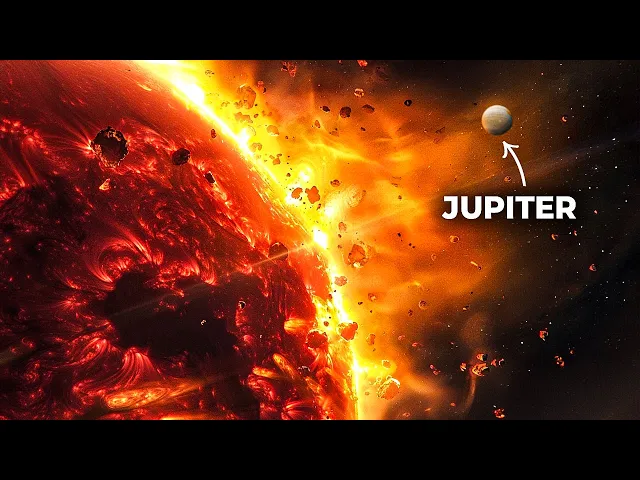


![Beyond the Observable Universe [4K]](https://img.youtube.com/vi/mty0srmLhTk/maxresdefault.jpg)