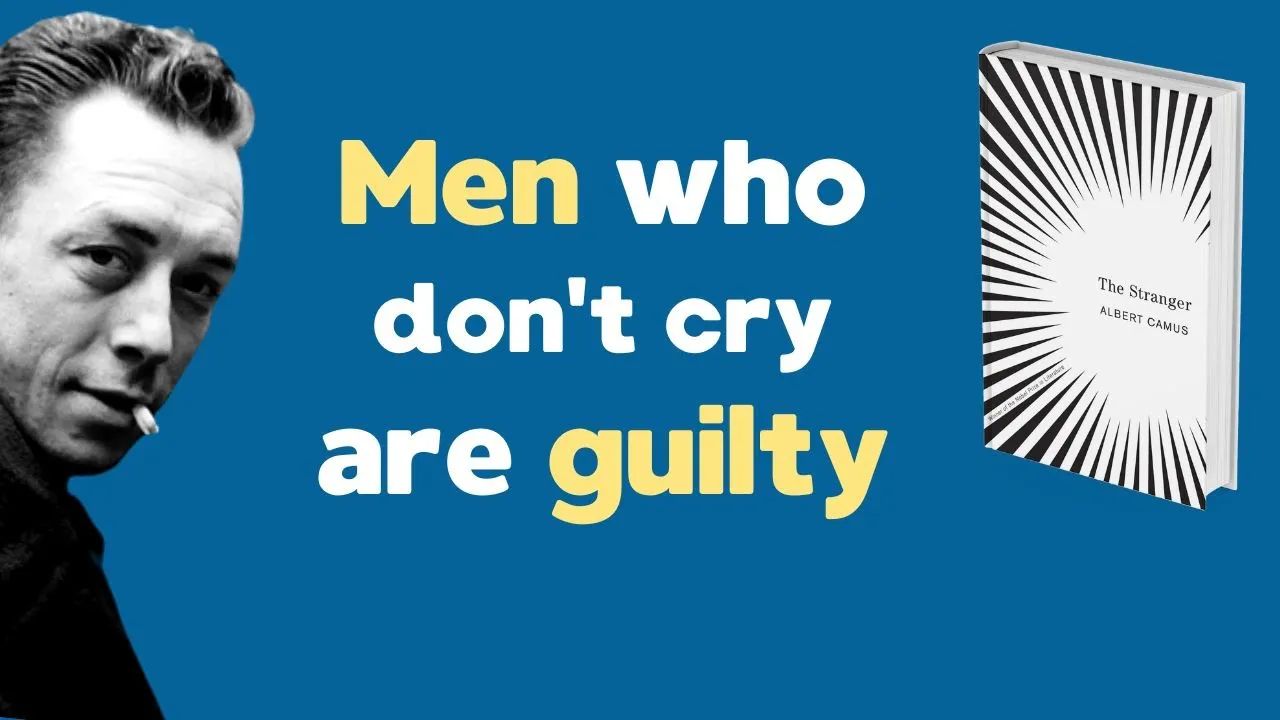
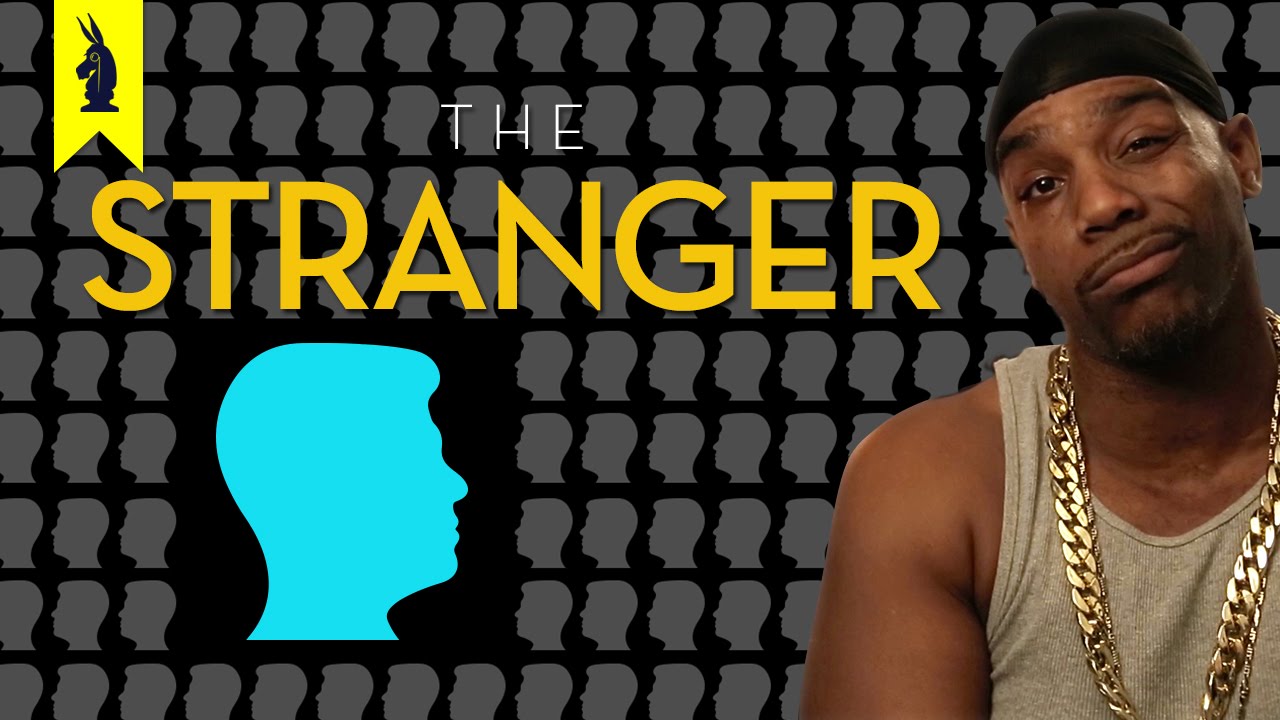
Published in 1942, The Stranger is Camus’s most famous novel. It tells the story of Mersault, a French man who lives in Algeria. The story has three main plot points or three deaths: the death of Mersault’s mother, the murder of an Arab man, and finally his own execution.
The awareness of death makes humans unique in the animal kingdom, so each death awakens something in Mersault from his animal state of indifference and gives him clarity of sort. If Sartre said we are condemned to be free, Camus says we are condemned to death, but also to be guilty. So at the heart of the novel is this central question which Camus poses himself.
Quote: "In our society any man who does not weep at his mother's funeral runs the risk of being sentenced to death. " In other words, Mersault is not only guilty for killing someone, but also because he didn’t cry at his mother’s funeral. That’s the kind of man he is.
Emotionally unavailable. A term used by women today to describe some men. Mersault gets the news that his mother has died of old age.
He takes time off work to be at her funeral, but contrary to common societal expectation he doesn’t cry or show sadness. He acts as though nothing has happened. He drinks, he smokes and he has sex with girlfriend.
He even helps his neighbour, Raymond, to have a revenge sex with an Arab woman who might have betrayed him. Not only that when Raymond is arrested for assaulting the girl, Mersault helps his friend, parroting his friend’s words to the police that the woman was unfaithful. Mersault doesn’t ask questions and does not think if his action might hurt someone.
He simply does what he feels at the moment. In other words, he feels no guilt of what has happened in the past, because he is always in the present so to speak. For example he is shocked to hear that people negatively judged him when he sent his mother to live in a nursing home.
When Mersault’s boss asks him if he wants to work in the company’s branch in Paris, he says: whatever. When his girlfriend Marie asks him if they should get married, his answer is the same: whatever makes you happy. He doesn’t care either way.
His indifferent attitude to life is a real time-bomb, so Camus cranks it up a notch. One day on a beach, Mersault’s friend, Raymond is attacked by the brother of the Arab woman he had assaulted with a knife. Raymond gets his gun to shoot but Mersault grabs the gun from him to stop the murder.
Incidentally, none of the Arab characters are named in the novel. Whether conscious or subconscious on Camus’s part, it shows the disparity of life between the French and Arabs in Algeria back then. Later that day, Mersault, while walking on the beach, encounters the same Arab man with a knife.
Mersault still has Raymond’s pistol so he shoots the Arab man, not one time but five times. He is arrested and put in prison. He promptly confesses to the murder.
But why did you kill him? His only explanation is that the sun was too hot and bright so he acted instinctively and somewhat reflexively. That’s it.
While in prison, days turn to weeks, then months and years, as he waits for his trial. In court, the focus is not so much on the murder of an Arab man, but more on Mersault’s inability to cry at his mother’s funeral. Camus inadvertently shows the disparity of life in Algeria.
An actual Arab man is murdered, yet the prosecutor is more focused on him not crying at his European mother’s funeral. To be fair to Camus, he perhaps wanted to expose the legal system not from a racial viewpoint but from an existential viewpoint that if someone doesn’t know how to cry, he is guilty. If women can cry, why can’t men?
That’s the main question the novel poses. Because he failed to cry, the prosecutor portrays him as a remorseless monster. He is sentenced to death.
As he waits for his execution, Mersault refuses to see a priest because he doesn’t believe in God and sees no physical way out of a certain death. As Dostoevsky said in his novel The Idiot, in nature when you face death, either a wild beast attacking you or your enemy in wars, there is always some hope of survival because you can battle or struggle to live, but when the state condemns you to death, there is no hope, no chance of escape. Death is the only certainty.
Mersault spends days soul-searching to understand his fate. Finally he settles on one incredible conclusion. Mersault tells the priest that we can escape from everything, but nobody can escape death.
It doesn’t matter how you die, but we all do. This fate is sewn in us from the day we are born. This simple, yet profound conclusion allows Mersault to accept his fate.
Not only that, the mere act of expressing himself, or yelling these words at the priest, also liberates Mersault, in a kind of Freudian talking therapy or church confession. He reflects, perhaps for the very first time in his life. He is finally awakened to the human condition.
He was an animal but now he realises death as a human experience. Mersault’s finally happy. Not only that, he is looking forward to his execution to hear the hatred of the crowd, so he won’t be alone while dying.
In the Stranger, Albert Camus raises two important issues: our human awareness of death and feeling guilt. The novel has three deaths, one natural, one illegal murder and one legal murder or execution. The first death, the death of his mother, arouses little in Mersault.
He’s also indifferent to the second death which he causes. But when it comes to his own execution, he finally wakes up and is completely lucid. Evolutionarily speaking, humans are perhaps the only species aware of its own death, which heightens our sense of consciousness.
As Martin Heidegger said, the awareness of death makes human life authentic and meaningful. Albert Camus echoes that arguing that death brings clarity to our lives. It makes us more conscientious to live a fuller life.
The second issue in the novel is guilt. Mersault is on trial for the murder but the focus is mainly on him not crying at his mother’s funeral. Camus, perhaps, just like his later compatriot Michel Foucault, was pointing out that modernity replaced physical punishment with psychological punishment.
Pre-modern world generally punished criminals through physical ordeals, while the modern legal system stopped physical punishment for the most part, and instead it introduced psychological punishment by making sure one feels guilt. This is perhaps due to the modern man being too rational. Mersault is an honest man who confesses to the murder without going through the Raskolnikov ordeal in Dostoevsky’s Crime and Punishment.
But his confession is not enough, so the prosecution tries to break Mersault’s indifference, icy interior by making him feel guilty. So Camus says to be a modern man is not to be free as his fellow writer Sarte said, but to be guilty and cry. Modernity, on a fundamental level, is an attempt to tame nature to benefit humans.
But modernity also wants to domesticate man and break their spirit by making them accept guilt, feel vulnerable and cry. So during the trial, all effort was on making sure Mersault felt guilt, not so much for the murder, but for not crying at his mother’s funeral. Today, if men don’t cry or show vulnerability or emotions, they’re sometimes labeled as toxically masculine.
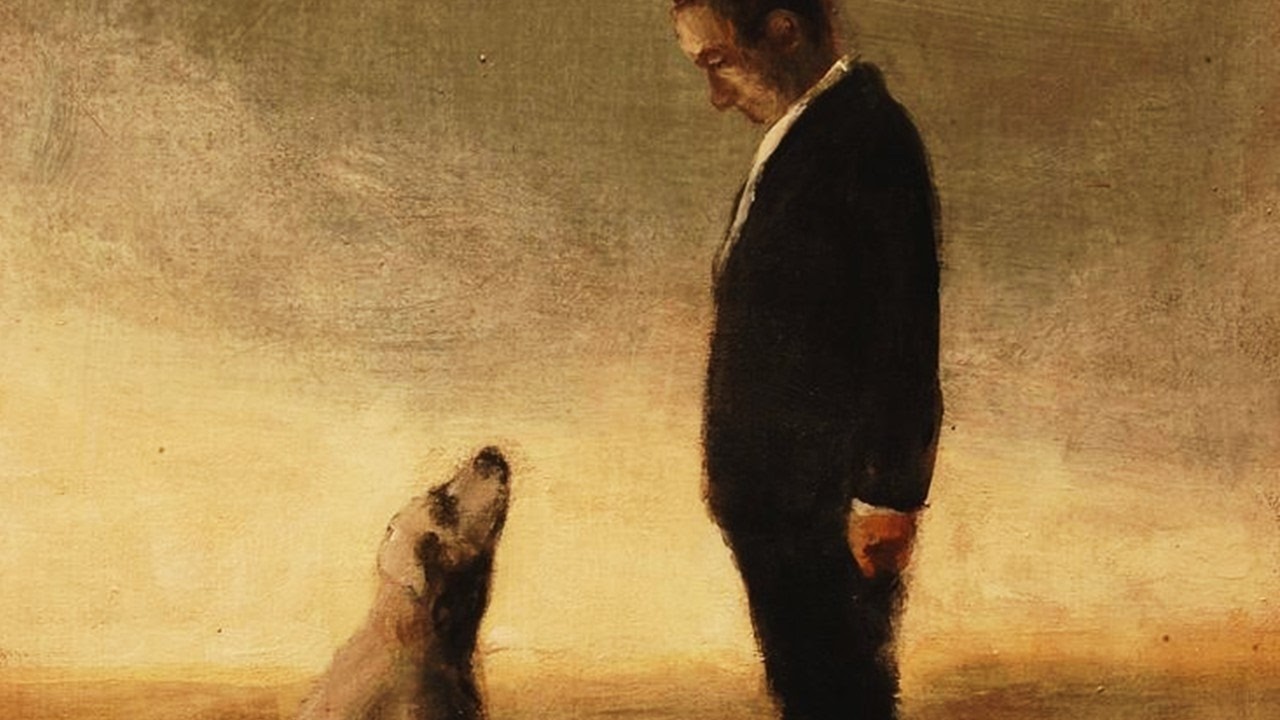
Mersault’s indifference or care-free attitude towards others makes him dangerous to society, so one has to tame him. By depicting Mersault as a complex character, Camus recognises that making him feel guilty is a process of taming the wild animal, turning a wolf into a domestic dog. While it makes the society safer, it can also break the spirit of others.
When a person is on trial, the focus is not on him but others, making him an example to others. Judicial process is less about punishing the criminal on trial but more about taming the rest of the society through fear of punishment. Mersault is not tamed.
Guilt doesn’t tame a man. Even death doesn’t tame him. Death makes you realise you’re not a stranger, but like everyone else, just another human being understanding and anticipating death.
He understands that he’s no different from his mother. Knowing that he’s connected to others by experiencing death is liberating and finally brings him happiness. He’s part of a bigger picture.



![The Stranger by Albert Camus [Audiobook]](https://img.youtube.com/vi/tqLRNo25d_E/maxresdefault.jpg)