I think that a lot of CRO forget after they came up through the ranks that first line sales managers are not many CRO. >> They're not thinking the same way. They're not thinking strategically.
They have their eyes narrowed in on their team. >> Yes. >> And their direct manager and it's not what are we looking at holistically.
First line managers are not compensated focusing on the overall northstar of the company or compensated on what they're focused on and that's why they're focused there. [music] I think that's the biggest blind spot is they're like why aren't they thinking this way? It's like that's not how you're paying them to think.
So many people are so scared of AI. I don't know where to start. I'm overwhelmed.
We're not ready. A lot of it comes down to do you have the basic fundamentals in place? >> Do you have a sales process to follow?
And what does that sales process look like? >> And a lot of teams that we work with don't even have sales enablement teams. They don't even know what that looks like or they're scared to call their teams sales, their business development, their customer engagement because they're scared of the word sales.
So, a lot of what we talk about is how do you lay the groundwork? One, we have to admit that everything in life is sales. Whether that's convincing [music] your wife you should get another dog or asking for a promotion, that's sales.
And also asking somebody to buy your product. [music] So, taking sales as not a dirty word, and then saying, let's put a workflow into this. What does this actually look like?
101, step one, step two, step three. And then how do we actually start wrapping technology around the processes and formulas around the processes so that it can be streamlined. >> This is the revenue vault where revenue machines are built not bought.
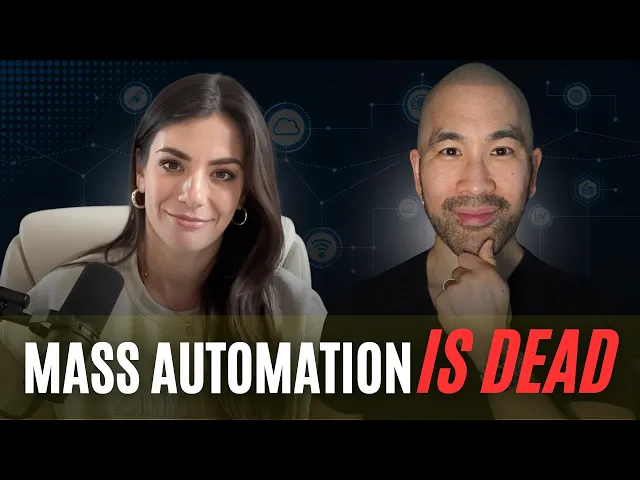
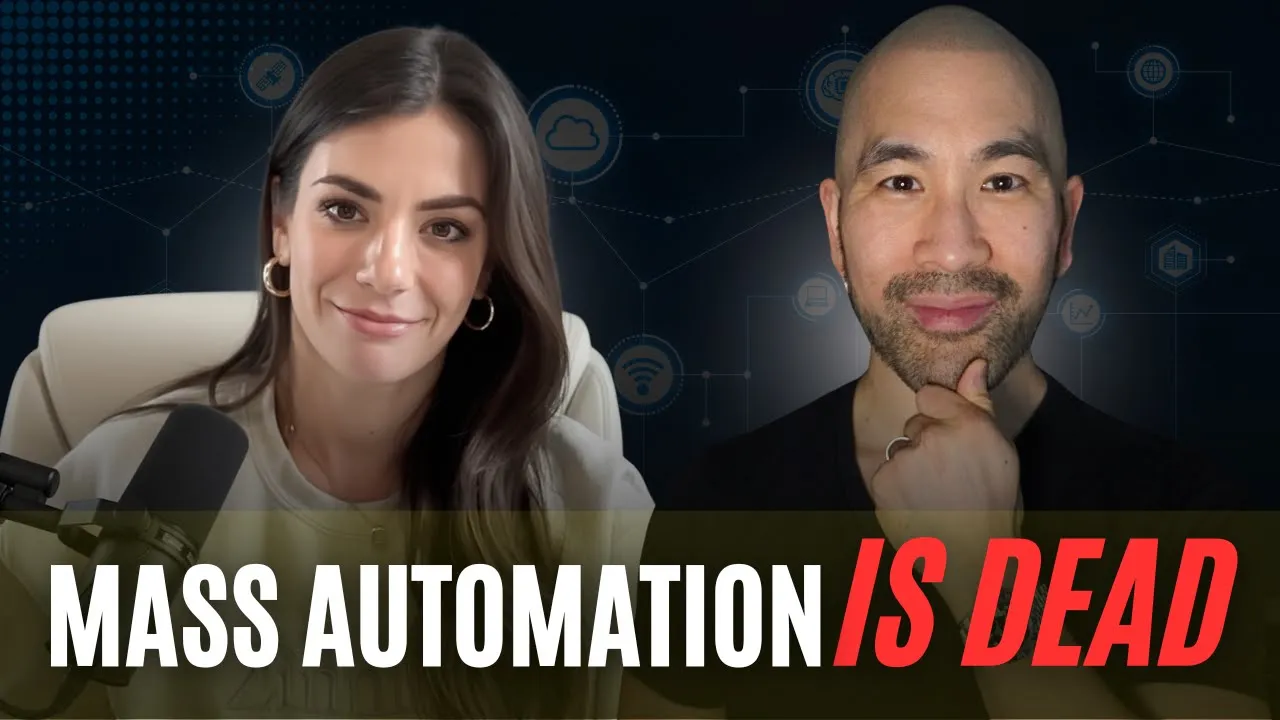
Hey, I'm Mark Shan, CEO of Venley and creator of Revenue Engine OS. Now today's guest is Lauren Cadell, founder and CEO of Zineia. She has been highly successful as an enterprise AE at companies like Salesforce and Microsoft and she's led both the ventureback software grind and the services side and now runs a sales acceleration platform flipping the script on AI making it more human not less.
Her take in a world where software gets commoditized overnight, the human experience is your only real moat. Here's what we dissected. Why wrapping services around software reduces churn increases retention more than margin chasing ever will.
How to modernize large enterprises that are so running on pen and paper. The art of forced serendipity. Cutting down that awkward hour small talk down to seconds with AI powered account intelligence.
Plus, Lauren breaks down why analyzing a company's 10K and comp structures lets you sell to the personal win, not just the business case. If you want to learn how to build pipeline that actually converts and you want the playbook for making AI your unfair advantage without losing the human touch, let's hop into it. So Lauren, you have lived both the venturebacked SAS grind and the services side of sales enablement.
What are the biggest misconceptions CRO are making about balancing software and services in go to market? O I think one of the biggest things today that we're hearing is so many CRO are like margins are so high on software. Let's focus on the software side of things.
>> But in this world of AI first, you know, lovable um vibe coding, all of these things, your software can be replicated so easily. And I think what a lot of people are forgetting is that it's the services, it's the customer experience, it's the human connection that is actually what's going to keep people sticking around and what makes them fall in love with you. >> Yeah.
I think it's really interesting, right? Because I think I think about, you know, at this time I think about even the future, right? Like like what business is going to be around?
What's the hardest business to replicate? And as I as I think about I'm like if if we go to even like the consumer market like the ones that people are always going to need are a lot of these services like hey I'm always if if my pipes have issues I'm I'm going to need that plumber like you know I don't want to cut my own lawn you know my my grass my lawn I'm going to hire people then to do that right um and so with that being said you know strategically you know cuz with rep sometimes you see even the comp structure right it drives towards more the what they consider to be more profitable piece of the business how should CRS be thinking about even the comp structure potentially then to incentivize maybe the stickiness of the business. >> Uh there's a lot of statistics that show that wrapping services around software is actually what increases uh customer retention >> and reduces churn.
And so creating a com structure I always say is an art not a science and no matter what you put in the con structures you're training your staff on what they should be focused on. So, if you're focused on longevity of your business and you want to keep your customers around, you want to keep them happy. It's important to be able to also compensate your reps for bringing in services and how is that weighted?
That's really according to you and your business, but it's something that should absolutely be included and that everybody should be aligned on. >> You're so right. I mean, I think it really it boils down to like what are you optimizing for, right?
Are you just optimizing to get a bunch of logos, you know, on there or you optimizing for long your lifetime gross profit of a deal, right? The longer the deal, obviously the more customers or the more, you know, the more profit you're going to generate over time with more upsells and um I think it's so vital. Now, one of the things when we were preparing for today's call, you know, we were talking about some of the enterprise accounts you're working with, you know, they have 600 plus sellers, tons tons of reps, no real CRM.
So what's the lesson for sales leaders who are trying to modernize their team but I mean they are just so far behind on the basics. >> It's so funny it's I joke with my team that enterprise does not mean uh prepared. Enterprise does not mean knowledgeable does not mean modern.
Um I mean we are working with quite a few enterprise clients and some of them are like how do I have a discovery call and they're like where should I be taking notes when I talk about customers? what should be included in my notes and it is truly the basic 101. Um, and a lot of these companies are, you know, pretty old, have been around for a long time, are not used to the modern kind of data sets like CRM or any of the AI tools out there.
So, it's really about, okay, how do we crawl and then walk and then run, you have to get the basics down. Um, especially as you start looking at adopting AI. AI is only as good as the data you put in.
So, if you don't have a CRM and you don't have data, you're not going to be able to do a lot with it. So, because it's it's a big overwhelming task, right? Like, you know, I gota imagine some of these organizations, they're like, "Oh, we're talking about getting AI adopted.
We don't even have a CRM. " Like, where would be the first step you would guide them to go first? >> Oh my goodness.
So, it's so real. So many people are so scared of AI. I don't know where to start.
I'm overwhelmed. We're not ready. And a lot of it comes down to do you have the basic fundamentals in place?
>> Do you have a sales process to follow? and what does that sales process look like? And a lot of teams that we work with don't even have sales enablement teams.
They don't even know what that looks like or they're scared to say call their teams sales. Their um business development, their customer engagement, they're scared of the word sales. >> And so a lot of what we talk about is how do you lay the groundwork?
One, we have to admit that everything in life is sales. Whether that's convincing your wife you should get another dog or, you know, um asking for a promotion, that's sales. And also asking somebody to buy your product.
So taking sales as not a dirty word and then saying let's put a workflow into this. What does this actually look like? 101 step you know step one, step two, step three and then how do we actually start wrapping um you know technology around the processes and formulas around the processes so that it can be streamlined.
>> Yeah, I think it's um you know I've always thought about you know whenever we incorporate new tools you know whether it's AI or anything else it's like rocket fuel right for the engine. Um, but if you don't really have an engine built out, you don't have the fundamental the core process, it's like really hard to do, you know, because I've talked to organizations, you're either these are like multi-billion organizations. I mean, and it's it's almost like everything's like pen and paper still, you know, like it's kind of wild, you know, or they kind of live in the in the rep's heads and they kind of manage it that way and there's no real like centralized CRM.
There's no real process. It's kind of like, hey, just go do what you do, you know? I mean, if you can incorporate some of the processes up front, then you stack tech with that together.
I mean now you you can like you can literally overnight like transform the organization you know it's pretty uh it's pretty wild. So and I'm sure you see this too because you have probably some customers you know or processes hey you know we're not we're not ready for AI we're not we're not sure ready for that. What should take away about timing and readiness and leading their teams through that transition.
>> The first thing that I say when it comes to we're not ready for AI is uh is that a fear of the data? Is that a fear of not knowing how to use it or being worried that your team can't adopt it quickly? >> And a lot of what we do with uh you know services is okay there's a big reason why somebody is going to fill out an account plan why somebody should take notes in CRM but it can't feel like it's checking a box.
It has to you have to start with the why when you're training and enabling a team. Why are we adopting AI? That goes all the way back to why am I filling out an account plan?
>> You're not filling out an account plan to check a box for leadership to say I did it. You're doing it to say, "Oh, I'm uncovering new opportunity that will build pipeline and in return make me more money. Give me more commission.
" >> Yeah. >> It's like, how do you tie each of the steps back into a why that's personally afflicting? >> Um, and then taking that and saying now that we all have buy in, >> we know that this is a valuable to do.
This is kind of the crawl and then the walk. We know this is valuable. We're learning how to do it.
How do we just streamline all of that and automate it? >> You know, and really what it sounds like you're really talking about is it's change management, is it? Just change management is what it breaks down to, >> so and and I can imagine and probably in in certain industries like for example, you're selling the tech generally speaking, they're pretty like kind of forward thinking.
They kind of understand like, yeah, okay, cool. This this makes sense. But when you talk to like an older industry, you know, some of these ones have been around for like what's called decades, you know, and they're behind a lot of these things.
Um, how do you And and sometimes they almost have like the old guard, if you will, and they're kind of like this is how we've always done it. >> Uh, >> you know, we just we just we put the reps out there. They go they go pound the pavement, they knock on doors, they collect business cards, and this is like their thing.
How how do we help those type of old ways of thinking shift to like embracing something like AI? >> A lot of this, like you said, comes back to change management. This often means not going through the same sales kickoff.
we're going to teach you everything in one day and then everybody leaves and they forget everything within a week. >> It is pulling in a um some sort of training process along the way to say we know that this is important fundamentally. How do we check in?
But for those that have push back, there's always going to be a few sellers. There's always going to be a few members of every team that's like, I don't want to use this. What I'm doing is working just fine.
And we often use the analogy of when we went to school and teachers would say, "You're not going to walk around with a calculator in your pocket. You need to learn how to do these things manually. " And now we walk around with a whole computer and server in our pocket and you can do everything at the click of a button.
>> And so when people say like, "Oh, I don't want to use that software, you know, like I've been doing this fine just manually. " It's like great. You're now saying that you're doing times tables in your head when you could just have it automated.
Instead of you going out and looking at 20 different websites to prepare for a meeting, you can click one button and now have everything at your fingertips. And so it's really about like do you want to be left behind cuz it's it's changing. How do we help you get there and add value along the way?
And >> I can imagine for people like that if you were to like I don't call force them right but like hey show me how you do account research. Okay try this. You know, like I don't remember the Pepsi challenge, right?
People tried two different soda. It's got and they could immediately real like, oh, oh my god. Like this would have taken me like two, three hours to do research and now within a couple minutes, seconds if you will, I have it right here.
You know, I think it's like mind-blowing for a lot of people to experience that, right? Um, and I think it's really vital when whenever I get buy, it's like you do not not just the the rep level, but every single level so they can truly understand it because, you know, cuz everything rolls downhill. If you they're bottoming up top, they'll roll it down as well.
One thing is what's cool about, you know, Zenia, about what you do is you're really passionate about making sales more human. And I think especially in what when people hear about AI now and they they get these AI generated emails, they get like almost like scared. They're like, "Oh, I kind of see it.
It seems robotics. It's not I don't respond to that. " What does that practically look like when you're trying to make it more human in sales in the enterprise or with hundreds of reps, multiple layers of leadership in a heavy process?
How do you make that more human? >> This is something I'm super passionate about because like I said at the beginning with software, yes, software is important. Software can be replicated easier than ever.
So, it comes back down to the services that you wrap around it. And the services could be managed services, paid services. >> It could also just be your free value ad services that you can offer as a sales rep, as a CRO, as an executive.
>> And that comes down to the human element. When we talk to large organizations, when we come in and talk about how do we use AI to make us more human, it's not here is the exact workflow that every single seller should use. This is the exact methodology.
It's here's a framework. Now, you are a human and if I said the same script that Marcus said, it's not going to work. We have to make it our own.
Figure out how it works for us, but then also how it will um adapt the customers and prospects we're talking to. >> Yeah, I think it's really really key, right? I think it's like when we think through tools as frameworks.
I think it's a great great terminology, right? Versus like a script, you know, the script in our minds like we read it verbatim, we don't change a single thing. We're basically a robot, which rarely works, but we understand frameworks.
We can adapt. And I've always thought through from a framework perspective. It's like a eight lane freeway.
We're all driving for the same direction. we have kind of same destination you want to get to, but based off the person you're talking with, you know, you might speed up, slow down, get off the freeway, get back on, but you're heading towards the same direction and a framework kind of helps you with that. And I think you're using tools like AI.
That's like that's what helps get there, right? But you need to have critical thinking skills to adjust and accordingly based off your prospect. Does that seem like a pretty fair statement?
>> Oh, absolutely. One thing we talk about often is um I say force serendipity. So, if you're ever sitting at a conference next to somebody or at a, you know, dinner party and you get sat next to somebody and you're like, I have nothing to talk to this person about.
They're the most dull person on earth. >> Uh, and then an hour and a half into dinner, you're like, "Oh my gosh, we have this, you know, we both went to the same yoga retreat or something like that. " And then you can't stop talking about it.
>> It's like Zineia removes that hour and a half of who the heck is this person? What do we have in common? And it helps light you up and be able to bridge those gaps and create that human connection where what do we have in common?
What are we both really passionate about? And how do we build a real relationship whether or not sales ever happens? >> You know, I love that so much, right?
Because I I think even how we came across and met, right? You know, we see each other's content, right? You know, then you had a presentation, you know, amazing presentation over in totality at Knoxville, right?
And then we just started talking, right? And we found obviously many, many common bonds and fast forward the the force serendipity, if you will. Now we're jamming out together live which is pretty awesome right and you know I think about like you know like this is so applicable across the board of force serendipity you know because obviously from a sales perspective you use a tool like Zenith that can really help you in a sales perspective but I think about what's that mindset you kind of if you kind of shift your mindset to think how can I do this in every situation >> you know I think about like you know the first time you meet somebody you know it you know it could be a cocktail party it could be an event people go oh how's it going it's going good and then it's like okay what happens next like you know it's like oh you know like what do you do you know like it kind of like weird awkward force >> and I think through like some of the best prompts I've learned is like how can you ins either number one you share something really interesting about yourself when they ask how are you to kind of facilitate the conversation or you ask a question prompt to get them out of the how are you >> you know like for instance you know you meet someone good to meet you Hey, cool.
Like what's something exciting going on in your life right now that you're passionate about? >> Oh, the uh >> you know the question cards. I don't know if you've ever seen the question cards that sit on a coffee table.
>> Yeah. >> It's those type of conversations. And I think um there's some people who are naturally outgoing like you and I immediately we're like, "Oh my gosh, we both love fitness.
We're both into this. " But that's not necessarily doesn't come naturally to everybody. And so using technology and using tools, using trainings is helping people that maybe it comes less naturally to or maybe are neurode divergent and have that harder time connecting.
Bridging that gap way quicker and I feel like it's just strengthening humanity >> 100%. Now this may shock you. I'm actually not extroverted.
>> You're not? >> Oh my goodness. >> I'm actually I actually used to be more more introverted.
I'm more of an ambiovert now, right? over time probably because of sales but because I was like really awkward small talk early on you know I didn't didn't know to how to bridge that I wish I had tools like a zineia up front because like you know like here I mean like just awkward hey I see you like the fish like like it's like being very weird like doesn't work right um but I had to learn over time how to like have these kind of frameworks and structures and I think about you know people who don't realize that and they're you know they're they're older now they have the same weird habits still if you will and they're kind socially awkward, right? Versus I was socially awkward, but I kind of had to force that learning.
So, I think you and I think about sales organizations. Some sales people are a little bit awkward. >> Yeah.
>> And they need a little bit of help in coaching, but no one's ever told them that, right? Like, so they have to be kind of guided into that. So, whenever we can help them ease it, that can be really, really powerful, you know.
Um, so we're going to pivot a little bit, right? So, a lot of times, you know, investors, they'll push for the high margins, right? They want 90% plus margins, right?
Printing cash is what they're kind of going for. But a lot of times these organizations see consulting drive the real impact. So how should CRO's think about the ROI, long-term value when choosing vendors under that dynamic?
>> So twofold. One for their products and services they're selling. What's been interesting is uh you know in 2021 investors were all about uh margin.
You know what is the highest level of margin that you can get? How do you push that up and up and up and you should ignore professional services. Now when I'm talking to venture capitalists, they are saying to me, we actually love that you guys have professional services.
>> It's actually d-risking you in a market where invest investment is at an all-time low. >> Um and so being able to build those professional services in d-risk for them. >> But like we mentioned earlier, this is also um from a perspective of how do you differentiate yourself?
What's your stickiness? What's your moat? It really comes down to the experience that you're giving to your customers.
>> And so, flip side, when you're evaluating what vendors you should be working with, sure, buying software is really important and it's something that is a recurring fee that you'll be paying um and it will keep kind of the process going >> of some of the trainings that you may be getting professional services. >> So, when I talk to CRO's and they're asking me, you know, should I buy your software, should I buy your services, typically my answer is both. And sometimes it's let's actually start with the services to make sure that we get you ready for implementing software that you can actually use.
>> I don't think it's either or. I think it's and >> yeah 100%. I mean when you when you take a step back and you really think about it you know the business you're you're the prospect you're working with they don't specialize in what you sell right.
So like yeah you you take on the service but you don't want to be like that dead dead weight of software you paying right the software bloat but that professional services piece can really help with actual true adoption but also fully maximizing it right um I think back you know back when you're working like a salesforce right it's like it wasn't just you sold the software there was the backend agencies and implementation to ensure they could fully leverage and utilize the full capacity because you know as you and I both know most of the time no one no one fully maximiz izes the software but same here it's same with you know like I have some amazing software I'm most of them I probably don't get the full max capacity and I think through like if they had a professional services component of some of these softwares I probably would number one >> do even more with them right as a result pay them more but I see even greater value it makes it far harder to leave yeah you know so sometime I think when they people look at like pure scalability like more software that's the way to go but like yeah that can help to a certain extent but how can you really maximize the overall account and drive with the customer experience which has all these other intangible benefits like you know referrals, testimonials and all these other things. Um I love that >> especially with something like a CRM, right? This is a CRM is what almost every single sales or is using.
Yeah. >> And they've already made the investment in it and they're paying a heck of a lot of money for something like that or like LinkedIn Sales Navigator. Really, really powerful tools.
>> Oh yeah. they would actually get such a high much higher ROI if they were to bring somebody in to actually teach them how to use >> and you know use all the different elements of that. So I think there's a higher ROI from services in that perspective.
You're 100% right and I I think too it's like you know if you're like a really smart CRO and you you see the potential in the tool it's like okay even that or doesn't have that professional services hey where can we go access it is it internally is it externally but how can we fully maximize I think the sales now is a perfect example you're already spending the money to get those licenses and it's such a wildly powerful tool but most reps have no idea how to use it like it's most interesting thing I'm like >> if if they were just trade for even an hour like they're going to know way more than majority of reps which is kind of wild thing, you know. So, >> yeah, most of our clients that are using something like that are using 10% of it. They're like, "Oh, I just get my leads there and then I go do my thing.
" It's like, you're spending so much money just to get a list of those things and not really utilizing it at full cap. >> Oh, yeah. It's like a basic search, you know?
I'm like, that's it. Like, this is not a boolean. I mean, all right, that's fine.
Okay. Kind of burning cash is what you're doing, right? So um >> when I think about you know deploying new solutions, developing teams and change management um a lot of it has to do with how good a frontline sales leader is and helping deploy it.
So in your opinion what's the biggest blind spots CRO have when it comes to frontline sales leaders? M I think that a lot of CRO forget after they came up through the ranks that first line sales managers are not many CRO. >> They're not thinking the same way.
They're not thinking strategically. They have their eyes narrowed in on their team. >> Yes.
and they're direct manager and it's not what is what are we looking at holistically and also that comes back to the comp plans and a lot of firstline managers are not compensated focusing on the overall northstar of the company they're focused on are compensated on what they're focused on and that's why they're focused there I think that's the biggest blind spot is they're like why aren't they thinking this way it's like that's not how you're paying them to think >> oh 100% this this is so true right it's um you know I worked for a fortune 500 company for years and was interesting Even as a frontline sales manager only uh well 60% of my number was dependent on how my team performed which which was key. The other 40% was how profitable we were. So pure profit.
So like and they had changed over the years and it used to be purely just off of like just sales. It was like hey whatever like the reps they did you you made money off that and then that was great but they saw profitability shrink. So how they change it?
They add a pretty heavy 40% significant like kicker into how your you know how profitable you know your overall org was in that in that area that you were at and it would change my behaviors right it actually forced me to understand the operational part of the business way more to get to deeper weeds and like work other departments. It actually made me a better like leader overall. And once I got to a larger role where I, you know, had, you know, had like 85 reps, multiple layers of leadership and all that stuff, half my comp now was on profit and earnings per share.
So now it's like it sh completely shifted my focus and my energy and how I drove teams and but it applied to everything. How did I hire? How did I train?
How did I onboard? Right? It's like show me the incentive plan and I'll show you the results.
That's that's kind of what it breaks down to, right? [laughter] I tell part of our platform is analyzing a 10K or an annual review. Um, so that when you go into procurement or you're going to negotiation, you know what's important to people.
And this comes back to exactly that. If I'm selling to a CFO and she gets her annual bonus if the company increases their margin by 10%. I can find that in the 10K.
And then even if that's just like a minor subset of the product or service I'm selling, I'm going to show her how I can put money into her own pocket. But it's the same thing conversely, right? as you're setting those parameters.
If you're compensating your leaders on a certain thing, they will make buying decisions. They will make hiring decisions based on how it affects their own bottom line. So, I'm [snorts] very passionate about this subject.
>> Well, I mean, Lauren, you nailed it, right? And I think a lot of times a lot of sellers, you know, and lot of exacts, they get so focused on like, hey, here's our product itself. It solves a specific problem, right?
like and yeah that might be good enough to a certain extent but a lot of times if you need executive alignment we need to understand what what's the actual win for them in the overall org but also personally >> yes >> you know if we can show personally how they're going to bonus more that's going to be pretty big if we're going to show personally how it's going to help them you know get promoted because they're making the right decisions to the next level leadership or get on the board that's really really powerful and I think we forget that human element a lot of times because we're trying to pull out like ROI calculators like let show you ROI, which is good for a logical sale. >> What about the emotional sale when they have a lot of worry about a riskiness of a deal and trying to get over the line and putting their name on it? >> Yep.
>> How can we get them bought in? You know, that's powerful. >> Thousand%.
>> Is there uh as we talk think through the kind of 10K piece, is there any specific example of maybe a situation you've like ran into or used it or maybe one of your clients use used it to help them with a deal? >> Oh, all the time. All the time.
I I think the 10K is a gold mine that people don't really dig into. I mean, it's 180 pages of super fun, dry content, fun Saturday night, scroll through, read it. Yeah, >> exactly.
Which is why we we put it in the analysis, right? Is um I don't want somebody to have to read 180 pages. I want to have it served up to me to say, I know what you're serving.
I know what you're selling, right? I know what the products or services are and what the typical benefits are. How does this actually align to what the company's reporting to their investors and their stakeholders?
>> And how are the people involved in the deal, your champions or blockers? How are they compensated and what's going to be important to them? >> Um, but one thing that we also do is we pair in personality details.
So, I love what you're saying is about this is a logical sale >> is one of my investors, Zenia, gives you the personality details. So, his is serious, stoic, and data driven. So, if I came in and tried to give an emotional sale with him, he'd be like, I don't want to hear this.
But I do know how he's compensated and I know that giving him a direct number ROI will be important versus [clears throat] someone like me who's very relational, if you try to just, you know, shove numbers in my face, I'm going to be like, but do you even care about who I am? Right? [laughter] And so it's important to cater it not only to like compensation, but like also how does somebody relate as a human?
It all comes back down to human. >> I love that. And if if you're able to explain like how does how does your tech help identify?
I think it's so critical, right, to walk in kind of understand the personality style, how does the how does your tool get that information to help sellers? >> Um, besides having a private investigator on every single person, >> great idea. >> We won't do any stalking, but we'll analyze your entire online persona.
So, obviously somebody like you who is very public and has podcasts and news articles and um, you know, your own LinkedIn posts and um, anything like that. Then we also analyze um, the persona. So, what is your personality on a call?
Are you really bubbly and funny and sarcastic? Are you very serious and quiet? And then even down to are you using exclamation points and emails >> or are you giving me bullet points?
Are you ending with no punctuation? All of those things kind of we distill down to say this is who we expect this person to be. And if we don't have a lot of that data, we can also we'll pull out insights and say we don't have a lot of data on this person.
Maybe they have no online presence. you've never interacted with them before, but given that they've been in their role for 25 years and they are an accountant, we expect their personality or they may cater towards these type of desires in these conversations. >> Well, the cool part is is you're walking with a hypothesis, right?
And and we mentioned the critical thinking skills piece where it's like you have a hypothes. And if you realize the opposite, completely cool because you at least I can adapt and adjust now based off this. And I think this is something that not many people talk enough about because they think sales is a very logical step by step.
But that's just not how it is. It's it's like it's very it's actually quite emotional even in B2B for all the stakeholders. So I think if we can understand all the stakeholders at different levels what their personality types are like you know we have the hypothesis then we validate the hypothesis then we adjust accordingly that gives you such an edge up over the competition because now you can adjust your selling style to kind of fit them right um I was talking to a client yesterday we're looking at one one of her team's calls and it was actually really interesting because we get in the weeds and kind of find out there's multiple presence of the company for one division They're very much a marketing background, right?
So that they have a marketing way of thinking, right? Very sales focused, which is great. Then you have a we have a one of the finance background and like they're the ROI, business case, justification, you know?
Yeah. And so now we're walking through a strategy. How do we approach each one differently?
Because we can't just, you know, maybe he can show a fancy deck to the marketing person, they're going to love it, but we send it to a finance person. They're going to be like, just give me that one pager. Like what's what's the bottom line, right?
Uh I think it's really really powerful. Now when we look at the teams uh a lot of times you see in teams ask for probably more training. Hey we need more help on discovery.
How do I how do I start a call or multi-threading? But the real issue is probably like manager reinforcement right or something like that. How can how should CRO's diagnose like the root problem versus let me just buy a software let me just buy sales training.
>> Yes. Oh okay. So, this is kind of maybe a taboo example, but um I I think about like church summer camps, right?
Kids will go to church. I I went and I would come home and I'd be like, "Oh my gosh, yes. " Like, "I'm going to be the best kid ever and like I'm going to put all these practices into place after you spent a week there and like look, I love all these worship songs.
" And a week later I'd be like playing tag and have forgotten about everything, you know? And [laughter] I'm not comparing sales people to kids, but in a way, we all are. Um, >> yeah, I became a complete delinquent after a week.
[laughter] >> But, you know, it's like this is great. It's awesome to have rah rah, everyone come together, sales kickoff, drink the Kool-Aid, get really excited, but if there's no reinforcement, you're going to forget about it and being playing tag on the playground with your friends soon. >> Oh, yeah.
And so whether it's, you know, rolling out and doing a big launch with software or doing a sales kickoff and bringing in a trainer, it I really like to instill micro trainings or touch points, whether that's customer success with software, whether that's micro trainings with, you know, somebody um like Benley, uh being able to say, "Okay, here here's what we taught you. Here's how we're going to keep implementing it over time and even making it stronger and adding little micro trainings along the way. " >> I think you nailed it right.
It's it's I think it's also when you when you diagnose it and you realize cool we can't just band-aid the solution we need to take a step back we need to be like a doctor we diagnose a core root issue okay and then we build in a system for like a reinforcement you know I I think about you know when I think about even training or developing of a team it's like sports you know it's not like they just train the preseason it's like hey good luck like they train non-stop all throughout fact 99% of the time is spent in training only 1% is actually on the field, you know. Um, I know a lot of CRO who listen to this and sales EPs, they're like they're worried about the future and they want to stay really competitive ahead of the market. If you could bestow upon your wisdom and and drop one piece of advice, what's one behavior that they should hardwire into their org to stay competitive the next 12 24 months?
>> People buy from people. >> And I know that's redundant and everyone said it. I didn't come up with a quote.
It's not groundbreaking, but we have so many of our customers that have come to us and said, "We bought the AIB BDR. We bought the, you know, mass automation tools who are sending thousands of emails. We paid for the offshore BDR services that said that they could book us x amount of meetings and they're filling their funnel with fluff or they're not getting any responses.
" >> And it's because we have, you know, what people are calling the great ignore. people are getting, you know, mass automation means, you know, mass annoyance. And so, nobody wants to respond.
>> And the times where I get an email when I know it was sent from a human or an outreach of somebody sending me a video or a voice note or, you know, a silly card, those are the people that I respond to and it's because they actually took the time to care. And so few orgs are doing that. And so, I think while everyone is leaning into mass automation, the companies that focus on the human element are the ones that are going to win.
M I think you 100% nailed it, right? It's um and I always found the best advice and you're like, "Oh, I didn't come up with this. " The best advice I found is true, not new.
>> Yes. >> And we often need to be reminded versus told what to do. And this is where this will in a world where everyone's trying to run towards scalability and they're trying to go like mass everything, it becomes obviously very very busy world, right?
And a lot of extra noise. But if you could slow down and say, "Hey, where are the gaps that kind of stand out? " These are the gaps.
These are the things that stand out. When everyone's trying to go left, you go right. Uh, amazing interview.
Um, people want to find out more about you, Lauren and Zenia, where can they find you, get a hold of you. >> Yes. So, getzineia.
com is our website. And if you'd like to connect with me, find me at Lauren Goodell on LinkedIn. >> Cool.
That's a wrap on this episode of Revenue Vault. Now, if you got value, here's your next step. Go to ventlinkconulting.
com/teams to get a free performance scan of your sales or we'll show exactly where deals are still and how to actually fix it. And this episode gave you even one insight worth sharing, send to a saleser you respect. I'm Marcus Shan.
Thanks for being in the room.