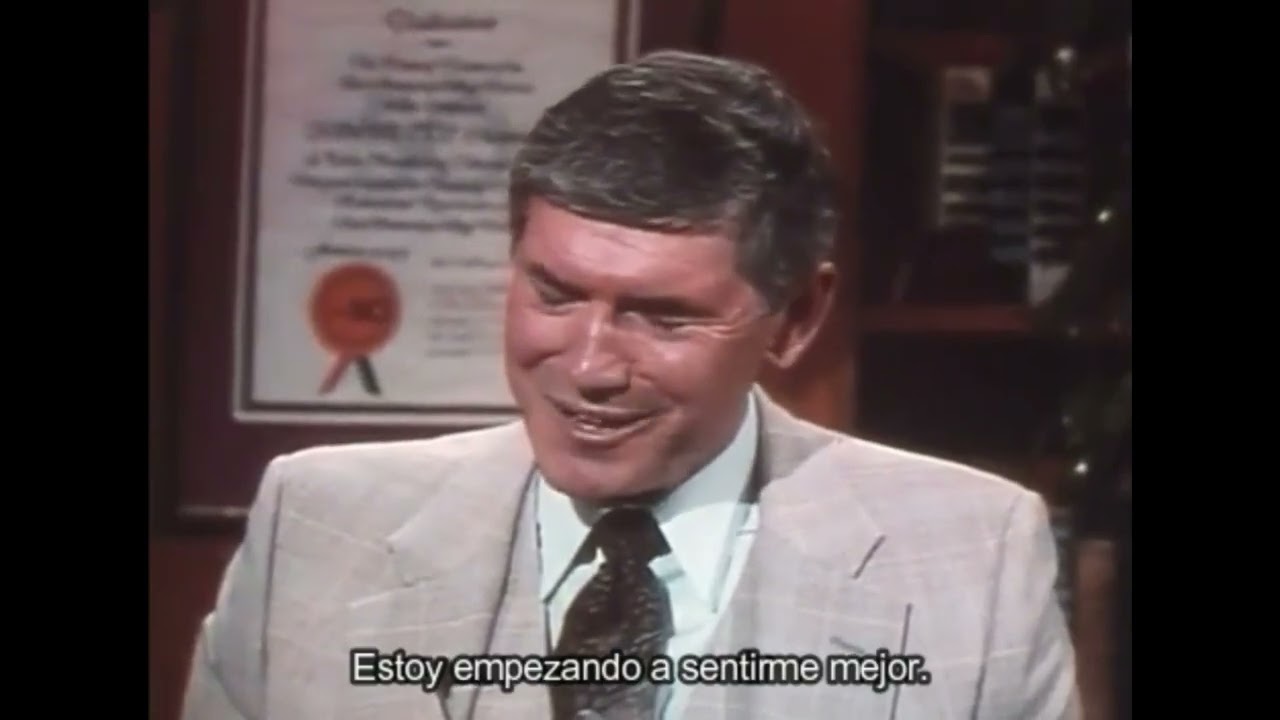
I'm Judith Bek and today I'm interviewing my father dr. Aaron Beck we are respectively the University professor emeritus of psychiatry and I'm a clinical associate professor were both at the University of Pennsylvania Perelman School of Medicine and my father is the president emeritus and I am the president of the Beck Institute for cognitive behavior therapy in Philadelphia and we have a number of Questions that span your careers work how did you get into psychiatry well you know that's a story of a big flip-flop when I was in medical school I was really turned off by
psychiatry the chairman of psychiatry at that time had been a student of crepin and he saw psychiatric patients is falling into one of two categories either they were psychotic or they had psychopathic personality disorder psychopathic personalities when he called that and Neither were treatable so that wasn't a very favorable introduction to somebody wanted to actually help people and then there was I believe one psychoanalyst on the staff who did some teaching and the way he talked was so esoteric I really could not understand him so when it came time for me to write an essay
as part of my clinical clerkship on psychiatric patients I won't really wasn't able to do it and I had some kind of a mental block so one of my friends Marty got and Actually helped me to write the paper so I then went through my internship and I really could not see much value to psychiatry at least the way it was presented in those days but I was very much interested in neurology and the thing that attracted to me about morality was in the sense it was so scientific you could locate a very precise area
in the brain which could account for a whole multitude of neurological symptoms and I found that Very interesting and very engaging and so I decided do my residency in neurology and I had two years of neurology and worked out very nicely and I was planning to have a whole career as a neurologist maybe do some teaching and some research as well as clinical practice then the chief of neuro psychiatry decided that all neurology residence should take six months rotation through psychiatry and I fought it but he said well you have to Do it and the
reason was that they were short of psychiatric residents at the time so I said okay so I did my six months and I felt he's I've invested the whole six months there and I really don't have any kind of grip as to what psychiatry is about or what definitely what it has to offer I remember at times I would be well in a doing group therapy with a group of psychotic patients and I really had no idea of what to do with them and they Would just be sitting around there's some would be talking continuously
and the others would be locked out and so on but I had several friends there who really were very involved very passionate about psychiatry so I went by them and they said well why should take another six months so instead of going back to neurology I spent another six months and at the end of that time I decided well maybe I'll go back to neurology I just don't think psychiatry And one of my friends good friends said you know your big reason the reason you can't really understand what's going on is you haven't been analyzed
and I said well what does that have to do with and said well you know you have these kind of personality problems and when you with these psychiatric patients they stir up all kinds of unconscious conflicts and that's why psychiatry is so aversive teal because you're it is bubbling all over and you get into all Your defenses and the defenses prevent you from really understanding of what's going on so I said well you know as long as I'm invested in six months I'll take a leave of absence from neurology and I'll try to find out
more about psychoanalysis I then went to the Orson Rick's Center in Stockbridge Mass and I did not get analyzed there but there was kind of an analytic atmosphere and it began to dawn on me that psychoanalysis really did have the Answer not only to neuroses but all kinds of human problems war and peace and even medical problems like cancer could be due to some kind of psycho dynamic conflict that people had so when I came to Philadelphia I decided to get analyzed and I went through my whole analysis and the end of the analysis I
thought well psychoanalysis is really ok and it really does have an awful lot of answers but I didn't like the psychoanalytic establishment and so I Thought they were very arbitrary and they were very ritualistic and it was a little bit like like a religion and in fact I applied accreditation by the American psychoanalytic Society having already gotten my credentials as an analyst and I got turned down twice and the first time was because I hadn't been analyzed long enough I'd been only analyzed for two years and they didn't like that and then I had had
four cases in analysis but they all got better Within a year and they thought that I really was not really imbued with a whole psychoanalytic ethos so they turned me down a second time and so anyhow so I still stayed in the field of psychoanalytic therapy for a while but for the anyhow that was my transition and from neurology to psychiatry they still probably have Mia the books and Boston us being on a leave of absence how did you move from psychiatry to cognitive therapy well I moved from Being a committed psychoanalyst to being an
uncommitted psychoanalyst to being something nebulous to being a cognitive therapist so there's a series of stages and basically I it was due to a number of some very surprising incidents that took place so when I finished my analysis this was in the late 50s you're talking about yes in the very late 50s I had finished my analysis and I was interested in depression for a couple of reasons one is I had a lot of Patients who were depressed and so interested in and just being able to treat them as well as I could and secondly
I was very much interested in evaluating the whole psychoanalytic notion of depression and it's at that particular time there were two schools of thought in psychology one believed in psychoanalysis and the more academically oriented psychologists really quite skeptical about psychoanalysis so he thought that if I could do some good Solid research on some of the psychoanalytic hypotheses that this could help to persuade the very skeptical academic psychologists that there was something to it the psychoanalyst psychoanalyst didn't need any persuasion they already were committed it's just reminded me of a story one of my friends told
me that he had done some tests of psychoanalytic theory and it turned out that Freud's notions according to his testing was Correct and he thought he said you know should I write to dr. Freud and tell him that I've now firmed one of his theories and he then he asked one of his friends about this and the friend said well telling Freud this would be like telling the Pope that you now have evidence and the existence of the Trinity and so and so anyhow but I I was not deterred by this and I thought it
would be really very useful for society to be able to have some Confirmation of the psychoanalytic theory now depression was a very good topic to research and the reason for this is that the theory was very clear-cut second according to psychoanalytic theory people have a lot of hostility for some reason or another but the hostility is not acceptable to them and so they repress the hostility and when it gets repressed who runs against this barrier of defense mechanisms and it then gets deflected And wordly something that we call the theory of retroflex hostility and when
the hostility gets reflected in Woodleigh and then it's manifested in a whole series of symptoms and one of the symptoms obviously is that the person is very self-critical they feel very bad about themselves and even in the Maher Alta mid-face they might even become suicidal and want to commit suicide and this is all due to hostility against herself and it made very good sense Clinically but the big problem was there was no independent evidence to support this and so I thought that I would do some research to try to support it and where to look
for support becomes the question well heard to me that if I could look at the dreams of my depressed patients and compare these with the dreams of non depressed patients I could look for the evidence of a hostility in the dreams and I could then get into the unconscious as you know the dreams are The Royal Road to the unconscious so I worked with a psychology graduate student with Marvin hurvich we prepared a manual for grading the hostility in the dreams and we went through the usual scientific comparisons and statistical analyses and so on looked
at the dreams of the depressed patients and after we did all the analyses to my surprise that was surprised number one the dreams of the depressed patients showed less hostility Than the dreams of the non depressed patients and so this was really a puzzle and it would seem to not really support the hypothesis but that didn't seem to be possible so we started to look for other explanations then we when we looked at the dreams again we saw that there was a peculiar feature of the dreams of the depressed patients and that was that the
depressed patients in the dreams was always the subject of some unpleasant occurrence that they Would be rejected the abandoned appreciated desolated diseas'd whatever and this seemed to be a current that ran through all of the dreams of the depressed patients one of the patients for example would have a dream of going to a formal dance and would discover that she only had shoes for the left foot or somebody would be on a desert and would put a nickel and a Coke machine in the desert and all that would happen they get Fez so Marvin and
I Talked about this and then the light bulb flashed in my mind and we thought well there's still the unconscious hostility but the way is showing up in the dreams is that the patient has the need to suffer and the need to suffer is then being expressed in these negative dreams and so we called this the masochistic dreams and we published a paper in 1959 on masochistic dreams in depressed patients and so it looked here as though I did have some Validation with psychoanalytic theory however I did want to get some independent confirmation of the
the whole masochistic theory so we did several other studies which should show that the depressed patients have a need to suffer but when we did these studies they were nonverbal studies experimental studies of various types that far from having a needs to suffer the depressed patients would show a need for being reassured forgetting affection of Forgetting praise and so on and so if there was any motivation it seemed from these other studies that the motivation was not to suffer but to get positive reinforcement of some type and so this was the second surprise so when
I then started to rethink this it occurred to me that maybe I should take the dreams of the face value and instead of seeing the dreams as being motivated by some unconscious Drive I could see the dreams are simply a representation of the way The patient perceives himself or herself and the way they perceive their experiences and that this could be the rock bottom and so I started to look around and I saw the literature there was some work done on what was called cognition and so I started to think well maybe there are certain
thinking processes that are involved and the thinking processes in the precipation take a negative turns and so that was the experimental work that I did and Then I went on and did some more clinical work and then how did you develop the theory and therapy of depression okay so so over here now we have the beginnings of my theory of depression because I'm already starting to think that depression is related to cognitive processes but there was only one piece of the action the other piece of the action was based on the clinical work that I
was doing so I was seeing Patients and two or three four times a week and there on the couch and free associating and then one time I had an unusual experience for me it was unusual and that one of the women patients that I was saying started to regale me with all kinds of stories about his sexual escapades and so on and she continued on through the entire session doing all that at the end of the session I asked her now how do you feel and she said well dr. day I feel quite Anxious and
so I gave her a good cycle oolitic formulation and I said well you see the big problem isn't talking about sex it triggers an anxiety because you consider that sex is somehow unacceptable and it then triggers anxiety and some kind of fear of disapproval for me or from society maybe from your parents and she said yes doctor that makes very good sense but and I said well what's the bud I thinks he was going to show a resistance now And she said well actually what I was really thinking about was that I was boring you
and I said what and I said well how many times did you have that thought and she said well I was thinking this all through the session and I said oh well that's interesting you ever have these thoughts and the other times she says well I always have it and I'm always anxious that I'm boring people so then another light went off in my head and I started to think this seems to be Totally contradictory to the way I was thinking because what she is doing is she's reporting having some thoughts that don't fit into
my theory and as these thoughts themselves that seem to be stirring up the anxiety not the the sexual material but it's these thoughts and the thoughts have to do with self-critical thoughts so then I I started to ask other patients during the session what thoughts they were having during the session and it turned out That they were having same type of negative self-deprecating thoughts and after having seen this a number of patients it occurred to me that there's a whole stream of kind of pre conscious thinking that goes on that people don't generally report to
be an analyst at least they weren't reporting it to me and that these thoughts that they were having had to do with some kind of an internal communication system not the kind of things that one reports to other People but the kind of automatic thoughts that one has such as when you're driving you have an automatic thought there's a bump in the road I'll steer around it these thoughts happen automatically and they're not only very quick but they go away very quickly and people don't pay too much attention to them but even though they don't
pay much attention to them they can trigger all kinds of emotions anger euphoria suggests and so on so now I was getting Another piece of material from my patients and at that point and this has to do with the therapy part at that point I decided that instead of having them on the couch I would sit my patients up and we would kind of focus on things in general but also on automatic thoughts so for example one of the women that I was treating at the time she actually was coming in for the first interview
and she had told me that she was really depressed and hopeless And the reason for that her husband he's just going off to jail and she didn't have any money she had some children to support and he then said can you help me and I said well we'll work together the two of us will help with the problem and I then saw a shadow go across her face and I went on to another question and I came back and I said you know you look kind of sad when I made that comment that we'll work
together on this and I said the key Cognitive therapy question which is what was going through your minds yes then and she said well he just thought you were telling me you weren't going to help me and I said well Chris to me this is a distortion and so now first I discovered there were automatic thoughts and this was like the thought that she had the flash thought I wasn't going to help her but also was a misinterpretation and so as I collected one material I found that these patients Were misinterpreting what I had to
tell them quite a bit and eventually I noted that the misinterpretations fell into twelve other categories one was called selective abstraction when I gave that name to where they would take one little element and then and then see everything through just that one little element like one little mistake would seem to them to represent everything related to that was over generalization and then I noticed they tended to have dichotomous Thinking that everything was either good or bad up or down and so on and so I started to see that there were a whole series of
cognitive distortions that were taking place particularly in patients who were depressed now I put everything together so from my research where I was getting the idea that patients depressed patients had a negative representation of the self as indicated in the dreams and then I saw that they were having Cognitive distortions and so I got the notion that people had negative beliefs and the negative beliefs would act as a kind of prison and it would block out positive things and only allow in negative things it was also a warped prison so that the interpretations that people
would make of what was going on where distorted so now we have the representations and we have the distortions and then the question is What do you do about it well at that particular time I became aware of the work of Albert Ellis and Alice had actually come before me in terms of seeing relationship between people's thinking and their effect or their thinking in their behavior so he had already written a book on this and he had developed a therapy which he called rational emotive therapy and so I borrowed some of his thoughts some of
Alice's techniques and I would have People now start to examine their thinking I challenge them which was Alice's term but to start to explore investigate evaluate their automatic thoughts and we would do this in a variety of ways one is person had a negative thought such as my wife doesn't love me because she ran off without saying goodbye so we'd say first of all is this the only time she's done this or does she do this a lot second that selective abstraction are you making Some general statement this is over generalization and so on and
then we say now is there's some alternative explanation in order to logically follow that the reason she went off this course you didn't care for you a whole variety of techniques now this is what happened and this was my next surprise is when I started to have people looking at their automatic thoughts they started to get better and while I could have patients doing analytic therapy with me for two Three years after about 10 or 12 sessions patient would say well doctor you've helped me a lot bye-bye and my caseloads shrunk yes and pretty soon
I was down to very few patients and at that point the chairman of my department McKey Stockard said well test you don't seem to be doing so well in private practice why's it comfort time to the University and that's how I think got going on a full academic career where I Did research did some clinical practice and teaching and that was the breadth of cognitive therapy but then you put cognitive therapy of depression to the test and you were involved in an outcome study can you talk a little bit about that yes ok so now
I'm doing academic work and I'm still doing some research and I set up a little organization which we called the mood clinic what I wanted to do was to do further research on my cognitive model of depression which I Had developed at that particular time and I wanted to do research but in order to research I how to get patients in order to get patients I had to offer them something and so we had offer them therapy but in order to offer them therapy I had have therapists so I hooked up with the residency training
people and I said well send your residents over and I'll teach them a new type of therapy basis at the University of Pennsylvania the University of Pennsylvania so we had the three things were all at once I was doing able to do research I did service and training and then one day the one of the residents name of John Rice said well Tim I think you've got something there with this cognitive therapy had already given it the name kind of therapy based on the fact that we're dealing with cognitions he said you know you developed
a good therapy but nobody's ever going to believe it Unless you do a clinical trial so I said well you know so they won't believe it interested at this point in spreading it I'm just interested in doing the research he said yes but it's a very good therapy and you really should be able to disseminate this so I said okay but I'm not going to do a clinical trial so he said I'll tell you what why don't you train the residents in cognitive therapy and I'll do the to trial about doing the research prime And
he did that and that actually was the first critical trial using psychotherapy first specifically for depression randomized control study and what we did as we compared coming to therapy with imipramine and depending upon you hand the way you manipulate the statistics you could say cogno thora p did just as well or you could say cognate Irby did better but that was kind of a complicated thing the patient was just in treatment for 12 Weeks and both groups did get better in 12 weeks and then Marika Kovacs did a follow-up study I think a year later
and it turned out the cognitive therapy people still maintained their improvement the drug treated people didn't do quite as well and I know there's been some recent research in cognitive therapy for even very severe depression can you tell us a little bit about that research the general thinking in the field is that depression is best Treated at least in a mild and moderate stages either with drugs or with some kind of therapy interpersonal therapy or kind of therapy but for the severe depressive you need to have barnicle therapy so that's that the general belief however
a number of studies somebody mostly by robbed Aruba's who's at the University of Pennsylvania have shown in a number of studies that even the severe depressive will respond to cognitive therapy without the use of Drugs however as with anything else the Congo therapy has to be adapted to the particular patient problems so when a patient isn't some feared depression you can't necessarily start with the cognitive restructuring such as one of the alternative explanations doesn't logically follow an so on what they have to do is they have to get activated they're in a state of torpor
basically and you and by getting them activated then you can help to Neutralize their negative beliefs about themselves such as I'm useless worthless and I'm never going to get better and things are only going to get worse and so on and so this is something that we I described in a book that I wrote with a couple of other authors several years ago called cognitive therapy of depression so we use what's called behavioral activation and that consists of giving the patient a whole series of Activities and have them rate the activities and so many of
them will have the attitude well okay so it was very hard for me to make a phone call but I follow your advice and I made a phone call but but is that man and now anybody can make a phone call and thing you say no but that's a mastery experience because for you making a phone call is very difficult and so what you have is a good mastery experience you have to rate this as a mastery experience and then The other thing is we could have them note down anything that they did that was
pleasurable ordinarily if you asked highly depressed patient if they had any pleasurable experiences during the week they will say no but as it happens if they go hour by hour they do have pleasurable experiences but they don't remember them and so what we try to do is to get this really indented into their minds that they are having pleasurable experiences if that life is Not as unpleasant as it seems and so that was really how we developed the corpus of depression what formulations have you made of the development of depression that is the longitudinal cognitive
model of depression oh yeah so so that's something that I've struggled with for a long time and has to do with the whole idea of the blue jeans and so I'll show you how the blue jeans get into it so way back in the early 60s When I started a whole research program on depression I was very much interested in what's the longitude of course of depression as it happens in those days the whole study of depression was virgin territory there were practically no psychological studies going on in depression so an awful lot of questions
that would be in my mind and there were no answers kind of prevailing notion was a person had some kind of unpleasant event that would happen and then they'd Get depressed but of course people have a lot of unpleasant events that they don't necessarily get depressed so the question is the people have a certain vulnerability to depression is there a diathesis for depression as there is for other disorders so we did a study of quite a large number of patients who were severely depressed mightily depressed a non depressed and we took some case histories this
was all retrospective although later on Prospective studies were done and this is what we found that for the severely depressed patients there was a very high incidence of a loss of a parent in childhood the parental loss was quite high in those days much higher than nowadays because a lot of our patients had lost a parent as a result of World War one or some of the influenza epidemic so there was a relatively high rate of parental loss now the parental loss occurred significantly only in the Severely depressed patients not so much in the moderately
depressed patients and minimally and the non depressed patients so then we could get a nice formulation people who become vulnerable because they lose a parent in childhood then they have some unpleasant event which seems to be consistent with the early loss dealing with separation or abandonment or loss of some type it could be a loss of status in some Cases and then they get depressed but at this point we didn't know the second part of the equation which is the loss in adulthood and so one of my doctoral students by name of Bryn Sethi did
a study and he showed that the parental loss was also paralleled by a similar loss in adulthood so there is some correlation between childhood loss and adult loss so that was neat this was a good thing and it was published and this then becomes part of the lore that Childhood trauma can predispose people to have things happening later on becoming depressed but there was one thing that bothered me and the thing that bothered me is not everybody who has it's out hood loss and has an adulthood loss and the two of them go together get
depressed so I thought well maybe there's something constitutionally that makes some people much more vulnerable to trauma than other people and I had to wait a long time I think This paper was published around 1961 or 62 and around the year 2000 a group headed by KSP who was worked at the Institute and it's to psychiatry I believe in London showed that people who had a variant of the serotonin transporter gene which called the short form of the gene and had childhood trauma were much more likely to become depressed than people who did not have
this gene which I called the blue gene so if they did not have the blue gene They did get depressed if they had the blue-jean but did not have childhood trauma they did not get depressed but if they had the blue jean and the childhood trauma then they did get depressed now I could say that there's a lot of controversy about the whether these genetic finding sold in some cases they hold in some cases they don't hold and and so on personally I do believe that there is something to it but depending upon the nature
of the Sample you may or may not show this genetic influence however what does that have to do with cognitive therapy or the cognitive model well this is what it has to do if people have this blue gene the serotonin short form children have this and they're subjected to if they then receive certain psychological manipulations it's shown that they already at that age have a negative cognitive bias that is they're much more likely to see in a pre conscious level In a sub threshold level negative faces than happy faces and at a much lower level
than people who who do not have the gene so already there seems to be some cognitive predisposition which is represented in a negative cognitive bias and when they're these children are followed they're much more likely to want to be the ones that develop depressive symptoms later on in addition to that and I'll be coming to this later I hope is that they also show negative Attitudes there's a scale that we developed which is called a dysfunctional attitude scale there's been developed for children and this has a lot of negative attitudes in the in the scale
and if they have the blue gene and they have the negative bias they also are more likely to have a negative attitude and then while likely then to have get depressive symptoms later on if they're subjected to particular types of stress So anyhow so this now pushed together observations that we made many decades earlier and we now it gets kind of a biological explanation for it and kind of a a neurobiological namely the negative cognitive bias now this is demonstrated to be part of the whole picture so we now have a much more complete picture
of how depression develops and this now includes them the biological as well as a psychological now some depressed patients become Suicidal can you describe the various investigations into suicide behavior with suicide studies to my mind there were the most elegant studies that I've done of course they were done in a very specific sequence it's the only group of studies that I had planned beforehand and extended over many decades and then came to fairly good results so when I first started my suicide work there was very little in the literature that cast any light as to
what happens with Suicidal people and very little but very little on how to treat them however in my patient with my work with depressed patients I did make the following observation that if they were suicidal they had a very high level of hopelessness they would see the future as something painful and on ending and unendurable it's just extending totally into the future so I made the observation that this there was a connection between the Depression that hopelessness and even if they weren't very depressed if they were high in hopelessness even if their major diagnosis might
have been anxiety if they were high in hopelessness they were far more likely to be suicidal so a then embarked on a program first of all was classification I set up a classification system and then a system for evaluation evaluation of the suicide and then the validation of the suicidal instruments that I had developed then Prediction of future suicides and finally treatment so the classification came about like this the ni MH national to demented health had a taskforce on classification of suicide at that particular time all types of suicidal behavior would kind of lump together
people who thought about suicide would lump together with people who actually attempted suicide and they will lump together sometimes with people who actually killed themselves and so we Set up a classification system which we talked about suicide id8 as people think about it and we have a wish to do it people attempt suicide we call the attempter so the ID eight is the attempt is and people completed suicide the completers so then we have the classification system but there was no way at that point of assessing the degree of suicide ideation either people with just
the high dietas or people who are attempted and then measuring the Degree of suicide ideation of those who had completed suicide where we'd have to get the information not from the patient obviously but we could get the suicide ideation from the family so the next step was to so we developed instruments for these three categories we then found that there was a definite correlation between the degree of suicide ideation and the likelihood that the person would make a suicide attempt and the degree of suicide ideation and the attempters and The likelihood they would make a
future attempt so we then got into prediction we heard the scales that would then predict ultimate suicide or suicide attempts now where does the hopelessness come into it we found that hopelessness correlated with suicide ideation and it also with the best predictor we had at the time of ultimate suicide so we did a 10-year follow-up on patients who had high suicide ideation and hopelessness and he Found that the hopelessness then was able to predict ultimate suicide we substitute all of these patients and we found that it was a very good prediction of our variables so
here we have a good deal of material on prediction but we don't have anything yet on treatment and treatment itself is like a quasi experiment if you have a hypothesis about the suicide and you attack the hypothesis during the treatment and get good results then you've got it made And I teamed up I think around nineteen out in the year 2005 many years later after we had formulated this when we were able to get funding for a suicide intervention and we had a tense study a tense session intervention for people who had attempted suicide and
they had the 10:00 session intervention of cognitive therapy intervention and then we followed them for a year after the intervention and had a control group and as compared to the control group the RIA Temps of suicide was about half so we were able to save about half of the people who would reattempt from actually doing it so that finally clinched it so he went step by step over a period of many decades and finally clinched the whole thing this last study you have just been talking about was really a landmark study in the field of
psychology psychiatry suicide ology I believe you did that with Greg Brown yes that was a study by Greg Brown and it Was considered and Mark it was published in the generally American Medical Association which was the only time I had an article published there's because it was considered of landmark and of general interest so we've been talking a lot about depression a lot about suicide when you first started off with the cognitive model and your cognitive theories and you developed a treatment for depression did you ever think that you would or anyone would ever apply
it To a condition such as schizophrenia well back in 1952 I actually published the study of psychotherapy with a patient with schizophrenia and this was a young man who had the belief that he was being followed by the g-man because the predecessors of the FBI and he thought that the g-men were following him all around and particularly in the workplace where his his father was working and he was working for his father and I developed a very strong Therapeutic relationship with him and I felt the therapeutic relationship had a lot to do with his ultimate
improvement but one of the techniques that I used with him was the following I said you know you have these g-men follow you all around but how would I know what they look like if I was you know if I wanted to help you that maybe in some way help you with with them and he he said well I can't exactly tell you but I just feel that a person is so I Asked him to describe the one of the sea men and so he came through with a description he started to look at them
and he would describe them and each time I would ask him I'd ask them to keep looking for them so we'd be able to identify them and see who they were but as he was able to really focus on them he did not see them quite the same way and so he started to discriminate between the g-man and the non g-man and the more he was discriminating the fewer There were and finally he was down to just three and at that point he thought that in the course of time that they would disappear he already
was beginning to get the sense that maybe he was misinterpreting what was going on and so then I wrote that up and so then a long time elapses and I did no more work in the field and I did although I had success with that case I did really wonder whether cognitive therapy could have any really during effect on places With schizophrenia other than maybe some stabilization and some improvement of but but nothing are very drastic and then a group of ravenna was one time I was at a meeting in Brighton England a meeting of
the Royal College of Psychiatrists and I saw a poster there and it said sixty patients treated with treated successfully with cognitive therapy and I knew nothing about the study 16 schizophrenic patients 60 schizophrenic patients right this Treated in a was one of the state hospitals in Britain so he managed to track down the authors who were Cherrington and Kington with the two authors and one of the things that intrigued me about this with that they had cited my 1952 paper so then I checked in with them and it turned out that they were using cognitive
techniques with the particularly with the positive symptoms with the depression I'm sorry that they Use depression techniques with the delusions hallucinations and even with the thinking disorder but quite predominantly with the delusions hallucinations and then they would ask questions such as what is the evidence for your belief and there are other alternative explanations and then as far as the hallucinations were concerned they would ask about beliefs about the voices and so on but within a very easy gradual empathetic framework and then Subsequently many several other groups in Britain almost simultaneously we're using cognitive therapy or
with the coca Carter behavior therapy with the with their patients and then ultimately I realized how many groups were in England we're using Cargo therapy and so I invited them all to come to fellow to Philadelphia come to the back Institute and for the first time this group had actually started talking to each other and so they developed a group of Cognitive therapy or CBT of schizophrenia researchers however the one aspect of schizophrenia that they did not tackle very much though they did somewhat but they don't have any manuals for treating this group and that
were the people with negative symptoms and negative symptoms consist of primarily ifs kind of social withdrawal very poor work efficiency the general inertia so one of the typical patient with negative symptoms Would be sitting at home smoking and watching televisions kind of totally withdrawing from the mainstream of society very low functioning very low functioning that's right they're low flex and the general belief at that time and still to this day is that this is all due to certain neurocognitive problems that they have they have great difficulties and attention and in memory and executive function and
cognitive flexibility and So on they simply are not functioning well and they can't concentrate very long on things and so on and there's actually a very good correlation between this cognitive neural cognitive dysfunction and the behavior that they show but that then strike me is plausible there may be a correlation but I could not see where a difficulty in concentration would necessarily lead to a person withdrawing socially and not being able to do anything at all and not Doing anything so it occurred to me there's a missing link and the missing link has to do
with motivation the reason they have drawn this way in a sense wrapped themselves up into a cocoon is that they've given up and if they've given up then they're not motivated to do things so they might have a hidden capacity that goes way beyond what they're actually showing so question is how do you tap it to that hidden capacity well first we had to Find out what is behind this loss of motivation why are they just seemingly complacent about their conditions so we developed a number of scales and I worked with Paul grant on this
and one scale was called a defeatist attitude scale which has to do with performance performance inhibition you could say a performance disability and that there are attitudes there such as there's no point in trying anything because I'm only going to fail or failing at one Point failing at one thing is the same thing is failing at a lot of things so we developed that scale we then did a study and what we showed was that the defeatist attitudes were a mediating variable between the neural cognitive and the actual performance that is if you put into
the equation the score on the defeatist attitude what it does is it soaks up much more of the variance then does the neurocognitive in terms of performance so now we see the defeatist Attitudes are a very important part of why they're not performing so how do you explain how the nastiest attitudes get in there well in the history of these people with the negative symptoms you find that they have always been frightening or maybe starting in school functioning a somewhat lower level than their peer group and their siblings and in the course of time they
have a series of failures and they feel disappointed themselves and their families Disappointed in them and they're also subject to bullying and to depreciation and they fell upon a really negative self-image and piled on that self-image is the attitude is there's no sense in doing anything no sense in trying because I'm only going to fail and later on when they develop their positive sense illusions and hallucinations this tends to accentuate their negative attitudes and they've become stigmatized and so on so the negative attitudes About themselves actually grow and they've become frozen and so so that
has to do with performance but we also have a scale in terms of social adjustment and they had negative attitudes about social relations too so now we have them frozen and with these negative attitudes about dealing with other people which then accounts for the social withdrawal and negative attitudes about performance which then accounts for their inertia very poor performance Well then the question is 10 Cardinals therapy do anything for them well negative attitudes that's the meat and potatoes of Cardinal therapy no nothing you write more than negative attitude something we call the schemas nothing like
schema therapy to get at that and so after we had done a series of studies such as this and I won't go into the details we know then had a very good formulation of what to do about patients with schizophrenia and at this point When we had the formulation all prepared and for granted I on to other people actually wrote a book on the sole topic we then felt prepared to do a study and we checked around with other people and people say we're never going to be able to get funded because nobody's going to
believe that going of therapy can help these people and so I managed to get funding from variety of smaller sources and we started a study and we had 30 patients in the cognitive therapy group And 30 and got treatment as usual and so we applied the cognitive therapy techniques of dealing with the negative attitudes giving people a while giving the patients a lot of positive experiences now I've had a draw on what I talked to you earlier about behavioral activation we had to use a lot of behavioral techniques in order to get the patients to
see themselves in a different light and there was nothing that succeeds like success For these patients and so we would do video games with them go for walks with them and so on and get them to in a very subtle way to have a series of positive experiences which in themselves would neutralize the negative attitudes that they had and at the end of therapy we found that the patients in general improved a whole order of magnitude beyond where they were before so if the patient could have been at home not doing anything maybe get them
into a Supportive living condition or maybe independent living and get a part-time job or a volunteer job and so on and so on depending upon what level they started at they were able to go up to the next level what ideas do you have regarding the trans diagnostic approach that has become so popular recently yeah well the trans diagnostic approach is interesting and in a way it has to do with the lumpa sand the splitters but I'll come back to that in a minute In a sense cognitive therapy is always had a trans diagnostic approach
but it's also had a specification approach and so both things are consistent and let me explain what I mean first of all the mind is not split up into certain areas with each area having to do with a particular diagnostic category the same mind is operating whether it's gets a premium or depression or anxiety or obsessive-compulsive disorder and so on And so with each of the disorders there's going to be some effect probably on different functions different brain or mental functions such as and memory and focus and beliefs and motivation and behavior so any approach
has to take into account that all of these functions or any-any or many or all of them may be affected within a particular diagnostic framework now in generic cognitive model is kind of a template and given this template One can look for specific features of course any of the disorders and then look at what's actually specific for a given disorder and many times when I've done a workshop people would say well do I have to learn something new for each of the disorders or is this some some easy way of going about it and my
answer to that is that there is this generic cognitive model which runs across all of the disorders but there's one difference for each of the disorders which can Account for the disorder and that is the meanings that the patient's attribute to their experiences and the meanings have to do with the beliefs that the people have so the disorders are similar in many ways but they're differentiated by the specific beliefs that the people have now the first person to deal with this was actually Albert Ellis and he postulated what he called the ABC of mental disorders
a standing for activating stimulus B for belief and C For the consequences and so if a person is exposed to a particular stimulus let's say it's an alcoholic he's in a bar it stimulates a belief that I have to have a drink all right I can't control this and I have to have it so the activating stimulus is the alcohol smell the belief is I have to have a drink and the consequences then is that he has the drink now I expanded that and my own work and to the following we still get the Activating
stimulus the activating stimulus though is often internal as opposed to external so maybe an internal activating activating stimulus such as stomach rumbling and you think my stomach is rumbling that might activate the belief that I'm going to get colitis or I'm going to get cancer of the stomach or something of that nature so it might be a physiological symptom it can be a physiological symptom it can be any type of sensation I have a pain In the back and that might trigger the belief that this pain is going to get worse any pain is a
representation of severe pathology and so on if one has an addictive disorder it could be simply the smell or could be white powder which could almost by a reflex action stimulate the desire to take coke cocaine and so on so you get your intubating and you can hear internal activating stimulus or it could be an external activating stimulus such as the Student receives they see on a report card so then the next is a belief and the belief would be as terms of the report card that I'm a failure I'm a total failure I'm always
going to be a failure I'm going to end up in Skid Row this is belief now what's important about the beliefs is that they attach meaning to a particular stimulus so you get you're activating stimulus and then you get your reflex which is the meaning that's attached to whatever the stimulus Is and then you get a whole sequence after that and so you might get in the case of the report card you get anxiety or sadness and then finally the consequence and the in the case of the alcoholic the consequence obvious is he has a
drink okay so the student who doesn't do well the consequences that he gets sad depressed and withdrawn and won't go to school or whatever now for many years this was the template that I used but then it occurred to me that There's something else that's very important and that's something I called attentional fixation and this really struck me when I was dealing with panic patients so now with panic patients the activating stimulus may be something like any kind of somatic sensation or some kind of psychological sensation can be the trigger and so it could be
something like pain in the chest or it can be feeling of faintness or a feeling of depersonalization anything that seems To be a little bit strange or worrisome to the patient and it will vary from person to person now what the patient's what happens next is that a particular belief gets activated and a belief may very well be something such as faintness could be a sign of having a stroke or it could be a sign of having a heart attack and so the patient then gets the belief oh I could be having a heart attack
or I could be having a stroke or I could be dying from this and the Patient's actually do feel as though they are dying as though they are actually having a heart attack so the imagination starts to play a role in this some a lot of these patients actually have images of these things happening to them had patients who even would have the image of themselves having the heart attack and ending up in a coffin and they quickly get that image and so you get the stimulation you get your belief Which gives the meaning and
the meaning then can come out in an imaginal pictorial form and just in a verbal form and then the important thing is we focus so the attention that get gets focused on the stimulus and the more it gets focused on the stimulus the worse it gets the more they think of the faint the the worse they feel and then the consequence of that is that they then will go run to the emergency room or they'll call somebody and get Reassurance that this isn't happening now through something but the learning theorists call reinforcement positive reinforcement as
long as the patients go for reassurance it tends to keep the cycle going and so the consequence itself then the reinforcement or the reassurance that they get tends to prevent them from working through the reality now so the therapy then follows very logically from from this little paradigm so let's just Save the we get the stimulus of the activation might be a pain in the chest say and question you do want to get medical clearance if you're actually working with such patient bleak good most of the time the pain in the chest may be simply
just in the rib cage and you can reproduce this little pain in the chest as people get these little paints lots of times but they're not aware of it unless they're hypersensitive hyper-vigilant so you can Get you can reproduce the pain sometimes by just pressing on the chest and so you can give the patient a different explanation for what's going on the people feel faint may have something that's called postural hypotension hypotension which means their blood pressure drops and you can get them to to stop the faint feeling by squeezing a year rubber ball say
and this is just getting the it's not just a question of getting this thing to stop It's trying to dis confirm this belief that they have so you just confirm the belief through cognitive restructuring now another thing as I say they focus on the symptom so another technique to use is to teach them to focus on something else when they focus on something else the panic attack tends to subside or go away and sometimes the person's in the subway let's say say get them to focus on the on the advertisements over near the roof of
the subway and they say well Suppose I'm in a classroom and I get the I get this attack and I said one of the techniques I've used with run people if I show them review in your own mind the names of the presidents starting with George Washington and some of these verbal techniques will be enough of a distraction removes the focus away from the symptom that they're having onto something else and when they remove this the focus the symptom subsides now this in itself is experiential learning Because it means that if they just by changing
the focus can relieve this then it means it cannot be a fatal life-threatening disease and then the next thing is the anxiety that they feel and they can deal with that through something we call it applied relaxation now the consequence is the thing of seeking reassurance so you try to get the patient to use any one or all of these techniques you train them the techniques or you do it in your office He demonstrate to them how the techniques work and you try to get them not to go to the emergency room or not to
call up the doctor and this then removes the the reinforcements that they were getting so so that's where you can use this template for anxiety but what's specific then about the anxiety is the belief the belief that they have an immediate life-threatening condition but then there are other conditions that are not immediately life-threatening Such as back pain so a fairly significant proportion of the population are disabled or certainly a very dysphoric because of chronic back pain so they they start to feel a pain in the back and then they get the thought the belief then
is the pain in the back this is terrible it's uncontrollable I'm not going to be able to do anything they then feel sad and then they withdraw and in these cases you often have to work with it with total withdrawal that they Have and get them not to withdraw because they still can have a capacity to do things so that can then neutralize the the idea that this is a disability and actually we've done some research on on this so that's why I'm talking about that they often become very self-critical they think there are other
belief is I am just an anomaly and I'm different from everybody else I'm not going to be able to do things for my family and they become very Self-critical and so you then can deal with the depressive components so those are two elements with totally different types of beliefs oh another another one which fit in to the template the template is there but the beliefs differ another thing is a patient once who had us had pain in the back and whenever she had back pain she had the thought I've got cancer of the kidney and
she went through all kinds of tests and she kept Going for tests but it wasn't getting her and he was and so what I did with her as I said well look you've been going for tests for how many years and she said 15-20 years I said how about if you'd make an agreement with your doctor then you won't go for tests for about six months and let's see what happens well that simple kind of intervention actually helped her because when she stopped going to the doctor and removed this reinforcement that she had and once
The reinforcement got removed she was able to face reality and she started to see that the back pain was still the back pain and not due to a cancer of the kidney so anyhow so that said so you can use the you can use the general template for every condition but you have to be able to specify the different meanings that go with each condition how does the cognitive model account for comorbidities for example I'm glad you asked that because that comes right from The the previous question so let's take depression anxiety and I mentioned
earlier you have lumpers and splitters back in the late 20s 28 and 29 there was a big debate going on in Britain one school of thought believed the depression anxiety will work together and they were the same basically the same condition and the other school believed that depression anxiety were two separate disorders now we fast forward to the present and there's They've been a young a big move on to lumping various conditions that have a certain amount of overlap together and this is called the trans diagnostic approach and so the various anxiety disorders are now
being lumped together by some of the investigators as though there's one single anxiety type of thing that applies across the board and there is this comorbidity between depression and anxiety which also raises questions as to just why this is now first of all So that's the lumping first of all I would say that there is a difference between depression and anxiety and I really did not really work we had a large sample to deal with we found that we could split off patients who had depression no anxiety and anxiety and no depression but the two
often go together and the question is why did people either depression anxiety go together so much well that's because they're dealing with the same thing basically depression Anxiety have to do with either damage to your self-esteem that is psychological damage or it has to do with physical damage now in the case of depression the damage has already occurred so the person has a negative bias and will see everything in terms of I am I am useless I am worthless I am inferior I'm inadequate I'm stupid and so on this is the way that they see
themselves and this is the way they interpret various events they will selectively interpret Events according to this negative self-image now with the anxious patients with this anxiety there it's the same thing except it hasn't happened yet they know they yet see themselves as different from other people as inadequate stupid worthless and so on but they interpret future situations as possibly showing that so a depressed patient in a social situation will think I'm I'm out of it people see that I'm useless and Worthless and so on the anxious patients will think I'm in the social situation
if I stick my neck out I may be shown to be worthless stupid inadequate and so on so they're afraid of something that may happen to them they have anxiety about what may happen they're vigilant about what may happen but with the depressed patient it's already happened and when they think of the future they always think of the future in terms of something that would Definitely have been now to be a little bit more specific so you know that people have a tendency to catastrophize to think of the worst possible thing that could happen so
we did a study in which we asked people to have an images of the worst possible thing that could happen to them in particular situations so we had to press people who were high in depression and people who are high in anxiety now the people are high end depression would attribute a very high Probability of this say ending up on Skid Row if they had some kind of loss of money or a child problem you give the same scenario to the anxious patients and you say what's the worst thing that can happen if you lose
your job or you lose your money and they also see themselves ending up a Skid Row well you ask the anxious basis one of the probabilities of this happening they'll say maybe 40 percent if you ask the depressed patients what's the Probability they say a hundred percent so the anxious patients still see this as as a possibility in the the press depressed patient see this is a certainty so what you're having then is between depression and anxiety you're gonna have people who may flush away from time to time in terms of how much they believe
that they are inadequate or how much they believe that they might be shown up to be inadequate and so they could have depression and anxiety going On at the same time or another way of looking at it is there a dis depressive schemas and there are access schemas and the the two sets of schemas are very close in terms of content when having to do with the future the other happy to do with the certainty of the present and since they overlap somewhat it's not surprising that people would have both so that's why you would
get comorbidity there now let's take this trans diagnostic notion of this one big Anxiety that manifest itself in panic attacks and generalized anxiety disorder maybe specific phobias for example a patient may have some particular patient may have social anxiety that is feels anxious in social situations feel that see he's going to get looked down on he's going to be perceived by other people as or quit and inept and that's socially desirable might have a tunnel phobia of might have panic attacks might have panics it might have public Speaking anxiety so it's true that a particular
person may have any of these things or might have only one of them now if they have any of them what's the explanation for that the explanation has to do with one thing is they feel vulnerable and they have a very strong belief about vulnerability and that they see themselves as somehow very fragile and therefore subject to a whole lot of different things or and/or They see the outside world as very threatening and so they might have any one of these things if they have a broad scheme or broad belief in terms of vulnerability and
a broad belief of a dangerous world or it can be then so that's kind of the lumper type of thing that can happen in nature but also you can get the specific so somebody might have a ton of phobia or a bridge phobia or phobia of noise and have nothing else then they just have a very specific Vulnerability so you get comorbidity when there's a broad generalization of the vulnerability or you get a specific vulnerability when it just has to do with specific situations that that's something we call phobias what's being done in terms of
dissemination of cognitive therapy well I'm glad you asked that because the cementation is very important so one of my concerns has been let me write these papers eventually they might get Browns in two Volumes and gather dust and something shelf take up some space and people's computers but it never does anybody any good because it doesn't get out into the community and particularly in division the community that I've been most concerned about the low-income individuals who Brian Lodge are not getting kind of up-to-date therapy mostly they're being treated by a master's level therapists who have
not already received any any of the Evidence-based training when they were in school and so fortunately we have a contract with the city of Philadelphia with a subsidiary in the city of Philadelphia which provides services at the various community mental health centers and so we have been engaged for several years now in training these masters level therapists and cognitive therapy and so it's breaks down into two types of training are three types of training one Is we've been doing workshops for them and we've probably given workshops to well over a thousand perhaps a couple of
thousand of the therapists and then we've been doing intensive training with weekly tape reviews they send in their tapes and they get the tapes getting evaluated and the given feedback every week on the tapes that they originally would get a year's training we've now doing a study in a see if they can reach competency and at six months and so that Tailor their tapes are rated at the onset of their instead of their training and then at the end of the training and about ninety percent from ninety percent reached competency and about ten percent and
a certain percentage about ten percent don't or drop out and so we've done very very well on that now the third type of training is a web-based training where they get the watch for 26 weeks they do the wards a computer computer based program on cognitive Therapy and we're trying to see how effective that is so that's one form of training now if they're also our people and many of them are actually a doctoral level postdoctoral level who never received any training in the evidence-based treatments while they were in school or they did not receive
enough there's also master's level people similar to what I'm talking about who are in practice who haven't received Training and so there are several research centers in the US where they can get training and this is very important now for example it is at the back Institute for cognitive therapy we have a series of monthly workshops which include both the basics and then other workshops have are advanced so that we do try to teach the the the basic tools to people who will come to the workshop and then we have specialty workshops for children or
eating disorders which is Very important as a prevention and schizophrenia and so on but our hope is that the patient that the the therapist will also enroll in a year long or a six months long program will get the same type of tape review that we have in the in the community and so I think that's really important and many of the people who've been through this training program as themselves become trainers and will train other people and so we've had people from all over the world and What one of the interesting things is that
the the greatest interest actually comes from the Islamic or the Muslim countries where cognitive therapy for some reason that I don't know seems to fit better with their culture than certainly psychodynamic therapy does in any event we're interested now in only spreading it out through North America but throughout the world and and so far it's been very successful there are some places such as Austria And New Zealand where Carter therapy isn't the dominant therapies from what I hear it's the only therapy that's being used and recently we've set up a we're in the process of
setting up a program in China there's already been a punch amount of dissemination through Asia through places like South Korea and Japan and Singapore and Hong Kong and so it's moving there but the other problem is this lot of it nowadays the insurance companies do tend to favor the Evidence-based treatments and so a lot of people are calling themselves cognitive therapist and when yes go to workshops where we ask how many how many of you were actually do a problem list or set an agenda at the beginning how many give feedback and so high it
turns out that they're not really doing cognitive therapy and so problem comes up when somebody from Keokuk Iowa wants a referral what do we do about sending them referrals so to solve this problem We set up we'll be participating with our former students in setting up a an organization called the Academy of cognitive therapy and the academy of cognitive therapy will then certify therapists they have to be able to present their credentials and and so we're trying to get certified people not only in North America but in other countries in the world we'll be able
to do that what do you think the future of cognitive therapy is well I guess the Big question is what's the future of therapy and what's the future of psychotherapy so as far as psychotherapy is concerned I think the future is going to really depend on therapies there are and it may be one therapy in the future everything will come together which will be based on science and by science I mean the following there has to be a science of psychopathology and the science of psychopathology has to be based not only On a whole series
of hypotheses but these hypotheses have to be confirmed so it has to be an empirically based foundation then the therapies have to be considered at least consistent with the theory of psychopathology and ideally they should be drivable from the theory from the evidence-based theory then the therapies themselves do have to not only they have to be derived from the theory which then gives you the template as I mentioned earlier but the therapies Themselves have to go through validation now there are also other forms of treatment there are a variety of biological treatments not only pharmaco
therapy but there's transcranial magnetic therapy and so on so the question is what therapies are best for individuals and robbed Aruba's has been doing some work trying to show that certain psychological configurations seem to best predict people's response neither pharmacal therapy or to Cognitive therapy so that there can be a degree of personalization in the future but there's another type of personalization and that has to do with the genes now it may be that people are genetically better constructed to respond to carto therapy or they may be better constructed to response a tooth follicle therapy
or to some other type of treatment we don't know it may be that this is just a fad the idea of but the psycho genomics may be a Fed Or there may be something to it and it may be that some people won't respond to any therapy although that's a nihilistic point of view what's your hope for how cognitive therapy might evolve well I think raga therapy has evolved and over the years what I've done personally is I've tried to incorporate more and more of the findings that have come from various of the psychological disciplines
and so I've been quite influenced to say by cognitive psychology and social Psychology and experimental psychology and all of these disciplines have findings that are relevant to to what I would consider the general theory and so I think as there are new findings in psychology that's going to be reflected and an expansion of the theory behind cognitive therapy as far as the techniques are concerned a lot of what techniques I use really depend upon what the therapist is comfortable with what the therapist has learned and also the Responsiveness of the patients it's probably ideal for
the ideal therapists if he has a number of approaches and so with some patients for example that I've treated in the past to a very intellectually oriented and they're very much interested in causation you can achieve a lot of the cognitive restructuring through talking about childhood experiences let's say or showing the relationship not taught about them because talking about them Doesn't do any good but trying to show the relationship between childhood experiences and what their particular problems are right now how the images that they develop didn't show as children and not producing the kind of
cognitive biases that are going on now so to get back to your question how do I see it evolving I see it as using more and more of the research that's going on and then incorporating the research into the whole corpus of cognitive therapy How does cognitive therapy view the therapeutic relationship well I used to think way for many years even decades I used to think that the therapeutic relationship was a crucial vehicle crucial part of the therapy and this little bit like a surgeon using anesthesia the anesthesia is essential in order to apply the
techniques way back I remember having debates with Jerry Frank who was a big believer in the curative power of the therapeutic Relationship itself I felt at that time and still do today that the technical aspects are really crucial but that the therapeutic relationship might be is a extremely important facilitator for being able to deliver the particular techniques but recently there have been a number of different delivery systems that have been discussed and they also the different delivery systems also seem to be effective now the most important work in this area has been done in Britain
and there they the British clinicians will use what's called either low intensity or high intensity interventions for their patients now low in sense of the interventions are used but say for mild or moderate depression and with the low intensity there may not be a therapist involved at all the patients may be given bibliotherapy they might be given computer therapy they may be given instructions about various mental health organizations they can go To for education and so on the intensity of course would be relevant to having a therapeutic alliance now there's also so that's one question
is one point is that therapy can be delivered successfully through methods that do not involve therapeutic relationship although I've been told that even people who have one of these computer programs for therapy develop a relationship with the computer or with the therapy with the therapist kind of Who's written the program so they have kind of a remote relationship okay now there are two things about the therapeutic relationship itself when it does go on one is though originally I felt that the was essential for the patient to be warm and empathic and kind of tuned in
to the patient's feelings and that this was really that a warm and plastic supportive relationship was critical to getting better I found that after a certain period of time working With patient there was patients who did not want this kind of nice bedside manner what they wanted was they wanted to know what the tools were they would deploy the tools they come to the sessions when the session was over they would be pleased to leave at the end of the session they would do the homework very thoroughly they got better very fast and they had
no great affection for me they were says right with the therapist They went their own way and then there are other people for whom the therapeutic relationship was very important and they would claim at the end of the session they wouldn't make phone calls between sessions and so I did a research a little research study and we we found that there are two types of people roughly there's the autonomous and there's the dependent and the autonomous people do very well if you just give him the techniques and they're Not interested in anything else and the
dependent people are largely interested in the relationship and you have to squeeze in the techniques as part of the relationship so anyhow so I imagine that maybe that the autonomous patients may do better with the other types of delivery systems that I mentioned now there's a big school of thought that believes that the therapeutic alliance is the key thing but again getting back to some work done by de rubas he finds That the therapeutic alliance does not come before the improvement but it comes after the improvement or to put it another way once the patient
starts doing the therapeutic techniques and develops certain of the skills and seizes the skills are effective then the the patient starts to feel that he has a working alliance with the with the therapist so the whole sense of the Alliance comes after the patient is actually going Through and practicing the techniques the other school of thought which is the dominant one is you have to have the working alliance first and then the patient will start using the techniques in any event it's still an open question and there are some patients who do get better it's
just on the basis of the various therapeutic factors such as warmth and empathy and so on they do get better but the question is do they stay better and this is what the research is Going to have to show we believe that the people who from learn the therapeutic skills are the ones who are less likely to relapse later on because they will all have these skills and I can keep exercising them for the rest of their lives so anyhow that's that's what things stand with therapeutic alliance well thank you so much for all the
interesting things that you said today you told a couple of stories that I even I hadn't heard about and I you know I'd Like to thank you on behalf of really the psychotherapeutic world for the work that you have done we get emails constantly at the Beck Institute of how grateful both professionals are and consumers are for the work that you've done well well thank you for for the interview actually it's been going down memory lane for me going back many decades in some cases and and your questions that helped me to piece together things
that I've thought about But I haven't really put them together before so thank you so much for the opportunity and you've celebrated your 90th birthday this year it seems that you have the the mind of a much younger person certainly the energy and the work and I know you still work pretty much 24/7 alright thank you you