In the universe, everything moves. Planets, stars, galaxies all move according to gravity with a simple principle: when an object has a mass, it influences the movement of other objects. For a long time, the rules that explained this mechanics of the stars worked very well, until the 1930s.
At that point, some astronomers realised that something was wrong. They detected cosmic movements that did not seem to stick to the laws of gravitation. According to their observations, some stars, some galaxies were moving too fast, as if a cosmic ghost was shaking the rules of the universe.
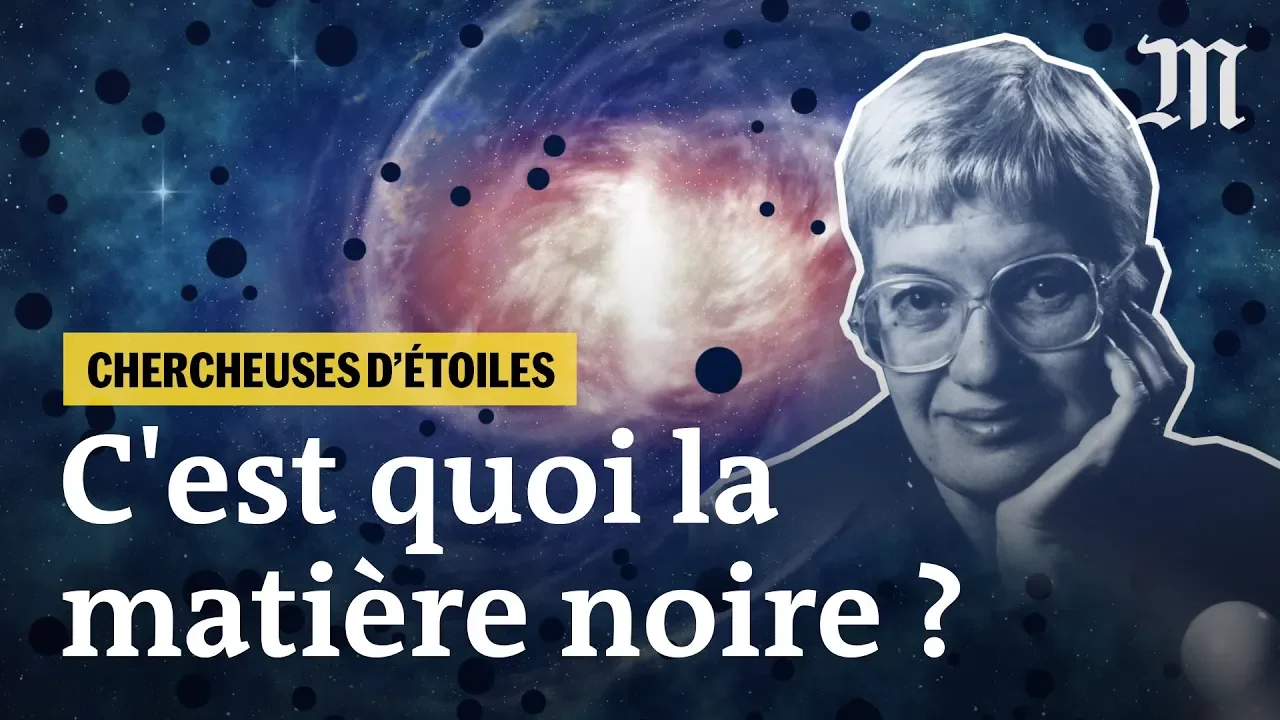
But at the time, there were few and poor quality data. The ghost was forgotten for several decades. It was in the 1970s that the story of the cosmic ghost started to unfold, and especially thanks to an American astronomer, Vera Rubin.
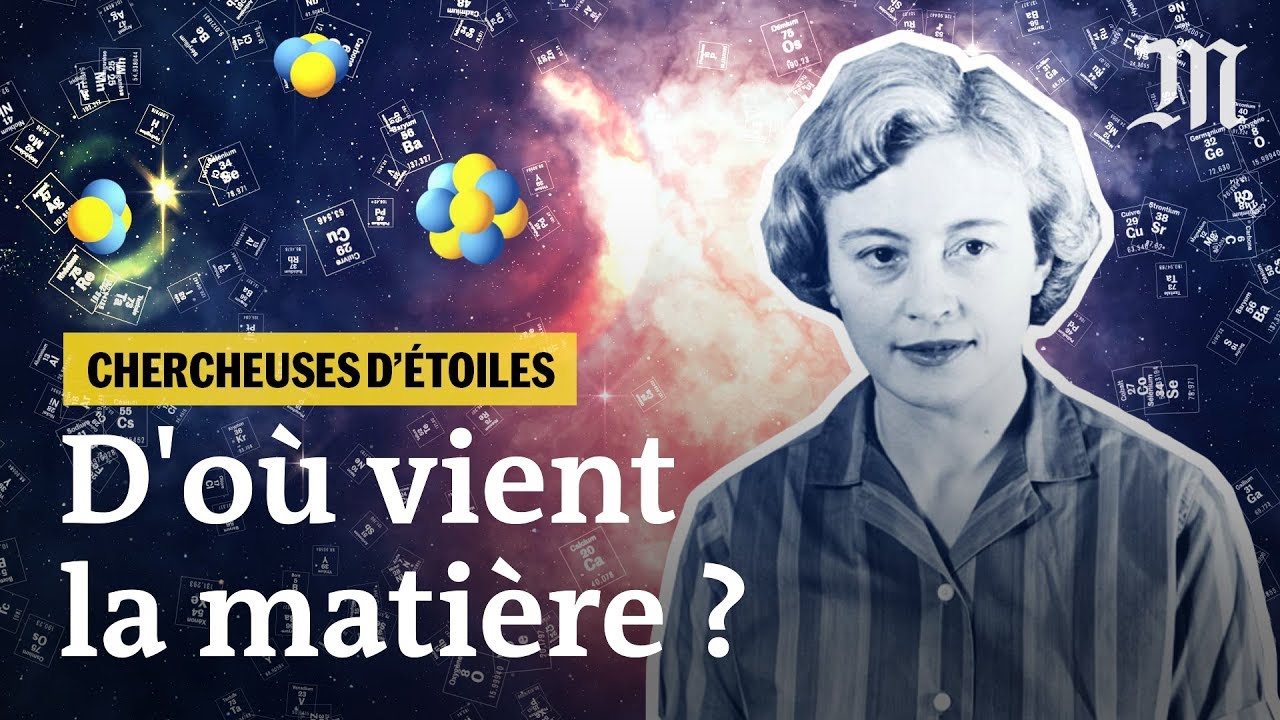
At the time, Vera Rubin was simply wondering why galaxies have different structures. She then assumed that this variety must come from the speed of their rotation. To study this, Vera Rubin worked with astronomer Kent Ford, who developed highly effective instruments to observe the stars.
Together, they became interested in several galaxies and a problem quickly became obvious to them, a big problem. If their observations were correct, the galaxies were rotating far too fast. To fully understand this inconsistency, we must remember how gravitation works.
And for that, let's take the example of the solar system. In the centre, the sun, very massive, and around it, the planets that rotate. What we are seeing is that the further away a planet is, the lower its average speed.
It ranges from 47. 4 km/sec for Mercury to 5. 4 km/sec for Neptune.
And if we put all that in a graph, that's what it looks like. The Earth is here, spinning at 30 km/sec around the Sun. All these speeds are summarised in this equation, in which the speeds of the planets depend both on their distance from the Sun and on the mass of the Sun.
What this means is that the movement of the planets depends on the mass of the object around which they rotate. In this case, the mass of the Sun. Let's go back to the galaxies.
One of the first that Vera Rubin observed was the Andromeda galaxy. In this galaxy, there is a lot of light in the middle. A lot of light means a lot of stars, and therefore a lot of mass, a bit like in the solar system.
So inevitably, astronomers thought that stars far from the centre should move more slowly, except that not at all, these stars move way too fast. On this graph, we can see the supposed speed decreases as we move away from the centre, and on this one, the speeds actually observed by Vera Rubin. The stars on the periphery of Andromeda actually go at almost the same speed as those near the centre.
And when Vera Rubin and her colleagues made the same kind of observations in other galaxies, they found the same strange phenomenon. If we applied this kind of graph to the solar system, planets far from the Sun would go so fast that they would be ejected into interstellar space. In galaxies, there must therefore be this famous cosmic ghost that alters the motion of stars.
The story of this cosmic ghost is not new. As early as the 1930s, astronomer Fritz Zwicky made similar observations. At the time, Zwicky was studying a group of galaxies: the Coma Cluster.
He calculated the mass of the galaxies that composed the cluster, then observed how they moved. And then, he had the same problem as Vera Rubin: galaxies moved way too fast. So, to explain these strange movements, he added an additional invisible mass to the mass of galaxies.
According to Zwicky, the gravitational effect of this invisible matter would explain the behaviour of galaxies. So, it is important to specify that this material is not a real ghost. If it is invisible, it is not because it is magical, but simply because it does not emit or reflect light.
He therefore called it "dunkle Materie", which can be translated as "black matter" or "dark matter". But his observations were rather imprecise and his conclusions were ignored. At the same time, other astronomers, such as Jan Oort or Horace Babcock, made observations similar to Zwicky's on a galaxy scale, but they were forgotten too.
40 years later, as she watched stars moving too fast, Vera Rubin remembered Zwicky and thought that this dark matter could be a solution. Indeed, by adding a certain amount of this matter, especially around galaxies, the gravitational configuration would be modified and the excessively fast motion of the stars could be explained. But a lot of matter would be needed.
According to calculations, for example, it is estimated to represent nearly 90% of the total mass in the Milky Way. In other words, 90% of the matter contained in our own galaxy would be invisible. Obviously, since Vera Rubin's work, there has been a big question stirring astronomers all over the world: what is this dark matter?
In an attempt to provide an answer, there are roughly three options. The first possibility is the most reassuring. It is based on the idea that dark matter is composed of things we already know, but that are difficult to identify.
Examples include black holes, neutron stars, very hot or very cold gases or brown dwarfs. These objects have common characteristics: they are massive, sometimes very massive, but emit little light. But despite this cosmic discretion, techniques have been found to detect a certain number of them.
The problem is that their cumulative mass is totally insufficient to explain the effects of dark matter. There is still too little mass left. We must therefore consider another hypothesis for dark matter, a problematic hypothesis since it assumes the existence of particles that we do not know and that we have never seen; and for a simple reason, it is that these particles do not interact with the light.
To try to find these mysterious particles, there are currently two methods: either locate them or manufacture them. To try to locate them, dark matter hunters have developed somewhat special detectors. They are buried underground to avoid external disturbances and consist of a tank filled with a sensitive liquid, such as xenon.
What researchers hope is that, as they pass through these sensors, dark matter particles will hit xenon atoms and tear off an electron. This would generate a flicker, a sign that the shock has occurred. There are many detectors in the world, but for the moment, nothing, dark matter slips out.
The other option is to manufacture dark matter. And to do this, researchers use the LHC, Large Hadron Collider, located on the French-Swiss border. In this large machine, particles are propelled at high speed before they hit each other.
Upon impact, they disintegrate into other particles. And it is among these particles that researchers hope to find traces of dark matter. The problem, once again, is that for the moment, nothing either, dark matter remains invisible.
The last option to solve the dark matter puzzle is the most disturbing: what if dark matter did not exist? One of the first defenders of this theory was Mordehai Milgrom. According to him, the problem did not come from dark matter, but from the theory of gravitation used to interpret observations.
It was therefore necessary to change the laws altogether to describe the universe. To understand his idea, let's take this graph. On the abscissa, we have the distance from the galactic centre, and on the ordinate, the gravitational acceleration.
Now, if we rely on the classical laws of gravitation, here's what it looks like: near a large mass, gravity is strong, and the further away we get, the more it decreases and tends towards zero. Milgrom modified the equation corresponding to this curve from a certain threshold. And this is how it looks on the graph.
We can see that from this threshold, the gravitational influence decreases much less quickly. The result: this would allow us to respond to the other graph, that of Vera Rubin, the one that shows that stars far from the centre of the galaxy rotate almost as fast as those much closer. According to Milgrom, this model helped to explain the anomalies.
The proposal is attractive, but it seems to contradict some of the observations. For example, astronomers have studied a rather special galaxy: Drgonfly 44. According to their calculations, it would be 99% dark matter, observations that are not very compatible with Milgrom's theory.
However, this was counterbalanced by other studies that, on the other hand, suggested galaxies that would not have dark matter. The galaxy NGC1052-DF2, for example, would contain 400 times less dark matter than might be expected. So the big problem today is the difficulty in interpreting the observations.
As a result, it is currently impossible to decide between two contradictory theories: either dark matter exists or it does not. With dark matter, Vera Rubin therefore raised two of the greatest questions of modern physics. Is there an invisible matter that represents nearly 80% of the mass of galaxies and that we have never seen before?
Or are the laws of gravity wrong? Vera Rubin will never get the answer. She died in 2016.
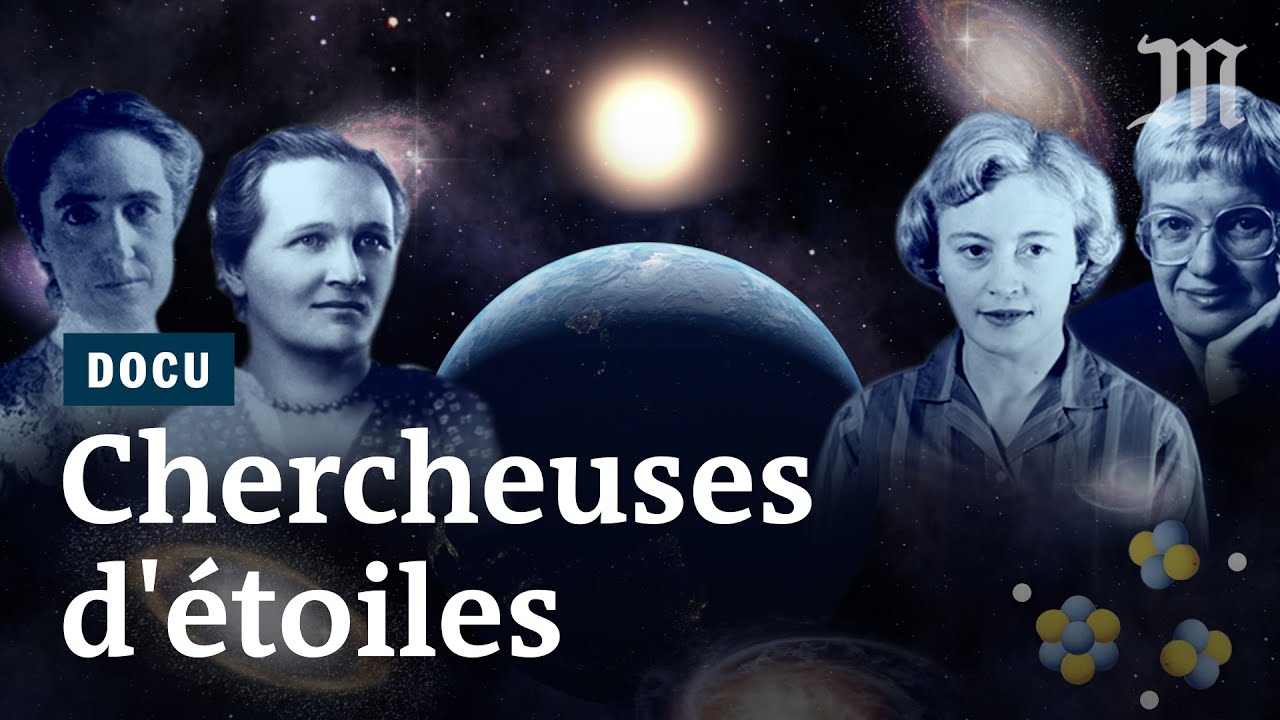
But one thing is certain, her ghost is likely to haunt the world of astronomy for a long time to come. Thank you for watching this video. This was the last episode of the "Chercheuses d'étoiles" series.
As usual, if you want to go deeper into the subject of dark matter, I have put links in the description. Once again, I would also like to thank Yaël Nazé, the astronomer who helped me design the whole series. Her advice and book on women astronomers helped me a lot.
Feel free to ask your questions in the comment section and to tell us what you thought of this series, or even to suggest ideas for the future. And if you want to see the other episodes, you will find here the links to the dedicated playlist. See you soon for more videos on Le Monde channel.