The Book of Enoch is an extraordinary text that offers a profound glimpse into the heavens, revealing their structure, inhabitants, and purposes as witnessed by Enoch himself. Taken to the realms beyond Earth while still alive, Enoch's journey through the heavens is a testament to his righteousness and God's favor. In this detailed narrative, I will guide you through the 10 heavens as described in the book of Enoch, Highlighting the awe inspiring visions and the lessons they hold for us today. Before we dive in, let me clarify. My ultimate goal is to lead you closer to the most
high. My intent is not to encourage the worship of angels or any heavenly beings, but to glorify God, who is the creator and sovereign of all. With that said, let us explore the heavens through Enoch's eyes. The story of Enoch begins with a remarkable premise. He was one of the Few people in history to ascend to heaven while still alive. The Bible mentions another individual, the prophet Elijah, who was also taken to heaven without tasting death. According to the opening of the book of Enoch, God chose Enoch, a wise man and skilled artisan, to behold
his kingdom. This wasn't a mere vision. It was a firsthand journey into the highest realms of existence. The text says, "The Lord took him away, Loving him so that he might witness the unchanging and glorious kingdom of God Almighty, the shining ranks of his servants, and his immovable throne. Enoch was to see the multitude of heavenly elements, the organization of angelic armies, the cherubim's unending songs, and the indescribable beauty of the light that surrounds the Lord. God's favor on Enoch was unparalleled. And through his eyes, we are given a rare glimpse into the workings of
Heaven. Enoch recounts that it all began with a dream that left him deeply disturbed. In the dream, he saw two immense beings unlike anything he had ever encountered. When he awoke, the same beings were standing by his bed, radiant and all inspiring. Enoch describes them. Their faces shone like the sun, their eyes burned like fiery lamps, and fire flowed from their mouths. Their clothing gleamed with brilliance, and their wings Shone brighter than gold. Their hands were whiter than snow. Terrified, Enoch bowed before them, his face changed with fear. The beings reassured him, saying, "Be brave,
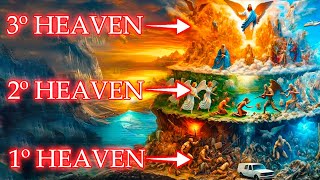
Enoch. Do not fear. The eternal God has sent us to you. Today, you will ascend with us to heaven." Enoch obeyed, leaving his family with instructions about how to live in his absence. The angels then lifted him up, carrying him into the skies on their magnificent wings. Enoch's journey into the heavens began in the first heaven, a realm situated directly above the firmament that separates the waters above from the waters below. This concept of the firmament is rooted in Genesis 1:7 where the Bible describes it as a vast domelike structure created by God during the
formation of the world. As Enoch entered this heavenly plane, he was immediately struck by the immensity of what he saw. A boundless Ocean far greater in size and majesty than any sea on earth. Its vast expanse shimmerred with the divine brilliance, reminding him of the power and creativity of the creator who governs all. Within this ethereal realm, Enoch encountered a group of mysterious figures known as the elders. These beings cloaked in an aura of wisdom and authority seemed to embody the order and governance of the heavens. Alongside Them were 200 angels, each appointed to oversee
the stars and the intricate movements of the celestial bodies. These angels carried out their divine duties with precision, ensuring that the heavenly lights moved according to God's perfect plan. The first heaven revealed to Enoch a glimpse of the harmony and balance that underpins creation. The vast ocean and the angelic beings demonstrated the beauty and order of God's design where even the stars are Governed by his will. It was a humbling and awe inspiring introduction to the wonders that awaited him in the higher realms. For Enoch, this was only the beginning, a first step into a
journey that would take him closer to the heart of God's majesty. As Enoch ascended to the second heaven, the stark contrast to the brightness of the first heaven was immediately apparent. This realm was enveloped in a profound and unsettling darkness, far Deeper than anything experienced on earth. It was not a place of peace, but of anguish, where Enoch witnessed fallen angels, once glorious beings, imprisoned and tormented, awaiting the day of divine judgment. Their faces, shadowed and sorrowful, bore the heavy weight of regret, and their ceaseless cries echoed throughout the vast expanse, creating an atmosphere of
despair. Enoch, moved by the sight of their suffering, asked his angelic guides why These beings were condemned to such a fate. The angels explained, "These are the ones who turned away from the Lord, disobeying his commandments. They followed their own will and aligned themselves with their prince who is restrained in the fifth heaven. These were the watchers, the angels who had rebelled against God's authority, abandoning their divine purpose to pursue their own desires. Their rebellion had not only led to their Fall, but also caused chaos and corruption on earth, a legacy that demanded severe judgment.
The second heaven served as a grim warning of the consequences of defying God's will. It was a place of accountability where even the mightiest of beings faced the justice of the creator. For Enoch, the experience was a reminder of the unshakable righteousness. The cries of the fallen angels echoed in his mind, serving as a powerful reminder of how Serious the consequences are for the choices we made in service or rebellion against the most high. The third heaven was a striking contrast to the profound darkness and despair of the second heaven. This realm known as paradise
was a place of indescribable beauty and peace filled with the radiance of God's blessings. As Enoch arrived, he beheld a stunning landscape overflowing with life. Towering trees blossomed with flowers of every color, Their sweet fragrances filling the air. Their fruits, ripe and abundant, glistened with a heavenly glow, while streams of honey, milk, oil, and wine flowed gently across the land, creating an atmosphere of divine abundance. At the very center of this paradise stood the tree of life, a magnificent symbol of God's eternal goodness. Its glowing branches shimmerred with hues of crimson and gold, and its
roots stretched down to the edge of the earth. The tree of Life emanated a sense of holiness and beauty beyond human comprehension, a testament to the creator's majesty. The angels accompanying Enoch explained that this heavenly paradise was prepared for the righteous, those who lived their lives in accordance with God's will. These were the people who showed compassion to the poor, fed the hungry, clothed the naked, and walked in humility and justice before the Lord. This was their eternal reward, a place Of rest and joy beyond imagination. However, not all of the third heaven was serene.
Enoch was also shown the northern region, a place of torment reserved for the wicked. This dark and terrifying area was marked by rivers of fire and unquenchable flames where those who practiced witchcraft, idolatry, and other grave sins faced eternal punishment. The imagery of this fiery region closely mirrors biblical depictions of hell, reminding Enoch and All who hear his story of the serious consequences of turning away from God's righteousness. In the fourth heaven, Enoch was granted a remarkable vision of the celestial mechanics that govern the cosmos. This realm was alive with divine order where the sun,
moon, and stars moved with perfect precision under the guidance of angelic beings. Enoch marveled at the radiant light of the sun, which was seven times greater than That of the moon. Each celestial body followed its ordained path, illuminating creation and marking the passage of time with unwavering consistency. Enoch observed legions of angels attending to the sun and moon, ensuring their movements were harmonious and exact. These angels carried out their sacred duties with diligence, guiding the celestial bodies in their revolutions and maintaining the balance of the heavens. He describes in awe four great Stars accompanied the
sun, each commanding a thousand stars beneath them. At night, flaming six-winged angels took up their stations, guiding the sun's chariot through the heavens. The fourth heaven revealed to Enoch the extraordinary complexity of God's creation. It wasn't merely the brilliance of the sun or the silvery glow of the moon that amazed him. It was the careful orchestration behind every movement. The stars, the winds, and the Heavenly lights all moved in unison, a testament to the creator's wisdom and power. This vision was a profound reminder of the divine order that governs the universe. Every detail, from the
rise of the sun to the phases of the moon, was part of God's flawless design. For Enoch, the fourth heaven was a glimpse into the majesty of the creator's plan, a harmonious symphony that underscored the perfection of his will. The fifth heaven was a somber and haunting place, a realm overshadowed by the weight of regret and rebellion. Here, Enoch encountered the Grigory, also known as the Watchers, angels who had once held noble roles in God's divine order. These beings originally created to watch over humanity had forsaken their heavenly duties. Overcome by desire, they descended to
earth, took human wives, and fathered the Nephilim, a race of giants whose presence brought Corruption and violence to the world. Enoch beheld the Gregori, standing in silence, their enormous forms still and lifeless. Their faces were withered, etched with sorrow and regret. Once radiant and glorious, they now bore the marks of their fall from grace, weighed down by the destruction they had unleashed on earth. The angels accompanying Enoch explained that the Gregori were condemned to this state, their punishment a period of Perpetual grief and anticipation of the final judgment. While they had been granted immense power
and responsibility, their disobedience led to chaos and suffering, and their failure to uphold God's will rendered them unworthy of their former glory. For Enoch, the fifth heaven was a somber lesson about the devastating consequences of straying from God's path. It served as a stark warning that even the most powerful beings are not Immune to the consequences of rebellion. The sight of the fallen watchers, now filled with despair, reinforced the cost of forsaking his commandments. The sixth heaven was a realm of unparalleled light and harmony, a place where divine order and beauty were on full display.
Enoch marveled at the radiant brilliance of this realm, where the glory of God was reflected in every corner. Here, seven bands of angels dedicated themselves to studying the intricate workings of the Universe. These celestial beings observed the movements of the stars, the revolutions of the cosmos, and the phases of the moon, ensuring that all functioned according to God's perfect design. These angels were not only keepers of knowledge, but also worshippers of unparalleled devotion. Their songs of praise echoed throughout the sixth heaven. Melodies so pure and beautiful that Enoch found them beyond Description. The harmonies of
their voices intertwined with the light of the realm, creating an atmosphere of reverence and joy that words could not fully capture. Among these angelic hosts were the mighty archangels, beings of great authority and responsibility. Tasked with overseeing the angels and the natural order of creation, the archangels acted as stewards of the divine will. They ensured that the balance of the heavens and the earth was Maintained, standing as guardians of God's cosmic masterpiece. For Enoch, the sixth heaven was a vision of divine precision and worship, where every movement and every sound was a testament to God's
glory. This realm reminded him of the unity and harmony that come from living in accordance with God's will. It was a place of both awe and inspiration, a glimpse into the beauty that unfolds when creation fulfills its purpose in Perfect alignment with the creator's plan. The seventh heaven was the pinnacle of Enoch's journey, the most terrifying and all inspiring realm he had encountered. This was the dwelling place of the fiery armies of angels, a host so magnificent and powerful that their presence was almost overwhelming. Among them were the cherubim, the seraraphim, and the manyeyed thrones,
each radiating an intensity of light and power that Reflected their nearness to the creator. Their brilliance filled the expanse, and their ceaseless songs of worship echoed like thunder, vibrating with a reverence that was both majestic and humbling. These celestial beings encircled the throne of God, which blazed with boundless light and an indescribable splendor. Enoch was struck by the immensity of the scene before him. The light emanating from the throne was so pure and overwhelming that he fell to His face in fear, trembling before the holiness of the Almighty. Every part of the seventh heaven radiated
the glory of God, and the vast hosts of angels worshiped him with unwavering devotion. In this moment of awe and terror, God in his infinite mercy commanded the archangel Michael to lift Enoch up. Michael approached Enoch with kindness, helping him to stand before the Lord's presence. By God's order, Michael clothed Enoch in garments of glory and Anointed him with radiant heavenly oil. This transformation was profound. Enoch now adorned in celestial garments, became like the angels, his earthly form replaced with a radiant heavenly likeness. For Enoch, the seventh heaven was both humbling and transformative, a powerful
reminder of God's holiness and mercy. It marked the culmination of his journey, bringing him into the presence of the creator and preparing him for his eternal purpose as a witness to God's Majesty. The eighth heaven known as Muth was a realm of cosmic influence where the delicate balance of seasons and the movements of celestial bodies. In this majestic domain, Enoch observed the changes of seasons, entities tasked with guiding the transitions between times of drought and rain, heat and cold. Here, the cycles of nature were harmonized with divine precision, ensuring that the earth would continue to
thrive under God's perfect order. Alongside these changes, the movements of the zodiac were carefully managed, influencing the rhythm of the heavens and their connection to the created world below. The ninth heaven called Kaveim served as the heavenly dwelling place of the constellations. This realm was the cosmic map of the stars, a sanctuary for the vast and intricate patterns that illuminate the Night sky. Each constellation, from its smallest detail to its grandest form, was housed here, radiating with a brilliance that spoke to the creator's infinite wisdom. In Cavim, the order of the constellations was preserved, their
courses set in alignment with God's will. Though these heavens are described only briefly in Enoch's account, their significance cannot be overstated. Together, the eighth and 9th heavens demonstrate the interconnectedness of The cosmos and the earth with every movement of the heavens influencing life below. For Enoch, these realms revealed the vastness of God's sovereignty, where even the stars and seasons operate under his command. These heavens were a testament to God's intricate design, a reminder that all creation works in harmony to fulfill his divine purpose. At last, Enoch was brought to the 10th heaven, the highest of
all realms, where God himself resides in unmatched glory And majesty. This was the pinnacle of his journey, the sacred dwelling place of the creator. As Enoch beheld the presence of God, he described his face as radiating an indescribable brilliance, glowing like molten iron, pulled from a fiery furnace, emitting sparks and flames. The sheer intensity of God's appearance filled Enoch with awe and reverent fear, leaving him overwhelmed by the magnitude of divine holiness and power. Surrounding the throne of God were countless cherubim and seraraphim, angelic beings of the highest rank, their forms radiating light and splendor.
These heavenly hosts sang songs of endless praise, their voices blending in a harmonious symphony that glorified God without ceasing. Their worship resonated through the 10th heaven, a testament to the creator's unchanging greatness and eternal sovereignty. In the midst of this Overwhelming vision, God spoke with authority and compassion, declaring, "Let Enoch dwell before my face for eternity." By his command, Enoch was transformed. The Archangel Michael clothed him in celestial garments and anointed him with a radiant heavenly oil that emanated the brilliance of the stars. No longer bound by earthly limitations, Enoch was made like the angels.
His form now suited for eternal life in the presence of God. This final Stage of Enoch's journey revealed the ultimate purpose of his ascent to stand before God, witness his glory, and serve as a testimony to humanity of the creator's majesty, justice, and love. The 10th heaven with its indescribable light and unceasing worship offered Enoch and through him all of us a glimpse of the eternal where God reigns supreme. Enoch's journey through the heavens stands as a profound testament to the majesty, justice, and mercy of God. Each realm he visited unveiled a new dimension of
God's character, his unyielding righteousness, his boundless mercy, and his intricate design for all of creation. Through Enoch's eyes, we see the consequences of rebellion and the eternal suffering that awaits those who turn away from God. At the same time, we are reminded of the indescribable reward awaiting the righteous, those who live In obedience and devotion to the most high. May Enoch's journey inspire you to draw nearer to God, deepening your faith and strengthening your commitment to walk in his ways. Let it remind you of the eternal glory that awaits those who choose righteousness and the
seriousness of living a life aligned with his commandments. If this exploration has touched your heart, consider sharing it with others who may need to be reminded of God's greatness. Together, let us Honor and glorify the one who reigns supreme over heaven and earth, the Almighty God. The question of what happens after death has intrigued humanity for centuries. People hold various beliefs about the afterlife. Some think everyone sleeps in death until the final judgment, while others believe souls are evaluated and sent to eternal destinations immediately. Some assert that souls rest in a temporary heaven or hell
until the Resurrection and final judgment. But what does the Bible say? Let's explore the scriptural insights into this profound topic and uncover the eternal hope offered to believers in Christ. The Bible offers comforting assurance to those who place their faith in Christ. For believers, death is not the end, but the beginning of eternal life in the presence of God. Scripture teaches that when believers die, their souls or spirits are taken to heaven because Their sins have been forgiven through Christ. In 2 Corinthians 5:6-8, the Apostle Paul writes, "Therefore, being always of good courage and knowing
that while we are at home in the body, we are absent from the Lord. For we walk by faith, not by sight, but we are of good courage, and prefer rather to be absent from the body, and to be at home with the Lord. Paul's words reveal the believer's confidence in being immediately with Christ upon death. This being at home with the Lord is a glorious reality, free from the pain and struggles of earthly life. However, this immediate union with Christ in heaven does not yet involve the resurrection of the body. Scriptures like 1 Corinthians
15:50-54 and 1 Thessalonians 4:13-17 describe a future event when believers bodies will be resurrected and glorified. These new eternal bodies will reunite with their souls, and believers Will live forever in the new heavens and new earth, as described in Revelation 21 1-4. Then I saw a new heaven and a new earth, for the first heaven and the first earth passed away. And I heard a loud voice from the throne saying, "Behold, the tabernacle of God is among the people, and he will dwell among them, and they shall be his people, and God himself will be
among them, and he will wipe away every tear from their eyes, and There will no longer be any death. There will no longer be any mourning or crying or pain. The first things have passed away." This eternal hope assures us that death is a transition to a better imperishable existence with God. Jesus offers an intriguing glimpse into the afterlife in Luke 16 through the parable of the rich man and Lazarus. This vivid story highlights two contrasting fates. The rich man who lived in luxury but ignored God and others finds himself in torment after death. While
Lazarus, a poor and destitute man, is carried by angels to Abraham's side, a place of comfort, peace, and rest for the righteous. The image of angels escorting Lazarus to his eternal destination provides a beautiful picture of God's tender care and love for his children. It reveals that death for a believer is not a solitary or frightening journey but a sacred transition overseen by heavenly Beings who ensure their safe passage to the presence of God. This detail offers profound reassurance demonstrating that even in the moment of death God's hand remains upon his people. Although the parable's
primary purpose is to teach about judgment and the irrevocable nature of one's eternal destiny, it also provides hope for believers. It assures them that upon leaving this world, they are not abandoned but are lovingly guided into God's presence. The angel's role reflects the intimacy and care of a heavenly father who delights in welcoming his children home. This story also emphasizes the finality of our earthly choices. Once death occurs, there is no crossing from one eternal state to another. For believers, this truth is a source of comfort, knowing that their destiny is secure in Christ. They
can rest in the promise that at life's end, they will be carried into The embrace of their savior, free from pain, sorrow, and the burdens of this world. The parable of the rich man and Lazarus in Luke 16 not only offers hope for believers, but also serves as a stark warning about the consequences of rejecting God. The rich man, having lived a life of self-indulgence and disregard for others, finds himself in torment in Hades after death. In his agony, he cries out for relief, asking Abraham to send Lazarus to cool his Tongue with just a
drop of water. However, he is confronted with a sobering and unchangeable reality. Between us and you, a great chasm has been set so that those who want to go from here to you cannot, nor can anyone cross over from there to us. This great chasm symbolizes the permanence of one's eternal destiny. It underscores the critical truth that the decisions made during earthly life determine a person's eternal future. Once life on earth ends, The opportunity for repentance and salvation is no longer available. Heaven and hell are final and unalterable states. Hades, as depicted in the parable,
is a place of anguish, regret, and separation from God. The rich man's torment contrasts sharply with the peace, comfort, and joy Lazarus experiences at Abraham's side. This vivid juosition highlights the gravity of ignoring God's call to salvation. The rich man's plea for even a small Reprieve emphasizes the depth of suffering in Hades. While Abraham's response reminds us of the sufficiency of God's word which the living have to guide them. For those who choose to reject God, this parable is a sobering reminder of the eternal consequences. Yet for those who respond to his grace, it is
a reassurance of the joy and peace awaiting them in his presence. Scripture consistently affirms that souls remain conscious after death, providing a Profound assurance of continuity beyond the grave. The story of the rich man and Lazarus in Luke 16 is a striking example. The rich man, despite being in Hades, is fully aware of his surroundings, his torment, and his lost opportunities. He expresses regret for his choices and remembers his life on earth, even asking Abraham to send someone to warn his family so they might avoid his fate. This vivid depiction highlights an Essential biblical truth.
The soul, the essence of who we are, continues to think, feel, remember, and experience after death. This continuity underscores the immortality of the soul. While our earthly bodies may age, weaken, and ultimately perish, our souls live on, retaining the core of our personhood. For believers, this truth is a source of tremendous hope. Death is not an end, but a transition into a deeper, fuller Existence with God. For those who trust in Christ, the awareness of the afterlife is marked by unending joy, peace, and communion with their savior. In Philippians 1:21-23, the Apostle Paul offers a
beautiful reflection on this reality. For to me to live is Christ and to die is gain. But if I am to live on in the flesh, this will mean fruitful labor for me. And I do not know which to choose. But I am hardpressed from both directions, having The desire to depart and be with Christ, for that is very much better. Paul's words reveal the tension between his earthly mission and his heavenly longing. While he recognizes the value of continuing his work on earth, his heart yearns for the ultimate joy of being with Christ. To
Paul, death is not a loss, but a gain, as it ushers him into the direct presence of his savior. This perspective reflects the hope that defines the Christian faith. For Believers, death holds no fear because it marks the beginning of an eternal relationship with God. In heaven, they will experience complete freedom from the limitations of earthly life. No more pain, sorrow, or separation. They will bask in God's glory, surrounded by his love forever. The continuity of the soul assures believers that their true selves, their thoughts, emotions, and personhood are eternal. This knowledge inspires Confidence and
joy, even in the face of life's hardships. As Paul's words remind us, the believer's ultimate destination is far better than anything this world can offer. To live is Christ, and to die is gain. a promise that fills life with purpose and the afterlife with unshakable hope. Heaven is often misunderstood as a place of static, monotonous existence. But the Bible offers a radically different and exhilarating perspective. Far from being A realm of endless idleness, heaven is portrayed in scripture as a dynamic and fulfilling experience. It will be a place of meaningful activity, profound joy, and endless
exploration where believers live in perfect harmony with their creator. The Bible reveals that heaven will not only be a place of rest, but also one of purposeful engagement as believers reign with Christ, reflect his glory, and enjoy the fullness of his presence. The Apostle John's vision in Revelation 21 provides a breathtaking glimpse of the new heavens and the new earth. He describes it as a place where God dwells among his people in an intimate and tangible way. He will wipe away every tear from their eyes and there will no longer be any death. There will
no longer be any mourning or crying or pain. This promise of a world free from pain, sorrow, and death is a profound assurance for believers. It reminds us That heaven will not merely be the absence of suffering, but the presence of something infinitely greater, the unbroken fellowship with God. In this new creation, God's presence will illuminate everything, and his glory will fill every corner, erasing all traces of sin and brokenness. Far from being passive, heaven will be a place where believers engage in purposeful activity. Revelation 22 3-5 speaks of God's Servants serving him, reigning forever,
and enjoying the light of his presence. This service is not burdensome, but a joyful expression of worship and fulfillment, aligned perfectly with the desires of redeemed hearts. Believers will have the privilege of participating in God's eternal purposes, exploring his boundless creation and marveling at his infinite wisdom and love. Heaven's dynamic nature also includes a deep sense of community and fellowship. The Bible suggests that believers will share meaningful relationships celebrating together in the presence of God. The imagery of the wedding supper of the lamb captures the joyous and communal aspect of heaven. A time of eternal
celebration and unity with God and his people. This vision of heaven as a place of adventure, purpose, and eternal fulfillment reminds us that it will far surpass anything we can imagine. As 1 Corinthians 2:9 declares, "No eye Has seen, no ear has heard, and no mind has imagined the things that God has prepared for those who love him." Heaven is not just a destination, but a promise of unending joy, exploration, and communion with God. It's the ultimate fulfillment of humanity's deepest longings where every moment will be filled with awe and wonder in the presence of
our creator. The Bible speaks of a future judgment that will bring eternal consequences for every Person. This divine judgment reveals both the holiness of God and the eternal destiny of humanity. For believers, this moment is not one of fear but of hope and fulfillment. Their sins covered by the blood of Christ are no longer counted against them. Instead, this judgment will result in rewards and the full realization of their eternal inheritance. Revelation 2011-15 vividly portrays the great white throne judgment. In this scene, God sits on his Throne and all the dead, great and small, stand
before him. Books are opened containing the record of deeds done in life. And another book, the book of life, is consulted. Those whose names are not found in the book of life are cast into the lake of fire described as the second death. This judgment highlights the finality of eternal separation for those who have rejected Christ's offer of salvation. For unbelievers, this judgment is a Sobering moment of reckoning as they face the eternal consequences of their decisions. Yet, even in this solemn reality, God's justice and mercy are evident. He does not judge unfairly, but according
to his perfect standards, offering every opportunity for repentance through his son, Jesus Christ. Believers, however, are spared from condemnation because of their faith in Christ. As Jesus declared in John 5:24, "Truly, truly, I say to you, whoever hears my word and believes him who sent me has eternal life. He does not come into judgment, but has passed from death to life." This final judgment serves as both a warning and a promise. For those who trust in Christ, it is the doorway to eternal joy and life in God's presence, a moment that seals their place in
his eternal kingdom forever. The gospel offers humanity the most extraordinary news. Jesus Christ has Provided a way for us to inherit eternal life. Through his death and resurrection, he secured forgiveness for sins and opened the door to heaven for all who place their faith in him. This good news is the foundation of Christian hope, rooted not in human effort, but in the boundless grace and mercy of God. The Apostle Peter captures this profound truth in 1 Peter 1:3-4. Blessed be the God and Father of our Lord Jesus Christ, who according to his Great mercy has
caused us to be born again to a living hope through the resurrection of Jesus Christ from the dead to obtain an inheritance which is imperishable, undefiled, and will not fade away, reserved in heaven for you. This living hope is not just a fleeting wish or optimistic outlook. It is a confident expectation grounded in the resurrection of Christ. Through his victory over sin and death, believers are given a new life free from the Condemnation of sin. This hope transforms how we view life, death, and eternity, assuring us of an inheritance that is eternal and incorruptible. Unlike
earthly treasures which fade or can be lost, the inheritance promised to believers is eternal, pure, and secure. It is kept in heaven by God himself, a place prepared for those who trust in Christ. This promise provides a profound sense of peace and assurance, especially in the face of life's uncertainties. The Gospel reminds us that salvation is not earned, but given by grace. Jesus sacrifice bridges the gap between humanity and God, offering not just forgiveness, but a future filled with unending joy, peace, and communion with him. It is the ultimate gift freely available to all who
believe. Life on earth is fleeting, a temporary journey toward an eternal destination. Each day brings us one step closer to our true home. For believers, this hope Transforms how we live, reminding us that our struggles are momentary compared to the glory to come. As Romans 8:18 reminds us, "For I consider that the sufferings of this present time are not worthy to be compared with the glory that is to be revealed to us." The ultimate question is this, where will you spend eternity? Jesus invites everyone to place their faith in him and receive the gift of
eternal life. The promise of heaven is Available to all who believe, offering peace, purpose, and unshakable hope. So, as you reflect on life's brevity, let the reality of eternity inspire you to live for what truly matters. Heaven awaits a glorious eternal home where we will dwell with our creator and savior forever. Will you accept his invitation? Thank you so much for taking the time to reflect on this powerful truth with us. We hope this message has blessed you and encouraged you in your journey of faith. If you'd like to continue exploring these life-changing truths, please
consider subscribing to our channel. By subscribing, you'll stay connected to uplifting content that inspires, encourages, and deepens your understanding of God's love. Don't forget to like this video and share it with someone who needs to hear this message of hope today. Together, we can spread the good news and bring light to others. Thank you for being part of this Community. Your support means so much to us. We look forward to seeing you in the next video. God bless you. Do you not know that you are God's temple and that God's spirit dwells in you? Many
believers wonder if the Holy Spirit is truly within them. You might pray regularly, attend church, read the Bible, and even serve in ministry. But what if none of that on its own is conclusive evidence of his inddwelling Presence? That's the hard truth. It's entirely possible to go through the motions of a spiritual life and yet remain spiritually empty. The Bible tells us plainly that the presence of the Holy Spirit transforms, not just inspires. So, how can we truly know if he lives within us? Let's explore nine undeniable signs that point to the inddwelling presence of
the Holy Spirit. Some might surprise you and one could even change your life. Number one, supernatural peace in the midst of chaos. Peace I leave with you. My peace I give to you. I do not give to you as the world gives. What happens when life turns upside down? When you face loss, disappointment, fear, or financial uncertainty. For most, anxiety takes over. But for those filled with the Holy Spirit, something extraordinary occurs. Instead of being consumed by fear, they are Anchored by a peace that defies human logic. This peace doesn't come from favorable circumstances or
the absence of hardship. It isn't based on how much we can control or how well things go according to plan. Rather, it flows from a deep unshakable trust in the sovereignty of God. It is, as Paul describes in Philippians 4:7, the peace of God which surpasses all understanding, guarding your hearts and your minds in Christ Jesus. It's not stoic detachment pretending to be unaffected. Nor is it mere optimism. This is supernatural peace, a divine calm that stills the soul even when the waves rage around you. Imagine standing in the middle of life's fiercest storm. Yet
inside you feel still, composed, even hopeful. That's not a personality trait. It's a fruit of the spirit's presence. It is what sets believers apart. While the world watches and wonders how you can smile through sorrow Or praise through pain, they witness something undeniably holy. This peace doesn't just protect you. It becomes your witness. In a restless and anxious world, your calm presence testifies that something greater is at work within you. The Holy Spirit becomes both your comforter and your compass, reminding you that no storm is stronger than the one who lives in you. That's the
miracle of peace. Not the absence of chaos, but the presence of Christ in the middle of It. Number two, a love that defies human limits, but the fruit of the spirit is love. Let's be honest, some people are incredibly difficult to love. Whether it's someone who has hurt you, betrayed your trust, constantly criticizes, or simply gets under your skin, loving them feels unnatural, even impossible. And yet Jesus doesn't give us the option to love selectively. He commands us in Matthew 5:44, "Love your enemies and Pray for those who persecute you." By human effort alone, this
kind of love is out of reach. But when the Holy Spirit dwells within us, something profound happens. He enables us to love not just with our emotions but with God's own heart. What once felt impossible now becomes not only possible but necessary. We see this clearly in the life of Steven, the first Christian martyr. As an angry mob hurled stones at him, Steven didn't respond with anger or Fear. Instead, filled with the Holy Spirit, he prayed, "Lord, do not hold this sin against them." This was not mere human kindness. It was divine love, pure, undeserved,
sacrificial flowing through him. When the spirit is in you, love becomes an active force. It empowers you to forgive those who never say sorry, to show kindness to those who repay you with harm, and to serve others without expecting anything in return. It's a Love that reflects Jesus himself. A love that covers offenses, heals wounds, and builds bridges where walls once stood. This kind of love is not a suggestion. It's a sign, a living, breathing evidence that the Holy Spirit is at work in your life. It's not about trying harder. It's about yielding more fully
to the one who is love. Number three, a deep desire for holiness and turning away from sin. The spirit himself testifies with our spirit that We are God's children. One of the most telling signs that the Holy Spirit is at work within you is a growing sensitivity to sin. The closer you draw to God, the more clearly you begin to see what separates you from him. Things you once enjoyed without a second thought, gossip, pride, selfishness, impurity, now feel different. What once brought pleasure now brings discomfort, even sorrow. This is not the weight of shame,
but the call of grace. The Holy Spirit Doesn't convict to condemn. He convicts to transform. His purpose isn't to guilt trip you, but to awaken you. When he lives in you, he begins to reshape your heart, changing your desires, renewing your mind, and realigning your will with God's. Holiness is no longer just a religious ideal. It becomes your heart's longing. We see this radical change in the life of Zakius. Before meeting Jesus, he was a corrupt tax collector who exploited Others for personal gain. But after one encounter with the Savior, he stood up and declared,
"Look, Lord, here and now I give half of my possessions to the poor, and if I have cheated anybody out of anything, I will pay back four times the amount." No one told him to do that. It wasn't guilt. It was transformation. That's what the Holy Spirit does. He makes sin unbearable and holiness irresistible. So ask yourself honestly, do you still feel the weight of sin? If You do, take heart. That discomfort is not a sign of failure. It's evidence that the spirit is actively working in you, pulling you away from darkness and drawing you
deeper into God's light. Number four, a hunger for God's word. Man shall not live by bread alone, but by every word that comes from the mouth of God. Just as the body cannot survive without food, the soul cannot thrive without the word of God. For those filled with the Holy Spirit, scripture Becomes more than just a religious obligation. It becomes a vital source of life. You don't read it simply to check off a spiritual to-do list. You read it because something within you longs to hear the voice of God. This hunger is not manufactured through
effort or discipline alone. It's planted by the spirit and nurtured as you walk with him. The Bible suddenly comes alive. Words that once felt distant now speak directly to your situation. A single Verse can bring comfort, conviction, direction, or deep assurance. That's not coincidence. That's the Holy Spirit illuminating truth. Jesus described this reality during his temptation in the wilderness, declaring that man doesn't live by bread alone, but by every word that comes from God. He was reminding us that the word is spiritual nourishment, essential, sustaining, and lifegiving. If you've ever gone through a season where
you felt spiritually dry or Disconnected, you've likely noticed your appetite for scripture diminishing. But don't be discouraged. Instead, pray. Ask the Holy Spirit to rekindle that hunger in you. Because a desire for God's word isn't natural. It's supernatural. And when that hunger is present, it's a powerful sign that the spirit is alive and active within you. It means you're not just learning about God, you're listening to him. So open your Bible today, not out of duty, but out of Desire. The more you feed on his word, the more you'll crave it, and the more your
life will be transformed. Number five, gratitude and worship, even in suffering. Give thanks in all circumstances for this is the will of God in Christ Jesus for you. It's easy to be grateful when life is going well, when prayers are answered, relationships are thriving, and everything feels under control. But true gratitude, the kind that shines brightest, is the kind that Endures even when everything around you seems to fall apart. This kind of gratitude doesn't come from human effort. It flows from the presence of the Holy Spirit within. When the spirit fills your heart, thankfulness becomes
more than a reaction. It becomes a revelation, an awareness that God is still good, even when life is not. We see this powerfully illustrated in the lives of Paul and Silas. After being wrongly accused, beaten, and thrown into Prison, they didn't respond with despair or anger. Instead, at midnight, they prayed and sang hymns to God. In the middle of pain, they chose worship. And that worship didn't just encourage their own hearts. It shook the very foundations of the prison. That's the power of spirit-led gratitude. It transforms your atmosphere. It brings heaven into your suffering. It
doesn't deny pain, but it declares that God is greater than pain. The Holy Spirit enables you to see beyond your circumstances. He reminds you that even in trials, God is working. That kind of thankfulness is supernatural. It's a sign that your faith isn't rooted in what God does, but in who he is. A thankful heart in trials is one of the clearest signs of the Spirit's work. Why? Because worship changes atmospheres. and the spirit fills the atmosphere where God is glorified. Number six, sensitivity to God's voice. My sheep listen to my voice. I know them
and they follow me. Have you ever felt a quiet prompting in your heart, a sudden urge to reach out to someone, an unexplained check in your spirit before making a decision, or a verse that seemed perfectly timed for your situation? These moments are more than coincidence or intuition. They are often the voice of the Holy Spirit gently guiding you. The spirit doesn't Always speak in thunder or visions. Most often he speaks through stillness, through a quiet inner nudge that brings peace, clarity, or conviction. As you walk more closely with God, your heart becomes more attuned
to his voice. Like sheep recognizing the voice of their shepherd, you begin to distinguish his whispers from the noise of the world. This sensitivity isn't about being spiritually elite. It's not reserved for pastors, prophets, or seasoned Believers. It's about being surrendered, being willing to pause, listen, and respond in obedience. God is always speaking. The real question is whether we're quiet enough to hear him. His voice always aligns with scripture. It never contradicts truth, never leads to fear or confusion. Even when he convicts, his voice brings peace and draws us closer to the father. As 1
Corinthians 14:33 reminds us, God is not a God of disorder, but of peace. But in a world filled with distractions, it takes intentional stillness to truly hear. That's why Jesus often withdrew to quiet places to pray. If he needed silence to connect with the father, how much more do we number seven, transformation in character and attitudes? By their fruit, you will recognize them. Anyone can say they believe in God, but real faith produces real change. Words alone aren't enough. The clearest evidence of the Holy Spirit in your life is transformation. Not in what you claim,
but in how you live. Peter is a powerful example of this. Before receiving the Holy Spirit, he was impulsive and fearful. In Jesus darkest hour, Peter denied even knowing him three times. Yet, after the spirit came upon him at Pentecost, he became bold, unwavering, and fearless. The same man who once hid now stood before thousands proclaiming the gospel with power. That wasn't Personality. It was transformation through the Holy Spirit. When the Spirit resides in you, change becomes inevitable. He begins to reshape your habits, purify your speech, renew your thoughts, and soften your heart. Your priorities
shift. Your reactions are tempered. Your desires align more with God's will and less with your own. This transformation isn't about instant perfection. It's about consistent progress. The fruit of the spirit, love, Joy, peace, patience, kindness, goodness, faithfulness, gentleness, and self-control begin to emerge. Sometimes subtly, but always steadily. Ask yourself honestly, am I more patient than I used to be? more forgiving, more humble, or compassionate. If so, that's not just self-improvement. It's evidence of the Holy Spirit at work within you. You're not changing by your own strength. You're being shaped by God's presence. And if you
feel like you're still struggling in some areas, don't be discouraged. Growth takes time, but transformation will come, not through striving harder, but by surrendering more fully to the spirit who lives in you. Number eight, boldness to share the gospel. You will receive power when the Holy Spirit has come upon you, and you will be my witnesses. In a world that often resists truth and Questions faith, it takes courage to speak openly about Jesus. For many believers, the fear of rejection, criticism, or not having the right words can be paralyzing. But one of the clearest signs
of the Holy Spirit's presence is a new spirit-born boldness to share the gospel. This boldness isn't loud or forceful. It's not rooted in arrogance or debate. Instead, it is a quiet confidence, a conviction that comes from knowing the truth and being Compelled to share it no matter the cost. This is the kind of power Jesus promised in Acts 1:8. When the Holy Spirit comes upon you, you will be my witnesses. We see this transformation vividly in the early disciples. Before Pentecost, they were afraid and in hiding. But after being filled with the Holy Spirit, they
became fearless witnesses. Peter, who had once denied Jesus to a servant girl, now stood before thousands and Boldly proclaimed the resurrection of Christ. What changed? It wasn't their courage, it was their filling. The same spirit who empowered them lives in you. And he gives you the strength to speak even when your voice trembles. Boldness is not a personality trait. It's a spiritual gift that flows from intimacy with God. Even if your words aren't perfect, even if you're unsure of how someone will respond, the spirit nudges you to speak, not to impress, but to Bless. So
if you've ever felt prompted to share your faith even in small ways, that's the spirit working in you. Don't wait until you feel ready. Trust him to give you the words and the courage when the moment comes. Number nine, spiritual discernment. Dear friends, do not believe every spirit, but test the spirits to see whether they are from God. A world overflowing with opinions, noise, and spiritual counterfeits. The Ability to discern truth from error is more than helpful. It's essential. Discernment is one of the most vital signs that the Holy Spirit is actively at work within
you. This discernment is not simply about spotting false teachers or heretical ideas, though that is part of it. It's about being spiritually alert, able to recognize when something that appears right is actually off. The Holy Spirit acts like a divine filter, helping you perceive the difference Between God's truth and the enemy's deception, even when that deception is wrapped in religious language or emotional appeal. But discernment goes beyond guarding against falsehood. It also helps you recognize God's will in your daily life. The spirit gives clarity when you're faced with decisions whether to move forward, wait, or
walk away. It's like a spiritual compass keeping your heart aligned with heaven's direction. Have you ever sensed a quiet Warning in your heart even when everything on the surface seemed fine? Perhaps a hesitation before taking an opportunity or a check in your spirit during a conversation. That inner alarm is often the Holy Spirit gently guiding you away from danger or deception. This ability to discern doesn't come from intellect or life experience. It grows out of a close relationship with the spirit through prayer, scripture, And sensitivity to his voice. The more you walk with him, the
more clearly you'll see what others may miss. What happens if you ignore the Holy Spirit? Do not grieve the Holy Spirit of God. The Holy Spirit is not forceful or demanding. He is gentle, patient, and faithful. But he still can be grieved. Not because he's quick to leave, but because we over time can choose to ignore him. And when we do, our hearts slowly begin to harden. This is exactly What happened to King Saul. His downfall wasn't rooted in a single act of failure, but in a pattern of disobedience. He stopped listening to God, began
trusting his own judgment, and drifted from the voice that once led him. Eventually, God's spirit departed from him, not in anger, but because Saul no longer made room for him. The same danger exists for us. If sin no longer Convicts you, if worship feels lifeless, if you haven't sensed God's voice in a long time, don't panic, but don't ignore it either. These signs are not condemnation. They are an invitation. An invitation to return, to realign, and to rekindle your connection with the spirit of God. The first step back is always repentance. Not driven by guilt,
but by love. God isn't standing over you with disappointment. He's waiting with open arms. His spirit hasn't given up on you. In fact, if you're reading this and feeling a pull in your heart, that's him still speaking, still drawing you, take a moment to reflect. Do I feel conviction when I sin? Do I hunger for God's word? Do I see changes in my heart, desires, and relationships? Do I experience peace in trials and love for difficult people? If you can answer yes, even imperfectly, then be encouraged. The Holy Spirit is in you. And if you're
unsure, don't be discouraged. Perhaps All you need to do is invite him more fully into your life today. How to invite more of the Holy Spirit. Be filled with the Spirit. Experiencing the fullness of the Holy Spirit is not a one-time event. It's a daily invitation. God desires to fill every area of your life with his presence. But he also invites your cooperation. To be filled with the spirit is to live in surrender, expectation, and obedience. First, start With repentance. Just as a vessel must be emptied before it can be filled, your heart must be
cleared of sin and distractions that hinder sensitivity to the spirit. Confess anything that has come between you and God. Let go of bitterness, pride, or hidden compromise. Repentance is not punishment. It's preparation for renewal. Second, ask boldly. Jesus made a powerful promise in Luke 11:13. How much more will your father in heaven give the Holy Spirit to those who ask him? God isn't reluctant. He delights in giving his spirit to those who genuinely seek him. So ask not casually but with hunger and expectation. Third, obey promptly. The more you respond to the spirit's leading, the
more clearly you'll hear his voice. Obedience strengthens intimacy. Whether he prompts you to speak, forgive, serve, or wait, say yes. Each act of obedience creates space for him to move more freely in your life. Fourth, worship freely. The Holy Spirit inhabits the praises of God's people. Worship isn't just about singing songs. It's about creating an atmosphere where the spirit feels welcome. Praise shifts your focus from self to God and opens your heart to his presence. Finally, stay rooted in scripture. The spirit speaks most clearly through the word. As you meditate on the Bible, he brings
truth to life, offering wisdom, correction, and encouragement exactly When you need it. The signs are clear. The fruit of the spirit is visible, and the invitation is open. Whether you've been walking with the Holy Spirit for many years or are just beginning to sense his presence in your life, this moment is sacred. It's an opportunity not to achieve perfection, but to step closer, to surrender more fully and to invite God to do a deeper work within you. This is not about striving. It's about yielding. It's about saying, "Holy Spirit, I want more of you and
less of me." The spirit doesn't fill those who are already perfect. He fills those who are willing, humble, and hungry. So right now, wherever you are, let this be your prayer. Holy Spirit, fill me aresh. Awaken my heart. Convict me, comfort me, and use me for your glory. I surrender again. Make my life a vessel for your presence. In Jesus' name, amen. As you reflect on these powerful signs of the Holy Spirit's presence, take a moment to Respond. Which sign spoke most deeply to your heart? Share your experience in the comments. Your story might encourage
someone else on their journey. And if this message stirred something in your spirit, don't forget to like and subscribe so you can continue receiving teachings that strengthen your faith and deepen your walk with God. Let's grow together in faith, power, and purpose.