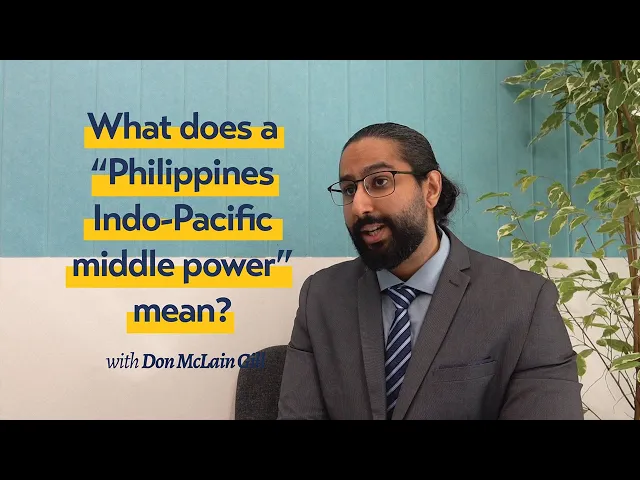
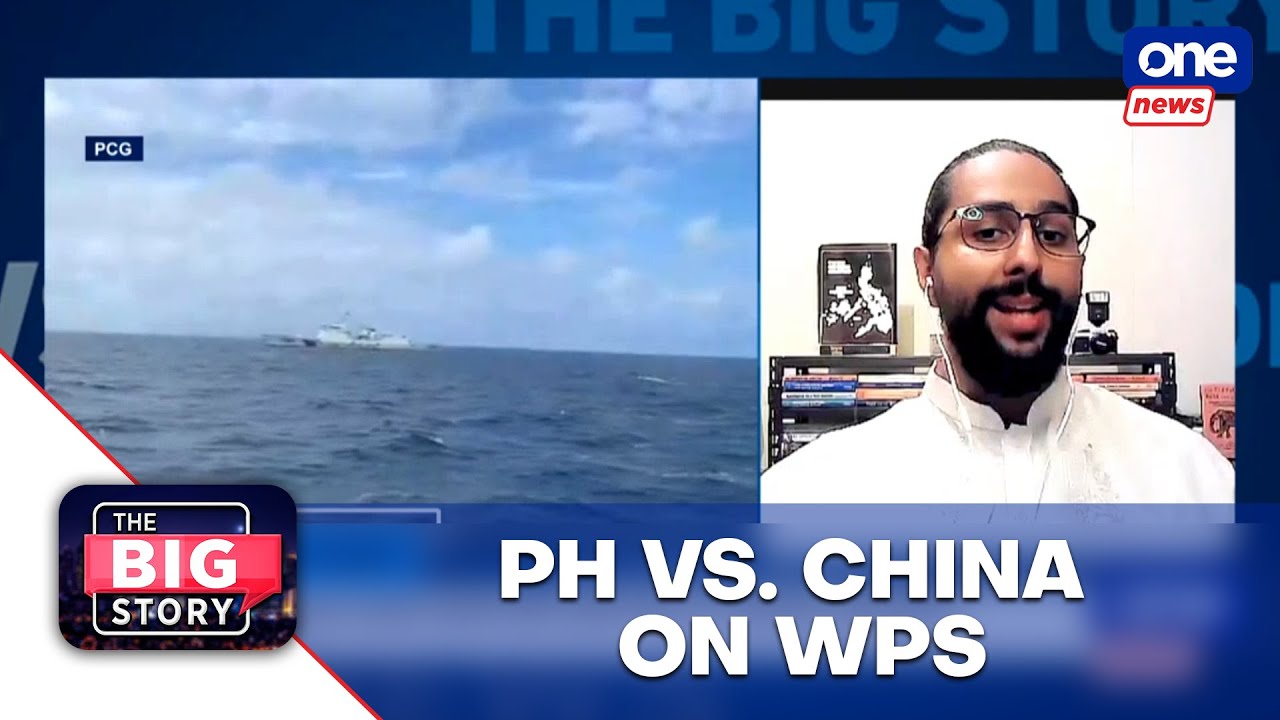
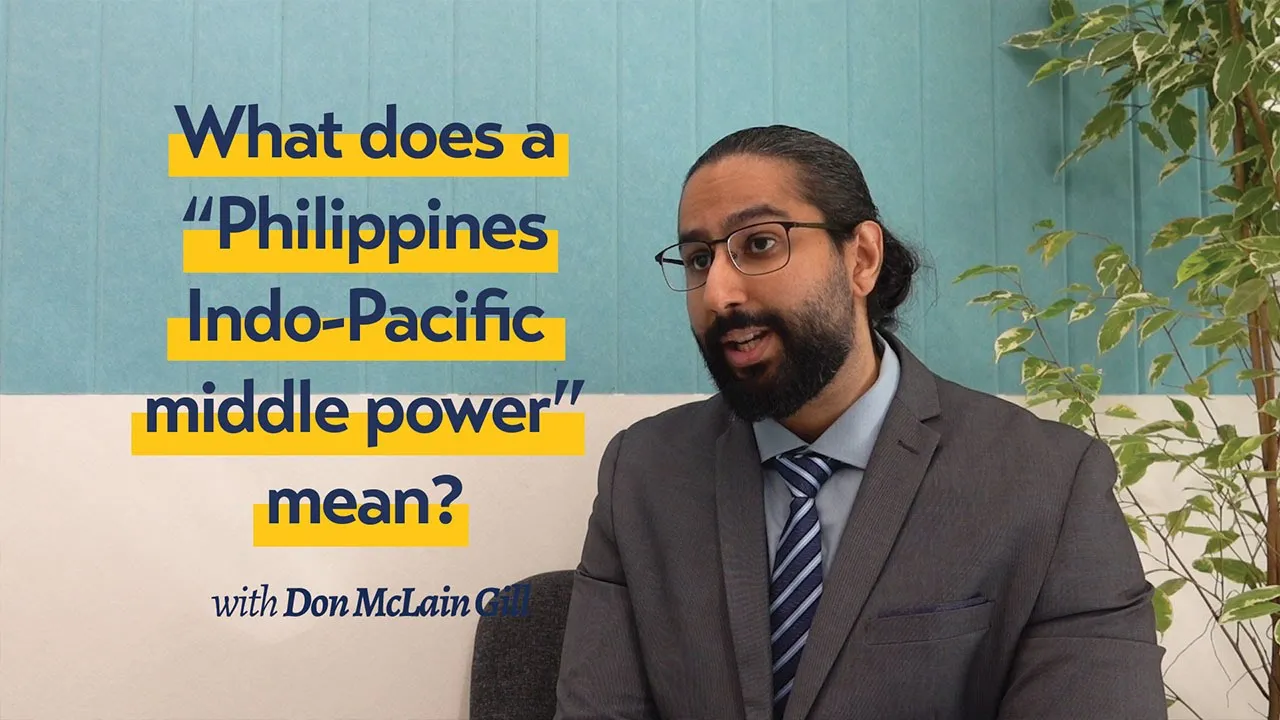
[Music] well we have to understand and we have to put this into context Philippine foreign policy throughout the beginning of the 21st century has been marred with great inconsistencies as well and this is of course one of the aspects that we have to look into when trying to understand the current situation however there have been some certain consistencies such as from 2010 a transition towards external defense and Maritime security but when it comes to um operationalizing uh our foreign policy today it's about rerouting our resources diplomatic and material resources into a more proactive position where
we seek to cement our position in the map um as an indopacific middle power and that is of course something that deals with strengthening deepening and broadening our traditional Partnerships but also venturing into non-traditional Partnerships with like-minded countries but at the same time uh this also coincides with a desire of Manila to more overtly uh secured sovereignty and Sovereign rights uh based on international law so with that idea there is a multipronged strategy that is highly interdependent with one another and this Summit in particular provides a significant uh com is a significant pillar uh in
that uh proactive strategy and that is to to be able to engage more uh with our neighbors and also with our dialogue Partners as well so this goes hand in hand with Philippine foreign [Music] policy right so looking at it based on the Philippine perspective and the Philippines in aan uh the Philippines now has been quite robust in uh in its uh in its strategies particularly as I've mentioned earlier uh it's a two-point strategy so one is of course external oriented to enhance given our limited capabilities and our resources uh we seek to of course
partner with uh and deepen and broaden existing Partnerships with traditional partners and non-traditional Partners uh the purpose of this is to First enhance our Maritime security capabilities improve our deterrence capabilities and of course ensure that the waters within our EZ which we call the West Philippine SE portion of the South China Sea uh is is constantly open and inclusive and away from uh the interests of narrowly driven powers to dominate or these monopolize the area uh which is of course uh beyond the premise of international law so in addition to that of course it's also
about working with our partners right and of course Manila now uh recognizes that what we may be doing externally could be considered uh to be of concern to some of our neighbors in the region so of course it's very important to create a least common denominator and I think one of the aspects to this was the transparency initiative shift uh that also considered food security and social economics to be the Crux which would be something relatable for our Southeast Asian neighbors but when it comes to Maritime security my last point is that it still is
quite controversial in Southeast Asia given the varying threat perceptions but at least understanding that uh individuality is very much a key uh identity in Southeast Asia the ability to have a joint Maritime drill for example despite the rerouting of geography and the location is still an incredible feat and of course this shows you that Aion seeks to have a more homegrown oriented uh uh component or element to their strategy uh amidst the intensifying power competition so I believe in that sense uh we are able to of course not only widen our options with our external
Partners but contribute in this way because the Philippines has been more than willing to Eng engage uh with its counterparts has been engaging bilaterally as well with Vietnam Malaysia for a potential resolution to the maritime border conflict so we're going hand inand with the dcoc um and uh and our desire to be more proactive in the region the shift has actually occurred the concept of middle power has been quite shy on uh has been you know we have often looked the other way when it comes to the IDE of the middle power for the past
few decades is because our fixation the Philippine fixation was based on its immediate geography in Southeast Asia uh and with that uh we had this sort of a strategic bubble where we just wanted to work with existing tools uh whether uh it is our immediate neighbors or whether with our traditional partner the US uh and the extended Hubb and spoke system to a certain degree uh however under uh well under President Marcus Jr we can see more revitalized context in manila's desire to get itself out there uh and this is of course the in line
with the the the desire of Manila to uphold its responsibilities um as a component of the Indo Pacific you know as a very important stabilizing element in the indo-pacific and Manila has been quite avert in contributing its share in preserving what we all call as the rules-based order and that is of course Very Much important for the Philippine position I believe President Marcus Jr uh has said this during his trip here in Melbourne so as we can see uh the Philippines now seeks to not only um engage you know in in the Western Pacific but
also at the same time widen its options and president Marcus Junior has been saying this again and again uh June 6th uh 2023 if I'm not mistaken uh he had a very important conversation with newly appointed Filipino diplomats uh and with that he he emphasized that it is NE necessary to broaden our security and economic Partnerships across the region beyond our traditional scope um and that in itself represents the Philippines to play a more um a more flexible role a more overt role uh as an indopacific middle power while also upholding the responsibilities that it
has as an indopacific middle power uh but of course we still have some work to do in terms of uh cementing our position uh in this particular context well the Philippine Australia partnership is actually very interesting if you look at Australia's position in Southeast Asia it is considered as a natural partner if if we look at it based on the objective aspects uh Australia uh one of the key powers in the Indo Pacific now uh is one of the few that does not have any strategic acts to grind in the region it's looked at uh
less controversially so that in itself is an opportunity for Australia and of course under the current Administration in Australia the desire to sort of balance its position between the US and China is a clear signal that it wants to be looked at as an independent force and not merely as an extension of the US China power competition and in this way uh it would be able to of course engage more uh throughout the region more equitably right when it comes to the Philippines of course the traditional notion of the Philippines towards Australia is that it
is a provider of Aid and economic support and developmental assistance uh but recently we have seen Australia willing to play a more robust role in the indopacific in terms of a security providers as an alternative as a security partner as a development partner um and this is of course very important and it converges with the current Philippine uh foreign policy of working uh nonetheless with like-minded partners and we have seen how Australia and the Philippines are positioning themselves uh and their bilateral partnership which a span back um uh for decades uh throughout you know immediately
even after the Cold War era we had a 1990s defense agreement with Australia and we have the visiting forces agreement with Australia as well but today we are looking at the Philippine Australia bilateral partnership as an independent force on its own a stabilizing Force which is quite interesting um and of course the desire to have joint Maritime drills in the west Philippines c um these are all very important for our uh partnership with Australia and I think that the moment will continue to increase um however from Australia side of course we would be delighted to
have it play a more effective role economically as well given that economic policies are of course at the Crux of every Southeast Asian foreign policy so of course we need to uh it would be wonderful to have more um you know an expanded economic cooperation with Australia as well and I believe that the current Administration is doing exactly that you know Paving towards that direction uh realizing that we need to have multi-dimensional uh presence in Southeast Asia amidst these polarizing Dynamics and of course um this coincides really well with billa's desire uh to engage within
the region so definitely the partnership is a natural one between uh the Philippines and Australia and uh we do look forward to it strengthening even further in the years to come