this is ingenuity explained make sure to subscribe below for more videos on the world's most revolutionary engineering breakthroughs hydrogen cars are very similar in many respects to electric vehicles in the sense that both are ultimately driven by electric motors however one of the main differences is that an ev car gets its fuel from the grid which stores it in a sequence of lithium-ion batteries while a hydrogen car creates its fuel on the go using what is known as a hydrogen fuel cell it is important to note that hydrogen itself is not a true fuel but
rather a carrier of energy that is made from other processes because the vast majority of hydrogen on earth is trapped in water processes such as steam reformation and electrolysis are needed to separate out the hydrogen hydrogen has an extremely low density in both gas and liquid states and as such it must first be compressed to up to 700 times atmospheric pressure to achieve an adequate fuel density within the vehicle furthermore hydrogen is extremely flammable and explosive therefore the storage tank must be strong and built to high tolerances to prevent leakage the hydrogen is fed from
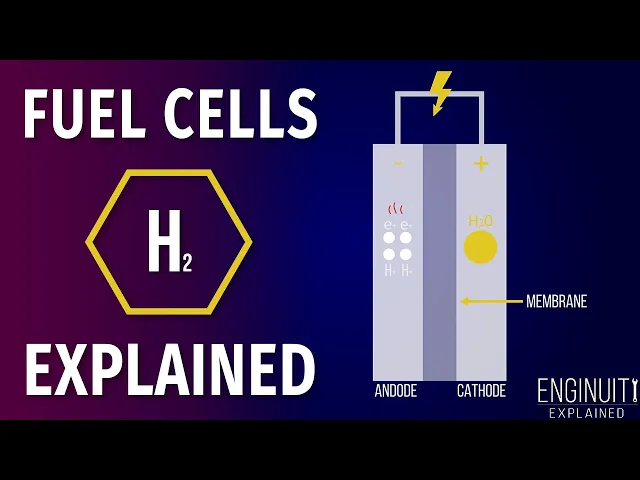
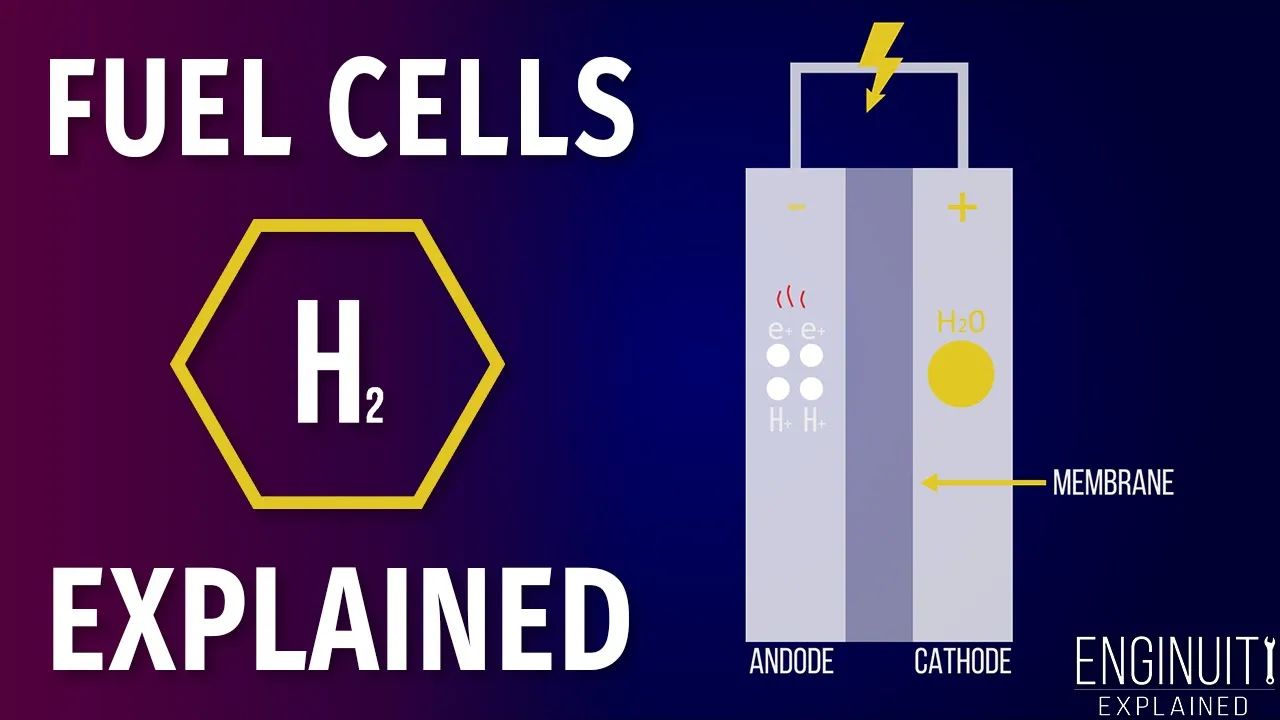
its storage tank to the fuel cell where an electrochemical reaction known as a reverse electrolysis takes place the fuel cell is made up of three parts similar to a battery it has a positively charged terminal the anode and negatively charged terminal the cathode and a separating membrane the electrolyte which is sandwiched in between this setup is typically known as a polymer exchange membrane at the anode a catalyst usually platinum oxidizes the hydrogen turning it into positively charged hydrogen ions and electrons this reaction releases heat the polymer membrane is designed to allow the positive hydrogen ions
to pass through the membrane and into the cathode leaving the electrons behind thereby giving the anode a negative charge this voltage difference between the terminals causes the electrons to follow an external circuit from anode to cathode which creates an electric current the dc current from this process must then be converted to ac by means of an inverter to power the electric motor at the cathode the hydrogen ions rejoin with the electrons and together they combine with oxygen from the air which creates a chemical reaction that produces water this is the only byproduct from the process
the water is released as either steam or vapor through the vehicle's exhaust one fuel cell would not nearly provide enough electricity to power the vehicle therefore multiple fuel cells are stacked in series with each other to account for this some hydrogen vehicles such as the toyota mirai also have an on-board battery which can store excess or reclaimed electricity from regenerative braking to further the vehicle's total range the exciting thing about hydrogen cars is the range that they can potentially deliver which comes quite close to that of a petrol vehicle for example the toyota mirai has
a total range of 500 kilometers electric vehicle producers claim that they can match this however that is largely dependent on how much energy is used for other on-board processes hydrogen cars can be refueled in under five minutes which is also a big bonus as it is not such a giant leap from modern gasoline vehicles hydrogen also produces very few by-products during use and can be considered an environmentally friendly fuel with one important caveat the electrolysis used to make the hydrogen must be done using clean renewable energy hydrogen cars are similar to evs in this respect
now for the bad news fuel cell technology in spite of all of its promising benefits is less than half as efficient as an electric vehicle when you take into account the entire energy chain to power the vehicle electrolysis which is an inherently inefficient process is initially needed to isolate the hydrogen then it must be compressed transported stored and finally converted back into electricity through reverse electrolysis with each of these processes comes an energy input and therefore an overall loss of efficiency it is possible that hydrogen could be produced and stored at the point of refueling
so that the transport element could be removed yet there are still significant challenges remaining the obvious question is why wouldn't you just go down the more straightforward route and store that initial electricity and batteries to be later used for electric vehicles the infrastructure for hydrogen is also much less developed than that of electric and gasoline and it would take many years for the industry to catch up however emerging companies such as nikola plan to develop hydrogen transport networks for their fuel cell trucks on some of the most important supply routes in the united states over
time this may help to scale their operations to a greater customer base the high cost of buying a hydrogen car today is still unattractive for most people where an equivalent ev can be picked up at almost half the price the reason behind this is the associated cost with platinum which is used as a catalyst in the fuel cells hydrogen fuel is also expensive and comes at a much higher price per kilometer than both gasoline and evs in spite of all of its flaws perhaps hydrogen does have a future in larger modes of transport where its
counterpart is limited by the weight of its bulky lithium-ion batteries or perhaps it is just an expensive distraction where more brain power could be channeled into refining evs or developing more efficient technologies nobody is certain what the future holds with all of the growing possibilities in this industry petroleum will undoubtedly play a much smaller part in our daily lives and the sooner that we embrace a world powered by these alternative clean energy technologies the better if you enjoy the video and would like to learn more about some of the world's most forward-thinking innovative solutions consider
subscribing to ingenuity explain make sure to hit the bell icon to receive notifications when i release my latest video