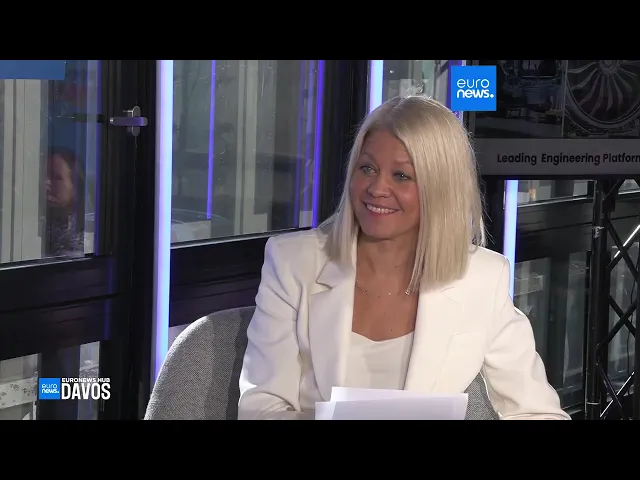
Good morning everyone. Your excellencies, ladies and gentlemen, distinguished guests. And for those of you joining us online, welcome to Davos.
I'm delighted to be here with you today for what promises to be a really interesting and timely conversation, one that really truly helps kickstart the year ahead. This event builds on the strong momentum of the Moroccan Investment and Export Development Agency's recent road shows across the UAE, Spain, the Netherlands, Brussels, and Germany. And today, that journey brings us here to Davos at the heart of global dialogue on growth, resilience, and opportunity.
Davos is where ideas meet action and where global investors come to look ahead to the markets, regions, and partnerships that will define the future. And today we turn that spotlight to Morocco. And this session is about showcasing what Morocco's investment opportunities look like and how the country is positioning itself in a rapidly shifting global landscape and why it continues to attract growing international interest.
To open the conversation and set the scene, it's my great pleasure to invite someone who's directly helping shape Morocco's investment story. So, please join me in giving a very warm welcome to Mr Alice Sadiki, the director general of the Moroccan Investment and Export Development Agency, AMD. Welcome.
>> Thank you, Jean. >> You're very welcome. It's great to have you here and I believe you have a a bit of a speech you're going to give to us, a bit of a talk.
We're very excited to hear all you have and once again an absolute delight to have you here at the Urine Studio and Hub here in Davos. >> Well, thank you. Thank you for giving me the opportunity to present what Morocco has become over the years.
Uh it is important for uh investors to understand that Morocco has been completely transformed. Uh Morocco has been uh going from a phase where we were struggling for electrification in 1999 when his majesty king Muhammad 6 came into office. Only half of our country had access to electricity.
So we went from that situation to 25 years later being the leading economy for the quality of infrastructure. So it's telling it's telling of uh something happening in the country. Morocco has become a kingdom of vision and also a kingdom of action over those 25 years.
>> Fantastic. And also, you know, how important is it for you to be here joining us, you know, about the conversations that we're seeing taking place in it's a very busy day today in Davos, isn't it? >> It is.
Davos is always busy but it's also the one of the best opportunities to uh to connect to share as I said uh your value proposition in Morocco has a very strong value proposition today uh so it's an unprecedented uh occasion to uh to to as I said to promote investment opportunities uh in uh in our country so as I said the value proposition uh Morocco is today a worldclass hub for sustainable investment and trade And this we've been building this over those years about uh on six main pillars. Stability. Stability is key.
And when we're seeing the global turmoil, uh you see how important stability is, how important predictability is. So that's one of our main pillar. Uh a world-class infrastructure.
As I said, we've been heavily investing in our country in order to prepare our industrialization. So we have world-class infrastructure with worldclass industrial ecosystems. Uh something that has been from the very beginning in our strategy the openness.
Morocco offers an access to more than 2. 5 billion consumers thanks to our free trade agreements. Uh last not last but not least but the other key asset of Morocco sorry is the our human capital.
Uh we have a young population an average age of 29 which is a demographic dividend. And this is key when you're trying to uh have your economic t take off. Morocco is also a leader in sustainable energy and we are ESG compatible economy.
That's very important to us. Everything we do, sustainability is at the very heart of everything we do. Uh and this is becoming more and more a strong asset for Morocco.
And last but not least, we're executiondriven. This is very complex to explain with words. you have to be there to see what Morocco looks like to understand how execution-driven we are.
Uh stability stability is as I said uh one of our key pillars we have um and I don't know if the audience knows that but Morocco is the second oldest monarchical system in history. The second oldest so stability is rooted in who we are in what we are. Yes.
>> Uh and that stability, that very healthy governance with the royal vision, setting the long-term objectives and the government not changing the vision but putting an action plan together led us to have a very stable economy as well. As a matter of fact, Morocco has one of the best is one of the best graded economy in Africa. We went from BB+ with stable outlook and been upgraded to positive outlook.
Uh we are championing inflation mastery. uh for 10 years in a row the average inflation rate was below 2%. So again it's telling of a very very healthy uh governance.
Uh the the stability led us to do to promote and to create and build uh a world-class infrastructure. >> Let's uh remind uh let's remember that Morocco sorry is not an oil and gas country. So I don't know if the audience sees this iconic infrastructure that we have.
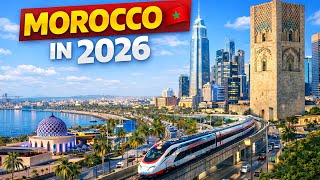
Tonimemed is the largest container port in Africa but also the largest container port in the Mediterranean largest than the port of Barcelona port of P or the Turkish ports. So again uh when you're not an oil and gas country being capable of building this top-notch infrastructure takes sophistication and this is why our stability led us to build world-class infrastructure. Tjimemed is not the only iconic infrastructure.
Morocco is also the first country in Africa to have a high-speed train. Uh and not only a high-speed train, but a fully powered with green energy. So this a decarbonized mobility that we're preparing for the continent.
We also have the second largest uh network for highways uh the largest network of international airports. So basically we set we prepared the field for our economic takeoff and our industrialization. that led over the years uh to building uh remarkable industrial ecosystems.
Morocco is today the largest passenger car manufacturer in Africa with a total capacity exceeding 1 million car uh a year. We're also the largest exporter of car non-European exporter of cars to the to the European Union. So it's showing it's showing that uh we were capable of building uh a serious serious uh ecosystem built around a large number of suppliers.
What we've done in automotive we also did in aerospace uh Morocco is the largest uh aeronautical uh manufacturing hub in Africa but also the fastest growing. uh recently his majesty launched a strategic project because we'll be starting manufacturing engines for the Airbus A320 Neo. Again, it shows our capacity to handle complex ecosystem and complex uh training and education because this requires engineering.
This requires very skilled technicians. Um those recent ecosystems uh have been developing together with our historical ecosystems. If you look at textile, textile was a historical uh industry in Morocco.
But the way we've done we we kept on developing it was uh by matching the new standards. And so Morocco ecosystem for textile is ESG compatible is completely decarbonized now with a set of suppliers that are working with uh world leaders in the fashion industry but also uh using the best standard for that uh very uh important industry for Morocco. Um what we have done in uh those uh industries is also based on uh as I said our resources.
Uh Morocco is the largest fish producer and we're now bringing more added value to uh our agria business in our fish production and transformation. And last but not least we became first uh destination for tourism as well which was an historical uh sector for Morocco. And this year we're very proud to say that we reached a milestone of 20 million tourists.
So it's uh it's very huge for us. It's important and the number keeps on increasing. Uh and this would not have been possible of course if we didn't have the skills and the engineering capabilities that are supporting uh these ecosystems.
Um the reason one of the reasons we were capable of growing the uh this industrial ecosystem it's precisely because we were capable of also bringing scale and the strategy of opening the economy has paid off. Uh Morocco is one of the most open economies in the world. Uh we have been signing free trade agreements with more than 90 countries.
Uh and that is granting an access without custom duties to a market of 2. 5 billion consumers. Morocco is has a free trade agreement with the European Union, free trade agreement with the United States when both economies do not have a free trade agreement together.
So again, it's showing the opportunities for investors. Uh and Morocco is the only country in Africa to have a free trade agreement with the United States. Um as I said before, the strongest asset of Morocco is uh our youth.
Uh the average age is 29. uh the uh we train around 200,000 graduates with scientific background more than 655,000 technicians highkl technicians and this average age is is a key element of our value proposition if you look at this average age it's what we call a demographic dividend it's that very unique moment in your demography where you can accelerate your economic takeoff uh this average age is the one that Japan had in the 60s uh South Korea in the 80s China in the 90s. So, it's telling that we're living a momentum.
Even our demography is telling you that we're living a momentum. As I said, one of the most important uh asset that we have today wasn't the case a few years before, but green energy is uh currently one of the most important topic uh for a lot of different countries. Among them, all the countries that are willing to net zero their economy.
Uh Europe is one uh of the geographic regions that is looking for opportunities to net zero while Morocco has the ability to net zero. We are enjoying a huge potential of uh green energy resources. Currently 40 more than 40% of our energy mix comes from re renewable energies.
We're we have a target to reach 52% uh by 20 2030 but we will go way beyond that given the current pace of that. And so if we uh want to net zero any industry, Morocco has the capacity to to do so. Not only to uh to to net zero, but also to net zero at a very very competitive cost because when you're combining wind and solar, I know that most people think about solar when they're thinking about Morocco, but it's actually the winds.
The winds are exceptional. So when you're combining solar and wind, you're getting one of the lowest cost green electricity in the world. So when you see the energy crisis currently hitting the world, uh well, Morocco has the solution.
One of the solution is to connect, one of the solution is also to bring manufacturing industries and to net zero those out uh output in Morocco. And if you move to the next slide, you'll see that um we like to say that we're execution driven but with examples. We've been creating dedicated zones, one-stop shops, dedicated agency, the Moroccan Agency for Investment and Export, and even a dedicated ministry to support investors.
Uh on top of that, we have been setting a large vast uh and diverse set of incentives that can uh support investors in the country. And most importantly, we take you by the hand and we build together. So this is what we call being executiondriven.
And we have a very special example. An example that I like to to share with investors uh is how we've been building the ecosystem around Stellantis. So to tell you the story, Stellantis uh have been signing an investment agreement in front of the highest authority, his majesty king Muhammad 6 in 2015.
uh two years later what was an empty field was turned into a worldclass industrial zone. The factories were built, Stellantis factory was built and two years later the ramp up was met. >> And so it is again showing our capacity to build fast to move fast and around that facility only four years later 66 suppliers were surrounding.
So at a time where we're seeing that bure bureaucracy is slowing down a lot of industrial projects, Morocco has that ability to be fast and being fast today given again the complex world that we're living in is also being efficient. So that's what we mean when we say that we're execution driven. I let the audience scan uh this little QR code.
It's our new investment charter. It's again one of the tools that we're using to support investors and uh I it's also something that shows that Morocco is putting not only uh agencies, government bodies, but also uh actual tools uh to to be even more attractive than before. >> Fantastic.
You've got lots going on. >> We do. We do indeed.
>> And thing to note as well, our viewers who are watching online saw all of those screens. Um, so I hope you're enjoying the show so far if you are tuning in live with us. Um, Mr Sadiki, thank you so much for that presentation.
While I have you here, I'm going to take this opportunity to ask you a couple of questions if you don't mind. Um, you've painted obviously a fantastic picture of a country that's not only open for business there, but also shaping uh its role globally as well and the global economy. Um, so we'll expand on that a little bit with these questions.
You know, Davos is all about global future growth. Where does Morocco fit into today's shifting global investment landscape and why should investors be looking to Morocco now? >> Well, uh as I said, when you look at our uh value proposition, we are uh bringing certainty at a time where uh there's a lot of questions, a lot of uh companies and big corporations are looking for alternatives.
So, Morocco is predictable. Morocco brings the stability that is necessary in order to secure uh investors. I mentioned the political stability, but it's also the the the stable economy that we're providing uh uh investors with that is uh attractive for any any investor that is looking for a new opportunity uh to invest in.
So it's uh for me the key message here is uh we know how complex the world we're living in is today. We know how everything is shifting from global value chains to global trade. uh but Morocco has this capacity to connect.
If you look at the the the number of uh partners that Morocco is enjoying in the world, we are among those uh a few connecting countries and this is very important at a time when everybody is trying to mitigate their risk. Morocco is bringing that uh opportunity. >> Fantastic.
Morocco has also successfully hosted many major continental and international events and the momentum is going to be continuing. You know, we had AFCON 2025. I was in Rabbat last week and it was electric the atmosphere.
It was so nice to go and just witness it for myself. You know, the country is also co-hosting the 2030 FIFA World Cup. Very exciting.
And how much of today's investment momentum is being accelerated by these milestones, both in terms of the infrastructure development, but also for Morocco's global visibility as well. You're absolutely right in in saying that uh uh those major events uh are accelerators. They're catalysts uh of a of an overall momentum that I that we're living in uh in Morocco right now.
Uh it's a reason it gives us a reason to even go faster uh than we used to. And so uh that is also bringing of course a lot of attention towards Morocco because it is an incarnation when you look at how Afan was an Afan of firsts record audience record attendance record revenues uh it uh it's showing that the that the message behind Morocco now is actually a living you have a living example of of of how Morocco has been completely transformed. So it is a great occasion, those major events are a great occasion to showcase uh our value proposition, who we've become, but it's also a great occasion to accelerate major major uh programs and among them not just the infrastructure but also social reforms, ambitious social reforms that have been undertaken by his majesty himself.
>> Ladies and gentlemen, please put your hands together. Mr Sadiki, thank you so much. That was a wonderful conversation.
>> Thank you for having me. >> You're very welcome. It's my privilege to introduce for our panel discussion which will deep dive into technology and innovation.
Can you please give a very warm welcome first off Kelsey Goodman, head of Middle East and North Africa for the World Economic Forum. Hello Kelsey. And can we also please welcome Muhammad Mabuk, partner at EY.
Hello Muhammad. Pleasure to have you with us. Let's get down to business.
Thank you so much for joining us here today, Kelsey. I'll begin with you. As head of the MINA region at the World Economic Forum, how do you see Morocco's role in the region in terms of innovation and as a bridge to the rest of the world?
And why should investors be looking to Morocco now? >> So, one thing I think my Moroccan friends always like to point out is that Morocco is so strategically positioned. It's positioned in Africa, in Mediterranean, and really at the gateway to the Atlantic.
And I think in a time where we're seeing supply chains being disrupted, we're seeing how important it is um that nearshoring that we have sort of um proximate uh supply chains. That's really where a lot of Morocco's competitive advantage is coming from. It's long been this gateway and nearshoring partner from Europe to Africa, especially when we look at finance, trade, agriculture, and manufacturing.
And I think we're really seeing that that position is growing even more especially in this time when like I said when supply chains are being disrupted and we're trying to look at more the strategic supply chains that fit in with um a geopolitical reality as well. Thank you Muhammad. What are the examples of Moroccan government promoting a businessfriendly environment for you?
>> Yes, it's an important question. I think over the past decade, Morocco has implemented a series of reforms aimed uh at attracting both domestic and foreign investment. Uh first in 2022, the American government adopted a new investment charter.
Uh this is very important reform provides financial in incentives for companies that created jobs, invests in uh sector strategic sector such as manufacturing and renewable energy or locate their uh project outside major uh urban uh center. Eligible project can receive an assessment grant covering up to 30% of their capital expenditure with additional bonuses for uh job creation. Second, Morocco has developed several specific economic zone known as industrial acceleration zones.
These zones offer tax exceptions for the first five year exemption pard simplified custom procedure and very modern infrastructure. They have been particular successful in sector such uh as automotive aerospace and electronic attracting the major uh international companies. Tang free zone, tang automative city, Atlantic free zone of Kenitra, mid park of Kazablanca and and a new in a new zone in in phase are example of industry acceleration.
In addition, Morocco has worked to simplify administration procedures uh through regional investment centers and digital platforms. investors can now register companies, obtain permits and complete tax procedure much much more e effect efficacy. >> Muhammad, can you elaborate a little bit further?
Can you give us an example of a company that uses Morocco as a successful base of operations in Africa? >> Yeah. Yeah, sure.
I would like uh to give two uh concrete example uh that clearly illustrates the the current dynamic between Morocco and Europe in both direction from Europe to Morocco as a hub of operation as you said in Africa and from Morocco as a global company to Europe. The first example uh Europe to Morocco uh I'm currently uh supporting a Leon based uh engineering group that specialize in the design of confined space especially for the agri food sector. This group has developed a high innovative uh process with significant market potential not only in Morocco but across all the African continent.
In this context, the group with the assistance of EY France decided to establish its African subsidiary in Kazablanca. >> This this subsidiary will manage all African contracts, all the contracts with African client and serve as a hub for all its activity in the continent which could represent a revenue of more than 10 millions of euro in the in the coming uh in the coming years. This this decision is very telling.
It demonstrates how Marco is increasingly seen by European investor as a natural platform for expanding across Africa. >> I was in Kazablanca with the group just last week to launch the formal creation of the company and according to the CEO the French CEO he was particularly particularly impressed by Marco businessfriendly environment companies company formation is fast. There is a high competence lawyer and accountants who understand his needs and the legal and fiscal framework is very similar to what he knows in France.
All of this greatly simplify the setup process and allows activity to start very quickly. I have a second to to to the second example. >> You the stage is yours.
Please uh go for it. It's very interesting. Please elaborate.
>> Thank you. The second example is Marco to Europe. In the other direction, I also support several Marco startups.
>> Yeah. >> Particularly in the field of AI, uh, Marco now and and this is something not very well known has an outstanding startup ecosystems and um with top level talents >> and globally relevant uh innovations. I help some of the startups scale from the local level to international development, global development including France and other global market.
For example, one startup called Devetto is based in Kazablanca has developed a platform similar to Shopify >> for so know Shopify but more efficient and performant. Its potential is huge. It's such that it could become an unicorn in the coming months and I'm supporting them in the critical f of securing and acceleration.
These two example clearly show that the flows today are truly birectional. Marco is both an attractive destination for international investor and branding growth for innovation capable of driving internationally and be become a global investment. >> Fantastic.
Thank you so much. the great examples all of those. Kelsey, what are the key sectors in your head that stand to grow in Morocco and why?
>> There there's a few of them. Um I first I would certainly echo um what he said around agriculture and aggra business. Um Morocco is producer of the most phosphates in the world.
It's really is a key player in the the supply chain for for agriculture. And I think we're also seeing very interesting sort of agricultural innovation coming out of Morocco as well. Another um certainly with renewables um the the solar park that's been mentioned many times is really one of the leaders in in renewable energy production I think and I think as we see more of a transition to some of these industrial clusters we can even see the development of hydrogen and the the exportation of green hydrogen.
The last one I think is fascinating because it really is I think also a multiplier effect of all these other industries and that is the drive of tourism and event driven tourism. Yes. >> With you know the World Cup that's coming up in in a few years in Morocco.
I think just across the country you are seeing an incredible expansion and improvement on infrastructure from everything from the hotels to the airports transportation and logistics. Um it really is sort of a fascinating national strategy. I think we've seen this with other large global events as well and how you can use these sort of events to really upgrade your infrastructure and lead help that contribute to lasting uh tourism industry and also just a lasting um infrastructure and um transport industry as well.
So I think good thing to come to even after the World Cup. Thank you. To summarize, I mean, some absolutely fascinating insights there from the three of you and thank you so much for that.
And obviously, um, as you mentioned, Kelsey, there's a fascinating strategy in place that we're seeing in Morocco and the future is looking very exciting. Um, I'm going to take this opportunity to thank a few people in particularly all of our speakers. Thank you so much.
And Mr Sadiki uh the AMD team who've been absolutely superb at putting this together and welcoming you all here to the Euro News Hub. Thank you so much for joining us today. For decades, Morocco has been developing into an industrial powerhouse.
It's the leading car manufacturer in Africa. With facilities like this 100% carbon-f free factory by Renault Group, Morocco can produce 44% of its energy from renewables. And it's a gateway to international markets with one of the busiest ports in the world.
So whether it's made in Morocco, connected by Morocco, or powered in Morocco, it's Morocco now.