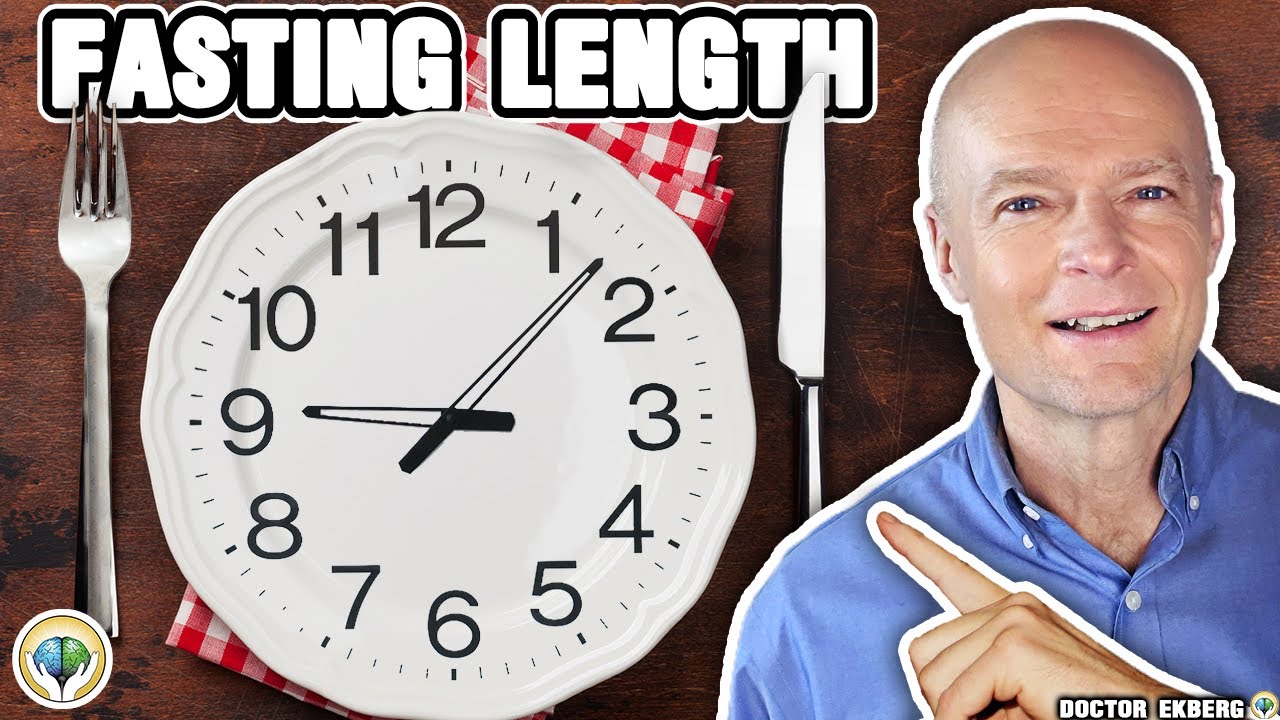
while the whole world and the whole internet has been talking about this fasting study that came out that shows that fasting and caloric restriction are no different in terms of end result what is intermittent fasting and should you be doing [Music] it hi I'm DrEric Westman and welcome to my channel where I review and debunk nutritional information online in this video thanks for sending them I'm going to be listening to Tom lower Tom is a massive internet influencer in the keto low car fasting space carnivore at times and he's going to be reviewing some studies about intermittent fasting be sure to wait till the end till you get my final thoughts I want to thank our friends at element for sponsoring today's video element has a great mixture of sodium potassium and magnesium everything you need on a keto diet especially when you're starting the keto diet I use the element almost every day in my own life and recommend it for my patients element is great because it has no fillers no sugar no artificial colorings and flavoring it no gluten great for a keto diet but the most important thing is it tastes great as you know electrolytes are really important especially if you're following a keto or carnivore diet an element gives you the sodium pottassium and magnesium that you need need right now element is offering my listeners a free sample pack with any order that's eight single serving packages free with any order that's a great way to try eight different flavors and to share element with a salty friend get yours at drink lm. com Eric Westman this offer is only available at my link drink elm. com slair Westman you'll find that in the description below thank you element for sponsoring this this video there's another paper that was published that nobody was really talking about that actually looks at real more aggressive fasting what do I mean by that well the previous study and I've done some videos on this that takes a look and says fasting is the same as caloric restriction although I agree with everything it said everything nothing I disagree with well-crafted study it was looking at very shortterm like fasting periods or very short fasting periods rather it was very was like 14-hour fasts which I don't know but without even thinking about it I fast for 14 hours and a lot of people do so well so what is intermittent fasting and what is fasting and there's a lot of jargon that goes on here you know you don't have to do intermittent fasting uh although I'm finding into the keto or even weight loss world people enter through different doorways if you will and then uh or like you're going into a vendor area at a meeting if you come in and the first Booth you see is intermittent fasting and you do it you might think that's the only thing that is available and certainly promoters of different diets or different techniques only talk about their technique typically because they are most familiar with that or they make money from that technique or sell a book that sort of thing but there really a lot of ways to go about being healthy I believe and intermittent fasting and or keto or carnivore or ultra low fat diets they all can be healthy what you want to do is match your metabolism to the level of carbohydrates in the diet from my perspective so what is intermittent fasting well several internet influencers started talking about fasting and and in general it means eating less and and eating less often during the day so if you eat once a day that's a 24-hour fast because you've gone 24 hours without eating anything because you've eaten just one meal a day you might have heard that as omad om mad d one meal a day but what intermittent fasting doesn't tell you and one of the problems that we're going to see in this video is what are you going to eat during that that window of period of time and that's going to be critical when you're looking at these studies hang on so this study was the first clinically supervised controlled feeding trial in humans on fast to compare if Tim restricted feeding in a more aggressive sense like a six-hour eating window if calories are equal has any benefit very interesting findings so this study was published in cell metabolism and what's cool is they gave subjects enough calories to maintain their weight okay so it went on for for 5 weeks okay and it was a crossover design so when one group finished the other group went into the other arm so what's interesting about this study is they didn't put them on a caloric restriction they didn't even like match calories what they did is they said hey here's exactly what this person needs to maintain their weight exactly and here's what this person needs to maintain their weight and this person it was so designed to a te clinically supervised and absolutely like literal to the tee feeding to make them keep their weight and it worked well that's a great setting up of of the study very controlled and uh what is missing is what what did they eat so looking at the the study itself and and actually all the other intermittent fasting studies that are done by funded funded meaning researchers who get grants to fund it they all are studying a 50% carbohydrate diet when people eat it's remarkable it it's 50% carbs 30% fat and 20% protein so I have to editorialize that the studies that they're being referenced here are all intermittent fasting studies but they're 50% carbohydrate 30% fat 20% protein so at a basic level what you want to do when you're looking at a study just look at the macros percent macros as Jeff volik has said many times when you're eating a nutritional ketosis type of diet carbohydrate isn't a macronutrient it doesn't have to be but I've learned that just as a summary measure look at the percentage of the daily calories is 50% carbs 30% fat 20% protein in this paper and whether you call it a Mediterranean diet or whatever but you want to get that macronutrient break down and this one it was 50% carbs 18% protein 30% fat for Tim restricted feeding study in this one 50% carbohydrate 30% 5% fat 15 you getting the point these aren't really studies of nutritional ketosis so Tim restricted feeding or intermittent fasting doesn't really say anything about what you eat during that time although these are all junk fruit free sorts of diets because it's a these are research studies but when you're looking at information about what to eat I want you to eat protein we're made of protein protein it should be protein first in your thinking and then the macros if you're doing a diet of nutritional ketosis type you're usually 5% of your daily calories is carbohydrate or maybe 10% and then that'll depend on how much you're eating for the day but to look at these research papers it's interesting some of them didn't even put the that macronutrient breakdown in the abstract so you have to go into the method section to see exactly so basically we're we're here now summarizing we're talking about eating carbs once a day well they did that so one group ate in a six-hour aggressive fasting window okay they couldn't eat past 300 p.
m. the other group ate in a 12-hour block but remember it didn't matter with calories because it was all equal macros were equal spacing was obviously different but as close to equal as they could get in terms of the sequencing okay so the only thing that was different was the timing period no calorie difference individually as a percentage or relatively speaking here's what they found insulin sensitivity improved who have thought you take a break from food insulin sensitivity is going to improve but insulin sensitivity didn't just improve in the short term beta cell function improved pancreatic function improved so over a 5we period they had significant improvements in just the ability to process carbohydrates and manufacture insulin okay well guess what else happened there was a decrease in reactive oxygen species species this is fascinating to me because reactive oxygen species is a driver of Aging okay so from a longevity perspective for a long time for like the longest time up until probably 15 years ago 10 years ago we thought that reactive oxygen species Ross oxidative stress was the primary driver of Aging it could still be a primary driver but we've since found a lot of other things that are driving it okay mitochondrial stuff that's beyond that but Ross is still a big one oxidative stress the fact that just compressing eating Wom in an aggressive time reduced Ross is very interesting oxidative stress went down but who would have thought if you stop eating for a little bit maybe you give yourself a chance for endogenous antioxidants to actually do the job and that's I think a good sort of paradigm shift that's occurring that you don't have to eat three four five meals a day breakfast is not necessarily the most important meal of the day which the cereal Manu facturers would love you to believe so eating less often allows your body to heal itself to repair itself I think you know fasting has been part of every major religion as a therapeutic or healing process uh even kind of even spiritually to to be uh aesthetic or or to get real rid of worldly sorts of of connections you don't have to think of it in that way but it's more just letting your body heal itself autophagy is the repair of your own body so you don't have the inputs coming in that you have to deal with eating is a stress and you don't have that stress when you're not eating even in the context of eating carbs once a day as these studies are showing I love this study because it's just it's really hard to poke holes in it the other thing that's interesting is that appetite went down even though they had to eat the same amount appetite went down right so they were maintaining weight but they had less desire to eat but they ate anyway because they had to because they were eating to maintain weight but they actually didn't even want to eat that much so it's like some would say well the benefits of intermittent fasting as far as the consumption is concerned and the lack of appetite comes because you're restricting your stomach shrinking and that could be true but in this particular case they were feeding them just enough to maintain weight and they still had a reduction of appetite so you know I've seen that clinically as well where or heard that where people will tell me that if they have breakfast it makes them more hungry during the day and they eat more now that's not true for everyone let me know your your response down below it does breakfast make you want to eat more or eat less so the classic teaching is that our our system is like a gas tank on a car and that you fill up until you're full and so eating shouldn't make you want to eat more although some people tell me that which kind of makes sense sort of from a standpoint of If You Came Upon an animal or you killed an animal a dead animal you had to eat it because it would spoil it was only relatively recently that we we as humans learned how to preserve the food so eating might make you want to eat more in that context there there shouldn't be a break uh on how much you eat uh if you couldn't have it you know an hour later so to for example uh so I wonder what your response is does breakfast make you want to eat more of course in the context of a low carb diet please so there's a good chance that even after the study maybe they would continue to lose weight but it gets better in the fact that they crossed over and those that did the 12-h hour went to the 6 hour and they had the same effects so it was like double proven in this metabolic like supervised situation the thing that makes me happy about this study is this one actually looked at real fasting compared to some of these other studies that are looking at 12 hours or 14 hours or sometimes even 16 hours that's just not enough time and I've preached this for so long and yes I'm toting my horn here but I have like if you want the benefits of fasting you need to go more aggressive the caveat with this is I don't think everyone should just model this this was a controlled situation for 5 weeks which is about as far as I would probably push it in this case before it might be too much fasting however calories were set to keep the metabolism somewhat high so maybe it would be okay if you were doing it this way but the shortterm like three times a week more aggressive fasting is probably the way to go and I think this kind of study demonstrates that compared to the other study that was published in the anals of internal medicine just a couple of weeks ago that says like hey 14-hour fasts every day don't do that much however let me make a note and I talked about this in that other video that broke that study down a 14-hour fast still showed improvements in insulin resistance in their home IR it wasn't highlighted in a lot of people's reviews of that study because it was statistically insignificant but when you actually look at the literal graph it's pretty darn significant and if you know scientific journals at all you know that statistically significant and absolute significance in like what it actually is in real life is a little bit different because it's more about the parameters that are set on the study versus the actual outcome so it means that it was not statistically significant beyond what was pretty much expected but it was still significant enough to say hey it's significant bottom line it works see you tomorrow so these studies and the the NIH researchers I I recall doing intermittent fasting studies are using carbs during that one meal a day when I teach a low carb keto diet I teach flexibility if you want to eat more frequently you can if you want to eat three meals a day you can but you have to stay away from carbs what happens there is your body goes into nutritional ketosis just changes metabolism to fat burning it's just same way to say it and that can have healing effects in and of itself it would be great to see a study of intermittent fasting one meal a day in the context of a low carb diet versus those who eat multiple times a day in the context of a low carb diet I haven't seen that study done yet so I'm still teaching now to let your body tell you when to eat use flexibility in the timing but stay away from the carbs as the general rule and you're going to get the benefits of fasting of not eating because that is really fat burning so fat burning is what happens when you're fasting and so when you're not eating so much you're going into fat burning and that's what happens all the time when you're eating a low carb keto diet I hope that's helpful if you like please like subscribe ring the notification Bell but I'm putting out new videos on Wednesdays and Fridays [Music] if you enjoyed this video be sure to like subscribe and hit the notification Bell and check out adapt yourlife academy.