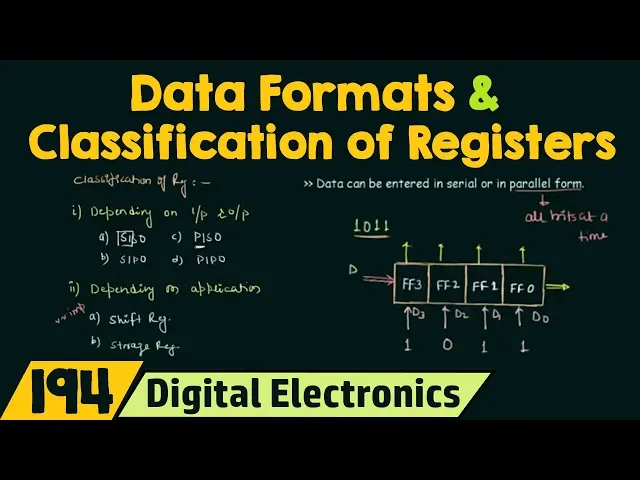
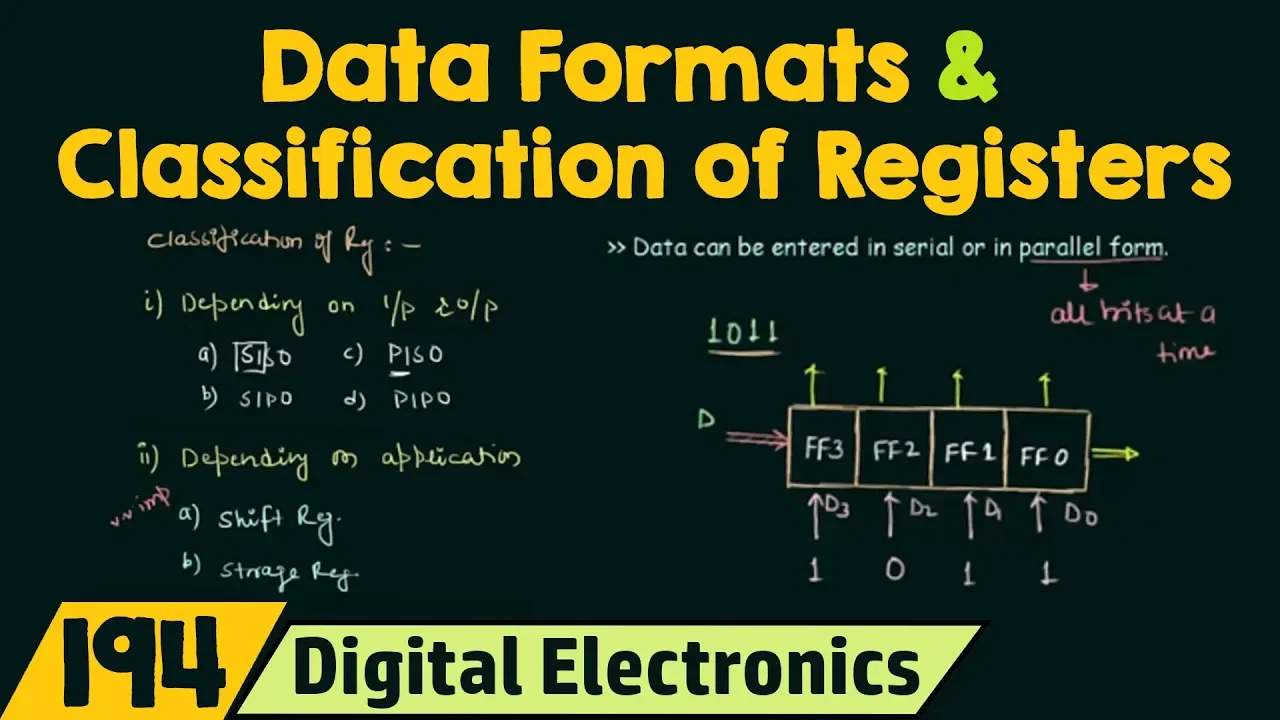
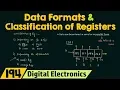
in the last presentation we started the registers and now we will see what are the different data formats available to us and also the classification of the registers so first I will start with the data formats data can be entered in serial or parallel form if this is my register then in this register the data can be entered in serial form by serial form I mean one bit at a time by this I mean one bit at a time and by parallel form I mean by parallel form I mean all the bits at a time
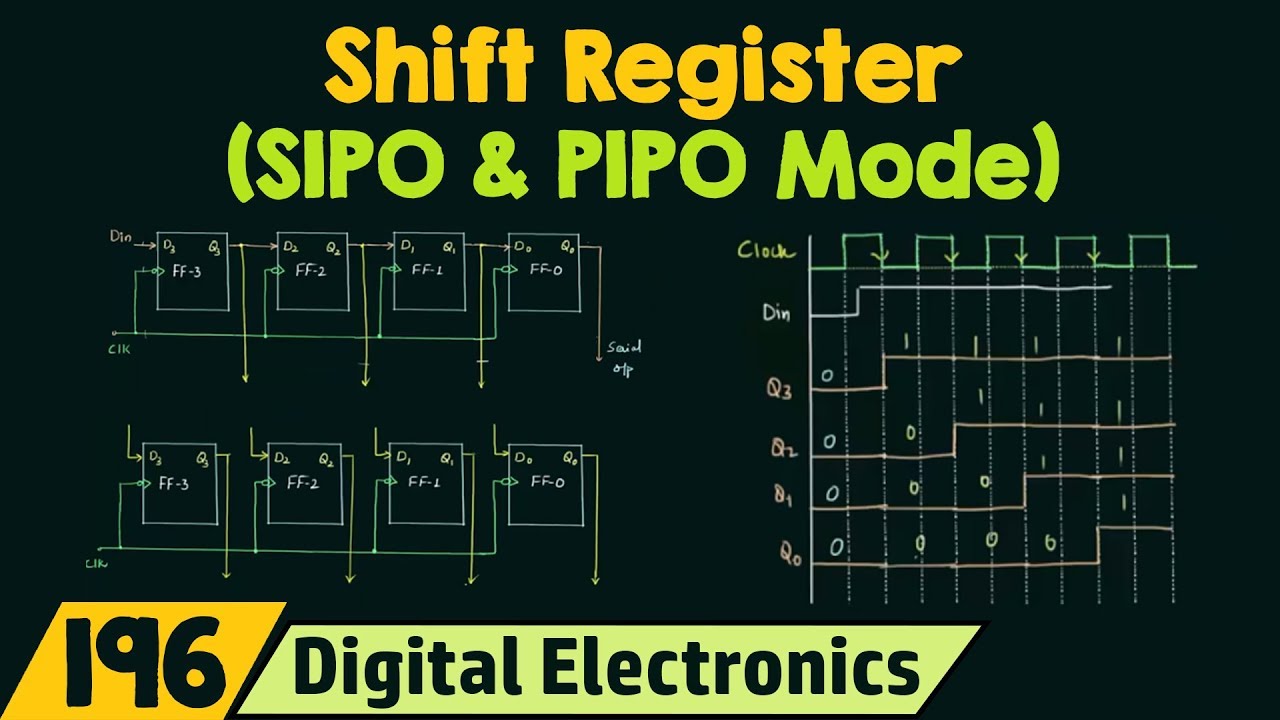
all bits at a time so if this is the register then in this the data can be entered like this this is the serial form the data is entered in a serial manner and let us take one example and let's say if I want to enter a four bit data 1 0 1 of 1 in this register so if I consider this serial manner let's say this D is the data that I want to enter then it will look something like this ok this is 1 0 1 1 this is what I want to enter
and in the same way if I want to enter it in parallel form then I have to enter it individually to all the four flip-flops okay so this one is 1 and this is 0 this is 1 and then a 1 this one is the parallel form and this one is the serial form in this I am entering the data 1 0 1 1 in serial and Here I am entering the data 1 0 1 1 in parallel so if you want to plot this in the timing diagram then first we will have D 3
D 3 is 1 from here you can see D 3 is the input to the flip-flop number 3 this is T 2 D and D 0 so d3 is high so I will make it high D 2 you can see is low so I will make it low and D 1 is high so it will be high in the same way D 0 is high so this is 1 0 1 or 1 and this is D 1 D is 0 so this is a small introduction about the data formats available to us and you can
also extract the data the stored data in this serial or parallel form if you want to extract the data in the serial form then it will come out like this and if you want to extract it or retrieve it in the parallel form then it will come out like this you are getting out this stored data and also this serial form is called as the temporal code the serial form is called as the temporal code temporal code and the parallel form is called as this spatial code ok so this is all about the data format
and you will understand it more when you study the different types of registers available to us and I'm just leaving the data formats here and I will start with the classification of the registers so let's start with it classification of registers I will classify registers depending upon two things the first one is the input and output so I will classify it depending upon depending on input and output this classification is very important so let's see the first type of flip-flop available in this category this is this C so as I as Oh serial input serial
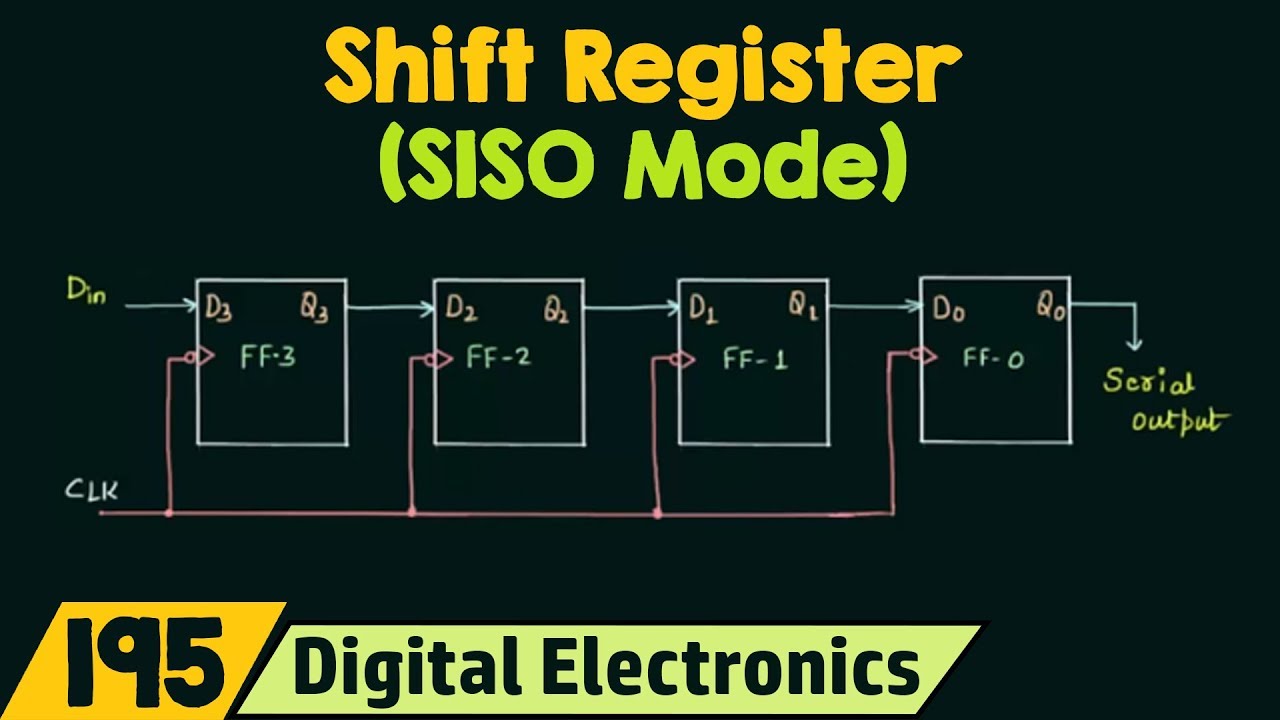
output you can see if I am entering the data in this serial form then I will say it is serial input and if I'm getting out the data also in serial form I will call it serial output so any serial input serial output register we entered the in serial manner and also extract the data in the serial manner very simple that's why I explained you this data format so that you can understand the classification a little bit easily and that the second one is the c po SI p o serial input in parallel output you
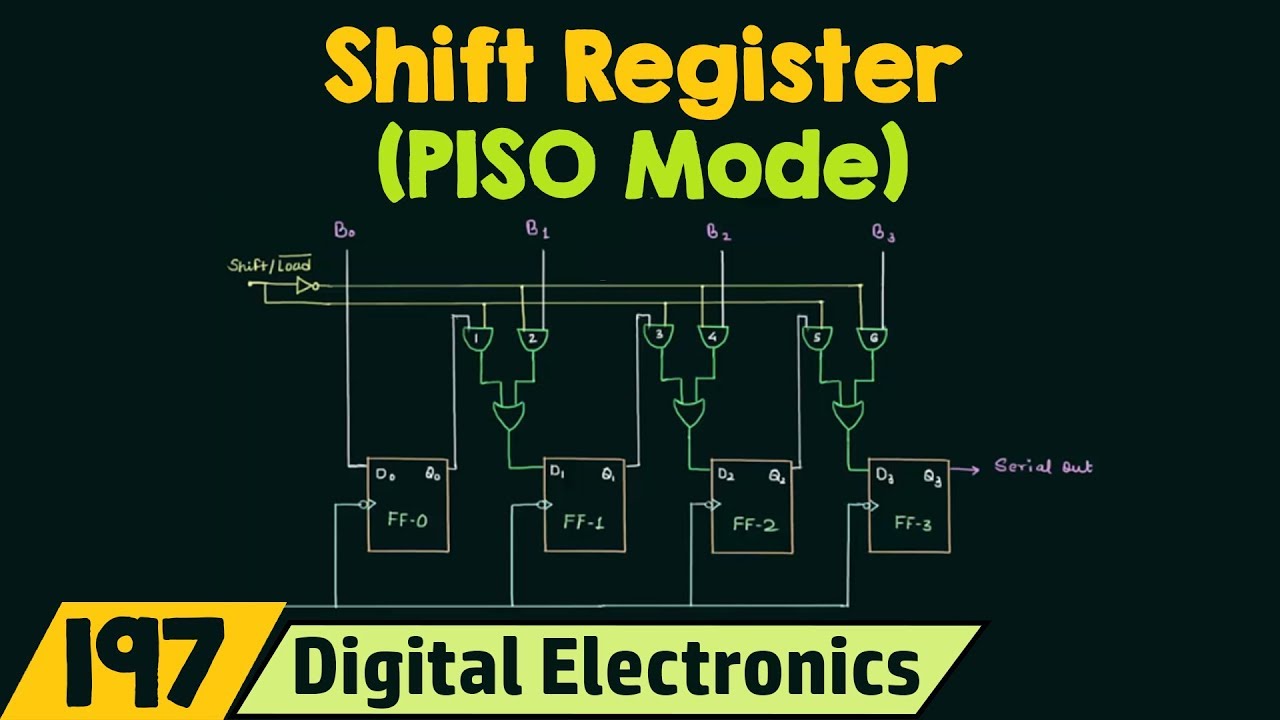
are entering the data in serial manner but you are getting the data out in the parallel manner like this and that register we call as this serial input parallel output the third one is the P so P is o in this we entered the data in parallel form parallel input like this and we get the data out in the serial form like this and the last one of course is p i-- p o parallel input and parallel output simply we are entering the data in parallel and getting out the data in parallel so this is
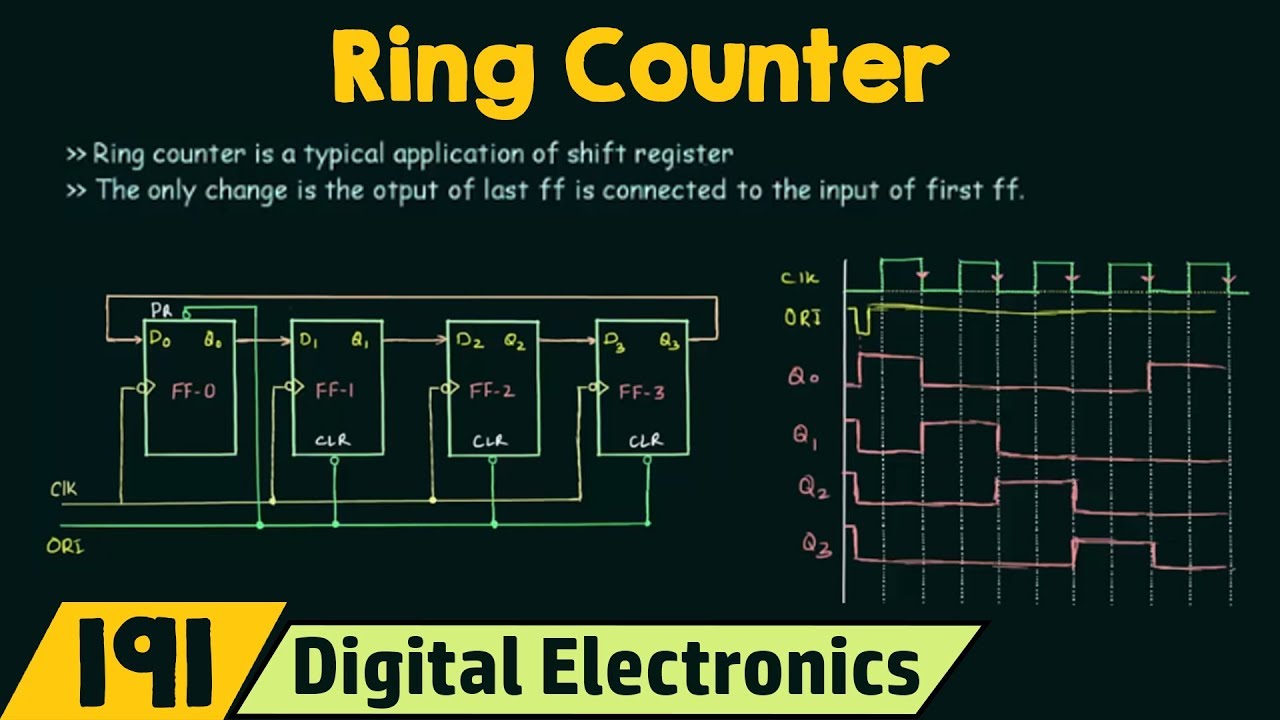
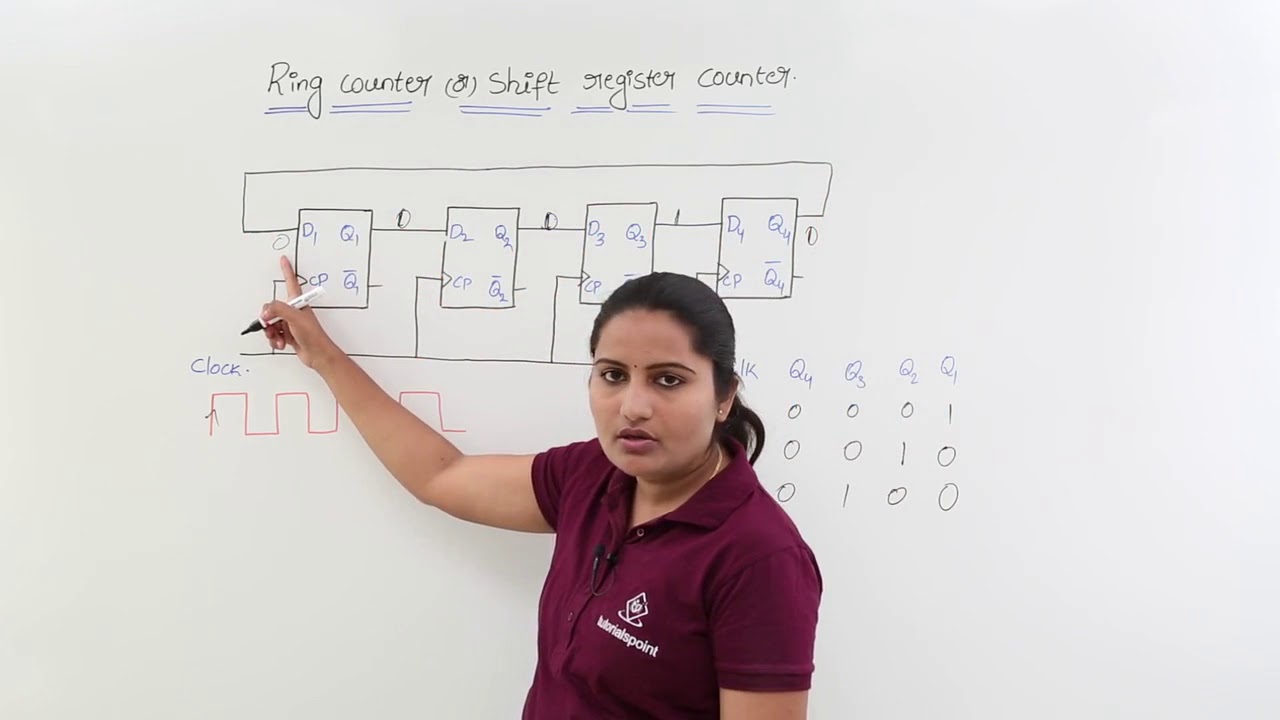
the classification depending upon the input and output we can also classify the registers depending upon the application so depending on application and we have two types of registers depending on the application the first one is the shift registers the shift registers and this one is very very important very very important we will study it in detail and the second one the second type in this category is the storage register storage register so these are the two types depending upon the application if you want your data to be shifted like from F 3 to F 2
then F 1 and then F 0 and then comes out we call it shift register and if you want your data to be just a store like you store the data and a use it when you need there is no shifting of data the stored data then we call it as the storage register and in this way you can say that this p IPO the parallel input parallel output register is nothing but the storage register because in this case we are entering the data the one is entered in the D flip-flop the flip-flop number 3
and this one that we have just entered is not shifting it is it is there that's why it is just a storage register in the same with zero 1 1 is stored in flip-flop number 2 1 and 0 there's no shifting of data so to simply storage register it is a very simple concept and actually the register is a very simple topic if you compare it with the counters or even flip-flop because understanding the flip-flop initially from the combinational circuits a little bit tough and once you have the feeling of flip-flop you can easily understand
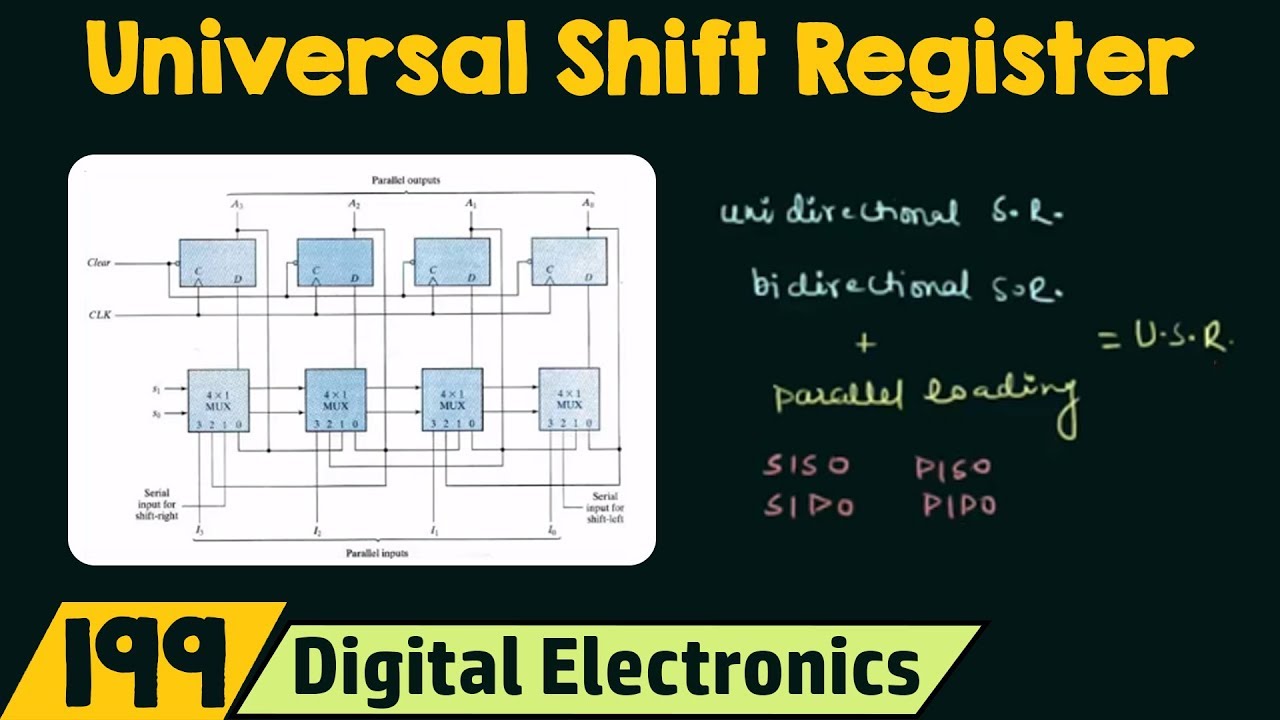
this registers so this is all about the data formats and classification of registers and we have to study all this for all this 4 registers in the coming presentations and also we will study few special type of registers like bi-directional shift registers and universal shift registers and in this way we will complete the register so see you in the next presentation