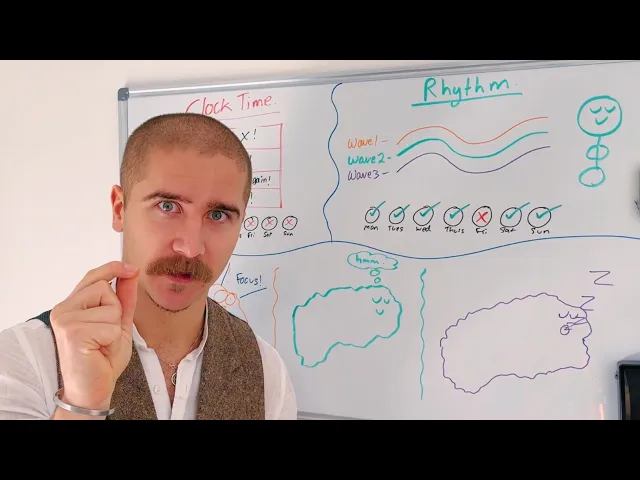
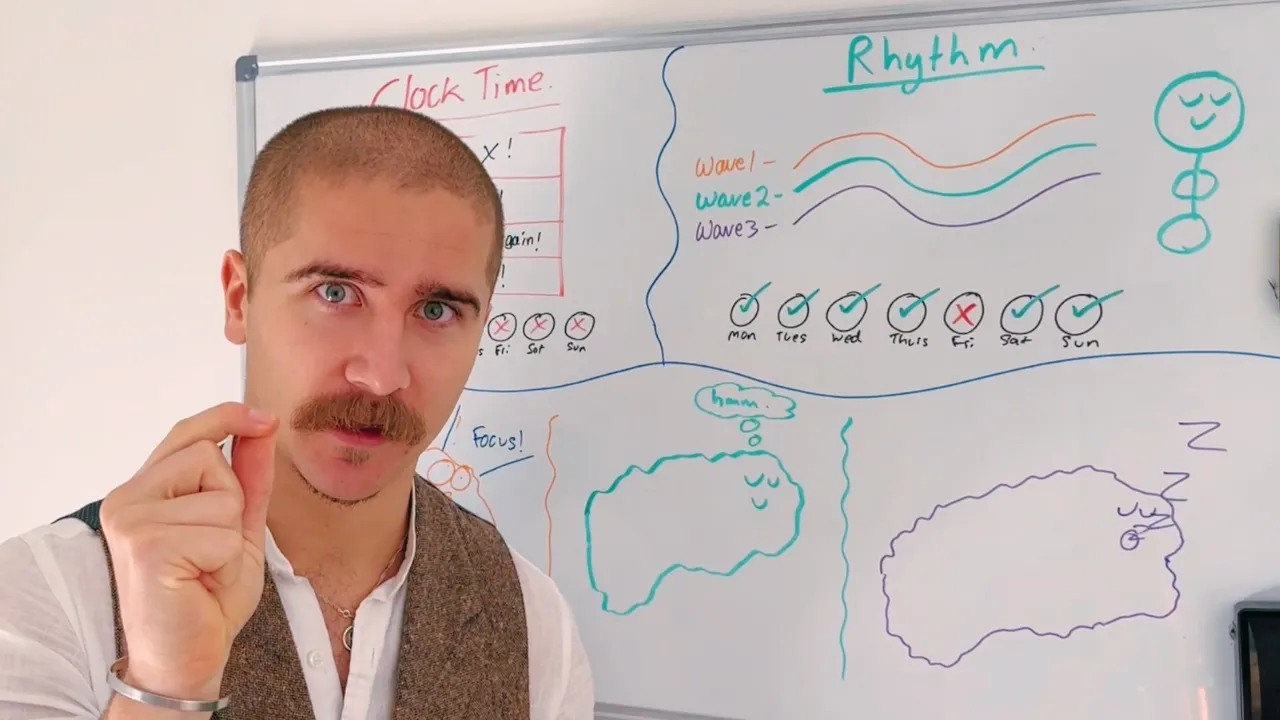
You struggle to stay consistent, not because you're lazy or undisiplined, but because your routine is built on clock time instead of rhythm. Clock time is do this thing at this time. Rhythm is do the right thing when your brain is in the right gear.
Clock time routine forces you to work against your brain, getting you to do the wrong thing at the wrong time. And nothing destroys your consistency quicker. So you miss a time block, feel guilty, convince yourself you're the problem and that the solution to that problem would be just finding the perfect routine you can follow every single day.
And only when you follow that routine without fail will you be able to get your life back on track. Then that loops every single week. This was me for years.
Here's why this all matters. Your brain is not the same hour by hour. It flows through predictable biological waves that determine when you can focus, when you can be creative, when you crash, and when you should wind down.
Clock time routine ignores these waves and instead treats you like a robot capable of the same output every single hour. So, you force yourself through a day, prison-like in structure, and you get trapped in tiny little time cages. No wonder why the routine collapses because it's built against your biology.
Your brain doesn't follow timestamps. It follows waves. For your consistency to feel effortless, you need to follow these waves.
Here's what these waves look like according to neuroscience. Double rub. Neuroscientists refer to the waves as phases, and there are three phases your brain cycles through every 24 hours.
The first phase runs between 0 and 8 hours after you wake up. In a quick example, if you wake up at 7:00 in the morning, this phase would run roughly between 7:00 in the morning and 3:00 p. m.
in the afternoon. In this phase, the neurochemicals highest in your brain are dopamine, cortisol, and neuropinephrine, which simply put means your brain is best served to focus deeply, do hard analytical tasks, hard work, and to make high stakes decisions because you've got the motivation in your system in this phase. Then your brain cycles into phase number two, 9 to 16 hours after you wake up.
In our example, this would run roughly between 3:00 p. m. in the afternoon and 11:00 p.
m. at night. The chemical shift here, serotonin starts to increase, which means your brain is now best served to be a little bit more creative, to brainstorm and to think outside of the box about things and to chill a little bit more.
Then it cycles into the final phase, phase three, 17 to 24 hours after waking up. In our example, this would run between 11:00 p. m.
at night until you wake up again. In this phase, your brain is in recovery mode. This is where you need to wind down, decrease the stimulation, dim the lights, rest and replenish.
When you force a clock time routine onto these biological waves, your energy scatters, your motivation swings, your days become a blur and then eventually collapse once you miss a time block. 4 p. m.
runs around and you're collapsing. Huh? Clock time routine says you've still got X, Y, and Zed to do.
And then that leads back to the loop we mentioned at the beginning of the video. you collapse, feel guilty, search for the perfect routine, and then repeat the loop. But the worst thing about that loop is you then convince yourself, do you know what?
[sighs] I'm just not disciplined or routines aren't for me. But here's the shift. You didn't fail because of a lack of consistency on your part.
You failed because the routine you were following had no rhythm. There was no through line connecting all of the tasks of tasks of your day. Instead, you just had a load of random tasks thrown on a calendar fighting each other.
Clocktime routine creates tension which makes you then hate routines in general. Rhythmic routine is the synergy that puts everything you do throughout the day into harmony. So before we cover exactly what you need to do next in order to create your personalized rhythmic routine, let's quickly zoom out and consider the bigger picture as to why we think about routine in the way that we do in the first place.
You think the way you do about routine because the internet only pushes two extremes. Both fail because they ignore your natural biology. The first extreme is something we'll call the discipline fantasy.
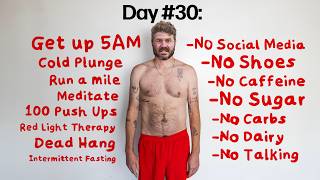
And this is where the productivity hustle bros scream at you through the screen and shout, "You need to wake up at 5 in the morning or you're a loser. " You need to time block in a perfectly color-coded system every minute of your day and stick to those time blocks and never skip a day. But the thing you have to remember about this message is it doesn't come from biology.
It comes from the industrial era. About 100 or so years ago when factories started sprouting up everywhere in the world and productivity became the big boom. The owners of those factories needed their workers to be predictable human beings and to run on clock time, not natural biological rhythm.
So although I'm painting them out to be the enemy here, the productivity bros, it's not their fault they think how they think. We've all just inherited these mindsets of time blocking and productivity from the industrial era. And this is what we now collectively call discipline.
The other extreme however takes the opposite approach and this is what we'll call the Talib fantasy because in the words of the famous author Nasim Talib in his book the bed of procristus if you know in the morning what your day will look like you are dead and well he's not wrong because us humans have evolved as improvisers we need novelty and surprise to feel alive not schedules as he also brilliantly highlights We are hunters. We are only truly alive in those moments when we improvise. No schedule, just small surprises and stimuli from the environment.
Beautiful philosophy, isn't it? Yeah. Until you try it.
Because here's the harsh truth. Most people don't become free without structure. They become chaotic, which is terrible for your mental health.
Because the neuroscience is clear on this. Your brain needs predictable rhythms. Take those rhythms away and your mood crumbles.
As anyone who's been unemployed, left university, or left school for that matter, knows very well. Worse yet, chaos makes your brain default to the cheapest dopamine available. Scrolling, binging, dooming, fapping, procrastinating on doing the things you know you need to do that would actually bring you a sense of growth, meaning fulfillment in life.
Hence the saying, the devil makes use of idle hands. Put simply, Talib's worldview from these two quotes, as great as those quotes are, only works if you already have elite level self-regulation. So, if both of these extremes ignore your natural biology, what's the solution here?
Let's put our solution caps on. Well, you don't need one or the other. You need both.
You need stability and freedom, structure and flexibility. Rhythm is the bridge. Here's the real relevance of the word.
Rhythmic routine means you work with your biology by respecting your personal biological waves, not timestamps. But the real upside for you, just before we get into the what to do next, is most routines, as we've seen, are built for perfection. Not humans.
They snap the moment you slip. Rhythmic routine, however, plans for low energy mornings, off days, fluctuating motivation, and life happening. When you miss a wave, nothing breaks.
You don't fall into guilt. You simply slide back into rhythm because rhythmic routine removes the shame that usually shatters your consistency. So, here's what to do next.
First of all, you need to find your daily energy waves by understanding your biology has a beat. You just need to vibe with it. But good news, you already understand the rhythm of this beat because you now know about the three phases we covered earlier.
But there's one caveat we need to mention with them. Some people focus better better in the mornings. Some people at 2 p.
m. Some people get creative at night. Some people crash way earlier than others.
We're all different. Totally normal. So, first of all, use your new knowledge of these three phases, not as a cage, but as a guide.
And then to find your personal biological rhythm. Simply do the following exercise. Think about how you currently spend your days and the activities you do throughout them.
And ask yourself, when does my mind feel sharpest? When do I get restless? When do I feel most social?
When do ideas flow naturally? When does my energy fade? And when do I crave quiet?
Your answers to questions such as these will highlight your natural biological waves, your rhythm. And your goal isn't to fight this rhythm. It's to notice it and build everything else around it.
And then you take that self-awareness into point number two, which is give each wave a name. Your answers to the questions will likely sound like this. During this period or after this activity or during this time window and you want to notice those periods of your day and label them.
For example, focus wave, move, movement wave, eating, social, creative, or windown wave. The purpose of giving names to these waves is you want to highlight clearly to your brain what state of mind and state of body you want to be in during that window. And the key thing to note here is you're not saying do X at Y time.
You're encouraging yourself to notice shift into this gear during this wave. And this way you give your day chapters instead of a prisonlike schedule. And then the third thing to do is to simply add one non-negotiable activity to each wave.
The non-negotiable activity, which we could also call your anchor because it keeps you steady, should highlight to you, get into this state during this window. It's almost as if it's reinforcing what you also did in point number two. Why is doing this important?
Well, think about what we covered in the last segment. The key isn't just to have hyper discipline or complete flexibility. You want both.
The waves throughout your day provide you with the flexibility because you're not saying specifically do X at Y time. Your anchors, however, keep you stable during these waves by giving you non-negotiable activities which prevent you from plunging into the depths of chaos and being too flexible. Okay.
Now the let's bring all of this together by covering a really clear example. Here is my rhythmic routine which over the past 3 weeks has been skyrocketing my consistency and discipline and boosting my happiness as well. Didn't want to mention the happiness part because of self-sabotage and all that but touchwood.
I split my day into four biological phases which have principle like names because I want to have a look at that principle and know exactly what state of mind and body I want to be in. Again, I'm not looking at the time stamp and knowing oh between 9 and 10 I need to do this. No, it's during this window I need to be in this state of mind.
First of all, as soon as I wake up, which is naturally, I get into creative first and dopamine last. The mode I'm in here is focused, energetic. I'm in a flow state.
I'm feeling slightly stressed. The rough time is when I wake up up until about 300 p. m.
ish. But of course, that time is flexible. The activities I'm doing here is deep work, writing, researching, building projects and videos.
My one anchor that keeps me stable here is I do not check WhatsApp until after I've been to the gym because creative first, dopamine last. I don't want my dopamine going here, there, and everywhere. I want it in the work I'm doing.
Then I get into refueling and recharging. The mode I'm in here is mentally depleted cuz I've been focusing on all morning. So I'm tired and I'm hungry.
Rough time 2 to 4 p. m. Activities, walking, eating, recording, anchor here.
One nutritious meal before I go to the gym. And then I train in transition. The mode I'm in here is physically energized.
I'm feeling slightly fidgety and restless now because I've been in all day and I want to socialize. The rough time 3 to 6 p. m.
activities, walking to the gym, training, talking to people at the gym. My one anchor here, which stabilizes my whole day, is I have one NSDR for 7 minutes, non-sleep, deep rest, having a nap on the floor after I've been to the gym because this marks the transition into high energy, focused work and movement to connecting and closing down. Now I'm tired, hungry, resting, and my why my mind is wandering.
Rough time between 6:00 and 11:00 p. m. Activities: texting, calling, socializing, light admin, chilling, walking, reading.
One anchor here, 9:00 p. m. roughly.
All screens go off and I go for a walk and talk to myself out loud. Now, three quick things I want to note here before we move on. Notice how there isn't time blocks.
Sometimes I'm using time of course based on my understanding of when roughly throughout the day I'm going to do certain things but those times are flexible. The time doesn't really matter. What matters is the state of mind as we keep saying.
It's not do x at y time. It's getting to this state during this window. Second thing I want to note is when it comes to your anchors the key is to do them 80% of the time.
The other 20% spontaneous deviation. Then the final thing to know is the real kicker as to why this works and it's been skyrocketing everything that I just said is because everything flows into each other. I'm focusing on heavy deep work in the morning which means I'm mentally depleted and I need to refuel and recharge.
Because I'm refuelled and recharged, I am ready to start working out. Because I've worked out, I'm now more tired and ready for sleep. Flexible actions, predictable patterns, one anchor per phase.
That is rhythm. But there is one more thing you need to do which is going to make or break your rhythmic routine. Let's finalize the video with this.
Schedule non-negotiable devian days. Pick one day a week where you are intentionally going to break routine and I guarantee you it will reset your nervous system, prevent burnout, remove guilt and keep the rhythm flowing. The paradox here deviating from the routine is what helps keep it alive.
Here is the final deeper explanation on this which we are going to end this video with. How do we know this? Well, the behavioral scientist Rita Coelloo Dvali has shown that slight deviation increases discipline long term.
How does she know this? Well, her and her team did a interesting experiment, a fascinating in fact experiment. They got two dieters, split them up in two groups of dieters, sorry.
Split them up into two groups, a strict group and a flexible group. The strict group strict the strict group [clears throat] could only eat [laughter] [snorts] the strict group. So I'm laughing because I said gloop.
The strict Oh my god. The strict group could only eat Keep it together. Could only eat 1500 calories every day with no exception exceptions.
It's all going wrong. The flexible group could only eat 1,300 calories every day, but one day a week they could have an off day where they could eat 2,700 calories. The results, who do you think lasted longer?
The flexible group. Why? Well, they showed what was the smart thing I was going to say?
Oh, yeah. They showed greater self-control, fewer emotional spirals, better rebounds after slip-ups, and they showed more persistence overall because they knew a future moment of pleasure was upcoming. The strict group, however, they were more likely to quit.
So, the bottom line here is, oh yeah, so long as it's planned, it's often good to be bad. As Oscar Wild said, the only way to give into temp no, the only way to resist temptation is to give into it. As Benjamin Franklin said, a speckled axe is best.
A benevolent man should allow a few faults in himself. And that's why for more discipline, don't try and avoid failure. Plan it.
In summary, there's no one else in my room. Sometimes I just laugh to myself. I need more friends.
I need to get out more. Either one. You're not a failure.
You're not undisiplined. Nor do you need to time box every minute of your life so as to squeeze more productivity out of yourself and then collapse and search for a new perfect routine every 3 to 4 days. No, you just need a rhythm that your body can trust.
Build your rhythmic routine and consistency will become effortless and happiness that will grow by itself. Thank you very much for your time and attention. If you have an understanding as to what your rhythmic routine looks like, I would love to know what it looks like in the comments.
Plus, you could spark some inspiration for other people who are a bit unsure as to what their rhythmic routine could look like. I shared mine with you. Now I want to see yours.
Sus. Stay disciplined, playful, and dangerous.