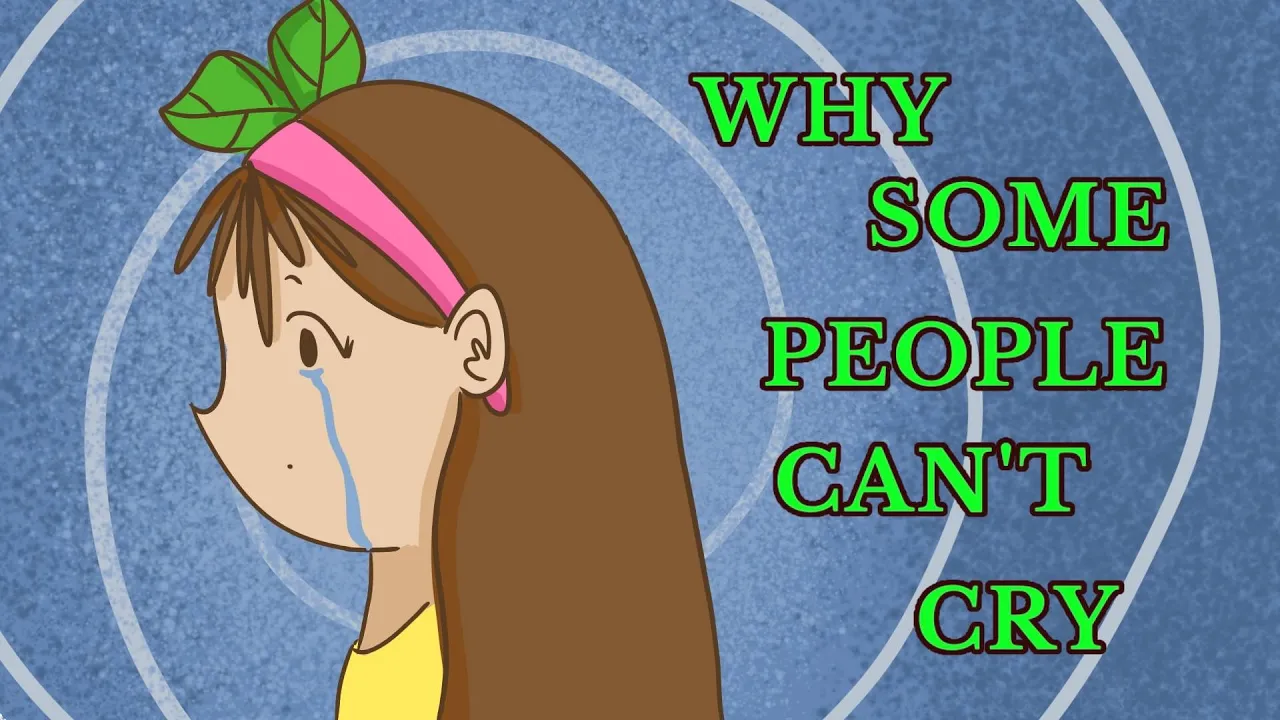
Have you ever been in a situation where you should be crying? A sad movie, a heartbreaking goodbye, a funeral. Everyone around you is a waterfall of emotion and you feel like a desert.
You feel the sadness, the pressure, the lump in your throat, but the tears just won't come. And it's not that you don't care, it's that your body seems to have forgotten the password to its own emotional release. First, let's get this straight.
The ability to cry is not a measure of strength, nor is the inability to cry a sign of it. Crying is a biological function, like sneezing or laughing. It's a pressure release valve for your emotional system.
So, when that valve gets stuck, it's not a character flaw, it's a sign that something deeper is going on. It's like having a full bladder but being physically unable to find a bathroom. The pressure is real and it's incredibly uncomfortable.
The most common reason is conditioning. For many of us, especially men, crying was implicitly or explicitly discouraged as children. We were taught that tears mean weakness, that we need to be strong.
Think of Steve Harrington in Stranger Things. He starts as the cool, detached jock who wouldn't be caught dead crying. Over time, your brain learns to suppress this reflex.
The emotion is still there, but it's been locked in a room in the basement of your mind. You don't stop feeling the sadness, you just stop showing it. Second, you might be experiencing emotional numbness or burnout.
This happens after prolonged periods of stress, grief, or trauma. Your nervous system is so overwhelmed that it basically shuts down non-essential functions to conserve energy. Crying, while a healthy release, is still seen by your body as a crisis response.
If you've been in crisis mode for months or years, your body might just say, "Nope, we're all out of crisis. We're running on on power. " It's not that you don't feel anything, it's that you feel everything all at once and your system has short-circuited.
Third, there's a deep-seated fear of losing control. For some, crying feels like opening Pandora's Box. You believe that if you allow yourself to start, you'll never be able to stop.
You'll dissolve into a messy, ugly heap and never be able to function again. It's like you're a tightrope walker on your own emotions and you believe that one single tear is the gust of wind that will send you plummeting. And fourth, it can be a trauma response.
We all know fight or flight, but there's a third response, freeze. When an emotion like grief or fear feels too big to process, your brain can essentially hit the brakes. You become emotionally immobilized.
It's a defense mechanism. Your mind is protecting you from something it perceives as a threat. It's not that you are cold or unfeeling.
You are in a state of emotional shock. So, if you're stuck in this dry, frustrating place, how do you gently coax the tears back? It's not about forcing a dramatic movie-style breakdown.
It's about creating safety. So, first create a safe space. Crying is a vulnerable act.
Your body won't do it if it doesn't feel safe. Find a time when you're alone, put on music that moves you, watch that movie that always gets you. Dim the lights.
You are giving your nervous system permission to finally let its guard down. Second, start with the body, not the mind. Don't try to force yourself to feel sad.
Instead, focus on physical release. Take a few deep, sighing breaths, the kind you do when you're utterly exhausted. Gently roll your neck and shoulders.
You're releasing the physical tension where emotions get stored. Sometimes the body needs to lead the way for your mind to follow. And finally, use a proxy.
If you can't cry yourself, cry for something else. Cry for the character in the book. Cry for the beauty of a piece of music.
Hold a pillow and cry into it. It sounds strange, but it allows you to bypass your own mental blocks. You're giving the emotion an outlet, even if it's not pointed directly at your own pain yet.
Your tears are not a sign of weakness. They're a sign of your humanity. They are the rain that allows the seeds of new growth to emerge.
Whether your tears flow freely or are currently locked away, your feelings are valid. And finding a way to let them out, even a little at a time, is one of the bravest things you can do. It's not about the flood, it's about the first drop.
If you struggle with processing your emotions, you might find our video on emotional numbness and how to heal helpful. And for a guided practice in reconnecting with yourself, try our guided meditation for emotional release, part of our 10-part series. You've got this.
And lastly, please support our channel by clicking that subscribe button if you haven't already. And check out our shop at psych2go. shop.