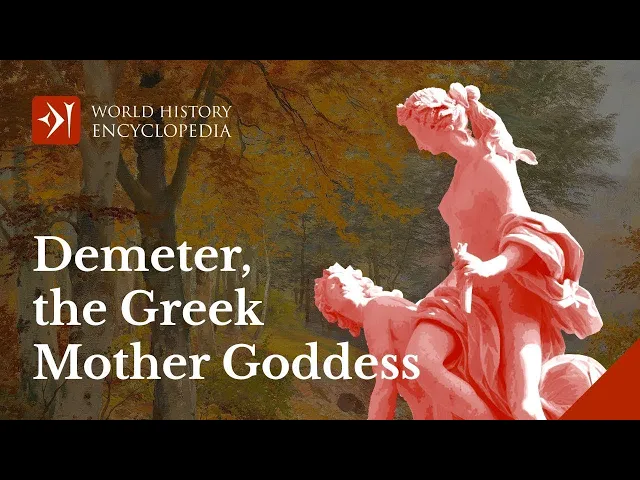
Did you know that Demeter's grief over her daughter being abducted by Hades was used as an explanation for the seasons in ancient Greece? Hello and welcome to World History Encyclopedia! My name is Kelly and today's video is all about the Greek goddess of agriculture, grain and the harvest, and the goddess central to the Eleusinian Mysteries.
This video is all about the goddess Demeter and the establishment of the mysteries at Eleusis. Don't forget, the easiest way to support us is by giving this video a thumbs up, subscribing to our channel and hitting that bell icon for notifications so you don't miss out on any new uploads. World History Encyclopedia is a non-profit organisation, and you can find us on Patreon - a brilliant site where you can support our work and receive exclusive benefits in return.
Your support helps us create videos twice a week so make sure to check it out via the pop-up in the top corner of the screen or via the Patreon link down below. Demeter, the goddess of agriculture, bread and grain, is one of the oldest deities in the ancient Greek pantheon, and not only that, she was an incredibly important one as the goddess that guaranteed the fertility of the earth. With her domain over agriculture, she was an essential deity for those working in farming and vegetation, and in Rome she remained popular and was known as Ceres.
Demeter is a daughter of Cronus and Rhea and a sister to the other Olympian gods Zeus, Poseidon, Hades, Hera and Hestia. Demeter is most commonly associated with her daughter by Zeus, Persephone, the goddess of spring and the queen of the underworld but Demeter had other children, including Ploutos, the god of wealth with the mortal Iasion, Arion, an immortal horse with Poseidon after he raped her in the form of horses and the fertility goddess Despoine, also by Poseidon. Since Demeter had many divine responsibilities as a goddess of agriculture, she had many different epithets; Homer describes her as 'golden-haired' in his "Iliad" and Hesiod in his "Theogony" and "Works and Days" describes her as 'bounteous Demeter', 'well-garlanded', 'hallowed', and 'revered'.
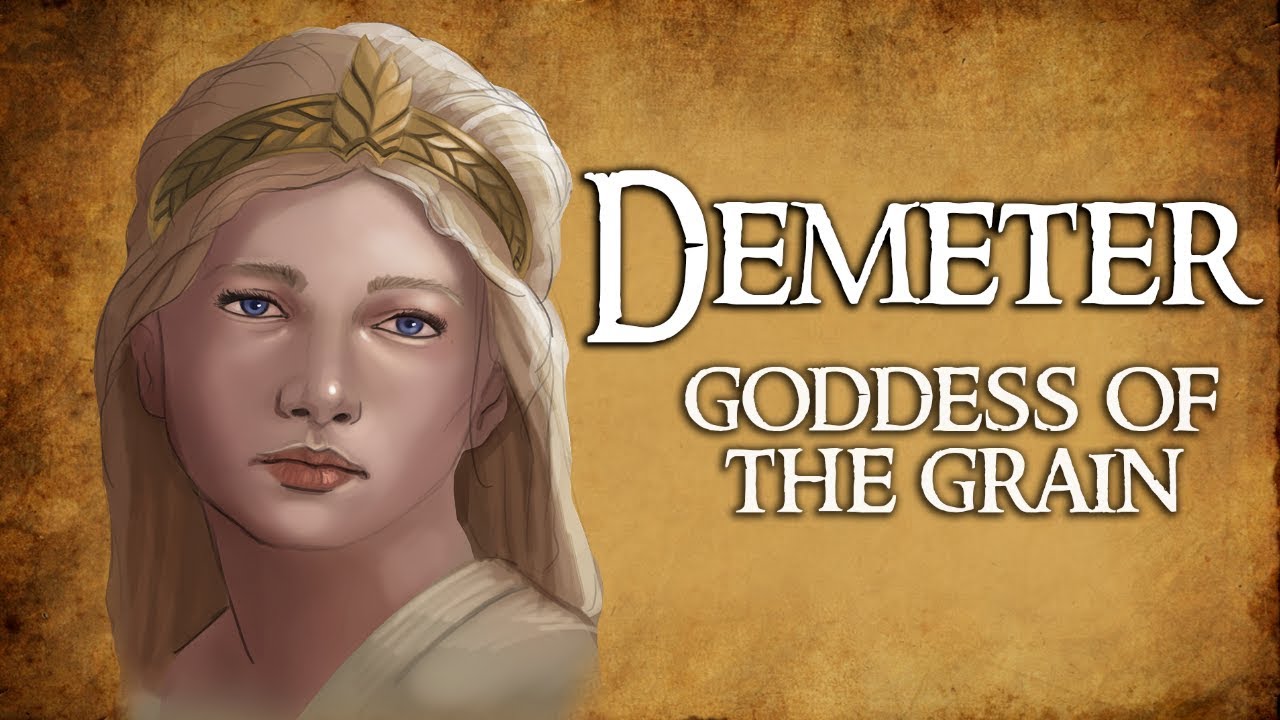
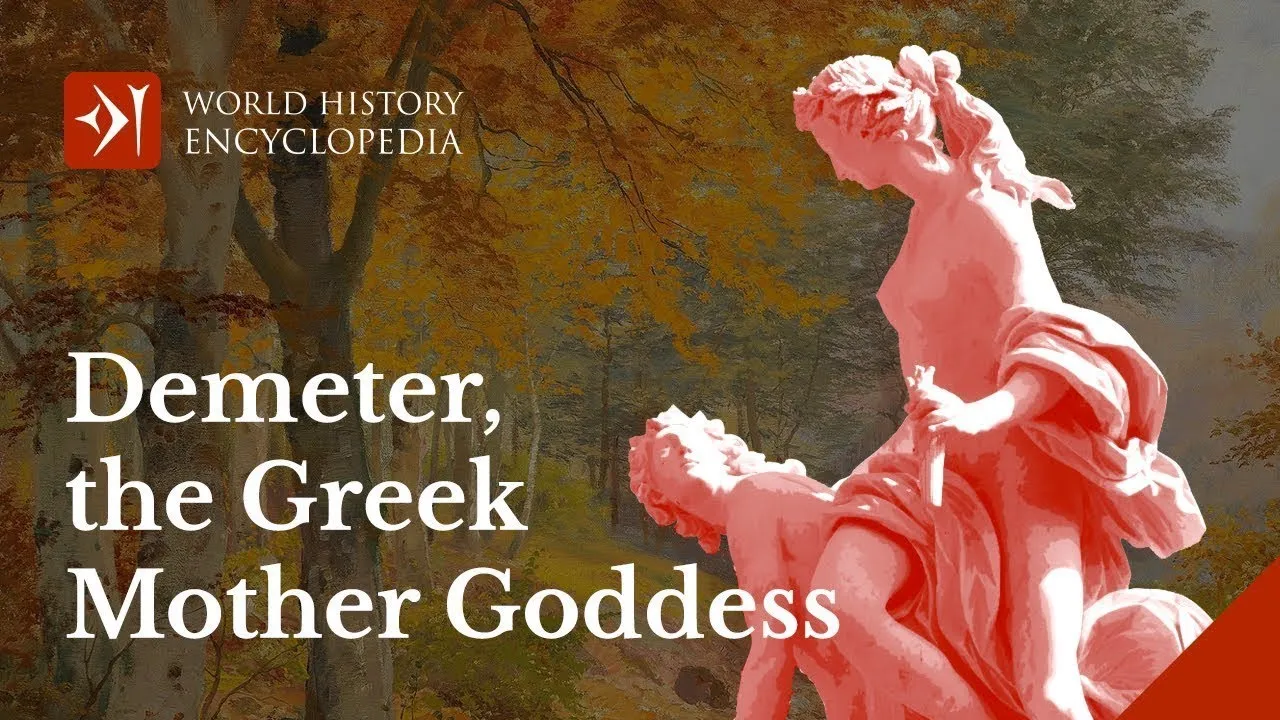
The goddess had other cult titles and epithets concerning all aspects of her responsibilities, including Chthonia, meaning 'Of the Earth', Ploutodóteria meaning 'Giver of wealth' Karpophóros meaning 'Bearer of Fruit' and Mægála Thæá meaning 'Great Goddess. ' Despite being a goddess with a long history, she is very rarely depicted in art before the 6th Century BCE, and when she is depicted, she is often with her daughter Persephone. Demeter is often seated, wearing a crown of grain and holding a torch that signifies her search for her daughter.
She may also be holding a sceptre, a poppy or stalks of grain. Grain, unsurprisingly, is a common symbol of Demeter, as is the Cornucopia or Horn of Plenty, and she had numerous plants sacred to her, including poppy, mint and wheat. The Orphic Hymn to Eleusinian Demeter begins by addressing many of her responsibilities and associations in antiquity.
"Dea, divine mother of all, Goddess of many names, Revered Demeter, nurturer of youths, Giver of prosperity and wealth, you nourish the ears of corn, O giver of all, you delight in peace and in toilsome labour. " "I sing of the revered goddess, rich-haired Demeter, and her slim-ankled daughter, whom Hades snatched (far-seeing, thundering Zeus gave her away) while she and Ocean's deep-breasted daughters played far from golden blade Demeter, who bears shining fruit. " This is how the Homeric Hymn to Demeter begins before it relays the story of the abduction of her daughter Persephone and Demeter's arduous search for her.
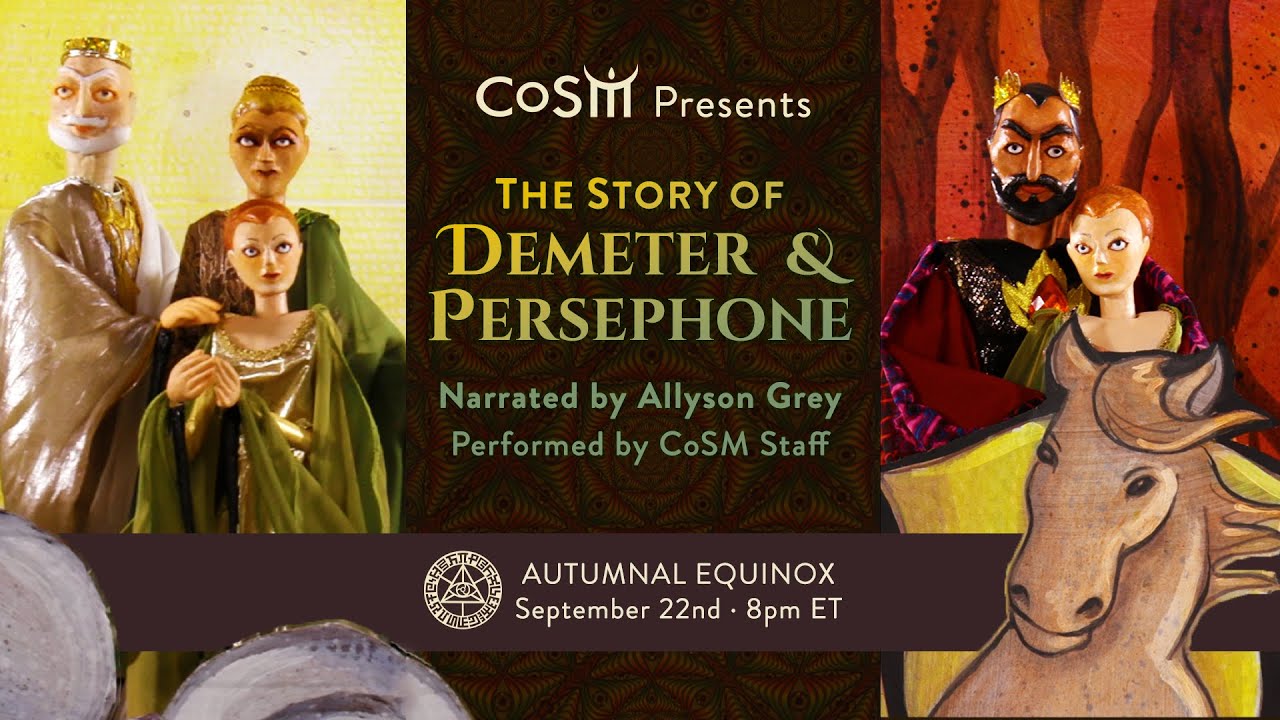
The myth of Demeter's wanderings in search for her daughter, who is being held captive by Hades in the Underworld, is among the best known and was told numerous times in the Greek and Roman world. The most famous version comes from the Homeric Hymns. Persephone, who is also known as Kore, was out picking flowers in a meadow until Gaia (the earth) made bloom a beautiful narcissus flower and as Persephone picks it, the ground opens up; Hades the lord of the dead emerges and snatches Persephone away in his golden chariot.
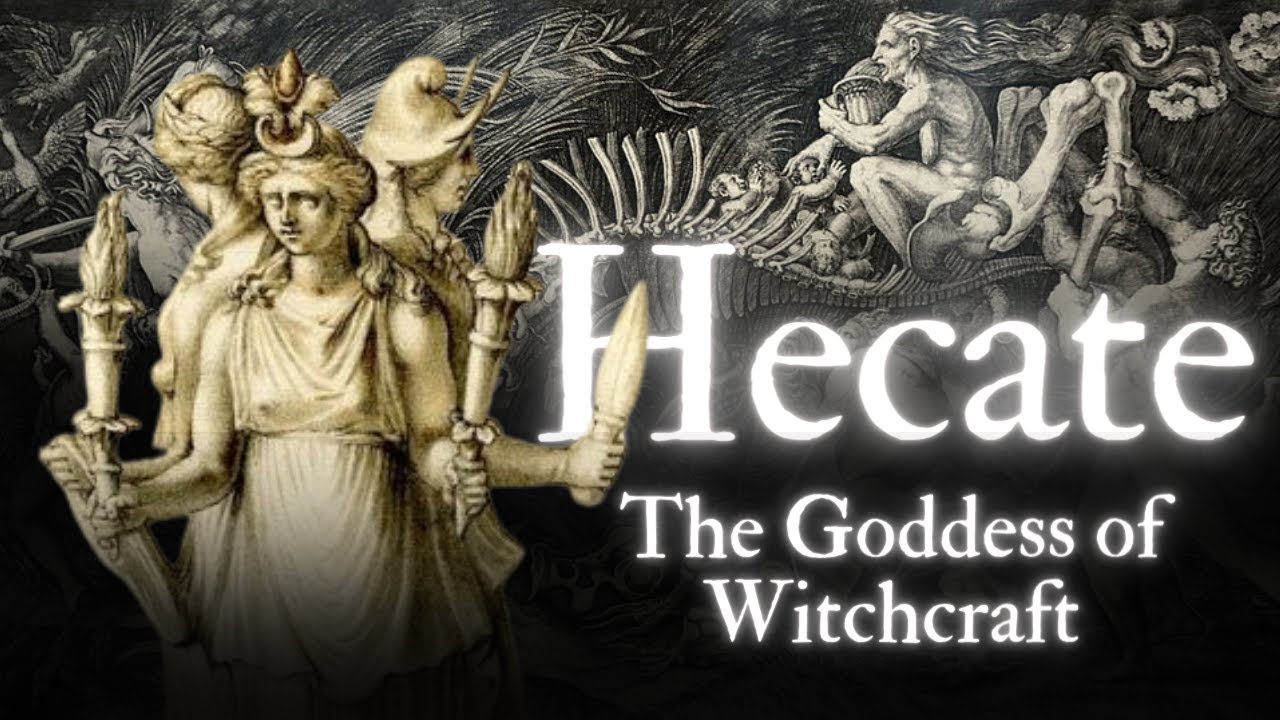
Persephone cried for help but no one immortal or mortal heard her except for the goddess of magic Hecate, and the Titan of the sun Helios. Demter searched for her daughter but no one could help her. She wandered for nine days with torches in her hands.
She didn't eat, drink or bathe. On the 10th day, Hecate met Demeter holding her own torches and told her that she heard Persephone's cry but didn't see who snatched her away so the two goddesses visited Helios who watches over gods and mortals and he told of how Zeus allowed his brother Hades to take Persephone away in his chariot, and in his opinion, Hades wasn't the worst match for Persephone as he is a king among his people. At this part of the tale, we see Demeter shrouded in grief; she withdraws from the home of the gods at Olympus and disguises herself as she walks the fields and cities of humans until she takes a seat at the home of Keleos, the ruler of Eleusis.
The daughters of Keleos don't recognise the goddess and ask who she is and why she is there. Demeter spins a tale that she is a midwife and asks if any home is after work for she could nurse a newborn and guide women in their work, Demeter is given work by the girl's mother, Metaneira who has a young son and entrusts him to Demeter, because she senses that this old woman is noble. Demeter looks after the young boy Demophon, anointing him with ambrosia as if he were the son of a god, and every night she placed him in a fire, and he grew fast, like a god.
Demeter would have made Demophon an immortal had Metaneira not walked in one night and seen Demeter placing the boy in the fire. She shrieked and so Demeter, furious at the interruption, retrieved him from the flames. At this point, she reveals herself as the goddess of agriculture and a deity who was the greatest source of aid and joy for mortals.
Metaneira begs forgiveness, and Demeter says she will grant it if a great temple with an altar be built for her to appease her spirit and says she will lay out the rites to be observed herself. She then strips herself of her disguise and stands beautiful and divine with golden hair before vanishing. The next day, the temple was built in honour of Demeter as she requested, and upon its completion, Demeter moved in, refusing to return to Olympus, preferring to remain at her temple, wasting away in grief for her daughter.
She made that year as dreadful and bitter for everyone else as she felt herself, making the land infertile so nothing grew and there was no harvest. She created a famine that threatened to destroy all of humankind and deprive her immortal siblings of the sacrifices and gifts given to them by mortals. Zeus tried to convince Demeter to rejoin the gods and resume her duties, but she refused saying she would never return until she saw her daughter again.
At that, Hermes was sent by Zeus down to the underworld in hopes that he could lead Persephone who was still longing for her mother out of the misty darkness, so Demeter could lay eyes on her and set aside her grief and rage. Hades listened to Hermes relay the anger of Demeter and her plan to destroy mankind, and so Hades smiled and agreed. Persephone could return to earth and see her mother, but before she left, Hades secretly slipped her a sweet pomegranate seed to eat, knowing that those who ate in the Land of the Dead had to remain in the Land of the Dead.
When Demeter saw her daughter, she embraced her but wanted to make sure that she hadn't eaten any food in the Underworld, for if she didn't, Persephone could once again live with her mother. Persephone told her mother how she was compelled to eat a single pomegranate seed, and because of this, she would have to return for a third of each year but could spend two seasons with Demeter and the other gods. With her daughter once again by her side, the land became fertile once again, and the grain could grow in season before Persephone had to return to the Underworld, and in this way, the myth explained the seasons.
Demeter revealed her sacred rites to Triptolemus and Diocles, Eumolpus and Keleos, and she shared her mysteries with them, secret things not to be asked about or uttered. Those who are initiated into the mysteries were promised a blessed afterlife. And so, from the Homeric Hymn to Demeter, we have the beginning of the Eleusinian Mysteries in honour of Demeter and her daughter Kore Persephone.
This myth was symbolic of the changing of seasons, the cycle of life to death to rebirth, as seen in Summer moving to Fall and Winter and then the return of life in Spring. This cycle became central to the sacred rituals that were part of the Eleusinian Mysteries, and it is unsurprising that the sanctuary to Demeter at Eleusis was the most important, with its religious connection dating back to the Mycenaean civilisation of the Bronze Age. She was worshipped all across Greece, though and had sanctuaries in most city-states, including Naxos and Andania and Lykosoura.
In around 600 BCE, the Eleusinian Mysteries became an official ceremony in the Athenian calendar, and the site of Eleusis became a truly Pan-Hellenic site. To become an initiate in the Mysteries, as it pretty much tells us in the name, everyone was bound by sacred oath not to reveal the secrets, and to this day, much of what may have happened during the Mysteries is a mystery. We know that from the establishment of it as an official ceremony, the rituals were held twice a year.
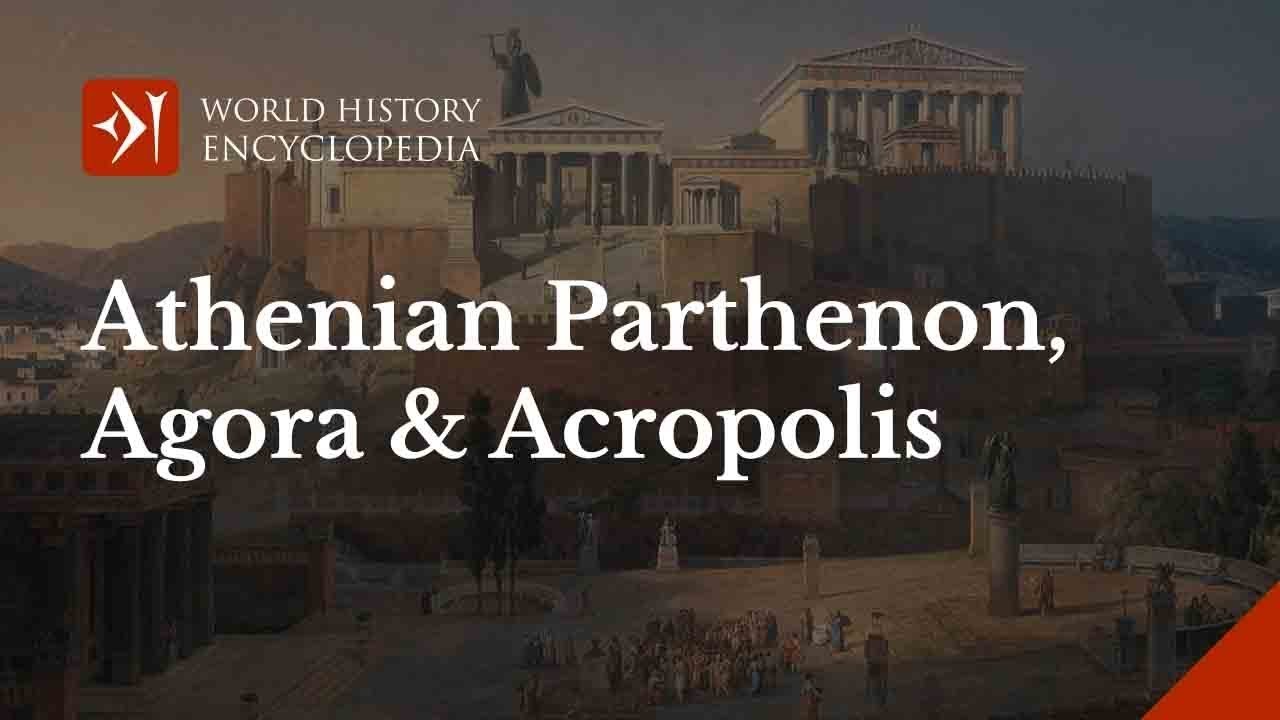
There was an initiation process held every Spring known as the Lesser Mysteries and for nine days in the Autumn, the Greater Mysteries were held. Only Greeks could be initiated, although this was expanded later on to Roman citizens. We know that there was a procession along the Sacred Way from Eleusis to the Agora of Athens led by a priestess of Demeter and a procession back led by a symbolic Chariot of Iacchus.
There were ceremonies of ritual cleansing and purifying and a reenactment of the myth of Demeter and Persephone. The first part of the ritual was solemn, but after Demeter was symbolically reunited with her daughter, a great celebration was held; pigs were sacrificed, sacred texts were interpreted by priests, and there was drinking, music and dancing, as shown in decoration on pottery depicting this part of the rites. Although no one revealed what went on in the first part of the ritual, people claimed to no longer fear death and to recognise the true meaning of life.
Demeter was also honoured in the all-women Autumn Festival known as the Thesmophoria, celebrating fertility. The rites of the Thesmophoria were also secret but, like the Mysteries, seemed to have assured participants of a continuance to life despite the illusion of death. Can you think of another example where a story from mythology may have been used to explain a natural phenomenon?
Let us know in the comments below! If you enjoyed this video, make sure to give it a thumbs up and subscribe to our channel so you don't miss out on our new videos every Tuesday and Friday. This video was brought to you by World History Encyclopedia.
For more great articles and interactive content, head to our website via the link below. If you like my shirt, you can find this design and a bunch more at apricusclothing. ca, or you can find a link for it down below.
Thank you so much for watching, and we will see you soon with another video!