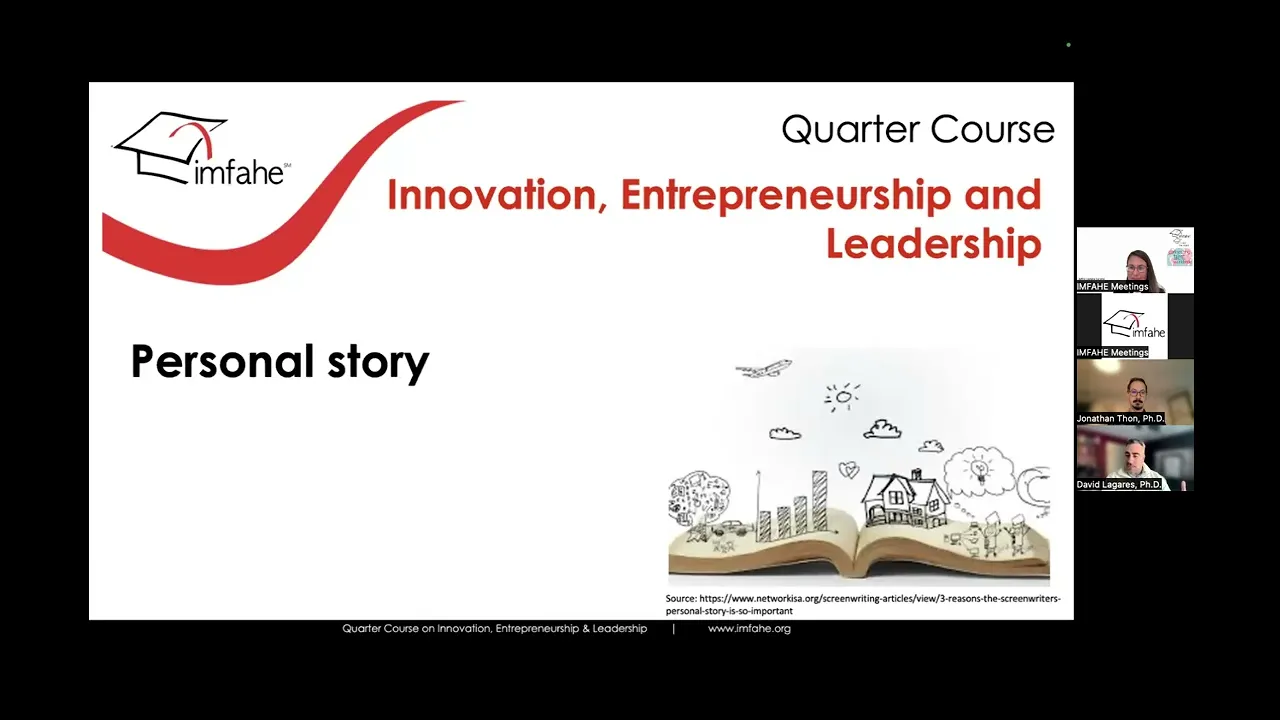
33 p.m in Portugal um Welcome to our Master Class part of the quarter course on Innovation entrepreneurship and Leadership my name is Safir castano and I am the President and co-founder of infi foundation over the 10 years H infi has built a global platform connecting more than 2,000 scientists students and professionals worldwide in 2024 2025 this platform is PR to collaborate and partner with the Next Generations of disruptors and innovators who are the redefining the boundaries of Education science and collaboration such as the University of Malaga La Laguna pad University Domino re Juan Carlos s
Institute of polya University of H Madrid autonoma non-conforming scientist Fullbright Memorial loing Cancer Center University of oo foro San Sebastian entrepreneurs or idea Square in 2024 2025 Academic Year we are welcoming more than 300 new Members from our partnet organizations to this platform these members will have the opportunity to collaborate with Talent professionals working across the globe in Este steam organizations such as Stanford Harvard MIT prinstone Amazon IBM Ikea meta nature publishing group Merc rochia Aus Novartis pepsa and many others as you can see in this slide on our website wwwi in.org you will find
a range of of opportunities designed to shape your Professional development these include mentorship programs prestigious fellowships quarter courses with field experts shown competitions for entrepreneurs and international conferences stay connected for the latest updates by following us on your preferred social media platforms LinkedIn X or Instagram and now I would like to discuss just briefly how you can get the certificate from this quarter course First you you need to attend the live master classes and fill and exit survey you have to watch the recorder master classes and indeed if you cannot attend to the live master
classes don't worry you can always watch the recorded classes and then finally you need to complete the Practical exercise we don't provide certificates for one class we provide certificates for the whole quarter course so you need to follow those uh steps and now we are moving Forward with our Market master class today how to get support for launching your business idea founder story panel and today is a great pleasure to introduce Jonathan Tong Dr Jonathan Tong is a c biotech entrepreneur with a remarkable career career spanning Academia and Industry Bor in Canada he moved to
Boston as a postd do in theology division at Bri wom hospital and later later on he was appointed as an assistant professor at Harvard Medical School successfully transitioning to the industry Dr Tong has become an accomplished CEO and indeed he's starting his third company right now he was the founder and CEO of platelet biogenesis and extrem bio companies at the Forefront of biotechnology with plateless as a foundation Dr Tong is a recognized leader in cell and gene therapy eatology and cell culture manufacturing interesting facts about Dr Tong include His chenian Heritage and his role as
a father for two children his journey exemplifies the successful fion of scientific innovation and entrepreneurial spirit thank you very much Jonathan for joining us today happy to be here two two Corrections uh one I was born in Buenos Ares Argentina sorry not Canada and and the second I have and now you have three kids yes this was a late H yes excited congratulations for the Third thank you all right and now I'm it's my pleasure to introduce Dr David Lagares who is from Madrid after completing his postdoctoral research at MGH he was appointed as an
assistant professor at Harvard Medical School transitioning to the entrepreneurial World Dr Lagares became a successful serial entrepreneur currently he is the founder and CEO of sonon Biotech and the co-founder of Medal Therapeutics both Innovative startups based in the Boston Area these companies focus on developing novel drugs for the treatment of metastatic cancer and fibrotic disease he's an expert in fibrotic disease with his groundbreaking discoveries patent and publish in top tier y jals such as Nature and Science his journey from Madrid to Boston and from Academia to Industry serves as an inspiring example of how science
expertise can lead to successful entrepreneurship thank you very much for joining us today David Thanks ta for the inviting having me so pleasure to be here okay right okay so we want to De and we want to learn a lot from your journal and let's start with your personal stories can you both of you uh tell us a little bit about your story growing up and how it influenc who you are today and what motivate your uh decision to move to Boston and finally what the the scientific idea that eventually became the foundation of your
first company it's a lot to talk About would you like me to start pleas ahead happy to so um maybe to begin I I am the son of immigrants I'm an immigrant myself like I said born in bontis Argentina came to Canada I'm also the son of Holocaust Survivors um and I I think it's important to mention both of those things because they really shaped how I grew up you know we we came to Canada my family never had any money so good grades and education was what I could Contribute to the family um I
I worked really hard to try to bring Scholarships in to help pay for University because we we couldn't afford to send me University otherwise um and then worked during University to try to you know continue to pay for University and and for for living during the course of those years um I I ended up doing my undergraduate in Southern Ontario at the University McMaster University and end ended up moving out west the University of British Columbia where I did my PhD and during my PhD I was working in the uh platelet space so I got
a job uh as a as a graduate student with the uh chief medical officer for Canadian Blood Services she ran Canada's national blood system and she was very interested in platelets which are the Band-Aids of the bloodstream anytime you cut yourself anytime you go under surgery or or or cancer treatment these platelets are the things that stop you from bleeding and If you don't have them or if you're losing them because you're bleeding you are unable to stop more bleeding and and can die and unlike other blood products platelets only have a 5day shelf life
and are the are sourced entirely from Human volunteer donors and so as you can imagine plet charges are very very common so I spent my PhD work trying to figure out how one could extend the lifespan of platelets published a lot of tremendous work in that space But Ultimately came to the real ization that to solve the problem we needed to disconnect the product from the donor and make platelets ourselves and so with that question in mind namely how does one make platelets I I came out to to Harvard initially as a postto I became
a faculty member there um and began working on uh trying to make platelets out of stem cells in the lab U develop some technology uh to to do that and that ultimately led to my first company Which was PL biogenesis thank you very much Jonathan I am sure that a lot of students can identify with you coming from Humble orins and working really really hard um this is a great example L it is your ter wonderful so thanks Jonathan for the kind intro so um I think the best thing I can do is probably you
know follow up on on fafa's introduction about myself so uh as you know I was born and raised in Madrid Spain um probably one of the Uh things that I would like to highlight beyond the science and it's not my intention to talk about you know technical technical stuff today it is how we are shaped by the environment and as you probably know who if you live in Spain at this point uh you are saved by the environment and the rules and the institutions that are you know surrounding yourself so um being a student in
Sciences in Madrid so basically there was no other path that I Just becoming a scientist so it was just a there was no entrepreneurship idea of or entrepreneurship as a career if you will so basically I just enrolled myself in this science program in Biochemistry and then in molecular biology and biomedical research so basically that was the the normal path if you are you know a chemist a biologist or even uh a physician right so the the key point for me was um uh my mentorship right so I have Really good mentors in Spain and
Beyond Spain right and when I was doing my Master's Degree and my my PhD basically I have this intuition that I you know uh there was something else that uh Beyond Spain right and uh really early on in my career so I discussed with my mentors what my training would be and I put myself on a path of training and really hard in Barcelona at the beginning really close you know 600 kilometers from Madrid then going to London then Going to Toronto in Canada and ultimately coming here to Boston um seven years later so the
the key aspect for me was to train on how people think biomedical research and and the the major point back then for me was to discover the root cause of diseases back then so and this is something we will like to discuss later one thing is to do research with the purpose of understanding the root cause and one thing is to set up a company with the Goal of developing technology to solve the root cause and that's completely different and that is one of the key points that I would like to discuss with you today
being a scientist is not being an entrepreneur and you know the purpose and the mission is completely different so the reason why I moved to Boston is um basically I met an investigator a physician a pulmonologist working at one of the top hospitals here in in Boston called MGH Mass General Hospital and What fascinated me about him was not only his science you know the science was great and every every good student you know could understand that a few publish in nature science you know there must be some groundbreaking work back then using the C
the CET technology but what really caught my eye about this person my mentor later on in life was his mindset about translating basic science into the clinic and how his stakeholder mapping was um back then and The stakeholder mapping is something again going back to networking your environment who is around you so when I was back in Spain I was just surrounded by scientists you know just science science science the only thing were different was just the science project but the people was pretty much the same you know it was pretty homogeneous in terms of
uh the mindset the way we think about problems but when when I met this person My Mentor in in in during my post Talk he was surrounded by pharmaceutical companies biotech companies the government different hospitals so that ecosystem or or state holder mapping was amazing to me and the reason why I moved to his lab was basically to train and understand how to move around this ecosystem which is the ecosystem that allows you to move an idea into practice so I'm going to stop here because we have multiple follow-up questions around these topics yeah I
would like to follow Up with that this is super interesting David and I think that is key what you said the environment also is guiding you right and giving opportunities so right now you are at Bas hospital or NG you publish High uh uh you published great science uh very robust science and now you want to translate all of that into your first company right uh can you explain us a little bit both of you how was your journey transitioning your idea from Academia to founding your first Company uh was very tough the negotiations to
transfer the IP from the University to the first company um what was the them that you needed to start founding that company thing is so important right I want I actually want to hear from David first I want him to finish the second half of that story great I I can continue so we we lefted it at MGH one of the hospitals here in the Boston area and uh so so the Way the question is framed SAA sounds like you know you just wake up one day and you know just start your own company right
and the reality the reality is uh it is a process and I can tell you I can be completely honest when when I started my first company I didn't have enough know how I feel I still don't have the whole thing put together right but uh the way it happens to me and probably you know Jonathan can share his own experience it was a great discovery Journey and and I think as a good scientist uh or Engineers or business people here entrepreneurs I think you have to be exposed to different inputs and you decide what
to do with those and I can tell you what happens to me basically uh I didn't describe my area of research but I basically I work in fibrosis fibrosis is a fensive word for uh in the clinic to discuss or to describe scaring basically tissue scaring um and the whole thing is around You know how our tissues uh repair or regenerate in response to infections or injuries and the whole thing is as we AG the capacity of organs of our organs to regenerate uh declines basically because certain cellular processes uh promote star tissue Scar Tissue
deposition uh as opposed of Regen gener ation so this is going to happen in multiple multiple organs is fundamental biology of our as human beings here basically you have a conic tissue injury in the L you're Going to have you know L scaring L fibrosis same thing in the heart after infarction you're going to have cardiac fibrosis or same thing in the liver what we call liver curosis in response to alcohol consumption so the whole idea is how can we regenerate these processes um and avoid the transplant so in a n what we did is
find a different way to treat this problem and induce regeneration of the lung the liver and the kidney and without going much into the detail on The biology that was a new way to really uh address a huge Clin clinical problem so we not only understand the biology the root cause of this problem but also you know develop a um a a prototype of a potential drug basically it was an antibody is a biologic it's a type of class that you just to uh inhibit biological processes if you're not in medicine and the whole aspect
it is the the the patent right so uh we patent this before Publishing uh obviously you don't want to disclose any of these findings before you know uh protecting your idea and the key turning point for me was when we publish these papers we have two big papers publish in nature medicine and science translation and publish the same month back to back in two big journals and you what you might expect is you know uh uh big congratulations from your peers uh probably journalist you know uh knocking on your door to you know uh Share
you know your your your findings with the with the public and you know interviews here and there and to be honest I didn't pay much attention to those uh what I pay attention to the uh to was the next 24 hours I got phone calls and emails from people called venture capitalist and those are you know uh this is very unique it's uh it's um um basically private companies with capital uh devoted to invest in innovation right So Boston is again it's a huge ecosystem for Venture Capital actually the concept of venture capital uh was
invented here and this and developed in the Boston area in the 70s not that long ago and what caught my eye was you know I have these phone calls and emails from these people in downtown saying what are you planning to do with your technology so to your question Safir about uh how I started my own company was just picking the first phone calls from these guys And just trying to understand what they were trying to do and how are you planning to execute this idea and at the beginning was uh talking to these guys
and realizing that our own institution the hospital has a venture fund and I didn't know anything about this I was working there for 10 years and I didn't know that I beyond the labs and the clinical and the clinics where you know patients got treated there was another hidden part of my institution called Venture fund and the Venture fund was just devoted to set up startups so basically what I did is uh set up a meeting with uh my own Venture fund at MGH and Harvard and put them to put them on a phone call
with this venture capitalist from downtown so that meeting crystallized into the first uh my first company I was a scientific co-founder I wasn't the CEO I was just a scientific co-founder guiding you know uh the vision of the company and how many Diseases can we treat with this technology and so on so for those we're going to be talking about big dollars later on but at the beginning it was just $2 million and the goal of the company at the beginning was to just validate whether or not our findings in the lab were two basically
you set up a small lab with five people out there and just try to validate whatever we've been doing for the last seven years so it took us seven years to publish the Nature and they gave us $2 million to validate the mayor findings in one year with this just five people you know that were entrepreneurs this is how I started I can tell you how I evolved later on but this is the the origin or the source of of the first company so Jonathan take it over uh my transition into entrepreneurship is really in
two parts there's a there's a professional part and then there's a personal part and so the the Professional part we had I I I've been working on platelet uh storage Legion I came to Harvard and was developing ways of making platelets from stem cells and we discovered technology that let us produce cells and this was interesting because there was an opportunity to um Mass produce these platelets and feed them into the clinic to actually help a tremendous number of people but to do that one had to take this technology which was done at a at
a Small scale in you know basic research conditions and translate that into a large scale operation that had uh quality controls and could meet regulatory standards that would be safe to put into people that's a huge undertaking and in order to do that sort of work you require one requires a tremendous amount of uh capital and infrastructure to build and and quite frankly the university is not set up to do those sorts of of work and so my Initial thought was okay well you know I'm a scientist there are others that specialize in this let
me just out license the technology to a private company or a public company and let them run with the bone and I I assume that I would support them as an advisor as consultant the problem is that this was a sell therap and this was more than a decade ago when at least the public markets didn't know what self therapies were I remember Being asked by investors is it a small molecule or medical device and I told them it's neither one of those things it's a it's cell therapy and they said well if it's not
a small molecule and it's not a medical device and it's not a thing I'm like no no it is a thing it's just not one of those two things so unfortunately there there weren't any um large companies that were willing to in license this technology because they didn't know what to do with it um I Could continue to advance technology in my academic La at that time I had been promoted to a professor at the in the hematology division at Harvard but that felt like it would be the rest of my professional career probably the
next 40 years of my life and it it also felt to me that with the right capital I could probably do this in seven to 10 years myself and so that began a a conversation around how do I raise that capital and and go at it for the purpose Of advancing this techn the focus was always on the technology but Advan the technology in the quickest most efficient way possible that's the technical side on the personal side there are some really interesting things that were happening um and as air was with me at Harvard during
this period in time so I think she can attest but during that time there was a market downt um the the the government in the United States at least had voted to um Not extend uh borrowing of money by the government and so as a result the government shut down um and when the government shut down and this it shut down for period of time when the government shut down there was a cut of funding to uh public sources like the NIH our federal granting systems at the time there had already been a pattern of
reduced f funding to the NIH and there were a lot Of academic labs around me shutting down because they weren't able to get another Grant or they weren't able to get grants at all and I was starting to feel this genuine lack of public interest in science it felt to me that people just genu genuinely did not care about science scientific innovation um and it was hard for me because I devoted my life to it I was still devoting my life to it and I remember coming home Uh that Christmas and I was home uh
just sitting on the couch my mom was at a desk on a computer I asked her what she was doing and again remember this was more than a decade ago so uh crowdfunding had just been created you know websites where you can uh pull money from a bunch of different public sources for the purposes of of funding an interesting idea project and so she was on a crowdfunding website uh and I asked her what it was and she told me There were these scientists doing this interesting science asking this interesting question and they were asking
for some some money public money you know $20 here $20 there and so she had just given them $20 and this came as a little bit of a surprise to me because you know she's got a son that's a professor she understands how academic science is funded she understands that we have Federal granting program she pays Tremendous taxes which get pulled into these Federal programs which then to get distributed to these academic Labs so on top of that she felt this desire this need to put $20 into um into this this group of scientists project
and so I asked her why and she said you know they're doing some interesting work they've asked some interesting questions I would also like to know the answer to those questions and if $20 will help us get an answer Together then I'm more than happy to do it um and this felt like a counterbalance to this feeling that the public didn't genuinely care about science because there here was a person who genuinely cared about the science and so it took me on this interesting uh Adventure where uh I was going to the bar uh later
that night and what I used to do we used to take cabs before Uber and on the cab ride I the the cab driver would always ask you know what do you do And I used to tell them I was an actor just because I didn't want to stop the conversation I wanted to keep it light and friendly and and that felt accessible and they'd asked me what uh movies I was in I said no theater because it's easy to justify that you know be something that they didn't see um but this time around I
actually told them uh what I did that I was a scientist what I was working on uh when I got to the bar I same sort of thing I I people you know in friendly conversation you talk about you know what you do what you're interested in I told them what I was actually working on it took a little bit of time because I started off extraordinarily Technical and a cab ride and and a bar conversation is not one where you can get into crazy technical details um so it took some practice but but what
what was interesting to me was I was having conversations about what I was Passionate about about the science that I was developing and the people that I was talking to genuinely care they genuinely wanted to sit and hear and and contribute and the contribution got to a point where there were actually people offering me money to advance the idea not not because they were seeing it as a as a good investment but they were generally interested in the problem generally interested in getting an answer to solution and wanting to help That process out as as
much as they could and so when people started when individuals started offering me money to advance an idea is when I had to figure out what a company was and really a company is just a vehicle to collect resources for the purposes of answering questions and so created that infrastructure and that's that's really how I launched my first company that's incredible uh thank you very much for sharing so a storytelling is was key Here right for your crowdfunding and then start moving there and in your it's like such a different story anding with theid ventor
capitals were just knocking in the door and just say okay here you have the money let's develop something together so the next question is about the funding um is it's very clear that two different scenarios but how much imagine that there there are people following us today they want to start their company how much pred or Seed funding more or less do you need to start running your company David you mentioned that it was around $2 million um and how in your case the ventor capitals were knocking the door but maybe with your second company
was different approach uh do you start like call meetings with BC firms or do you reach connections and start from there yeah that's a good point so I would say I would go back to the ecosystem and how do you go your your your network right And again uh there are multiple ways to fund your company and you can knock on the uh government store so the NIH you know provide some Capital to that so it depends on your circumstances and you have to navigate different Avenues and my recommendation is in which whatever country you
are doing entrepreneurship you have to understand the rules right and that's the main point it is anything that I can tell you about what happens in Boston may not happen in Germany or Japan or Singapore right so the rules are different and the way to uh fund your your your startup might be different so um the first one I said as I said you know was set D it was pure s s basically they were calling my my my door as to what are you planning to do with the IP and one of the things
that I would like to mention is I knew the clinical problem we were uh investigating was huge you know it was how do you regenerate organs that are Chronically damaged in response to injuries or infections it's a big big problem and something that I would like to mention it is before jumping into fundraising you have to do your market research or your primary Market resarch as they say here and understand what is your competitive strategy right so it's not just that you just go and ask them this is my idea you need to know exactly
what is your uh competitive advantage and your Market Feit and something that I would like to mention is I was a professor at of medicine at Harvard for many years and that allowed me to do a lot of Consulting work so I did more than 10 years of Consulting with big Pharma companies so I basically knew their uh drop portfolio meaning they were tackling the same problems as I was investigating in the lab so I knew the way they were approaching you know the therapeutic approach and I knew what I was doing it was different
right so and At the beginning I have two options and this is something when you're thinking about fundraising it is I can partner up I can partner my uh initial technology with um with a big Pharma or what I can do it in myself so you have to balance you know the pros and cons there are scenarios where you know you may want somebody else to develop this and that is a different deal uh actually there's going to be money on the table but it's a venture partnership something like That instead of you know forming
your own startup so the key aspect here for me was um based on my understanding of the standards in industry or how they were approaching the problem I know I could just develop my own thing right and for that you you need to surround yourself with people with understanding in business market research and technology and the first 2 million as I said that is called preed and the ultimate goal was just to validate the Findings and this is something that uh it is important for you to understand you might be developing something that is called
First in class or a fast follower what we were doing it was a first in class nobody else published this before which is good and bad if you're in Academia that allows you to basically open up your own um research space basically own Niche and you can continue investigating that Niche for 20 or 30 or your entire year your entire Career so uh I the the the first seminar papers I thought you know lay out the the the groundbreaking work of what we wanted to do and again that was just the science and the company
was the technology and again think about this mindset all the time because it's not the same when you're going out you cannot sell an idea you need to sell a product and what is the product so the sifting was okay we validated the idea with that technology that it was a Prototype of the technology we develop in the lab from the prototype to clinical practice that is going to be 7 to 10 years with more than $100 million of funding so when we went out and and raised the first 2 million it was just basically
validating the idea once we validated we started you know fundraising and for that we it took us almost a year traveling all over the US went to San Francisco in New Jersey you know it's a hub of big pharmaceutical Companies waking up at 4 in the morning and you know driving down to New York and New Jersey to talk to venture capital to talk to a big Pharma and at the end uh what I can tell you was the science was one of the key pieces but the team the expertise and the market research you
know how we going to be entering this Market those were the key aspects of the funding so once we put the SE Suite level basically the management of the company that was the Key aspect um meaning you know people with expertise in developing the technology people with expertise in uh understanding the market situation and the market climate and behind that you know what was the basic science supporting that so that was the first company my second one um what I can tell you was basically uh I have another idea from the lab I was I
was still doing the scientist entrepreneur not fully transitioning into a management CEO role And when I was doing that I was getting invited to multiple um uh conferences not just scientific or medical conferences but entrepreneurial conferences so basically I met Angel Investors in those meetings and at some point you know you start just discussing okay I have this idea in the lab can I transition that into a technology and that was part of my uh oneone uh coffee breaks discussions with people it is okay we have the the basic science but We have the therapeutic
approach and that's how I got into a different uh uh type of investor called angel in vors not venture capital and one of those got interested in another idea that we haven't yet published this is three years ago and um this is how we established the company uh it was just $5 million again to uh drisk the project and assess whether or not the project has legs with a prototype of technology that we are developing so in an answer What I'm trying to say is the initial F stages of funding is going to be Venture
Capital Angel Investors talking to a big Pharma and the whole idea is before going into the clinic it is how solid is the team how solid is the technology and how well supported is by the basic science and I'm going to stop here so we can talk about clinical practice later on but uh this is about $2 to5 million uh seid round preed round thank you very I would add that there's there's no Specific amount that you need to be raising I think what you need to be doing what one needs to be doing is
thinking through what one is trying to build the the development plan the the research plan the timeline the constructing a budget from the ground up and then you'll know how much it's going to cost then you just need to raise enough to get you through the first major value inflection Milestones that would enable you to then go out and Raise another trunch to support the next set of work and in some for some ideas some technologies that could be a couple hundred thousand for others and they need to be in in the millions right and
what what I would advise though is you should one should go out and identify different funding sources you know D spoke about some there Venture capitalists there's there's a ton of them um there are Angel groups there are Federal funding programs there are family offices there are um societies uh there's there's a lot of different places pools of capital that one can conceivably drawn um you you also then want to go out and um establish warm introductions or connections to those funds and those are for the purposes not not initially of pitching your technology but
for the purposes of understanding what that organization is solving for who the partners are um what They want and trying to identify groups for which there is a fit an alignment in in terms of not not just what they're solving for versus what you're solving for but also the the people involved and the personality fits you know from from now more than a decade of experience my my advice here would be not to force it and if it doesn't feel right if it's if you have to like readjust everything to make it work it's just
that it's just not worth it you know focus on the areas Where the fit is natural where there's an an innate alignment um with your interest and the interest of the of the group and then also follow up on leads you know one thing as scientists we don't tend to do very well mostly because we don't teach it in academic institutions is not just the initial networking and connection but then following up on those connections so you met somebody at a at a party or a at a conference or at a at some sort of
Function you exchanged in uh contact information you know the next day shoot them an email the next week follow up try to get a copy with them a month later and and even if they're not a fit for what you're trying to do keep that relationship alive over the next 3 five 10 years because you never know I mean some of the strongest relationships I've had have come not from the the first company or the second company but now a Third company that I met more than a decade ago because now we're in a place
where there is alignment and fits so I think relationships are are key and you should invest in them and and then also maybe the last thing I'm going to say before we move on to another topic is just appreciate that all of this takes time um and you don't arrive at your company idea over a week or over a month you think of something that is exciting to you and make sense to you and then You have conversations with a lot of different people over months maybe years um and you hear from them information or
feedback that after first maybe seems negative or doesn't fit with what you're trying to do but but you consider you ruminate on and you refine your idea and iterate on it and through a lot of these conversations over a long period of time you start shaping that rough idea into something that just works better um and over the course of those conversations You also start to understand what the various different partners that you're talking to are actually solving for what they care about um and are able to better identify you know who among them are
good support structures for advancing this idea that you have and who are you know great people tons of money but they just they don't fit with what you're trying to build and so um you know keep that conversation alive but maybe come back To them when you have an idea or working on something that would work with them or maybe reconnect with them when they move to a different fund and are now working in an organization that is interested in supporting the kind of technology that you're wanting to develop those are great lessons um thank
you for sharing all of thing and also these advices um and learning a lot with you thank you very much um I want to go back at something that you mention that Is very important the thing uh ventor capitals one of the most important part is the thing who do you think was the most important members in your team when you were starting your companies oh I mean everyone is important the um I think the I think the keyers yeah I mean I I think the key here is that you want to be talking to
and engaging with a lot of different people um but everyone you engage with has a different perspective and Something different to add to the conversation and so um everyone's a product of their environment uh how they were brought up what they've seen what they've experienced and all of those perspectives have value it's just a matter of being receptive to hearing them and considering them in the spirit in which they are offered and and sometimes the the person communicating doesn't do a good job of communicating in a in a in a clear enough way or Respectful
enough way and I have been in a lot of conversations where I've heard something that feels offensive or feels um like they they're not valuing my idea and I feel hurt by it it's difficult it's very difficult to put your personal feelings around how you received information aside and try to parse that that feedback for what it's worth for the perspective that that's being shared I I I will say though um I have found there to be in general two types of People there are people that um are making things sound more difficult than they
actually are um and those people aren't really trying to help you they're actually trying to keep you out and I have seen there be very little value from engaging with those mostly because as complicated as someone makes something sound all of you you know all of us are tremendously intelligent capable driven uh scientists there's there Really isn't anything out there that you couldn't understand or or said it's it's not rocket science and even if it were rocket science you would understand it right so the idea that something is too complicated for you to get it
is someone making a concerted effort to try to keep you out you know I I I put a lot less value in those that where I try to spend my time and where I attribute a tremendous man value are those people that try to uh explain to take the time To explain to you or shorthand for you or clarify for you systems processes so that you can access them so you can understand them um and and that's where I was saying you know so not always will those people do a great job or or communicate
very effectively but I if their intention is to try to help then I would draw on them as much as possible to try to get that perspective because whether you agree with it or not it's it's adding value to the shaping of the Idea that you're trying to put together totally what about you what do you think David who were the most important co-founders um or members to start the company yeah I think I sort of describe you the the founding team right but [Music] um I think this goes back to to management and I
think that's the the important aspect here is about who is going to be managing the company we which is different from who is the Founder or co-founders so sometimes the the founders uh or co-founders might be actively contributing to the development of the company and sometimes they are just bringing the idea and providing advice you know that's that's usually the 95% of academic uh entrepreneurs they basically you know contribute with the idea based on whatever basic science they've done in the lab so one of the key aspects uh for biotech entrepreneurship or Tech Entrepreneurship even
fintech entrepreneurship is not what the team is now it is how the company is going to be evolving and the managment is going to be changing and probably I can go back to my first company uh which you know has seven years of Lifetime already and I can tell you the company has changed three times and the faces in the company has basically evolved over the last you know uh seven years and at the beginning most scientists believe that the the Technologies are the the key um uh the key uh Personnel right so basically uh
if you go back to the previous discussion so you have an idea in the lab and you just want to validate whether you know your idea has legs with some kind of a technological prototype you are developing right obviously you know the person doing the the the tech work you know sounds like you know is driving the whole thing I think it's a huge Misunderstanding and I guarantee you when you talk to investors and you want to grow your company the management at the top level is what really matters how do you position the company
what is the timeline for an m&a a merchant acquisition what is the capital you need to reach those milestones and how the company and the and the leadership is going to change and I can tell you at the beginning you just need uh probably um someone with uh some kind of business Background and actually can be one of your investors can be the active CEO it's not the CEO it's an acting CEO you don't need you didn't need a CEO at the beginning so you just need someone you know taking care of how the market
is evolving these days over the last two years over the last over the next two three years because your technology is going to take some time to develop and at the beginning you just need to put you know two three people that are you Know experts in whatever technology you are you are developing and the technology and again it is is something that I you know I think is overrated a little bit it's an engineer problem so basically you if you know what you're trying to solve what is the problem you're trying to solve the
technology is something that you can do even Outsource and I can tell you in the US we can Outsource the development of a drug to third party companies and just Pay for them all we need to do is manage you know their performance and that's a key element so don't be uh I would say don't overvalue you know uh our technologist at the beginning and I understand if you're a student now you believe that is the core aspect of the company and it is not because I can tell you A lot of people can do
that and it's very cost effective and the industry is developed in a way that uh you can develop these Technologies outside the Problem or the question here is how do you position this and how quick how quickly can you position this or when you develop the technology how broad is your P your your your patent so you need to talk to your lawyers and say he we have this we have this this technology what can we do with it so how Pro how can we protect this technology and that aspect of the technology is really
important because the physics of the of this business at least in Tech or Biotech is driven by the patent and you have 10 20 years of Lifetime patent lifetime so you have to do everything in 20 years develop that technology and once you finish this and reach the market you have X number of years for commercialization right so again whoever is developing the technology is fine but I better talk to your lawyer and understand you know how well protected you are because that protection is going to be key for the investors to uh you Know
believe in your technology again key aspect is not just whoever is developing the drug or the device it is who is thinking about the market research who is thinking about the market feed and potential MMA so um I was discussing with uh uh thefa right so just came from you know JP Morgan this is a a a venue where you know uh business people in in medical research uh meet together every year and the key aspect it is what is the m&a activity Merch and Acquisitions basically you're going to be bought out by a big
farmer in our case and it's a small company so the the key discussions there are going to be um we are trying to treat a cardiovascular disease or we are trying to take treat a liver disease or a neurological disease so over the last five years what is the activity and the successes in that field in that market if you will if there are multiple clinical trials failing in neurological Deis say I guarantee you there's not going to be big companies interested in whatever you're doing because the success rate is going to be really low
so the capital is going to be drawn for that market and move to a cardiovascular where there is more m&a activity what I'm trying to say it is really early on somebody has to be thinking about this somebody has to be in those conversations because the the value creation uh for the company uh as far as Technolog is concerned it is one tenth of what you can create with business and those conversations around how do you position the company who's going to be your buyer and how much Capital you need you need that really really
early on and as early you have these people in the company the sooner you're going to be able to grow the company that would be my my advice or based on my experience I know everyone um you know experience different different ways of growing your Company but at least in biomedical research this would be you know what I experience in the Boston area my my take-home there is that I it's all important right there's a there's a technical there's a commercial there's a corporate there's a regulatory there's an intellectual property there's a finance there's an
HR component yes all of these things are important and and what makes entrepreneurship especially early on if you're doing it by yourself Or you're launching a venture so challenging so difficult is that these are all balls that you're juggling and at any given time you only have the bandwidth to attend to one or a couple of them and so you're trying to move each one of these up a little bit and then focus on the one that needs more attention and so when you when you ask you know who are the most important people in
the company I think there are a lot of important people I think what You're looking for are people that can help drive or support each one of these verticals in their time uh and sometimes that support comes from a full-time employee that you recruit and hire into the company sometimes it comes from an advisor or a consultant that helps with a portion of it for a period in time um probably and you know if I'm reading between the lines of what I heard D say and at least my experience has been that the key person
there is the CEO either Interim or acting CEO the the person that's playing point and sort of driving the agenda to see all these things get done and sometimes that's you and sometimes you're finding someone that can help fill that role for a period in time and you're supporting them with an aspect of this there's no right way of doing it but but all of these things are important thank you very much this was um a a huge clarification so we have a lot to cover and we can be talking here For hours uh but
I want to give the opportunity to the um to our audience um see if they have any question before we move forward with more questions um I if you want to launch any question to our speakers please go to the webinar chat and I will be very happy to uh read it for on your behalf um okay I'm going to give a couple of seconds just in case anybody wants to ask any question otherwise we will move forward with uh your second company um And here okay so here we have one question how was the
market access process for you how your companies make money was regulation traving that is Rafael Navaro that's a that's a big question is so dependent yeah it's so dependent on the technology and um what you're intending to do with it but I would say um you if you probably want to talk to your customer uh or your intended customer as soon as possible Don't pitch them on the product just yet but but hear from them what their actual problems are um and I I say that because many times in my own personal experiences have I
conceived seen a problem that is a real problem conceived of a solution that in theory makes all of the sense in the world and then spoken to the the people actually that should care the most about that that problem to discover only to discover that while They acknowledge it's a problem and a solution theoretically makes sense the institution doesn't care so much about the problem that it is something that they would execute on or or or or manage through so for for example you know um there are real problems with enzyme replacement therapies today they
they work but they get cleared prematurely they're not as effective as they could be and so conceivably theoretically if You can improve the the quality the efficacy of an enzyme replacement therapy um you would end up with a better product help more people the the company should care very much about that right um but and this isn't exclusively to true to all companies but but at least in conversation I've had with some companies their perspective on it is that they have a product in the ends up replacement therapy space it is good enough and instead
of investing in a Version 2.0 they would rather invest in the next rare disease for which they don't have a product on the market yet so the the problem's a real problem a solution a better product is a real solution but there are companies out there that generally do not care about that solution not because it's not a real solution but because their business strategy is prioritizing finding new products as opposed to creating versions 2.0 of existing products um there are a Ton of examples like that and so the but the only way you get
to those answers are by having the the real-time conversations with your with your customers and letting them tell you what they care about not not forcing a a solution on them we are running out of time unfortunately we have three meanes thank you very much Jonathan for answering this question we have three minutes and we have a couple of questions um maybe this one we're going To take this one Joel for theid uh with those initial funding from the ventor capitals Which percentage of the companies they got it's a good question but the question is
uh second so yes so the ventor capitals what is the equity that they got the equity yes so that's that's an important point right it is this is what we call cap table right and basically describes the ownership of the company so it depends on your this goes back to negotiation Right and um you have to assess the strengths and the weaknesses of your your idea at that point or basically you know the Prototype of your technology and there is no written rule I think it it matters um how well you negotiate I would say
you may need to give up 10 to 40% of your company at the beginning I would say if you can be on the lower end of 10% even better but uh normally you know giving up one3 of the company uh could be could be logical but Uh again it depends how mat you is the idea how well the companies manag if you have you know good uh management team you have good good scientist in the company so all these elements are going to determine you know how you negotiate that but let's put a 1/3 we
something that I you know in the ballpark of logical Regal um uh negotiations thank you very much AIT um Gabriel has another question that is how To approach this ventor Capital funds I think that we discussed that um basically is ning your network followup very good advices that uh Jonathan and and David were sharing with us um uh investors due to their lack of experience could you share suggestions for how freshh PhD graduates or new researchers can secure funding particularly when investors may be hesitant due to their lack of Experience I can with don't worry
go ahead David you go we trying to say you know uh securing the funding as a student you know it's obviously hard it's just um it's part of the nature of your career development a back then right so I would say there are mechanisms for example you know MIT here extremely well uh known academic institution that help students build that ecosystem and uh they're going to Bring people mentors to help you you know get your pit together and get any s funding right so um it depends where you are again your your your your ecosystem
and again you have to realize as well that I the lack of experience means a lot of risk and the higher the risk the lower the chances for you to get funded right so your your key job as a student or fresh PhD or graduated um is how do you lower the risk and the major risk would be maybe you are a technical Wizard you can build something completely uh uh outstanding out of the lab and no one no one is worried about that so the person is the question is who's going to be helping
you you know grow the business so to lower your own personal risk uh you have to surround yourself with advisors I think Jonathan mentioned that um advisors or just put a co-founder around you or you know bring a scientific Advisory board or a board of directors so that is part of you know Um building your team one thing that uh maybe we can highlight before we go or the next question it is uh entrepreneurship is not an individual sport it's not about you or your technology or you as a student it's a team sport so
the the strength of the company comes from the team and you are part of part of that team so first thing is build the team around you and then you talk to investors I would say that's the best Approach to uh uh deal into um entrepreneurship that would be my advice just to add to that and agree with everything David said find the things that you're weakest in and then find a way of turning that into a strength so if you don't have experience look for someone that does have a tremendous amount of experience and
bring them on right if you're a business person you don't have any technical expertise find the scientist right if You if people are pushing because they they see an interesting technology but you don't have the space to build it search for the space so keep identifying what you're weakest in in any given time and solve for that and if you keep solving for the thing you're weakest in you overall be building up the ship and getting stronger along the way all right we are Clos with great advises um I'm sorry we run out of time
I don't know how this happen it's so Interesting to listen all of your stories and to learn from you you are both of you are an inspiration and we are really really grateful for having you today and sharing with us your time um this this is incredible um so thank you thank you to everybody uh have a great day and we will be around thank you pleas thank you for having us thank thank you cheers