[Music] all animals need to find food to survive over millions of years nature has created hunters with powerful tools for finding and killing their prey there was actually a moment in time when this eternal dance of life and death began once animals start looking for other organisms and things to eat and feeding on other organisms the geologic record is changed forever scientists all over the world are tracking down the animal that started it all the first hunter but the terrible beasts they're searching for may have been something altogether unexpected these are possibly the ancestors of
most of the higher animals and possibly who knows even human beings if so they had a profound impact on animal life the first hunter also invented a new way to mate join us as we seek out some of the strangest animals on the planet simple creatures that hold clues to our own evolution deep within their genetic code lies evidence of how the hunter came to change the shape of life [Music] [Music] [Music] [Music] yt Hagedorn is walking a long way back in time [Music] in the rugged Inyo mountains of California he is seeking remnants of
an ancient ocean containing clues to early life [Music] hagedorn is a paleontologist searching for traces of the first hunter his quest is not easy because the first animals didn't leave fossilized bones they had no bones [Music] but they did leave clues clear traces of their existence the same kinds of traces are left by animals today when you're looking for tracks and trails of organisms canyons like this are an ideal area especially a little flat spots like this actually just like we've got some tracks right here judging from the closeness of the footprints to one another
so just that was probably walking rather than running in a way its tracks are recording its movement its behavior its size writing it steps on the earth hagedorn is looking for the first steps animals ever took more than half a billion years ago [Applause] [Music] California's ever-changing geology has pushed the past up to the surface peeling off the layers of time revealing the early drama of animal life I'm playing detective in deep time I mean I'm trying to think what was on the seafloor 540 million years ago and the trick that we have as paleontologists
is to go back in the geologic record and look in the rocks for evidence of tracks or trails of ancient organisms particularly for intervals of time where maybe the animals themselves aren't preserved what were these organs doing how did they live what did they eat how big were they how many were they and one of those tell us about the development of early life on earth for organisms to leave tracks seems natural and inevitable until you consider that animals flourished for millions of years while fixed to the ocean floor the first animals on this planet
were like the sponges of today their cells worked together pumping water and filtering out tiny bits of food [Music] but there was one thing they couldn't do move most of the other animals alive back then didn't get around much either these were the flower-like cnidarians which could stretch and flex they had muscle and nervous systems yet they couldn't go out and pursue the world for locomotion to develop a very different animal would soon emerge a creature with a brand new talent on the way to finding this animal Hagedorn has found evidence of active mobility dating
back 540 million years the evidence he has found is as plain as day but it was only preserved by a lucky accident some soft-bodied organism was cruising around on the sea floor and all of a sudden a storm event occurred and this entire area was blanketed by a thin veneer of sand effectively sealing these traces into the rock record the sand entombed the ancient sea floor and preserved their trails the tracks that edge this rock are like a written history but they date from a time when the world was already teeming with hunters to find
the very first hunter on earth Hagedorn will have to look even further back in time I have a clue here a clue there and I try to piece them together and create a story is to find out who's the culprit the culprit was the first animal in the world that could search and destroy and it probably made its appearance about 565 million years ago today new evidence is bringing that creature to light it was a new kind of animal that left its mark on the earth its trail is hardly bigger than a strand of hair
yet its importance is fast all right at this time about 565 million years ago was sort of revolution in animal body plans organisms for the first time be able to became able to move under their own control in a directed fashion and one of the ways we know that is by looking at trace fossils by looking at that trailer almost certainly say that this animal had an ability to move sediment prior to this time the work very many organisms that could do that the question is what kind of animal was it to those who can
read the signs its tracks sketch a portrait of the creature itself the trail is only a few millimeters wide so the animal had to be thin and the track is rounded so the creature was probably cylindrical there are no scratches along the edge of the trail so it didn't have any appendages no arms or legs most importantly the trail shows evidence of a sense of direction this animal had a head and it knew where it was going whoever it was there is no doubt about its legacy we may never know which animal was the first
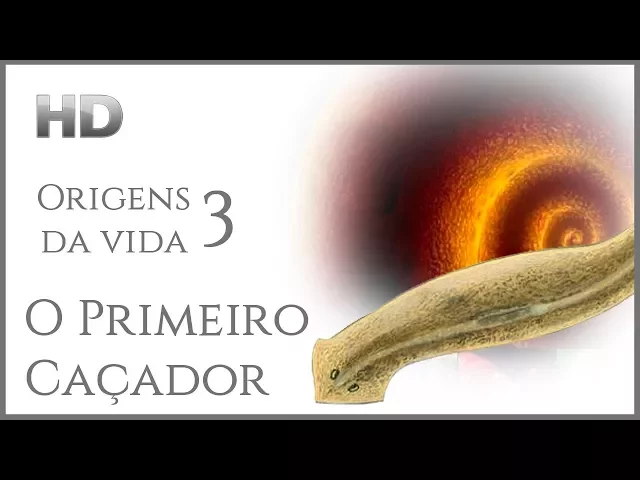
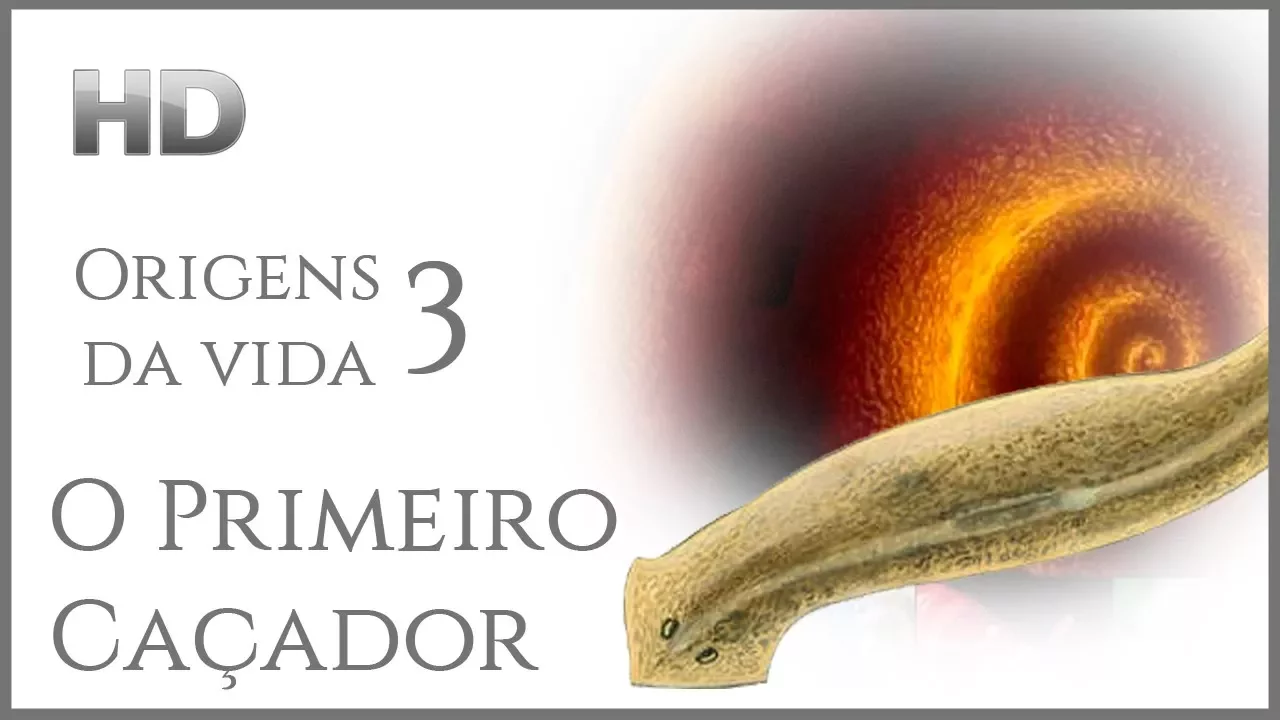
hunter but scientists believe there is an animal living today that gives us a good idea of what that ancient trailblazing ancestor looked like [Music] this animal is a flatworm they may be among the most obscure animals on earth but near the base of our family tree a similar creature was the first to move with intent to explore the world to hunt and their direct descendants have spread to every corner of the world scientists have described about 20,000 different species of flatworms so far and more keep turning up tenaciously surviving in almost every environment [Music] on
land [Music] in the oceans in freshwater ponds [Music] and in the strangest habitat of all inside the bodies of other animals [Music] the development of the hunter is one of evolutions great success stories but it's also a story of quiet destruction that still continues today [Applause] every morning Tom Hill is in his dog and chip head out early to run the sheep on his farm in the Scottish Highlands but Tom's life has changed generations of Scottish farmers have worked this land land made fertile by generations of native earthworms creatures who dine on decaying organic matter
don't often make the headlines but recently earthworms have that's because they are being hunted to death the killer comes from an ancient line of predators but in Scotland it is relatively new it's a flatworm from New Zealand the first same item in but be aware of them was when fishermen came here to look for bottoms for fishing and they complained there was no air forums so then we started to look for reasons why there's no via forums and we come up with the flat bottom [Music] no one is sure how it got the Scotland but
this is already a worm of ill repute well the alien they're quite sinister really yeah I'm underneath the ground you can't see them but now they are devouring earthworms I'm quite a sir sinister oh that horrible little beasties gray flat cuddled up and below a store and usually a nasty little slimy things just I'm just glad they're just small not big there may be small but their reputation is growing because these predators are turning up all over the UK it's an all-out flatworm invasion hello mrs. Jeffries hello this is Hugh Jones here calling from the
flatworm survey you recently sent me a card saying you found New Zealand flat worms in your garden Oh lovely and I'm really funny just to try and confirm that with you studying worms is usually a pretty obscure profession but this worm is such a bad guy they actually put it on wanted posters its arrival has made biologist Hugh Jones a very busy man I wonder if you could tell me under what circumstances you found them how many you found and so what sort of colour and size and shape there well I don't think the dangerous
but I certainly tell people a strange creature has invaded and overnight the media will create a sensation now this is going to sound like the plot of a science fiction film alien worms invading the country and destroying farmland future of the British earthworm they've asked gardeners to capture any New Zealand flat worms they find and send them to their laboratory in Cambridge Royal Mail aren't quite so keen on the idea cards calls and worms came pouring into Hugh Jones everybody had a story about the invader [Music] two inches long round one end and did it
have signature wings around it Jordan orange color an orange color okay well nobody's absolutely sure how they got here though it's the suspicion is that they arrived here in potted plants initially they were just regarded as a curiosity another one of these imported animals that probably doesn't do much harm turned out these things are carnivores they're hunting other animals they're doing things they're going out hunting reproducing doing everything that every other animal does but the way these animals pursue their lives is particularly damaging Tom Hill's knows all about the damage earthworms used to help aerate
and drain his pastures now acres of land sit under water things have gotten so bad he actually looks forward to a second invasion this time it's a convoy of scientists but the team led by Hugh Jones is only here to determine how much land the flatworm has taken over they're not here to kill the killers that's proven to be nearly impossible turn up stones and a debris of one sort or another and the bloody things are like eh excuse me and the things are lying in there and we try and dispatch them how do you
kill them absolutely no idea because you find them under the stones or rocks and then just flat you stand in them you jump in them makes no difference don't go away what can you do pulverize them with stones with them into mush that's the best way don't all be the best way as we redo it the scientists way is to test samples of ground using square boxes I'll head down towards that cottage for 25 paces and Giulio if you could head down for that house 25 paces that clear everybody okay thank you let's go there's
a battle right beneath our feet flat worms like wet soil damp soil damp conditions and here in the West of Scotland we've got nice wet conditions which ideally suits these platforms and the result is in this particular area are extremely abundant [Music] it's a battle the flatworms are likely to win for they bring a powerful array of weapons to the hunt the most basic requirement for hunting is simple the predator needs to stalk its prey and the ancestors of the flatworms were the first animals to crawl [Applause] associated with a powers of locomotion our development
of sense organs so they've got a sense where they're going or what's harmful in front of them what they might eat in front of them they've got chemical sense organs so they can taste the trail of their prey things like earthworms leave trails behind them off of slime flat worms can sense that slime trail and even follow the earthworms while the flat worm searches for prey Hugh Jones too is looking for earthworms he uses a mustard solution to flush earthworms from the ground from the number of earthworms that surface Jones can measure the extent of
the massacre he's found mass destruction in Scotland for the New Zealand flatworm has impressive tools for killing the familiar freshwater planarian shows just how these subtle but deadly tools work [Music] like many flatworms today the modern planarian is a smooth hunting machine but so too were its ancestors and they lived over half a billion years ago [Music] an ancient worm was the first to develop a new type of nervous system a centralized one hooked up to sensors at one end of the body this was the first animal with a head within it the first brain
in that head were some stunning innovations a pair of eyes [Music] eyes that could sense both the intensity of light and the direction from which it came [Music] placing sense organs near the brain helped fire signals to the rest of the body at top speed [Music] those signals could spark a sturdy set of muscles running down and around the entire body [Music] these muscles along with millions of tiny cilia propelled the worm on a power glide over a self-made cushion of slime [Music] this worm had a direct relationship to the world it could see and
then act on what it saw like intelligent animals today all animals have to obtain food it's the main purpose almost the sole purpose of every animal is to feed yeah I mean these animals have to make decisions they have to as it were decide to go somewhere they've got to make a decision to move so they have to have a some development of the nervous system what what you can call a brain the concentration of nerve cells near the front end which allows them to make what you would call a simple decision making process to
find food today's hunters need extraordinary senses [Music] even at night the leopard can see well enough to carry out a devastating ambush [Music] it's talent for the hunt is a legacy from the ancient worm the first animal to have sense organism in stereo two eyes two nostrils two ears stereo senses allow a hunter to sense exactly where its prey is by triangulation then react and adjust in mere fractions of a second [Music] it's one of the wonders of evolution that it happened and without that initial step of decision-making who knows where evolution would have led
we'd all still be corals and sponges I guess today's hunters have developed ingenious ways to capture their prey but could the very act of hunting really have begun with an ancient worm certainly a modern flat worm on the hunt is an impressive sight the hunter positions itself to attack choosing just the right moment to wrap itself around its writhing prey [Music] it initially wriggles quite violently and larger firms can even escape the initial clutches of the flatworm but relatively small earthworms are fairly doomed it almost as soon as the flatworm catches it the earthworm's attempts
to escape begin to slow it's believed that the flatworm slime contains a fast-acting anesthetic [Music] it's sort of crawls alongside the earthworm surrounds it the mouth parts of the flatworm emerge from the flat women wrap around the earthworm the mouth of the flatworm oddly is not in its head it's on the underside of the body from this mouth the flatworm launches a device called the pharynx which it uses to suck down its prey [Music] as the planarian scavenger fish the pharynx goes into action [Music] [Music] once inside food moves through a gut so expensive it
reaches to every square millimeter of the flatworms body back in Scotland yet another earthworm is getting digested it's rather slow but it's nonetheless probably more gruesome because it's slow the poor earthworm is is dissolved over the course of 3540 minutes that sort of time period what farmers here have long suspected scientists have now confirmed a couple of dozen flat worms in a single field can kill over a thousand earthworms a year the design of the hunters body has been astonishingly successful in fact it's taken flat worms to places you'd never imagined [Applause] [Music] some of
those places are islands of intimate geography inside us it took the millions of years to adapt but now many flatworms are parasites no parasite has a good reputation but think of them as biological underdogs they take on creatures hundreds of times their size and turn them into suppliers of food tapeworms are a perfect example once inside human intestines a tapeworm can grow to be 60 feet long they have other adaptations that are equally amazing but not very pretty [Music] they have no eyes or mouths their heads have transformed into ghastly hooks and suckers that latch
into the intestinal wall with a secure hold inside the gut they can proceed with their main task making more tape worms the worms body is a conveyor belt cranking out tiny breeding machines each one produces sperm and eggs generating huge batches of offspring in fact the number of eggs generated by even one tapeworm exceeds the total number of human beings alive on earth few of the worms embryos will survive in the outside world but those that do have plenty of places where they can go flat worms they may not be beautiful but you have to
admire their ability to go forth and multiply human beings too are driven to multiply but none of us can multiply alone [Music] that's why today's hunter can be found cruising places like this we've actually inherited our basic machinery for sex from the first hunter which did its cruising more than 500 million years ago like us modern flatworms have their own flamboyant methods for attracting the mate [Music] some of the most sensational sexual habits in the animal world are found in the sandy shallows of the Great Barrier Reef off the coast of Australia [Music] over millions
of years some flatworms here have developed remarkable sexual equipment and strange ways to go with it [Music] four biologist Leslie Newman the Great Barrier Reef is a flatworm paradise what it really interests me is the biodiversity how many flat ones they really are how diverse they are and how many different environments you find them in you're just looking now we saw at the tip of the iceberg of biodiversity these marine animals Newman's research has yielded an astonishing harvest of new species each one more spectacular than the last [Music] I found to date probably 450 species
of flatworms and I've named about a hundred to date and it's great I think when I'm on a good field trip somewhere new it's maybe a new species every day let's set it up and we'll check it out thanks thanks good run now yours is in the dog bag diving on this remote reef Newman and her husband Andrew are hoping to find rare flat worms and study their bizarre sexual techniques [Applause] [Music] [Applause] [Music] the showy markings of the worms are a defensive strategy [Music] fish learned to avoid bright colors which are usually associated with
something toxic even so it's hard to find flatworms among all the intricate patterns of the reef it's hard to look and to focus in on flatworms when all you can see is brightly colored coral and fish underwater it takes training and it takes dedication and it is a challenge and it's it's rewarding [Music] just after she's explored every nook and cranny the object of her desire appears on its own swimming out in the open [Music] there aren't that many flat ones that swim but when they do it's just beautiful it's just like a ribbon moving
in folding and unfolding and it's like a dance [Music] it's goal got to do with the muscle bands and they're very very thin so the muscles are contracting and they're causing them to move to under light as I move along [Music] but there's more to this flatworm than the way it moves this is a creature with a sexual life fit for the tabloids [Music] flatworms are hermaphroditic they have both male and female sex organs in fact the first hunter was also the first animal with an internal system to deliver sperm to an egg [Music] it
means everything to find a mate if animals can't find a partner and mix their genetic material then there's no point being there when we talk about flatworms they have both male and female sex organs in the one animal so if you think about it that's a great way to be if you're rare and you're looking for a mate and you're traveling alone you don't have to meet another female or another male you just have to meet another one the Newman's have found a pair and with them they hope to get a glimpse into the sexual
life of the flatworms they may be a small package of guts and gonads no bigger than a ziplock bag but it's a very successful design being hermaphroditic is a great strategy to maximize the chances to reproduce but basic internal fertilization changed the shape of life the flatworms ancestor combined the ability to move with a new way to meet these innovations still define our sexual lives today [Applause] [Music] Leslie Newman and the shape of life photographic team have set up a special tank to film a flatworms unique mating behavior calm rolling okay the other one in
just zooming around its up and look around debit but there okay hands out of the way yeah there he goes I think they're gonna do it now I think that one's approaching the other one and it's rearing up you can see it you can see it it's going it's going it's gonna stop okay okay we may never know what the first animal courtship was like but these flatworms can show us how even simple animals add their own twist for them sex is more like war than love it's known as penis fencing and the worms are
the swordsman from the mid section of each flatworm double daggers protrude each dagger is actually a penis [Music] the first one who can make a successful jab delivers its sperm about of this violent sex can last up to an hour and leave gaping holes in the body of the loser sperm can be injected anywhere on the skin where it's then absorbed the losing flatworm must then bear the burden of motherhood committing valuable resources to having offspring soon after the designated mother will release the young primordial worms may seem simple but they were the first animals
to pursue food and sex they changed the shape of life on earth one of the most exciting discoveries of the past couple of decades in developmental biology and genetics has been the recognition that similar genes make similar structures in very different organisms all animals start with an egg and development in all animals is guided by the same pattern formation genes human flatworm fly or annelid worm in terms of our genes we're all family [Music] animals have come to be very different from each other and yet we can trace these genetic similarities that say some of
their parts are built using some of the same genes and there must have been some sort of ancestor that had those genes and one of the great mysteries at what did that ancestor look like [Music] or reasonable guesses that it could have been something like a flatworm a sort of creature that must have existed a long time ago that had some sort of circulatory system some sort of visual system a bilateral body plan these pattern formation genes were endowed idli involved in the progression of events that made this possible we will never see the animal
itself the one that first carved trail some 565 million years ago but exploring the genetic code has allowed us a way to meet this pioneer we found the genes that actually built the first hunter those jeans created an animal that could move through the world an animal that could hunt an animal that could hunt from mates the explosion of animal life over a half billion years ago used these genes to shape the new body plans for the rest of the animal kingdom they fill the world with grace and with terror the hunt is still on
[Music] [Music] and it all began eons ago with a new kind of body a body that went out into the world and conquered the trails left by these first wriggles of worms mark the beginning of a brave new animal world those tiny impressions are nothing less than the footprints of an explorer [Music] [Music] [Applause] [Music] you